



Personally vetted instructors
Intensive French tutors, lessons & classes
On commence "Let's begin" — the working register of an intensive program where the lesson opens in French and stays there.
Personally vetted Intensive French tutors. Immersive 4-to-8-hours-a-week programs for students with a deadline — a move to France, a job start, a partner's family, a graduate program, a sabbatical that begins in three months and demands real fluency on arrival.

Your instructors
Intensive French tutors for private lessons & classes
Strommen has French tutors who specialize in intensive programs — the 4-to-8-hour-per-week cadence that compresses years of standard lessons into months because a real-life deadline demands it. Every tutor below was met and vetted by us in person or via thorough video interview. No marketplace. No automated profile-creation. Real teachers with real backgrounds in intensive French instruction.
Filter by location, age, or price. Then book a 30-minute free trial.
Below are the Strommen tutors who specialize in intensive French programs. Photos, ratings, and rates are real. Click any card to read their bio and book a free 30-minute trial.
I want to learn…
Every tutor, personally met. — founder-vetted since 2006, in Los Angeles and online worldwide.
Get a personalized plan
Pick your language — a language advisor will match you with the right tutor and map out your path.


Bachelor of Fine Arts, Master of Fine Arts and Research
French and English teacher with University level teaching Experience - Top Rated Instructor
Personally vetted · Strommen’s note
Erin teaches French and English with university-level credentials, and her specialties stretch from accent work to art history to college prep.
Specialties
Bachelor of Fine Arts, Master of Fine Arts and Research
French and English teacher with University level teaching Experience - Top Rated Instructor
Specialties
Personally vetted · Strommen’s note
Erin teaches French and English with university-level credentials, and her specialties stretch from accent work to art history to college prep.


Masters of Fine Art, Bachelor in Foreign Language and Literature. · Over 2,000 hours of one‑on‑one teaching experience. Published literary translator, with work reviewed in Kirkus Reviews, Times Literary Supplement, Art Book D.A.P., and multiple international journals.
Master English, French & Italian with a Published Literary Translator
Personally vetted · Strommen’s note
A published literary translator, Colombina teaches English, French, and Italian, plus SAT prep, college essay coaching, and learning-disability support.
Specialties
Masters of Fine Art, Bachelor in Foreign Language and Literature. · Over 2,000 hours of one‑on‑one teaching experience. Published literary translator, with work reviewed in Kirkus Reviews, Times Literary Supplement, Art Book D.A.P., and multiple international journals.
Master English, French & Italian with a Published Literary Translator
Specialties
Personally vetted · Strommen’s note
A published literary translator, Colombina teaches English, French, and Italian, plus SAT prep, college essay coaching, and learning-disability support.
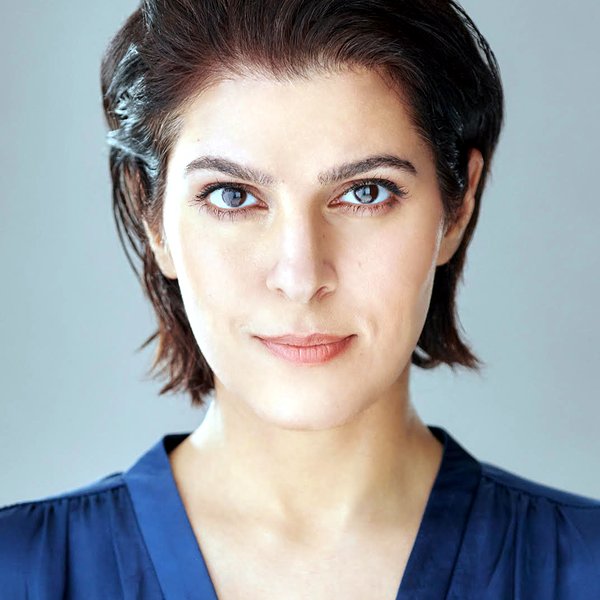

Associates in three different majors
Learn with Me: Where Language Meets Culture, Creativity, and Conversation!
Personally vetted · Strommen’s note
Sheida spent over fifteen years working with kids before she ever tutored one, and she's taught Farsi and French for eleven years since.
Specialties
Associates in three different majors
Learn with Me: Where Language Meets Culture, Creativity, and Conversation!
Specialties
Personally vetted · Strommen’s note
Sheida spent over fifteen years working with kids before she ever tutored one, and she's taught Farsi and French for eleven years since.
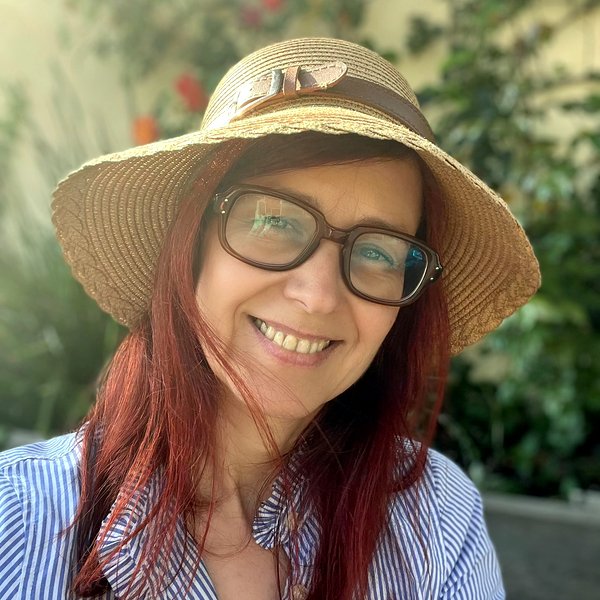
BA in Modern Literature, BA in Music · Orff Music Teaching Certification
French teacher from France. Native speaker with 25+ years of teaching experience and a background in accent coaching, translation and interpretation.
Personally vetted · Strommen’s note
Helene has spent fourteen years working as an accent coach, translator, and French teacher, making formal French sound like the student's own voice.
Specialties
BA in Modern Literature, BA in Music · Orff Music Teaching Certification
French teacher from France. Native speaker with 25+ years of teaching experience and a background in accent coaching, translation and interpretation.
Specialties
Personally vetted · Strommen’s note
Helene has spent fourteen years working as an accent coach, translator, and French teacher, making formal French sound like the student's own voice.
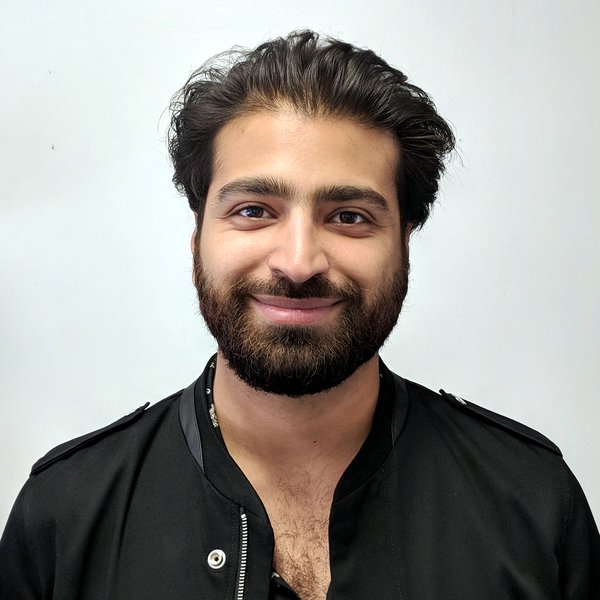
Bachelor's Degree in History, Panthéon-Sorbonne University, Paris- Bachelor's Degree in Information and Communication Sciences, Sorbonne Nouvelle University, Paris- Master's Degree in Cultural Journalism, Sorbonne Nouvelle University, Paris.
French Tutor in Paris!
Personally vetted · Strommen’s note
Paris-based and thoroughly conversation-driven, Nima keeps French lessons lively enough that staying focused for the full hour isn't a struggle.
Specialties
Bachelor's Degree in History, Panthéon-Sorbonne University, Paris- Bachelor's Degree in Information and Communication Sciences, Sorbonne Nouvelle University, Paris- Master's Degree in Cultural Journalism, Sorbonne Nouvelle University, Paris.
French Tutor in Paris!
Specialties
Personally vetted · Strommen’s note
Paris-based and thoroughly conversation-driven, Nima keeps French lessons lively enough that staying focused for the full hour isn't a struggle.


M.A Oxford foreign languages and literature BSN University of Oklahoma.Working part time towards MSN · RN license for California
language learners unite!
Personally vetted · Strommen’s note
Miriam teaches English, French, German, and some Latin, adapting by age: constructivist methods for adults, inquiry-based learning for kids.
Specialties
M.A Oxford foreign languages and literature BSN University of Oklahoma.Working part time towards MSN · RN license for California
language learners unite!
Specialties
Personally vetted · Strommen’s note
Miriam teaches English, French, German, and some Latin, adapting by age: constructivist methods for adults, inquiry-based learning for kids.
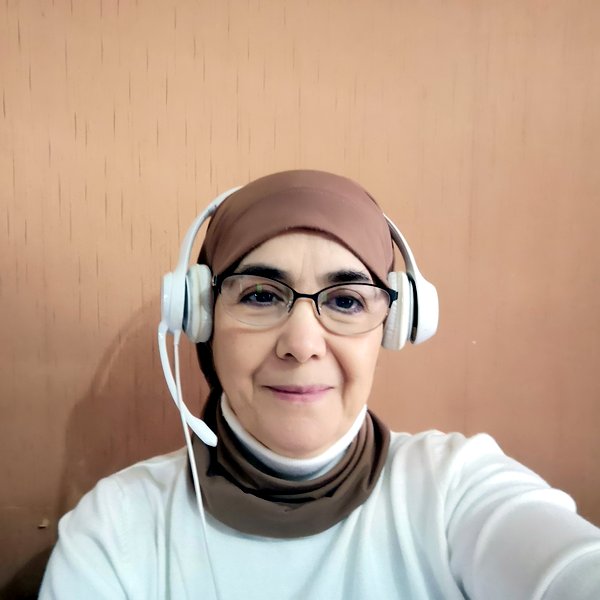

University Degree
Helping students learn with clarity, confidence, and motivation
Personally vetted · Strommen’s note
Quebec-based, Rahma teaches Arabic and French together, four Maghreb dialects covered, Algerian through Libyan.
Specialties
Also speaks: English
University Degree
Helping students learn with clarity, confidence, and motivation
Specialties
I also speak: English
Personally vetted · Strommen’s note
Quebec-based, Rahma teaches Arabic and French together, four Maghreb dialects covered, Algerian through Libyan.
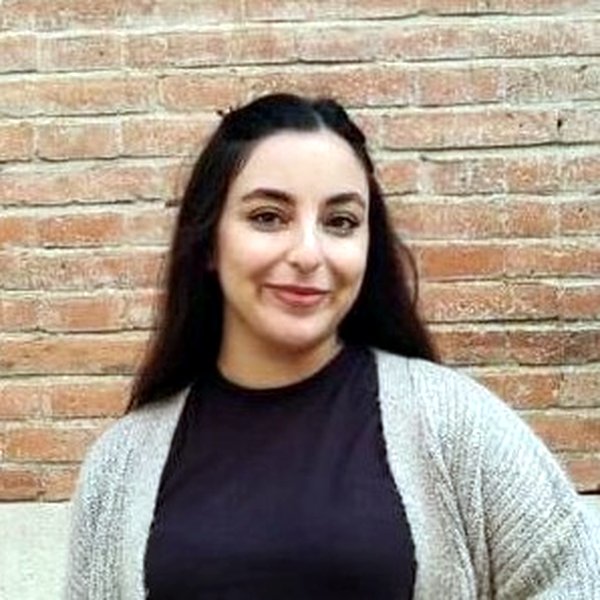

Bachelors degree in business Masters in logistics · TEFL Translation
Certified French & Spanish Language Coach | Business, Exams, & Conversational Mastery
Personally vetted · Strommen’s note
A Berlitz-trained language consultant, marielyne teaches English, French, and Spanish, built for business communication and exam prep specifically.
Specialties
Bachelors degree in business Masters in logistics · TEFL Translation
Certified French & Spanish Language Coach | Business, Exams, & Conversational Mastery
Specialties
Personally vetted · Strommen’s note
A Berlitz-trained language consultant, marielyne teaches English, French, and Spanish, built for business communication and exam prep specifically.

Bachelor degree in french studiesMaster's degree in french studies · DALF C2
Online certified french tutor delf/DALF/ TEF/TCF Preparation
Personally vetted · Strommen’s note
Hela has taught French and Arabic for thirteen years, DELF, DALF, TEF, and TCF certification prep included, plus four different Maghreb Arabic dialects.
Specialties
Bachelor degree in french studiesMaster's degree in french studies · DALF C2
Online certified french tutor delf/DALF/ TEF/TCF Preparation
Specialties
Personally vetted · Strommen’s note
Hela has taught French and Arabic for thirteen years, DELF, DALF, TEF, and TCF certification prep included, plus four different Maghreb Arabic dialects.
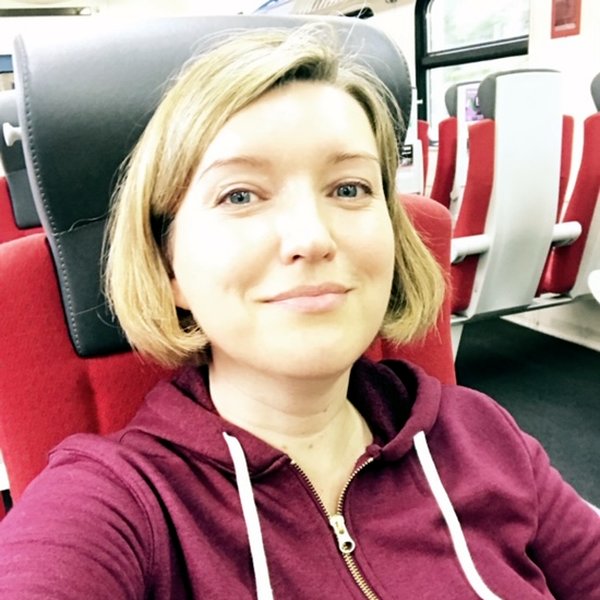

Masters in Linguistics · Masters in Linguistics, PFUR, Moscow, Russia, 2001
Native Russian Tutor with Over 20 Years of Experience
Personally vetted · Strommen’s note
A Russian native with a linguistics master's and more than twenty years teaching, Katya won't rush a student past where they're actually ready.
Specialties
Masters in Linguistics · Masters in Linguistics, PFUR, Moscow, Russia, 2001
Native Russian Tutor with Over 20 Years of Experience
Specialties
Personally vetted · Strommen’s note
A Russian native with a linguistics master's and more than twenty years teaching, Katya won't rush a student past where they're actually ready.


Bachelor of Arts, Honours French and English Specialist; Bachelor of Education · Ontario Certified Teacher | B.Ed. | Honours B.A. French & English
English & French Coach | Certified Teacher | 33+ Years Experience
Personally vetted · Strommen’s note
Sylvana taught French and English across Grades 4 through 12 in Canada for thirty-three years. She's new to Strommen, not new to teaching.
Specialties
Also speaks: Italian, Spanish
Bachelor of Arts, Honours French and English Specialist; Bachelor of Education · Ontario Certified Teacher | B.Ed. | Honours B.A. French & English
English & French Coach | Certified Teacher | 33+ Years Experience
Specialties
I also speak: Italian, Spanish
Personally vetted · Strommen’s note
Sylvana taught French and English across Grades 4 through 12 in Canada for thirty-three years. She's new to Strommen, not new to teaching.

Immersion — pace essentials
5 things that define an intensive French program
These are the pace and methodology features that separate intensive French from standard weekly lessons. Screenshot before you book the trial.
-
01
FSI Category I
The Foreign Service Institute classifies French in Category I, the easiest tier for English speakers, alongside Spanish, Italian, Portuguese, and Romanian. The FSI estimate is 600 to 750 classroom hours to reach professional working proficiency (B2-C1) from zero, under full-time immersive conditions. This is the benchmark for maximum learning velocity, and it's what intensive programs reverse-engineer toward at part-time cadence.
e.g. FSI Category I: French, Spanish, Italian, Portuguese, Romanian (600-750 hours to B2-C1).
-
02
La courbe de 600-750 heures
The proficiency arc that defines intensive French planning. At 4 hours per week of lessons plus daily self-study, expect 3 years to B2-C1. At 8 hours per week, roughly 18 months. At the full 25-plus hours of an immersive FSI-style program, 6 to 7 months. Most Strommen intensive programs sit in the 4-to-8-hour range, which is fast enough for most real deadlines without burning the student out.
e.g. 12 weeks at 6 hours/week = 72 hours, enough to move from zero to high A2 in most cases.
-
03
Le protocole de classe immersive
Intensive lessons run in French from minute one, with English used only when an explicit grammar explanation requires it. Most students reach the point of following the lesson without English support somewhere between week six and week ten. The protocol is non-negotiable for the methodology to work; the student stops translating in their head only when they're forced to.
e.g. Bonjour, on commence. Aujourd'hui on travaille le subjonctif et on lit un extrait du Monde.
-
04
L'input avant l'output
Intensive programs lean on the linguistic principle that comprehensible input (reading and listening to French slightly above your level) drives faster acquisition than output (speaking and writing) alone. Daily French media consumption between lessons is non-negotiable: podcasts, films, novels, news radio. The lessons accelerate when the student is also consuming French media daily; without the input layer, even 8 hours per week of lessons plateaus.
e.g. Daily: 1 podcast episode, 1 article, 1 short writing entry. Weekly: 1 French film with French subtitles.
-
05
Les sorties d'un programme intensif
What intensive graduates typically achieve. From zero, 12 weeks at 6 hours/week reaches high A2 for most students. 24 weeks reaches B1. 12 months reaches B2 (the DELF B2 level, the most common professional-working-proficiency benchmark). Outcomes depend on starting level, daily self-study hours, and the student's life situation; honest self-assessment at the trial sets realistic expectations.
e.g. Typical graduate of a 12-week 6h/week program from zero: high A2, comfortable in everyday transactions.
About Intensive French
French at full immersion pace
Intensive French is what you do when the timeline is short and the stakes are real. A move to Paris in twelve weeks. A new role at a French firm starting next quarter. A partner whose family expects you at the Christmas table speaking the language. A graduate program where the entrance threshold is DELF B2 and the deadline is six months. Standard weekly French lessons are the right pace for curious adults building toward fluency on a multi-year arc. Intensive French is the right pace for the much smaller cohort who need to compress that arc into months because life has set a deadline.
The Foreign Service Institute classifies French as a Category I language for English speakers, in the easiest tier alongside Spanish, Italian, Portuguese, and Romanian. FSI estimates 600 to 750 classroom hours to reach professional working proficiency (a strong B2 to low C1) from zero, under full-time immersive conditions with motivated adult learners and trained instructors. This is the gold-standard benchmark for what is actually possible at maximum learning velocity. Translated into part-time terms, 600 to 750 hours at four hours a week is roughly three years; at eight hours a week, roughly eighteen months; at the full immersive 25-plus hours a week of an FSI-style program, six to seven months. Intensive French programs at Strommen sit between weekly lessons and the FSI extreme: 4 to 8 hours of tutored instruction per week, plus 1 to 3 hours daily of structured self-study and French media exposure. That cadence gets a determined adult learner from zero to comfortable A2 in three months, B1 in six, and B2 in twelve to eighteen, which is fast enough for most real-life deadlines without burning the student out.
The defining feature of intensive instruction is the input-output ratio. Casual weekly lessons deliver about an hour of guided input plus whatever the student does between sessions, often very little. The compounding effect is slow. Intensive instruction inverts that: 4 to 8 hours of guided input each week, supplemented by daily exposure to French media (podcasts, news, film, conversation partners), with the lessons themselves run entirely in French from minute one. The student stops translating in their head somewhere around month two and starts thinking in French for short stretches. By month four the thinking-in-French stretches lengthen. By month six the student dreams in French occasionally, which sounds like a cliché until it happens. This phase shift does not occur at weekly lesson cadence for most adult learners. It requires the volume.
The second defining feature is the methodology. Intensive French lessons cannot run on the same structure as casual conversational lessons because the volume would burn through any standard curriculum in weeks. Instead, lessons combine focused grammar instruction (in French, with explicit rule explanation), high-density vocabulary work (50 to 100 new items per lesson with spaced repetition between sessions), reading from real French texts (newspapers, novels, professional documents in the student's field), listening from real French audio (news, podcasts, film clips), and structured speaking practice that occupies at least half of every lesson hour. Writing is added from week one for intermediate-and-above students, in the form of short daily journal entries reviewed at the next lesson. Pronunciation is drilled through shadowing exercises, with the student recording themselves repeating native audio and the tutor catching specific sound-level errors that would otherwise calcify. Nothing about this is gentle. Most intensive students describe the first month as exhausting and the third month as the point where the workload starts feeling like progress rather than effort.
The third defining feature is the curriculum compression. A standard French course covers grammar at one or two new structures per week. An intensive program covers four to six per week, sequenced so that each new structure builds on the last and gets immediate reinforcement in the next lesson. Vocabulary expansion runs at 200 to 400 new active items per month, with the lessons selecting items by frequency and by relevance to the student's specific situation. A student moving to Paris for a finance job gets finance vocabulary prioritized over kitchen vocabulary. A student joining a French family gets family-life vocabulary prioritized over professional vocabulary. A student preparing for DELF B2 gets exam-rubric-driven vocabulary regardless of personal context. The curriculum is built per student, not pulled off a shelf.
The fourth defining feature is the assessment cadence. Casual lessons rarely assess formally because the timeline is open-ended. Intensive lessons assess every two to four weeks against the CEFR levels (A1, A2, B1, B2, C1, C2), with mock written and spoken tasks scored against the official rubrics. Most intensive students hit A1 between week three and week six from zero, A2 between week eight and week twelve, B1 around month five to six, and B2 around month twelve to fifteen. These ranges assume the full 4-to-8-hour weekly cadence plus daily self-study; lighter cadences proportionally slower. The assessments are not optional. They are how the curriculum gets recalibrated when something is sticking or not sticking, and they are how the student maintains psychological momentum during the long middle stretch where the gains are real but day-to-day feel slow.
A typical week in an intensive program runs roughly like this. Monday: 90-minute lesson focused on new grammar plus targeted speaking drills. Tuesday: 30 minutes of self-study (assigned reading, vocabulary review, listening). Wednesday: 90-minute lesson focused on the week's reading text plus discussion in French. Thursday: 30 minutes of self-study (assigned podcast plus written response). Friday: 60-to-90-minute lesson combining reading, conversation, and pronunciation work. Saturday: optional 60-minute lesson for accelerated students, or self-study day. Sunday: rest day or French film with subtitles in French. The lessons themselves run in French from start to finish, with English used only when an explicit grammar explanation requires it. Most students reach the point of being able to follow the lesson without English support somewhere between week six and week ten.
The immersion-input layer outside lessons is non-negotiable for intensive students. Two hours of guided lessons per week plus zero French exposure between sessions does not work, even at four lessons per week. The lessons accelerate when the student is also consuming French media daily: a podcast on the commute (Transfert, InnerFrench, News in Slow French at lower levels, La Story or France Culture at higher levels), a French film once a week with French subtitles rather than English, a French novel for reading reps (Le Petit Prince for early learners, Modiano or Gavalda for intermediates, Houellebecq or Ferrante in French translation for advanced), French YouTube creators in the student's interest area, and ideally one or two weekly conversation-partner sessions with a French speaker outside the formal lessons. The Strommen French podcast roundup covers the listening side; the 1000 most common French words list anchors vocabulary.
For students with a specific outcome target, the intensive program scaffolds toward it. DELF and DALF certifications have published official rubrics and sample exams, and intensive lessons can simulate exam conditions weekly in the final month before the test. Job-track students get sector-specific vocabulary front-loaded plus role-play of likely workplace conversations (intake meetings, performance reviews, technical presentations in French). Family-track students get domestic vocabulary plus role-play of the social situations they're heading into. Graduate-program students get academic French (reading comprehension at speed, writing the French equivalent of a research statement, defending an argument in French) prioritized over conversational small talk. The lessons reverse-engineer the target situation and work backward.
Intensive French is not for everyone, and the tutor will say so honestly at the trial if it isn't the right fit. The hour-count alone is significant: 4 to 8 hours of lessons per week, plus 1 to 3 hours of daily self-study, plus the immersion-input layer, runs to 12 to 25 hours of French per week. Most working adults can sustain that for three to six months but not indefinitely. Most students who try intensive French while juggling a full-time job plus other commitments scale back to standard weekly lessons within a month. The students who thrive in intensive programs are typically on sabbatical, between jobs, working part-time, retired, or pre-relocation with reduced work obligations. Honest self-assessment at the trial saves everyone time.
The Strommen Intensive French roster includes native French teachers with FLE (français langue étrangère) certifications and years of intensive-program experience, native French university instructors with academic linguistics backgrounds, longtime French-American bilinguals with deep teaching experience, and former language-school program directors from immersive French academies. Intensive teaching is a real skill, separate from casual lesson teaching: the ability to maintain student morale through the difficult middle phase, the ear for which structures need immediate reinforcement and which can be allowed to settle, the instinct for when to push and when to consolidate, the cultural awareness to deliver high-volume feedback without crushing the student's confidence. Each tutor's bio specifies their intensive-program background and which student profile fits best (zero-to-A2 sprint, intermediate plateau-breaker, certification-track, professional-relocation). Pricing reflects the cadence: intensive programs typically book in 12-to-24-week blocks at a multi-hour weekly cadence, with package pricing rather than per-lesson billing. For related French specialties, our Parisian French, Business French, DELF test preparation, and French classes pages cover the broader family.
Lessons calibrate to your situation. A pre-relocation sprint for someone moving to Paris in twelve weeks looks different from a 6-month DELF B2 program for a graduate-school applicant, which looks different from a year-long sabbatical immersion for an adult learner who wants to read Camus in the original by next summer. Each program is built around your deadline, your starting level, and your available weekly hours. The trial conversation maps all three before any commitment. Browse the full tutor list, pick a tutor whose bio matches your situation, and book the free 30-minute trial. Most intensive students start within two weeks of the trial; the deadline is the reason they came.
What you'll cover
Lessons & classes tailored to Intensive French
Compressed curriculum and high-density vocabulary
Intensive lessons cover four to six new grammar structures per week with immediate reinforcement, alongside 200 to 400 new active vocabulary items per month selected by frequency and by relevance to your situation. A student moving to Paris for a finance job gets finance vocabulary front-loaded. A student joining a French family gets domestic vocabulary first. The curriculum is built per student, not pulled off a shelf.
Immersive lesson protocol
Lessons run in French from start to finish, with English used only when explicit grammar instruction requires it. Most students reach the point of following the lesson without English support somewhere between week six and week ten. The protocol forces the cognitive shift from translation-in-the-head to thinking-in-French, which is the single biggest acceleration in any intensive program.
Daily input layer outside lessons
Lessons alone, even at 8 hours per week, plateau without daily exposure to real French media. Your tutor will assign a specific daily input regimen: a podcast on the commute, a French film weekly with French subtitles, a French novel for reading reps, French YouTube in your interest area, ideally one or two weekly conversation-partner sessions outside formal lessons. The compounding effect of the input layer is what differentiates intensive results from standard-lesson results.
CEFR-aligned assessment and certification prep
Formal assessment against the CEFR rubric (A1, A2, B1, B2, C1, C2) every two to four weeks, with mock written and spoken tasks scored against the official scales. DELF and DALF certification preparation built into the program if certification is part of your goal. Coordinates with our DELF test prep specialty for the exam-mechanics side.
FAQ
About Intensive French lessons & classes
How is Intensive French different from regular weekly lessons?
Volume and methodology. Standard weekly lessons run one hour per week and treat French as one piece of a longer-arc curiosity. Intensive French runs 4 to 8 hours per week of lessons plus 1 to 3 hours daily of structured self-study, with lessons run in French from minute one, a compressed grammar and vocabulary curriculum, and formal CEFR-aligned assessment every two to four weeks. Different audience too: weekly lessons fit curious adults on no deadline, intensive lessons fit students with a real timeline (a move, a job, a certification, a graduate program).
How fluent can I really get in 12 weeks?
From zero French, 12 weeks at 6 hours per week of lessons plus daily self-study reaches high A2 for most students, occasionally low B1 for fast learners with rich input layers. That means comfortable everyday transactions, basic conversations about yourself, ability to follow slow native speech, ability to read simple French texts. It does not mean professional fluency or comfortable native-speed conversation; both are realistic at 12 to 18 months of sustained intensive cadence. Honest expectation-setting at the trial saves frustration later.
How many hours per week do you recommend?
Depends on your deadline and your life situation. The sweet spot for most intensive students is 6 to 8 hours per week of lessons split across 3 to 4 sessions, plus 1 to 2 hours daily of self-study. Less than 4 hours per week stops counting as intensive and converges with standard weekly lessons. More than 10 hours per week is hard to sustain for most working adults beyond a few months. The trial conversation maps your available hours and recommends a cadence.
Can I do an intensive program while working a full-time job?
It depends on the job and your life situation. Honest answer: most students who try intensive French while holding a full-time job plus other commitments scale back to standard weekly lessons within a month. The hour count is significant: 4 to 8 hours of lessons, plus 1 to 3 hours daily of self-study, plus immersion-input listening, runs to 12 to 25 hours of French per week. The students who sustain intensive cadence are typically on sabbatical, between jobs, part-time, retired, or pre-relocation with reduced work obligations. The tutor will say honestly at the trial if intensive is or isn't right for your situation.
Do you prep for DELF, DALF, or other French certifications?
Yes. Intensive programs naturally align with certification timelines. DELF B2 is the most common professional-working-proficiency target and typically takes 12 to 18 months of intensive instruction from zero. DALF C1 takes another 6 to 12 months beyond B2. Our DELF test prep specialty covers the exam-mechanics side; intensive lessons handle the broader language-skills foundation that the exam tests. Most certification-track students do a few weeks of pure exam prep at the end of an intensive program to drill the test format and rubrics.
What's the right tutor profile for intensive instruction?
Intensive teaching is a separate skill from casual lesson teaching. The right tutor has experience running intensive programs (language-school program directors, FLE-certified instructors with immersive-academy backgrounds, university French instructors), maintains student morale through the difficult middle phase, has the ear for which structures need immediate reinforcement, and delivers high-volume feedback without crushing student confidence. The tutors on this specialty page were filtered specifically for intensive-program experience. Each bio specifies their background.
How is intensive French priced?
Intensive programs typically book in 12-to-24-week blocks at a multi-hour weekly cadence, with package pricing rather than per-lesson billing. The package usually includes the lessons, assessment cycles, custom curriculum design, and feedback on between-lesson written work. Pricing reflects the tutor's experience and the program intensity (hours per week). The trial conversation discusses pricing alongside cadence and goals; intensive programs are a larger commitment than standard weekly lessons and the budget conversation happens upfront.
What does the trial conversation cover?
30 minutes, free, with the tutor you select. Bring your real situation: deadline, current French level, available weekly hours, target outcome (a move, a certification, a job, a graduate program). The tutor assesses your starting level (often near-zero or rusty school French), maps a realistic intensive program to your deadline and hours, discusses the cadence and the package pricing, and answers your questions about methodology. Most intensive students start within two weeks of the trial; the deadline is the reason they came.
Ready for Intensive French lessons or classes?
Book a free 30-minute trial with one of our personally vetted tutors. Private lessons or small-group classes — your choice.