



Personally vetted instructors
Modern Standard Arabic tutors, lessons & classes
السلام عليكم as-salāmu ʿalaykum — the pan-Arab formal greeting, recognized across all 22 Arabic-speaking countries.
Personally vetted Modern Standard Arabic tutors. Lessons grounded in al-fuṣḥā, the written and formal-spoken register that carries every Arabic newspaper, broadcast, and professional document.
Your instructors
Modern Standard Arabic tutors for private lessons & classes
Strommen has been teaching Arabic since 2006. Modern Standard Arabic is the register students reach for when the goal is reading, formal writing, or following the news, and it is the scaffolding the spoken dialects all derive from. Both tutors below were met and vetted by us. No marketplace, no automated profile-creation, just real teachers whose backgrounds you can read in their bios.
This is a thin roster by design. Filter by format or price, then book a 30-minute free trial to see whether the fit is right.
Below are the Strommen tutors who specialize in Modern Standard Arabic. Photos, ratings, and rates are real. Click any card to read a tutor's background and book a free 30-minute trial.
I want to learn…
Every tutor, personally met. — founder-vetted since 2006, in Los Angeles and online worldwide.
Get a personalized plan
Pick your language — a language advisor will match you with the right tutor and map out your path.

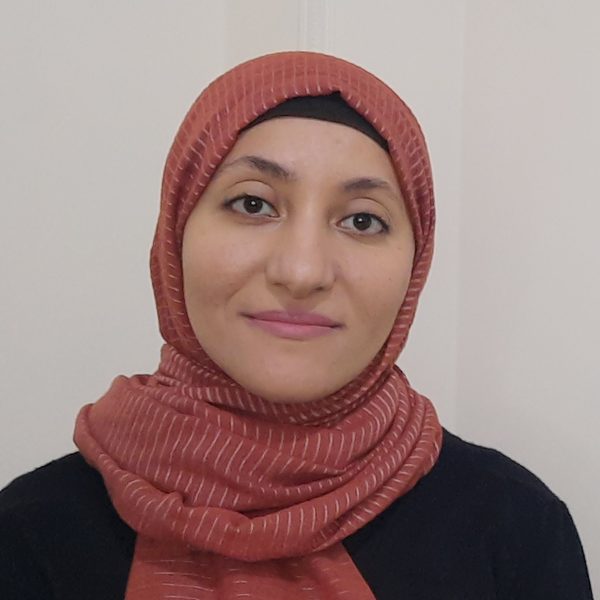
A master degree in Education in Teaching Arabic language to non Arabic speakers
Arabic language teacher (Modern standard, and Egyptian Arabic)
Personally vetted · Strommen’s note
Somaia teaches both Modern Standard and Egyptian Arabic, useful if you need the textbook version and the way people actually talk.
Specialties
A master degree in Education in Teaching Arabic language to non Arabic speakers
Arabic language teacher (Modern standard, and Egyptian Arabic)
Specialties
Personally vetted · Strommen’s note
Somaia teaches both Modern Standard and Egyptian Arabic, useful if you need the textbook version and the way people actually talk.
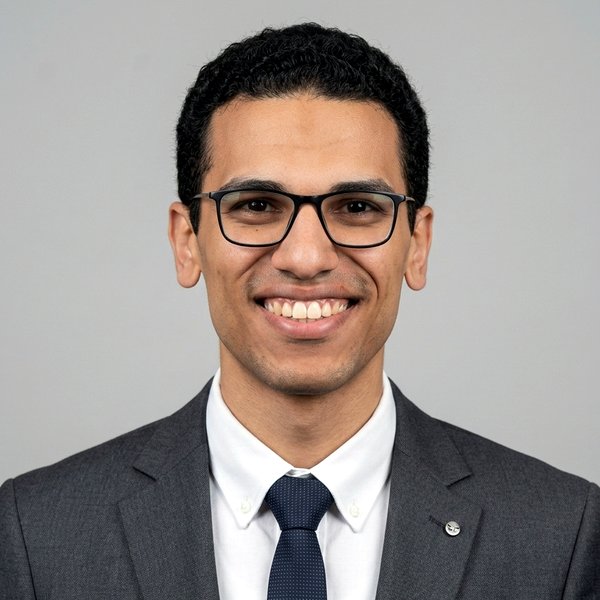


Bachelor of Education (B.Ed.) and pursuing a degree in Aerospace Engineering. · I have a TEFL certification | Certifications in Adobe Graphic Design (Level 1 & 2) for interactive presentations and educational materials.
English, German, and Arabic classes
Personally vetted · Strommen’s note
Arabic, English, and German sit alongside AP Calculus and AP Physics on Omar's schedule, a genuinely rare tutor who crosses from language straight into STEM.
Specialties
Also speaks: French, Italian, Spanish
Bachelor of Education (B.Ed.) and pursuing a degree in Aerospace Engineering. · I have a TEFL certification | Certifications in Adobe Graphic Design (Level 1 & 2) for interactive presentations and educational materials.
English, German, and Arabic classes
Specialties
I also speak: French, Italian, Spanish
Personally vetted · Strommen’s note
Arabic, English, and German sit alongside AP Calculus and AP Physics on Omar's schedule, a genuinely rare tutor who crosses from language straight into STEM.
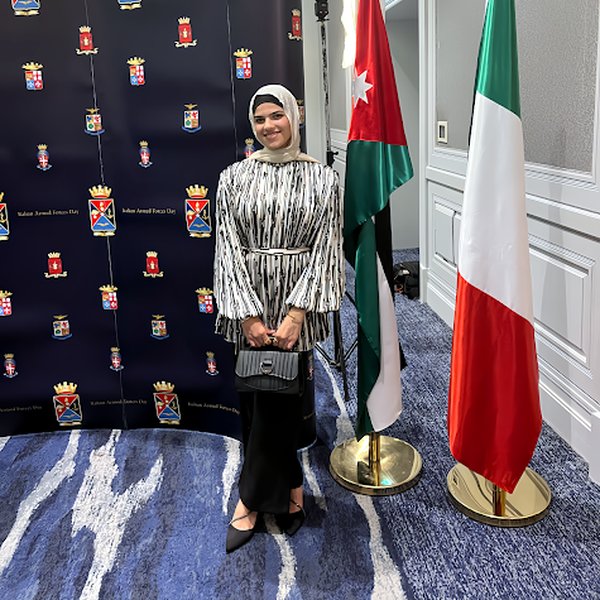
Bachelor’s Degree in Arabic Language and Literature, University of Jordan · Certificate in Teaching Arabic to Children – Jannah Way Canadian Institute.Certificate of Teaching Excellence (5+ Years of Experience) – Intensive Arabic Language Center for Foreigners, Amman.
Your Gateway to Fluent Arabic: Fusha and Jordanian Dialect for All Levels
Specialties
Also speaks: English
Bachelor’s Degree in Arabic Language and Literature, University of Jordan · Certificate in Teaching Arabic to Children – Jannah Way Canadian Institute.Certificate of Teaching Excellence (5+ Years of Experience) – Intensive Arabic Language Center for Foreigners, Amman.
Your Gateway to Fluent Arabic: Fusha and Jordanian Dialect for All Levels
Specialties
I also speak: English

الفصحى — register & cultural codes
5 expressions that carry across the whole Arab world
These pan-Arab phrases are religiously rooted but used by speakers of any faith or none, woven into formal MSA and everyday speech alike. Knowing when each one belongs is part of sounding fluent rather than merely correct.
-
01
إن شاء الله
Transliterated in shāʾ Allāh, "if God wills." The standard way to mark any future plan as contingent, used by religious and non-religious speakers alike across every register. Worth learning early: declining to attach it to a future commitment can read as overconfident.
e.g. We will sign the contract next week, in shāʾ Allāh.
-
02
الحمد لله
Transliterated al-ḥamdu lillāh, "praise be to God." The default answer to "how are you," given regardless of how things are actually going. It also closes off good news gracefully and works in formal MSA correspondence as readily as in conversation.
e.g. Someone asks how the trip went, and you answer al-ḥamdu lillāh.
-
03
ما شاء الله
Transliterated mā shāʾ Allāh, "what God has willed." Said when admiring something or someone, where English would simply compliment. It also serves to ward off the evil eye, so it tends to accompany praise of a child, a home, or an achievement.
e.g. Your Arabic has improved so much, mā shāʾ Allāh.
-
04
بسم الله
Transliterated bismi-llāh, "in the name of God." Spoken before eating, before starting a task, before driving off, before opening a meeting. Even secular speakers use it as a plain "here goes" marker at the start of something.
e.g. Before the first agenda item, the chair says bismi-llāh.
-
05
تحياتي
Transliterated taḥiyyātī, "my regards." A formal MSA closing for emails, letters, and broadcast addresses, the written equivalent of "best regards." It is never spoken casually, where it would land as comically stiff. The warmer variant taḥiyyātī al-ḥārra softens a formal close.
e.g. A business email signs off with maʿa taḥiyyātī.
About Modern Standard Arabic
The register that holds the whole Arabic world together
Modern Standard Arabic is the one register that every literate person in the Arab world shares. الفصحى, al-fuṣḥā, is the contemporary written standard, descended from Classical Arabic and standardized through the twentieth century by the Arabic-language academies in Cairo, Damascus, Baghdad, Amman, and Rabat. It is the language of newspapers, government, contracts, university lectures, and the news desks of Al Jazeera and BBC Arabic. A Moroccan and an Iraqi whose spoken dialects barely overlap will reach for MSA the moment a conversation turns formal or needs to be recorded. That pan-Arab reach is exactly what a learner is buying when they choose this page, and it is the strongest reason a serious student of Arabic builds the formal register early rather than treating it as an afterthought.
It helps to be clear about what MSA is not, because the misconceptions get in the way of good study. It is not "old Arabic," and it is not the language of the Qurʾan. Classical Arabic carries the pre-modern literary canon and the Qurʾanic text; MSA inherits its grammatical core but evolved a modern vocabulary to handle things the seventh century never needed. The Arabic word for telephone, hātif, is an MSA coinage built from the verbal root meaning "to call." Most modern Arabic speakers can read Classical Arabic with some effort, and the grammar a student learns through MSA is the scaffolding that makes that possible. The reverse does not hold: a seventh-century speaker could not read a modern newspaper, and the gap is mostly vocabulary rather than grammar. So MSA sits in a useful middle position. It is fully modern, fully functional for contemporary life, and it opens a door onto the classical tradition without being that tradition itself.
That root-and-pattern logic runs through the whole language and is worth understanding before any vocabulary list. A cluster of three consonants carries a core meaning, and vowel patterns and affixes derive specific words from it. From ك-ت-ب, k-t-b, "write," you get kataba (he wrote), yaktubu (he writes), kātib (writer), maktab (office or desk), maktaba (library or bookstore), and kitāb (book). The same machinery turns ج-ل-س, j-l-s, "sit," into jalasa (he sat), jalsa (a session), and majlis (a council, literally a place of sitting). Internalizing this system is the single highest-leverage breakthrough in intermediate Arabic. Students who learn vocabulary as random word-strings struggle; students who see the root system see Arabic as the patterned language it actually is. A good MSA tutor signposts this from the first lessons rather than letting words pile up unstructured.
One honest caveat belongs near the top. No child grows up speaking MSA at home; it is acquired entirely through education. Study it on its own and you can read al-Hayat, write a professional email, and follow a news broadcast, but you cannot order coffee in Beirut or Cairo without sounding stilted, a little like reciting Shakespearean English at a café counter. That is not a flaw in MSA. It is the structure of Arabic itself, which lives as a written-and-formal register alongside a family of spoken dialects that no one writes. Strommen's recommendation, which our tutors will give you plainly, is MSA plus a chosen spoken dialect studied in parallel from early on, treated as two registers of one language rather than two separate languages. If your goal is reading, formal writing, broadcast comprehension, or professional correspondence, MSA is precisely the right foundation. If you also want everyday conversation, a tutor will help you layer Levantine or Egyptian alongside it, since those two dialects are the best-resourced for adult learners.
The hardest parts of MSA tend to be the same for most adult learners, and they are worth naming so you know what you are signing up for. The script reads right to left and connects its letters cursively, with most letters changing shape depending on their position in a word. Short vowels are diacritics that printed Arabic almost always omits, so a newspaper or novel leaves the reader to infer them from grammar and vocabulary knowledge. Learners typically spend a first year on fully vowelled text before transitioning to unvowelled journalism and fiction. And several consonants have no English equivalent at all. The two pharyngeals, ʿayn and ḥāʾ, are produced deep in the throat, and the difference is not cosmetic: ʿilm means "knowledge" while alam means "pain," and ḥubb means "love" where a mispronounced version drifts toward an unrelated word. The uvular qāf and the velar fricatives khāʾ and ghayn round out the set of sounds that take real practice. A tutor who drills these early saves you from building longer words on a shaky phonetic base, which is why our lessons front-load pronunciation rather than postponing it.
MSA also has its own written conventions, and lessons cover them once a student is reading and composing. The formal business letter follows a stable shape: a religious or secular opening salutation, the transitional phrase تحية طيبة وبعد, taḥiyya ṭayyiba wa-baʿd, "a good greeting, and now to the matter," then a body written in MSA's verb-initial syntax, and a formal close such as وتفضلوا بقبول فائق الاحترام, the equivalent of "yours sincerely." Knowing these moves is the difference between Arabic that is merely grammatical and Arabic that reads as genuinely professional. On the listening side, the canonical practice material is broadcast journalism. Al Jazeera Arabic runs MSA at full pace and is the standard for advanced comprehension; BBC Arabic and France 24 Arabic offer the same register with different editorial framing. For a gentler on-ramp, the children's program Iftaḥ Yā Simsim, the Arabic Sesame Street, was made in a deliberately neutral MSA-leaning register accessible across the Arab world, and remains a strong early-learner resource.
Strommen's MSA roster is small, and deliberately so. We have two tutors who specialize in this register, both able to teach the alphabet and root system from scratch and to take a reading-focused student up through unvowelled news and modern literature. We do not run a marketplace, and we will not pad a page with profiles we have not vetted. If those two tutors are not the right schedule or fit for you, our broader Arabic roster covers beginner Arabic, conversational Arabic, and business Arabic, and any of those tutors can build an MSA-grounded plan with you. You can also see our full Arabic classes and lessons overview, or browse every vetted teacher on the tutors directory.
What you'll cover
Lessons & classes tailored to Modern Standard Arabic
The script and the sound system
Lessons start with the Arabic alphabet read right to left, with letters that connect cursively and change shape by position. We drill the consonants English does not have, especially the pharyngeals ʿayn and ḥāʾ and the uvular qāf, because the difference between ʿilm (knowledge) and alam (pain) is not optional. Beginners read fully vowelled text first, then transition toward the unvowelled Arabic of real newspapers and books. Our blog post on how the Arabic varieties relate to each other is a useful orientation between lessons.
The root-and-pattern system
Arabic vocabulary is built on three-consonant roots that carry a core meaning, with vowel patterns deriving specific words. From k-t-b you get "he wrote," "writer," "office," "library," and "book." We teach this system explicitly rather than letting words accumulate at random, because it is the organizing principle of Arabic morphology and the breakthrough that turns intermediate study from memorization into pattern recognition. Tutors pair this with our 1,000 most common Arabic words list so you build frequency-weighted vocabulary on a structural frame.
Reading, writing, and broadcast comprehension
MSA is the language of every Arabic newspaper, contract, and news desk, so lessons build toward genuine reading and listening access. We work through graded texts toward unvowelled journalism, formal writing with the verb-initial syntax MSA favors, and listening practice with Al Jazeera Arabic and BBC Arabic, the standard for advanced MSA comprehension. The aim is a learner who can read al-Hayat and follow a broadcast, not just pass a textbook exercise.
Where MSA ends and dialect begins
An honest MSA course names its own limits. Lessons clarify what fuṣḥā gives you (reading, formal writing, broadcast, pan-Arab formal speech) and what it does not (ordering coffee in a way that sounds natural anywhere). Tutors will help you decide whether and when to add a spoken dialect alongside, usually conversational Arabic in Levantine or Egyptian, treating the two as registers of one language rather than separate subjects.
FAQ
About Modern Standard Arabic lessons & classes
Is Modern Standard Arabic the same as the Arabic of the Qurʾan?
No. The Qurʾan is in Classical Arabic, the pre-modern literary register. MSA descended from Classical Arabic and shares its grammatical core, but it evolved a modern vocabulary through twentieth-century standardization to handle things the classical period never needed. Most Arabic speakers can read Classical Arabic with some effort, and studying MSA gives you the scaffolding to do that. MSA is the contemporary written and formal standard, not an old or purely religious language.
If no one speaks MSA at home, why learn it?
MSA gives you reading access to all written Arabic, listening access to broadcast news and formal speech, writing competence, and the grammatical foundation the spoken dialects all derive from. It is also the register every literate Arab recognizes, so it lets you be understood across the whole Arab world. The tradeoff is everyday conversation: MSA alone sounds stilted at a café. Our recommendation is MSA plus a chosen spoken dialect studied in parallel.
Should I learn MSA first or start with a dialect?
For most learners, neither strictly first. Strommen's posture is to start the alphabet, root system, and core grammar in MSA while also beginning a spoken dialect early for conversation. Levantine and Egyptian are the best-resourced dialects for adult learners. Treat them as two registers of one language. If your goal is purely reading, formal writing, or broadcast comprehension, MSA on its own is the right and sufficient choice.
How hard is Arabic for an English speaker, honestly?
The US State Department places Arabic among the hardest languages for English speakers, and the honest reasons are the right-to-left cursive script, the short vowels that printed text omits, and several consonants with no English equivalent such as the pharyngeals and the uvular qāf. None of this is insurmountable. It does mean steady weekly study matters more than intensity bursts, and a tutor who drills the sounds early saves you from building on a shaky base.
Are your Modern Standard Arabic tutors native speakers?
Our MSA tutors are fluent in al-fuṣḥā and experienced teaching it, including the alphabet and root system from scratch. Because MSA is acquired through education rather than spoken at home, what matters most is formal training and teaching experience, and each tutor's bio specifies their background and where they have taught. This is a small specialty roster of two tutors, vetted by us in the same way as the rest of the Arabic team.
Can I take MSA lessons online, or only in person?
Both. Our Arabic tutors teach online via Zoom or Jitsi, available globally, and some also teach in person. The booking widget on each tutor's profile shows their available formats and times. Reading-focused MSA study works well online, since much of the lesson centers on shared texts.
What if your two MSA tutors are not the right fit or schedule for me?
It is a thin roster and we will not pretend otherwise. If neither MSA specialist works for your schedule, our wider Arabic team can still build an MSA-grounded plan with you. The tutors on our beginner Arabic, conversational Arabic, and business Arabic pages all teach formal Arabic alongside their focus. A free 30-minute trial is the fastest way to find the right match.
How long does it take to read Arabic newspapers comfortably?
It depends on your starting point, study time, and how consistently you practice. Most students spend a first year reading fully vowelled text before moving to the unvowelled Arabic of real journalism. Comfortable reading of general news typically takes well over a year of steady weekly lessons with self-study between them. Your tutor sets concrete goals at the trial and adjusts as your reading develops.
Ready for Modern Standard Arabic lessons or classes?
Book a free 30-minute trial with one of our personally vetted tutors. Private lessons or small-group classes — your choice.