



Personally vetted instructors
Tuscan tutors, lessons & classes
Bischero! Tuscan affectionate ribbing, roughly "you goofball." The kind of word a Florentine would use with a friend, never a stranger.
Personally vetted Tuscan tutor. Lessons in the regional Italian of Florence, Siena, Pisa, and the wider Tuscan zone, with focus on the gorgia toscana, Florentine lexicon, and the literary tradition that made this dialect into modern standard Italian.
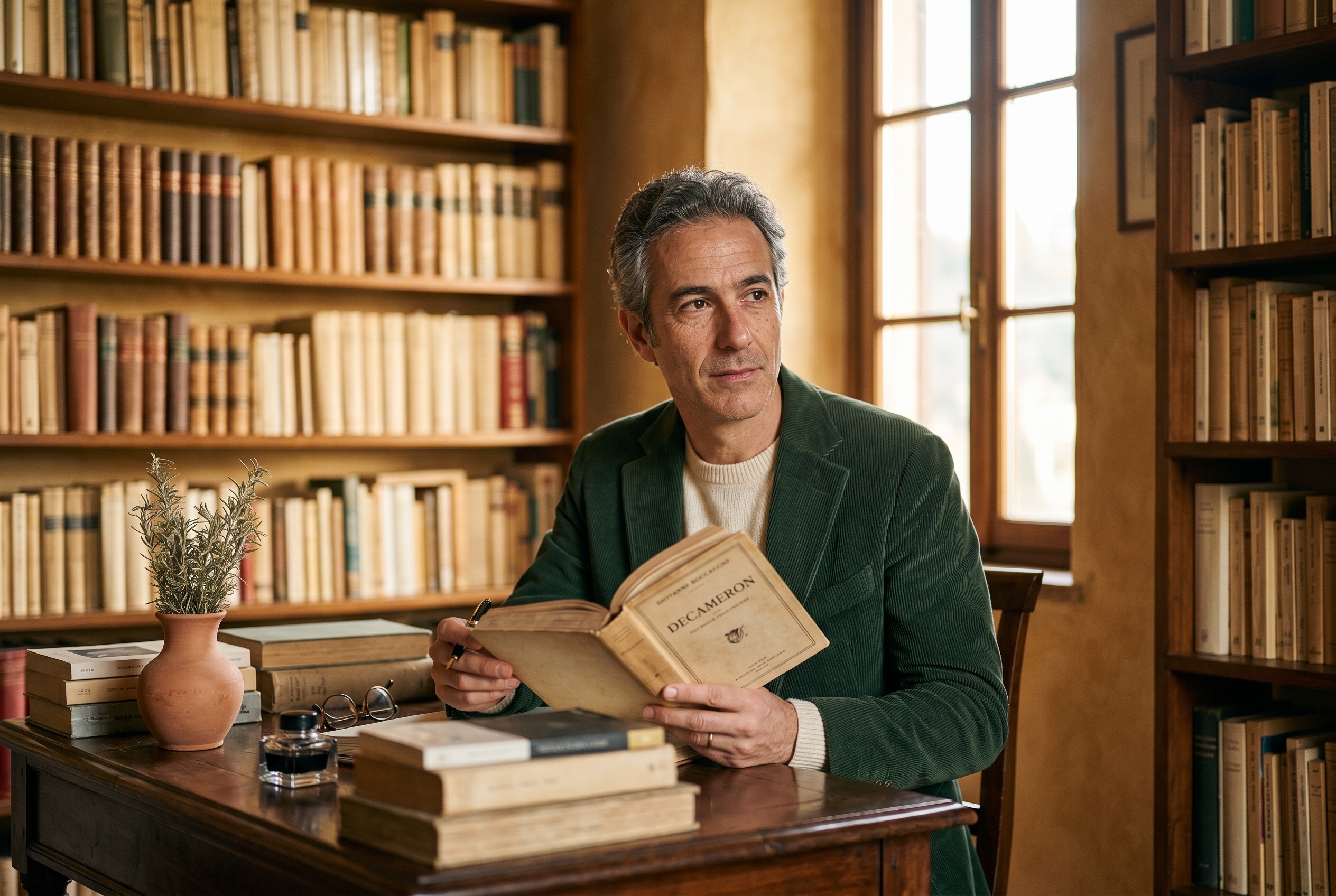
Your instructors
Tuscan tutors for private lessons & classes
Strommen has been teaching Italian since 2006. Tuscan is one of the rarer specialty requests we get, partly because most students don't know they can pick a regional variant, and partly because the gap between Tuscan and standard Italian is narrow enough that many learners absorb Tuscan features without ever naming them. The tutor below is the one currently tagged for Tuscan; the broader Italian roster includes additional teachers with Florence and Tuscan-region backgrounds who take Tuscan-specific students when capacity allows. Every tutor was met and vetted in person or via thorough video interview. No marketplace. No automated profiles.
Filter by location, age, or price. Then book a 30-minute free trial.
Below is the Strommen tutor who specializes in Tuscan. Their photo, ratings, and rates are real. Click the card to read the bio and book a free 30-minute trial. The roster is small; if availability or fit isn't right, we route to a Florentine or Tuscan-region tutor from our broader Italian roster.
I want to learn…
Every tutor, personally met. — founder-vetted since 2006, in Los Angeles and online worldwide.
Get a personalized plan
Pick your language — a language advisor will match you with the right tutor and map out your path.

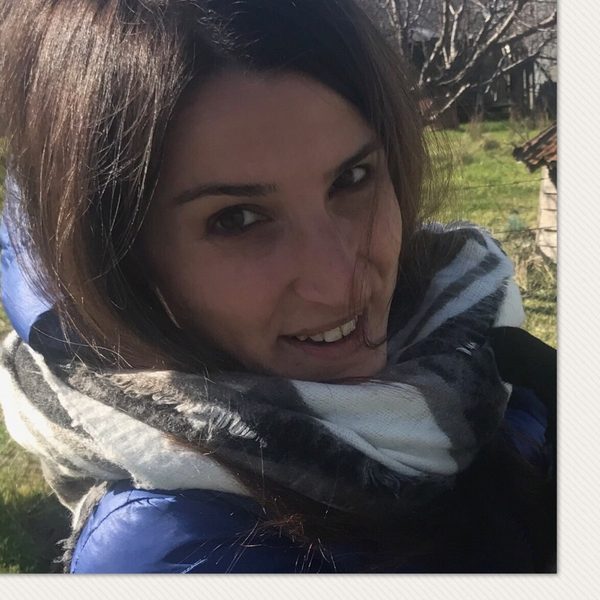
University Master Degree of teaching Italian to ForeignersUniversity bacherloo degree in Foreign Languages and cultures · Master University of Italian teaching
Creative Italian Teacher with Masters in Teaching Italian as a foreign language, from the Tuscan countryside. Turn your Italian journey into a story worth telling!
Specialties
University Master Degree of teaching Italian to ForeignersUniversity bacherloo degree in Foreign Languages and cultures · Master University of Italian teaching
Creative Italian Teacher with Masters in Teaching Italian as a foreign language, from the Tuscan countryside. Turn your Italian journey into a story worth telling!
Specialties

Icché si dice — culture & slang
5 things that make Tuscan sound Tuscan
Five features that mark the variant — phonetic, lexical, and historical. The ones a Tuscan tutor will surface in your first lesson, because they're what the rest of Italy hears as Florentine the moment you open your mouth.
-
01
La gorgia toscana
The Tuscan throat. Intervocalic single voiceless stops (c, t, p between vowels) lenite to aspirated fricatives, so la casa sounds like la hasa and la coca-cola becomes the famous la hoha-hola. Only single stops, not geminates. Strongest in Florence and the Arno valley. The signature Tuscan phonetic feature, and the one Marotta's phonological work uses as the canonical example of Italian regional lenition.
e.g. <em>La Coca-Cola con la cannuccia corta corta</em> in full Florentine.
-
02
Icché
Tuscan / Florentine for "what," replacing standard Italian che cosa. The geminate cch is held intact, which is why the gorgia doesn't soften it. Heard constantly in everyday Florentine speech and a fast tell that you're in Tuscany. Standard Italian speakers from elsewhere notice it within a sentence.
e.g. <em>Icché tu fai stasera?</em> means "what are you doing tonight?"
-
03
Bischero
Tuscan-only affectionate insult, roughly "goofball" or "fool." Used between friends, never with strangers or in formal settings. The word has its own folk etymology in Florence (a medieval family that allegedly lost a fortune through bad timing), and a Tuscan calling you bischero with a smile is being warm, not rude. Outside Tuscany the word reads as harsh; inside, it's gentle.
e.g. <em>O bischero, icché tu hai fatto?</em>
-
04
Boccalone
Tuscan for someone who talks too much and can't keep a secret. Literally "big mouth." Lighter than the English equivalent: a boccalone is annoying but not malicious, the kind of person who repeats everything they hear at the bar by the next morning. Standard Italian would reach for chiacchierone; Tuscan keeps boccalone.
e.g. <em>Non gli raccontare nulla, è un boccalone</em>.
-
05
Tuscan = the source of standard Italian
Modern standard Italian is essentially edited Tuscan. Dante's Divina Commedia, Petrarca's lyric, Boccaccio's Decameron, Machiavelli's Il Principe — all written in Florentine vernacular between 1320 and 1513. When Italy unified in 1861, the Tuscan-Florentine literary tradition was the prestige variety, and the new national language was codified accordingly. Manzoni rewrote I promessi sposi in Florentine in 1840, "rinsing his clothes in the Arno." The Treccani's entry on the Italian standard / Tuscan relationship covers the history.
e.g. Italians studying their own language are studying a refined version of medieval Florentine.
About Tuscan
The dialect that became a standard
Tuscan (Toscano, sometimes Fiorentino when narrowly Florentine) is the dialect group that became modern standard Italian. That's a real historical claim, not a marketing line. Dante wrote the Divina Commedia in Florentine vernacular around 1320, Petrarca shaped Italian lyric in Tuscan over the same century, Boccaccio's Decameron codified Tuscan prose, and Machiavelli wrote Il Principe in Florentine in 1513. By the time Italy unified in 1861 and needed a national language, the Tuscan-Florentine literary tradition had four centuries of prestige behind it, and standard Italian was effectively codified as edited Tuscan. Manzoni famously rewrote I promessi sposi in Florentine in 1840, calling it "rinsing his clothes in the Arno." That phrase still gets quoted in Italian schools when teachers explain why standard Italian sounds the way it does.
What this means for a student today: Tuscan as a regional Italian is closer to the standard than almost any other Italian variety, and pickup runs in the opposite direction from most dialect work. With Sicilian or Neapolitan, students learn an additional language alongside Italian. With Tuscan, students mostly learn what the standard sounds like in the mouth of someone whose family has spoken it for generations, plus the specific features that mark the regional variant: a handful of phonetic moves, a lexicon, and a posture toward language that's distinctly Tuscan.
The defining phonetic feature is the gorgia toscana, the Tuscan throat, the lenition of intervocalic single voiceless stops. C between vowels softens to an aspirated h-sound, so la casa sounds like la hasa, la coca-cola becomes the often-quoted la hoha-hola, and amico can land closer to amiho. T and p undergo parallel softening. The gorgia applies only to single intervocalic stops, not geminates: cocco stays cocco, icché stays icché. The intensity of the gorgia varies by zone (strongest in Florence and the Arno valley, lighter in southern Tuscany, almost absent in Pisa's coastal speech) and by speaker (more pronounced in older speakers and in informal registers). Marotta's phonological work on Tuscan and the Treccani's regional Italian entries are the standard linguistic references. For a student, learning to hear the gorgia comes before learning to produce it; over-applying it is one of the fastest ways to sound stagey rather than Tuscan.
The Florentine lexicon carries the other half of the regional flavor. Icché for che cosa (what), codesto for the demonstrative pointing to the listener's space (a three-way deictic system standard Italian has mostly dropped), punto as an emphatic negative marker (non mi piace punto, "I don't like it at all"), babbo for father where the rest of Italy says papà. There's an affectionate insult vocabulary that's almost untranslatable: bischero for a fool or goofball (gentle, used between friends), boccalone for someone who talks too much and can't keep a secret, ganzo for cool or clever, grullo for silly. These aren't standard Italian; a Milanese or a Roman won't reach for them, and a Tuscan using them outside the region is signaling regional identity deliberately.
The literary weight is worth taking seriously as a learning context. A student of Tuscan with any reading ability is reading the same language Dante and Boccaccio wrote, with the gap of seven centuries softened by the fact that the literary tradition has continued in this dialect the whole time. Modern Tuscan writers (Vasco Pratolini's Cronache di poveri amanti, Antonio Tabucchi's later work, Romano Bilenchi, Pietro Citati) keep the lineage going. Reading Tuscan literature with a tutor who can point out which words and constructions are specifically regional, and which were standard at the time of writing but feel regional now, is a different experience than reading the same passages in a standard-Italian classroom. Berruto's sociolinguistic work on the Italian standard / dialect relationship covers the dynamics in detail; for a student-facing summary, our complete guide to Italy's regional languages on the blog is a useful starting point.
A few honest tutor observations on what trips students up with Tuscan. The most common is treating it as just standard Italian with a funny accent; it's a regional Italian with its own phonetic, lexical, and pragmatic features, and the gorgia is only the most visible one. Next most common is over-producing the gorgia, especially after first hearing it; native Tuscans apply it variably and contextually, and full-on aspiration on every intervocalic c reads as caricature. The babbo / papà distinction surprises students who've been taught papà as universal; in Tuscany babbo is the everyday word, and Tuscans gently mock the rest of Italy for papà. The demonstrative system trips up students with reading-level Italian; codesto is alive in Tuscan in a way it isn't in most of Italy. And the affectionate-insult register catches students off guard: bischero sounds harsh to a non-Tuscan ear but is genuinely warm between friends, the way an American "you idiot" can be a term of affection. Calibrating that register takes ear time and a tutor who can model it.
Between lessons, immersion runs through Tuscan film, TV, and literature. Roberto Benigni's films (La vita è bella, Pinocchio) carry his Tuscan speech patterns even when the scripts are standard. Leonardo Pieraccioni's comedies are denser Tuscan. The RAI Tuscany regional broadcasts and local newspapers like La Nazione and Il Tirreno are useful for hearing and reading the variant in daily use. Pratolini, Tabucchi, and the modern Tuscan poets (Caproni, Luzi) are the literary anchor; Florentine theater (with Stefano Bicocchi / Vito and others) preserves the spoken tradition. For broader Italian foundations, our 1000 most common Italian words and Italian pronunciation guide on the blog cover the standard-language scaffolding that Tuscan work sits on top of.
The Strommen Tuscan roster is small. One tutor currently lists Tuscan as a specialty, with Florence-area roots and the kind of bilingual standard / regional Italian command this work requires. When that tutor's availability doesn't match a student's schedule, we route through the broader Italian roster to teachers with Florence or Tuscan-region backgrounds, even if they don't list Tuscan as a tagged specialty. The trial conversation is where the matching happens. Our Italian dialect coach and Italian dialect coaching for actors specialty pages cover related work for performers and dialect specialists; this page is for students learning Tuscan as a regional Italian rather than as on-set dialect prep. Our Business Italian and Italian academic writing specialty pages cover non-regional Italian needs.
Lessons are one-on-one and calibrated to the student. Reading a Pratolini novel with a Tuscan native and unpacking which phrases are specifically regional is different work from learning to produce the gorgia for a study-abroad semester in Florence, which is different again from a student building Italian from beginner level while consciously orienting toward the Tuscan variant. The trial is free, the tutor will ask about the goal, and the study plan comes out of that conversation. If you're traveling to Tuscany, planning a longer stay, reading Italian literature in the original, or just drawn to the variant that built the standard, you're in the right place. Tell us the goal. We'll match the work to it. For a head-start, the Italian course page shows the family of related programs, or just browse the full tutor list and book a trial.
What you'll cover
Lessons & classes tailored to Tuscan
The gorgia toscana and Tuscan phonology
Lenition of intervocalic voiceless stops, the geminate rule, the Florence-versus-southern-Tuscany variation, the Pisa-coast exception. Ear training first, production second, calibration third. Marotta's phonological work and the Treccani's regional Italian entries inform the approach. The aim is a Tuscan ear and a Tuscan mouth, not a caricature.
Florentine lexicon and pragmatic register
Icché, codesto, babbo, punto, bischero, boccalone, ganzo, grullo. The everyday Florentine vocabulary that marks a speaker as Tuscan instead of generically Italian. Pragmatic register too: when an affectionate insult is warmth and when it isn't, how Tuscan irony lands, the gentle mockery of papà that's almost a cultural reflex in Tuscany.
Standard Italian foundation through a Tuscan lens
For students building Italian from beginner or intermediate level while orienting toward Tuscan, the standard-language scaffolding (grammar, syntax, core vocabulary) runs alongside the regional features rather than after them. The Tuscan tutor teaches the standard the way a Tuscan teaches it: with the regional fingerprint visible but the standard structures intact, the way Italian schools have taught the language for generations.
Tuscan literature and modern Tuscan voices
Dante, Petrarca, Boccaccio, Machiavelli for the literary foundation. Pratolini, Tabucchi, Bilenchi, Citati for the modern tradition. Benigni, Pieraccioni, and the Tuscan theater tradition for the contemporary spoken variant. Reading and listening work calibrated to the student's level and interest, with the tutor flagging which features in any given passage are specifically Tuscan versus standard Italian.
FAQ
About Tuscan lessons & classes
Is Tuscan a dialect or a language?
Tuscan is a dialect group of Italian, not a separate language in the sense Neapolitan and Sicilian are. UNESCO and most modern Italian linguists classify it as a regional variety of Italian, because modern standard Italian was historically derived from it. The relationship runs the opposite direction from most Italian regional varieties: standard Italian is essentially edited Tuscan, so Tuscan and the standard are closer to each other than either is to Sicilian, Neapolitan, or Sardinian. Berruto's sociolinguistic work on Italian covers the standard / dialect dynamics in detail.
Why does standard Italian come from Tuscan?
Prestige. Florence in the 14th to 16th centuries was the cultural and economic engine of the Italian peninsula, and the Tuscan-Florentine literary tradition (Dante, Petrarca, Boccaccio, Machiavelli) carried four centuries of authority by the time Italy unified in 1861. When the new nation needed a national language, the Tuscan literary standard was the obvious choice. Manzoni's 1840 rewrite of I promessi sposi in Florentine, which he called "rinsing his clothes in the Arno," sealed the standard for the modern period.
What is the gorgia toscana and how do I learn it?
The gorgia toscana is the Tuscan lenition of intervocalic single voiceless stops. C, t, and p between vowels soften to aspirated fricatives, so la casa sounds like la hasa and la coca-cola becomes la hoha-hola. Geminates are exempt. Intensity varies by zone (strongest in Florence and the Arno valley, lighter elsewhere) and by speaker. Learning to hear it precedes learning to produce it; over-applying it sounds stagey. Tutored ear-training with native Tuscan audio is the standard approach.
Will learning Tuscan help or hurt my standard Italian?
Help, in most cases. The lexical and grammatical core of Tuscan is the standard Italian core, with regional features layered on top. A student building Italian from beginner level with a Tuscan tutor learns the standard as a Tuscan teaches it: structurally identical to what students get in Milan or Rome, just with Tuscan phonetic and lexical fingerprints visible. The risk is over-producing the gorgia or the regional lexicon in contexts where neutral standard Italian is expected. The tutor calibrates that.
Is Tuscan useful if I'm not planning to live in Tuscany?
Yes, in two ways. The Tuscan accent is the prestige Italian regional variant, the one Italians from elsewhere associate with cultural depth and literary tradition, so a Tuscan-inflected standard Italian carries well across the country. And the literary tradition (Dante, Boccaccio, Machiavelli, Pratolini, Tabucchi) is more accessible through a Tuscan tutor who can point out which features in the prose are specifically regional. Many students pick Tuscan for the literature alone.
Are your lessons online or in person?
Both. The Tuscan tutor teaches online via Zoom or Jitsi, available globally. In-person sessions are possible when the student and tutor are co-located. The booking widget on the tutor profile shows the available formats.
I'm preparing for a study-abroad semester in Florence. Is this the right page?
Yes. Pre-departure orientation toward Florentine speech is exactly the use case this specialty fits. The work typically combines standard Italian foundation-building (grammar, conversation, useful vocabulary) with Tuscan-specific phonetic and lexical exposure, so the student arrives in Florence already attuned to the variant they'll hear daily. Two to three months of weekly lessons before departure is a common timeline.
What does the trial include?
Thirty minutes, free, with the tutor on this page. Bring your goal: travel, study abroad, literature, family connection, or general orientation toward Tuscan as a chosen regional Italian. The tutor will assess your current level if you have one, propose a study plan calibrated to the goal, and you decide whether to continue. If the tutor's schedule doesn't match yours, we route to a Florence or Tuscan-region tutor from the broader Italian roster.
Ready for Tuscan lessons or classes?
Book a free 30-minute trial with one of our personally vetted tutors. Private lessons or small-group classes — your choice.