



Personally vetted instructors
Spanish Dialect Coaching tutors, lessons & classes
¡Acción! What the set hears before every take.
Personally vetted Spanish dialect coaches for actors and voice-over artists. Script-led phonetic and cultural prep for Mexican, Caribbean, Argentine, Castilian, Colombian, and Andean roles across film, TV, voice, and theater.
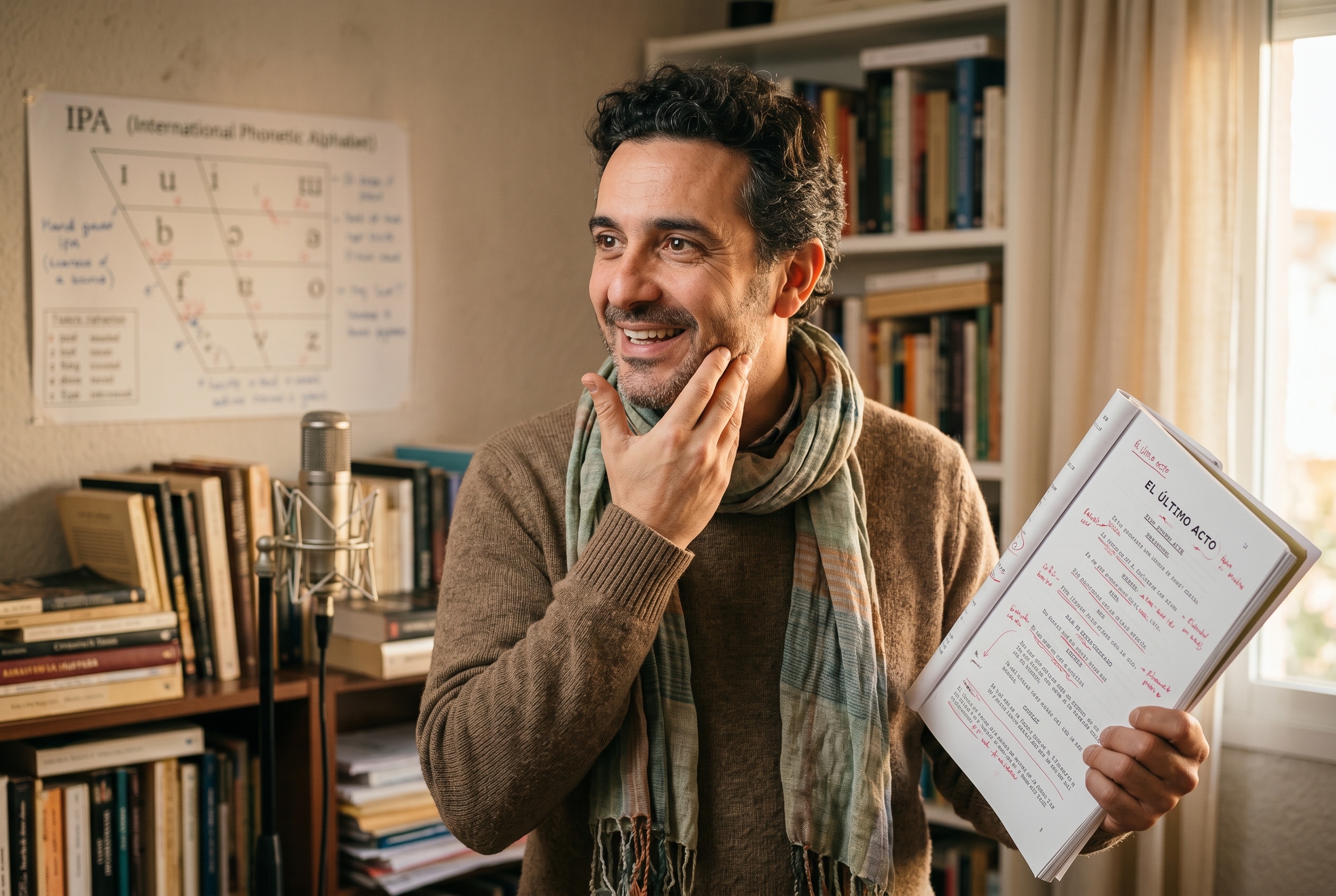
Your instructors
Spanish Dialect Coaching tutors for private lessons & classes
Strommen has coached Spanish dialect work for film, TV, theater, and voice productions since 2006. Our roster ranges from native Spanish speakers from specific regional zones (Mexico City, Madrid, Buenos Aires, Havana, Bogotá) to coaches with direct on-set credits on prestige Spanish-language productions and theater-faculty coaches with stage credits in dialect repertoire. Every tutor below was met and vetted by us in person or via thorough video interview. No marketplace. No automated profiles. Real coaches with real on-set, on-stage, and in-booth credits.
Filter by location, age, or price. Then book a 30-minute free trial.
Below are the Strommen tutors who specialize in Spanish dialect coaching for actors. Photos, ratings, and rates are real. Click any card to read their bio and book a free 30-minute trial.
I want to learn…
Every tutor, personally met. — founder-vetted since 2006, in Los Angeles and online worldwide.
Get a personalized plan
Pick your language — a language advisor will match you with the right tutor and map out your path.


Masters Degree in Cognitive Science, specializing in Linguisitcs
Learn Spanish through the subjects that inspire imagination, awe and wonder to you
Personally vetted · Strommen’s note
Barcelona-based, Valeria teaches Spanish through whatever genuinely fascinates a student. The subject leads, the language follows.
Specialties
Masters Degree in Cognitive Science, specializing in Linguisitcs
Learn Spanish through the subjects that inspire imagination, awe and wonder to you
Specialties
Personally vetted · Strommen’s note
Barcelona-based, Valeria teaches Spanish through whatever genuinely fascinates a student. The subject leads, the language follows.


Journalism/Spanish-Language Journalism
Highly Rated Spanish Tutor at Strommen | Born in Argentina, Raised in LA
Specialties
Also speaks: Armenian
Journalism/Spanish-Language Journalism
Highly Rated Spanish Tutor at Strommen | Born in Argentina, Raised in LA
Specialties
I also speak: Armenian
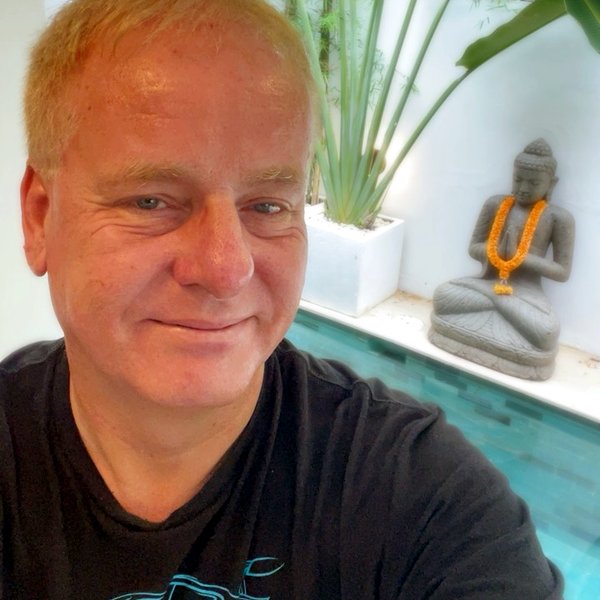

B.A. (MIT)
Native trilingual
Personally vetted · Strommen’s note
Trilingual since age seven and raised between Mexico City and Düsseldorf, Klaus coaches Spanish and German dialects the way he learned them: by talking.
Specialties
B.A. (MIT)
Native trilingual
Specialties
Personally vetted · Strommen’s note
Trilingual since age seven and raised between Mexico City and Düsseldorf, Klaus coaches Spanish and German dialects the way he learned them: by talking.
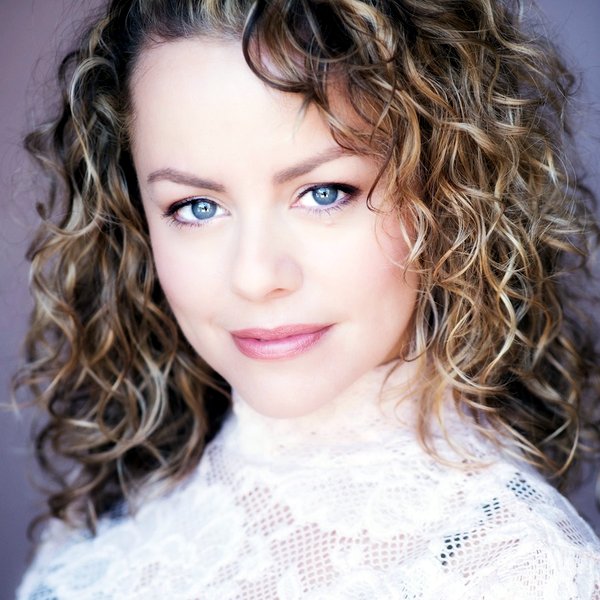

BA in Psychology and English from the University of Connecticut
Colombian-born, 10+ years experience, offers personalized language instruction with creativity and flair
Personally vetted · Strommen’s note
Berlitz-certified and equally exacting with everyone she teaches, Andrea's client list has run from FBI agents to studio heads to kindergartners.
Specialties
BA in Psychology and English from the University of Connecticut
Colombian-born, 10+ years experience, offers personalized language instruction with creativity and flair
Specialties
Personally vetted · Strommen’s note
Berlitz-certified and equally exacting with everyone she teaches, Andrea's client list has run from FBI agents to studio heads to kindergartners.
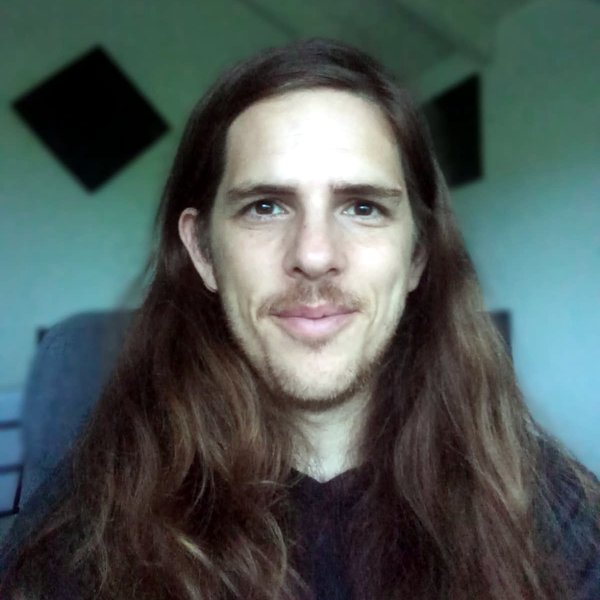
I have a Law degree from Buenos Aires university.
¡Muy buenas! Your Argentinian Spanish sherpa here.
Specialties
I have a Law degree from Buenos Aires university.
¡Muy buenas! Your Argentinian Spanish sherpa here.
Specialties

Bac Psychology & Sociology
.
Specialties
Bac Psychology & Sociology
.
Specialties
university
spanish tutor
Specialties
Also speaks: French
university
spanish tutor
Specialties
I also speak: French

En el set — dialect & culture
5 features that separate one Spanish accent from another
Five phonetic and grammatical features, five regional fingerprints. Each one is the kind of detail a coach will mark up in your script on the first read, because the way your character says one word tells the audience which country they come from before the line is finished.
-
01
Gracias (Madrid /θ/ vs. Latin American /s/)
The distinción between s and z/ce/ci is the single largest signal between Spain and the Americas. Madrid says GRA-thias with a true voiceless dental fricative; everywhere west of the Atlantic says GRA-sias. An actor playing a Madrid character without the th reads as Latin American immediately, and an actor playing a Latin American character with the th reads as a tourist. Coaches drill the sound and, just as importantly, the consistency of its absence.
e.g. Madrid: <em>GRA-thias por la cena.</em> Mexico City: <em>GRA-sias por la cena.</em>
-
02
Gracia(h): Caribbean /s/-aspiration
In Cuban, Dominican, Puerto Rican, and broader Caribbean Spanish (plus much of southern Spain and coastal Latin America), syllable-final s aspirates to a breathy h or drops entirely: gracias sounds like gracia(h), los hombres like lo(h) ombre(h). This is the one-line separator between Caribbean and highland (Mexico City, Bogotá, Quito) varieties. Hispanic audiences place a character on the Caribbean-or-highland map within the first sentence on this feature alone.
e.g. Havana: <em>¿Cómo etá(h)? Bien, gracia(h).</em>
-
03
ʃo: Rioplatense <em>ʃ</em>/<em>ʒ</em> for ll and y
Buenos Aires and Montevideo realize ll and y as a postalveolar fricative: yo as ʃo or ʒo, calle as CA-ʃe, lluvia as ʃu-via. This is the signature Rioplatense phonetic marker. Drift toward standard Latin American ʝo in a Buenos Aires part is the most common note a coach gives an actor stepping into Argentine work for the first time.
e.g. Buenos Aires: <em>ʃo me ʃamo Juan, vivo en la caʃe Corrientes.</em>
-
04
Muchacho: Mexican crisp /tʃ/
Mexican Spanish realizes ch as a fully released affricate tʃ, audibly sharp and forward. Caribbean and Andalusian varieties soften toward a fricative ʃ, so muchacho can sound like mu-SHA-sho in Havana or Sevilla. Holding the crisp Mexican tʃ for a Mexican character, and softening it for a Caribbean one, is the kind of micro-calibration that signals regional grounding without any dialect word doing the work.
e.g. Mexico City: <em>El mu-TCHA-tcho está en la coTCHe-ra.</em>
-
05
Vos tenés / vos sos: Rioplatense voseo
Argentine and Río de la Plata Spanish replace tú tienes with vos tenés and tú eres with vos sos: a second-person-singular pronoun and verb-conjugation shift that signals Rioplatense before any phonetic feature has time to. The stress moves to the final syllable (tenés, querés, podés) and the imperative changes too (vení, not ven). Voseo also surfaces in regional Central American Spanish (Honduras, Nicaragua, Costa Rica, parts of Colombia), where the coach calibrates per country.
e.g. Buenos Aires: <em>¿Vos sos de acá? ¿Qué hacés esta noche?</em>
About Spanish Dialect Coaching
Spanish dialect work, built around your script
An actor cast as a Mexican character walks into the read-through and defaults to the Spanish they learned in school, which is almost always Spain-flavored: gracias with the lisped th, vosotros conjugations, the prosody of Madrid news anchors. The director hears it before the actor finishes the first line. Half the audience hears it, too. The Spanish-speaking half hears it the loudest. Spanish dialect coaching at Strommen exists to keep that scene from happening to you. Whichever country, region, or generation your part comes from, the work is to land in the right one, on the right page, with the rhythm and lexicon a native listener will accept.
Spanish is not one accent. The Spanish of Madrid, Mexico City, Havana, Buenos Aires, Bogotá, Lima, Caracas, Santiago, Quito, and San Juan are mutually intelligible in the way that Glasgow English and Atlanta English are mutually intelligible: same language, very different sound, very different signal. The linguistics literature on this is settled (John Lipski's Latin American Spanish remains the canonical reference; José Hualde's The Sounds of Spanish is the standard for phonetics). What matters on a job is that each regional variety has a specific phonological signature an audience reads instantly, and a specific lexical fingerprint that places the character in a country, a decade, and a class within seconds of dialogue. The casting note "a Spanish accent" almost never means Spain; the production usually means the dialect the role demands and trusts the actor to figure out which.
The regional inventory most actors hit on a job. Mexican Spanish for Mexico-set drama, narcocorrido-tradition crime work, southwestern US roles, and the broader Latino-American casting that defaults to Mexican in the absence of other context. Castilian (Castellano) for productions set in Spain, period work, Almodóvar-tradition film, and the prestige Spanish television (RTVE, Movistar) that has been exporting heavily since 2015. Argentine Spanish for Buenos Aires-set drama, Rioplatense crime and prestige TV, tango-era period work, and the vos conjugations that mark the character before any dialect word does. Caribbean Spanish (Cuban, Dominican, Puerto Rican) for Miami-set drama, salsa-era period work, reggaetón-adjacent contemporary roles, and the syllable-final s-aspiration that distinguishes the Caribbean from the highlands within one line. Colombian (Bogotano, Paisa, Costeño as separate calibrations) for Narcos-tradition work, Medellín cartel-era period drama, and the increasingly active Colombian production scene. Andean Spanish (Peru, Bolivia, highland Ecuador) for Andean-set period and contemporary work, with its slower cadence and Quechua-substrate vocabulary. Chilean for the Chilean New Wave cinema that travels internationally. Venezuelan for the diaspora roles that have grown across US productions since 2014. Strommen's roster covers the major regional varieties with native or near-native coaches; less common dialects (Equatoguinean, Sephardic, rural varieties) are matched per project.
The phonetic features that do the actual signaling are concrete and learnable. The distinción between s and z/ce/ci is the single largest tell between Spain and the Americas: gracias as GRA-thias in Madrid and as GRA-sias everywhere west of the Atlantic. Syllable-final s-aspiration (gracias becoming gracia(h)) marks the Caribbean, much of southern Spain, and coastal Latin America as a single phonological belt distinct from the highlands. The realization of ll and y as ʃ or ʒ (Buenos Aires's signature ʃo for yo) is the one-line giveaway for Rioplatense. The crisp Mexican ch as a fully released tʃ (muchacho with a hard ch) sits in contrast to the Caribbean palatalized softening. The voseo shift in verb conjugation, where Argentine and Río de la Plata speakers say vos tenés and vos sos rather than tú tienes and tú eres, is grammar that carries dialect the second the word leaves the actor's mouth. These five features alone, calibrated against the regional baseline a coach picks for the part, will move a performance from generic-textbook-Spanish to a credible regional dialect a native listener accepts.
The method has a shape. Read the script first. The coach builds a phonetic map of the part: which sounds are dialect-distinctive, which the actor already lands cleanly, which need targeted drilling. Listening drills come next, pulled from native sources the coach selects to match the character (a 70-year-old Cuban grandmother from Santiago de Cuba in 1972 does not sound like a 25-year-old Cubana from contemporary Hialeah; the coach picks the right reference audio). The actor records the Spanish passages and the coach corrects mouth shape, cadence, lexical choices, and the prosodic-musical layer that often distinguishes credible Hispanophone performance from competent-but-flat work. Cultural and gesture coaching threads through when the role demands it. For shoot weeks, the coach can be available on-set or on-Zoom for emotional-scene work where actors typically lose dialect under pressure. The whole arc is one-on-one, calibrated to the part and the production calendar.
Strommen has been the LA-based dialect resource for film, television, and theater since 2006, and Spanish is the language we cover in the most regional depth, because Spanish is the language Hollywood casts most often after English. Garrett Strommen has been quoted in trade press on Hispanophone dialect work in major productions; published Strommen commentary on the Italian accents in House of Gucci for Slate ran the same playbook from a different language. Productions are tight-lipped by contract about which coaches worked on which projects, so we will not publish credit lists on a public page. The trial conversation is where references get exchanged when a casting director, showrunner, or producer needs them.
A few honest observations on what trips up actors taking on Spanish dialect work for the first time. Defaulting to Spain Spanish for a Latin American character is the most common stumble, almost always because the actor studied in a US classroom that taught Castilian as the academic standard. The opposite mistake, defaulting to a generic neutral Latin American for a Spain role, lands the same kind of wrong note in reverse. Going stagey-Spanish is the next trap: the bad-novela-villain accent that piles on rolled r's, exaggerated vowel stretching, and clichés the audience reads as bad acting. Real Spanish dialect work goes quieter and more specific. Heritage speakers who grew up around Spanish at home sometimes assume they have the dialect already; usually they have one register from one generation from one country and need to build out the others. Emotional scenes are where dialect drops first; high-emotion lines tend to revert to whichever Spanish the actor learned earliest, and rehearsal under coach supervision is the only fix. The script-to-set drift catches actors who prep at home alone: a line that sounds right in your own ear at 11pm rarely survives the first take in front of a director. Lessons drill all of these specifically rather than abstractly.
Between sessions, the immersion is character-specific. Your coach will send a curated reference list based on the role: Roma and Cuarón's earlier Mexican work for Mexico City Spanish, Narcos and El robo del siglo for Colombian, El secreto de sus ojos and Argentina, 1985 for Rioplatense, Volver and Hable con ella for Almodóvar-era Madrid, Cuatro estaciones en La Habana for Cuban, contemporary RTVE and Movistar prestige TV for Peninsular contemporary, telenovelas from a specific country and decade when the part calls for it. For broader Spanish phonetic foundations and dialect background, the guide to Castilian vs. Latin American differences, the South American dialects overview, and the Cuban Spanish reference on the blog are useful supplements between coaching sessions. For an actor without prior Spanish, the foundation work runs alongside the dialect work rather than before it; you do not need to wait until your Spanish is conversational to start coaching for a specific part.
The Strommen Spanish dialect coaching roster includes native speakers from the major regional zones (Mexico City, Madrid, Buenos Aires, Havana, Bogotá, Lima, San Juan, Caracas), trained Spanish-language theater actors with stage credits in dialect repertoire, and coaches with direct on-set credits on prestige Spanish-language productions. Each tutor's bio specifies regional background, dialect specialties, and which student profile they fit best (film/TV, theater, voice-over, telenovela work, video games). Pricing reflects experience and credit list. You can match yourself to a Mexico City coach for Cuarón-tradition work, a Buenos Aires coach for Rioplatense, a Havana-born coach for Cuban roles, a Madrid coach for Almodóvar-tradition Peninsular, a Bogotá coach for Narcos-tradition Colombian, or a coach with theater credits in classical Spanish dialect repertoire for stage work. Our regional pages (Mexican Spanish, Argentinian Castellano, Castellano from Spain, Cuban Spanish, Colombian Spanish, Andean Spanish) cover those rosters from a learner angle; this page is the actor-craft entry point into the same coach pool.
Lessons are one-on-one and calibrated to the role. A coached lead on an upcoming shoot is a different curriculum from a self-tape preparing for a callback, which is different from foundation dialect work between projects for an actor who wants to be ready when the next Spanish role comes through. The trial is free, the coach reads the script with you, the study plan comes out of that read. For a head-start before the trial, our Spanish course page shows the family of related programs, and Business Spanish covers non-acting needs. Or just browse the full tutor list and book a trial. Bring the script. Tell us the role. We go from there.
What you'll cover
Lessons & classes tailored to Spanish Dialect Coaching
Script-led phonetic mapping
Read the script with the coach, mark up the lines, identify the regional and generational specifics of the character (where from, what year, what class, who they speak with at home, in which Spanish they answer). Build the phonetic map: which sounds are dialect-distinctive, which the actor lands cleanly, which need drilling. Foundation step for any role-specific Spanish dialect work.
Regional dialects: Mexican, Caribbean, Rioplatense, Castilian, Colombian, Andean, and more
Native or near-native coaches for the major regional zones. Mexican for Cuarón-tradition and southwestern US roles; Castilian for Almodóvar-tradition and Movistar prestige TV; Argentine for Rioplatense crime and tango-era period work; Caribbean (Cuban, Dominican, Puerto Rican) for Miami-set and salsa-era drama; Colombian for Narcos-tradition; Andean for Quechua-substrate highland work; Chilean and Venezuelan when the part calls for them. Less common varieties matched per project.
Voice-over, dubbing, and "neutral Spanish" calibration
Voice-over Spanish often calls for a deliberately neutralized pan-Hispanic register (Latin American dubbing standard), built by stripping the most regionally marked features (no Caribbean aspiration, no Rioplatense ʃ, no Castilian th) while keeping the cadence credible to a Hispanic listener. Coaches with dubbing and game-character credits handle this calibration alongside the country-specific work, depending on which booth standard the production wants.
On-set, on-Zoom, and pre-production support
For shoot weeks, coaches can be available on-set or on-Zoom for emotional-scene work where dialect tends to drop under pressure. Pre-production coaching for auditions and callbacks. Voice-over and game-character recording sessions. Self-tape calibration. Theater rehearsal coaching for stage runs. The deliverable is a credible dialect under real production conditions.
FAQ
About Spanish Dialect Coaching lessons & classes
I have an audition for a Mexican character in two weeks. Where do we start?
First session within 48 hours of booking. The coach reads the sides with you, identifies which features will signal Mexican to the casting room (the crisp tʃ, the absence of Castilian th, the diminutive habit, the specific lexical choices the script implies), and builds a daily drill schedule for the prep window. A dress-rehearsal pass 24-48 hours before the audition catches whatever has drifted. Audition prep is its own focused mode, distinct from full-role coaching for a series regular or lead; tell us the deadline in the trial and we match a coach with availability.
How is this different from your <a href="/mexican-spanish-tutors/">Mexican Spanish</a> or <a href="/argentinian-spanish-castellano-tutors/">Argentinian Castellano</a> pages?
Same coach pool, different framing. The country-specific pages are built for learners who want to study one dialect for travel, work, family, or general fluency. This page is built for actors and voice-over artists approaching a part: the method, the script-led process, the on-set craft, the kind of decisions a coach makes when reading your script for the first time. Pick whichever framing matches where you are. Both link to the same tutors.
I am a heritage speaker. Do I still need a coach?
Often yes, and the work tends to be different from what a non-Spanish-speaking actor needs. Heritage speakers usually have one register from one generation from one country (the Spanish your grandmother spoke in the kitchen) and need to build out the others (a different region, a different decade, a different class, the formal register, the contemporary slang the script demands). A coach who shares your background knows where the gaps usually sit and works on those directly rather than starting you over.
What does "neutral Latin American Spanish" mean and when should I use it?
It is the dubbing-industry standard register that strips the most regionally marked features, used for Spanish-language dubs of English-language film and TV intended to travel across Latin American markets. For an acting job, it is the right calibration when the production specifies it (often for voice-over, animation, and commercial work) and the wrong calibration when the part calls for a specific country (almost always for on-camera dramatic work). Your coach will tell you which lane the role belongs in based on the script and the production type.
Can you coach the Spanish-language dub of an English-language project?
Yes. Spanish-language dubbing for animation, video games, and live-action features is a regular part of what these coaches do, and several have direct dubbing-studio credits. The work is more booth-focused (microphone technique, breath control, sync to picture or to original-language timing) but the dialect calibration is the same craft as on-camera work, just under different production constraints.
Do you support on-set coaching during production?
Yes. For lead roles in feature films, prestige TV, or theater productions with extended runs, on-set or on-Zoom coaching during shoot is common, especially for emotional scenes where dialect tends to drop, or for last-minute script changes that introduce new dialect material the actor has not drilled. Rates and availability for on-set work are arranged per project; the trial conversation is where this gets scoped. We have staffed productions in Los Angeles, New York, Miami, and on-location internationally.
I do not speak Spanish at all. Can I still take dialect coaching for a role?
Yes. For non-Spanish-speaking actors with a part that requires Spanish dialect, the foundation work runs alongside the dialect work rather than before it. The coach builds out the specific lines and sounds the part requires, while the actor picks up enough Spanish phonetics, vocabulary, and grammar to support the performance. Many actors who had never studied Spanish have delivered credible dialect work on screen this way. The script and the production calendar drive the curriculum, not the actor's prior Spanish level.
What does the trial include?
30 minutes, free, with the coach you select. Bring the script (or the role you are auditioning for) if you have one. The coach will read or listen, ask the questions about the character that need answering, identify the highest-impact prep areas, and propose a study plan calibrated to your audition, shoot, or rehearsal date. Most actors continue with their trial coach; if the fit is not right, swapping is easy and quick.
Ready for Spanish Dialect Coaching lessons or classes?
Book a free 30-minute trial with one of our personally vetted tutors. Private lessons or small-group classes — your choice.