



Personally vetted instructors
Catalano Algherese tutors, lessons & classes
Bon dia, com anem? The Algherese hello you'll hear walking through the old city walls.
Personally vetted tutors of Catalano Algherese, the Catalan dialect spoken in Alghero on the northwest coast of Sardinia. A small language with a long memory.
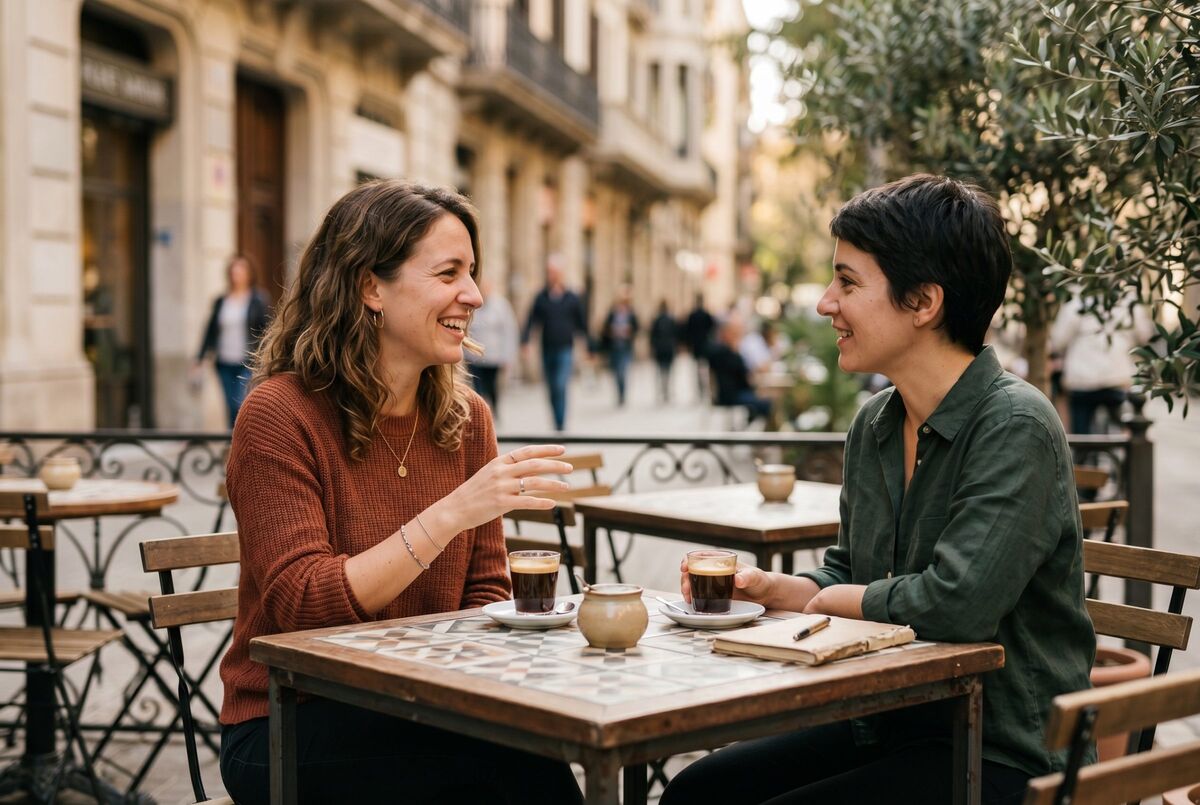
Your instructors
Catalano Algherese tutors for private lessons & classes
Strommen teaches small and endangered languages alongside the major ones. We don't list a tutor for a dialect unless we've vetted them. Every tutor below was met by us, and their backgrounds are documented in their bios.
Filter by location, age, or price. Then book a 30-minute free trial.
Below are the Strommen tutors who specialize in Catalano Algherese. Photos, ratings, and rates are real. Click any card to read their bio and book a free 30-minute trial.
I want to learn…
Every tutor, personally met. — founder-vetted since 2006, in Los Angeles and online worldwide.
Get a personalized plan
Pick your language — a language advisor will match you with the right tutor and map out your path.

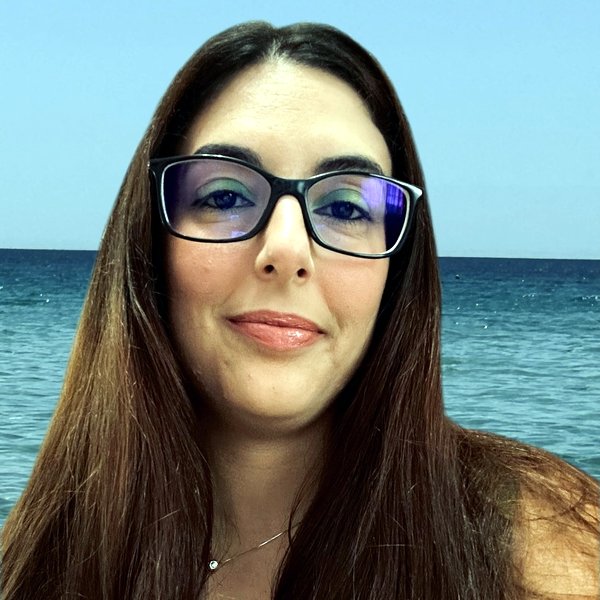


Bachelor's Degree in English and American Literature and Creative Writing · CELTA Certificate
Language Tutor (Italian and English as a foreign language)
Specialties
Bachelor's Degree in English and American Literature and Creative Writing · CELTA Certificate
Language Tutor (Italian and English as a foreign language)
Specialties

L'alguerés viu — culture & expressions
5 phrases that mark you as someone who knows Alghero
These phrases won't show up in a Catalan textbook from Barcelona. They're Algherese, and they belong to a specific town on a specific coast. Screenshot them. Then book a tutor for the rest.
-
01
Bon dia, com anem?
The standard Algherese greeting. "Good day, how are we going?" The plural "we" instead of standard Catalan "com va" or "com estàs" is a marker of the dialect.
e.g. Bon dia, Antoni, com anem avui?
-
02
Pataca
Potato. In standard Catalan it's patata. Pataca is one of the Algherese-specific vocabulary items that immediately marks the dialect.
e.g. Mengem pataques al forn aquesta nit.
-
03
Eivà
Yes, used as a casual affirmation. Standard Catalan would use "sí." Eivà is older and very Algherese.
e.g. Vols cafè? Eivà, gràcies.
-
04
Anem al mol
"Let's go to the harbor." Mol is the Algherese word for the harbor, used the way locals say it. The bastions and the harbor are the daily backdrop of life in Alghero.
e.g. Avui fa bon temps, anem al mol.
-
05
Lo barrio vell
The old town. Locals use lo (instead of standard el) as the masculine article, a feature Algherese shares with some other archaic Catalan varieties and with Italian dialects of the area.
e.g. Vivim a lo barrio vell, prop de la catedral.
About Catalano Algherese
Catalan in Sardinia, still alive after 700 years
Algherese (l'alguerès in Catalan, alguerés in the local form, catalano di Alghero in Italian) is a variety of Catalan spoken in and around Alghero, a coastal town on the northwest of Sardinia. It's the linguistic legacy of a 14th-century Catalan repopulation under the Crown of Aragon, when the original Sardinian and Ligurian inhabitants were largely displaced and Catalan colonists settled the town. Seven hundred years later, the language is still here. Maybe 20,000 to 25,000 people use it actively, with many more who understand it.
Algherese sits in a strange linguistic place. Its core is medieval Catalan, but it has absorbed centuries of contact with Sardinian, Italian, Spanish, and Ligurian. The result is a dialect that a modern Barcelona speaker will mostly understand but find archaic and oddly accented, with vocabulary, vowel sounds, and grammatical features that have drifted from the mainland. Algherese keeps some old Catalan features that standard Catalan has lost. It has also Italianized in ways no other Catalan variety has, since the surrounding linguistic context is Italian and Sardinian rather than Spanish.
If you're learning Algherese, you almost certainly have a specific reason. Family heritage from Alghero. A research project on minority languages. A move to Sardinia. Catalan-diaspora identity work. Or you've spent time in Alghero, fallen in love with the place, and want to engage with the older generations who still use the dialect in daily life. Whatever the reason, this is not a language you stumble into.
Our Algherese tutors are native speakers from Alghero or longtime second-language speakers who've worked closely with the local cultural associations that have kept the language alive (Òmnium Cultural de l'Alguer, the Obra Cultural de l'Alguer, the Centre de Recursos Pedagògics Maria Montessori). Most have backgrounds in linguistics, education, or cultural preservation. Lessons cover the dialect itself, the historical context, and the cultural framework that makes Algherese what it is, from the patron saint celebrations to the music of the cant llarg.
If you already speak standard Catalan, you have a big head start. We'll focus on the features that distinguish Algherese: the rhotacism (l becoming r in some positions), the open vowels, the Italianisms in vocabulary, the verb forms that have drifted from the standard. If you're coming in with Italian or Spanish but no Catalan, that's workable too. We'll build a base in standard Catalan first, then specialize into Algherese once the foundation holds. If you're starting from zero, the path is longer but absolutely doable.
This is small-language teaching. Materials are scarcer than for major languages. Your tutor will often use locally produced grammars, oral recordings of Alghero elders, and texts from local poets like Rafael Sari and Antoni Ciuffo. Expect a lesson that feels closer to mentorship than a textbook walkthrough.
What you'll cover
Lessons & classes tailored to Catalano Algherese
How Algherese diverged from standard Catalan
Seven centuries of contact with Sardinian, Italian, and Ligurian left fingerprints. We cover the rhotacism (where l shifts to r in some positions), the open vowel sounds, the article system (lo, los instead of el, els), and the Italianized vocabulary that gives Algherese its specific texture. If you already speak standard Catalan, this is where most of your study time goes.
The cultural framework
You can't really learn Algherese without learning Alghero. Lessons include the history of the Catalan repopulation, the cultural associations that preserve the language, the local feast days (Setmana Santa, Sant Joan, Sant Miquel), the food culture (paella algheresa, llagostada), and the broader Catalan-speaking world the town is symbolically part of.
Reading Algherese texts and poetry
The Algherese literary tradition is small but rich. Local poets like Rafael Sari, Antoni Ciuffo, and Antoni Nughes wrote in the dialect, and contemporary writers keep producing. We use these texts as reading material, both to expose you to the dialect in its written form and to give you a sense of the cultural concerns that animate Algherese-language writing today.
Algherese in the context of minority-language preservation
Algherese is one of many minority languages of Europe fighting for survival in the age of standardization. For students interested in linguistics or cultural preservation, lessons can include the comparative framework: how Algherese fits among other endangered Catalan and Romance varieties, what the EU's Charter for Regional or Minority Languages means in practice, what the Italian state has and hasn't done.
FAQ
About Catalano Algherese lessons & classes
Is Algherese really Catalan or is it Italian?
Algherese is Catalan. Linguistically it sits in the Catalan branch of Romance languages, descended from the medieval Catalan brought by repopulators in 1372. It has been heavily influenced by Italian and Sardinian over the centuries, but its grammatical core, basic vocabulary, and sound system are Catalan. Standard Catalan speakers from Barcelona can mostly understand Algherese with effort.
I don't speak any Catalan. Can I start with Algherese directly?
You can, but most students benefit from a few months of foundational standard Catalan first, then a switch to Algherese. The reason is purely practical: standard Catalan has more learning materials, and once you have the grammar, dialect features are a focused specialization rather than the whole curriculum.
How many people still speak Algherese?
Estimates vary. Roughly 20,000 to 25,000 active speakers, with another 20,000 to 30,000 who understand it but use it less often. The language is classified as endangered. It's stronger among older generations, though local schools and cultural associations are working hard on transmission.
Can I take Algherese lessons online?
Yes. All of our Algherese tutors teach online via Zoom or Jitsi, available globally. We don't currently have Algherese tutors teaching in person in LA.
What's the difference between Algherese and Sardinian?
Sardinian is a separate Romance language, also spoken on the island of Sardinia, with its own deep roots and several major varieties (Logudorese, Campidanese, Gallurese, Sassarese). Algherese is Catalan that landed in Sardinia in the 14th century. The two coexist in the same region but belong to different branches of the Romance family. Many Algherese speakers are also at least passively familiar with Sardinian or Italian.
I'm researching minority languages. Are your lessons useful for academic work?
Yes. Several of our Algherese tutors have linguistic or pedagogical training and have worked with researchers and graduate students. If your goal is academic, mention it at the trial lesson and we'll match you to someone with the right background. Materials, oral recordings, and references can be tailored to your research questions.
Will learning Algherese help me with other languages?
It will deepen your understanding of Catalan and give you a window into medieval Romance contact zones. If you already speak Italian, Spanish, or French, you'll see how those languages relate to a language that has been pulled in multiple directions over seven centuries. Practically speaking, Algherese is a niche language, not a stepping stone to others.
Ready for Catalano Algherese lessons or classes?
Book a free 30-minute trial with one of our personally vetted tutors. Private lessons or small-group classes — your choice.