



Personally vetted instructors
Wallon tutors, lessons & classes
Bondjoû, kimint vas-se? How Wallon greets you in a Liège café when the older speakers come in.
Personally vetted tutors of Wallon, the Romance language of southern Belgium. Distinct from Belgian French. A regional language with deep roots in Liège, Namur, Charleroi, and the rest of Wallonia.
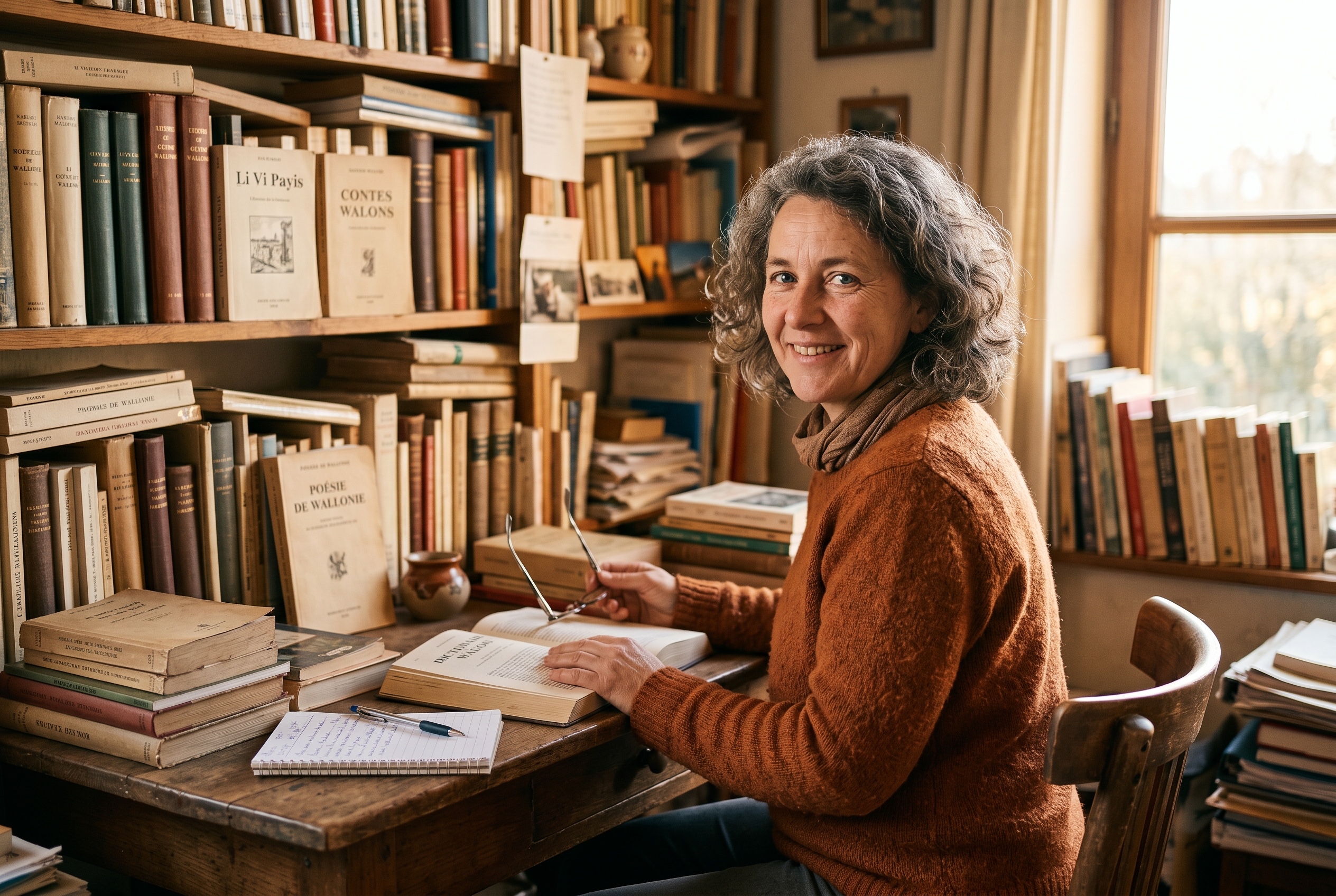
Your instructors
Wallon tutors for private lessons & classes
Strommen teaches regional Romance languages alongside the major ones. Every Wallon tutor below was met and vetted by us. No marketplace. No automated profile-creation. Real Wallons with documented backgrounds.
Filter by location, age, or price. Then book a 30-minute free trial.
Below are the Strommen tutors who specialize in Wallon. Photos, ratings, and rates are real. Click any card to read their bio and book a free 30-minute trial.
I want to learn…
Every tutor, personally met. — founder-vetted since 2006, in Los Angeles and online worldwide.
Get a personalized plan
Pick your language — a language advisor will match you with the right tutor and map out your path.

We don’t currently have any tutors for Wallon.
Speak the language? We’d love to hear from you.
Apply to Teach with Strommen
Lès Walons — culture & expressions
5 phrases that mark you as someone who knows Wallonia
These won't be in your French textbook. They're Wallon, and they're how locals spot someone who's done the work in a region where French and Wallon overlap. Screenshot them. Then book a tutor for the rest.
-
01
Bondjoû
"Good day." Standard Wallon greeting. French speakers will recognize the root (bonjour) but the pronunciation and ending mark it as Wallon. Used in shops, at gatherings, with strangers.
e.g. Bondjoû, kimint vas-se?
-
02
Kimint vas-se?
"How are you?" Casual second-person form. The verb construction is distinctly Wallon, not borrowed from French "comment vas-tu." Lands as authentic the moment you use it correctly.
e.g. Kimint vas-se, vî?
-
03
Vi / Vî
"Old one," used affectionately between male friends. Standard French has vieux. The Wallon version is shorter and warmer in tone, used between old friends.
e.g. Ti vas-se bin, vî?
-
04
Bia
"Handsome" or "beautiful," depending on context. From the same root as French beau but with characteristic Wallon vowel softening. You'll hear it used both for people and as a casual term of endearment.
e.g. Quéle bia djoû!
-
05
Adè
"Goodbye." Cousin of French adieu but with a clipped Wallon pronunciation. Used at the end of any social encounter, casually.
e.g. Adè, à dimegne!
About Wallon
Not French. Not a French accent.
Wallon (sometimes spelled Walloon in English) is a Romance language spoken in southern Belgium, the region known as Wallonia. It descends from the same Vulgar Latin root as French but along a different branch of the Oïl language family, with distinctive Germanic influences from centuries of contact with Dutch and German speakers along its northern and eastern borders. It is officially recognized as an endogenous regional language of the French Community of Belgium. Active speakers number somewhere between 600,000 and a million, depending on how generously you define active. Many more people understand it without speaking it.
Wallon is not Belgian French. Belgian French is French as spoken in Belgium, with some local vocabulary (septante for 70, nonante for 90, déjeuner for breakfast instead of lunch) and a Belgian accent. Wallon is a separate language: separate vocabulary, separate grammar, separate sound system. A Parisian fluent in French cannot understand a Wallon conversation. Wallons typically speak both French (the formal and dominant language) and Wallon (the home and regional language), with French being dominant in younger generations and Wallon strongest among older speakers and in rural areas.
The language has four main regional varieties: Wallon de Liège (Eastern), Wallon de Namur (Central), Wallon de Charleroi (Western), and Wallon de Bastogne / Wallon du Sud (Southern). They share enough structure to be mutually intelligible but differ in vocabulary, sound, and a few grammatical features. Liège Wallon is sometimes considered the prestige form because of the city's historical importance and the strength of its literary tradition (the Société de Langue et de Littérature Wallonnes has been active since 1856).
If you're learning Wallon, you have a real reason. Family heritage. A move to Liège or Namur. Research interest. Cultural identification with Wallonia. Or genuine fascination with a Romance language most French speakers have never heard. Wallon is also enjoying a small renaissance in music, theater, and slam poetry, with younger artists picking up the language as a marker of regional identity in a Belgium increasingly defined by its linguistic communities.
Our Wallon tutors are native speakers from Liège, Namur, Charleroi, and surrounding areas. Most also teach French, since most students need both. Lessons cover the language's sound system, vocabulary, grammar, and the cultural framework that has shaped it: the industrial history of the Liège-Charleroi belt, the Walloon Movement, the strong regional identity within federal Belgium, and the literature and music that keep the language alive. Don't expect to leave Wallon-fluent in a month. Do expect to leave able to understand Wallon speakers, read Wallon texts, and engage with a community that values when outsiders make the effort.
If you already speak French, you have a huge head start. The grammar will feel partly familiar. The vocabulary diverges in surprising ways. The sound system will require real adjustment. If you're coming in with no Romance language background, the path is longer but doable. We'll calibrate at the trial lesson.
What you'll cover
Lessons & classes tailored to Wallon
The Wallon sound system
Lessons drill the specific phonological features that distinguish Wallon from French: vowel sounds French doesn't have, distinctive nasal handling, consonant clusters that come from Germanic contact, and the rhythm and intonation that mark Wallon as its own language. Real audio from Wallon speakers across regions, plus feedback so you produce the sounds correctly.
Vocabulary that diverges from French
Wallon has its own everyday vocabulary: ovrer (to work) instead of travailler, dimegne (Sunday) instead of dimanche, foû (out) instead of dehors. Many of these come from older French roots that standard French has lost. Others come from Dutch, German, or Latin directly. We teach the vocabulary in coherent fields so it sticks.
Regional varieties of Wallon
Liégeois, Namurois, Carolorégien (Charleroi), and Wallon du Sud each sound different. Tell us which one matters to you and we'll match you to a tutor from that region. Liégeois is the most-published and most-studied, but the others have strong communities of speakers and writers.
The cultural and political framework
Wallon identity is inseparable from Belgian federalism, the Walloon Movement, and the complex relationship with Flemish-speaking Flanders. Optional but most students want it: lessons covering Wallon literature (the works of Joseph Bodson, Lucien Léonard), music (urban folk like Julos Beaucarne and modern artists like William Dunker), theater (the strong Wallon-language theater tradition in Liège), and the political negotiations that secured the language's regional protection.
FAQ
About Wallon lessons & classes
Is Wallon really separate from French or just a French dialect?
Linguistically Wallon is a sister language to French, both descended from medieval Oïl varieties but along separate branches. The two are not mutually intelligible in their full forms. Belgium's French Community officially recognizes Wallon as a separate endogenous regional language. Locally, the consensus is that Wallon is its own language, not a French dialect.
How many people still speak Wallon?
Estimates vary widely. Active speakers are usually placed between 600,000 and 1 million. Passive understanding is significantly higher. The language is stronger among older speakers and in rural areas, weaker in cities and among younger generations, though revival efforts and cultural projects have brought it back into use among some younger urban speakers.
Should I learn French first or can I start with Wallon directly?
Most students benefit from at least a basic French foundation before diving deep into Wallon, mostly because French study materials are abundant and Wallon materials are limited. That said, we can teach Wallon to true beginners if you have a real reason (family connection, planned move). The path is just slower.
Can I take Wallon lessons online?
Yes. Most of our Wallon tutors teach online via Zoom or Jitsi, available globally. A handful occasionally teach in person in LA. The booking widget on each tutor's profile shows their formats.
Will Wallon help me with French?
Yes, in two ways. It will give you a sharper sense of how French evolved from Vulgar Latin, since Wallon preserves features French has lost. And it will improve your ear for Romance variation broadly, which translates into faster comprehension of other Romance languages and dialects. Practically, you'll probably end up better at French as a byproduct of studying Wallon.
What's the difference between Wallon and Belgian French?
Belgian French is the variety of French spoken in Belgium, with some local vocabulary and a Belgian accent. It's mutually intelligible with all other French. Wallon is a separate Romance language, with its own grammar and vocabulary, not mutually intelligible with French. Most Wallons speak both Belgian French and Wallon. They're parallel languages, not the same.
Is Wallon written or only spoken?
Both. Wallon has a written literary tradition going back to the 17th century, with significant 19th and 20th century output in poetry, theater, and prose. Several spelling conventions exist (the Feller system is the most-used). Modern writers continue to publish in Wallon. We teach you to read the major written varieties alongside the spoken language.
Ready for Wallon lessons or classes?
Book a free 30-minute trial with one of our personally vetted tutors. Private lessons or small-group classes — your choice.