



Personally vetted instructors
Intensive Japanese tutors, lessons & classes
頑張りましょう ganbarimashou What a Japanese tutor says at the start of any serious sit-down: "Let's do our best."
Personally vetted Japanese tutors who run compressed, daily-practice programs. Lessons modeled on FSI-style Category IV training, calibrated to adults with a fixed window: a posting to Tokyo, a graduate program start, an Osaka relocation, or simply the decision to make this the year Japanese stops being a side project.
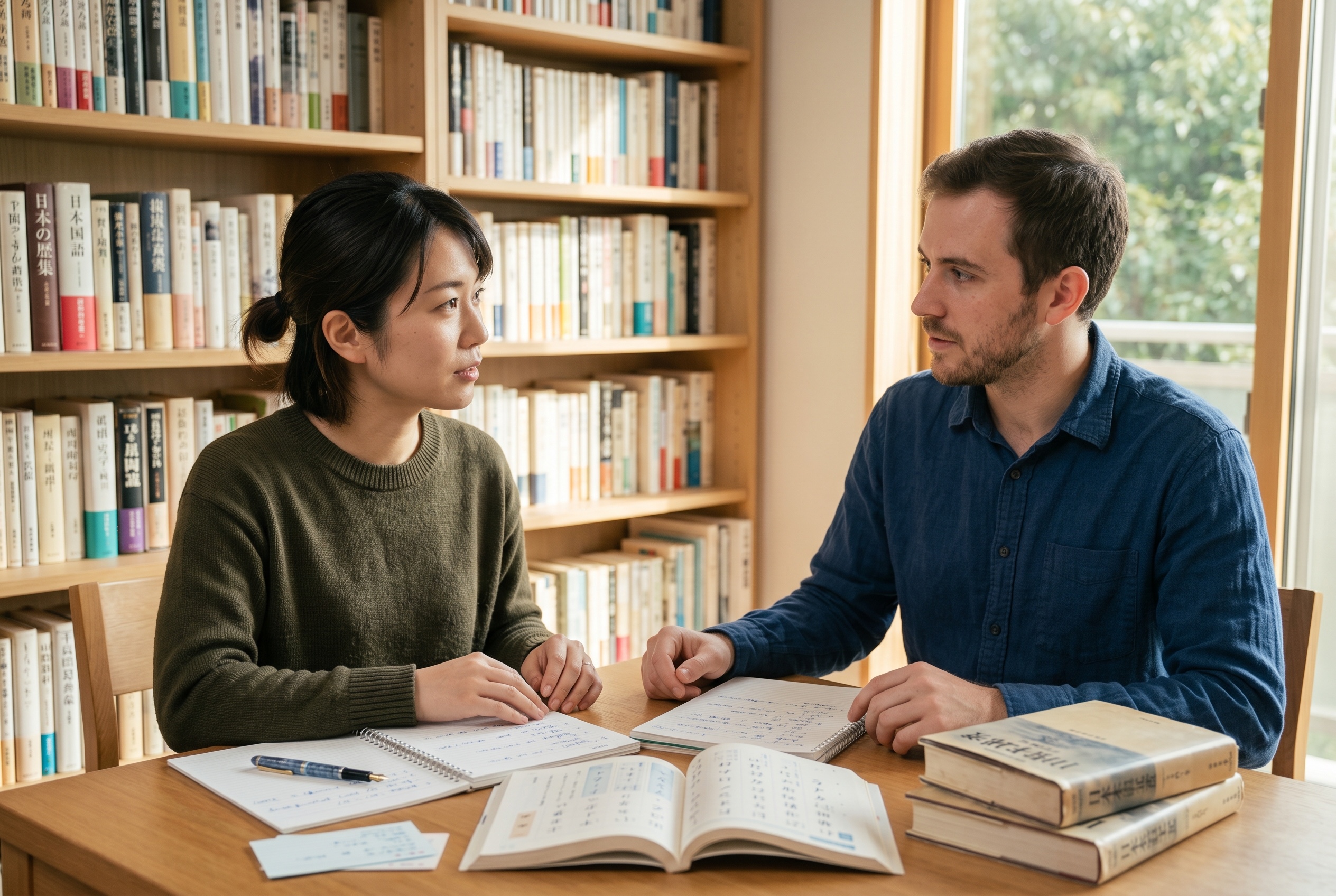
Your instructors
Intensive Japanese tutors for private lessons & classes
Strommen is a curated boutique school and the Intensive Japanese roster is the deepest end of the Japanese program. Every tutor below was met and vetted by us, and the bar for the intensive track is higher: experience running compressed programs, comfort with daily contact, and the discipline to hold the schedule architecture together when students hit a wall.
Filter by location, age, or price. Then book a 30-minute free trial and tell us your deadline.
Below are the Strommen tutors who run intensive Japanese programs. Photos, ratings, and rates are real. Click any card to read a bio and book a free 30-minute trial.
I want to learn…
Every tutor, personally met. — founder-vetted since 2006, in Los Angeles and online worldwide.
Get a personalized plan
Pick your language — a language advisor will match you with the right tutor and map out your path.

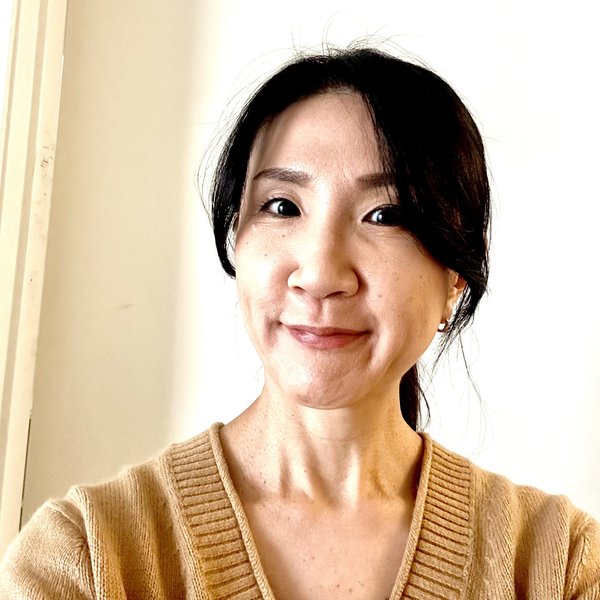
Masters In Linguistics from Cal State Long Beach
Japanese Tutor Eriko - Masters in Linguistics years of experience with Kids and Adults
Personally vetted · Strommen’s note
With us since 2015 and a linguistics master's in hand, Eriko teaches Tokyo-standard Japanese to kids and adults with the same care.
Specialties
Masters In Linguistics from Cal State Long Beach
Japanese Tutor Eriko - Masters in Linguistics years of experience with Kids and Adults
Specialties
Personally vetted · Strommen’s note
With us since 2015 and a linguistics master's in hand, Eriko teaches Tokyo-standard Japanese to kids and adults with the same care.

Bachelor of Science in Mathematics
japanese
Personally vetted · Strommen’s note
The Tohoku dialect sits right alongside standard Tokyo Japanese on Kana's schedule, genuinely rare regional range for one tutor.
Specialties
Bachelor of Science in Mathematics
japanese
Specialties
Personally vetted · Strommen’s note
The Tohoku dialect sits right alongside standard Tokyo Japanese on Kana's schedule, genuinely rare regional range for one tutor.


A patient japanese tutor who learns with you, not just teaches you. Beginner-friendly lessons using structure materials and clear explanations with step-by-step support.
Personally vetted · Strommen’s note
Sapporo-based, Hinako teaches beginner-friendly Japanese with original materials and a fixed structure: icebreaker, vocab review, grammar, every lesson.
Specialties
Also speaks: English
A patient japanese tutor who learns with you, not just teaches you. Beginner-friendly lessons using structure materials and clear explanations with step-by-step support.
Specialties
I also speak: English
Personally vetted · Strommen’s note
Sapporo-based, Hinako teaches beginner-friendly Japanese with original materials and a fixed structure: icebreaker, vocab review, grammar, every lesson.

集中 shuuchuu — daily practice essentials
5 things to know before starting Intensive Japanese
These are the framing pieces a tutor lays out at the trial before any intensive plan gets built. Save the list, then book a tutor to talk through your deadline and your real weekly availability.
-
01
FSI Category IV
The Foreign Service Institute classifies Japanese as Category IV (roughly 2,200 classroom hours to professional working proficiency), grouping it with Mandarin, Korean, and Arabic. By comparison, Spanish is Category I at around 600 to 750 hours. The 2,200-hour figure is what an intensive program compresses, and it is the honest baseline for setting expectations and deadlines.
e.g. 2,200 contact hours plus comparable self-study, compressed from years into months by daily practice
-
02
Anki + a daily kanji habit
The non-negotiable tool of the intensive learner. Spaced-repetition flashcard software (Anki, WaniKani, or the Kanji Damage deck) lets a learner maintain 100 to 300 new kanji a month without losing yesterday's set. Twenty minutes daily beats two hours weekly for character retention, and intensive students who skip the daily habit consistently hit a kanji wall around month four.
e.g. 20 minutes daily on Anki, paired with reading exercises that put the new characters in context within hours
-
03
JLPT N5 → N4 → N3 → N2 → N1
The Japanese-Language Proficiency Test, the standard non-native credential, administered by the Japan Foundation and JEES with test windows in July and December. N5 is elementary (about 100 kanji, 800 words). N4 is upper-elementary (300 kanji). N3 is intermediate (650 kanji). N2 is upper-intermediate (1,000 kanji), the level most employers in Japan ask for. N1 is advanced (the full 2,000 joyo set).
e.g. Most intensive students target N4 at six months from zero, N3 at twelve, N2 at twenty-four with serious commitment
-
04
Kana → Genki → kanji-in-context
The canonical intensive sequence. Hiragana and katakana in weeks one and two, the standard Genki I and II textbook (Banno et al.) as the structural backbone for months one through six, and kanji introduced gradually in service of the words from those chapters rather than as a separate flashcard project. The radicals-first approach to kanji (learning the 214 building-block components first) compounds faster than rote character memorization once the count crosses 200.
e.g. Hiragana week 1 → katakana week 2 → Genki I chapters 1-12 months 1-3 → Genki II + parallel N4 kanji months 4-6
-
05
Consistent daily practice, not weekly bursts
The single biggest predictor of intensive-Japanese success is daily contact with the language, in any form. A student who studies thirty minutes every day outperforms one who studies three hours every Saturday, because Japanese morphology and kanji recognition both decay quickly without daily reinforcement. Intensive tutors enforce this by setting a small daily homework block rather than a large weekly one.
e.g. 30 minutes daily of kanji + listening + a short written response > 3 hours on Sunday alone
About Intensive Japanese
Japanese on a daily-practice timeline
Intensive Japanese is a different undertaking from weekly tutoring, and the difference is worth naming in the first paragraph. The US Foreign Service Institute, which has trained American diplomats in Japanese for decades, places the language in Category IV, its hardest group alongside Korean, Mandarin, and Arabic. The figure FSI publishes is roughly 2,200 classroom hours to professional working proficiency for a motivated adult starting from zero, plus a comparable load of self-study. By comparison, Spanish and French sit at Category I, around 600 to 750 hours. No tutor or program shrinks that 2,200-hour total. What an intensive plan does is spend the hours you have well: daily contact rather than weekly, an honest sequencing of script and grammar that compounds rather than scatters, and a schedule reverse-engineered from the deadline that brought you here in the first place.
Most intensive Japanese students arrive with one of a small number of reasons. There is the relocation to Tokyo, Osaka, Kyoto, or Fukuoka with a fixed move date six to twelve months out, often paired with a corporate posting or a partner's job. There is the graduate program in Japanese studies, East Asian history, comparative literature, or political science, where reading-level Japanese is non-negotiable by the start of the term. There is the JLPT (the Japanese-Language Proficiency Test) deadline, with administered test windows in July and December that anchor the prep calendar. There is the immersive summer program at Middlebury, IUC in Yokohama, or KCJS in Kyoto, where students arrive already expected to function. And there is the long-deferred-discipline case: an adult heritage learner formalizing what they have absorbed, a Japan-curious professional who has decided the next year is the year, or a translator-in-training building reading capacity. Tutors calibrate the intensive plan to which of those is driving the schedule, because the answer changes which skills get loaded first.
The weekly architecture of a well-run intensive plan looks roughly like this. Eight to fifteen hours of one-on-one or small-group tutor contact per week, plus fifteen to thirty hours of structured self-study (kanji drilling, listening practice, reading, written-response work, vocabulary maintenance), plus an hour or more daily of native content (NHK Easy News, anime or drama at native speed once the ear is ready, podcasts like Nihongo Con Teppei, graded readers). Contact hours split between grammar work, conversation practice, reading and writing under tutor correction, and direct kanji review. The self-study hours absorb what the contact hours introduce. Without the self-study load, contact-only programs produce learners who recognize a particle in the tutor's presence and lose it within the week. Without the contact hours, app-and-textbook programs produce learners who develop fossilized pronunciation errors that take years to undo, especially around pitch accent and the small-tsu geminate consonants. The combination is the curve that holds.
The sequencing of an intensive Japanese plan is its own piece of craft, and it deserves attention because the canonical order is what compounds. Hiragana goes first and quickly, in week one rather than the three or four weeks a weekly course allots, because every Japanese sentence's grammatical glue is written in it. Katakana follows in week two so that loanwords stop being a wall. The polite -masu verb forms enter alongside the first hundred words of vocabulary in week three so that students are producing real sentences from the start. Particles arrive in pairs (wa versus ga, ni versus de) starting in week four, because contrastive drilling beats list memorization. Kanji enter slowly and deliberately from week four onward, sequenced through the joyo radicals so that new characters look like compositions of pieces already known. The te-form, which underlies a dozen later constructions, gets concentrated attention in week six. Plain (short) forms come in around week eight, partly because most authentic spoken Japanese uses them and partly because a learner without plain forms cannot read anything but textbook dialogues. The full conditional set (-tara, -reba, -to, -nara) enters in week ten. By the end of the third month an intensive learner is reading hiragana-and-basic-kanji texts, holding ten-minute conversations on familiar topics, and writing paragraph-length responses with mostly accurate particles. By the end of the sixth month they are reading NHK Easy News without aid, sustaining conversations on professional or personal topics, and approaching the rough territory of JLPT N4. These targets assume the full study load is being put in. Partial commitment produces partial timelines, and a good tutor says so honestly at the trial rather than after month three.
The kanji question deserves its own paragraph because it is where intensive Japanese plans either succeed or quietly fail. Adult Japanese readers know roughly 2,000 kanji (the joyo set the Japanese government defines). JLPT N5 expects about 100. N4 expects roughly 300. N3 jumps to around 650. N2 lands near 1,000 and N1 reaches the full 2,000. Most intensive learners hit a kanji wall somewhere between months three and five, when the count crosses the threshold where rote memorization stops working and the radicals-and-components approach has to take over. The intensive plan that works treats kanji as a daily discipline rather than a weekly topic: 20 minutes a day of structured SRS practice (Anki with the Kanji Damage or WaniKani deck, or Heisig's Remembering the Kanji as the parallel mental-anchor system that many intensive learners swear by), paired with reading exercises that put the new characters in context within hours rather than days. The students who succeed at intensive Japanese build a daily kanji habit early; the ones who stall almost universally let the kanji habit lapse first.
Immersion is the second piece that distinguishes intensive Japanese from merely-frequent Japanese, and there are several ways tutors build it. The Japanese-only protocol is the most basic: from week three or four onward, tutor and student conduct lessons exclusively in Japanese, with English permitted only for the briefest grammar clarifications. The daily-life-Japanese wedge layers in next: students switch their phone interface to Japanese, keep a single-paragraph journal in Japanese, consume an hour of native content daily, and join a language-exchange partner via HelloTalk, iTalki community tutoring, or a local Japanese-conversation meetup. The cohort-immersion option, where intensive students join a small group for sustained-Japanese conversation, often accelerates progress noticeably. The full-immersion option, attending Middlebury's summer Japanese program or one of the Tokyo or Kyoto summer intensives, telescopes months of work into weeks for students whose schedule allows it. A Strommen intensive tutor will help you design the immersion plan around your real life, since the heaviest immersion model is not always the right one for a student with a demanding day job.
A candid word on attrition. Intensive Japanese programs have meaningful dropout rates, and the dropout is rarely about intelligence. Three walls account for most of it. The kanji wall around month three or four, when the count of characters to maintain crosses what rote memorization can hold; this passes with the radicals-first reframe and a daily SRS habit. The life-collision wall, when a job intensification, a family demand, or accumulated tiredness from three months of heavy study makes the schedule untenable; the right move here is usually to negotiate the intensity down for a couple of months rather than abandon the language entirely. And the politeness-layer wall, when the layered keigo system for professional Japanese arrives and feels like a new language on top of the one the learner thought they had built. A tutor who has seen all three walls can name them in advance and plan around them, which is half of what intensive coaching is.
The Strommen Intensive Japanese roster includes tutors trained for compressed-timeline work, several with experience preparing students for JLPT exams, relocations, and academic programs. Tutors with a more conversational lean appear on the conversational Japanese page; absolute beginners weighing whether to enter intensive work from zero should review the Japanese for beginners page and discuss with us whether an intensive entry makes sense or whether a brief weekly ramp-up is wiser given your timeline. The broader program sits on the main Japanese classes page, and the full Strommen roster across languages is on the tutor directory. Free 30-minute trial. Bring your deadline and the real number of weekly hours you can sustain. Intensive plans live or die on the schedule math, and the trial is largely where that math gets done honestly together.
What you'll cover
Lessons & classes tailored to Intensive Japanese
Compressed script and grammar sequencing
Hiragana in week one (rather than the three-to-four weeks of a weekly course), katakana in week two, polite -masu forms with first vocabulary in week three, particles in contrastive pairs from week four, kanji introduced gradually through the joyo radicals from week four onward, the te-form concentrated in week six, plain (short) forms by week eight, and the full conditional set (-tara, -reba, -to, -nara) by week ten. The sequencing assumes daily study and compounds aggressively when the load is sustained.
Japanese-only immersion protocol
From week three or four, lessons conducted exclusively in Japanese with English permitted only for the briefest grammar clarifications. Layered with daily-life immersion: phone interface in Japanese, a single-paragraph daily journal, an hour of native content daily, and an optional language-exchange partner via HelloTalk or local meetups. The immersive component is what distinguishes intensive Japanese from merely-frequent Japanese, and tutors help you build the version that fits your actual life.
Daily kanji habit and the radicals-first approach
Kanji handled as a daily discipline rather than a weekly topic: 20 minutes a day of spaced-repetition practice (Anki, WaniKani, or the Heisig system), paired with reading exercises that put new characters in context within hours. The radicals-first reframe carries learners through the kanji wall that strands rote-memorization students around month four. The target by month six is roughly the N4 set of 300 kanji, with the N3 set of 650 within reach by month twelve at intensive pace.
Deadline-anchored planning: posting, semester, JLPT
The intensive plan reverse-engineers from your deadline. Corporate or academic posting six to twelve months out, semester start in three months, JLPT test date in July or December, immersion-program arrival at Middlebury or IUC. Tutors build the weekly architecture (8 to 15 contact hours, 15 to 30 self-study hours) around the deadline and revise it as life collisions hit. For students who want to maintain Japanese after the intensive window closes, the path opens into conversational Japanese work or the broader Japanese classes.
FAQ
About Intensive Japanese lessons & classes
How many hours per week does an intensive Japanese program require?
The functional shape is 8 to 15 hours of one-on-one tutor contact per week, plus 15 to 30 hours of structured self-study (kanji drilling, listening practice, reading, written-response work, vocabulary maintenance), plus an hour or more daily of native content. Programs at the lower end of that range still qualify as intensive and produce real gains; programs at the upper end approximate a full-time language commitment. Honest assessment of what you can actually sustain matters more than aiming high and burning out by month two.
Realistically, how far can I get in six months of intensive Japanese from zero?
With the full intensive load (10 to 15 contact hours weekly plus matching self-study), most students reach the rough territory of JLPT N4 in six months: able to read NHK Easy News without aid, sustain conversations on familiar topics, write paragraph-length responses with mostly accurate particles, and recognize around 300 kanji. JLPT N3 is usually a 9-to-12-month intensive target from zero. N2 (the level most employers in Japan ask for) is typically a 24-month commitment at intensive pace, often partially completed in-country.
Is intensive Japanese appropriate for an absolute beginner?
Often yes, especially if there is a hard deadline 6 to 12 months out. The compressed sequencing actually compounds faster from zero than a slow weekly start would, because the script and the early grammar reinforce each other when they arrive in quick succession. Absolute beginners without an external deadline sometimes do better with a 2 to 4 month weekly ramp-up first, to build the foundation comfortably and confirm Japanese is a good fit before committing to the heavy schedule. The trial conversation is where this gets decided.
How do I handle the kanji wall everyone talks about?
By treating kanji as a daily 20-minute habit from week one, not a weekly cram. The wall that strands learners around month four is almost always the wall that hits people who let the daily habit lapse. Spaced-repetition tools (Anki, WaniKani, the Kanji Damage deck) handle the maintenance work; the radicals-first reframe (learning the 214 building-block components first, then recognizing new kanji as compositions of pieces already known) carries learners across the threshold where rote memorization stops scaling. Intensive tutors enforce the daily habit and the reframe early.
Are your intensive Japanese tutors native speakers?
Most are native speakers from across Japan, and the rest are longtime fluent teachers with formal training and substantial experience running compressed programs. Bios specify backgrounds. The intensive track has a higher bar than weekly tutoring: comfort with daily contact, experience holding immersion protocols, and the discipline to manage schedule architecture when students hit a wall. Tutors on the intensive roster have cleared that bar.
Can intensive lessons happen online, or do they need to be in person?
Both work. Online via Zoom or Jitsi is the norm for most intensive students because the daily-or-near-daily contact schedule is easier to sustain when lessons happen from home. Audio quality is fine for the conversation work, screen-sharing handles kanji and grammar drills, and shared documents work for writing correction. In-person lessons in the Los Angeles area are possible for students who prefer face-to-face energy. Hybrid plans (in-person twice a week, online for the rest) are common.
I want to take JLPT N4 (or N3, or N2). Can the program prepare me for a specific level?
Yes. JLPT prep is one of the most common intensive deadlines, and the July and December test windows anchor the calendar well. Tutors with JLPT experience build the program around the test date, calibrate the four-skill balance (reading, listening, grammar, vocabulary) to match the exam, and run timed practice tests in the final weeks. The specific level depends on your starting point and your timeline; the trial conversation establishes both.
What if life collides with the program halfway through?
Honest answer: this happens to a meaningful percentage of intensive students, and the right move is usually to negotiate down the intensity rather than abandon the language. A student who hits a job intensification, a family situation, or accumulated tiredness is better served by dropping from 12 contact hours to 6 for a couple of months and keeping the daily kanji habit alive than by going to zero and trying to restart later. Tutors on the intensive roster are coaches as well as teachers, and most have managed dozens of mid-program adjustments. Tell us when life shifts and we will replan.
Ready for Intensive Japanese lessons or classes?
Book a free 30-minute trial with one of our personally vetted tutors. Private lessons or small-group classes — your choice.