



Personally vetted instructors
Intensive Korean tutors, lessons & classes
시작하겠습니다 sijakhagessumnida How a Korean teacher opens a serious intensive session: "Let us begin."
Personally vetted Korean tutors who run compressed, immersive programs. Lessons modeled on the discipline of FSI Category IV training, with hangul in week one, TOPIK-I-level reading by month three, and a Seoul-immersion path for students whose deadline asks for it.

Your instructors
Intensive Korean tutors for private lessons & classes
Strommen is a curated boutique school and the Intensive Korean roster is the deepest end of the Korean program. Every tutor below was met and vetted by us, and the bar for the intensive track is higher: experience running compressed programs, comfort with daily contact, and the discipline to hold the schedule architecture together when students hit a wall.
Filter by location, age, or price. Then book a 30-minute free trial and tell us your deadline.
Below are the Strommen tutors who run intensive Korean programs. Photos, ratings, and rates are real. Click any card to read a bio and book a free 30-minute trial.
I want to learn…
Every tutor, personally met. — founder-vetted since 2006, in Los Angeles and online worldwide.
Get a personalized plan
Pick your language — a language advisor will match you with the right tutor and map out your path.

N/A
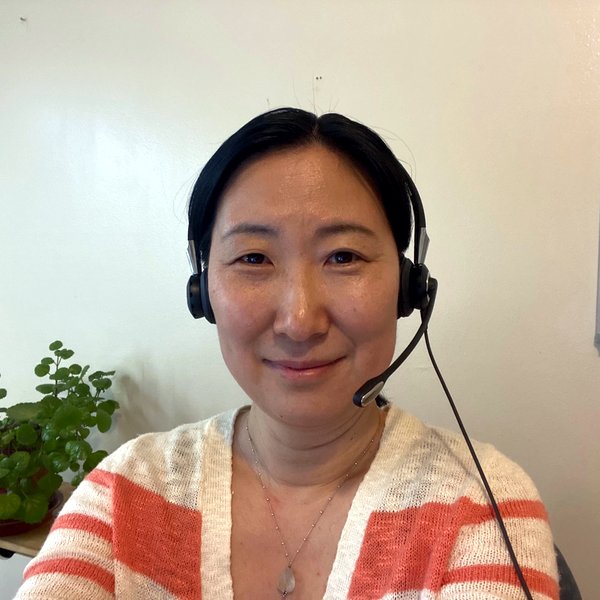
15 Years of Teaching Experience, Passionate about Language, Culture, and Education
Personally vetted · Strommen’s note
Yunhee has taught Korean for fifteen years. She reads what a student actually needs fast, then adjusts the lesson on the spot.
Specialties
N/A
15 Years of Teaching Experience, Passionate about Language, Culture, and Education
Specialties
Personally vetted · Strommen’s note
Yunhee has taught Korean for fifteen years. She reads what a student actually needs fast, then adjusts the lesson on the spot.

Master of Fine Arts · Korean language certificate
Experienced Korean Language Teacher
Personally vetted · Strommen’s note
Thirteen years teaching Korean out of San Gabriel, and Jihye still tailors lessons strictly to whatever level and need walks in the door.
Specialties
Master of Fine Arts · Korean language certificate
Experienced Korean Language Teacher
Specialties
Personally vetted · Strommen’s note
Thirteen years teaching Korean out of San Gabriel, and Jihye still tailors lessons strictly to whatever level and need walks in the door.

집중 jipjung — immersion essentials
5 things to know before starting Intensive Korean
These are the framing pieces a tutor lays out at the trial before any intensive plan gets built. Screenshot them, then book a tutor to discuss the deadline and the schedule.
-
01
FSI Category IV
The Foreign Service Institute classifies Korean as Category IV (roughly 2,200 classroom hours to professional working proficiency), grouping it with Japanese, Mandarin, and Arabic. By comparison, Spanish is Category I at around 600 to 750 hours. The 2,200-hour figure is what an intensive program compresses, and it is the honest baseline for setting expectations and deadlines.
e.g. 2,200 contact hours plus comparable self-study, compressed from years into months through daily practice
-
02
Hangul → TOPIK I → TOPIK II arc
The canonical intensive Korean sequence. Hangul fluent by week two. TOPIK I level (specifically level 2, roughly 800 words and basic polite-form grammar) within four to six months of compressed study. TOPIK II level 4 (intermediate working proficiency, the level most Korean graduate programs ask for) typically within 12 to 18 months. Level 6 (mastery) usually multi-year and often includes time spent in Korea.
e.g. Hangul (week 1-2) → TOPIK I prep (months 1-4) → TOPIK II level 3-4 (months 6-12) → TOPIK level 5-6 (year 2+)
-
03
K-content as native-speed listening immersion
What sets intensive Korean apart from intensive Mandarin or Arabic right now: the vast quantity of high-quality, current, accessible Korean-language media available daily for free or near-free. K-drama at native speed becomes the listening centerpiece by month three. K-pop lyric study with hangul transcripts becomes vocabulary practice that does not feel like work. K-variety shows offer faster speech and more slang for intermediate immersion.
e.g. Daily diet by month four: 30 min K-drama with English subs, 15 min K-drama with Korean subs only, 15 min K-pop lyric study, 20 min TTMIK podcast
-
04
Seoul-immersion programs (Yonsei KLI, Sogang KLEC, SNU)
The Korean equivalents of Middlebury-style intensive immersion. Yonsei KLI (oldest and most established), Sogang KLEC (conversation-heavy methodology), Seoul National KLEC (most academically demanding), Ewha, and Korea University each run ten-week intensive terms with 20 hours of classroom contact weekly. An intensive learner who reaches TOPIK level 2-3 through Strommen and then attends a Seoul program often emerges at level 4-5 within a year from zero.
e.g. Strommen intensive (months 1-6) → Yonsei KLI ten-week term in Seoul → return at TOPIK level 4 → continue with Strommen tutor
-
05
TalkToMeInKorean (TTMIK)
The single most widely used free Korean-learning resource in the world. Founded in 2009 by Hyunwoo Sun and others, TTMIK publishes structured grammar lessons, conversation practice, vocabulary lists, and reading materials organized by level (TTMIK levels 1-10, roughly mapping to TOPIK levels). Intensive students run TTMIK in parallel with Strommen lessons: structured curriculum from the tutor, daily podcast as listening practice.
e.g. Tutor lesson Tuesday → TTMIK podcast episode each morning that week reinforcing the same grammar point → workbook exercises Thursday → tutor checks comprehension Friday
About Intensive Korean
Korean on a compressed timeline
Intensive Korean is a different undertaking from weekly tutoring, and the difference deserves naming in the first paragraph. The US Foreign Service Institute, which has trained American diplomats in Korean for decades, classifies the language as Category IV, its hardest tier alongside Japanese, Mandarin, and Arabic, at roughly 2,200 classroom hours to professional working proficiency for a motivated adult starting from zero. By comparison, Spanish and French sit at Category I, around 600 to 750 hours. No program shrinks that 2,200-hour total. What an intensive plan does is spend the hours you have well: daily contact rather than weekly, a sequencing of hangul, grammar, and listening that compounds rather than scatters, and a schedule reverse-engineered from the deadline that brought you here in the first place.
Most intensive Korean students arrive with one of a small number of reasons. There is the corporate posting or relocation to Seoul, Busan, or Incheon with a fixed move date six to twelve months out. There is the graduate program in Korean studies, East Asian history, or political science, where reading-level Korean is non-negotiable by the start of the term. There is the TOPIK (Test of Proficiency in Korean) deadline, with administered test windows several times a year that anchor the prep calendar. There is the summer-immersion program at Seoul National's KLEC, Yonsei's KLI, Sogang's KLEC, or one of the other major Seoul-based language institutes, where students arrive expected to function at a baseline level. And there is the personal-discipline case: an adult heritage learner formalizing what they have absorbed, a K-content fan who has decided to learn the language seriously, or a professional with a Korean parent company. Tutors calibrate the intensive plan to which of those is driving the schedule.
The canonical arc of an intensive Korean program runs Hangul → TOPIK I → TOPIK II, with the rhythm of progress changing at each stage. Hangul comes in week one and is fluent by week two; this is faster than even a weekly course because the alphabet was deliberately designed by King Sejong in the fifteenth century to be learnable quickly, and intensive students have the time to drill the syllable blocks until reading is automatic rather than computed. The TOPIK I level (which combines TOPIK levels 1 and 2 in a single exam) is the elementary-to-upper-elementary target: roughly 800 words of vocabulary, the polite -요 forms in all tenses, basic particle use, and the ability to handle simple everyday situations. Most intensive students reach the TOPIK I level (specifically level 2) within four to six months of compressed study, and many take the exam at that point both for the credential and for the diagnostic value of the score. TOPIK II covers levels 3 through 6, with level 4 being intermediate working proficiency (the level most Korean graduate programs require for international students), level 5 being upper-intermediate, and level 6 being mastery. Reaching TOPIK level 4 from zero typically takes 12 to 18 months at intensive pace; level 6 is usually a multi-year commitment that often includes time spent in Korea.
The weekly architecture of a high-functioning intensive plan looks roughly like this. Eight to fifteen hours of one-on-one or small-group tutor contact per week, plus fifteen to thirty hours of structured self-study (textbook work, listening practice, reading, vocabulary maintenance, written-response drilling), plus an hour or more daily of native content. The contact hours split between grammar work, conversation practice, reading and writing under tutor correction, and listening comprehension. The self-study hours absorb what the contact hours introduce. Without the self-study load, contact-only programs produce students who recognize the polite endings in the tutor's presence and lose them within the week. Without the contact hours, app-and-textbook programs produce students who develop fossilized pronunciation errors that take years to undo, especially around the three-way consonant series (ㄱ/ㄲ/ㅋ, ㄷ/ㄸ/ㅌ, ㅂ/ㅃ/ㅍ) that English does not distinguish. The combination is the curve that holds.
The role of K-drama, K-pop, and broader K-content in intensive immersion is worth a paragraph, because it sets Korean apart from the other Category IV languages. Mandarin and Arabic do not have an equivalent cultural pull in the English-speaking world right now; Japanese has anime and J-pop but the K-content wave has been larger and faster over the last decade. Intensive Korean students benefit from this in a way that intensive Mandarin or Arabic students do not: there is a vast quantity of high-quality, current, accessible Korean-language media to consume daily, much of it free on YouTube, Netflix, and Korean broadcaster apps. K-drama at native speed becomes the listening-immersion centerpiece by month three of an intensive plan. K-pop lyric study (with hangul transcripts and translations widely available) becomes vocabulary practice that does not feel like vocabulary practice. K-variety shows (Running Man, Knowing Bros, the various idol-cooking shows) offer faster speech and more slang than dramas, which intermediate intensive students need exposure to. A tutor running an intensive program will help you design the K-content diet around your level and your deadline, because the wrong content for the wrong stage is wasted time.
Seoul-immersion programs are the closest thing Korean has to the European-language equivalents of Middlebury or the Goethe-Institut intensive courses, and they deserve mention because they are often the right capstone to an intensive plan. The major options are Yonsei University's Korean Language Institute (KLI, the oldest and most established, with a strong reputation for rigor), Sogang University's Korean Language Education Center (KLEC, known for its conversation-heavy methodology), Seoul National University's Korean Language Education Center (KLEC, the most academically demanding), Ewha Womans University's Language Center (women-focused but accepts male students for certain tracks), and Korea University's Korean Language and Culture Center (strong in business-Korean and academic-Korean prep). Each runs ten-week intensive terms with 20 hours of classroom contact per week, plus assignments. An intensive learner who has reached the TOPIK level 2 or 3 range through Strommen tutoring and then attends a Seoul-immersion program for one or two terms often emerges at TOPIK level 4 or 5 within a year of starting from zero, which is the fastest path to working Korean proficiency that the language realistically offers.
The TalkToMeInKorean (TTMIK) podcast and learning ecosystem deserves its own mention because it is the single most widely used free Korean-learning resource in the world and intensive students should know about it on day one. TTMIK, founded in 2009 by Hyunwoo Sun and others, publishes structured grammar lessons, conversation practice, vocabulary lists, and reading materials organized by level. The podcast episodes are short (five to ten minutes), free, and pitched at each level (TTMIK levels 1 through 10, roughly mapping to TOPIK levels). Intensive students typically run TTMIK in parallel with their Strommen lessons: the structured curriculum from the tutor, the daily podcast as listening practice and concept reinforcement, the TTMIK workbooks for self-study exercises. A tutor running an intensive program will tell you which TTMIK level to start at and which episodes to prioritize based on what you are working on that week.
A candid word on attrition. Intensive Korean programs have meaningful dropout rates, and the dropout is rarely about intelligence. Three walls account for most of it. The grammar-shape wall around month two or three, when the subject-object-verb word order and the particle system and the polite-vs-casual register all stack on top of each other and the cognitive load briefly feels unsustainable; this passes with patient pacing. The pronunciation wall around month four, when the three-way consonant distinctions (plain-tense-aspirated) start mattering for comprehension and the learner realizes their fossilized errors are now visible to native speakers; the fix here is direct drilling, often with a tutor recording sessions and the student listening back. And the life-collision wall, when a job intensification or a family demand makes the daily commitment untenable; the right move is usually to negotiate the intensity down for a couple of months rather than abandon the language. A tutor who has seen all three walls can name them in advance and plan around them.
The Strommen Intensive Korean roster includes tutors trained for compressed-timeline work, several with experience preparing students for TOPIK exams, Seoul-immersion placements, and corporate relocations. Tutors with a more conversational lean appear on the conversational Korean page; absolute beginners weighing whether to enter intensive work from zero should review the Korean for Beginners page and discuss with us whether an intensive entry makes sense or whether a brief weekly ramp-up is wiser given your timeline. The broader program sits on the main Korean classes page, and the full Strommen roster across languages is on the tutor directory. Free 30-minute trial. Bring your deadline and the real number of weekly hours you can sustain. Intensive plans live or die on the schedule math.
What you'll cover
Lessons & classes tailored to Intensive Korean
Compressed hangul and grammar sequencing
Hangul fluent by week two (against the four-to-six weeks a weekly course allots), the polite -요 forms by week four, the particle system in contrastive pairs (은/는 vs 이/가, 을/를 vs 에 vs 에서) from week six, the past tense and basic future by week eight, the full conditional set and connective endings by week ten. The honorific verb-suffix system enters around month four. The sequencing assumes daily study and compounds aggressively when the load is sustained.
K-content immersion at native speed
Korean's unique advantage among Category IV languages: vast quantities of high-quality, current, accessible media to consume daily. K-drama at native speed by month three (Strong Girl Bong-soon, Reply 1988, the year's current major series), K-pop lyric study with hangul transcripts as vocabulary practice, K-variety shows for faster speech and slang exposure at the intermediate stage. Tutors help design the K-content diet around your level and deadline.
TOPIK exam preparation built into the plan
TOPIK is the standard non-native Korean credential and the most common intensive deadline. Tutors with TOPIK experience build the program around the test date, calibrate the four-skill balance (listening, reading, writing, grammar-vocabulary) to match the exam, run timed practice tests in the final weeks, and target the specific level your goal requires (level 2 for survival proficiency, level 4 for graduate school admission, level 6 for native-equivalent mastery). The Strommen blog post on the 1000 most common Korean words is a useful daily-drill companion.
Seoul-immersion-program preparation and bridging
For students whose timeline allows, the path to fastest Korean fluency runs through one or two terms at a Seoul-based language institute (Yonsei KLI, Sogang KLEC, Seoul National, Ewha, Korea University). Strommen intensive tutors prepare students to enter at the right placement level (typically TOPIK 2-3), bridge between terms, and continue tutoring during and after the in-Seoul program. For students continuing past intensive work, paths open into conversational Korean, business Korean, or advanced Korean.
FAQ
About Intensive Korean lessons & classes
How many hours per week does an intensive Korean program require?
The functional shape is 8 to 15 hours of one-on-one tutor contact per week, plus 15 to 30 hours of structured self-study (textbook work, listening practice, reading, vocabulary maintenance, written-response drilling), plus an hour or more daily of K-content at appropriate level. Programs at the lower end of that range still qualify as intensive and produce real gains; programs at the upper end approximate a full-time language commitment. Honest assessment of what you can actually sustain matters more than aiming high and burning out by month two.
Realistically, how far can I get in six months of intensive Korean from zero?
With the full intensive load (10 to 15 contact hours weekly plus matching self-study), most students reach the TOPIK I level 2 range in four to six months: roughly 800 words of vocabulary, the polite -요 forms in all tenses, basic particle use, and the ability to handle simple everyday situations. TOPIK II level 4 (intermediate working proficiency, the level most Korean graduate programs require) is typically a 12 to 18 month intensive target from zero. Level 6 mastery is multi-year and often includes time spent in Korea.
Should I attend a Seoul-immersion program, or is intensive tutoring enough?
Both work, and the right answer depends on your timeline, budget, and the level you need. Intensive tutoring alone gets motivated students to TOPIK level 4 in 12 to 18 months from zero, which is sufficient for most professional and academic deadlines. Adding one or two ten-week terms at a Seoul institute (Yonsei KLI, Sogang KLEC, Seoul National) typically accelerates the curve by several months and adds the in-country immersion benefit that tutoring alone cannot replicate. A common pattern is Strommen intensive to TOPIK level 2-3, then a Seoul-immersion term, then continued Strommen tutoring.
Is intensive Korean appropriate for an absolute beginner?
Often yes, especially with a hard deadline 6 to 12 months out. The compressed sequencing actually compounds faster from zero than a slow weekly start, because hangul and the early grammar reinforce each other when they arrive in quick succession. Absolute beginners without an external deadline sometimes do better with a 2 to 4 month weekly ramp-up first, to build the foundation comfortably and confirm Korean is a good fit before committing to the heavy schedule. The trial conversation establishes which path fits.
How does K-drama and K-pop fit into a serious intensive plan?
As immersion input, used deliberately. K-drama at native speed by month three becomes the listening centerpiece, K-pop lyric study with hangul transcripts is vocabulary practice that does not feel like work, and K-variety shows offer the faster speech and slang exposure intermediate students need. Tutors help design the K-content diet around the level and deadline, because the wrong content for the wrong stage is wasted time. Korean is the rare Category IV language where high-quality, current, accessible native content is plentiful and free.
Are your intensive Korean tutors native speakers?
Most are native speakers from Seoul and other Korean cities. The rest are longtime fluent teachers with formal training and substantial experience running compressed programs. The intensive track has a higher bar than weekly tutoring: comfort with daily contact, experience holding immersion protocols, and the discipline to manage schedule architecture when students hit a wall. Tutors on the intensive roster have cleared that bar.
Can intensive lessons happen online, or do they need to be in person?
Both work. Online via Zoom or Jitsi is the norm for most intensive students because the daily-or-near-daily contact schedule is easier to sustain when lessons happen from home. Audio quality is fine for the conversation work, screen-sharing handles vocabulary and grammar drills, and shared documents work for writing correction. In-person lessons in the Los Angeles area are possible for students who prefer face-to-face energy. Hybrid plans (in-person twice a week, online for the rest) are common.
What if life collides with the program halfway through?
Honest answer: this happens to a meaningful percentage of intensive students, and the right move is usually to negotiate down the intensity rather than abandon the language. A student who hits a job intensification, a family situation, or accumulated tiredness is better served by dropping from 12 contact hours to 6 for a couple of months and keeping the daily K-content habit alive than by going to zero and trying to restart later. Tutors on the intensive roster are coaches as well as teachers, and most have managed dozens of mid-program adjustments.
Ready for Intensive Korean lessons or classes?
Book a free 30-minute trial with one of our personally vetted tutors. Private lessons or small-group classes — your choice.