



Personally vetted instructors
Arabic Grammar tutors, lessons & classes
لنبدأ li-nabdaʾ "Let's begin" — what the right grammar tutor says when the architecture starts to click for a student.
Personally vetted Arabic grammar specialists. Lessons that take the root-and-pattern system, the 10 verb forms, the case system, and the gender and number agreements seriously, because Arabic grammar is patterned rather than chaotic once a tutor walks you through the architecture.

Your instructors
Arabic Grammar tutors for private lessons & classes
Strommen is a curated boutique school. Grammar-focused tutors are a smaller niche on our roster because the skill of teaching the architecture clearly, without overwhelming or under-explaining, is rarer than the skill of teaching conversation. The tutors below were vetted specifically for that pedagogical depth.
Read the bios, then book a 30-minute free trial and bring the grammar questions you have been carrying around.
Below are the Strommen tutors who specialize in Arabic grammar. Photos, ratings, and rates are real. Click any card to read the bio and book a free 30-minute trial.
I want to learn…
Every tutor, personally met. — founder-vetted since 2006, in Los Angeles and online worldwide.
Get a personalized plan
Pick your language — a language advisor will match you with the right tutor and map out your path.

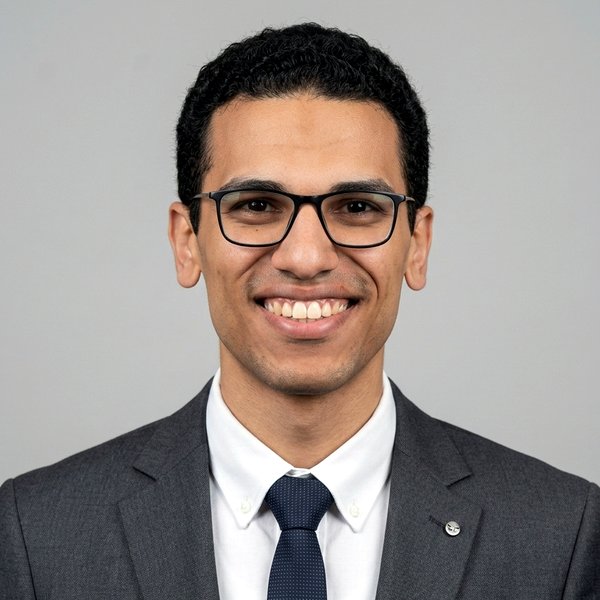


Bachelor of Education (B.Ed.) and pursuing a degree in Aerospace Engineering. · I have a TEFL certification | Certifications in Adobe Graphic Design (Level 1 & 2) for interactive presentations and educational materials.
English, German, and Arabic classes
Personally vetted · Strommen’s note
Arabic, English, and German sit alongside AP Calculus and AP Physics on Omar's schedule, a genuinely rare tutor who crosses from language straight into STEM.
Specialties
Also speaks: French, Italian, Spanish
Bachelor of Education (B.Ed.) and pursuing a degree in Aerospace Engineering. · I have a TEFL certification | Certifications in Adobe Graphic Design (Level 1 & 2) for interactive presentations and educational materials.
English, German, and Arabic classes
Specialties
I also speak: French, Italian, Spanish
Personally vetted · Strommen’s note
Arabic, English, and German sit alongside AP Calculus and AP Physics on Omar's schedule, a genuinely rare tutor who crosses from language straight into STEM.
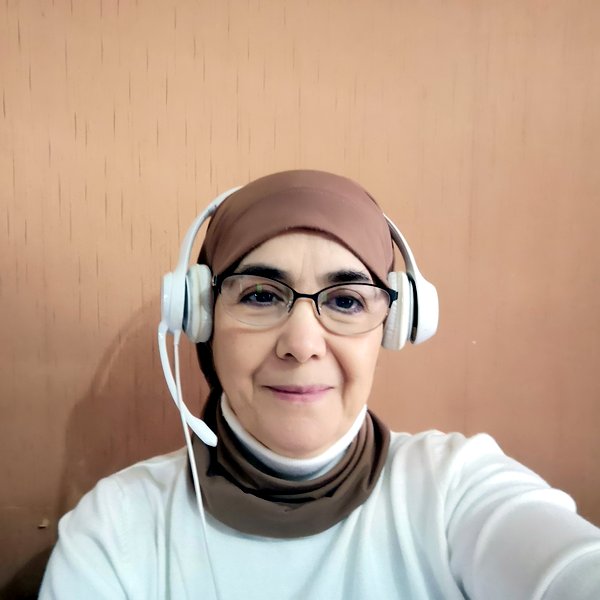
University Degree
Helping students learn with clarity, confidence, and motivation
Personally vetted · Strommen’s note
Quebec-based, Rahma teaches Arabic and French together, four Maghreb dialects covered, Algerian through Libyan.
Specialties
Also speaks: English
University Degree
Helping students learn with clarity, confidence, and motivation
Specialties
I also speak: English
Personally vetted · Strommen’s note
Quebec-based, Rahma teaches Arabic and French together, four Maghreb dialects covered, Algerian through Libyan.


BA and MA in Arabic Studies, PhD in Philology (Arabic & Hebrew Studies)
Polyglot tutor with 15 years’ experience in Armenian, Arabic, Hebrew, and Russian
Personally vetted · Strommen’s note
Alvina holds a BA and MA in Arabic Studies and has spent fifteen years teaching Arabic, Hebrew, Russian, and Armenian, genuinely rare range in one tutor.
Specialties
BA and MA in Arabic Studies, PhD in Philology (Arabic & Hebrew Studies)
Polyglot tutor with 15 years’ experience in Armenian, Arabic, Hebrew, and Russian
Specialties
Personally vetted · Strommen’s note
Alvina holds a BA and MA in Arabic Studies and has spent fifteen years teaching Arabic, Hebrew, Russian, and Armenian, genuinely rare range in one tutor.

Bachelor degree in french studiesMaster's degree in french studies · DALF C2
Online certified french tutor delf/DALF/ TEF/TCF Preparation
Personally vetted · Strommen’s note
Hela has taught French and Arabic for thirteen years, DELF, DALF, TEF, and TCF certification prep included, plus four different Maghreb Arabic dialects.
Specialties
Bachelor degree in french studiesMaster's degree in french studies · DALF C2
Online certified french tutor delf/DALF/ TEF/TCF Preparation
Specialties
Personally vetted · Strommen’s note
Hela has taught French and Arabic for thirteen years, DELF, DALF, TEF, and TCF certification prep included, plus four different Maghreb Arabic dialects.

النحو — Arabic grammar architecture
5 architectural ideas every Arabic grammar student needs
These are the structural pillars of Arabic grammar. Once you see the architecture, vocabulary stops being a pile and starts being a derivation game. Screenshot the list, then book a tutor to walk you through them.
-
01
الجذر al-jadhr
The three-consonant root that nearly every Arabic word derives from. The root ك-ت-ب (k-t-b) carries the field of writing, generating kataba (he wrote), kātib (writer), kitāb (book), kutub (books), maktab (office), maktaba (library), maktūb (written / a letter). Internalizing the root system in the first months turns vocabulary from memorization into recognition.
e.g. د-ر-س (d-r-s): darasa (studied), dars (lesson), mudarris (teacher), madrasa (school).
-
02
الأوزان al-awzān
The ten verb forms (the binyānīm in Hebrew-aligned terminology), each run from the same three-consonant root with semi-predictable meaning shifts. Form I is the basic root verb. Form II usually intensifies or makes-transitive. Form III is reciprocal or directed-at-someone. Form IV is causative. Form X often means "to seek" the root's meaning. A vocabulary-generation engine that compounds for years.
e.g. kataba (Form I, wrote) → kāttaba (Form II, made write) → istaktaba (Form X, asked to write).
-
03
الإعراب al-iʿrāb
The case system. Classical and Modern Standard Arabic mark three cases with short vowel endings: nominative (-u), accusative (-a), and genitive (-i). Subject is nominative, direct object is accusative, noun after a preposition is genitive, second noun in an iḍāfa is genitive. The endings are usually unwritten in everyday text. Spoken dialects have dropped them almost entirely.
e.g. al-kitāb-u jadīd-un ("the book is new," nominative on both).
-
04
المثنى al-muthannā
The dual. Arabic's third grammatical number, fully separate from singular and plural, marked by -āni in the nominative and -ayni in the accusative and genitive. Most other languages lack a dual entirely or have lost it. Arabic uses it actively for pairs, with gender agreement extending into the dual form. "Two boys" and "two girls" take distinct dual forms.
e.g. walad-āni (two boys) vs bint-āni (two girls).
-
05
الإضافة al-iḍāfa
The construct state. Arabic indicates possession by stringing two nouns together: kitāb al-walad, "the book of the boy." The first noun drops any definite article; the second takes the article if definite and is always in the genitive case. Chains can run three or four nouns deep. Replaces the English preposition "of" in most contexts and feels foreign for about a month before clicking permanently.
e.g. bāb bayt al-rajul ("the door of the house of the man").
About Arabic Grammar
Arabic grammar is patterned, not chaotic
Arabic grammar has a reputation for being intimidating and a smaller reputation for being beautiful, and both reputations are correct. The intimidation comes from the sheer number of moving parts: a three-consonant root system that generates families of related words, ten formally numbered verb forms (the awzān or binyānīm in the Hebrew-aligned terminology), three cases marked by short vowel endings, two grammatical genders, three numbers including a fully separate dual, and the construct state (the iḍāfa) that strings nouns together in possession chains. The beauty comes from the fact that all of this is patterned rather than chaotic. Once a learner sees the architecture, vocabulary stops being a memorization pile and starts being a derivation game. A new word lands in your hand and you can often guess its plural, its verb, its participle, and its abstract-noun derivative from the same root before you ever look the word up.
The single highest-leverage idea in Arabic grammar is the root system. Almost every Arabic word derives from a three-consonant root (jadhr, جذر) that carries the core semantic field. The root ك-ت-ب (k-t-b) carries the field of writing. From it you get kataba (he wrote), kātib (writer), maktūb (written, also a letter), kitāb (book), kutub (books), maktab (office, the place of writing), maktaba (library, the place of books), iktitāb (subscription, dictation), and more. The root د-ر-س (d-r-s) carries the field of studying. From it you get darasa (he studied), dars (a lesson), mudarris (teacher), madrasa (school), and so on. A learner who internalizes this idea in the first months stops being surprised by new vocabulary and starts seeing it as recognizable.
The ten verb forms are the second piece of the architecture and the part where most independent learners get lost. The same three-consonant root, when run through different vowel patterns and consonantal additions (doubling, prefixed letters, infixed letters), produces ten formally distinct verb forms with semi-predictable meaning shifts. Form I is the basic root verb (faʿala). Form II doubles the middle root letter (faʿʿala) and usually intensifies or makes-transitive the meaning. Form III adds an alif after the first root letter (fāʿala) and often makes the action reciprocal or directed at someone. Form IV prefixes a hamza (ʾafʿala) and usually makes the verb causative. Form V (tafaʿʿala) is the reflexive of Form II. Form VI (tafāʿala) is the reciprocal of Form III. Form VII (infaʿala) is passive-like. Form VIII (iftaʿala) is reflexive-middle. Form IX (ifʿalla) is mostly for colors and physical defects. Form X (istafʿala) often means to seek or to request the root's meaning. Not every root produces all ten forms, but a tutor who walks a student through the system in the first six months gives them a vocabulary-generation engine that compounds for years.
The case system is the third pillar and the part where many self-taught learners simply skip it and end up with a grammatically wobbly Arabic. Classical and Modern Standard Arabic mark three cases on nouns and adjectives: the nominative (-u for indefinite, often realized as -un), the accusative (-a for indefinite, often -an), and the genitive (-i for indefinite, often -in). The case endings appear on the final syllable of the noun and are usually unwritten in everyday text (newspapers, books for adult readers, signs). The case is determined by the noun's syntactic role: subject takes nominative, direct object takes accusative, noun after a preposition takes genitive, second noun in an iḍāfa construct chain takes genitive. Spoken dialects have dropped the case endings almost entirely, which is why MSA students can read text without the case marks comfortably while spoken-dialect-only students can struggle when they encounter the marks for the first time. A grammar tutor decides with the student whether case study is a priority (it is for formal writing, classical reading, and Quranic Arabic) or a polish item (for purely conversational goals).
Gender and number are the fourth pillar. Arabic nouns are either masculine or feminine. The feminine is most often marked by the suffix -ah / -at (tāʾ marbūṭa, ة), but there are exceptions: some inherently feminine words (umm "mother," bint "daughter," shams "sun") do not take the marker, and some masculine words happen to end in -ah. Adjectives agree with the noun in gender. Verbs agree with the subject in gender. The plural system is more complex than gender. Arabic has sound plurals (regular endings: -ūn for masculine human plurals, -āt for feminine plurals) and broken plurals (internal vowel changes that follow patterns rather than rules: kitāb / kutub, walad / awlād, qalam / aqlām). Broken plurals are not chaotic; they follow a finite set of patterns that a learner internalizes over time. The dual is Arabic's third number, fully separate from singular and plural, marked by the suffix -āni (nominative) or -ayni (accusative and genitive). Most other languages either lack a dual entirely (English, Spanish) or have lost it (Latin, Hebrew in everyday usage). Arabic still uses it actively for pairs, and gender agreement extends into the dual: "two female teachers" takes a different verb form than "two male teachers."
The iḍāfa, the construct state, is the fifth piece of common-frustration architecture. Arabic indicates possession by stringing two nouns together: kitāb al-walad, "the book of the boy." The first noun (the possessed thing) drops any definite article and any nunation; the second noun (the possessor) takes the definite article if definite. The case of the second noun is always genitive. Iḍāfa chains can run three or four nouns deep: bāb bayt al-rajul, "the door of the house of the man." This construction is everywhere in Arabic and replaces the English preposition "of" in most contexts. Self-taught learners often try to use a preposition (li, "to/for") where iḍāfa is correct and end up sounding awkward. A grammar tutor drills iḍāfa patterns in the first month and the construction stops feeling foreign within a few lessons.
More than most languages, Arabic rewards systematic grammar study with compounding returns. A learner who has internalized the root system, the verb forms, the case system, gender and number agreement, and the iḍāfa can read a sentence and parse the role of every word before reaching for a dictionary. That parsing skill is what separates a learner who can struggle through a paragraph from a learner who can read fluently. The trade-off is that this kind of study is methodical rather than fast. Grammar lessons are not the place for breakneck conversational pace. They are the place for unhurried walks through the architecture, with a tutor who can answer the genuine question ("why does this word take a kasra here?") rather than wave it away. The right grammar tutor makes the questions feel welcome rather than awkward.
The tutors below specialize in Arabic grammar as the structural backbone of the language, paired with whatever spoken or written register the student needs it for. Beginners building toward grammar from zero usually start on the Arabic for Beginners page. Students whose primary goal is reading literary texts often combine grammar work with our Arabic literature roster. Students focused on Modern Standard Arabic specifically have a dedicated MSA roster. The broader program lives on the main Arabic page.
What you'll cover
Lessons & classes tailored to Arabic Grammar
The root system as a vocabulary-generation engine
The three-consonant root that nearly every Arabic word derives from. Lessons walk through how to recognize the root of a new word, how to predict its plural and its verb forms, and how to use a root-organized dictionary like Hans Wehr. Once the root system is a working habit, vocabulary stops piling up and starts compounding. This is the single highest-leverage idea in Arabic grammar and tutors front-load it for that reason.
The ten verb forms and their meaning shifts
Methodical walks through awzān I through X, with the semi-predictable meaning shifts at each form. Form II intensifies or makes-transitive. Form III is reciprocal. Form IV is causative. Form V is the reflexive of Form II. Form VII is passive-like. Form X often means "to seek" the root's meaning. Tutors show how the same root behaves across the forms it produces, so students develop intuition rather than memorizing tables.
Case, gender, number, and agreement
The case system (nominative, accusative, genitive) and when the endings matter. Gender (masculine vs feminine, marked by tāʾ marbūṭa with the predictable exceptions). Number (singular, dual, plural, with the dual fully active in Arabic). Adjective-noun agreement, verb-subject agreement, the patterns of broken plurals. Drilled with sample sentences rather than tables alone so the patterns settle into recognizable rhythm.
The iḍāfa and other syntactic constructions
The construct state for possession and its chains. Sentence-level word order (verbal sentences starting with the verb, nominal sentences starting with the subject). The two negation systems (lā for present, mā for past, lan and lam for various tenses). The conditional structures. Question formation. These are the structures that organize Arabic sentences beyond the word level.
FAQ
About Arabic Grammar lessons & classes
Why is Arabic grammar considered so difficult?
The reputation comes from the sheer number of moving parts: a three-consonant root system, ten verb forms, three cases, two genders, three numbers including a fully separate dual, the construct state for possession, and the agreement rules that connect all of these. The reputation underrates the structure, though. Arabic grammar is patterned rather than chaotic, and once a learner sees the architecture (usually in the first six months of dedicated grammar work), vocabulary stops being a memorization pile and starts being a derivation game. The intimidation gives way to a sense of system.
Do I need to learn all ten verb forms?
Eventually yes, but they come in over time rather than all at once. Forms I, II, IV, V, VII, VIII, and X are the most frequent in everyday Arabic and tend to be drilled in the first year. Forms III and VI are common enough to be worth learning early. Form IX is rare (mostly colors and physical defects) and can be picked up later. The pattern is the point: once a student sees how Form II relates to Form I and how Form X relates to Form I, they can recognize and generate new verbs from any root they encounter.
Do I need to learn the case system, or can I skip it?
Depends on your goal. For purely conversational dialect goals, the case endings are largely irrelevant because spoken dialects have dropped them almost entirely. For Modern Standard Arabic reading, you can usually get by without active case study because the endings are unwritten in everyday text and context resolves ambiguity. For formal writing, classical reading, and Quranic Arabic, case study is non-negotiable. Your tutor walks through which level of case mastery your specific goals call for.
What is the difference between the root system and the verb forms?
The root is the three-consonant skeleton that carries the core semantic field (k-t-b for writing, d-r-s for studying). The verb forms are the ten systematic ways that root can be conjugated to produce related verbs with related but distinct meanings (kataba "wrote," kāttaba "made write," istaktaba "asked to write"). Roots are about semantic families; verb forms are about how that family expresses different shades of action. Together they form the vocabulary-generation engine that makes Arabic grammar so structurally rewarding.
How long until Arabic grammar feels intuitive?
It depends on how much you put in. With one or two grammar-focused lessons a week plus regular reading practice, most students reach a working command of the root system, the main verb forms, and basic syntax in 9 to 18 months. Real intuition (the kind where you can parse a sentence's syntactic roles before reaching for a dictionary) usually takes longer, often 2 to 3 years for committed students. Your tutor sets concrete milestones at the trial and adjusts as you go.
Are your Arabic grammar tutors native speakers?
Most are native speakers with formal training in Arabic grammar (al-naḥw wa-al-ṣarf). Several have teaching backgrounds at the university level and bring that systematic pedagogy to private lessons. Each tutor's bio specifies their background and approach to teaching the architecture. Grammar specialists are a smaller niche on our roster because the skill of explaining clearly is rarer than the skill of conversational coaching.
Should I combine grammar lessons with conversation lessons?
Often yes. Grammar without conversation can become an academic exercise that does not produce living fluency; conversation without grammar can plateau in patchy correctness. Most students who come specifically for grammar work pair it with some conversation practice, either with the same tutor or with a separate conversational Arabic tutor. The right balance depends on your goals; your tutor will help you think through it at the trial.
Ready for Arabic Grammar lessons or classes?
Book a free 30-minute trial with one of our personally vetted tutors. Private lessons or small-group classes — your choice.