



Personally vetted instructors
Bhagavad Gita tutors, lessons & classes
हरे कृष्ण Hare Krishna, the devotional salutation most commonly heard around Gita study.
Personally vetted tutors who teach the Bhagavad Gita as both philosophical text and Sanskrit reading project. Lessons that move chapter by chapter through the 700 verses, with attention to language, context, and the major commentarial traditions.
Your instructors
Bhagavad Gita tutors for private lessons & classes
The tutors below have the deepest background on our roster for the Bhagavad Gita specifically. Some have studied within a traditional Hindu or yogic lineage, some hold graduate credentials in Hindu philosophy or comparative religion, several have taught the Gita in classroom and workshop settings for years. Every one of them was met and vetted by Strommen directly before being listed.
Filter by location, age, or price, read the bios, then book a 30-minute free trial with whoever feels right.
Below are the Strommen tutors who specialize in the Bhagavad Gita. Photos, ratings, and rates are real. Click any card to read the tutor's background and book a free 30-minute trial.
I want to learn…
Every tutor, personally met. — founder-vetted since 2006, in Los Angeles and online worldwide.
Get a personalized plan
Pick your language — a language advisor will match you with the right tutor and map out your path.

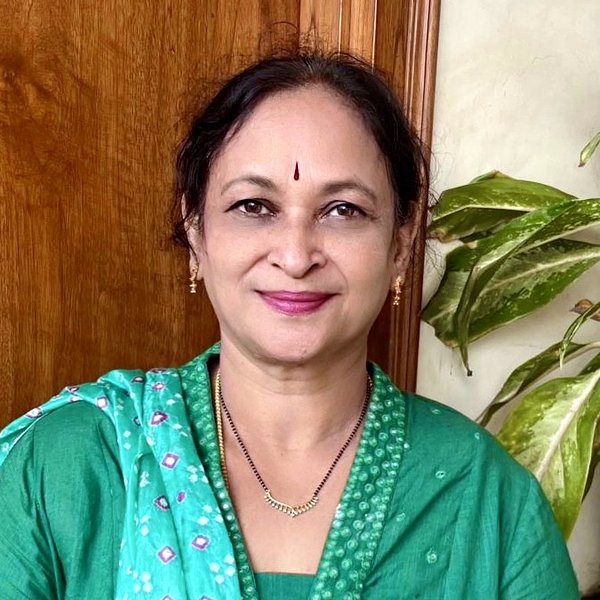
Masters in English Language and Literature, Masters in South Indian Classical Music · Hindi Language Certification.
Knowledge is a journey and Learning never ends—it evolves with every experience.
Personally vetted · Strommen’s note
Sailaja's Hindi lessons come with Sanskrit, the Bhagavad Gita, and traditional stotras built in, a genuinely unusual specialty pairing.
Specialties
Masters in English Language and Literature, Masters in South Indian Classical Music · Hindi Language Certification.
Knowledge is a journey and Learning never ends—it evolves with every experience.
Specialties
Personally vetted · Strommen’s note
Sailaja's Hindi lessons come with Sanskrit, the Bhagavad Gita, and traditional stotras built in, a genuinely unusual specialty pairing.

भगवद्गीता — text & tradition
5 things every Bhagavad Gita student meets early
These are the structural and historical anchors that organize Gita study. Knowing what each one is, and how it shapes the reading, makes the first months of study less mysterious and far more rewarding.
-
01
अष्टादश अध्यायाः · the eighteen chapters
The Gita's 700 verses are organized into eighteen chapters, each named in Hindu tradition by the form of yoga or the topic it most fully treats. Chapter one sets the scene; chapter two contains most of the foundational philosophical vocabulary; chapter eleven contains the cosmic vision; chapter eighteen integrates the threads. A serious tutor will help you choose which chapter to start with based on your goal.
e.g. Beginners often start with chapter two or chapter twelve, not chapter one.
-
02
कर्मयोगः · the path of action
The discipline of acting without attachment to the fruits of action, developed most fully in chapters three through six. This is the single most-quoted concept from the Gita and has had enormous influence on Indian and global thought about ethics, work, and freedom. Gandhi's reading of the Gita centered this path.
e.g. Karmaṇyevādhikāraste mā phaleṣu kadācana ("Your right is to action alone, never to its fruits," Bhagavad Gita 2.47).
-
03
विश्वरूपदर्शनम् · the cosmic vision
Chapter eleven, in which Krishna grants Arjuna a vision of his universal form, with all of creation visible within it. The passage Robert Oppenheimer famously quoted at the Trinity test ("Now I am become Death, the destroyer of worlds") comes from this chapter. It is the most theologically and poetically dense chapter and rewards slow reading.
e.g. Many tutors save chapter eleven for later, after the philosophical groundwork of chapters two through six is solid.
-
04
भाष्यम् · the commentarial tradition
For roughly fifteen centuries, the major Hindu philosophical schools have read the Gita through extensive commentaries. Shankara (eighth century CE, Advaita Vedanta), Ramanuja (eleventh century, Vishishtadvaita), and Madhva (thirteenth century, Dvaita) are the three classical anchors. Modern commentaries by Gandhi, Aurobindo, Vivekananda, and others continue the tradition.
e.g. Tutors will introduce a commentary when the reading raises a question one of them addresses well.
-
05
अनुष्टुप् · anushtubh meter
The 32-syllable meter in four eight-syllable lines that makes up almost all of the Gita's 700 verses, with a handful of longer Trishtubh verses inserted at moments of heightened intensity. The metric regularity makes the Gita one of the more approachable classical Sanskrit texts for students wanting to read in the original.
e.g. The famous opening verse, dharma-kṣetre kuru-kṣetre, is anushtubh.
About Bhagavad Gita
Krishna and Arjuna on the eve of battle
The Bhagavad Gita is a 700-verse dialogue embedded in the sixth book of the Mahabharata, set on the battlefield of Kurukshetra just before the eighteen-day war between the Pandavas and the Kauravas begins. The warrior Arjuna, looking across at relatives, teachers, and friends arrayed against him, breaks down and refuses to fight. His charioteer Krishna, revealed in the course of the dialogue as an incarnation of Vishnu, responds across eighteen chapters with a sustained teaching on duty, action, knowledge, devotion, and the nature of the self. The text has been continuously read, commented on, recited, and lived by for at least two thousand years, and it remains both a central scripture of Hindu tradition and one of the most widely translated philosophical works in any language. A student who studies it well is reading a text that Gandhi called his "spiritual dictionary," that Emerson and Thoreau drank from, and that has shaped how an enormous part of humanity thinks about action, duty, and freedom.
The people who come to Strommen for Gita study fall into several distinct groups, and naming which one you are tends to shape the first lesson. Some students are studying the Gita as text, working through it chapter by chapter with attention to language and structure, often as part of a longer Sanskrit project or a course on Indian philosophy. Some are reading it devotionally, within a Hindu or yogic tradition, and want a tutor who can move between the textual surface and the commentarial and lived layers that the text accumulated across two millennia. Some are reading it comparatively, alongside the Tao Te Ching, the Stoics, or the Christian mystics, and want help placing the Gita's vocabulary inside its own intellectual world before pulling cross-tradition parallels. And some are reading it because a teacher, a parent, or a turning point in their own life brought it to them, and they want to understand it properly rather than only through one translator. Tutors calibrate the first lesson to whichever doorway you came in through.
The text is organized into eighteen chapters, and Hindu tradition names each chapter by the form of yoga or the topic it most fully treats. The first chapter (Arjuna Vishada Yoga, the yoga of Arjuna's despair) sets the scene and the question. The second chapter (Sankhya Yoga) lays out the foundational distinction between the perishable body and the imperishable self, and is the chapter most Gita courses focus on first because it contains a large share of the philosophical vocabulary the rest of the text uses. The third through sixth chapters develop the path of action (Karma Yoga), the path of knowledge (Jnana Yoga), and the discipline of meditation (Dhyana Yoga). The middle chapters (especially the eleventh, the Vishvarupa Darshana Yoga, where Arjuna is granted a vision of Krishna's cosmic form) are among the most theologically and poetically dense. The final chapters integrate the threads. A serious tutor will not necessarily march straight from chapter one to chapter eighteen; many start with chapter two or chapter twelve (the Bhakti Yoga chapter, often the most accessible devotional doorway) and circle outward.
The karma-jnana-bhakti tripartite is the most famous structural frame for reading the Gita, and it is genuinely useful even though the text itself does not present these as three sealed paths. Karma yoga is the discipline of acting without attachment to the fruits of action, an idea that has had outsized influence on Indian and now global thought about right action. Jnana yoga is the discipline of knowledge, the cultivation of discrimination between what is permanent and what is not. Bhakti yoga is the discipline of devotion, of orienting the self toward the divine through love. The Gita weaves these together rather than ranking them, and a good tutor will resist the temptation to flatten the text into a single thesis.
The question of which translation to start with comes up early. There is no single right answer, but the strong recommendations cluster around a handful. Eknath Easwaran's translation is the most widely read introductory English version, warm and readable, with chapter-by-chapter commentary that is accessible to a non-specialist. Swami Prabhupada's Bhagavad-gita As It Is is the Hare Krishna lineage's standard, with extensive commentary from within that devotional tradition. The Winthrop Sargeant interlinear gives word-by-word Sanskrit with a grammatical analysis, indispensable for students reading the original. Gandhi's Anasaktiyoga, in his own annotated translation, reads the Gita through the lens of nonviolent action. The Christopher Isherwood and Swami Prabhavananda Song of God, written for a Western literary audience in the mid-twentieth century, holds up surprisingly well. Tutors will help you choose based on your goal: textual study, devotional practice, or comparative reading each calls for a different starting translation.
The Sanskrit question matters but does not have to be a barrier. Many students study the Gita without learning Sanskrit, and that is a legitimate path: a good translation with a good tutor can take you a long way into the text. Other students want the Sanskrit, either to be able to read individual verses in the original (a common ambition, achievable within a year of beginner Sanskrit work) or to read the full text in Sanskrit (a multi-year project that overlaps with our main Sanskrit track). Tutors will calibrate to what you actually want. The Gita is also one of the most metrically straightforward Sanskrit texts, written almost entirely in the standard 32-syllable anushtubh meter, which makes it a friendlier entry point into reading classical Sanskrit than, say, Kalidasa's poetry.
A cultural and contextual literacy comes with the reading. You cannot read the Gita without some sense of the Mahabharata framework that contains it, of the kshatriya warrior code that gives Arjuna's crisis its specific shape, and of the long commentarial tradition (Shankara, Ramanuja, Madhva, and many later figures) that argued for centuries over what the text means. A literature-aware tutor folds this in as the reading earns it, not as a separate lecture.
Strommen has been teaching languages in Los Angeles since 2006, and the Gita track sits at the intersection of our Sanskrit and Hindu-text offerings. Every tutor below was met and vetted by us in person. There is no marketplace here. Lessons run online for students worldwide and in person for those near Los Angeles. Most students begin with a free 30-minute trial so the tutor can see where you sit, which translation you are working from, and what you most want from the text.
What you'll cover
Lessons & classes tailored to Bhagavad Gita
Reading the text chapter by chapter
A working path through the eighteen chapters, tailored to your goal. Most students do not march straight from chapter one to chapter eighteen; tutors typically start with chapter two (which contains the foundational philosophical vocabulary) or chapter twelve (the most accessible devotional doorway) and circle outward. Each chapter is read with attention to its internal argument, its place in the larger structure, and the questions it has provoked across the commentarial tradition.
Karma, Jnana, and Bhakti yoga in context
The three paths the Gita weaves together: action without attachment, the cultivation of discriminating knowledge, and devotional surrender. Tutors resist the temptation to flatten the text into one of these as a single thesis, because the text itself does not. Lessons cover how the three paths support each other, where they differ in emphasis across chapters, and how the major commentarial traditions read the balance.
Context: the Mahabharata frame and the kshatriya world
The Gita is a small dialogue inside a vast epic, and reading it without its context flattens the text. Lessons cover the Mahabharata setup that puts Arjuna on the battlefield, the kshatriya warrior code that makes his crisis specifically a crisis of dharma, and the historical and cultural world in which the dialogue was composed. The point is not to make you a Mahabharata scholar, but to give the Gita the frame it needs.
Sanskrit alongside translation, if you want it
Many Gita students do not learn Sanskrit, and that is a legitimate path. Tutors who teach the Gita as text can work entirely from English (Easwaran, Sargeant, Prabhupada, Isherwood, or Gandhi, depending on your starting point) with attention to translation choices that matter. Students who want the Sanskrit can add it, either at the level of reading individual verses in the original (achievable within a year of beginner Sanskrit work) or as a full bilingual reading project. The anushtubh meter makes the Gita one of the more approachable classical texts in Sanskrit.
FAQ
About Bhagavad Gita lessons & classes
Which translation should I start with?
There is no single right answer, but a few strong starting points. Eknath Easwaran's translation is the most widely read introductory English version, warm and accessible. Swami Prabhupada's Bhagavad-gita As It Is is the Hare Krishna lineage's standard with extensive devotional commentary. The Winthrop Sargeant interlinear gives word-by-word Sanskrit and is essential for students reading the original. Gandhi's Anasaktiyoga reads the text through the lens of nonviolent action. Isherwood and Prabhavananda's Song of God is the most literary of the popular versions. Your tutor will help you choose based on whether you are reading as text, as practice, or as comparison.
Do I need to know Sanskrit to study the Bhagavad Gita?
Not at all. Many serious students of the Gita work entirely from English translation, and the text has been read that way fruitfully by everyone from Emerson and Thoreau to contemporary Hindu teachers. What Sanskrit adds is direct access to vocabulary that translators have to make choices about (dharma, atman, yoga, sannyasa, all of which travel imperfectly into English) and the ability to read individual verses in the original, which often resolves ambiguities in translation. If you want to add Sanskrit, see our beginner Sanskrit course; tutors can run both tracks in parallel.
Is this religious study or philosophical study?
It can be either, and tutors calibrate accordingly. The Gita is a central scripture of Hindu tradition and is taught devotionally within many lineages (Vaishnava, Smarta, and others). It is also one of the most-read philosophical texts in the world and can be approached as comparative philosophy alongside the Stoics, the Tao Te Ching, or the Christian mystics. Tell us at the trial which mode interests you and we will match you to a tutor whose approach fits.
How long does it take to work through the full Gita?
Depends on your pace, your depth, and whether you are reading translation only or Sanskrit alongside. A weekly chapter-by-chapter course with discussion covers the eighteen chapters in roughly four to six months at a comfortable pace, or in two to three months if you are moving briskly. A slower, more meditative reading with attention to the commentarial tradition and to selected Sanskrit passages typically runs a full year. Many students read the Gita more than once across their lives, getting different things from it each time.
Do I need to be Hindu to study the Bhagavad Gita?
No. The Gita has been studied across religious traditions for centuries. Gandhi (raised Vaishnava but reading widely across traditions), Thoreau and Emerson (American transcendentalists), Aldous Huxley, Hermann Hesse, T.S. Eliot, and many others approached the text as a work of world philosophy and literature. Plenty of our Gita students are Christian, Jewish, Buddhist, secular, or simply curious. The text is open to readers from any tradition; what changes is which layers of the reading land hardest.
Which commentaries are worth knowing?
The three classical Vedanta commentaries (Shankara, Ramanuja, Madhva) anchor the historical Hindu reception and represent three different metaphysical readings of the same verses. Among modern commentaries, Aurobindo's Essays on the Gita is a major twentieth-century philosophical reading, Gandhi's Anasaktiyoga reads through the lens of nonviolent action, Vivekananda's lectures bring the Gita to a Western audience in late-nineteenth-century terms, and Eknath Easwaran's chapter-by-chapter commentary is the most accessible contemporary introduction. Your tutor will introduce a commentary when the reading raises a question it addresses well.
Can I take Bhagavad Gita lessons online or only in person?
Both. Most of our Gita tutors teach online via Zoom or Jitsi and work with students worldwide. Several also teach in person around Los Angeles. Text-based reading lessons work very well online because most of the lesson is spent on a shared text. The booking widget on each tutor's profile shows their available formats.
Ready for Bhagavad Gita lessons or classes?
Book a free 30-minute trial with one of our personally vetted tutors. Private lessons or small-group classes — your choice.