



Personally vetted instructors
Cantonese for Kids tutors, lessons & classes
你好 Nei5 hou2 The standard Cantonese hello a teacher uses with a child arriving for class.
Personally vetted Cantonese tutors who teach children. Heritage-focused lessons that respect the difference between Cantonese and Mandarin and the urgency many diaspora families feel about keeping Cantonese alive for the next generation.
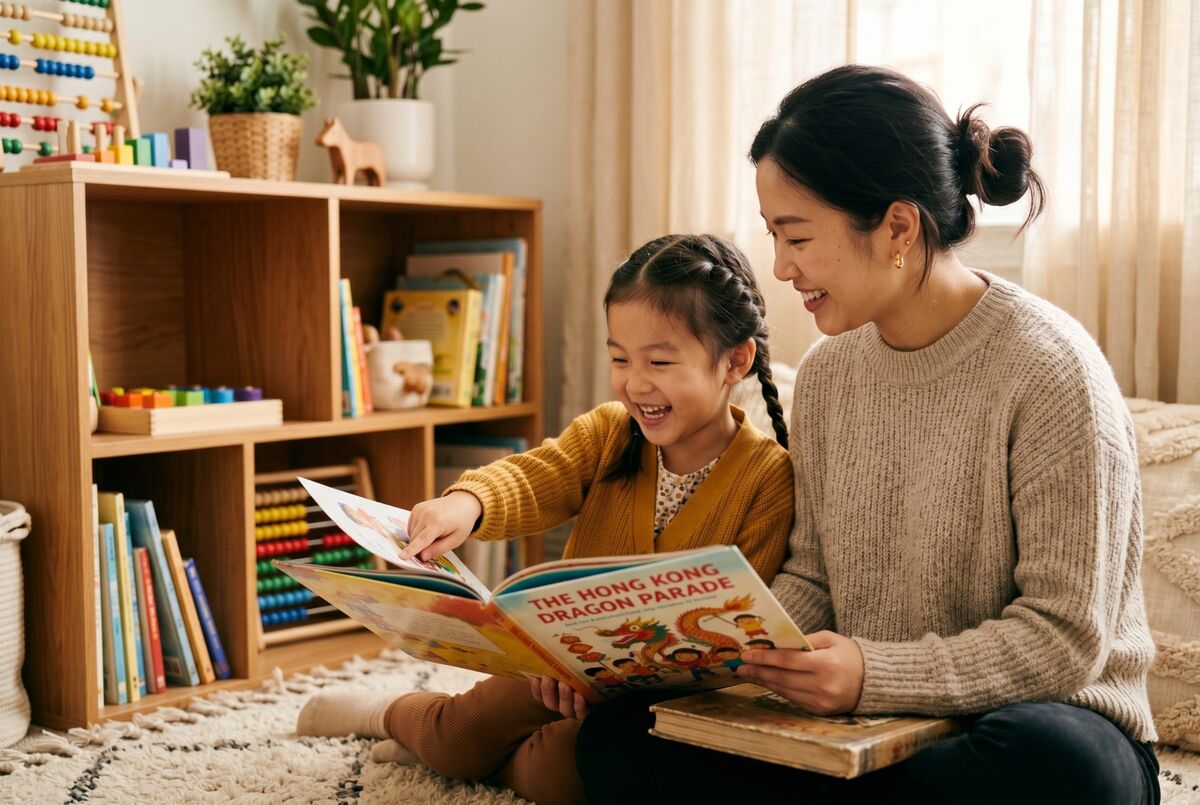
Your instructors
Cantonese for Kids tutors for private lessons & classes
Strommen has been teaching languages since 2006, and we vet every teacher ourselves rather than running an open marketplace. Our Cantonese roster is small and tightly curated; kids' Cantonese tutors are a rare specialty even in LA, and we have built relationships with the teachers in the city who actually do this work.
Filter by location, age, or price, then book a 30-minute free trial. The trial is also a chance for the child to meet the tutor; you will know within ten minutes whether the rapport is there.
Below are the Strommen tutors who teach Cantonese to children. Photos, ratings, and rates are real. Click any card to read a bio and book a free 30-minute trial.
I want to learn…
Every tutor, personally met. — founder-vetted since 2006, in Los Angeles and online worldwide.
Get a personalized plan
Pick your language — a language advisor will match you with the right tutor and map out your path.


Bachelor's degree in Economics. · Cambridge Business English Certificate
Master Chinese with a Former Senior Diplomatic Mission Manager: 25 Years of High-Level Strategic Communication
Personally vetted · Strommen’s note
Before this, Ying spent twenty-five years as a senior diplomatic mission manager. She runs Chinese lessons like a project plan: milestones, roadmap, real scenarios.
Specialties
Bachelor's degree in Economics. · Cambridge Business English Certificate
Master Chinese with a Former Senior Diplomatic Mission Manager: 25 Years of High-Level Strategic Communication
Specialties
Personally vetted · Strommen’s note
Before this, Ying spent twenty-five years as a senior diplomatic mission manager. She runs Chinese lessons like a project plan: milestones, roadmap, real scenarios.
Human Resources and Education · Qualifications:※ Sun Yat-sen University in China with a bachelor's degree certificates.※Chinese National Putonghua Level 1 B certificates.※China National Primary School Chinese Teacher Qualification Certificate.※National Public English Level 3 Oral Exa...
Experienced native Chinese (Mandarin)/Cantonese tutor
Personally vetted · Strommen’s note
A native Cantonese and Mandarin speaker, Kate teaches both and keeps every class lively, tailored to the student's own goals and personality.
Specialties
Human Resources and Education · Qualifications:※ Sun Yat-sen University in China with a bachelor's degree certificates.※Chinese National Putonghua Level 1 B certificates.※China National Primary School Chinese Teacher Qualification Certificate.※National Public English Level 3 Oral Exa...
Experienced native Chinese (Mandarin)/Cantonese tutor
Specialties
Personally vetted · Strommen’s note
A native Cantonese and Mandarin speaker, Kate teaches both and keeps every class lively, tailored to the student's own goals and personality.


BA (Hons) in Bilingual Studies. · TCSOL and TEFL.
Bridging cultures through language, story, and authentic communication.
Specialties
Also speaks: Japanese, Spanish
BA (Hons) in Bilingual Studies. · TCSOL and TEFL.
Bridging cultures through language, story, and authentic communication.
Specialties
I also speak: Japanese, Spanish

細路 sai3 lou6 — Cantonese the way kids learn it
5 things every Cantonese-learning kid encounters early
These are the building blocks Cantonese-speaking children grow up with in Hong Kong and across the diaspora. Save the list and book a tutor to build a lesson around them.
-
01
利是 lai6 si6 (the red envelope)
The little red envelope of lucky money that Cantonese-speaking children receive at Lunar New Year and at weddings. Kids memorize the four-character new-year blessings (恭喜發財 gong1 hei2 faat3 coi4 chief among them) and recite them to grandparents in exchange for the lai see, which makes the cultural transaction itself a vocabulary lesson. A tutor's January unit covers the blessings, the envelopes, and the new-year customs.
e.g. 恭喜發財,利是逗來!("Wishing you wealth, hand over the lai see!")
-
02
點心 dim2 sam1 (dim sum)
The Cantonese small-plate brunch tradition that Cantonese-American kids grow up with as their everyday family food. Har gow, siu mai, char siu bao, cheong fan; the names become the child's first real Cantonese vocabulary because they are spoken every weekend at the dim sum table. Tutors lean on dim sum vocabulary as a natural early-lesson set because the kid already knows the food.
e.g. 我想食蝦餃。Ngo5 soeng2 sik6 haa1 gaau2. ("I want to eat shrimp dumplings.")
-
03
嘅 ge3 (the Cantonese possessive)
The little particle that does not exist in Mandarin and that marks Cantonese speech as distinct from the first sentence. Used as the possessive ("my" in 我嘅), as a sentence-final softener, and as a relativizer. A Cantonese-learning kid hears 嘅 within the first ten words of any real Cantonese conversation, and learning to use it correctly is one of the first markers of someone actually speaking Cantonese rather than translating from Mandarin.
e.g. 呢個係我嘅。Ni1 go3 hai6 ngo5 ge3. ("This is mine.")
-
04
McDull · 麥兜
The beloved Hong Kong children's character, a slow-witted but kind-hearted pig who has anchored a series of films, books, and merchandise since the 1990s. McDull's Cantonese is gentle, expressive, and at exactly the right level for younger kids learning the language. Tutors recommend McDull films and books as between-lesson exposure, and the character is widely loved across the Hong Kong diaspora.
e.g. 我係麥兜。Ngo5 hai6 Mak6 Dau1. ("I am McDull.")
-
05
Cantopop and the Hong Kong songbook
Cantonese has one of the most distinctive popular music traditions in Asia, with a canon stretching from Sam Hui in the 1970s through Beyond, Anita Mui, Leslie Cheung, and into contemporary acts like Mirror. Songs are the most efficient grammar delivery system for older kids; melodies lock vocabulary in. Tutors loop age-appropriate Cantopop into lessons regularly for kids ten and up.
e.g. 海闊天空 (Hoi2 fut3 tin1 hung1, "Boundless Oceans, Vast Skies"), the most famous Beyond song, is a kids' lesson regular.
About Cantonese for Kids
Cantonese for kids, kept alive across generations
The case for kids' Cantonese has a quiet urgency to it that Mandarin does not. Mandarin is the official language of the People's Republic of China, taught in schools across the country and across the diaspora, and a child learning Mandarin can find a Mandarin tutor on every block. Cantonese is the language of Hong Kong, of Guangdong province, and of the older diaspora communities (Chinatowns in San Francisco, New York, LA, Toronto, Vancouver, London), and increasingly it is a language families have to actively work to maintain. The generational shift in Hong Kong and in mainland Guangdong toward Mandarin-medium schooling, combined with the fact that most kids' Chinese-language resources sold in the US are Mandarin-first, has meant that Cantonese-American kids often grow up understanding the language at home but speaking very little of it back. Many heritage families come to Strommen specifically because they tried Mandarin programs and realized it was not the same language as what their grandmother speaks.
Cantonese is genuinely different from Mandarin. The two share Chinese characters in writing (with some Cantonese-specific characters that do not exist in Mandarin), but they are mutually unintelligible spoken languages, with different tones (Cantonese has six commonly counted, Mandarin has four), different grammar in places, and a substantial vocabulary that does not overlap in everyday speech. A child learning Mandarin will not understand their Cantonese-speaking grandmother any better than they would understand French. For families whose grandparents speak Cantonese, choosing Mandarin instead is a real loss of cross-generational communication, and many families come to that realization only after a few years of Mandarin lessons.
Most of the families who come to Strommen for kids' Cantonese are heritage families, typically Hong Kong-American or Guangdong-American, often in the second or third generation. The goal is almost always that the child be able to talk to their grandmother in real Cantonese rather than the half-English mix that creeps in by elementary school. A smaller group of families are not Cantonese but have chosen the language for cultural reasons (a love of Hong Kong cinema, a connection through marriage, a relocation plan). Heritage children typically arrive with some listening comprehension and a small spoken vocabulary; the work is about activating production and adding the script.
The six-tone ear training is the part kids do best at and the part that is hardest to install in adulthood. Cantonese tones run roughly: high level, high rising, mid level, low falling, low rising, and low level (the exact count and analysis varies by linguist, but six is the working number for teaching). A child under about ten absorbs the tones the way they picked up English intonation, without thinking about it. The flat-pitch fifth tone and the low-falling fourth tone are the two that take adults longest to lock in; kids learn them in weeks. For Cantonese-American families wondering when to start, the honest answer is earlier helps with the accent.
Characters are the same Chinese characters used for Mandarin (with the additional Cantonese-specific characters like 嘅, 咗, 啲, 嘢 that show up constantly in spoken Cantonese), but a kids' Cantonese program teaches the characters with Cantonese pronunciation, which is the obvious right answer for a heritage child but is harder to find than it sounds because most kids' Chinese-character resources sold in the US use Mandarin pinyin. Tutors who specialize in kids' Cantonese keep a library of Hong Kong-published children's books and Cantonese-pinyin Jyutping flashcards, which together form a workable reading curriculum.
Cantonese children's literature does exist, though the field is smaller than the Mandarin equivalent. Hong Kong-published picture books, the Tin Yam (天眼) detective series for older kids, and the Eric Carle books published in Cantonese editions all work as lesson texts. The Cantonese-language children's TV tradition, especially the Hong Kong cartoon canon (Old Master Q for older kids, McDull and Bo Bo, Doraemon dubbed into Cantonese), is a real resource for between-lesson exposure. Tutors recommend specific YouTube playlists and ATV/TVB children's-show archives based on the child's age.
Cultural anchors matter. Lunar New Year (農曆新年) is the cultural fixed point, with the lai see (利是, lucky money) red envelopes, the family visiting, the special foods, and the traditional new-year blessings (恭喜發財 gong1 hei2 faat3 coi4 is the canonical one) that children memorize and recite. Mid-Autumn Festival (中秋節) with mooncake and lanterns, and the Dragon Boat Festival (端午節) with zongzi sticky-rice dumplings, anchor the autumn and summer units respectively. Dim sum is its own vocabulary set most kids enjoy: har gow (蝦餃, shrimp dumplings), siu mai (燒賣), char siu bao (叉燒包), cheong fan (腸粉), the names of which become the kid's everyday Cantonese before the grammar does.
For older kids (twelve to fourteen), the lesson can shift toward Cantopop, Hong Kong cinema, and short conversations on real topics. The Cantopop canon (Beyond, Anita Mui, Leslie Cheung, more recently Mirror) provides genuinely good listening material, and the lyrics work as reading texts. Hong Kong cinema, especially the kid-friendly Stephen Chow comedies and the Wong Fei-hung films, gives older kids a cultural archive to absorb.
Logistics are uncomplicated. Lessons typically run 30 minutes for ages five to nine, 45 minutes for ages ten to twelve, and an hour for the older end of the range. Online lessons over Zoom or Jitsi work well from about age seven; in-person is available around LA. Heritage families often arrange for a grandmother to listen in over speakerphone, which is both lovely and pedagogically useful.
Our kids' Cantonese tutors include Hong Kong-born native speakers with classroom experience, longtime Cantonese-American bilinguals raising their own children with the language, and a few tutors who specialize specifically in heritage learners. Each bio specifies background, age range taught, and teaching style.
What you'll cover
Lessons & classes tailored to Cantonese for Kids
Six tones, the part kids are best at
Lessons build tone awareness through songs, exaggerated tutor modeling, and short shadowing drills. Children under about ten absorb the six Cantonese tones without conscious effort and typically end up with a native-sounding accent. The fourth and fifth tones (the low-falling and the flat-pitch low) are the two adults struggle with longest; kids learn them in weeks. Our general Cantonese tutors page covers the adult-track equivalent.
Cantonese-pronounced characters and Jyutping
Lessons teach Chinese characters with Cantonese pronunciation using Jyutping, the Cantonese romanization system, alongside the characters themselves. This matters because most kids' character resources sold in the US use Mandarin pinyin, and a heritage child learning characters with the wrong pronunciation is doing the wrong work. Hong Kong-published picture books become the reading texts.
Heritage conversation with grandparents
For Cantonese-American families, the priority is usually the conversation the child needs to have with their grandmother. Tutors build family-call vocabulary deliberately: kinship terms, holiday words, food words, and the everyday phrases that come up across the dim sum table or on a phone call. Heritage children typically move from passive listening to active speaking on family calls in a single semester of regular lessons.
Lunar New Year, Mid-Autumn, dim sum vocab, and Cantopop
A school-year arc cycles through the major Cantonese cultural moments. The Lunar New Year lai see and blessings unit in January, the Mid-Autumn mooncake-and-lantern unit in autumn, the Dragon Boat zongzi unit in summer. Dim sum vocabulary runs throughout because kids eat dim sum every weekend. For older kids, Cantopop and Hong Kong cinema enter the lesson rotation.
FAQ
About Cantonese for Kids lessons & classes
Is Cantonese different enough from Mandarin that it matters which one we choose?
Yes, meaningfully. Cantonese and Mandarin share Chinese characters in writing but are mutually unintelligible when spoken; they have different tones, different grammar in places, and a substantial vocabulary that does not overlap in everyday speech. A child learning Mandarin will not understand their Cantonese-speaking grandmother any better than they would understand French. For families whose grandparents speak Cantonese, choosing Cantonese is the right answer for cross-generational communication.
My child understands Cantonese at home but won't speak it. Can a tutor help?
Yes, and this is the most common reason heritage families book lessons. The pattern of strong receptive Cantonese and weak productive Cantonese is the norm in second-generation kids, and the fix is structured practice with a tutor who is not a family member. Tutors trained on heritage learners spend the first few months activating the speaking the child already has stored, then build out vocabulary and grammar from there.
Will my child learn to read and write Chinese characters?
Yes, and with Cantonese pronunciation rather than Mandarin pinyin. Lessons teach the standard Chinese character set plus the Cantonese-specific characters (嘅, 咗, 啲, 嘢, others) that show up constantly in spoken Cantonese but not in formal written Chinese. Jyutping, the Cantonese romanization system, is the bridge tool, and tutors keep a library of Hong Kong-published children's readers.
What age can my child start learning Cantonese?
As early as the family wants. The earlier the exposure, the easier the six-tone system locks in, and there is no lower bound. Lessons formally start working as language instruction around age four or five with the right tutor; before that, what matters most is consistent Cantonese-speaking adults in the child's daily life.
Are online Cantonese lessons effective for kids?
Yes, from about age seven. Younger than that, in-person tends to hold attention better. For elementary-age and older kids, online lessons via Zoom or Jitsi work well, and online actually expands the pool of available kids' Cantonese tutors significantly, which is a real consideration given how rare this specialty is.
How long should a Cantonese lesson be for a young child?
Thirty minutes is the sweet spot for ages five to nine. Forty-five minutes works for ages ten to twelve. A full hour fits most thirteen and fourteen-year-olds. Shorter, more frequent sessions outperform a single longer weekly lesson at the younger end, both for retention and for keeping the child looking forward to the next session.
Are your kids' Cantonese tutors native speakers?
Most are Hong Kong-born or Guangdong-born native speakers with classroom or private-teaching experience. A few are longtime Cantonese-American bilinguals raising their own children with the language. Each bio specifies background and teaching style.
Ready for Cantonese for Kids lessons or classes?
Book a free 30-minute trial with one of our personally vetted tutors. Private lessons or small-group classes — your choice.