



Personally vetted instructors
Document Translation tutors, lessons & classes
Certified true translation. The stamp every paid certified translator signs at the bottom of every document they produce.
Personally vetted document translation tutors. Coaching on certified translation craft, the ATA-track pipeline, immigration document workflows, business contracts, and the working discipline of paid translation as a career.

Your instructors
Document Translation tutors for private lessons & classes
Strommen has run its own translation department since 2006, handling certified document translation, transcription, and review for clients across the US. The document translation tutors on this page were vetted by the same team that bills the work commercially. No marketplace. No automated profile-creation. Real professionals teaching the craft they practice, with credentials you can read about in their bios.
Filter by location, age, or price. Then book a 30-minute free trial.
Below are the Strommen tutors who coach document translation. Photos, ratings, and rates are real. Click any card to read their bio and book a free 30-minute trial.
I want to learn…
Every tutor, personally met. — founder-vetted since 2006, in Los Angeles and online worldwide.
Get a personalized plan
Pick your language — a language advisor will match you with the right tutor and map out your path.

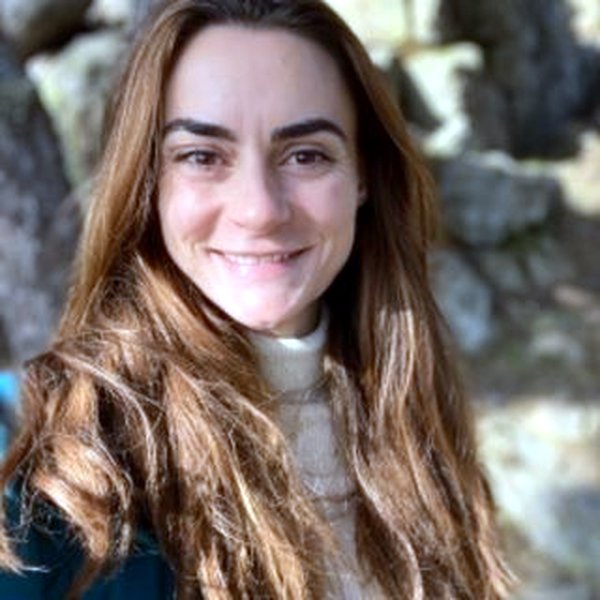
Masters of Fine Art, Bachelor in Foreign Language and Literature. · Over 2,000 hours of one‑on‑one teaching experience. Published literary translator, with work reviewed in Kirkus Reviews, Times Literary Supplement, Art Book D.A.P., and multiple international journals.
Master English, French & Italian with a Published Literary Translator
Personally vetted · Strommen’s note
A published literary translator, Colombina teaches English, French, and Italian, plus SAT prep, college essay coaching, and learning-disability support.
Specialties
Masters of Fine Art, Bachelor in Foreign Language and Literature. · Over 2,000 hours of one‑on‑one teaching experience. Published literary translator, with work reviewed in Kirkus Reviews, Times Literary Supplement, Art Book D.A.P., and multiple international journals.
Master English, French & Italian with a Published Literary Translator
Specialties
Personally vetted · Strommen’s note
A published literary translator, Colombina teaches English, French, and Italian, plus SAT prep, college essay coaching, and learning-disability support.
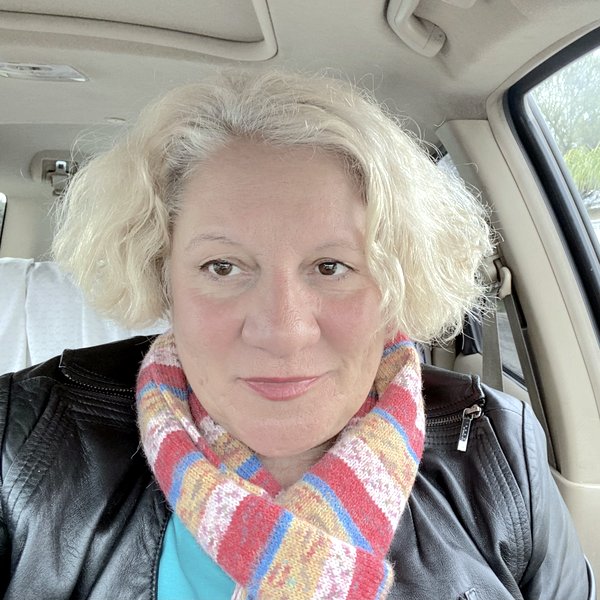


I am a passionate Italian language teacher and tutor with a strong academic background that combines both science and humanities. Although I hold a degree in Biomedical Science, I also completed extensive humanities studies in Italy, where I studied It... · I am member of ATI ( American Association of Italian Teachers) and I partecipate to continuing education event and seminars.
Discover Italian Language and Italian Culture- Italian lessons customized to meet your individual needs, goals, and abilities
Personally vetted · Strommen’s note
Twenty-two years teaching Italian have given Francesca a track for nearly every reason to learn it, from opera-singer diction to CILS B1 citizenship prep.
Specialties
Also speaks: French, Japanese, Spanish
I am a passionate Italian language teacher and tutor with a strong academic background that combines both science and humanities. Although I hold a degree in Biomedical Science, I also completed extensive humanities studies in Italy, where I studied It... · I am member of ATI ( American Association of Italian Teachers) and I partecipate to continuing education event and seminars.
Discover Italian Language and Italian Culture- Italian lessons customized to meet your individual needs, goals, and abilities
Specialties
I also speak: French, Japanese, Spanish
Personally vetted · Strommen’s note
Twenty-two years teaching Italian have given Francesca a track for nearly every reason to learn it, from opera-singer diction to CILS B1 citizenship prep.

At the desk — craft & pipeline
5 disciplines that separate working document translators from competent bilinguals
These are not textbook topics. They are the daily habits that show up on every certification exam and every paid invoice. Screenshot the infographic, then book a tutor to drill them.
-
01
ATA Framework for Standardized Error Marking
The rubric the American Translators Association uses to grade certification exams. Errors are categorized (mistranslation, terminology, omission, register, grammar, punctuation, mechanics) and weighted by severity. A single major mistranslation can cost the exam. Working translators internalize the error categories and revise their own work against them; tutors return graded practice translations with the categories marked.
e.g. A literal rendering of <em>asistir a una reunión</em> as "assist a meeting" is a major mistranslation. The right rendering is "attend a meeting."
-
02
Certified translation statement
The wording the translator signs at the bottom of every certified document, attesting to its accuracy. USCIS, courts, universities, and DMVs each have acceptance criteria. The wording varies by institution; working translators maintain templates for the most common ones and know when to add a notary block. A certification that does not meet acceptance criteria gets the translation rejected.
e.g. USCIS standard: "I certify that I am competent to translate from [language] into English and that the above translation is accurate."
-
03
CAT tools and translation memory
Computer-Assisted Translation software (SDL Trados Studio, MemoQ, OmegaT) stores every sentence the translator has rendered in past jobs as searchable translation memory. Reused sentences populate automatically, which compounds productivity and enforces consistency. Working translators are CAT-tool literate; clients and agencies assume it. Tutors orient students to a chosen tool as part of the coaching arc.
e.g. A 60-page contract whose first 30 pages reuse boilerplate from past jobs may translate in a third the time of the same length without TM.
-
04
Discourse over word-for-word
A literal English-to-Spanish rendering of a US medical consent form produces a document that is technically accurate, register-wrong, and useless in a Mexican or Colombian clinic. The translator's job includes discourse-level decisions about register, document architecture, and audience expectations, not just lexical substitution. Hatim and Mason's Discourse and the Translator is the theoretical foundation.
e.g. US legal contracts run long and prescriptive; Latin American civil-law contracts use shorter declarative architecture. A faithful word-for-word swap reads wrong in both directions.
-
05
Revision is half the job
Working translators budget roughly equal time across drafting, terminology research, and revision. Apprentices ship after the first draft and accumulate the kinds of errors paid clients catch. The two-pass revision (one for accuracy against the source, one for naturalness in the target) is where competent work becomes publishable. The time saved by skipping revision costs more in revisions and reputation than the time it would have taken.
e.g. A 2,500-word document might draft in 4 hours, research in 2, and revise in 3. Cutting revision to 30 minutes is where errors slip through.
About Document Translation
Translation as a working craft
Document translation is the patient craft of moving meaning across languages on the written page. The student arriving on this page is usually serious: a bilingual professional considering translation as a second career, a working translator preparing for the ATA certification exam, an immigration paralegal who wants to do their own document work, an academic translating their first book chapter, or a heritage speaker who wants to convert their lived bilingualism into billable work. Strommen runs an in-house translation department that handles certified document translation for clients across the country (immigration, academic, legal, civil), so the tutors who coach on this page are working professionals teaching the craft they practice commercially. That working credential is the foundation for everything in the curriculum.
The craft has shape. A working document translation runs through several distinct stages: source-text analysis (what kind of document is this, what register does it require, what is its legal or institutional purpose), drafting (the first pass that captures the meaning across the language pair), terminology research (the lookup work that validates the technical vocabulary), revision (the careful second and third passes that catch errors and tighten register), and formatting and certification (the final layout, the certification statement, the translator's signature). Apprentice translators sometimes treat the whole process as a single drafting step and produce work that reads as competent but ships with errors that paid clients catch. Working translators internalize the stages and budget time across them; a typical day might produce 2,000 to 3,000 finished words with the time split roughly evenly between drafting, terminology research, and revision.
The American Translators Association (ATA) administers the most widely recognized commercial translator certification in the US market. The exam is a three-hour written test in specific language pairs (English into Spanish, Spanish into English, English into French, French into English, English into Portuguese, English into Italian, English into German, English into Chinese, and others). The candidate translates three passages from a choice of five, with one passage in general subject matter and the other two from semi-specialized fields (scientific-technical, legal, medical, financial). The exam is graded by certified working translators against the ATA Framework for Standardized Error Marking, with errors categorized (mistranslation, terminology, omission, register, grammar, punctuation, mechanics) and weighted by severity. A single major mistranslation can cost the exam. Pass rates are notoriously low (often quoted around 20%) precisely because the standard is calibrated to professional working quality. Tutors who coach toward the ATA exam typically run a 3- to 6-month arc with weekly practice translations against the published rubric, error-category analysis on each return, and timed mock exams in the final weeks.
Certified document translation is its own discipline within the broader translation craft. Most institutional consumers of translation (US Citizenship and Immigration Services, universities accepting international transcripts, state DMVs accepting foreign driver's licenses, courts accepting foreign-language evidence, employers verifying foreign credentials) require a certification statement from the translator attesting to the translation's accuracy. The exact wording of the certification varies by institution; USCIS requires a specific format that the translator signs and dates. Working certified translators maintain templates for the most common certification statements and know when to add a notary block. The work is not legally regulated in the United States (no state currently licenses translators), but the institutional consumers do the gatekeeping through their acceptance criteria, and a translation that does not meet the criteria gets rejected and the client comes back upset.
Immigration document translation is one of the most common entry points to paid certified work and one of the most exacting. Birth certificates, marriage certificates, divorce decrees, death certificates, academic transcripts, criminal-background checks, professional licenses, military records, and the dozens of supporting documents that USCIS asks for in family-based, employment-based, and naturalization petitions all require certified translation when the original is in a language other than English. The work demands exact fidelity to the original (USCIS rejects translations that omit, summarize, or paraphrase), preserved formatting where it carries legal meaning (signatures, stamps, marginalia, official seals), and certification-statement compliance. Errors are costly: a rejected translation delays a visa petition by weeks, costs the client a re-filing fee, and damages the translator's reputation. Tutors with immigration-document experience drill these document types specifically, with anonymized real source documents and the certification-statement templates that current USCIS guidance accepts.
Business and legal document translation runs in parallel and is its own commercial track. Contracts, NDAs, employment agreements, shareholder agreements, partnership agreements, M&A documents, corporate bylaws, articles of incorporation, board resolutions, regulatory filings, and patent applications all flow through document translation when business crosses language boundaries. The work demands legal accuracy (the wrong rendering of a single clause can shift a contract's enforceability), terminology consistency (a single contract uses each defined term identically throughout), and discourse awareness (US common-law document architecture does not map cleanly onto civil-law systems in most other countries, and a literal word-for-word output can produce a document that the receiving jurisdiction will not enforce as written). Tutors with legal-translation experience drill these document types and can discuss the boundary between translation and the parallel professional work of comparative legal review that some clients ask for.
Terminology management is the discipline that separates working translators from talented bilinguals. A serious document translator builds and maintains glossaries (called term bases in the trade) that accumulate across jobs. The standard tool is a Computer-Assisted Translation (CAT) application: SDL Trados Studio (the market leader), MemoQ (the second-largest commercial option), and OmegaT (the open-source alternative that runs on a translator's laptop without a license fee) are the three most commonly used in the US market. CAT tools store translation memory (TM): every sentence the translator has translated in a previous job is searchable and reusable, which compounds productivity over a career and enforces consistency within and across documents. Working translators are expected to be CAT-tool literate by clients and agencies; tutors orient students to CAT workflows as part of the coaching arc.
A few patterns trip up serious apprentices often enough to call them out. Translating word-by-word instead of meaning-by-meaning is the most common; the result reads as translation-flavored and clients can tell. Trusting machine translation output without revision is the second; modern MT (Google Translate, DeepL, GPT-class models) is competent on general text and consistently wrong in ways the apprentice does not catch, especially in legal, medical, and technical domains. Skipping the revision passes to ship faster is the third; the revision is where the work goes from competent to publishable, and the time saved by skipping it costs the translator more in revisions and reputation than the time it would have taken. Underpricing as a new entrant is the fourth; the market rates for certified document translation are real and translators who undercharge to break in often struggle to raise rates later. Tutors with commercial experience will discuss pricing openly as part of the career-coaching layer of the engagement.
The Strommen document translation coaching roster includes ATA-certified working translators in the major US language pairs, court-certified translators and interpreters with legal-translation experience, immigration-document specialists with USCIS workflow experience, academic translators with university press experience, and translation department leads with agency-side knowledge of how the commercial pipeline actually works. Several tutors come from professional backgrounds in law, medicine, or technology and bring the field vocabulary of those sectors directly to the coaching. Each tutor's bio specifies background, certifications held, working language pairs, and which student profile they fit best (ATA exam prep, immigration document specialization, legal and business contracts, academic and literary translation, CAT-tool orientation). Pricing reflects credentials and experience.
Lessons are one-on-one and built around your real translation work. The first session usually includes a diagnostic translation task and a conversation about your goal: ATA certification, paid immigration work, business-contract specialization, a specific source document you are stuck on, or career-pivot exploration. The trial is free. The coaching arc usually runs 3 to 6 months for ATA exam preparation with weekly practice translations against the published rubric. For coordination with interpreting work (the spoken side of the craft), see the legal translation page and the language-specific Spanish interpreting and translating page.
What you'll cover
Lessons & classes tailored to Document Translation
ATA certification preparation
Three-hour timed practice on the kinds of source texts the exam draws from (general, semi-specialized scientific-technical, legal, medical, financial), error-category analysis against the ATA Framework for Standardized Error Marking, revision of student work against working-translator standards, and timed mock exams in the final weeks. Tutors who have passed the exam themselves and grade against the same rubric the official graders use.
Immigration document specialization
USCIS-compliant translation workflow for birth certificates, marriage certificates, divorce decrees, academic transcripts, criminal-background checks, professional licenses, and the dozens of supporting documents that immigration petitions require. Certification-statement templates, exact-fidelity discipline, formatting preservation for signatures and seals, and the troubleshooting of rejected translations.
Business and legal document translation
Contracts, NDAs, employment agreements, shareholder agreements, M&A documents, corporate bylaws, regulatory filings, and patent applications. Terminology consistency discipline, defined-term tracking across long contracts, comparative legal awareness (common-law versus civil-law document architecture), and the boundary between translation and parallel professional review.
CAT tools, career pipeline, and pricing strategy
Orientation to SDL Trados Studio, MemoQ, or OmegaT depending on the student's situation. Translation memory and term-base hygiene. Agency-versus-direct-client pipeline considerations, pricing strategy for new entrants, the boundary between freelance work and in-house staff translation roles, and the realistic income trajectory across the first three to five years of paid practice.
FAQ
About Document Translation lessons & classes
Do I need to be bilingual before lessons?
Yes. Document translation coaching assumes the student is already at the C1 to C2 end of the proficiency scale in both source and target languages. The coaching is about the craft of translation, not foundational language work. If your language is at B2 or below, the right move is foundation work in the language first, with a check-in once you are reading native-speed source texts comfortably. The Strommen language-specific course pages cover the foundation tracks.
Which certification should I target?
Depends on the work you want. The American Translators Association (ATA) certification is the most widely recognized commercial translator credential in the US market and the right target for paid commercial document work in any of the certified language pairs. Court-certified status (state-by-state, often via the National Center for State Courts consortium) matters for translators who also interpret in court settings. Medical and conference interpreting credentials (CCHI, NBCMI, AIIC) cover the spoken side of the craft. Tell your tutor your target work and the certification map gets clearer fast.
Can lessons cover CAT tools?
Yes. The translator tutors on this page work with SDL Trados Studio, MemoQ, and OmegaT, and several can orient you to translation memory and term-base setup as part of lesson time. CAT-tool fluency is not strictly required for the ATA exam itself (the exam is handwritten or typed without TM), but it is a baseline expectation for paid commercial work after certification. If you are coming from a translation program that did not cover CAT tooling, this is a useful gap to close early.
What language pairs do you teach?
The most active pairs at Strommen are English-Spanish, English-Italian, English-French, English-Portuguese, English-German, English-Chinese (Mandarin and Cantonese variants), English-Korean, English-Japanese, English-Russian, English-Arabic, and English-Hebrew, in both directions. Several other pairs are available through specific tutors; tell us your pair in the trial and we will match accordingly. Heritage speakers translating into their second language should be aware that the ATA exam is harder into the non-dominant language; coaches will discuss directionality strategy in the trial.
Are your tutors working translators or only teachers?
Most are working professionals who teach as a side practice. Several are ATA-certified and bill commercial translation work weekly. Several are court-certified at state or federal level. Several work inside immigration law firms or large agencies. The bios are specific about credentials and current practice. Strommen also runs its own translation department, which handles certified document translation commercially, so the people coaching you are inside the craft, not adjacent to it.
How long does it realistically take to certify?
Varies by starting point and language pair. A bilingual professional with strong written skills in both languages targeting the ATA exam often needs 3 to 6 months of focused weekly preparation with practice translations and revision. Some students pass on the first attempt; some need a second attempt. The pass rate is genuinely low, and treating the timeline as flexible from the start avoids the frustration of a forced single attempt.
Can you help me get my first paying clients?
Several tutors will discuss the agency-versus-direct-client pipeline, pricing strategy for new entrants, the ProZ and Translators Cafe platforms, and the realistic income trajectory across the first three years. Strommen's translation department occasionally subcontracts overflow work to vetted translators, and certified students who have worked with the coaching team are sometimes considered for that work as their credentials come together. No promises, but the relationship exists. Tell your tutor your career goal in the trial and the conversation will include it.
Ready for Document Translation lessons or classes?
Book a free 30-minute trial with one of our personally vetted tutors. Private lessons or small-group classes — your choice.