



Personally vetted instructors
French for Canadian Citizenship (TEF/TCF) tutors, lessons & classes
Bonne chance ! What your examiner won't say on test day. Your tutor will.
Personally vetted French tutors who prep IRCC-recognized TEF Canada and TCF Canada candidates — Canadian citizenship, Express Entry, and Quebec immigration tracks. Real exam-rubric coaching, not generic French.

Your instructors
French for Canadian Citizenship (TEF/TCF) tutors for private lessons & classes
Strommen has been teaching French in Los Angeles since 2006, and TEF/TCF prep candidates have been a steady part of the roster: families pursuing Canadian citizenship, Express Entry applicants chasing the CLB 7+ French bonus, Quebec-track candidates sitting the TEFAQ, and PR-card holders re-testing after expiry. Every tutor below was met and vetted by us in person or via thorough video interview. No marketplace. No automated profile-creation. Real teachers familiar with the IRCC rubrics and the four-skill format.
Filter by location, age, or price. Then book a 30-minute free trial.
Below are the Strommen tutors who specialize in TEF Canada and TCF Canada prep. Photos, ratings, and rates are real. Click any card to read their bio and book a free 30-minute trial.
I want to learn…
Every tutor, personally met. — founder-vetted since 2006, in Los Angeles and online worldwide.
Get a personalized plan
Pick your language — a language advisor will match you with the right tutor and map out your path.




Bachelor of Business Administration (specialized in International Relations) · DELF Examiner, DALF C2, Goethe Zertifikat C1/B2, DELE B1
Join me on your language learning adventure!
Personally vetted · Strommen’s note
Bangalore-based, Yvanka teaches French and German after years at Alliance Française. She started, unusually, as an English teacher in France.
Specialties
Also speaks: English, Italian, Spanish
Bachelor of Business Administration (specialized in International Relations) · DELF Examiner, DALF C2, Goethe Zertifikat C1/B2, DELE B1
Join me on your language learning adventure!
Specialties
I also speak: English, Italian, Spanish
Personally vetted · Strommen’s note
Bangalore-based, Yvanka teaches French and German after years at Alliance Française. She started, unusually, as an English teacher in France.
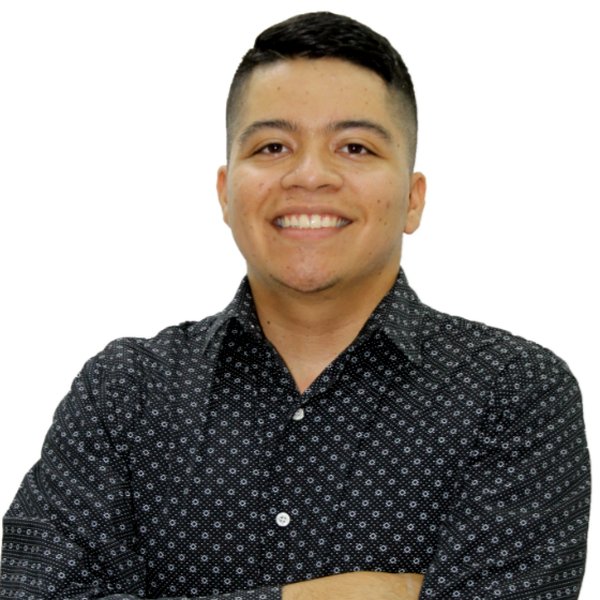
I have a degree in Modern Languages in English and French with a minor in business. · I am an English, French and Spanish tutor with more than seven years of experience both in person and online. I have a degree in Modern Languages in English and French with a minor in business.
Master Languages with Daniel: C2 English, DELF B2 French, and Native Spanish Tutor!
Personally vetted · Strommen’s note
Daniel is C2-certified in English, holds a DELF B2 in French, and is a native Spanish speaker. He teaches all three with real fluency benchmarks behind each one.
Specialties
Also speaks: Business & Management, Dialect Coaching, International Business, Public, Tests, Translation
I have a degree in Modern Languages in English and French with a minor in business. · I am an English, French and Spanish tutor with more than seven years of experience both in person and online. I have a degree in Modern Languages in English and French with a minor in business.
Master Languages with Daniel: C2 English, DELF B2 French, and Native Spanish Tutor!
Specialties
I also speak: Business & Management, Dialect Coaching, International Business, Public, Tests, Translation
Personally vetted · Strommen’s note
Daniel is C2-certified in English, holds a DELF B2 in French, and is a native Spanish speaker. He teaches all three with real fluency benchmarks behind each one.

Bachelor of Arts in FrenchLicence en FLE- Ongoing · Pro FLEDALF C1TEF/TCF/DELF-DALF examiner certifications
French language expert I DELF/DALF/TCF/TEF Examiner I FOS/FLE
Personally vetted · Strommen’s note
Paul is a certified DELF/DALF/TCF/TEF examiner, not just a prep tutor. He teaches French and Swahili out of Nairobi, thirteen years in.
Specialties
Bachelor of Arts in FrenchLicence en FLE- Ongoing · Pro FLEDALF C1TEF/TCF/DELF-DALF examiner certifications
French language expert I DELF/DALF/TCF/TEF Examiner I FOS/FLE
Specialties
Personally vetted · Strommen’s note
Paul is a certified DELF/DALF/TCF/TEF examiner, not just a prep tutor. He teaches French and Swahili out of Nairobi, thirteen years in.
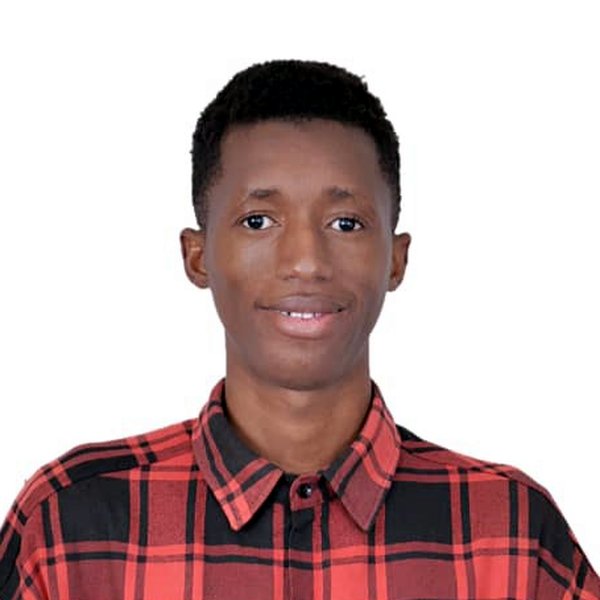
Master · bachelor's degree
Pédagogie personnalisée
Personally vetted · Strommen’s note
Seven years teaching French sit behind Boubacar's practice out of Settat: TEF, TCF, and DELF exam coaching, Belgian French included as a specialty.
Specialties
Also speaks: English
Master · bachelor's degree
Pédagogie personnalisée
Specialties
I also speak: English
Personally vetted · Strommen’s note
Seven years teaching French sit behind Boubacar's practice out of Settat: TEF, TCF, and DELF exam coaching, Belgian French included as a specialty.

Français formel — exam-day register
5 transition phrases that lift a TEF/TCF written task
Examiners want variety in your connectors. These five carry weight in expression écrite and the interactive speaking section. Screenshot the infographic, then book a tutor to drill the rest.
-
01
Par ailleurs
"Furthermore" or "in addition." Adds a related but distinct point. Higher-register than aussi or en plus, both of which lean conversational. Used routinely in editorials and formal writing, exactly the register the TEF/TCF writing sections expect.
e.g. Le candidat maîtrise la grammaire. Par ailleurs, son lexique est varié.
-
02
En revanche
"On the other hand," a phrase that sets up a clean contrast. Far stronger in a written task than mais, which examiners flag as low-register when overused. Pair it with certes... en revanche for the concession-then-counter structure that scores well on argumentative tasks.
e.g. Le coût de la vie est élevé. En revanche, les services publics sont accessibles.
-
03
Cela étant dit
"That being said," a sophisticated pivot phrase that signals you can hold two ideas in tension. Examiners reward writers who can concede ground before pushing back. Works in both written tasks and the speaking interaction.
e.g. L'argument est valable. Cela étant dit, plusieurs nuances méritent d'être examinées.
-
04
À cet égard
"In this regard" or "on this point." Used to drill down into a specific aspect of the topic at hand. Signals a writer who can structure rather than just list, which the rubric calls "cohérence et cohésion."
e.g. Plusieurs solutions ont été proposées. À cet égard, le rapport ministériel mérite attention.
-
05
Toutefois
"However," the formal-register equivalent of mais. Cleaner than cependant for short transitions, more elegant than par contre (which is informal and avoided in writing). A reliable workhorse for the written tasks.
e.g. Les chiffres sont encourageants. Toutefois, des progrès restent à accomplir.
About French for Canadian Citizenship (TEF/TCF)
French that opens the door to Canada
Canada is officially bilingual, and Immigration, Refugees and Citizenship Canada (IRCC) treats French ability as a real selection factor. Proving that ability means sitting one of two tests: the TEF (Test d'évaluation de français), administered by CCI Paris Île-de-France, or the TCF (Test de connaissance du français), administered by France Éducation international. Both are accepted by IRCC for the major French-language pathways, but only specific IRCC-recognized versions count: TEF Canada and TCF Canada. Sit the wrong variant and the score will be valid for a French university admission and useless for your Express Entry profile. The first thing a Strommen tutor will do is confirm which test, which version, and which IRCC program you're targeting before a single drill happens.
The pathways and the minimums look roughly like this, with the caveat that IRCC adjusts the CLB conversion tables periodically and the canada.ca pages are the only authoritative source. Canadian citizenship requires CLB 4 in listening and speaking for applicants aged 18 to 54. Express Entry / Federal Skilled Worker uses the Comprehensive Ranking System (CRS), which awards substantial bonus points for CLB 7 or higher in all four French skills (listening, reading, speaking, writing) even when English is your first official language. A CLB 7+ French profile can swing a CRS score by the better part of a hundred points and pull a candidate from the borderline into the cut-off. Quebec Skilled Worker and the Quebec Experience Program use the TEFAQ (a TEF variant scored against the Échelle québécoise) rather than TEF Canada, and Quebec runs its own selection grid independent of IRCC. Provincial Nominee Programs with francophone streams accept TEF Canada or TCF Canada. If you don't yet know which test or which program is the right fit, that's the first lesson, not a prerequisite. (Verify the current CLB / NCLC tables against the IRCC pages before any application, since they shift.) Students who want broader French foundations alongside the test track can begin with our general French course page.
Both tests cover the same four skills, but the formats are not interchangeable. TEF Canada runs around three hours, with separate sections for compréhension orale, compréhension écrite, expression écrite, and expression orale, scored on a scale that IRCC maps to CLB levels per skill. TCF Canada is also a four-skill exam in roughly the same time block, structured as a modular test where each section returns its own score that converts to a CLB band. The TCF reading and listening sections are multiple choice; TEF reading and listening include multiple choice with a heavier emphasis on professional and administrative contexts. The writing sections diverge most: TEF Canada's expression écrite asks you to produce two distinct tasks (a news article completion and a formal letter or argumentative piece), while TCF Canada gives you three short-to-medium writing tasks of increasing length and complexity. Both speaking sections are interactive: you and the examiner have a real conversation, and learners who prepared by recording monologues into a phone consistently underperform. We'll come back to that. For most candidates the choice between TEF Canada and TCF Canada comes down to which schedule and test center is most accessible and which writing format suits your style; the IRCC outcome is the same.
Strommen's prep moves through a fixed rhythm calibrated to the candidate. Lesson one is diagnostic: a sample paper from the actual TEF or TCF, timed, no help, so the tutor sees where the candidate truly sits per skill. From there the lesson plan weights the weakest section heaviest. Most North-American adult learners discover their reading is stronger than their writing and their listening is stronger than their speaking, which means the higher-stakes Express Entry CLB 7+ goal tends to be bottlenecked by expression écrite and expression orale. Lessons drill the rubrics directly: how examiners score coherence, register, lexical range, grammatical accuracy, phonological control, and interactive competence. We run timed mock writing tasks marked against the published criteria, mock speaking with a tutor playing the examiner role on prescribed prompts, and listening drills built from official sample papers and equivalent francophone radio (Radio-Canada, RFI, France Culture). For a deeper look at how CLB and CEFR levels relate to the kind of progress real students see, our blog post on ILR and CEFR levels is the most useful primer.
Transition signposts are the single biggest writing-score lever for learners arriving with conversational French. The examiners want to see par ailleurs, en outre, en revanche, cela étant dit, à cet égard, dans cette optique, néanmoins, and toutefois used correctly and in variety. American writers under-use them because English equivalents like "moreover" sound stiff in casual prose; in formal French they're load-bearing. A weekend of targeted drilling on transition phrases routinely lifts a written task by half a CLB band. Our blog post on mastering French transition words is the supplement we hand to students between the diagnostic and the first writing mock.
On pronunciation and the interactive speaking section, a few patterns repeat. The TEF and TCF examiners are listening for nasal vowels (the contrast between vin, vent, vont), the uvular R, and the difference between the u and ou sounds. They're also listening for register. These are formal tests; ouais, ben, du coup dropped into an oral monologue cost points. Anglicisms cost points too: using opportunité for opportunity when occasion is the right word, or borrowing English syntax for relative clauses. Candidates targeting Quebec immigration sometimes assume Québécois pronunciation will help on the TEFAQ. It mostly doesn't. The TEFAQ tests continental French; the Quebec integration happens after arrival. Our Parisian French specialty covers the standard register the exam expects, and our Québécois French tutors page is the right next step for post-arrival integration. The speaking section is interactive, not a monologue: candidates who prepared by recording themselves into a phone freeze when the examiner interrupts or follows up. Lessons drill the interaction: a tutor in the examiner role, real-time prompts, real-time follow-ups, real-time rubric feedback.
The expected prep timeline depends on starting level. A candidate sitting at solid B1 conversational French targeting CLB 7 across all four skills typically needs three to six months of weekly lessons with structured self-study between, including 30 minutes a day of Radio-Canada or France Info listening, two written tasks a week, and one full mock exam in the final month. A candidate at high A2 targeting CLB 4 for citizenship can usually get there in two to three months. A candidate already at B2 who needs CLB 8 or 9 for a Quebec graduate program will need the timeline driven by writing and speaking, not vocabulary. Honest pacing matters more than aggressive scheduling. The tests aren't graded on a curve, and a rescheduled exam is cheaper than a borderline pass.
The Strommen TEF/TCF roster includes native French tutors with TEF or TCF examiner credentials, Canada-based French tutors who've coached immigration candidates through the IRCC scoring process themselves, and France-based teachers familiar with the exam administration and the official sample papers. Each tutor's bio says where they're from, their certification background, and which student profile they fit best (citizenship CLB 4, Express Entry CLB 7+, Quebec TEFAQ, deferred-pathway maintenance). You can match yourself to a tutor with examiner credentials for rubric-accurate scoring practice, a Canada-based tutor for IRCC navigation alongside the language work, or a France-based tutor for the standard register and exam pacing. For a head-start before lessons begin, our DELF test preparation specialty covers related French exam rubrics, and our Business French specialty overlaps with the formal-register vocabulary that strong TEF/TCF writers need. Or browse the full tutor list and book a 30-minute free trial.
Lessons calibrate to your actual goal. Citizenship CLB 4 prep is a different curriculum from Express Entry CLB 7+, which is different again from Quebec TEFAQ. We don't run a generic French exam course. Each lesson is one-on-one, your tutor plans around your test date and your weakest section, and the trial is free. Existing French is a head start, not a liability. Most candidates arrive with usable conversational French and need targeted exam strategy plus written-register elevation. The point of the test is to prove French ability to IRCC; the point of the lessons is to make sure the score on the page reflects the French you actually have.
What you'll cover
Lessons & classes tailored to French for Canadian Citizenship (TEF/TCF)
TEF Canada and TCF Canada exam strategy
The two IRCC-recognized exams, section by section: compréhension orale, compréhension écrite, expression écrite, expression orale. Format, timing, scoring conversion to CLB, and which test better suits your writing style. Sample papers drilled against the published rubrics with timed conditions, plus mock exams in the final month before your sitting. We also cover the TEFAQ separately for Quebec Skilled Worker and Quebec Experience Program candidates. Our DELF test preparation specialty covers the broader French exam rubric for students considering both pathways.
Formal register, transition phrases, and writing tasks
Par ailleurs, en outre, en revanche, cela étant dit, à cet égard, toutefois, néanmoins, dans cette optique: the discourse markers that lift a written task by half a CLB band. Plus the elaborate French letter conventions, formal closings, and argumentative-essay structure the rubric rewards. Weekly written tasks marked against the official criteria. The transition words blog post is the canonical supplement.
Interactive speaking and pronunciation
The expression orale section is a real conversation, not a recorded monologue. Lessons drill the interaction live with a tutor playing examiner: prompts, follow-ups, prepared topics shifted mid-flight, register held under pressure. Plus pronunciation work targeted to what examiners listen for: nasal vowels, the uvular R, the u/ou distinction, sentence-final stress. Our Parisian French specialty covers the standard register the exam expects.
IRCC navigation, CLB conversion, and test-day plan
How the TEF and TCF raw scores convert to CLB bands per skill. Which IRCC program (citizenship, Express Entry, Quebec) wants which score and which test version. How long results stay valid for each pathway, when to re-test, and how to plan the application timeline backward from a target IRCC submission date. Our Canada-based tutors have walked this process themselves and can flag the IRCC nuances mid-lesson. (Verify all CLB tables and program rules against current canada.ca pages, since IRCC adjusts them.)
FAQ
About French for Canadian Citizenship (TEF/TCF) lessons & classes
What's the difference between TEF Canada and TCF Canada, and which should I take?
Both are IRCC-recognized for the same French-language pathways (citizenship, Express Entry, francophone PNP streams). TEF Canada is administered by CCI Paris Île-de-France; TCF Canada is administered by France Éducation international. Format differences are real but modest: TEF Canada's expression écrite asks for two distinct tasks (news article completion plus formal letter or argumentative piece); TCF Canada gives three writing tasks of increasing length. Reading and listening are multiple choice on both. For most candidates the right choice comes down to test center accessibility, schedule, and which writing format better suits how you compose. Your tutor can recommend after the diagnostic lesson.
What CLB score do I actually need?
Depends on the IRCC program. Canadian citizenship requires CLB 4 in listening and speaking for applicants 18-54. Express Entry awards substantial Comprehensive Ranking System bonus points for CLB 7+ in all four skills (listening, reading, speaking, writing), and this is the threshold most Express Entry candidates target because it can swing a CRS score by the better part of a hundred points. Quebec programs use the TEFAQ scored against the Échelle québécoise, with thresholds set by the relevant Quebec program. Verify current CLB and NCLC conversion tables on canada.ca and the relevant Quebec immigration pages before any application, since IRCC adjusts them periodically.
I already speak some French. How long does prep take?
Honest answer: depends on the gap between your current level and your target CLB. A candidate at solid B1 conversational French targeting CLB 7 across all four skills typically needs three to six months of weekly lessons with structured self-study between. A candidate at high A2 targeting CLB 4 for citizenship can usually get there in two to three months. A B2 candidate targeting CLB 8 or 9 will be paced by writing and speaking rather than vocabulary. Most candidates underestimate the writing section; the gain there comes from formal-register vocabulary and transition phrases, not generic conversational practice.
Is the speaking section really an interactive conversation?
Yes, and that's the biggest single misconception. Many candidates prepare by recording monologues into their phones, then freeze on test day when the examiner interrupts, follows up, or shifts the prompt. The expression orale rubric scores interactive competence: your ability to engage in real-time French dialogue under register and topic pressure. Lessons drill this directly: a tutor in the examiner role, prepared topics shifted mid-flight, real-time rubric feedback on what would and wouldn't have scored.
Do I need TEFAQ instead if I'm immigrating to Quebec?
For Quebec Skilled Worker and the Quebec Experience Program, yes. TEFAQ (Test d'évaluation de français pour l'accès au Québec) is a TEF variant scored against the Échelle québécoise rather than the IRCC CLB. Some Quebec-bound candidates sit both TEFAQ for the Quebec application and TEF Canada or TCF Canada if they also want federal pathway flexibility. Your tutor can map which test (or tests) match your actual immigration plan in the diagnostic lesson.
Will Québécois pronunciation help on the test?
Not really. The TEF and TCF (including TEFAQ) test continental French as the reference. Québécois pronunciation isn't penalized, but it isn't rewarded either, and shifting toward continental neutral pronunciation tends to be the cleaner path to score points. Integration into spoken Québécois is the post-arrival project, and our Québécois French tutors page is the right next step after the test.
How long are TEF/TCF scores valid?
Two years from the test date for IRCC purposes, with some program-specific nuances. The validity clock runs from the date you sat the test, not the date IRCC received your file. Plan the application timeline backward from your target submission so the score doesn't expire mid-process. Verify current validity rules on canada.ca before scheduling, since IRCC has adjusted these in the past.
Are tutors based in Canada, France, or the US?
All three. Our roster includes native French tutors with TEF or TCF examiner credentials based in France, Canada-based French tutors who've walked the IRCC immigration process themselves, and longtime French-American bilinguals based in the US. Each tutor's bio says where they're from, their certification background, and which student profile they fit best (citizenship CLB 4, Express Entry CLB 7+, Quebec TEFAQ, deferred-pathway maintenance).
Ready for French for Canadian Citizenship (TEF/TCF) lessons or classes?
Book a free 30-minute trial with one of our personally vetted tutors. Private lessons or small-group classes — your choice.