



Personally vetted instructors
Swedish for Beginners tutors, lessons & classes
God dag The formal Swedish hello you use in a first meeting or with someone in a service role, taught alongside casual hej in the first lesson.
Personally vetted Swedish tutors who specialize in absolute beginners. Lessons that take the 28-letter alphabet, the famous J-sound, and the en/ett gender problem seriously, with the patience first-month learners actually need.
Your instructors
Swedish for Beginners tutors for private lessons & classes
Strommen runs a curated boutique school. Our Swedish beginner tutors are vetted for the pedagogical skill of patient pronunciation work, clear early grammar explanation, and the encouragement that beginners need when the J-sound feels impossible and the en/ett distinction feels arbitrary.
Filter by location, age, or price. Then book a 30-minute free trial.
Below are the Strommen tutors who specialize in teaching Swedish to absolute beginners. Photos, ratings, and rates are real. Click any card to read the bio and book a free 30-minute trial.
I want to learn…
Every tutor, personally met. — founder-vetted since 2006, in Los Angeles and online worldwide.
Get a personalized plan
Pick your language — a language advisor will match you with the right tutor and map out your path.

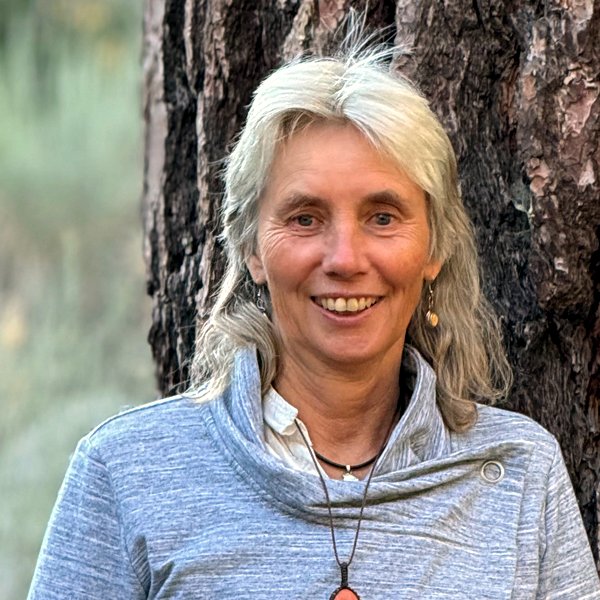


PhD, BSc
PHD with Degree in Swedish and German Linguistics - Arctic researcher, PHD in Biology offering fun and interactive Swedish and German lessons
Personally vetted · Strommen’s note
Carola is a PhD biologist and Arctic researcher with a separate degree in Swedish and German linguistics. She brings that same field rigor into lessons.
Specialties
PhD, BSc
PHD with Degree in Swedish and German Linguistics - Arctic researcher, PHD in Biology offering fun and interactive Swedish and German lessons
Specialties
Personally vetted · Strommen’s note
Carola is a PhD biologist and Arctic researcher with a separate degree in Swedish and German linguistics. She brings that same field rigor into lessons.

Början — first foundations
5 Swedish foundations every beginner needs in the first month
These are the building blocks that anchor a beginner Swedish course. Knowing them changes how the first lessons feel.
-
01
Det svenska alfabetet · 29 letters
The Swedish alphabet is the 26 letters of English plus å, ä, and ö, for a total of 29. The three extra letters are separate letters with their own sounds and their own positions at the end of the alphabet (not variants of a, a, and o). Sweden treats them as full alphabet members, which means dictionaries and phone books place them after z. Knowing this matters for sorting and for understanding how Swedes index information.
e.g. ABCDEFGHIJKLMNOPQRSTUVWXYZÅÄÖ. Twenty-nine letters in the standard order.
-
02
The famous J-sound
The Swedish J is pronounced as a Y sound. Jag ("I") is "yah," not "jag." Jul (Christmas) is "yool," not "jule." The related sj-sound (in sjö, sju, sjuksköterska) has no single standard pronunciation across Sweden and varies regionally; beginners produce something recognizable as the sj-sound and let it settle with regional exposure.
e.g. Jag heter Maria. ("My name is Maria.") Pronounced "yah hee-ter ma-REE-ah."
-
03
En vs ett
Every Swedish noun is either an en-word (common gender, roughly 75 percent) or an ett-word (neuter, the remaining 25 percent). The article determines adjective forms, the definite-suffix form, and various other agreement details. Some patterns help (people are usually en, abstract diminutives can be ett), but many common ett-words simply need memorization. Drill them with vocabulary from day one.
e.g. En bok (a book). Ett bord (a table). En stol (a chair). Ett rum (a room).
-
04
Du for everyone, since the du-reform
The du-reform of the 1960s and 1970s moved Swedish toward universal use of the informal du for everyone: strangers, older people, professors, doctors, store clerks. The formal ni still exists but is used rarely and can sometimes feel stilted. A beginner who defaults to du is following modern Swedish convention correctly. English-speaking instincts to be formal first do not translate here.
e.g. Addressing a stranger at a counter: "Hej, har du tid en sekund?" ("Hi, do you have a second?")
-
05
Vowel length is contrastive
Swedish distinguishes long vowels and short vowels in ways that change meaning. Glas (long vowel, glass as in a drinking vessel) versus glass (short vowel, ice cream). Tak (long vowel, roof) versus tack (short vowel, thanks). A beginner who attends to vowel length in the first months prevents the comprehension failures that come from collapsing the distinction.
e.g. En glas mjölk (a glass of milk) vs en glass (an ice cream). Same letter, different vowel length.
About Swedish for Beginners
Swedish from hej to your first real conversation
Starting Swedish from zero is a friendlier project than its reputation suggests, especially for English speakers. Swedish is a North Germanic language closely related to English through the broader Germanic family, with substantial vocabulary overlap and a basic grammar architecture that English speakers find intuitive faster than they typically expect. Cognates appear constantly: hus is house, bok is book, mjölk is milk, vatten is water, broder is brother, syster is sister, vinter is winter. Word order in Swedish follows the V2 rule (the conjugated verb sits in the second position of the main clause), which is close enough to English declarative structure that beginners adapt within the first month. The case system that complicates German has largely disappeared in modern Swedish, leaving only the genitive marker -s. Adjective endings are simpler than in German. Most plurals follow predictable patterns. None of this makes Swedish trivial, but it does mean that the hours an English speaker invests in Swedish compound faster than they would in many other languages.
The famous Swedish J-sound is the first piece of pronunciation that catches every beginner's attention. The letter J in Swedish is pronounced as a Y sound (like English Y in "yes"), and several consonant clusters that include J or similar letters produce a softer, more palatal sound than English speakers expect. Jag (I) is pronounced "yah" rather than "jag." Jul (Christmas) is "yool" rather than "jule." The more famous variation is the so-called sj-sound, which appears in words like sjö (sea), sju (seven), and sjuksköterska (nurse). The sj-sound has no single standard pronunciation across Sweden; it ranges from a soft sh-like sound in southern Sweden to a more guttural sound in central Sweden to a distinctive whistled or fricative sound in Stockholm and surrounding areas. Beginners do not need to master a particular regional version; they need to produce something recognizable as the sj-sound, and a tutor will help calibrate based on which Swedish region the student is targeting. The tj-sound (in words like tjugo, twenty) is a related palatal fricative, gentler than the sj-sound and closer to English ch.
The nine-vowel system is the second pronunciation foundation. Swedish has nine distinct vowel sounds: a, e, i, o, u, y, å, ä, ö. The last three (å, ä, ö) are written as separate letters in the Swedish alphabet, which has 29 letters total (the 26 of English plus å, ä, ö). The å is pronounced roughly like the English "oh" in "more." The ä is roughly like the English "e" in "egg" but more open. The ö is a rounded front vowel with no direct English equivalent, similar to the German ö or the French eu in deux. The y is a rounded front vowel as well, different from English y and from Swedish i (which is the high front unrounded vowel). Vowel length is contrastive in Swedish: long vowels and short vowels distinguish meaning in word pairs (glas, glass meaning glass and ice cream respectively, with the long-vowel version meaning glass and the short-vowel version meaning ice cream). A beginner who attends carefully to vowel length in the first months prevents the misunderstandings that come from collapsing long and short vowels into a single American-style pronunciation.
The en/ett gender system is the third foundation, and the friction point that catches most beginners. Every Swedish noun is either an en-word (common gender, accounting for roughly 75 percent of nouns) or an ett-word (neuter, the remaining 25 percent). The article determines which form of adjectives the noun takes, which form of the definite article suffix appears (-en versus -et), and various other agreement details. There are some helpful patterns: most nouns referring to people are en-words; most concrete inanimate objects are ett-words; abstract concepts go either way. But many common ett-words simply have to be memorized. En bok (a book). Ett bord (a table). En stol (a chair). Ett rum (a room). En kvinna (a woman). Ett barn (a child, neuter despite referring to a person, because diminutive). The good news for beginners is that getting the article wrong rarely blocks comprehension; the bad news is that fluent-sounding Swedish eventually requires getting it right. Tutors drill articles with vocabulary from day one rather than introducing them later.
The polite-versus-casual register question is interesting in Swedish because of the famous du-reform of the 1960s and 1970s. Until the 1960s, Swedish used a complex system of polite address (titles, last names, the third-person ni form) that varied by social context, age, and relationship. The du-reform, which moved Swedish toward universal use of the informal du for everyone, was a deliberate sociolinguistic shift driven by egalitarian social movements and made permanent through institutional adoption. Today, Swedes use du with essentially everyone in everyday interaction: strangers, older people, professors, doctors, store clerks. The formal ni still exists but is used rarely and can sometimes feel slightly stilted or ironic. A beginner who defaults to du with everyone is following modern Swedish convention correctly. The English-speaking instinct to be formal first does not translate; in Swedish, formality reads as distance rather than respect.
The basic verbs for the first month are vara (to be), ha (to have), göra (to do), gå (to go), and komma (to come). Like with most languages, the irregular high-frequency verbs do disproportionate work in early conversation. Jag är (I am), du är (you are), han/hon är (he/she is) covers identification. Jag har (I have) covers possession. Jag gör (I do/make) covers action. Jag går (I go/walk) and jag kommer (I come) cover motion. Once these are automatic, regular present-tense verb conjugation slots in beside them, with the simple Swedish present tense (verb stem plus -r) handling the bulk of basic sentences. Past tense and future tense come gradually over the first six months.
Reading Swedish is genuinely accessible from early in the curriculum because the spelling is consistent and the cognates with English carry vocabulary. A beginner who can sound out the letters can usually read simple Swedish sentences with surprising comprehension. Tutors often introduce reading early through children's books and short news articles, both for the comprehension boost and for the encouragement that comes from realizing how much Swedish a beginner can already make sense of. The Astrid Lindgren canon (Pippi Långstrump and the rest), the Eugene Schoultz nature writing, and the children's-news editions of various Swedish newspapers all work as early reading material.
Who actually learns Swedish with us as a beginner. Strommen sees Swedish-American heritage learners reconnecting with the language, partners of Swedish speakers preparing for family visits, relocation families heading to Stockholm, Gothenburg, or Malmö for work or study, and the steady stream of cultural enthusiasts drawn to Swedish design, film (Bergman and the more recent wave of Scandinavian cinema), music (everything from ABBA to the contemporary indie scene), and the famously functional Nordic social model. Each has a different starting point and a different timeline, and the lesson plan calibrates at the trial.
Lessons calibrate to your goal and your available cadence. A leisurely beginner pace for a heritage learner with personal motivation looks different from a relocation sprint for someone moving to Stockholm in six months. Both look different from preparing for a SAS (Sfi) Swedish-for-immigrants placement test. Each lesson is one-on-one and your tutor plans around your week.
The Strommen Swedish for Beginners roster includes Sweden-born native speakers with classroom or private-teaching backgrounds, plus longtime Swedish-American bilinguals who themselves grew up between languages. Each bio specifies background, regional accent, and teaching style. For longer-term goals or specific tracks, our Swedish Grammar and Swedish for Kids pages cover related programs. The trial lesson is the place to figure out the right pace and the right tutor fit.
What you'll cover
Lessons & classes tailored to Swedish for Beginners
Pronunciation foundations from day one
The 29-letter alphabet, the nine-vowel system, the J-sound and the regional sj-sound variants, the contrastive vowel length, and the basic word stress patterns. Lessons include short listening-and-repeat drills with native audio so your ear builds alongside your speaking. Beginner Swedish pronunciation is best learned correctly the first time rather than corrected later, which is why we frontload it.
The en/ett system, handled the right way
Articles get drilled with vocabulary from day one: never "bok," always "en bok." Patterns where they exist (people are typically en, diminutives often ett, abstract concepts mixed) get explained and applied. The chunk of ett-words that simply have to be memorized gets folded into your active vocabulary through repetition. Most beginners reach reliable en/ett instinct by month four.
Vara, ha, gå, and your first 150 words
The four foundational verbs (to be, to have, to go, to come) plus 100 to 150 high-frequency nouns and verbs in the first month cover the majority of the basic sentences you'll want to make. Family, food, daily routine, work, hobbies, time, location. Once these are automatic, regular present-tense verb conjugation slots in with little additional friction.
Beginner-friendly between-lesson resources
Your tutor will recommend specific resources calibrated to your level: SVT Barn (the Swedish public broadcaster's children's content) for slow Swedish, the Babbel and Drops apps for vocabulary reps, the easy-Swedish news edition 8 Sidor for reading practice, and Astrid Lindgren picture books for the cultural and linguistic anchor. Twenty to thirty minutes of daily exposure outside lessons is the single biggest accelerator for beginners.
FAQ
About Swedish for Beginners lessons & classes
How do I actually master the Swedish J-sound and sj-sound?
The J-sound is easy: it is pronounced as the English Y in "yes." Jag is "yah." The sj-sound is harder because it varies regionally across Sweden, from a soft sh-like sound in the south to a more guttural sound in central Sweden to a distinctive whistled fricative in Stockholm. Beginners do not need to master a specific regional version; they need to produce something recognizable as the sj-sound, and a tutor calibrates based on which Swedish region you are targeting. Communicative success does not depend on a textbook-perfect sj-sound.
When do I use en versus ett?
Roughly 75 percent of Swedish nouns are en-words and 25 percent are ett-words. Useful patterns: people are usually en, abstract diminutives often ett, concrete inanimate objects often ett. Beyond the patterns, many common ett-words have to be memorized: ett bord, ett rum, ett barn, ett hus, ett land. Good tutors drill articles together with vocabulary from your first lesson onward, so you are learning each noun with its article rather than as a bare stem.
Is Swedish easier than German for English speakers?
In most ways, yes. Swedish has lost almost all of its case marking (German still uses four cases actively), adjective endings are simpler, vocabulary overlap with English is roughly similar but with a slightly more transparent feel for English speakers, and the modern du-for-everyone register removes the German Sie-versus-du calculation. Word order patterns are similar in both languages: V2 in main clauses, verb-final in subordinate clauses. Many English speakers who tried German and bounced off find Swedish much more approachable.
How long until I can hold a basic conversation in Swedish?
From zero, weekly hour-long lessons plus 20 to 30 minutes of daily exposure (podcasts, apps, Swedish media) typically produces functional A2 conversation within 6 to 9 months. That means introducing yourself, ordering food, talking about your day, basic small talk. Conversational comfort at B1 usually takes another 6 months at the same pace. Faster timelines are possible with more intensive schedules; slower timelines are normal for learners with less time.
What does a typical beginner Swedish lesson look like?
A first-month lesson runs about an hour and typically includes 10 minutes of warm-up conversation in Swedish (even halting), 15 minutes of new vocabulary with pronunciation drill, 15 minutes of grammar in context (a single point introduced through example sentences), 10 minutes of listening practice with a short audio clip, and 10 minutes of structured role-play or guided conversation. Homework is light and primarily listening-focused. Your tutor calibrates based on what is clicking and what is not.
Do I need to learn the formal ni form?
Not as an active production skill. Since the du-reform of the 1960s and 1970s, modern Swedish uses du with essentially everyone in everyday interaction: strangers, older people, professors, doctors, store clerks. The formal ni still exists in print and in some traditional contexts, but defaulting to du is the correct modern convention. You will recognize ni when you encounter it in older texts or in specific institutional contexts; you do not need to produce it.
Should I worry about the differences between Swedish in Sweden and Swedish in Finland?
Not in the first six months. Swedish is one of the two official languages of Finland (spoken by roughly 5 percent of the Finnish population), with some pronunciation differences and a handful of vocabulary preferences compared to Sweden Swedish. The written language is essentially the same. For beginners, learning standard Sweden Swedish gives you full functionality in Finland as well, and Finland Swedish speakers all understand Sweden Swedish without difficulty. If your specific goal is Finland Swedish, mention it at the trial and the tutor can calibrate accordingly.
Are your beginner Swedish tutors native speakers?
Most are Sweden-born native speakers with classroom or private-teaching backgrounds. A few are longtime Swedish-American bilinguals who grew up between languages and now teach. Each tutor's bio specifies their background, regional accent (Stockholm, Gothenburg, Malmö, and other variants), and teaching style. For beginner work, what matters most is patient pronunciation modeling, clear early grammar explanation, and the encouragement that beginners need in the first weeks when the language feels foreign.
Ready for Swedish for Beginners lessons or classes?
Book a free 30-minute trial with one of our personally vetted tutors. Private lessons or small-group classes — your choice.