



Personally vetted instructors
English for Kids tutors, lessons & classes
Hi there! The warm, kid-friendly English opener kids actually hear at home and at school.
Personally vetted English tutors for kids. Patient, age-appropriate lessons for ages 4-14, calibrated to your child's level — ESL support, international school work, reading and phonics, or pure enrichment for bilingual families.

Your instructors
English for Kids tutors for private lessons & classes
Strommen has been teaching English to international families and ESL children since 2006. Kids' English is the most patience-intensive specialty on our roster. What makes a kids' tutor work is classroom experience, warmth, and the instinct for when a child needs a stretch versus when they need encouragement. Every tutor below has been met and vetted by us, screened specifically for working with children. TESOL/TEFL credentials, elementary classroom backgrounds, and reading-specialist training are common. No marketplace. No automated profile-creation.
Filter by location, age, or price. Then book a free 30-minute trial, including a parent chat up front about your child's level and goals.
Below are the Strommen tutors who specialize in English for kids. Photos, ratings, and rates are real. Click any card to read their bio and book a free 30-minute trial — including a quick chat with you, the parent, about your child's English goals.
I want to learn…
Every tutor, personally met. — founder-vetted since 2006, in Los Angeles and online worldwide.
Get a personalized plan
Pick your language — a language advisor will match you with the right tutor and map out your path.



Bachelor's · TEFL 120h (Graded A)
Damon, the ESL teacher
Personally vetted · Strommen’s note
Damon treats every student like someone he's building a long relationship with. He teaches Chinese, English, and Russian out of Bangkok.
Specialties
Bachelor's · TEFL 120h (Graded A)
Damon, the ESL teacher
Specialties
Personally vetted · Strommen’s note
Damon treats every student like someone he's building a long relationship with. He teaches Chinese, English, and Russian out of Bangkok.

Master of Science · TEFL (120-hour Premier) Certificate
Learn the language, live the culture
Personally vetted · Strommen’s note
Bill's whole premise is that language and culture can't really be separated. His lessons are built around both together.
Specialties
Master of Science · TEFL (120-hour Premier) Certificate
Learn the language, live the culture
Specialties
Personally vetted · Strommen’s note
Bill's whole premise is that language and culture can't really be separated. His lessons are built around both together.
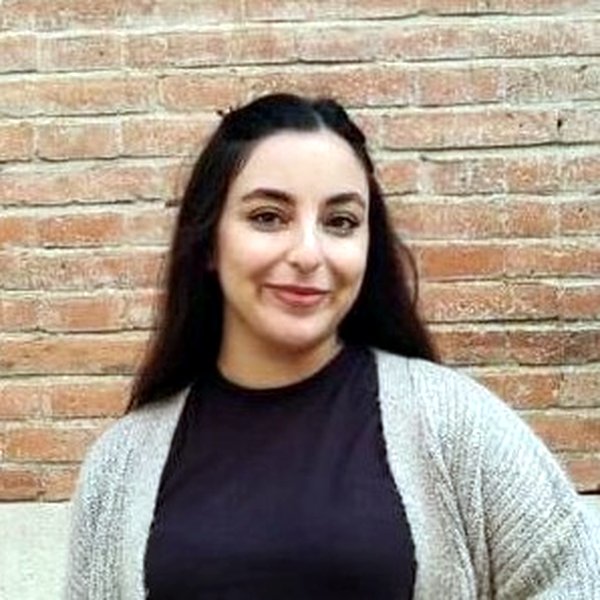


Bachelors degree in business Masters in logistics · TEFL Translation
Certified French & Spanish Language Coach | Business, Exams, & Conversational Mastery
Personally vetted · Strommen’s note
A Berlitz-trained language consultant, marielyne teaches English, French, and Spanish, built for business communication and exam prep specifically.
Specialties
Bachelors degree in business Masters in logistics · TEFL Translation
Certified French & Spanish Language Coach | Business, Exams, & Conversational Mastery
Specialties
Personally vetted · Strommen’s note
A Berlitz-trained language consultant, marielyne teaches English, French, and Spanish, built for business communication and exam prep specifically.

B. A(ED) English language · TEFL
#Where Patience Meets Passion, Productivity Blooms!
Specialties
Also speaks: Igbo
B. A(ED) English language · TEFL
#Where Patience Meets Passion, Productivity Blooms!
Specialties
I also speak: Igbo

I have a Bachelor's Degree in Business Education (Accounting Option).I also an MSC in Educational Administration and Planning. · I have a 120 Hour TEFL Certificate.
Fun, Friendly and Effective English Lessons.
Specialties
Also speaks: English Literature
I have a Bachelor's Degree in Business Education (Accounting Option).I also an MSC in Educational Administration and Planning. · I have a 120 Hour TEFL Certificate.
Fun, Friendly and Effective English Lessons.
Specialties
I also speak: English Literature

Bachelor’s degree in Environmental Education · TELF
Empowering learners to communicate confidently in English.
Specialties
Bachelor’s degree in Environmental Education · TELF
Empowering learners to communicate confidently in English.
Specialties


Diploma in Nutrition and dietetics · English as a foreign language German language
Making language learning simple and enjoyable
Specialties
Also speaks: German
Diploma in Nutrition and dietetics · English as a foreign language German language
Making language learning simple and enjoyable
Specialties
I also speak: German

MBA · TEFL
PROFESSOR
Personally vetted · Strommen’s note
Ewe, a West African language rarely offered anywhere, sits right alongside English and French on Komi's schedule, taught out of Ghana.
Specialties
Also speaks: German
MBA · TEFL
PROFESSOR
Specialties
I also speak: German
Personally vetted · Strommen’s note
Ewe, a West African language rarely offered anywhere, sits right alongside English and French on Komi's schedule, taught out of Ghana.

Kids' English — milestones & markers
5 milestones in a child's English development
These are the developmental waypoints a great kids' English tutor watches for and builds toward. Useful for parents tracking progress between sessions. Screenshot to share with your child's other parent or your child's school.
-
01
Phonemic awareness
The earliest reading-readiness milestone, usually built in pre-K and kindergarten. Your child can hear and play with the individual sounds in spoken words: they can clap the syllables in "butterfly," rhyme "cat" with "hat," and identify the first sound in "sun." This isn't reading yet; it's the auditory groundwork that makes phonics make sense. Without it, decoding stalls.
e.g. Tutor: "What sound does 'snake' start with?" Child: "Ssss!"
-
02
Sight word automaticity
The second milestone, typically built across kindergarten through second grade. Your child instantly recognizes high-frequency words (the, was, said, where, because) without sounding them out. The Dolch and Fry sight-word lists are the canonical references; most ESL kids need explicit drilling on these because the words are irregular and can't be reliably decoded with phonics rules.
e.g. Child reads "The boy said where his dog was" without pausing on a single word.
-
03
Reading fluency
The decoding-to-comprehension leap, usually around ages 7-9. Your child reads aloud with expression, appropriate pacing, and natural phrasing, not word-by-word. This is the milestone that unlocks reading for meaning rather than reading as a decoding exercise. Once a child reads fluently they can finally read to learn instead of just learning to read, and academic progress accelerates across every subject.
e.g. A second-grader reads a paragraph aloud with the same rhythm they'd use in conversation.
-
04
Written composition
The mid-to-late elementary milestone, typically ages 9-11. Your child can structure a paragraph with a topic sentence, supporting details, and a closing thought. They use transition words (first, then, however, because) appropriately. Spelling is mostly conventional. Sentences vary in length. This is the level American and British schools start expecting in fourth and fifth grade, and ESL kids without it stall at every writing assignment.
e.g. A 10-year-old writes a five-sentence paragraph about a weekend trip that reads coherently end-to-end.
-
05
Analytical reading
The middle-school threshold, ages 11-14. Your child can read a text and discuss what the author is doing, not just what happened in the story. They identify themes, infer motivation, recognize tone and irony, and connect a text to other texts. This is the academic English level secondary school assumes and the level that determines whether a child can keep up in English-language history, science, and literature classes.
e.g. A seventh-grader reads a short story and explains why the narrator might be unreliable.
About English for Kids
English your kid can actually use
Most parents who write to us about English-for-kids lessons fall into one of two situations. Some are bilingual families living in an English-speaking country, where the parents speak another language at home and the child needs extra English support: sometimes for school, sometimes because the school's ESL pull-out isn't moving fast enough, sometimes because a parent worries their own accent or grammar is rubbing off in ways the child will have to unlearn later. Other families are abroad, with a child attending an international school where the medium of instruction is English, and they want a dedicated tutor to close the gap between classroom English and the level the school actually expects. Both situations call for the same thing: an experienced kids' English tutor who can meet the child where they are and build the missing pieces patiently, week after week.
The Strommen English-for-Kids roster filters for that exact profile. We're a curated boutique, so Garrett or someone on the team has met every tutor here, in person or via a thorough video interview. We screen for English fluency, of course, but the harder filter is the kids piece: classroom experience, patience, the ability to keep a six-year-old engaged for 25 minutes, the instinct to spot when a child is faking comprehension versus actually following along. Many of our kids' English tutors hold TESOL or TEFL credentials. Several are former elementary classroom teachers. A handful have backgrounds as reading specialists or literacy interventionists. The credentialing is real, but the chemistry with your child matters at least as much, and the trial lesson exists to surface that fit.
Lessons calibrate to your child's age, not a one-size pre-K-through-middle-school curriculum. For ages 4-5, sessions stay short (15-25 minutes), heavy on phonics fundamentals, songs, picture books, and vocabulary built through play. Tutors lean on Dr. Seuss, Eric Carle, classic nursery rhymes, and song-based phonics programs that teach letter sounds without the child feeling like they're studying. For ages 6-9 the work shifts toward reading fluency and the leap from decoding to comprehension. Sight words get drilled into automaticity, early grammar concepts (subject-verb agreement, regular and irregular plurals, past tense) get introduced through context rather than rules, and spoken confidence gets built through structured conversation games. Reading aloud with the tutor every session is non-negotiable at this age. For ages 10-12 the curriculum moves toward writing structure (paragraphs, topic sentences, transition words) alongside richer comprehension passages, more abstract vocabulary, and the kind of analytical reading that middle school will demand. For ages 12-14 sessions look more like adult lessons but still scaffolded: academic register, essay structure, standardized test prep when relevant, age-appropriate literature and journalism. The thread across all ages is that lessons are taught by someone who actually likes working with children, not someone who teaches adults and tolerates the occasional kid.
Reading and literacy deserve their own paragraph because they are the highest-leverage piece of kids' English instruction and the place ESL pull-out programs most often fall short. A child who decodes well, recognizes sight words automatically, and reads independently for pleasure will outpace classroom peers within a year. A child who's still sounding out words in third grade will struggle in every subject because every subject is taught in English. Our literacy-focused tutors use phonics-based curricula (Reading A-Z, Bob Books, Fountas and Pinnell guided reading levels, Orton-Gillingham techniques where dyslexia is suspected) paired with daily reading practice your child does between sessions. Paired reading (the tutor reads a sentence, the child reads it back, then the child reads independently with the tutor catching errors gently) is one of the most effective techniques for emerging readers and shows up in most of our kids' English sessions in some form. A focused tutor working one-on-one for 30 minutes a week, plus 10 minutes of daily home reading the tutor assigns, will move a kid forward faster than three hours a week of group ESL.
A few questions almost every parent asks in the first conversation are worth answering up front. Will my child get confused growing up with two languages? No. Decades of research, with Ellen Bialystok's work on bilingual children at York University as the most-cited example, shows that bilingual kids develop typically on every measure that matters and often display advantages in executive function, attention switching, and metalinguistic awareness. Mixing words from two languages within a single sentence (code-switching) is normal, healthy, and not a sign of confusion; bilingual adults do it too. Our blog post on how the brain benefits from being bilingual covers the research in more depth. Should I speak only English at home so my child improves faster? Almost never. The home language is your child's foundation for identity, family connection, and grandparent relationships, and abandoning it usually backfires within a generation. The right move is to invest seriously in school English (which is what tutoring is for) while keeping the home language strong. Should we try to erase my child's accent? No. Accents shift naturally as children pick up the dominant speech around them, and a tutor's job isn't to drill a child out of how they sound. Clarity matters; uniformity doesn't.
For parents abroad whose kids attend international or English-medium schools, the curriculum looks a little different. These children typically have good classroom English vocabulary but uneven exposure to colloquial spoken English, idiom, and informal register. They can pass an academic English assessment but stall in a conversation with a native-speaking classmate's parent. Our tutors who specialize in this profile lean heavily on conversation practice, age-appropriate idiom (the 70 most useful ones, not all 70 in our proverbs post), and exposure to current kid-and-teen culture in English-speaking countries: the YouTubers, shows, sports, music your child's American or British peers are actually consuming. The blog post on English greetings covers the social-register layer that classroom English usually skips.
Between lessons, the parent's role is to curate the English environment without turning it into a chore. For younger kids: read aloud in English every night, even if you're not a native speaker. Your child will read along, follow pictures, and absorb rhythm and vocabulary. For mid-elementary: shows in English with English subtitles (Bluey, Magic School Bus, Wild Kratts, classic Disney) plus 20 minutes of independent reading. For older kids: longer-form content they actually want (YouTube channels, podcasts, age-appropriate films), plus an English-language book they're reading for pleasure, not for school. Audiobooks count and are particularly useful for kids who struggle with the decoding-to-comprehension leap. The tutor will assign specific between-session reading or listening that fits your child's level; your job is to make space for it in the week.
For children with diagnosed learning differences (dyslexia, ADHD, processing speed) or suspected ones, mention this upfront in the trial. We have tutors with specific training in literacy interventions and special-needs experience; our English for special needs students page covers that profile more fully. For California families specifically, the state's Self-Determination Program can sometimes fund language tutoring for kids with IEPs; our SDP guide walks through eligibility. We're happy to be part of the support team your child already has.
Lessons are one-on-one. The tutor builds the curriculum around your child's level, your family's schedule, your child's interests, and your specific goal, whether that's reading-readiness for kindergarten, fluency catch-up for an immigrant child in second grade, international school support abroad, or middle-school writing prep. The 30-minute trial is free and includes a parent conversation up front. For broader context, our ESL course page covers the family of related programs and our conversational English and Business English specialty pages cover related profiles for adults in the family. Or browse the full tutor list and book a trial directly. Most parents notice the shift around lesson eight or nine. The kid stops dreading Tuesday, starts reading the picture book aloud without being asked, corrects a sibling's grammar at dinner. The hour a week was doing its work the whole time; you just couldn't see it accumulating until it spilled into the rest of the day.
What you'll cover
Lessons & classes tailored to English for Kids
Phonics, reading, and literacy foundations
Phonics-based reading instruction using Reading A-Z, Bob Books, Fountas and Pinnell guided reading levels, or Orton-Gillingham techniques when literacy challenges are suspected. Paired reading every session. Sight-word drilling. Decoding-to-comprehension scaffolding. The highest-leverage work for any child under 10 and the area where ESL pull-out programs most often fall short.
ESL support for children in English-speaking countries
Targeted support for bilingual or non-English-speaking families whose kids are in mainstream US, UK, Canadian, or Australian schools. Classroom-English vocabulary, social-register practice for the playground, homework support across subjects, and confidence-building speaking practice so your child participates instead of going silent. Tutors who've worked with ELL students directly.
International school and English-medium school support
For families abroad whose kids attend international schools: American School, British School, IB schools, English-medium private schools. Lessons fill the gap between classroom English and the level the curriculum assumes. Conversation practice, idiom and colloquial register, age-appropriate exposure to kid culture in English-speaking countries. Tutors who've taught at or attended international schools themselves.
Writing, exam prep, and middle-school readiness
Paragraph and essay structure, vocabulary depth, comprehension passages, age-appropriate analytical reading. Standardized test prep when relevant: Cambridge Young Learners English (Starters/Movers/Flyers), TOEFL Junior, IELTS for younger teens, ISEE, SSAT. Calibrated to your child's school track and any specific deadlines like entrance exams or grade-level expectations.
FAQ
About English for Kids lessons & classes
How young is too young to start English lessons?
Ages 4-5 is the youngest we'd typically recommend formal lessons, and even then sessions stay short (15-25 minutes), play-based, and built around phonics fundamentals, songs, and picture books. Younger than 4 is better served by English-language playgroups, daycare, or simple exposure through screen-time-with-a-parent. From age 5 onward, lessons work well, especially for reading readiness and pre-K vocabulary. Most of our English-for-Kids lessons are for ages 5-14.
We speak another language at home. Will tutoring confuse my child?
No. The research is clear: bilingual children develop typically and often show cognitive advantages. Mixing words from two languages within a sentence (code-switching) is normal and healthy, not a sign of confusion. We strongly encourage maintaining your home language even while investing in English tutoring; abandoning the home language usually backfires within a generation. Our blog post on how the brain benefits from being bilingual covers the research.
My kid attends an international school. Do they still need a tutor?
Most do, especially if the school's English instruction is happening alongside classmates who are native or near-native and your child is the only one catching up. International school curricula assume a level of English most non-native kids haven't yet reached, and the gap shows up in writing assignments and reading comprehension before it shows up in spoken English. A weekly tutor working on the actual classroom material (reading what the class is reading, writing what the class is writing) closes the gap fastest.
Will my child lose their accent? Should they?
Accents shift naturally as children pick up the dominant speech around them, and a tutor's job isn't to drill a child out of how they sound. What matters is intelligibility, not uniformity. A child who speaks clearly and confidently with an accent is in a much better place than a child who speaks accent-free but reluctantly. We don't run accent-reduction sessions for kids under 12; for older teens who specifically want to work on this, we can recommend it, but it's never the focus.
Does video work for kids, or do they need in-person?
Video works well from about age 6 onward, especially once your child and the tutor have established rapport in the first session or two. Younger kids (4-6) often benefit from a parent in the room for the first few sessions to bridge attention. The advantage of video for kids is the same as for adults: best-fit tutor regardless of location, plus the scheduling flexibility that real families need. In-person is also available where the tutor and family are geographically aligned.
How do you match the right tutor to my child?
We talk to you first about your child's age, current English level, school situation, any learning differences, interests, personality, and what has and hasn't worked with prior teachers. Then we propose one or two tutors who fit. The personality match matters as much as the credentialing: some kids click with a more structured teacher, some with a goofier one, some with a maternal one. We've been matching language tutors with families since 2006 and the fit usually lands on the first try.
What about kids with diagnosed learning differences?
Mention this in the trial conversation. We have tutors with specific training in literacy interventions (Orton-Gillingham, Wilson Reading System), ADHD-friendly pacing, and special-needs experience. For deeper coverage see our English for special-needs students page. For California families, the Self-Determination Program can sometimes fund language tutoring for kids with IEPs; our SDP guide covers eligibility.
What does the trial include?
30 minutes, free, with the tutor you select. The first 5-10 minutes are typically a conversation with you (the parent) about your child's level, school situation, goals, and any concerns. The remaining 20 minutes the tutor spends one-on-one with your child to assess where they are and find rapport. After the trial you decide whether to continue, and the tutor will share their read on your child's level and a proposed curriculum direction.
Ready for English for Kids lessons or classes?
Book a free 30-minute trial with one of our personally vetted tutors. Private lessons or small-group classes — your choice.