



Personally vetted instructors
South African Accent tutors, lessons & classes
Howzit? The standard South African greeting across most varieties of the country's English.
Personally vetted South African accent coaches for actors and voice-over artists. Region- and substrate-specific dialect work across Cape Town English, Johannesburg English, Afrikaans-influenced English, and the major heritage varieties for film, TV, theater, and games.
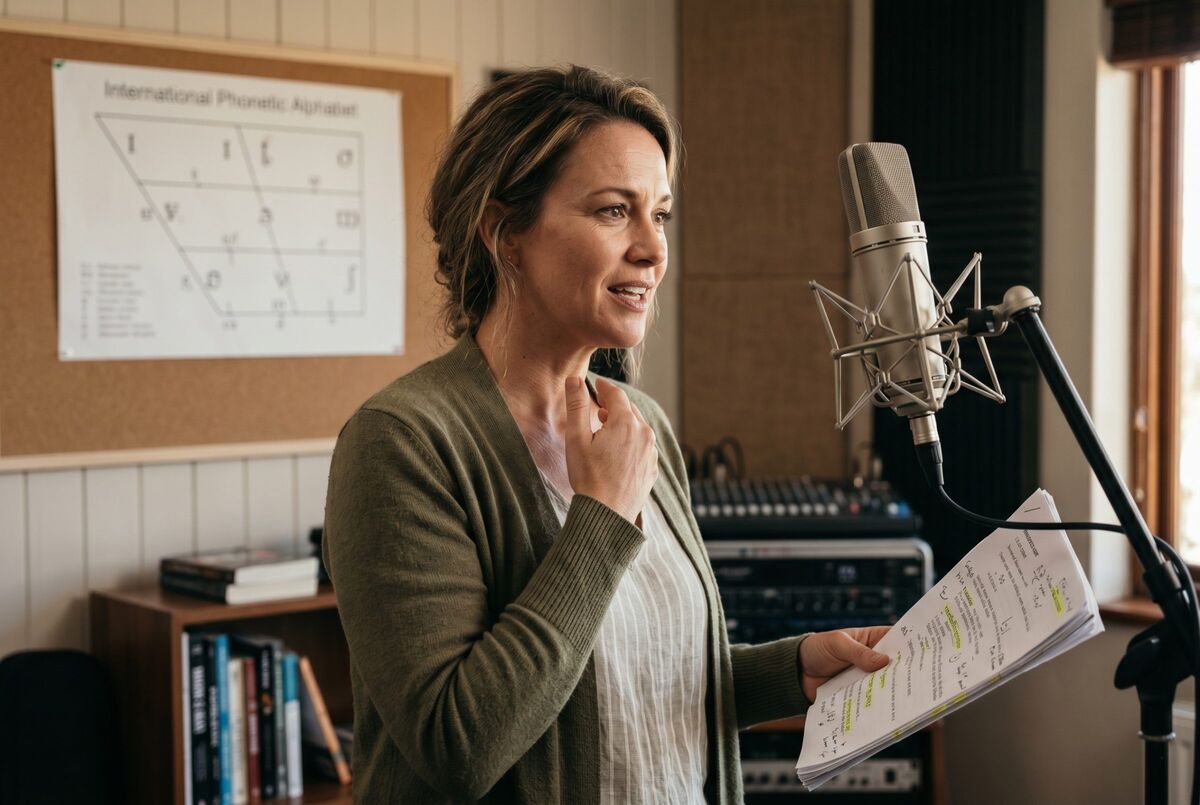
Your instructors
South African Accent tutors for private lessons & classes
Strommen has coached international-accent dialect work for film, TV, theater, and voice productions since 2006. Our South African roster ranges from native speakers across the main community varieties (white Cape Town, white Johannesburg, Afrikaans-first, Cape Coloured, Indian South African, Black South African) to coaches with direct on-set credits on South African productions and theater-faculty specialists with stage credits in South African-set repertoire. Every tutor below was met and vetted by us in person or via thorough video interview. No marketplace. No automated profiles. Real coaches with real on-set, on-stage, and in-booth credits.
Filter by location, age, or price. Then book a 30-minute free trial.
Below are the Strommen coaches who specialize in South African accent work for actors. Photos, ratings, and rates are real. Click any card to read their bio and book a free 30-minute trial.
I want to learn…
Every tutor, personally met. — founder-vetted since 2006, in Los Angeles and online worldwide.
Get a personalized plan
Pick your language — a language advisor will match you with the right tutor and map out your path.

I have a Bachelor Of Arts General Degree (majoring in English Lit. and Counselling Psychology) and a Bachelor Of Arts Honours in Psychology Degree. · N / A
Published Author teaching Afrikaans and English Second Language, With especial care for Children & those with Special Needs ☺️.
Specialties
I have a Bachelor Of Arts General Degree (majoring in English Lit. and Counselling Psychology) and a Bachelor Of Arts Honours in Psychology Degree. · N / A
Published Author teaching Afrikaans and English Second Language, With especial care for Children & those with Special Needs ☺️.
Specialties

Howzit — South African dialect & culture
5 South African accent features that separate the real thing from generic British-ish
Five phonetic and lexical features, each one a detail a coach will mark up in your script on the first read. Together they distinguish a credible South African performance from the generic British-flavored substitute that Hollywood films have reached for too often.
-
01
The KIT-DRESS-TRAP chain shift
The South African Chain Shift moves several short vowels in patterned ways. The KIT vowel in kit, sit, bit is centralized toward a schwa, reading as slightly muffled to American ears. The DRESS vowel in bed raises toward /i/, making bed sound closer to bid. The TRAP vowel in cat, man raises toward DRESS, making cat sound closer to ket. The shifts interact in patterned ways and are one of the cleanest markers of credible South African English.
e.g. <em>I sit in a bit of a quiet kitchen</em> renders with centralized KIT vowels that American ears read as distinct.
-
02
Cape Town versus Joburg versus Afrikaans-influenced
Three working bands of white South African English. Cape Town educated English is closest to British RP, with a more conservative phonology. Johannesburg educated English carries a slightly harder edge and faster prosody. Afrikaans-influenced English is its own variety shaped by Afrikaans phonology and prosody, with tapped or trilled R, devoicing of final consonants, and a distinctive intonation. The Hollywood-shorthand "South African villain" accent is usually Afrikaans-influenced; most parts need a different variety.
e.g. A Stellenbosch attorney speaks Cape Town educated; a Pretoria farm-raised character may speak Afrikaans-influenced English; the two sound nothing alike.
-
03
Non-rhotic R, sometimes trilled
South African English is non-rhotic across most varieties (car as cah, water as wateh) in line with the British and Southern Hemisphere tradition. Afrikaans-influenced English uses a tapped or trilled R, especially in initial position; this is the audible Afrikaans substrate. American-style retroflex R is the most immediate marker of an uncoached actor in any South African role.
e.g. <em>I drove the car to the river</em> in Afrikaans-influenced English: tapped initial R on <em>drove</em> and <em>river</em>, non-rhotic <em>car</em>.
-
04
Lekker, braai, robot, just-now
South African English carries a substantial lexicon from Afrikaans and from the Nguni and Sotho-Tswana languages. Braai for barbecue. Bakkie for pickup truck. Lekker for nice. Robot for traffic light. Just-now means in a while (not the American meaning). Now-now means very soon. Indaba for a meeting. The pronunciation of these words matters: the K in braai is back-velar; lekker has a tapped Afrikaans R; boet is pronounced closer to boot.
e.g. <em>I'll see you at the braai now-now, boet.</em> (translation: I will see you at the barbecue very soon, friend)
-
05
Indian and Black South African English are separate varieties
Indian South African English (Durban especially) has roots in 19th-century indentured-labor migration and preserves substrate features from Tamil and Hindi. Black South African English varies by L1 substrate across nine official Bantu languages and has its own phonological and prosodic patterns. Both are distinct from white South African English and require coaches with the cultural and linguistic background to coach them responsibly. Substituting a generic white South African accent in roles that should be Indian or Black South African is a craft and cultural error.
e.g. Trevor Noah's code-mixed Johannesburg English differs in vowel realization and prosody from Charlize Theron's older educated white Joburg English.
About South African Accent
Cape Town versus Joburg versus Afrikaans-influenced
An actor cast in a South African role usually arrives at the read-through unsure which South African the part requires, and the script does not always say. Most American actors have a vague reference for the accent (Charlize Theron in interview register, the Springbok rugby captain after a match, the documentary voiceover on a wildlife show) and the natural instinct is to flatten the variety into a single generic register. South African English is several distinct varieties, each shaped by the substrate language and community of its speakers. Cape Town does not sound like Johannesburg. The accent of a Stellenbosch Afrikaans-first speaker does not sound like the accent of a Cape Coloured English-first speaker even when they grew up in the same suburb. Indian South African English (Durban and Pietermaritzburg) is its own variety with substantial South Asian linguistic substrate. South African English shaped by Black African heritage languages (Zulu, Xhosa, Sotho, Tswana, the other Nguni and Sotho-Tswana languages) is meaningfully different again. Real dialect work for a South African role starts with the question of which community, which province, and what generation, and builds the performance from there.
The phonetic features that mark South African English across most of its varieties are concrete and learnable. The KIT-FLEECE distinction (the vowels in kit and fleece) is largely preserved as it is in British English, but the KIT vowel itself is often realized lower and more centralized than in RP, closer to a schwa in many speakers; this gives kit, sit, bit a characteristically South African quality where the vowel reads as slightly muffled to American ears. The TRAP vowel in cat and man is often raised toward something closer to the British DRESS vowel, so that cat in broad South African sounds almost like ket to American ears. The DRESS vowel is often raised toward a tense /e/, making bed sound closer to bid. These vowel shifts (called the South African Chain Shift in the dialectology literature) interact in patterned ways and are one of the cleanest markers an audience reads when an accent is or is not credible. The non-rhotic R is standard across South African English varieties: car as cah, water as wateh, the R after a vowel softens or disappears, in line with the broader Southern Hemisphere and British English pattern. The cot-caught merger does not happen in South African English; the vowels remain distinct.
The regional and community distinctions are where dialect work for a part actually lives. Cape Town English (the white middle-class educated variety of the Western Cape) is closer to British Received Pronunciation than most other South African varieties, with a more conservative phonology, clearer consonants, and the educated-suburb register that maps to most Hollywood depictions of "white South African" when no further specification is given. The accent of Stellenbosch University faculty or Constantia attorneys lives here. Johannesburg English (educated white Joburg, the Witwatersrand region) has its own register, somewhat more rapid and with slightly different vowel realizations than the Cape Town variety, often described by South African speakers themselves as harder-edged. The Eastern Cape (Port Elizabeth, East London, Grahamstown) has its own subvariety. Afrikaans-influenced English (speakers whose first language is Afrikaans and who use English as a second language) is its own distinct variety, with consonant realizations and intonation patterns shaped by Afrikaans phonology; the rolled or tapped R appears, devoicing of final consonants is common (Afrikaans devoices final stops), and the prosody carries the Afrikaans pitch contour. This is the variety many Hollywood films reach for when they want a South African villain, often with mixed accuracy. Cape Coloured English is its own variety with substantial Afrikaans substrate, predominantly spoken in the Western Cape's working-class and lower-middle-class communities, with its own phonological and lexical features that differ from white Afrikaans-influenced English. Indian South African English (Durban especially) has roots in indentured-labor migration from Tamil-speaking and Hindi-speaking regions of India in the 19th century; the variety preserves substrate features and overlaps with Indian English in some respects. Black South African English (the variety spoken by Black South Africans whose first language is one of the nine Bantu official languages) varies by L1 substrate and educational context, with click consonants from Zulu and Xhosa sometimes surfacing in code-mixed English, and prosodic patterns shaped by tonal first-language phonology.
The lexical layer is part of the dialect work even when the script does not include the vocabulary. South African English carries a substantial lexicon from Afrikaans (braai for barbecue, bakkie for pickup truck, lekker for nice, boet for brother or friend, oke for guy, now-now for very soon, just-now for in a while, shame as an expression of affection or sympathy, robot for traffic light, biltong for the cured-meat snack), from the Nguni languages (indaba for a meeting or discussion, ubuntu for the broader humanist philosophy and its everyday meaning of community-connectedness), and from the country's distinctive colonial-history vocabulary. A South African character whose dialogue uses none of this vocabulary reads as researched-but-not-lived; an actor whose script does include the vocabulary needs to learn how the words are actually pronounced (the K in braai is back-velar; lekker has the Afrikaans rolled or tapped R; boet is pronounced closer to boot). The script may not say which South African community; the lexical choices the script does include can help the coach calibrate.
The generational and historical layer matters as it does in any dialect. The accent of a 70-year-old educated white Capetonian in 1995 is markedly different from the accent of a 30-year-old multiracial Capetonian today. Post-apartheid South Africa has seen significant convergence across previously segregated varieties in younger urban speakers, especially in Cape Town and Johannesburg, where younger educated speakers across communities often share more features than their grandparents did. Pre-1994 versus post-1994 settings shift the dialect target meaningfully; a film set in 1980s Soweto is a different dialect from a film set in 2024 Johannesburg even when the character is in the same family.
The method has a shape. Read the script first. The coach builds a phonetic map of the part: which community the character belongs to, what year, what social class, what L1 the character grew up with, which features will land cleanly versus which need targeted drilling, which lexical items the script implies. Listening drills come next, pulled from native sources the coach selects to match the character: Trevor Noah's stand-up and book interviews for code-mixed contemporary Johannesburg, Charlize Theron in early interviews for older white Joburg, the cricket and rugby broadcast register for the educated white Cape Town variety, Tsotsi and District 9 for working-class Joburg, Mandela: Long Walk to Freedom and the Mandela archival speeches for historical register, contemporary South African podcasts and documentary footage for the modern range. The actor records the dialect passages and the coach corrects mouth shape, the South African Chain Shift vowels, cadence, lexical choices, and the prosodic patterns that distinguish credible South African from generic British-ish stage-accent work. For shoot weeks, the coach can be available on-set or on-Zoom for emotional-scene work where actors typically lose dialect under pressure.
A few honest tutor observations on what trips up actors taking on South African work. Defaulting to a vaguely Australian accent is the most common stumble; the two share non-rhoticity and some vowel-shift patterns but diverge sharply on the South African Chain Shift specifics and on the prosodic layer. Overdoing the Afrikaans-influenced features in a context where the character would speak a different variety is the second trap; the Afrikaans-influenced register is the Hollywood-shorthand version of South African but is wrong for most parts. Mixing variety-specific features that would not co-occur in a real speaker is a craft error coaches catch quickly: Cape Town educated phonology with Cape Coloured lexicon, for instance, reads as off even when each piece is individually correct. The South African R is non-rhotic in most varieties and trilled or tapped in Afrikaans-influenced English; using American-style retroflex R is the most immediate marker of an actor who has not been coached. Emotional scenes are where dialect drops first; high-emotion lines tend to revert to the actor's native phonology, and rehearsal under coach supervision is the only reliable fix.
The Strommen South African accent coaching roster includes South African-born coaches across the main community varieties (white Cape Town, white Johannesburg, Afrikaans-first, Cape Coloured, Indian South African, Black South African English with multiple L1 substrates), trained dialect coaches with theater credits in South African-set repertoire, and bilingual heritage speakers with direct on-set credits on South African productions. Each tutor's bio specifies community background, generational register, and which student profile they fit best (film and TV, theater, voice-over, video games, audiobooks). Pricing reflects experience and credit list. You can match yourself to a Cape Town-raised coach for educated white Western Cape work, a Johannesburg-raised coach for Witwatersrand parts, an Afrikaans-first coach for the Afrikaans-influenced register that many Hollywood South African parts call for, or a Black South African coach for roles in the post-apartheid urban Johannesburg or Soweto-set traditions. Our British accent training page covers the broader UK varieties for actors working across English-speaking regions, and the accent modification page covers the opposite direction (South African actors softening their accent for US-market casting).
Lessons are one-on-one and calibrated to the role. A coached lead on an upcoming shoot is a different curriculum from a self-tape preparing for a callback, which is different from foundation dialect work between projects for an actor who wants to be ready when the next South African role comes through. The trial is free, the coach reads the script with you, the study plan comes out of that read.
What you'll cover
Lessons & classes tailored to South African Accent
Script-led phonetic mapping for the right South African
Read the script with the coach, mark up the lines, identify the community and generational specifics of the character (white Cape Town, white Johannesburg, Afrikaans-first, Cape Coloured, Indian South African, Black South African; 1985 or 2024; rural or urban; working-class or educated). Build the phonetic map: which South African Chain Shift vowels land cleanly, which need targeted drilling, which lexical items the script implies. Foundation step for any South African role.
White Cape Town, white Johannesburg, Afrikaans-influenced
The three most common Hollywood-targeted varieties. Cape Town educated white Western Cape English (close to British RP, with the conservative phonology of Stellenbosch and Constantia). Johannesburg educated white Witwatersrand English (slightly harder edge, faster prosody). Afrikaans-influenced English (the Hollywood-villain-shorthand variety with tapped R, devoicing, and Afrikaans-substrate prosody). Native coaches in each.
Cape Coloured, Indian South African, Black South African English
Coaches with the cultural and linguistic background to coach the heritage and community-specific varieties responsibly. Cape Coloured English with its Afrikaans substrate and Western Cape working-class register. Indian South African English (Durban and Pietermaritzburg) with its Tamil and Hindi substrate. Black South African English calibrated to the character's L1 substrate (Zulu, Xhosa, Sotho, Tswana, others) and educational context.
On-set, on-Zoom, and audition prep
For shoot weeks, coaches can be available on-set or on-Zoom for emotional scenes where dialect tends to drop. Pre-production coaching for auditions and callbacks. Voice-over and audiobook recording sessions. Self-tape calibration. Theater rehearsal coaching for stage runs. The deliverable is a credible South African under real production conditions, not a polished demo reel.
FAQ
About South African Accent lessons & classes
What's the difference between a Cape Town accent and a Johannesburg accent?
Significant for South African ears, subtle for American ones until you learn what to listen for. Cape Town educated white English is more conservative phonologically, closer to British RP, with slower prosody and a softer feel. Johannesburg educated white English has a harder edge, faster prosody, slightly different vowel realizations, and what South Africans themselves often describe as a more assertive register. The two communities also differ on lexicon, prosody, and cultural reference points. For an actor preparing a part, the right city and the right community matter as much as choosing the right South African accent in the first place.
How do I avoid the generic British-ish South African?
Three rules in order of frequency violated. First, hit the South African Chain Shift: centralized KIT, raised DRESS, raised TRAP. Without those vowels the accent reads as generic non-rhotic Commonwealth English rather than specifically South African. Second, do the specific variety the script calls for, not a generic South African flattening; Cape Town educated white English is not Afrikaans-influenced English is not Cape Coloured English. Third, use the lexicon (lekker, braai, now-now, robot) where the script provides it, with correct South African pronunciation rather than the American reading of the spelling.
Is the Hollywood South African villain accent accurate?
Usually it is the Afrikaans-influenced register, performed approximately, with mixed accuracy. Real Afrikaans-influenced English has distinctive features (tapped or trilled R, devoiced final consonants, Afrikaans-substrate prosody) that Hollywood films sometimes hit and sometimes substitute with a generic British-flavored approximation. For roles that genuinely call for Afrikaans-influenced English (an Afrikaans-first character speaking English as a second language), the variety is correct; for roles whose characters are urban English-first South Africans, the Afrikaans-influenced register is the wrong choice.
Can you coach Indian South African or Black South African English?
Yes. Several coaches handle Indian South African English (Durban region) and Black South African English with the cultural and linguistic background to coach them responsibly. The varieties are distinct from white South African English and have their own phonological and grammatical features; substituting a white South African coach for a role that should be Indian or Black South African is a craft and cultural error. Tell us in the trial which community the role belongs to and we will match accordingly.
Will I lose my native accent doing South African?
No. Actors who work in multiple dialects code-switch, not overwrite. The work for a South African part builds a parallel phonological track you can step into and out of with rehearsal and on-set support. Many of the actors most associated with South African work in international film have native accents from elsewhere; the coaching arc gets them to a place where the South African track is accessible on cue without affecting their native phonology.
Are your coaches actually South African?
Most are. The bios specify country and community of origin, years lived in South Africa, training, and credits. Several are Strommen LA-based coaches who emigrated and continue working both markets. The right coach depends on the role; tell us the script's community in the trial and we match accordingly.
How long does prep for a South African role take?
Depends on scope. A supporting role with a handful of dialect lines can be ready in two weeks of focused work. A lead role with a film's worth of dialogue typically takes four to six weeks of intensive prep before principal photography, plus continuing coach support through shoot. An audition or callback for a South African part can be prepped in a few sessions over one to two weeks. Tell us the deadline in the trial and we match a coach with the right availability and credit history for the project.
Ready for South African Accent lessons or classes?
Book a free 30-minute trial with one of our personally vetted tutors. Private lessons or small-group classes — your choice.