


Personally vetted instructors
Bosnian tutors, lessons & classes
Zdravo! The everyday casual hello, exchanged between friends, family, and anyone roughly your age.
Personally vetted Bosnian tutors. Lessons in the Bosnian standard spoken in Sarajevo, across Bosnia and Herzegovina, and in the diaspora, calibrated to the cultural context the language carries.
Your instructors
Bosnian tutors for private lessons & classes
Strommen has placed Bosnian tutors for years, and the steady ask has been for tutors who teach the Bosnian standard with its cultural inheritance fully present rather than blended into a generic Yugoslav register. Strommen is a curated practice, not an open marketplace. Every teacher below was met and vetted by us.
Filter by location, age, or price. Then book a free 30-minute trial and tell the tutor whether your family roots, your travel plans, or your work pull you toward Bosnian specifically.
Below are the Strommen tutors who specialize in Bosnian. Photos, ratings, and rates are real. Click any card to read a tutor's bio and book a free 30-minute trial.
I want to learn…
Every tutor, personally met. — founder-vetted since 2006, in Los Angeles and online worldwide.
Get a personalized plan
Pick your language — a language advisor will match you with the right tutor and map out your path.

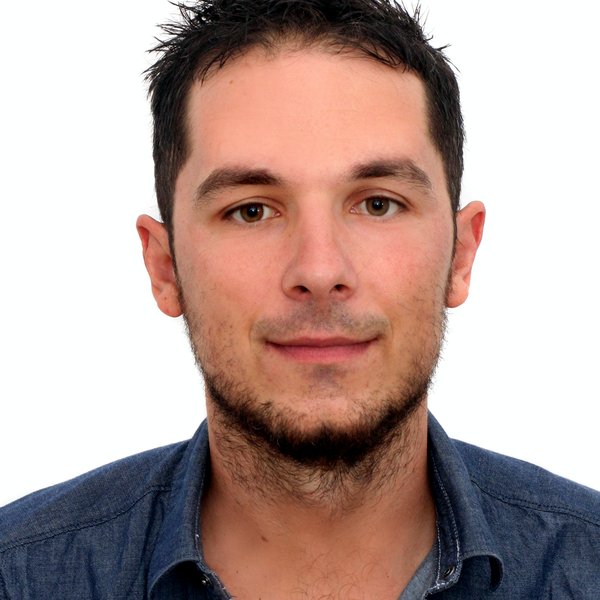

Professor of Italian Language and Literature at the Juraj Dobrila University of Pula. · Degree in Italian Language and Literature.
Professor of Italian language, several years of experience
Personally vetted · Strommen’s note
Every lesson with Romeo starts with a level check, then a plan built entirely around the student's own goals. He teaches Italian and Croatian both, out of Pula.
Specialties
Professor of Italian Language and Literature at the Juraj Dobrila University of Pula. · Degree in Italian Language and Literature.
Professor of Italian language, several years of experience
Specialties
Personally vetted · Strommen’s note
Every lesson with Romeo starts with a level check, then a plan built entirely around the student's own goals. He teaches Italian and Croatian both, out of Pula.
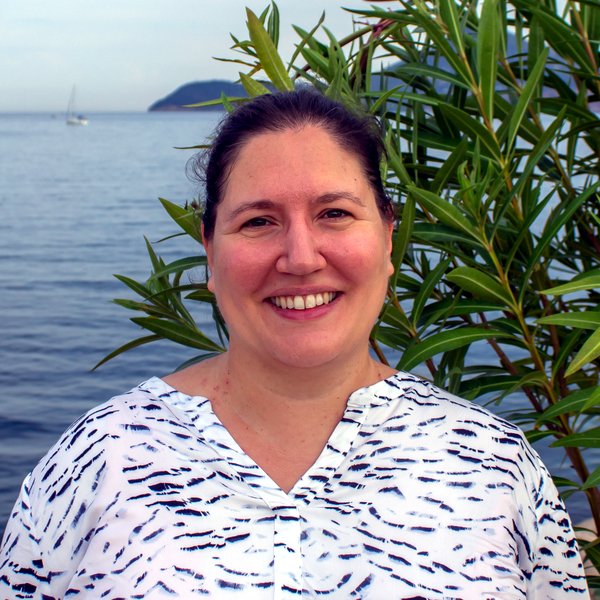


MA in Language, Literature, and Culture (Italian) · My certifications include numerous ones from various publishing houses (mainly Alma Edizioni and Edilingua), ESL webinars, seminars, and Serbian L2 courses and webinars. The goal of these seminars was to stay up to date with all the news and trends in...
Italian and Serbian Teacher with experience working at Italian companies and private tutoring
Personally vetted · Strommen’s note
Belgrade-based and fluent across Croatian, Italian, and Serbian, Vladana's background includes years working inside actual Italian companies, not just classrooms.
Specialties
Also speaks: English, Norwegian, Spanish
MA in Language, Literature, and Culture (Italian) · My certifications include numerous ones from various publishing houses (mainly Alma Edizioni and Edilingua), ESL webinars, seminars, and Serbian L2 courses and webinars. The goal of these seminars was to stay up to date with all the news and trends in...
Italian and Serbian Teacher with experience working at Italian companies and private tutoring
Specialties
I also speak: English, Norwegian, Spanish
Personally vetted · Strommen’s note
Belgrade-based and fluent across Croatian, Italian, and Serbian, Vladana's background includes years working inside actual Italian companies, not just classrooms.

Sarajevo — culture & language
5 cues that mark Bosnian as Bosnian
These are the markers a Sarajevo tutor will name in your first lesson. Save the list. Then book a tutor to work through them in real reading and conversation.
-
01
Latin and Cyrillic, both official
Bosnia and Herzegovina officially recognizes both scripts. Latin dominates in everyday public use across Sarajevo and the Federation. Cyrillic dominates in the Republika Srpska and in some institutional contexts. Most Bosnians read both without thinking. A learner needs the same reflex from early on; lessons cover both rather than picking a side.
e.g. The same street name on a Sarajevo sign: Marsala Tita (Latin) and Маршала Тита (Cyrillic).
-
02
The Ottoman Turkish lexical layer
Bosnian retains a deliberately preserved layer of Ottoman Turkish loanwords from the centuries of Ottoman rule: komsija (neighbor), basca (garden), sevdah (a specific Bosnian musical and emotional register), turbe (a small mausoleum), dzamija (mosque), and dozens more. Croatian and Serbian have often moved toward Slavic alternatives where Bosnian has kept the Ottoman-origin word. A learner who picks up the layer marks their Bosnian as Bosnian rather than as the unmarked Slavic continuum.
e.g. Sevdah, the Bosnian musical tradition: untranslatable, and centrally Bosnian.
-
03
Verb aspect (perfective and imperfective)
Bosnian verbs come in pairs: one form for completed actions, another for ongoing or habitual ones. Pisati (to write, ongoing) versus napisati (to write, completed). The choice carries meaning, and getting it wrong is the most common single tell of a beginner speaker. A conversational tutor builds aspect into lessons from the first weeks rather than saving it for some later chapter.
e.g. Pisem pismo (I am writing a letter) and Napisao sam pismo (I wrote / have written the letter).
-
04
Coffee as a ritual, not a beverage
Bosnian coffee is a slow sit-down occasion, taken in small cups with a sugar cube and a small piece of rahat lokum, often over an hour of conversation, often more than once a day. The phrase popiti kafu (to have a coffee) is rarely about caffeine; it is the social fabric. Lessons fold the ritual in as vocabulary and as cultural cue, because the language and the ritual are inseparable in daily Bosnian life.
e.g. Hajde da popijemo kafu (Let us have a coffee): the universal invitation to actually talk.
-
05
Sevdah and the literary inheritance
Sevdah is the Bosnian musical tradition of melancholy love songs, the emotional register the word names, and one of the most distinctive cultural inheritances the language carries. The literary tradition runs through the 1961 Nobel laureate Ivo Andric (whose Na Drini cuprija is set on the Ottoman bridge at Visegrad), Mesa Selimovic, Dzevad Karahasan, Aleksandar Hemon, and Semezdin Mehmedinovic. A learner who reaches reading level finds one of the most rewarding twentieth-century Slavic literatures waiting.
e.g. Andric's Na Drini cuprija and Selimovic's Dervis i smrt are usual first canonical reads at upper-intermediate level.
About Bosnian
Bosnian, on both scripts and with the cultural weight
Bosnian is one of three official languages of Bosnia and Herzegovina alongside Croatian and Serbian, and it sits inside the South Slavic dialect continuum that linguists sometimes call BCMS, for Bosnian-Croatian-Montenegrin-Serbian. The four standards are mutually intelligible to a degree that most language pairs are not. They share grammar, share most vocabulary, and differ on a handful of words, some pronunciation conventions, the script question, and a layer of cultural and lexical choices that each community has made deliberately about which words feel like their own. A learner who reaches conversational comfort in Bosnian can talk with friends in Belgrade or Zagreb and be understood, though each side will notice the regional markers. What distinguishes Bosnian from its neighbors on the page and in the room is partly grammatical and partly lexical, but the deepest layer is cultural, and a working tutor names it as the lesson begins.
The cultural layer comes first because it shapes everything else. Bosnian is the standard most strongly associated with the Bosniak community, descendants of the Slavic populations of the western Balkans who adopted Islam during the centuries of Ottoman rule from the fifteenth century onward, and with the broader Bosnian Muslim cultural inheritance: the architecture and street life of old Sarajevo, the Ottoman-era turbe and dzamija that mark the city skyline, the coffee ritual that Bosnians defend as theirs alone, the cuisine that runs through cevapi and burek and somun and baklava, the music of sevdah, the literary tradition that includes the 1961 Nobel laureate Ivo Andric and the contemporary writers Dzevad Karahasan, Aleksandar Hemon, and Semezdin Mehmedinovic. The standard carries a deliberately preserved layer of Ottoman Turkish loanwords (komsija for neighbor, basca for garden, sevdah itself), which contemporary Bosnian usage has kept where Croatian and Serbian have often moved toward Slavic alternatives. Learning Bosnian without being introduced to this layer is learning vocabulary without the world the vocabulary lives in, and most Bosnian tutors fold the cultural framing into early lessons by default.
Bosnian operates in both the Latin and Cyrillic scripts, both officially recognized in Bosnia and Herzegovina, with Latin dominant in everyday public use across Sarajevo and the Federation entity, and Cyrillic dominant in the Republika Srpska entity and in some institutional contexts. Most Bosnian publishing, signage, and digital communication in the Federation runs in Latin. Most Bosnians of any background read both without thinking, and a learner who plans to read anything in country ends up needing both as well. Conversational lessons treat the bilingual-script reality as a feature: students learn to read the language they hear, in whichever coat it shows up wearing.
Grammar is where Bosnian asks the most of an adult English-speaking learner. There are seven cases, doing real work in the sentence rather than the residual case-marking English speakers are used to. Verbs take aspect, perfective or imperfective, and the choice between aspects is grammatical and carries meaning. Word order is freer than in English because case endings carry the syntactic information that English assigns by position. None of this is impossible; it is work that pays off slowly, and a tutor sequences the highest-frequency patterns so they settle in as reflexes during the first months, while the rarer cases settle in across a longer arc. Pretending the case system can be skipped is the move that produces a student who can greet a neighbor and then go silent.
The sound system carries its own learning curve. Bosnian has consonants English does not (c, c with hacek, c with acute, dz, dz with hacek, s with hacek, z with hacek, lj, nj, dj), and a pitch accent that gives the sentence the lilt that marks a native speaker from a careful learner. Sarajevo speech tends to be warm, the consonants softer than in some neighboring Serbian varieties, and the pitch accent is part of what gives the standard its characteristic music. Tutors calibrate listening drills toward Sarajevo audio (radio, the Bosanska kuhinja cooking tradition, contemporary podcasts) so the rhythm becomes a felt pattern rather than a rule on a page.
Lexically, Bosnian carries its Ottoman Turkish layer as a deliberate part of the standard, alongside vocabulary shared with Croatian and Serbian, and a smaller set of items that are specifically Bosnian preferences. Examples: kafa (coffee) is widely used, where Croatian standardizes on kava and Serbian also tends toward kafa; vlak versus voz for train varies by speaker; the word for January is januar, where Croatian uses sijecanj. Tutors point out these calibrations as they come up so a student knows which lexical choices mark them as having learned Bosnian specifically rather than the unmarked continuum.
Most students who come to Bosnian tutoring at Strommen fall into a few recognizable groups. Heritage speakers whose families emigrated from Bosnia and Herzegovina during the 1992-95 war or in the years since, who understand more than they can produce and want to reactivate dormant comprehension. Partners marrying into Bosnian families preparing for in-law dinners. Travelers planning Sarajevo, Mostar, Banja Luka, or a Balkan circuit. Researchers, journalists, and aid workers heading into the region for work. Adoptees reconnecting with origin. Music fans who got to the language through sevdah, through the Sarajevo new-primitive rock scene, or through the films of Danis Tanovic, Jasmila Zbanic, or Emir Kusturica. Each of these arrives with a different starting point and a different finish line.
A few honest tutor observations on where Anglophone learners typically stall in Bosnian. The cases come up first, as in any Slavic language. Verb aspect is the next, and it tends to feel arbitrary until enough examples accumulate. The pitch accent is rarely treated as a tested skill in beginner materials, which is partly why otherwise competent students still sound off at the intermediate level. Reading both scripts becomes reflex within a few weeks of daily practice, faster than students expect. And one pleasure: the social register of Bosnian speech, which carries warmth and humor in ways the textbook does not capture, becomes a genuinely rewarding part of the work once a learner has the grammar to navigate it.
The Strommen Bosnian tutors are native speakers from Sarajevo and the wider country, longtime bilingual teachers raised in the Bosnian diaspora, and a few tutors fluent across the BCMS continuum who can show a student where Bosnian, Croatian, and Serbian diverge as lessons progress. Bios on each tutor's profile name where they are from, which script they default to in writing, and what kind of student they have moved the furthest. You can book a 30-minute free trial directly from any profile, and the full Strommen tutor directory shows the broader roster if you want to compare before booking.
What you'll cover
Lessons & classes tailored to Bosnian
Both scripts, from early on
Latin and Cyrillic are not optional choices for a Bosnian learner. They are two skins on the same language, both official in country, and Bosnians read both without noticing the switch. Lessons cover both from early on: reading practice in one script paired with the same word written in the other, texts and signage in whichever script they happen to appear in, and direct attention to the few letters that look identical across scripts but represent different sounds.
Cases, aspect, and the grammar that pays off
Bosnian has seven cases and a verb-aspect system that decides whether you are describing a habit or a completed action. Lessons sequence the most useful patterns first (nominative, accusative, genitive, locative, and the basic perfective and imperfective pairs) so a student starts speaking with grammatical Bosnian rather than translated Bosnian. The rarer cases settle in over months. Pretending the grammar can be skipped is the move that produces students who can order coffee and stall on the second sentence.
Sound, pitch, and Sarajevo rhythm
Bosnian has consonants English does not (c, c with hacek, c with acute, dz, dz with hacek, s with hacek, z with hacek, lj, nj, dj) and a pitch accent that gives the language its lilt. Lessons drill the consonants directly and use shadowing on real audio (Sarajevo voices in particular) so the pitch becomes a felt pattern. Tutors point out where their own region falls on the rhythm spectrum and calibrate listening practice toward the variety the student is most likely to encounter.
Ottoman heritage, sevdah, coffee, and the social register
Bosnian culture lives inside Bosnian speech in concrete ways. The Ottoman Turkish lexical layer, the sevdah musical tradition, the coffee ritual, the warmth-carrying polite registers. Lessons fold these in alongside grammar because a student who has the grammar without the social cues sounds correct and foreign at the same time. For broader Balkan-language context, the blog post on Bosnian, Croatian, Serbian, and Montenegrin is a useful map of the umbrella (blog post not yet published).
FAQ
About Bosnian lessons & classes
What is the difference between Bosnian, Croatian, and Serbian?
They are three closely related standards inside one South Slavic continuum that linguists sometimes call BCMS. The four standards (BCMS adds Montenegrin) are mutually intelligible across most everyday conversation. They differ in script preference (Bosnian uses both Latin and Cyrillic; Croatian uses Latin; Serbian uses both), in some lexical choices (Bosnian retains an Ottoman Turkish layer that the others have often replaced with Slavic alternatives), in some pronunciation conventions, and in cultural connotation. A learner who reaches conversational Bosnian will be understood in Belgrade and Zagreb.
Do I have to learn both scripts?
Yes if you plan to read anything in Bosnia, no if you only want to speak. The honest answer is that most students who reach conversational comfort learn both, because both scripts are official in country and both appear in daily public use. Lessons cover both, and most adult learners pick up the second script within a few weeks once they have the first one.
How hard is the grammar really?
Honestly demanding. Seven cases, verb aspect, and freer word order are real work for an English speaker. The reward is that once the patterns settle in, Bosnian sentences become flexible in a way English never quite manages. Most committed adult students reach conversational comfort within nine to fifteen months at one or two lessons a week with steady self-study between. Skipping the grammar in favor of phrasebook study is the route that produces learners who can greet someone and then stall.
Are your Bosnian tutors native speakers?
Most are native speakers from Sarajevo and the wider country, with several longtime bilingual teachers raised in the Bosnian diaspora and a few tutors fluent across the BCMS continuum. Each tutor's bio specifies background, where in the region they are from, and which script they default to in writing. For heritage learners, several tutors specifically work with students reactivating dormant Bosnian from family contexts.
I am a heritage speaker who understands more than I speak. Is this the right specialty?
Often it is exactly the right specialty. Heritage learners usually have a vocabulary base from family contexts and a strong ear for cadence, and what is missing is active speaking, modern register, and confidence in unfamiliar situations. A conversational tutor builds on the listening you already have rather than starting from beginner one. Many heritage students become functional in conversation within a few months of regular practice.
Can I take Bosnian lessons online or only in person?
Both. Most of our Bosnian tutors teach online via Zoom or Jitsi and work with students globally. Several also teach in person around Los Angeles. The booking widget on each tutor's profile shows the available formats and live availability.
What does a typical Bosnian lesson look like?
Lessons are one-on-one and built around your goal. A session might open with guided conversation in Bosnian on a topic you chose, pause for targeted work on a case ending or an aspect pair that surfaced, add a piece of cultural context (a sevdah reference, a coffee-ritual phrase, an Ottoman-origin word) when relevant, then close with listening practice on real Sarajevo audio. No two students get the same plan.
Will Bosnian lessons help me read Andric, Selimovic, or Karahasan?
Yes, with patience. Bosnian literary prose at an upper-intermediate level becomes accessible after most students reach conversational comfort, usually in the second year of regular study. Andric's Na Drini cuprija and Selimovic's Dervis i smrt are usual first canonical reads. Contemporary Bosnian writers (Karahasan, Hemon when he writes in Bosnian, Mehmedinovic) reach the reader sooner because their prose is closer to spoken register. Tell your tutor at the trial if reading the canon is part of your goal.
Ready for Bosnian lessons or classes?
Book a free 30-minute trial with one of our personally vetted tutors. Private lessons or small-group classes — your choice.