



Personally vetted instructors
Conversational Hebrew tutors, lessons & classes
מה קורה Mah kore, the casual Israeli "what's up."
Personally vetted tutors who teach the Hebrew people actually speak on a Tel Aviv bus, in a Jerusalem coffee shop, or at a Friday-night dinner table. Lessons that move from textbook Hebrew into the casual, slang-laced, fast-paced register of everyday Israeli speech.

Your instructors
Conversational Hebrew tutors for private lessons & classes
The tutors below speak Hebrew the way Israelis speak it, not the way a textbook teaches it. Several grew up in Israel and have been teaching adults conversational Hebrew for years; several are returning olim themselves who remember exactly where the gaps were when they were learning. Every one of them was met and vetted by Strommen directly before being listed.
Filter by location, age, or price, then book a 30-minute free trial.
Below are the Strommen tutors who specialize in conversational Hebrew. Photos, ratings, and rates are real. Click any card to read their bio and book a free 30-minute trial.
I want to learn…
Every tutor, personally met. — founder-vetted since 2006, in Los Angeles and online worldwide.
Get a personalized plan
Pick your language — a language advisor will match you with the right tutor and map out your path.

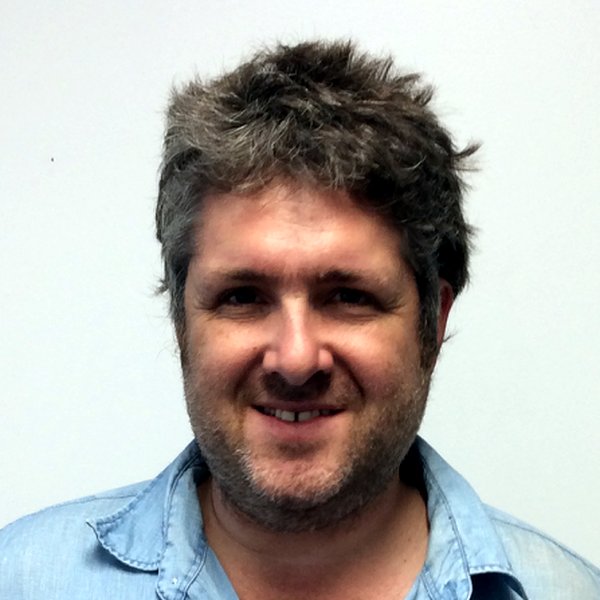
BFA
Discover Hebrew with Adam: Tel Aviv-Born Artist and Former Bezalel Academy Teacher!
Specialties
BFA
Discover Hebrew with Adam: Tel Aviv-Born Artist and Former Bezalel Academy Teacher!
Specialties

סלנג — slang & everyday register
5 slang words that mark you as someone who actually speaks Israeli Hebrew
These are the everyday words you will not find in a textbook and will hear within ten minutes of landing at Ben Gurion. Screenshot them, then book a tutor for the rest.
-
01
סבבה · sababa
"Cool / great / fine." Borrowed from Arabic and now fully naturalized in Hebrew, it is the all-purpose positive response in everyday speech. Use it as agreement, as confirmation, as a casual yes. Pairs naturally with אחלה (achla, awesome) for emphasis.
e.g. ניפגש בשמונה? סבבה. ("Meet at eight? Cool.")
-
02
יאללה · yalla
"Let's go," also from Arabic. Closes meetings, opens nights out, prompts decisions, signals "alright, we are moving." The single most-borrowed Arabic word in Israeli Hebrew, and the one foreign learners adopt fastest.
e.g. יאללה, ביי! ("Alright, bye!")
-
03
חבל על הזמן · chaval al hazman
Literally "a waste of time," but in slang it flips into an emphatic positive meaning "amazing" or "incredible." Context and tone do all the work. A textbook will give you the literal sense; only conversation gives you the flipped one.
e.g. הסרט הזה חבל על הזמן! ("That movie is amazing!")
-
04
הזוי · hazui
Literally "hallucinated." In everyday speech it means "weird," "surreal," "unbelievable," "can't even," depending on tone. Used for absurd situations, wild news, strange behavior, anything that lands as too much.
e.g. מה שקרה אתמול היה הזוי לגמרי. ("What happened yesterday was completely surreal.")
-
05
אהלן · ahlan
An ultra-casual "hi" borrowed from Arabic. More relaxed than שלום (shalom), warmer than the textbook הי (hi), and the natural greeting between friends or anyone you want to signal warmth with. The lazy cousin of mah kore.
e.g. אהלן, מה קורה? ("Hey, what's up?")
About Conversational Hebrew
How Israelis actually talk
Most American students who arrive in Israel for the first time after a year of textbook Hebrew have the same disorienting experience. They can read the menu. They can ask for the bathroom. They cannot follow what the person at the next table is saying, and they cannot figure out why the bus driver answered them in a language that sounds like a recording played at 1.5x speed. The gap between the Hebrew taught in adult-education classes and the Hebrew Israelis actually use is real and it is wide, and conversational Hebrew is the bridge. It is not a slangier version of textbook Hebrew. It is the unmarked everyday register that runs the country.
What makes Israeli speech sound the way it does is a layering of things that no single course covers well. There is the speed: Israelis speak fast, with overlapping turns and a tolerance for interrupting that would read as rude in many American contexts and reads as engaged here. There is the casual vocabulary, much of it borrowed: סבבה (sababa, cool / great) and אהלן (ahlan, hi) come from Arabic; דבר (davar, thing) takes on slangier shades in everyday use that a dictionary will not catch. There is the contraction habit: Hebrew compresses common phrases in speech the way English compresses "going to" into "gonna," and a student who learned the textbook form keeps getting tripped up by the spoken form. There is the relaxed grammar: Hebrew has formal verb forms that almost no one uses outside of writing, official speech, or older speakers, and a learner who arrives armed with the full conjugation table sounds slightly stilted.
The people who come to Strommen for this track are usually somewhere in this gap. Some are returning olim who can talk a little Hebrew but cannot keep up with their cousins or the office WhatsApp. Some have a partner whose family speaks Hebrew at home. Some are travelers planning extended time in Israel who want more than survival phrases. Some are heritage learners who heard Hebrew growing up but never moved past Hebrew school cadence. Some are professionals who took our Business Hebrew track and want the casual side too, because dugri does not just happen in meetings. The tutors below calibrate to that profile, and the first lesson is usually a diagnosis: where your speech actually sits, and which gap to close first.
A few things tend to come up early in any honest conversational track. Listening at real speed is one, and it gets less attention in most courses than it deserves. Tutors use real audio (TV clips, podcasts, recorded street interviews) and work on shadowing, repeating what the speaker said milliseconds later, matching cadence and contraction patterns. This is where the textbook-to-street gap actually closes. Spoken contractions are the second early surprise. Real Israeli speech contracts אני הולך to something closer to ani holech with the vowels collapsed, drops the formal future tense in favor of present-tense workarounds, and uses the participial form (הולך, אוכל, שותה) for ongoing and habitual actions in ways the textbook glosses over. And then there is the slang vocabulary itself, which becomes genuinely fun once it stops being a barrier: yalla, sababa, achla, chaval al hazman, hazui, gever, achi. Each one carries cultural information that translation flattens.
There is a register question that comes up often, and it deserves a clean answer. Conversational Hebrew is not bad Hebrew. It is the unmarked everyday register, the one that fluent native speakers actually use among friends, family, and most colleagues. The formal register exists for journalism, official correspondence, certain academic settings, and religious contexts, and a good tutor will not pretend otherwise. They will teach you to operate in the everyday register first, since that is where 90% of your interactions will live, and then to recognize and produce the more formal register when the situation calls for it. The reverse order, formal first and casual later, is how a lot of adult-ed Hebrew programs are structured, and it tends to produce learners who sound slightly bookish for years.
The slang itself is worth taking seriously rather than dismissing. Israeli slang carries a remarkable amount of cultural texture compressed into single words. Sababa, originally Arabic, has crossed into Hebrew so fully that it now functions as an all-purpose "great / fine / sure." Chaval al hazman ("a waste of time," literally) flips into an emphatic positive in slang use, meaning "amazing" or "incredible." Hazui ("hallucinated") becomes "weird," "surreal," "can't believe it," depending on tone. Knowing when and with whom to use each one is the work, and a tutor who is themselves a fluent speaker of the everyday register will calibrate you in real time. There is no good way to learn this from a textbook. It has to come from someone who lives in the language.
A practical timeline question comes up a lot. Most students who already have a base of Hebrew, say A2 to B1 from prior study or upbringing, can reach comfortable everyday conversational fluency in 6 to 12 months of one or two lessons a week plus real listening practice (TV in Hebrew, podcasts, ideally some travel). True fluency where Israelis stop slowing down for you is a longer arc, often two to three years of steady practice. Starting from zero, the timeline stretches significantly; a complete beginner is better served starting with our Hebrew for Beginners track and moving here once the basics are in place. Strommen has been teaching Hebrew in Los Angeles since 2006, and the conversational track is the most popular Hebrew specialty we offer, because it is what most students actually want even when they signed up thinking they wanted something else. Every tutor below was met and vetted by us in person. Lessons run online for students worldwide and in person for those near LA, and most students begin with a free 30-minute trial so the tutor can hear where your speaking actually sits.
What you'll cover
Lessons & classes tailored to Conversational Hebrew
Listening at real Israeli speed
Real speech is faster than any textbook recording prepares you for, and Israeli speech is faster than most. Lessons use real audio (TV clips, podcasts, recorded interviews) and work on shadowing: repeating what the speaker said a beat later, matching cadence, picking up the contractions that the printed transcript would not show. This is the part that closes the textbook-to-street gap, and it gets dedicated lesson time rather than being treated as homework.
Contractions and the spoken-grammar shift
Hebrew compresses common phrases in speech the way English compresses "going to" into "gonna," and a learner trained only on the textbook form keeps getting tripped up by the spoken form. Lessons drill the participial future (אני הולך for "I'm going to" instead of אלך), the dropped pronouns when context makes them obvious, and the relaxed verb conjugations that everyday speakers use. The formal register gets covered too, with a clear sense of when each is appropriate.
Slang, idiom, and borrowed vocabulary
The everyday vocabulary that lives outside any textbook: the Arabic-derived sababa, yalla, ahlan, walla; the Hebrew-origin slang like achla, chaval al hazman, hazui, gever; the English loanwords that show up inside Hebrew sentences ("call," "meeting," "sale"). Tutors teach when and with whom each one fits, since slang misused sounds worse than no slang at all.
Conversation practice with real correction
Most of each lesson is spent actually speaking. Tutors steer you onto topics you care about, correct as you go without grinding the conversation to a halt, and surface the patterns that keep tripping you up. This is the part of language learning that scales worst from apps and books, which is why one-on-one practice with a fluent native speaker is where the real progress lives. Many students supplement with our main Hebrew page resources and our blog content between lessons.
FAQ
About Conversational Hebrew lessons & classes
How long until I can hold a casual conversation in Hebrew?
It depends on where you are starting from. A student arriving at A2 or B1 with prior coursework or upbringing can usually reach comfortable everyday conversational fluency in 6 to 12 months of one or two lessons a week plus consistent real-listening practice (Hebrew TV, podcasts, ideally some travel). A complete beginner starting from zero is on a longer arc, often 12 to 18 months to the same point, and is better served beginning with our Hebrew for Beginners track first. True fluency where native speakers stop slowing down for you is a two-to-three-year project for most students.
What slang should I avoid early?
Mainly the slang you do not yet have a feel for. Early use of edgy or vulgar slang lands worse than no slang at all, because the timing and tone matter as much as the word. Strong words exist in Israeli speech and native speakers use them freely, but using them without an ear for the social register makes a learner sound off rather than authentic. Stick to the safe everyday slang (sababa, yalla, achla, walla) for the first months and let your tutor introduce the more loaded vocabulary as your ear catches up.
Why is Israeli speech so fast?
Two reasons. One is structural: Hebrew compresses common phrases in speech, drops pronouns when context covers them, and uses participial forms in place of fuller verb conjugations, which packs more meaning into fewer syllables. The other is cultural: the conversational norm tolerates overlapping turns and quick exchanges in ways American English usually does not. Listening practice closes the gap. Most students find that within a few months of real-audio work, the speed stops sounding like a wall and starts sounding like just how the language goes.
When do I switch from formal to casual register?
Almost immediately in everyday life. Israeli Hebrew uses the casual register by default among friends, family, colleagues, shop staff, taxi drivers, almost anyone you talk to in a day. The formal register is reserved for journalism, official correspondence, certain academic settings, religious contexts, and addressing the very elderly with deference. A good tutor teaches the everyday register first and adds formal recognition (so you can read a news article or write a respectful email) as a layer, not as the foundation. The reverse order produces learners who sound bookish for years.
Are your tutors native speakers from Israel?
Most are native speakers who grew up in Israel and have been teaching conversational Hebrew for years. A few are longtime returning olim who remember the gaps from their own learning. Each tutor's bio specifies their background, regional accent, and what they most enjoy teaching, so you can match yourself to someone whose energy and approach line up with yours.
Can I take Hebrew lessons online or only in person in LA?
Both. Many of our conversational Hebrew tutors teach online via Zoom or Jitsi and work with students worldwide. Several also teach in person around Los Angeles, especially in the Westside, Pico-Robertson, and the Valley. The booking widget on each tutor's profile shows their available formats.
I learned Hebrew in Hebrew school as a kid. Where does that put me?
Usually somewhere between A2 and B1 depending on how recently and how regularly you used it. Hebrew school typically builds prayer-language familiarity, basic vocabulary, and reading mechanics, but it rarely builds modern conversational fluency, which is what most adults actually want. The good news is that the foundation is real and a tutor can rebuild on it efficiently. The first lesson is usually a quick diagnosis of where the speaking sits and where the listening sits, since those are often at very different levels for heritage learners.
What does a conversational Hebrew lesson actually look like?
Most of the hour is spent speaking. A typical session might open with a short real-audio listening segment (a clip from an Israeli podcast or TV show), move into a conversation on a topic the student chose, pause to fix a recurring grammar or pronunciation issue, drill a handful of contractions or slang phrases that came up, and close with a small piece of homework (often a 5-minute audio to listen to before next lesson). Tutors plan each lesson rather than running a fixed curriculum, so two students with different goals get different lessons.
Ready for Conversational Hebrew lessons or classes?
Book a free 30-minute trial with one of our personally vetted tutors. Private lessons or small-group classes — your choice.