



Personally vetted instructors
Biblical Hebrew tutors, lessons & classes
בָּרוּךְ הַבָּא Baruch haba, the ritual welcome — "blessed is the one who comes."
Personally vetted Biblical Hebrew tutors who teach the language of the Tanakh on its own terms. Lessons that move from the alefbet and the masoretic vowels into reading Genesis, the Psalms, and the prophets in the original.
Your instructors
Biblical Hebrew tutors for private lessons & classes
The tutors below tend to have the deepest reading backgrounds on our Hebrew roster: some studied at yeshiva or seminary, some hold graduate degrees in Bible or in Semitic languages, several have taught the Tanakh in classroom settings for years. Every one of them was met and vetted by Strommen directly before being listed, because a Biblical Hebrew track depends on a tutor who actually reads the corpus.
Filter by location, age, or price, read the bios, then book a 30-minute free trial with whoever feels right.
Below are the Strommen tutors who teach Biblical Hebrew. Photos, ratings, and rates are real. Click any card to read the tutor's background and book a free 30-minute trial.
I want to learn…
Every tutor, personally met. — founder-vetted since 2006, in Los Angeles and online worldwide.
Get a personalized plan
Pick your language — a language advisor will match you with the right tutor and map out your path.

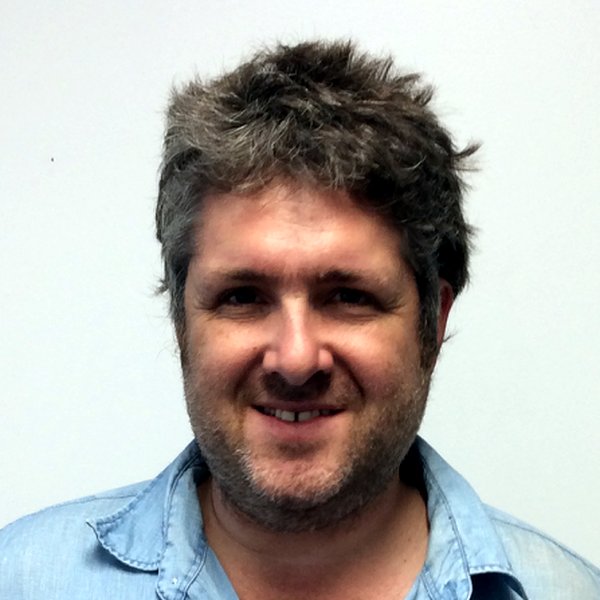
BFA
Discover Hebrew with Adam: Tel Aviv-Born Artist and Former Bezalel Academy Teacher!
Specialties
BFA
Discover Hebrew with Adam: Tel Aviv-Born Artist and Former Bezalel Academy Teacher!
Specialties

כתבי הקודש — canon & cultural touchstones
5 things every Biblical Hebrew reader meets early
These are the anchors that recur across the canon. Knowing what each one is, and what it is doing on the page, makes the first months of reading less mysterious and far more rewarding.
-
01
תנ"ך · Tanakh
The Hebrew Bible, an acronym of its three sections: Torah (the Five Books), Nevi'im (Prophets), and Ketuvim (Writings, including Psalms, Job, and the Five Scrolls). Different sections sit at different reading difficulties: Genesis is approachable narrative; Job and parts of the prophets are notoriously dense poetry.
e.g. Tutors typically start beginners in Genesis or Jonah, not in Job or Isaiah.
-
02
ניקוד · niqqud
The masoretic vowel-pointing system, the dots and dashes under and around the consonants. Biblical texts are printed fully vocalized, which is why beginners can read aloud accurately long before they could in unpointed modern writing. The system was standardized by the Tiberian Masoretes around the seventh to tenth centuries CE.
e.g. בְּרֵאשִׁית bereishit ("in the beginning") is fully vocalized in any standard edition.
-
03
טעמים · te'amim
The cantillation marks above and below the words. They serve two jobs at once: they cue the traditional liturgical chant used in synagogue Torah reading, and they function as a syntactic punctuation system that signals where phrases break and how clauses relate. Reading the te'amim well genuinely speeds up reading comprehension.
e.g. The atnach טַ֖ marks the major mid-verse pause, roughly like a colon.
-
04
שורש · shoresh
The three-consonant root that carries the core meaning of a word family. Layered with the binyanim (the seven verbal patterns), it generates the verbs and nouns of the language. The root ק-ד-ש gives qadosh (holy), qiddesh (sanctified), miqdash (sanctuary), and qodesh haqodashim (the holy of holies).
e.g. Recognizing the root behind an unfamiliar word usually places its meaning before a dictionary is needed.
-
05
פרשת השבוע · parashat hashavua
The weekly Torah portion. The Five Books of Moses are divided into 54 portions read in synagogue over the course of a year, one per Shabbat. A common Biblical Hebrew study goal is to read the week's parasha in the original alongside the English, which gives a built-in rhythm and a finite weekly project.
e.g. Bereshit is the first parasha; the cycle restarts each year on Simchat Torah.
About Biblical Hebrew
The language the Tanakh was written in
Biblical Hebrew is not a slightly older version of the language spoken today in Tel Aviv. The two share an alphabet, a root system, and a large core of vocabulary, but they diverged enough over twenty-five centuries that a fluent Modern Hebrew speaker who opens a page of Genesis still has real work to do. Verb morphology behaves differently. The narrative tense (the so-called vav-consecutive, וַיֹּאמֶר and its kin) does not exist in modern speech. Word order is freer, often verb-initial. Half the high-poetry vocabulary of the Psalms or Job never made it into modern usage at all. None of this is a barrier, but it does mean that learning Biblical Hebrew is a project of its own, with its own pedagogy, its own reference works, and its own pace. A tutor who teaches it well is teaching you to read a specific corpus rather than to chat at a kibbutz.
The people who come to Strommen for this track are a varied group, and being honest about which one you are tends to shape the first lesson. Some students are working through a seminary or graduate-school curriculum and need a tutor to keep them moving when the textbook stalls. Some are clergy or laypeople who want to read the parashat hashavua, the weekly Torah portion, in the original instead of through translation. Some are converts learning Hebrew alongside the rest of the Jewish tradition. Some are scholars of the Ancient Near East, comparative Semiticists, or readers who want access to the Hebrew Bible without an intermediary. A few are simply lifelong learners who feel that an ancient text loses something irreducible when read only in English. Tutors calibrate to the goal: a Genesis-first reader and a Psalms-first reader actually need different early lessons, and a student preparing for a seminary qualifying exam needs different still.
The early weeks of a serious Biblical Hebrew course are concrete. You learn the alefbet, twenty-two consonants written right to left, five of which take a different shape at the end of a word (the final letters ך ם ן ף ץ). You learn that Biblical texts, unlike everyday modern writing, are usually printed with full vocalization (the niqqud, the masoretic vowel pointing), so a beginner reading Genesis is never guessing at vowels. You learn the te'amim, the cantillation marks that double as a syntactic punctuation system: they tell you how the ancient liturgical chant rises and falls, and they also tell you where the sentence breaks fall, which is genuine reading help once you know what to look for. None of this is mysterious. It just has to be sequenced in the right order by someone who has taught it before.
The root system, the shoresh, is where Biblical Hebrew starts to click. Three-consonant roots carry a core idea — ק-ד-ש (q-d-sh) the concept of holiness or set-apart-ness, ב-ר-ך (b-r-kh) the field of blessing — and the binyanim, the seven verbal patterns, generate the actual verbs and nouns by running the root through fixed templates. A reader who internalizes this finds that a page of biblical narrative compounds rapidly: unfamiliar words are usually patterned variations on roots already met. A reader who memorizes vocabulary as random strings reads slowly forever. The same shoresh idea undergirds Modern Hebrew, but Biblical Hebrew leans on it harder because the corpus is finite and the high-poetry registers reach further into the system.
The standard reference works are worth meeting early. Tutors lean on the Brown-Driver-Briggs lexicon (BDB) for serious vocabulary work and HALOT for advanced research, on Gesenius and Joüon-Muraoka for grammar, on the Biblia Hebraica Stuttgartensia (BHS) as the standard scholarly text. Newer learners can lean on graded readers and on the unpointed-versus-pointed distinction more gently. Your tutor will not throw all of this at you in week one. They will introduce a reference when the reading earns it, and they will tell you plainly when a question is better answered by BDB than by Google.
A cultural literacy comes with the reading, and it is part of what makes this track worth the time. You cannot read the Psalms without some sense of the qinah meter and the parallelism that organizes biblical poetry. You cannot read the prophetic books without the historical layering of the Iron Age kingdoms and the Babylonian exile in your peripheral vision. You cannot fully feel Genesis without knowing what the Hebrew is doing rhythmically with repetition and chiasm, which a translation flattens. A literature-aware tutor folds this in as the reading earns it, not as a lecture.
A practical note that comes up often: many students arrive asking whether to learn Modern Hebrew first or Biblical Hebrew first. There is no universal answer, but the honest framing is that they are related projects, not one project. If your goal is the Hebrew Bible, start with Biblical Hebrew. If your goal is Israel or contemporary use, start with Modern Hebrew. Many serious students eventually do both and find the second easier because of the first, but doing one expecting it to deliver the other is the mistake. Strommen has been teaching Hebrew in Los Angeles since 2006, and the Biblical track has always been small, specialized, and disproportionately satisfying for the students who finish it. Every tutor below was met and vetted by us in person. There is no marketplace here. Lessons run online for students worldwide and in person for those near Los Angeles. Most students begin with a free 30-minute trial so the tutor can see where your reading actually sits before recommending a first text.
What you'll cover
Lessons & classes tailored to Biblical Hebrew
Alefbet, niqqud, and the te'amim
The 22 letters of the Hebrew alphabet with their five final forms, written right to left. The masoretic vowel-pointing system, which is what makes Biblical Hebrew approachable for a beginner: the text is fully vocalized, so you are never guessing at pronunciation. And the cantillation marks, the te'amim, which double as a punctuation system that genuinely speeds up reading once you know what to look for. Tutors watch your reading aloud and correct it in real time, which is the part an app cannot do.
The root-and-binyan system as a reading tool
Biblical Hebrew vocabulary is built from three-consonant roots run through the seven verbal patterns (the binyanim: qal, niphal, piel, pual, hiphil, hophal, hitpael). Lessons make this system a working habit, so that an unfamiliar word in a Genesis narrative is usually a patterned variation on a root you already know. This is the single biggest difference between students who read fluidly and students who stay slow indefinitely.
Biblical syntax: the vav-consecutive and narrative tense
The biblical narrative tense, the so-called vav-consecutive (וַיֹּאמֶר, וַיֵּלֶךְ, וַיַּרְא), does not exist in Modern Hebrew, and it is the engine of every story in the Torah. Lessons teach you to read this tense without translating it back through a modern verb chart, alongside the freer biblical word order, the construct chain, and the participial system. The grammar gets covered as the reading demands it, not as a sealed-off chapter.
Reading a real text together
From early lessons, you read actual biblical text alongside the tutor, slowly at first, with the tutor pacing you and unpacking grammar in the flow of the reading rather than in isolation. A typical first path runs from Genesis 1 and 22 into Jonah (a short, accessible whole book), then into selected Psalms or prophetic passages, and eventually toward Job or other poetic books for advanced readers. Tutors lean on the BHS and on Brown-Driver-Briggs as the reading demands.
FAQ
About Biblical Hebrew lessons & classes
Should I learn Biblical or Modern Hebrew first?
They are related projects, not one project, so pick by goal. If you want to read the Tanakh, start with Biblical Hebrew. If you want to function in Israel, start with Modern Hebrew. They share an alphabet, a root system, and a large core of vocabulary, so doing one makes the second easier, but doing one expecting it to deliver the other is the common mistake. Many serious students eventually do both, in either order, depending on which goal came first.
Do I need to know the niqqud (vowel marks)?
Yes, and the good news is that Biblical texts are printed fully vocalized. Unlike everyday Modern Hebrew writing, which omits the vowel pointing, every standard edition of the Tanakh prints the masoretic niqqud, so a beginner can read aloud accurately almost from the start. Tutors teach the vowel system early because it is foundational; once you have it, the rest of the reading opens up.
What is the difference between Biblical and Mishnaic Hebrew?
Biblical Hebrew is the language of the Tanakh, roughly the period from around 1200 BCE through the post-exilic books. Mishnaic Hebrew is the later rabbinic stage, the language of the Mishnah and much of the Talmud, edited around 200 CE. The two share their grammatical core but differ in vocabulary, in some syntactic habits, and in tone: Mishnaic Hebrew sounds closer to a working spoken register, while Biblical Hebrew often has higher literary registers. Tutors who teach Bible can usually also bridge into Mishnaic when a student wants to move toward rabbinic literature.
Can a Modern Hebrew speaker read Genesis?
Mostly yes, with effort. A fluent Modern Hebrew reader can work through Genesis with patience and a good lexicon, and will recognize most of the vocabulary and a fair amount of the grammar. The places they stumble are the narrative tense (the vav-consecutive), some less common vocabulary, and the poetic books like Psalms and Job, where the register, the parallelism, and the high-literary vocabulary all reach further than modern usage. The reading is real but the poetic nuance often gets lost without targeted study.
What is the cantillation chanting tradition (te'amim)?
The te'amim, the cantillation marks above and below the words, do two jobs. They cue the traditional liturgical chant used in synagogue Torah reading, which has its own melodic system passed down for centuries with regional variations (Ashkenazi, Sephardic, Yemenite). And they function as a syntactic punctuation system that signals where phrases pause, where clauses subordinate, and how a verse organizes itself. Even a reader who never plans to chant aloud benefits from learning the basic disjunctive marks, because they speed up comprehension.
Are your tutors religiously affiliated?
Strommen tutors come from a range of backgrounds, religious and academic. Some teach from a yeshiva or seminary background, some from a scholarly Bible or Semitic languages background, some from both. The Biblical Hebrew track itself is taught as language rather than as theology, so the focus stays on the text and the grammar. If you want a tutor whose background matches yours, or one who teaches from a deliberately neutral scholarly stance, tell us at the trial and we can match accordingly.
Can I take Biblical Hebrew lessons online or only in person?
Both. Many of our Biblical Hebrew tutors teach online via Zoom or Jitsi and work with students worldwide. Several also teach in person around Los Angeles. Reading-focused lessons work very well online, since most of the lesson is spent on a shared text. The booking widget on each tutor's profile shows their available formats.
How long until I can read a Torah portion in the original?
It depends on your hours, your starting level, and your steadiness between lessons. A motivated beginner doing one or two lessons a week with consistent self-study can usually read short, accessible passages (parts of Genesis, the book of Jonah) within several months. Reading a full weekly parasha with comprehension typically takes a year or more of steady work. Reading Psalms or the prophets with real fluency is a longer arc. The reading gets faster as the root system and the niqqud become second nature, and the last things to arrive are reading speed and the ear for poetic register.
Ready for Biblical Hebrew lessons or classes?
Book a free 30-minute trial with one of our personally vetted tutors. Private lessons or small-group classes — your choice.