


Personally vetted instructors
Modern Hebrew tutors, lessons & classes
מה שלומך Mah shlomcha, the standard "how are you" you will hear from morning till night in Israel.
Personally vetted Modern Hebrew tutors who teach the living language of Israel, from absolute beginner through advanced fluency. Lessons that respect the language's 140-year revival and the everyday way 9 million people speak it today.
Your instructors
Modern Hebrew tutors for private lessons & classes
The tutors below cover the full range of Modern Hebrew levels, from absolute beginners through advanced. Each one was met and vetted by Strommen directly before being listed, and the bios show their background, regional accent, and what they most enjoy teaching. If your goal is more specific (kids, business, conversation, Bible), the dedicated tracks linked above are usually a better starting point.
Filter by location, age, or price, then book a 30-minute free trial.
Below are the Strommen tutors who teach Modern Hebrew. Photos, ratings, and rates are real. Click any card to read their bio and book a free 30-minute trial.
I want to learn…
Every tutor, personally met. — founder-vetted since 2006, in Los Angeles and online worldwide.
Get a personalized plan
Pick your language — a language advisor will match you with the right tutor and map out your path.

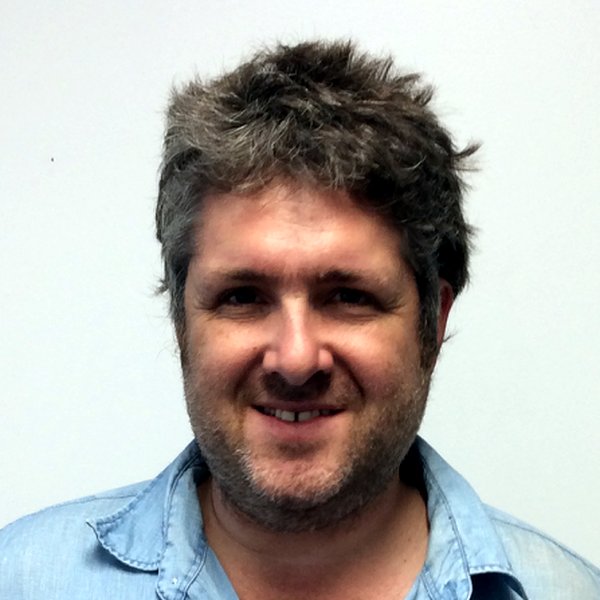
BFA
Discover Hebrew with Adam: Tel Aviv-Born Artist and Former Bezalel Academy Teacher!
Specialties
BFA
Discover Hebrew with Adam: Tel Aviv-Born Artist and Former Bezalel Academy Teacher!
Specialties

תחייה — revival & modern register
5 things that make Modern Hebrew unique
These are the facts about the language that shape how a serious student thinks about it. Knowing them changes how you study.
-
01
אליעזר בן-יהודה · Eliezer Ben-Yehuda
The Lithuanian-born scholar who moved to Jerusalem in 1881 and committed his life to reviving Hebrew as a spoken everyday language. He compiled the first comprehensive Modern Hebrew dictionary and raised his son entirely in Hebrew, producing the first native speaker of the language in over a thousand years.
e.g. Ben-Yehuda Street in Jerusalem and Tel Aviv is named for him.
-
02
האקדמיה ללשון העברית · the Academy of the Hebrew Language
The official Israeli body that coins new Hebrew terms for modern concepts and rules on grammar and orthography questions. Founded in 1953 to succeed Ben-Yehuda's Hebrew Language Committee. Israelis sometimes use Academy-coined Hebrew terms and sometimes use the English loanword instead, which is a running national joke.
e.g. The Academy coined מרשתת (mirshetet, internet) but Israelis say אינטרנט.
-
03
מבטא ספרדי · Sephardic pronunciation
Modern Israeli pronunciation follows the Sephardic tradition (the tradition of Sephardic Jewish communities) rather than the Ashkenazi tradition that many American Jews encountered in Hebrew school. The difference is most audible in how the tav-without-dagesh is pronounced (Shabbat in Sephardic, Shabbos in Ashkenazi).
e.g. Israelis say Shabbat shalom, not Shabbos shalom.
-
04
סבר · sabra (the Israeli-born identity)
The slang term for a native-born Israeli, taken from the name of the prickly-pear cactus: tough on the outside, sweet on the inside. The word carries a whole cultural self-image about the directness, informality, and warmth that native Israelis recognize as the Israeli norm.
e.g. הוא סבר אמיתי ("he's a real sabra").
-
05
שורש · shoresh (the root system)
Modern Hebrew, like its biblical ancestor, builds vocabulary from three-consonant roots run through fixed verbal patterns (the binyanim). Internalizing this system is what makes a learner's vocabulary compound rather than pile up. The root ל-מ-ד gives talmid (student), lomed (learns), milammed (teaches), beit-midrash (study hall), and limudim (studies).
e.g. Recognizing a root behind an unfamiliar word usually places its meaning before a dictionary is needed.
About Modern Hebrew
The language that was brought back
Modern Hebrew is one of the most unusual languages on the planet, and the strangeness is worth understanding before you start learning it. It is the only ancient language in human history to have been revived as the native daily language of a national community after centuries of being used only liturgically. Latin did not pull this off. Sanskrit did not. Hebrew did, between roughly 1880 and 1950, in a sustained collective project that turned the language of prayer and Torah study into the language a child grows up speaking, the language a comedian tells jokes in, the language a software engineer writes documentation in. Nine million people speak it today, almost all of them in Israel, and the language they speak is closely related to but meaningfully different from the language of the Tanakh. Knowing this changes how you study it.
The revival is associated above all with Eliezer Ben-Yehuda, the Lithuanian-born scholar who moved to Jerusalem in 1881 and committed his life and his family to using Hebrew as a spoken everyday language. His son Ben-Zion (later Itamar Ben-Avi) is generally cited as the first native speaker of Modern Hebrew in over a thousand years. Ben-Yehuda compiled the first comprehensive Hebrew dictionary, coined thousands of words for modern concepts the biblical language did not have, and seeded the institutional infrastructure (newspapers, schools, eventually the Academy of the Hebrew Language) that turned a personal project into a national one. The revival was not Ben-Yehuda alone — it took a wider community of Zionist settlers, teachers, and writers across what was then Ottoman Palestine — but his choice to raise his son entirely in Hebrew is the symbolic founding moment that students remember.
The result is a language that is genuinely modern: it has a slang register, an internet register, a corporate register, a literary register, and a high-formal register, each with its own vocabulary and rhythm. It has loanwords from English (which dominates the tech and pop-culture vocabulary), from Arabic (which gave Hebrew much of its everyday slang: sababa, yalla, ahlan, walla), from Yiddish (which gave it a layer of warm, often humorous vocabulary), from Russian (through the large immigrations of the 1990s), from Ladino, and from German. The Academy of the Hebrew Language, האקדמיה ללשון העברית, sits in Jerusalem and officially coins new Hebrew terms for modern concepts, though Israelis often use the English loanword anyway despite the Academy's preferences. There is a running joke in Israel about Academy-coined words that nobody uses.
The relationship between Modern Hebrew and Biblical Hebrew is the single most useful thing for a new student to understand. They share an alphabet, a root system (the shoresh), and a large core of vocabulary. They differ in verb morphology (the biblical narrative tense, the vav-consecutive, does not exist in modern speech), in word order (modern Hebrew is more rigidly subject-verb-object, biblical is verb-initial more often), and in significant chunks of vocabulary (modern speakers have words for car, computer, and internet that the Tanakh obviously does not). A fluent Modern Hebrew speaker can read Genesis with some effort and a good lexicon, but the poetic books like Psalms and Job require real work because the register and the high-literary vocabulary reach further than modern usage. If your goal is Israel, conversation, or modern reading, Modern Hebrew is the right starting point. If your goal is the Tanakh, our Biblical Hebrew track is the right one. Many students eventually want both.
The pronunciation of Modern Hebrew is broadly Sephardic in its standard form, meaning it follows the pronunciation tradition that developed in Sephardic Jewish communities rather than the Ashkenazi tradition that many American Jews encountered in Hebrew school. The Ashkenazi pronunciation of certain vowels (most famously the tav-with-no-dagesh as "s" rather than "t," producing shabbos vs shabbat) lives on in many American Jewish communities, but it is not what you will hear in Tel Aviv. The Sephardic pronunciation became the modern Israeli standard partly because it was the spoken tradition in Ottoman Palestine when the revival began and partly through deliberate institutional choice. Yemenite and other Mizrahi pronunciation traditions preserve features (the deep ayin, the differentiated chet versus khaf) that modern Israeli pronunciation has flattened, and you will hear those features in older Mizrahi speakers and in some religious communities.
The people who come to Strommen for Modern Hebrew are wide-ranging. Some are absolute beginners preparing for travel, family, or general curiosity, and the right track for them is often our dedicated Hebrew for Beginners page. Some are intermediate students looking to push through a plateau into real fluency, often with the conversational focus that our Conversational Hebrew track handles in depth. Some are advanced students working on writing, literary reading, or specialized vocabulary for a profession or academic field. Some are returning olim or heritage speakers rebuilding a language they once knew. The tutors below cover all of these levels and can place a student accurately at a free trial lesson. The Modern Hebrew specialty is the most general of our Hebrew tracks; if your goal is more specific, one of the focused tracks is probably the better starting point.
Strommen has been teaching Hebrew in Los Angeles since 2006. Hebrew has always been part of LA's language landscape because of the city's large Jewish community and its strong Israeli-American population, especially in the Westside, Pico-Robertson, Encino, and the Valley. The tutors below were all met and vetted by us in person, and they include native speakers from across Israel, fluent diaspora teachers with classroom experience, and a few returning olim who came back to language teaching after professional careers in Israel. Lessons run online for students worldwide and in person for those near Los Angeles, and most students begin with a free 30-minute trial.
What you'll cover
Lessons & classes tailored to Modern Hebrew
Foundations for new and returning learners
The alefbet, the masoretic vowel-pointing system, basic grammar, and the working vocabulary of everyday life. For complete beginners, tutors often recommend starting with the dedicated Hebrew for Beginners track, which is paced for absolute first-timers. The Modern Hebrew track is broader and serves learners at all levels, including returning students rebuilding from a heritage or Hebrew-school foundation.
The root system and verbal patterns
Modern Hebrew builds vocabulary from three-consonant roots run through the seven verbal patterns (the binyanim: pa'al, nif'al, pi'el, pu'al, hif'il, huf'al, hitpa'el). Lessons make this system a working habit at every level, since it is the single biggest difference between students whose vocabulary compounds and students whose vocabulary stays a long list. Advanced students extend it into nominal and adjectival patterns as well.
Reading, listening, and writing at modern pace
The full spectrum of modern Hebrew text and speech: news articles, novels, podcasts, TV, internet writing, email and WhatsApp register. Lessons use real Israeli media (Haaretz and Ynet articles, Israeli TV like Shtisel or Fauda, podcasts, recorded interviews) and work on listening at real speed, which is the skill most adult learners underestimate. Writing in unvocalized text becomes a working skill in the intermediate stages.
Cultural and historical literacy
Modern Hebrew is inseparable from the modern Israeli story: the revival, the literary tradition that grew up around it (Bialik, Agnon, Amichai, Oz, Grossman), the slang layers borrowed from Arabic, Yiddish, English, and Russian. Tutors fold this in as the reading and conversation earn it, so a learner builds cultural literacy alongside the language rather than separately.
FAQ
About Modern Hebrew lessons & classes
Is Modern Hebrew really different from Biblical Hebrew?
Yes, more than most students expect. They share an alphabet, a root system, and a large core of vocabulary, so the two are closely related. They differ in verb morphology (the biblical narrative tense, the vav-consecutive, does not exist in modern speech), in word order (modern Hebrew is more rigidly subject-verb-object), in pronunciation (modern is Sephardic-based), and in significant chunks of everyday vocabulary that the Tanakh did not need. A fluent Modern Hebrew speaker can read Genesis with effort but the poetic books like Psalms and Job require real targeted work. If your goal is the Tanakh, our Biblical Hebrew track is the better fit.
Who actually invented Modern Hebrew?
No one person, but Eliezer Ben-Yehuda is the figure most associated with the revival. He moved from Lithuania to Jerusalem in 1881, committed his family to using Hebrew as a daily spoken language, compiled the first comprehensive Modern Hebrew dictionary, and coined thousands of words for modern concepts. His son Ben-Zion (Itamar Ben-Avi) is generally cited as the first native speaker of Modern Hebrew in over a thousand years. The wider revival took a whole community of Zionist settlers, teachers, and writers across Ottoman Palestine, but Ben-Yehuda is the symbolic founder.
What is the Academy of the Hebrew Language?
The official Israeli body that coins new Hebrew terms for modern concepts and rules on grammar and orthography questions. Founded in 1953 to succeed Ben-Yehuda's Hebrew Language Committee, the Academy publishes recommended Hebrew terms for everything from medical vocabulary to internet vocabulary. Israelis sometimes use the Academy term and sometimes use the English loanword, which is a running joke; the Academy coined מרשתת for internet, but everyone says אינטרנט.
How does my Yiddish or Ladino help or hurt?
Both can help, in different ways. Yiddish shares vocabulary with Hebrew through religious and Jewish-life terms, and many Yiddish words have Hebrew roots, so a Yiddish speaker often recognizes Hebrew loanwords inside Yiddish. But Yiddish is a Germanic language structurally, so the grammar does not transfer. Ladino, the Judeo-Spanish of Sephardic communities, is even further structurally. Neither shortcuts the language work but both give you a cultural and emotional foothold that pure beginners do not have.
What's the difference between Sephardic and Ashkenazi Hebrew?
Mainly pronunciation. Modern Israeli Hebrew follows the Sephardic pronunciation tradition (Shabbat, not Shabbos), while many American Jewish communities use the Ashkenazi pronunciation in religious contexts. The grammar and vocabulary are not different between traditions; it is the sounds of certain consonants and vowels that vary, most audibly the tav-without-dagesh. Tutors teach the Sephardic-based modern Israeli pronunciation by default but can adjust for students whose home or synagogue uses the Ashkenazi tradition.
How long does it take to become fluent in Modern Hebrew?
It depends on where you start and how steady your practice is. A motivated adult starting from zero, doing one or two lessons a week with consistent self-study, can usually reach functional everyday conversational fluency in 12 to 24 months. Real fluency where Israelis stop slowing down for you is a longer arc, often three years or more. Reading novels in unvocalized text comfortably tends to come somewhere in year two for students who read regularly. Your tutor sets concrete milestones at the trial and adjusts as you progress.
Are your tutors native speakers from Israel?
Most are native speakers who grew up in Israel and represent a range of regional backgrounds. A few are longtime fluent diaspora teachers with extensive in-country experience, and several are returning olim who lived and worked in Israel for years before returning to teach. Each tutor's bio specifies their background, regional accent, and what they most enjoy teaching, so you can match yourself to a teaching style that fits.
Can I take Modern Hebrew lessons online or only in person in LA?
Both. Many of our Modern Hebrew tutors teach online via Zoom or Jitsi and work with students worldwide. Several also teach in person around Los Angeles, especially in the Westside, Pico-Robertson, Encino, and the Valley. The booking widget on each tutor's profile shows their available formats.
Ready for Modern Hebrew lessons or classes?
Book a free 30-minute trial with one of our personally vetted tutors. Private lessons or small-group classes — your choice.