



Personally vetted instructors
Conversational Czech tutors, lessons & classes
Ahoj! The universal Czech hello and goodbye, used between friends, family, and anyone you're on first-name terms with.
Personally vetted Conversational Czech tutors. Lessons centered on the Czech a learner can actually use in a Prague pub, a Brno kitchen, or a phone call with their partner's parents, not the careful written register of a grammar workbook.
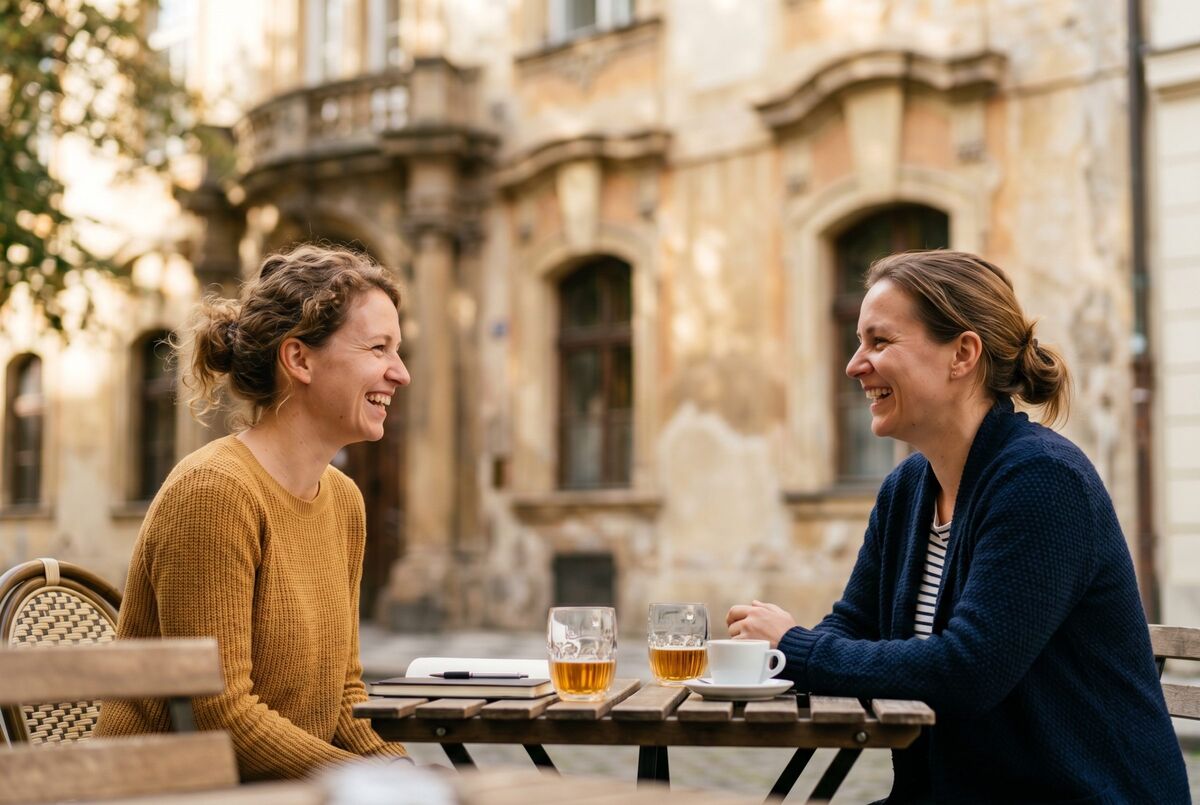
Your instructors
Conversational Czech tutors for private lessons & classes
Strommen runs a curated Czech practice rather than an open marketplace. Every teacher here was met and vetted by us. Bios are the tutors' own.
Filter by location, age, or price. Then book a 30-minute free trial.
Below are the Strommen tutors who specialize in Conversational Czech. Photos, ratings, and rates are real. Click any card to read a bio and book a free 30-minute trial.
I want to learn…
Every tutor, personally met. — founder-vetted since 2006, in Los Angeles and online worldwide.
Get a personalized plan
Pick your language — a language advisor will match you with the right tutor and map out your path.

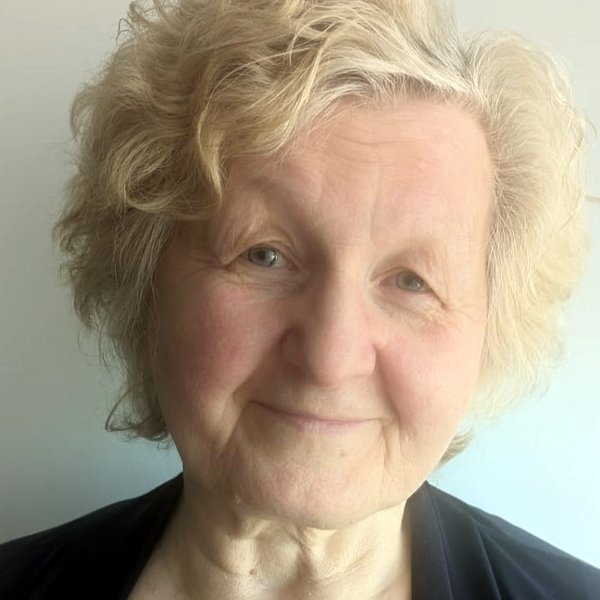


University of Toronto Bachelor's Diploma
Your Multicultural Language Companion: Expert Guidance in English, French, German, and Spanish
Personally vetted · Strommen’s note
Maria has spent thirty years teaching across Czech, English, French, German, Polish, and Spanish, much of it inside government departments and international organizations.
Specialties
University of Toronto Bachelor's Diploma
Your Multicultural Language Companion: Expert Guidance in English, French, German, and Spanish
Specialties
Personally vetted · Strommen’s note
Maria has spent thirty years teaching across Czech, English, French, German, Polish, and Spanish, much of it inside government departments and international organizations.

Slang — culture & slang
5 cues that mark Czech you actually hear
These are the small details that mark a learner who has spent time in the Czech Republic from one who has only studied the language on paper. Save the list. Then book a tutor for the practice that uses them.
-
01
Strč prst skrz krk
The famous tongue-twister, translatable as "stick a finger through your throat." Contains no vowels in the standard sense, only the consonant r doing syllabic work in every word. Czech allows syllabic r and l, which is the feature that makes the sentence pronounceable at all. Every Czech child learns it and every learner encounters it within the first month of serious study. Getting it out at conversational speed is a small rite of passage.
e.g. Ask a Czech friend to say it three times fast. Then try yourself.
-
02
Pivo, prosím
"A beer, please." The universal opening of a Czech evening, and the phrase that most travellers learn before any other. Czech pub culture is daily rather than special-occasion, and the hospoda is a social institution, not a venue. Knowing how to order, pay ("zaplatím, prosím"), and follow the small social negotiations of a pub table is its own conversational module.
e.g. Jedno pivo, prosím. ("One beer, please.")
-
03
Diminutives everywhere
Czech diminutivizes almost everything, often more than once. Kočka → kočička → kočenka. The diminutives carry warmth and politeness rather than literal smallness. Refusing to use them makes a learner sound stiff in a context where every Czech speaker is using them constantly. Lessons treat the diminutive system as a core register layer, not a curiosity.
e.g. Dáš si kafíčko? ("Want a coffee?") — kafíčko being the affectionate diminutive of kafé.
-
04
Standard Czech vs Common Czech
Spisovná čeština is the written and formal register taught in textbooks. Obecná čeština is the everyday spoken register used in Prague and across most of Bohemia, with different endings, different forms, and its own vocabulary. A learner who studies only the standard hears a language in Prague that feels off because most casual speech runs on Common Czech grammar. A good tutor teaches both in parallel.
e.g. Standard: "Jsem mladý." Common: "Jsem mladej." Same meaning, different register.
-
05
Seven cases, three genders, doing all the work
Czech nouns, adjectives, and pronouns inflect through seven cases in singular and plural across three genders. The cases drive verb agreement, prepositions, and word order. Adult learners spend their first six months of serious study settling into the case system, and the rest of Czech becomes much smaller after that. There is no shortcut around them, and avoiding them in early lessons just postpones the work.
e.g. Praha (Prague, nominative), do Prahy (to Prague, genitive), v Praze (in Prague, locative). One city, three cases, three endings.
About Conversational Czech
Czech rewards patience with real fluency
Czech has a reputation for being hard, and the reputation is honest. About ten million native speakers, almost all of them in the Czech Republic, with a heritage diaspora spread across the US, Canada, Austria, and Germany. The language is West Slavic, closely related to Slovak (mutually intelligible to most adult speakers) and Polish (similar but not freely intelligible), and it preserves a feature that almost every Romance and Germanic language has shed: a full case system. Czech nouns, adjectives, and pronouns inflect through seven cases, in singular and plural, across three grammatical genders. The cases drive almost everything else. Verb agreement, prepositions, word order, and a learner cannot fully avoid them at any level. The first six months of serious Czech study are essentially a long settling-in with the case system, after which the rest of the language becomes a much smaller hill.
The sound system has its own reputation. The famous Czech tongue-twister Strč prst skrz krk ("stick a finger through your throat") contains no vowels in the standard sense, only the consonant r doing syllabic work. Czech allows syllabic consonants r and l, which means whole words can be pronounced without any vowel at all. The letter ř, which represents a fricative trill that few other languages have, is the consonant most adult learners spend the longest on. The hard-soft consonant distinction (twělé and měkké) drives spelling rules, vowel-following rules, and pronunciation. The pronunciation is also highly regular, which is the consolation prize: once you can hear the sounds, the spelling tells you exactly how to say a word, with no English-style spelling chaos.
The register split is the next thing every learner meets. Czech has two parallel spoken layers. Standard Czech (spisovná čeština) is the written and formal-speech register used in news broadcasts, schools, and formal contexts. Common Czech (obecná čeština) is the everyday spoken register used in Prague, much of Bohemia, and increasingly across the country, with its own grammatical forms, its own endings, and its own vocabulary. A learner who studies only Standard Czech and then arrives in Prague hears a language that sounds related but feels off, because most casual conversation runs on Common Czech grammar even when speakers think they are speaking standard. The Moravian east keeps a different balance, with Brno and Olomouc using forms closer to Standard. A good tutor names this split early and teaches both registers in parallel rather than pretending the standard is the whole language.
The diminutive system is the other piece that surprises learners. Czech diminutivizes almost everything, often more than once. Kočka is cat, kočička is little cat or cat-affectionate, kočenka is kitten-affectionate-even-more, and the chain can keep going. The diminutives carry warmth, politeness, and tone rather than literal size, and refusing to use them makes a learner sound stiff in a context where every Czech speaker is using them. Tutors teach the system as a register layer rather than as a curiosity, because in real conversation it is the difference between sounding like a memo and sounding like a person.
Pub and pivo culture is more central to spoken Czech than outsiders realize. The Czech Republic has the highest per-capita beer consumption in the world, and the hospoda (pub) is a daily social institution rather than a weekend destination. Pivo, prosím ("a beer, please") is the universal opening line of an evening, and ordering, paying, and the small social negotiations around a Czech pub table are their own conversational module. Czech beer is mostly Pilsner-style, originally invented in Plzeň in the 1840s, and the conversation about which brewery is doing what is a real cultural register that travellers and learners walk into often. Lessons include the pub vocabulary not as a stereotype but because it is genuinely how Czechs spend evenings together.
The political and historical layer matters too. Czech survived as a national language through Habsburg rule when German dominated administration and education, through the National Revival of the 19th century that re-built modern literary Czech essentially from the ground up, through the founding and the splitting of Czechoslovakia, and through forty years of state-socialist Russian pressure during which Russian was compulsory in schools. The language carries that history audibly. Older speakers often have functional Russian, younger speakers usually have stronger English, and there are subtle vocabulary divides between borrowing layers (German, Russian, more recent English) that a learner picks up over time. A tutor who can name this context helps a student make sense of why certain words sound the way they do and which register a given word belongs to.
Who learns Czech with us. Strommen sees expats and partners of Czech speakers preparing for life in Prague or Brno, heritage learners with Czech or Czech-American grandparents reconnecting with the language, occasional students of Slavic linguistics adding Czech to a comparative reading list, and an occasional traveller drawn in by Prague enough to commit. Each has a different finish line. A good conversational tutor will not run them through the same lesson plan.
Our Conversational Czech tutors are native speakers from Prague, Brno, Olomouc, and elsewhere, alongside longtime bilingual teachers experienced with how English speakers actually stall in Czech. They calibrate to your goal at the trial, build the lesson plan around it, and adjust as you progress. You can also browse the wider Strommen tutor directory for the rest of our Slavic-language roster.
What you'll cover
Lessons & classes tailored to Conversational Czech
The case system, taught early and often
Czech has seven cases working across three genders in singular and plural, and a learner cannot fully avoid them at any level. Lessons introduce the cases gradually but use them in real speech from the first month, because attempting to delay them creates a wall later. Nominative and accusative come first, then locative for talking about places, then dative, instrumental, genitive, and vocative. Each one carries its own work and its own payoff, and by month six the system stops feeling like a separate burden and becomes ordinary grammar.
Pronunciation: the ř, the syllabic r and l, the soft consonants
The famous Czech ř, the syllabic r and l that let words be pronounced without vowels, and the hard-soft consonant distinction that runs through every Czech word. Lessons include real ear-training and shadowing with native audio, plus direct feedback on the consonant pairs that English speakers conflate. The spelling is highly regular once the sounds are in place, which is the consolation: the work is in the mouth, not in remembering arbitrary spellings.
Standard and Common Czech in parallel
Spisovná čeština and obecná čeština are not the same Czech and a learner needs both. Standard for reading, writing, formal speech, and respect. Common Czech for casual conversation in Prague and Bohemia, where most speakers naturally use it even when they think they are speaking standard. Lessons label each form as it appears so the registers stay distinct, and listening practice covers both.
Diminutives, register, and pub-table Czech
The diminutive system is a core register layer, not a curiosity. Lessons teach it as a tool for warmth, politeness, and tone, alongside the everyday vocabulary of pub culture, family conversation, and casual exchange. Real audio from Czech podcasts, TV, and recorded conversation gives learners the ear for how the diminutives and the register choices actually work in connected speech. A learner who controls these stops sounding rehearsed and starts sounding present.
FAQ
About Conversational Czech lessons & classes
Is Czech really as hard as people say?
Yes and no. The case system is real work, the sound system has features (the ř, syllabic consonants) that few other languages share, and the standard-vs-common register split adds a layer most courses do not. That said, Czech rewards consistent practice in ways that less inflected languages do not, and a learner who puts in six focused months on the cases is on solid ground for the rest of the language. The FSI estimates Czech at the same difficulty bracket as Polish and Russian for English speakers.
Can I learn Czech and Slovak at the same time?
You can, and many heritage learners do, but most tutors will recommend committing to one as a primary and treating the other as passive comprehension. Czech and Slovak are mutually intelligible to most adult native speakers, who grew up in Czechoslovakia or its successor states with both languages around. As a learner starting from outside, mixing the two during active study often produces a hybrid that does not sound right in either. Pick one as your speaking language and the other comes along for the listening.
How long until I can hold a real conversation in Czech?
Depends on what counts as a conversation. Holding a simple cafe or pub exchange usually comes within four to six months of one or two lessons a week with regular practice. Holding a relaxed conversation about your day, your work, and recent events takes longer, often nine to fifteen months for an adult starting from beginner. Following a casual exchange between two native speakers at full speed comes later still. Your tutor sets concrete weekly targets at the trial and adjusts based on what is working.
Should I learn Standard Czech or Common Czech?
Both, in parallel, with the tutor labelling each as it appears. Standard Czech is the right answer for reading, writing, formal speech, and showing respect with people you do not know well. Common Czech is the right answer for casual conversation in Prague, friendship, and most evening contexts. Picking only one creates problems in the other half of your life. A tutor teaches both and helps you learn when to use which.
Will Czech help me with other Slavic languages?
Yes, especially with Slovak (largely mutually intelligible), Polish (recognizable but not freely intelligible), and to a lesser extent with the Eastern Slavic languages Russian and Ukrainian. The case system, the aspectual verb system, and a substantial vocabulary base transfer. Reading any other Slavic language is meaningfully easier once you have Czech. Speaking another Slavic language still requires direct study, but the framework you have built in Czech accelerates it considerably.
Are your Czech tutors native speakers?
Most are native speakers from Prague, Brno, Olomouc, and elsewhere in the Czech Republic, alongside longtime bilingual teachers experienced with the specific way English speakers stall in Czech. Each tutor's bio specifies background, region, and teaching experience. For conversational practice, what matters most is a tutor who can hear what is keeping your Czech from sounding natural and diagnose it specifically.
Can I take Czech lessons online?
Yes. Most of our Czech tutors teach online via Zoom or Jitsi and work with students worldwide, which fits this specialty well since the lesson is mostly speaking and listening. A few teach in person around Los Angeles when schedules align. The booking widget on each tutor profile shows the available formats and live availability.
What does a typical conversational Czech lesson look like?
Lessons are one-on-one and built around your goals. A typical hour pairs guided conversation in Czech on a topic you chose, focused work on whatever case or pronunciation issue surfaced, a short listening segment from Czech media, and feedback on your output. No two students get the same plan. A heritage learner reconnecting with grandparents and a partner preparing for a family Sunday in Olomouc get genuinely different lessons.
Ready for Conversational Czech lessons or classes?
Book a free 30-minute trial with one of our personally vetted tutors. Private lessons or small-group classes — your choice.