



Personally vetted instructors
Czech for Beginners tutors, lessons & classes
Dobrý den The formal Czech good day, the greeting every beginner learns to use with anyone they don't know well.
Personally vetted Czech tutors who specialize in absolute beginners. Patient, methodical teachers who can take a student from zero into their first Czech sentences without flinching at the case system.
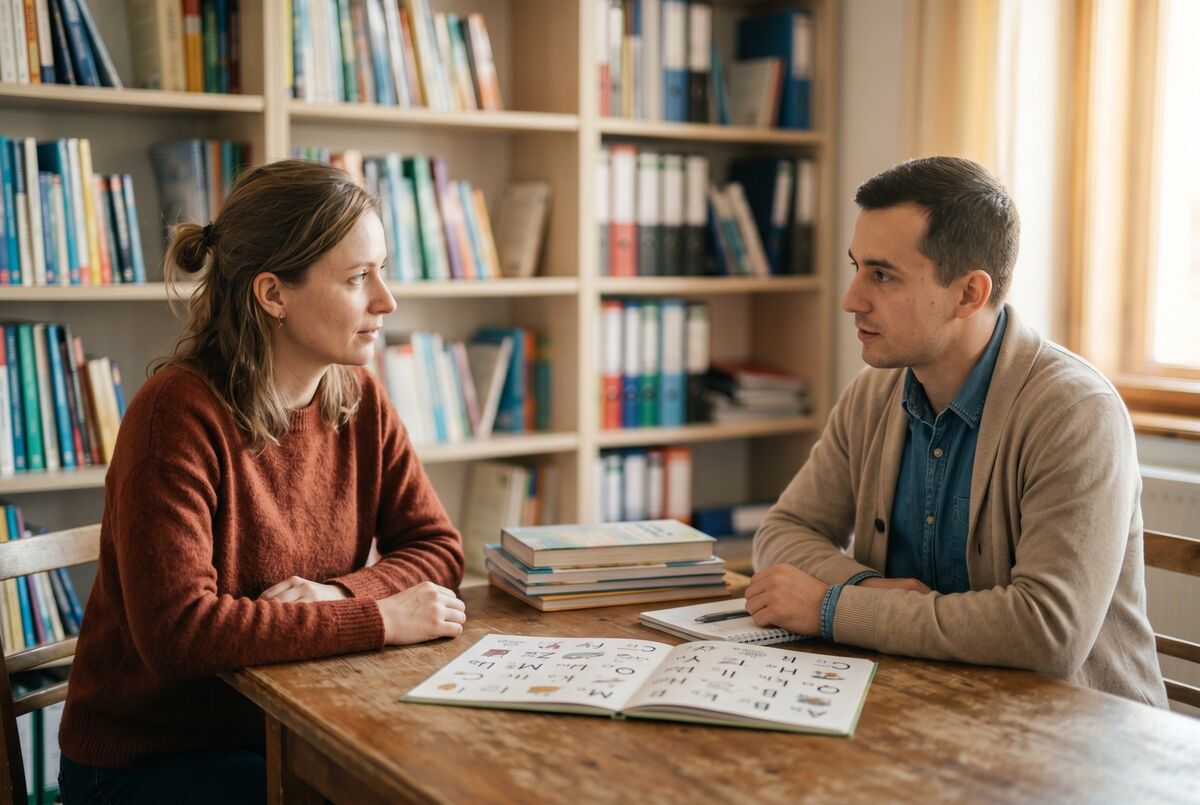
Your instructors
Czech for Beginners tutors for private lessons & classes
Strommen runs a curated Czech practice rather than an open marketplace. Every teacher here was met and vetted by us in person or via thorough video interview. Bios are the tutors' own.
Filter by location, age, or price. Then book a 30-minute free trial.
Below are the Strommen tutors who specialize in teaching Czech to absolute beginners. Photos, ratings, and rates are real. Click any card to read a bio and book a free 30-minute trial.
I want to learn…
Every tutor, personally met. — founder-vetted since 2006, in Los Angeles and online worldwide.
Get a personalized plan
Pick your language — a language advisor will match you with the right tutor and map out your path.

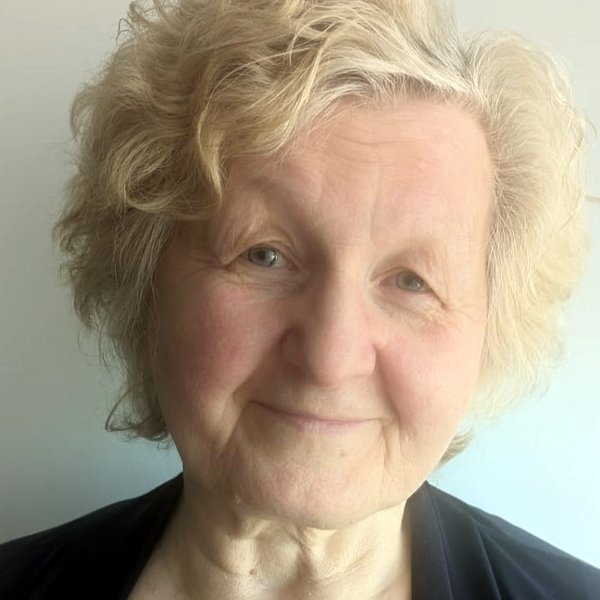


University of Toronto Bachelor's Diploma · Certificate in International Relations from the Political Science Institute of Paris
Your Multicultural Language Companion: Expert Guidance in English, French, German, and Spanish
Personally vetted · Strommen’s note
Maria has spent thirty years teaching across Czech, English, French, German, Polish, and Spanish, much of it inside government departments and international organizations.
Specialties
University of Toronto Bachelor's Diploma · Certificate in International Relations from the Political Science Institute of Paris
Your Multicultural Language Companion: Expert Guidance in English, French, German, and Spanish
Specialties
Personally vetted · Strommen’s note
Maria has spent thirty years teaching across Czech, English, French, German, Polish, and Spanish, much of it inside government departments and international organizations.

První slova — first foundations
5 Czech foundations every beginner needs in the first month
These are the building blocks that turn the famously hard Czech first months from a wall into a sequence of manageable steps. Save the list for the trial lesson.
-
01
Strč prst skrz krk
The famous tongue-twister, translatable as stick a finger through your throat. Contains no vowels in the standard sense, only the consonant r doing syllabic work in every word. Czech allows syllabic r and l, which is the feature that makes the sentence pronounceable at all. Every Czech child learns it and every beginner encounters it within the first month of serious study. Getting it out at conversational speed is a small rite of passage.
e.g. Ask a Czech friend to say it three times fast. Then try yourself.
-
02
Seven cases, three genders, doing all the work
Czech nouns, adjectives, and pronouns inflect through seven cases in singular and plural across three genders. The cases drive verb agreement, prepositions, word order, and most of what makes a Czech sentence cohere. There is no shortcut around them. Beginners spend their first six months settling into the system, and the rest of Czech becomes much smaller after that.
e.g. Praha (Prague, nominative), do Prahy (to Prague, genitive), v Praze (in Prague, locative). One city, three cases, three endings.
-
03
Czech and Slovak, parted in 1993
From 1918 to 1992, Czechoslovakia was a single country, and Czech and Slovak speakers grew up exposed to both languages through media and education. The two languages remain mutually intelligible to most adult speakers, who can hold a conversation each in their own language and understand each other without translation. A beginner who learns Czech gets passive comprehension of Slovak almost for free, and the reverse holds.
e.g. A Czech and a Slovak speaker on a Prague train each use their own language and follow each other completely.
-
04
Diminutives carry warmth
Czech diminutivizes almost everything, often more than once. Kočka becomes kočička becomes kočenka. Kafe becomes kafíčko. Pivo becomes pivečko. The diminutives carry warmth and politeness rather than literal smallness, and refusing to use them in casual contexts makes a beginner sound stiff. Lessons treat the system as a register layer to be learned early, not a curiosity reserved for advanced study.
e.g. Dáš si kafíčko? ("Want a coffee?") — kafíčko being the affectionate diminutive of kafe.
-
05
Bohemia is beer, Moravia is wine
The two historic regions that make up the Czech Republic have their own cultural flavours that any beginner planning real time in the country will encounter. Bohemia, the western half (Prague, Plzeň, České Budějovice), is beer country, with the world's highest per-capita beer consumption. Moravia, the eastern half (Brno, Olomouc), is wine country, with its own folk traditions and a spoken Czech that sits closer to the standard than Prague speech does.
e.g. Pilsner beer was invented in Plzeň in 1842. Moravian wine is older and less famous abroad.
About Czech for Beginners
Czech rewards the steady beginner
Czech is honest about being hard, and that honesty is the right starting point. The Foreign Service Institute groups Czech with Polish, Russian, and the other Category III languages, estimating roughly 1,100 classroom hours to professional proficiency from English. The first six months of serious Czech study are essentially a long settling-in with the case system: seven cases working across three genders in singular and plural, with adjectives and pronouns agreeing through every one. After that, the rest of Czech becomes a much smaller hill. A beginner who takes the foundations seriously, lesson by lesson, ends month nine in a place that beginners in less inflected languages do not reach for years. The reward for the steady early work is genuine, and it is the reason adult learners who finish their first Czech year tend to keep going.
The first thing a beginner Czech tutor introduces is the alphabet and pronunciation. Czech uses the Latin alphabet plus a set of diacritics that mark length (the acute accent, called čárka) and softness (the hook, called háček, which sits above letters like č, š, ž, ř, ě). The spelling is highly regular: once you know the letter values and the diacritics, every word can be pronounced correctly from the page. This is the consolation prize for the grammatical work ahead. There is no English-style spelling chaos in Czech. What you see is what you say.
The famous Czech ř is the consonant that most adult beginners spend the longest on. It is a raised alveolar fricative trill, a sound that almost no other language has, produced by trilling the tongue against the roof of the mouth and adding voicing at the same time. The composer Bedřich Smetana's name contains it. So does the word for door (dveře) and the word for river (řeka). Most beginners cannot produce a clean ř in the first month, and that is fine. The sound develops through ear-training and practice over the first six to twelve months, and Czech speakers are tolerant of approximations as long as the rest of the pronunciation is reasonable. The tongue-twister Strč prst skrz krk (literally: stick a finger through your throat) is the famous example of Czech allowing syllabic consonants r and l, where whole words can be pronounced with no vowel at all. Every Czech child learns the sentence, every beginner encounters it within the first month of serious study, and getting it out at conversational speed is a small rite of passage.
The case system is the work, and there is no way around it. Czech nouns, adjectives, and pronouns inflect through seven cases (nominative, genitive, dative, accusative, vocative, locative, instrumental), in singular and plural, across three grammatical genders (masculine animate, masculine inanimate, feminine, neuter, with the animate-inanimate split functioning as a fourth gender for practical purposes). The cases drive almost everything else: verb agreement, preposition choice, word order, possession. The same noun has different endings depending on its role in the sentence. Praha is Prague in the nominative; do Prahy is to Prague in the genitive; v Praze is in Prague in the locative; Prahou is by Prague in the instrumental. One city, four cases, four endings. Lessons introduce the cases gradually (nominative and accusative first, then locative for places, then dative, instrumental, and genitive), but use them in real speech from the first month, because attempting to delay them creates a wall later. By month six the system stops feeling like a separate burden and becomes ordinary grammar.
The Czech-Slovak split is worth knowing as a beginner. From 1918 to 1992, Czechoslovakia was a single country, and Czech and Slovak speakers grew up exposed to both languages through media, education, and family ties. The two languages are mutually intelligible to most adult speakers, who can hold a conversation each in their own language and understand each other without translation. Since the 1993 split into the Czech Republic and Slovakia, younger generations on each side have less natural exposure to the other language, and the mutual intelligibility has narrowed slightly. A beginner who learns Czech gets passive comprehension of Slovak almost for free, and the reverse is also true.
Bohemia and Moravia, the two historic regions that make up the Czech Republic, have their own cultural and linguistic flavours that any beginner planning real time in the country will encounter. Bohemia, the western half, includes Prague and most of the country's industrial and cultural centres. Moravia, the eastern half, includes Brno and Olomouc and is closer culturally to Slovakia and Austria, with its own folk traditions, its own wine culture (Bohemia is beer country, Moravia is wine country), and its own dialectal forms of spoken Czech. The standard-versus-common register split that defines spoken Czech is more pronounced in Bohemia, especially Prague, than in Moravia, where standard Czech is closer to the everyday spoken language.
The diminutive tradition is the cultural feature that beginners get the most affection out of once they start using it. Czech diminutivizes almost everything, often more than once. Kočka is cat. Kočička is little cat, or cat-affectionate. Kočenka is kitten-affectionate-even-more. Kafe is coffee. Kafíčko is coffee-affectionate. Pivo is beer. Pivečko is beer-affectionate. The chain can keep going, and the diminutives carry warmth, politeness, and tone rather than literal smallness. A beginner who learns the system in the first three months rather than the first year sounds dramatically warmer in casual conversation.
Pilsner beer is the famous Czech cultural export, and the everyday word pivo (beer) is one of the first vocabulary items any beginner picks up. Pilsner-style beer was invented in Plzeň (Pilsen) in 1842, and the Czech Republic has the highest per-capita beer consumption in the world. The hospoda (pub) is a daily social institution rather than a weekend destination, and the conversation around beer and pub culture is its own register that beginners walk into often. Knowing how to order one beer (jedno pivo, prosím) and how to ask for the bill (zaplatím, prosím) is the first practical conversational module most beginners master.
A typical first month of beginner Czech covers the alphabet and pronunciation, greetings and farewells, introducing yourself, numbers one through one hundred, days of the week and months, basic family vocabulary, the verbs být (to be) and mít (to have), the present tense of regular verbs, the nominative and accusative cases for the most common noun types, and roughly one hundred to one hundred and fifty high-frequency words. By month three, most beginners can hold a basic conversation about themselves, their family, and their work, and order food and drinks. By month six, basic A2 conversation on familiar topics is realistic, with the case system still settling but starting to feel less alien.
Our Czech for Beginners tutors include native speakers from Prague, Brno, Olomouc, and elsewhere, alongside longtime bilingual teachers experienced with the specific way English speakers stall in early Czech. Beginner-specific teaching in a heavily inflected language is its own skill: the patience to drill the case endings, the ear for which case a learner is missing, the instinct for when to consolidate and when to push. Each tutor's bio specifies their background. The sibling Conversational Czech page covers a related program for students past the beginner stage, and you can browse the wider Strommen tutor directory for our full Slavic-language roster.
What you'll cover
Lessons & classes tailored to Czech for Beginners
The case system, taught from the first month
Czech has seven cases working across three genders in singular and plural, and a beginner cannot fully avoid them at any level. Lessons introduce the cases gradually but use them in real speech from the first month, because attempting to delay them creates a wall later. Nominative and accusative come first, then locative for talking about places, then dative, instrumental, genitive, and vocative. Each one carries its own work and its own payoff.
Pronunciation: the ř, the syllabic consonants, the diacritics
The famous ř, the syllabic r and l that let words be pronounced without vowels, and the diacritics (čárka for length, háček for softness) that drive Czech spelling. Lessons include ear-training and shadowing with native audio, plus direct feedback on the soft consonants that English speakers conflate. The spelling is highly regular once the sounds are in place, which is the consolation: the work is in the mouth, not in remembering arbitrary spellings.
Být, mít, and your first 150 words
The two foundational verbs (to be and to have) plus 100 to 150 high-frequency nouns and verbs in the first month cover the majority of basic Czech sentences. Family, food, daily routine, work, hobbies, time, location. Once být and mít are automatic, regular present-tense verb conjugation slots in with very little additional friction, and the case endings can be drilled through real noun-and-verb combinations rather than as abstract grammar.
Beginner-friendly between-lesson resources
Your tutor will recommend specific resources calibrated to your level: the Pimsleur Czech audio course for ear training, the Drops Czech app for vocabulary reps, ČT D children's programming for slow Czech, and the Mluvíte česky podcast series for beginner-friendly listening. Twenty to thirty minutes of daily exposure outside lessons is the single biggest accelerator for beginners in an inflected language like Czech.
FAQ
About Czech for Beginners lessons & classes
Is Czech really as hard as people say?
Yes and no. The case system is real work, the sound system has features (the ř, syllabic consonants) that few other languages share, and there is a real standard-versus-common-register split in spoken Czech. That said, Czech rewards consistent practice in ways that less inflected languages do not, and a beginner who puts in six focused months on the cases is on solid ground for the rest of the language. The FSI estimates Czech at the same difficulty bracket as Polish and Russian for English speakers.
How long until I can hold a basic conversation in Czech?
From zero, weekly hour-long lessons plus twenty to thirty minutes of daily exposure typically produces functional A2 conversation within seven to ten months. That means introducing yourself, ordering food, talking about your day, basic small talk. Conversational comfort at B1 usually takes another nine to twelve months at the same pace, because the case system and the verb aspect distinction take real time to become automatic.
How do I master the famous Czech ř?
Slowly. The ř is a raised alveolar fricative trill, a sound that almost no other language has. Most adult beginners cannot produce a clean ř in the first month, and that is fine. The sound develops through ear-training and practice over the first six to twelve months, and Czech speakers are tolerant of approximations as long as the rest of the pronunciation is reasonable. Your tutor will model the sound, give you specific tongue-positioning cues, and let it develop naturally rather than stalling progress on it.
Can I learn Czech and Slovak at the same time?
Most tutors recommend committing to one as a primary and treating the other as passive comprehension. Czech and Slovak are mutually intelligible to most adult native speakers, who grew up in Czechoslovakia or its successor states with both languages around. As a beginner starting from outside, mixing the two during active study often produces a hybrid that does not sound right in either. Pick one as your speaking language and the other comes along for the listening.
What does a typical beginner Czech lesson look like?
A first-month lesson runs about an hour and typically includes ten minutes of warm-up conversation in Czech (even halting), fifteen minutes of new vocabulary with pronunciation drill, fifteen minutes of grammar in context (one case ending or one verb form introduced through example sentences), ten minutes of listening practice, and ten minutes of structured speaking practice. Homework is light. Your tutor calibrates based on what is clicking and what is not.
Will Czech help me with other Slavic languages?
Yes, especially with Slovak (largely mutually intelligible), Polish (recognisable but not freely intelligible), and to a lesser extent with the Eastern Slavic languages Russian and Ukrainian. The case system, the aspectual verb system, and a substantial vocabulary base transfer. Reading any other Slavic language is meaningfully easier once you have Czech. Speaking another Slavic language still requires direct study, but the framework you have built in Czech accelerates it considerably.
Do I need to know German or any other language before starting Czech?
No. English is more than enough background. Czech vocabulary has a layer of German loanwords (especially in everyday and culinary vocabulary) that German speakers will recognise, and the Latin alphabet is the same one you already read. Knowing Russian or another Slavic language is a real head start on the case system and the verb aspect distinction, but those are not prerequisites. We have taught Czech beginners with zero language background besides English.
What is the trial lesson like for a complete beginner?
Thirty minutes, free, with the tutor you select. For absolute beginners, the trial is half assessment and half preview: the tutor will introduce themselves in Czech and English, walk through a few examples of how the case system actually works, explain the typical first-month roadmap, and answer your questions about lesson cadence and goals. You will leave with a sense of whether this specific tutor's approach feels right for you.
Ready for Czech for Beginners lessons or classes?
Book a free 30-minute trial with one of our personally vetted tutors. Private lessons or small-group classes — your choice.