



Personally vetted instructors
Libyan Arabic tutors, lessons & classes
كيف حالك Libyan for "how are you?" The Tripoli ear also recognizes the Egyptian-style izzayyik next door.
Personally vetted Libyan Arabic tutors. Lessons in the Darija actually spoken in Tripoli, Benghazi, Misrata, and the desert south, Bedouin and urban registers included.
Your instructors
Libyan Arabic tutors for private lessons & classes
Strommen runs a curated, founder-vetted teaching practice rather than a marketplace. The Libyan Arabic roster is small because the supply of professional tutors in this variety is small abroad; what is on this page is what we trust personally.
Click any card to read the full bio, then book a 30-minute free trial.
Below are the Strommen tutors who specialize in Libyan Arabic. Photos, ratings, and rates are real. Click any card to read their bio and book a free 30-minute trial.
I want to learn…
Every tutor, personally met. — founder-vetted since 2006, in Los Angeles and online worldwide.
Get a personalized plan
Pick your language — a language advisor will match you with the right tutor and map out your path.



University Degree
Helping students learn with clarity, confidence, and motivation
Personally vetted · Strommen’s note
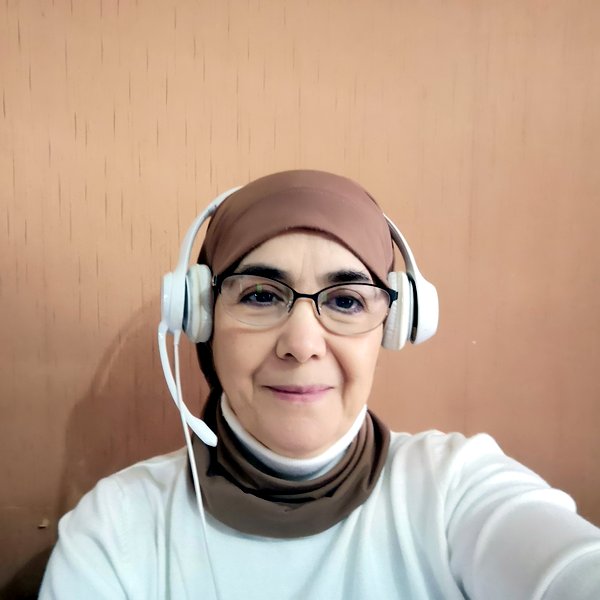
Quebec-based, Rahma teaches Arabic and French together, four Maghreb dialects covered, Algerian through Libyan.
Specialties
Also speaks: English
University Degree
Helping students learn with clarity, confidence, and motivation
Specialties
I also speak: English
Personally vetted · Strommen’s note
Quebec-based, Rahma teaches Arabic and French together, four Maghreb dialects covered, Algerian through Libyan.

Bachelor degree in french studiesMaster's degree in french studies · DALF C2
Online certified french tutor delf/DALF/ TEF/TCF Preparation
Personally vetted · Strommen’s note
Hela has taught French and Arabic for thirteen years, DELF, DALF, TEF, and TCF certification prep included, plus four different Maghreb Arabic dialects.
Specialties
Bachelor degree in french studiesMaster's degree in french studies · DALF C2
Online certified french tutor delf/DALF/ TEF/TCF Preparation
Specialties
Personally vetted · Strommen’s note
Hela has taught French and Arabic for thirteen years, DELF, DALF, TEF, and TCF certification prep included, plus four different Maghreb Arabic dialects.

BA in English Literature · TOT , ITM Interactive teaching methodology. BA in English Literature
Step by step to English mastery.
Personally vetted · Strommen’s note
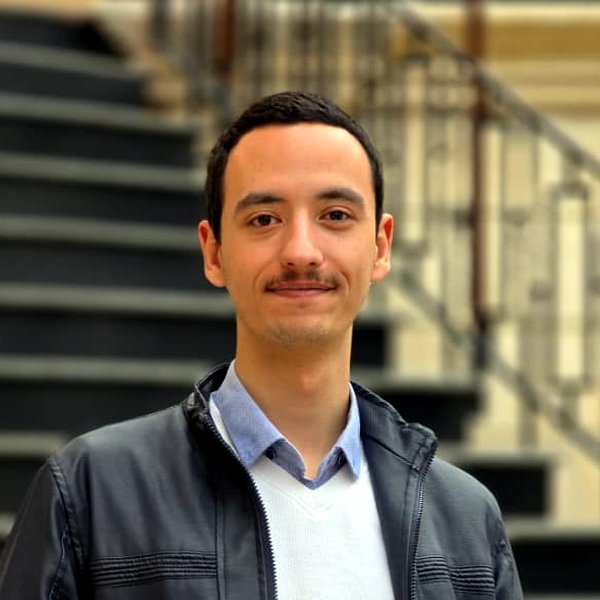
Emad's Arabic dialect range is genuinely enormous: Syrian, Gulf, Levantine, Emirati, Saudi, Moroccan. English is taught step by step alongside it.
Specialties
Also speaks: Copywriting, Spanish, Translation
BA in English Literature · TOT , ITM Interactive teaching methodology. BA in English Literature
Step by step to English mastery.
Specialties
I also speak: Copywriting, Spanish, Translation
Personally vetted · Strommen’s note
Emad's Arabic dialect range is genuinely enormous: Syrian, Gulf, Levantine, Emirati, Saudi, Moroccan. English is taught step by step alongside it.

الليبي — Libyan culture & slang
5 Libyan markers a Tripoli or Benghazi ear catches instantly
Five markers that read as unmistakably Libyan. Screenshot them, then book a tutor to learn the rest in context.
-
01
قلت / 9ult, gult
"I said," with the characteristic hard g realization of the قاف that runs across most Libyan speech, descended from the Bedouin substrate of the Banū Hilāl migrations. Urban Egyptians say ʾult, Levantines also ʾult, classical Arabic qultu. The Libyan g is one of the fastest single-sound tells.
e.g. Sentence-initial in everyday speech: "gult lik" ("I told you").
-
02
بازين, bāzīn
The Libyan national dish: a dense ball of barley dough served with a tomato-and-lamb stew, traditionally eaten by hand from a shared platter. Where Algerian and Moroccan tables center on couscous and tagine, the Libyan table centers here, and the word travels with the diaspora.
e.g. Used as both food and shorthand for Libyan hospitality: "come for bāzīn on Friday."
-
03
قراعة, qra3a
The classic Tripolitan round flatbread, distinct from the broader khubz. Bread vocabulary varies by region across the country; qra3a reads as urban-Tripoli the way a particular loaf name reads as Damascene or Beiruti elsewhere in the Arab world.
e.g. Asked at a Tripoli bakery: "qra3a or khubz?"
-
04
سبيناتش، لافنديڨو, the Italian layer
Forty-plus years of Italian colonial presence left vocabulary that outlived the period: sbinitsh (spinach), lavandīno (kitchen sink), gōma (tire), kāccaviti (screwdriver). Some borrowings are technical, some domestic, and older speakers no longer hear them as foreign.
e.g. A Tripoli cook reaches for <em>sbinitsh</em> at the market without translating in their head.
-
05
شنو، توا, shnū, tawwa
The everyday Libyan question word for "what" (shnū) and the adverb for "now" (tawwa). Both sit on the Maghrebi side of the country's vocabulary map, closer to Tunisian than to Egyptian, and they appear constantly in casual speech.
e.g. Spoken with the rising Tripoli intonation: "shnū, tawwa?" ("what, now?").
About Libyan Arabic
The Arabic that sits between Maghreb and Egypt
Libyan Arabic is the Arabic almost nobody teaches and a surprising number of people need. It sits geographically and linguistically between the Maghreb to the west and Egypt to the east, and that border location is the most useful single fact about it. A Tripolitan picks up Tunisian without much friction; a Benghazi speaker follows Egyptian comfortably; both can read the eastern Arab world's media in MSA and watch Egyptian film without subtitles. The reverse direction is harder. Egyptians find western Libyan dense, Moroccans find eastern Libyan unfamiliar, and the country itself splits roughly down the middle between a more Maghrebi west (Tripolitania) and a more eastern-feeling east (Cyrenaica), with the Fezzan in the south carrying its own Bedouin and Saharan layer.
What ties it together is a Bedouin substrate. Most Libyan dialects descend from the Banū Hilāl and Banū Sulaym migrations of the 11th century, which gives Libyan its characteristic hard g for the قاف (the same g you hear in Najdi or rural Egyptian Saʿidi), the masculine plural verb agreement patterns of nomadic Arabic, and a rural-flavored vocabulary that has carried into urban speech long after the cities settled. That is one of the easier tells when you hear it: a Tripoli speaker says gult for "I said," not the urban ʾult a Cairene would use, and the g shows up across the country with only minor variation. A tutor will flag that early so you do not mistake the Libyan g for a foreign accent on MSA. It is the local norm.
Then there is Italian. Libya was an Italian colony from 1911 through the Second World War, and the Italian layer in everyday Libyan vocabulary outlives the colonial period by a wide margin. A kitchen sink is a lavandīno, espinach is sbinitsh, a tire is a gōma, a screwdriver a kāccaviti. Some of the borrowings are technical, some are domestic, and many are so naturalized that older Libyans no longer hear them as foreign at all. Younger urban speakers also code-switch with English in a way that maps to Gulf-influenced patterns rather than to the French-and-Arabic switching of Algeria or Morocco. Add in the fact that Tripoli has historically been a port city with Maltese, Greek, and Turkish contact, and the lexicon has more layers than the small population (~7 million) would suggest.
The accent divide between Tripoli and Benghazi is the next thing to know. Tripolitan speech sits closer to Tunisian, with vowel reduction that makes the consonant clusters dense, a softer overall texture, and a vocabulary that overlaps heavily with the Maghrebi core (barsha for "a lot," shnū for "what," wīn for "where"). Benghazi and eastern Libyan are more conservative, with fuller vowels, more retained MSA-flavored forms, and intonation that an Egyptian ear hears as familiar. The 2011 revolution and its aftermath produced a generation of speakers who moved between regions or out of the country entirely, so younger Libyans abroad often carry a blended accent that a careful tutor can identify within a sentence or two. That matters for lessons: tell your tutor which variety you are aiming for, whether for family, for a posting, or for film work, and they will not flatten it into a generic Libyan that nobody actually speaks.
There is also a vocabulary that is just Libyan, neither obviously Maghrebi nor obviously eastern. 9aalek (qālik), "he said to you," with the characteristic g realization; tawwa for "now"; shanū as the everyday "what"; baʿd meaning "still" or "yet" in a way Egyptian speakers do not use; the bread khubz in the broad varieties and qra3a in the local Tripolitan loaf-name. Food is its own atlas. The national dish, bāzīn, a dense barley dough served with lamb stew and eaten by hand from a shared platter, is the giveaway dish at any Libyan table abroad. Couscous appears too, served Libyan-style with the country's own spice mix. None of this is in a general Arabic course, and a tutor who actually speaks the dialect treats it as the main subject rather than as trivia.
Most students who arrive at Libyan Arabic have a specific reason for it. A grandparent or extended family in Tripoli, Benghazi, Misrata, Sabha. A partner whose home dialect is Libyan. Oil and gas work that sends you to the country. Heritage learners who grew up hearing it but speaking English at school. The page exists for those students, and the Strommen roster reflects the reality that the supply of professional Libyan-Arabic tutors abroad is small. Every tutor below was met and vetted by us, and every lesson is built around the variety and register you actually need.
What you'll cover
Lessons & classes tailored to Libyan Arabic
The Tripoli-to-Benghazi accent map
Western Libyan (Tripoli, Misrata, the Jebel Nafusa) leans Maghrebi: dense consonant clusters, Tunisian-style vocabulary, softer texture. Eastern Libyan (Benghazi, Tobruk, the Jebel Akhdar) leans eastern: fuller vowels, more MSA-style retentions, intonation an Egyptian ear finds familiar. Tell your tutor which side your family or work points to and lessons calibrate from there. Pairs naturally with our guide to Arabic dialects for background between lessons.
The Bedouin g and the Italian layer
Two of the most audible Libyan tells get explicit attention: the hard g realization of the قاف that runs across most of the country (gult, not ʾult), and the Italian colonial vocabulary that lives on in everyday speech (sbinitsh, lavandīno, gōma, kāccaviti). Both are normal in real speech, not in a textbook, and a tutor teaches them as Libyan defaults.
Grammar that splits east and west
Libyan shares the Maghrebi shnū and wīn in the west and the eastern īh and fēn in some Cyrenaican speech, with the masculine plural verb agreement of Bedouin Arabic across both regions. If you have studied MSA or another spoken Arabic, your tutor maps the Libyan-specific forms directly so you are adjusting rather than starting over. Pair with Modern Standard Arabic tutors if you also need the written register.
Listening with real Libyan audio
There is less Libyan media to draw from than there is for Egyptian or Levantine, which makes selection matter. Tutors bring Libyan music (the chaabi traditions, the Misrata wedding songs), Libyan film and theater (the small but real Tripoli cinema scene), and family-style conversation drawn from the diaspora, so your ear adjusts to how Libya actually sounds rather than how an Arabic textbook claims it does.
FAQ
About Libyan Arabic lessons & classes
How different is Libyan Arabic from Egyptian or Tunisian?
Libyan sits between the two and borrows features from both. Western Libyan (Tripoli) overlaps heavily with Tunisian Darija in vocabulary and pronunciation. Eastern Libyan (Benghazi) is closer to Egyptian, with more familiar vowels and intonation. Libyans tend to understand Egyptian and Tunisian well; the reverse is partial. If your reason for learning is Libya specifically, a Libyan tutor matters because neither Egyptian nor Tunisian will fully prepare you for the country's own vocabulary, the hard g of the قاف, or the Italian borrowings.
Do I need to know Italian to learn Libyan Arabic?
No. Italian loanwords are part of everyday Libyan vocabulary, but a tutor teaches them in context as Libyan words rather than as a separate Italian lesson. If you already speak some Italian, you will recognize the borrowings immediately, which is a small head start, especially for kitchen vocabulary, mechanical and technical terms, and a handful of domestic items. Most students arrive with no Italian and pick the borrowings up naturally as the dialect comes together.
Are your Libyan Arabic tutors native speakers?
Yes. The tutors on this page are native or near-native Libyan Arabic speakers, and each bio specifies where in Libya they are from and where they have taught. The roster is intentionally small because the supply of professional Libyan-Arabic tutors abroad is small; the Strommen practice is curated and founder-vetted rather than a marketplace, so every tutor was met by us before being listed.
Can I take Libyan Arabic lessons online or only in person?
Online is the usual format for this variety, because Libyan tutors are scattered across the diaspora rather than concentrated in any single city. Many teach via Zoom or Jitsi and are available worldwide. The booking widget on each tutor's profile shows their available formats and current schedule.
I already studied Modern Standard Arabic. Will that help with Libyan?
It will. MSA gives you the script, the root system, and a formal register that Libyans still use in writing and in formal speech. The work of moving toward Libyan is mostly about pronunciation (especially the hard g for the قاف), the spoken vocabulary including the Italian layer, and the dialect-specific grammar that varies between east and west. Tutors map the differences directly so MSA students adjust rather than starting over. Pairing Libyan lessons with continued MSA study is a common path.
Will learning Libyan also help me understand other Arabic dialects?
More than most, actually, because Libyan borrows from both Maghrebi and eastern speech. Students who learn Libyan tend to follow Tunisian and Egyptian conversation better than students who learn either of those in isolation. The reverse is not as smooth, since Libyan's own vocabulary, the Italian layer, and the Bedouin grammar features take dedicated exposure to recognize quickly.
What does a Libyan Arabic lesson actually look like?
Lessons are one-on-one and built around your goal. A typical hour mixes conversation in Libyan on a topic you chose, targeted work on a pronunciation point that came up (often the قاف, the vowel reductions in Tripoli speech, or the eastern fuller vowels), vocabulary including the Italian and Bedouin layers, and practice with real Libyan audio when the level fits. Tutors set concrete weekly goals at the trial lesson and adjust as you go.
Why do most students want Libyan Arabic specifically?
Almost always a concrete reason. Family heritage, with relatives in Tripoli, Benghazi, Misrata, or Sabha. A partner from Libya. Oil-and-gas work that sends you to the country. Or dialect coaching for a film or stage role where a generic Arabic accent would not pass. The page was built for those students, and the tutors plan courses around your particular reason rather than treating Libyan as a tourist variety.
Ready for Libyan Arabic lessons or classes?
Book a free 30-minute trial with one of our personally vetted tutors. Private lessons or small-group classes — your choice.