



Personally vetted instructors
Korean for Beginners tutors, lessons & classes
안녕하세요 annyeonghaseyo The universal polite "hello," and the first word every Korean beginner needs.
Personally vetted Korean tutors who teach the language from the first letter. Lessons that start with hangul (learnable in a single afternoon), move into the SOV grammar that surprises English speakers, and ground every sentence in the polite-vs-casual register that holds Korean together.
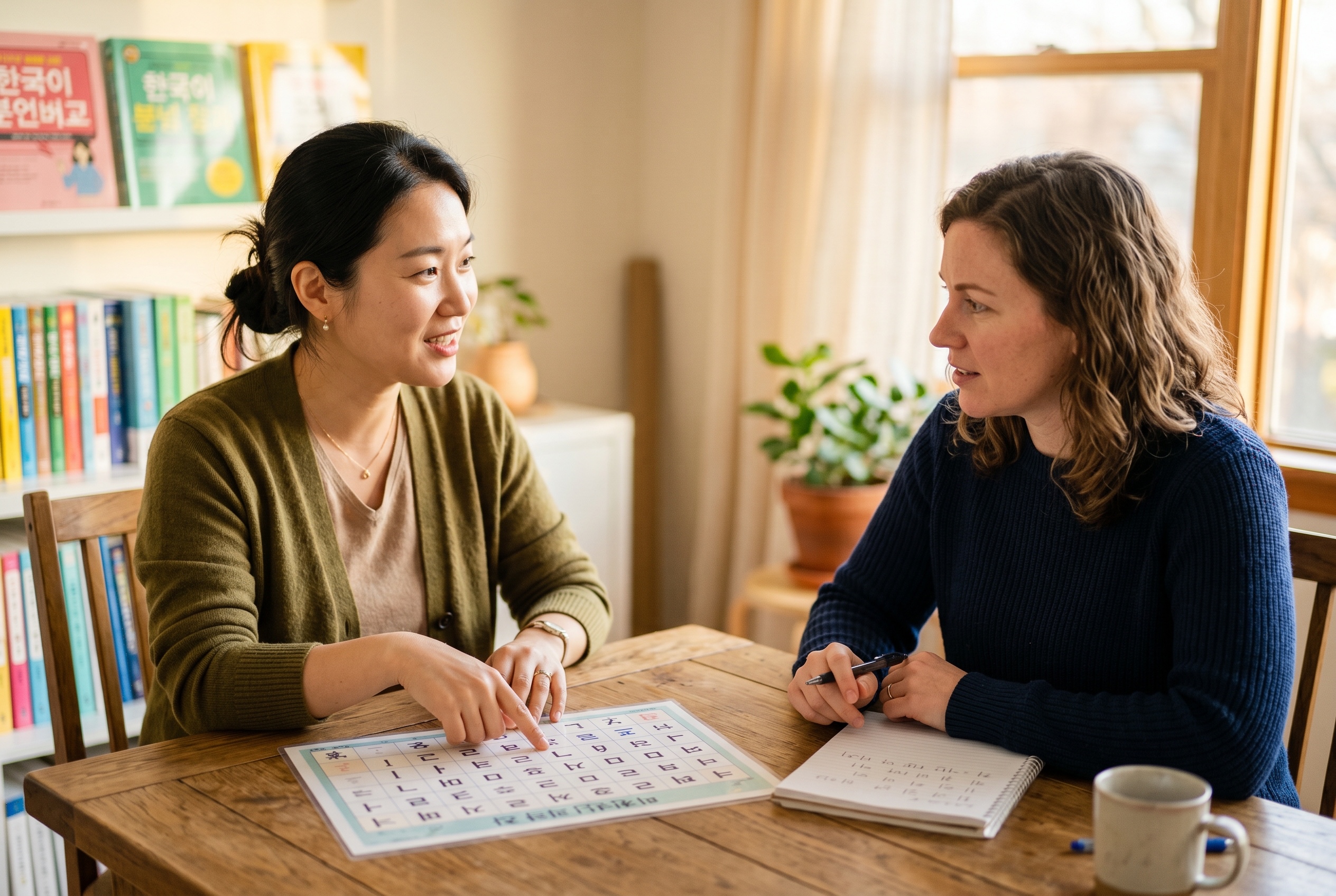
Your instructors
Korean for Beginners tutors for private lessons & classes
Strommen has been teaching Korean since well before the current global wave of interest, and we have always preferred to vet teachers ourselves rather than run an open marketplace. Every tutor below was met and approved by us, and every bio is a real account of a real teacher's background. For a beginner that matters, because the tutor you choose installs the habits, good or bad, that you carry for years.
The Korean beginner roster is curated tightly on purpose. Filter by location, age, or price, then book a 30-minute free trial to see who you click with.
Below are the Strommen tutors who teach beginner-level Korean. Photos, ratings, and rates are real. Click any card to read a bio and book a free 30-minute trial.
I want to learn…
Every tutor, personally met. — founder-vetted since 2006, in Los Angeles and online worldwide.
Get a personalized plan
Pick your language — a language advisor will match you with the right tutor and map out your path.

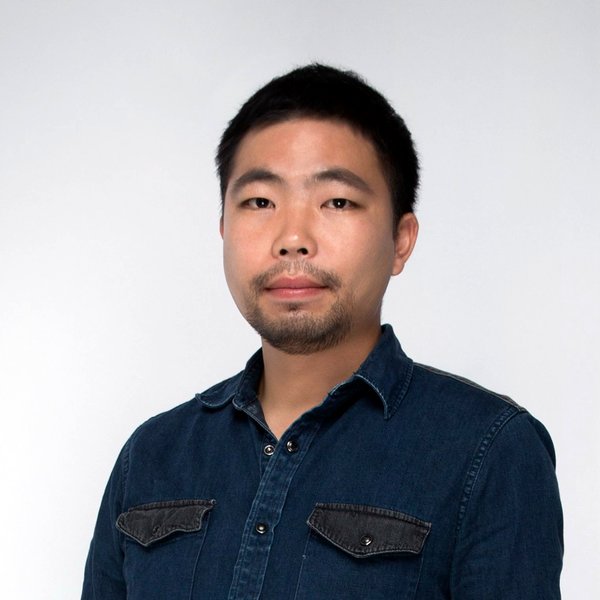


Master of Arts (M.A.) in Education from the University of the People (US)Bachelor of Arts (BA) in Teaching Korean as a Second Language from the Korean Education Bank (Korea)Bachelor of Arts (BA) in International Commerce and Logistics from Seoul Cyber... · Level 2 Certificate of Korean Language Teaching
Multilingualism, Specialized Education, Extensive Experience, Target Audience, Practical Skills
Personally vetted · Strommen’s note
Sanghoon teaches Chinese, English, and Korean out of Hangzhou, pulling material from work with students across very different backgrounds.
Specialties
Master of Arts (M.A.) in Education from the University of the People (US)Bachelor of Arts (BA) in Teaching Korean as a Second Language from the Korean Education Bank (Korea)Bachelor of Arts (BA) in International Commerce and Logistics from Seoul Cyber... · Level 2 Certificate of Korean Language Teaching
Multilingualism, Specialized Education, Extensive Experience, Target Audience, Practical Skills
Specialties
Personally vetted · Strommen’s note
Sanghoon teaches Chinese, English, and Korean out of Hangzhou, pulling material from work with students across very different backgrounds.
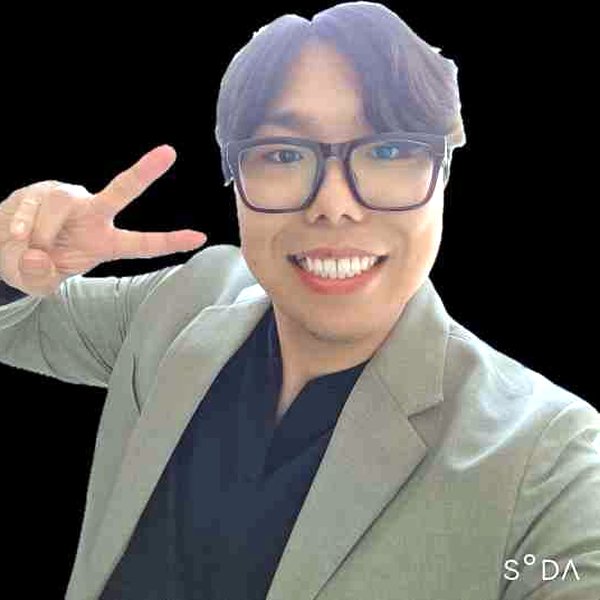

Bachelor's degree · Chinese learning, Certified Korean language teacher
Light, Learning, Growth your languages.
Personally vetted · Strommen’s note
Jihoon starts with pronunciation basics, tongue position included, before moving into grammar. He teaches Chinese and Korean both, out of Bogotá.
Specialties
Also speaks: Japanese
Bachelor's degree · Chinese learning, Certified Korean language teacher
Light, Learning, Growth your languages.
Specialties
I also speak: Japanese
Personally vetted · Strommen’s note
Jihoon starts with pronunciation basics, tongue position included, before moving into grammar. He teaches Chinese and Korean both, out of Bogotá.

한글 hangul — first letters & first sounds
5 first essentials every Korean beginner needs
These are not advanced topics. They are the small, foundational pieces a beginner picks up early to sound natural rather than studied. Save the list and book a tutor to learn the rest.
-
01
한글 hangul — the alphabet in 1-2 hours
The Korean writing system, commissioned by King Sejong in 1443 and explicitly designed to be learnable in a single afternoon. 14 basic consonants and 10 basic vowels, plus compound forms, totaling 40 letters. Consonant shapes echo the mouth position; vowel shapes are built from three primary elements (horizontal earth, vertical human, dot heaven). A motivated beginner reads basic words within two hours of focused tutor time and reads fluently within two weeks of light practice.
e.g. ㄱ k/g (back of tongue at soft palate), ㄴ n (tongue tip at alveolar ridge), ㅁ m (closed lips), ㅏ a (vertical line + dot to the right)
-
02
Subject-object-verb word order
Korean is SOV: the verb sits at the end of the sentence, not in the middle as in English. "I ate rice" is 저는 밥을 먹었어요 (jeoneun bab-eul meogeosseoyo), literally "I rice ate." English-speaking beginners spend the first months unlearning the verb-in-the-middle instinct, and the next months learning to wait for the verb at the end when listening. The pattern is consistent across every Korean sentence type, which makes it learnable through repetition.
e.g. 저는 학생이에요 (Jeoneun haksaeng-ieyo) literally "I student am" for "I am a student"
-
03
은/는 vs 이/가 — topic and subject markers
Korean attaches small particles to nouns to mark their grammatical role. 은/는 (eun/neun) marks the topic, often translatable as "as for X." 이/가 (i/ga) marks the grammatical subject, often introducing new information. The distinction is the slowest piece of Korean grammar to internalize because the contexts overlap, but the rough heuristic gets a beginner started: known or given information tends to take 은/는; new or contrastive information tends to take 이/가.
e.g. 저는 한국어를 공부해요 (topic: "as for me, I study Korean") vs 누가 왔어요 / 친구가 왔어요 (subject: "who came / my friend came")
-
04
Polite -요 vs casual 반말
Korean encodes social relationship in verb endings. The polite 해요체 (-요 ending) is the universal default for adults speaking to anyone they do not know well. The casual 반말 form is used with close friends, family, and people younger than the speaker. The formal-polite 합쇼체 (-습니다) is used in presentations and first business meetings. Beginners default to 해요체 in every new context, because using 반말 with the wrong person reads as untrained rather than informal.
e.g. 먹어요 (polite, default for any new adult) vs 먹어 (casual, only with invited close friends) vs 먹습니다 (formal, presentations and broadcasts)
-
05
Honorific verb-suffixes (-시-)
Korean inserts the suffix -시 (-si-) between the verb stem and the ending when the subject of the sentence is socially elevated relative to the speaker. 가다 (to go) becomes 가시다 when the subject is a grandparent, boss, or respected figure. This is separate from the polite-vs-casual question about who you are addressing; the honorific is about who the sentence is about. A few high-frequency verbs have separate honorific stems entirely (잡수시다 for elevated eating).
e.g. 할아버지께서 가셨어요 ("grandfather went," -si- marks respect for the grandfather as the subject), vs 친구가 갔어요 ("my friend went," no honorific needed)
About Korean for Beginners
Starting Korean from zero
Most people who decide to learn Korean arrive with two beliefs that often turn out to be backward. One is that hangul, the Korean alphabet, will take weeks to learn. The other is that Korean grammar is roughly Japanese-shaped, which they have heard is difficult. The reality is closer to the opposite. Hangul takes one to two hours of focused tutor time to read at a basic level, because the alphabet was deliberately designed in the fifteenth century by King Sejong and his scholars to be learnable by ordinary people, with letter shapes that visually echo the mouth positions they represent. The Korean grammar, on the other hand, is its own system, and the part that takes time. The early arc of beginner Korean inverts the script-vs-grammar expectation almost everyone shows up with, and a tutor who frames the first month honestly (hangul in two lessons, grammar for the rest of the year) tends to keep students with the language.
The hangul story is worth telling because it explains why the alphabet really is fast. King Sejong the Great commissioned the writing system in 1443 and published it as 훈민정음 (hunminjeongeum, "the correct sounds for the instruction of the people") in 1446, with the explicit goal of literacy for commoners who could not afford the years of Classical Chinese study that the existing literate class required. The system has 14 basic consonants and 10 basic vowels, plus a small set of compound vowels and double consonants, totaling 40 letters in modern use. Consonant shapes are based on the position of the tongue, teeth, and lips when pronouncing them: ㄱ k/g shows the back of the tongue against the soft palate, ㄴ n shows the tip of the tongue at the alveolar ridge, ㅁ m shows the closed lips. Vowel shapes are built from three primary elements (a horizontal line for earth, a vertical line for human, a dot for heaven). Letters combine into syllable blocks that are then strung into words. A motivated beginner reads hangul slowly within two hours and fluently within two weeks of light practice. Tutors typically dedicate lesson one entirely to hangul and have students reading basic words by the end of the session.
Korean phonology is the next early piece. Korean has consonant sounds that English does not distinguish: the three-way ㄱ (plain k/g), ㄲ (tense kk), and ㅋ (aspirated k') series, repeated for ㄷ/ㄸ/ㅌ, ㅂ/ㅃ/ㅍ, ㅅ/ㅆ, and ㅈ/ㅉ/ㅊ. To an English ear these often sound similar; to a Korean ear they are entirely different consonants that change the meaning of the word. The aspirated-vs-tense distinction (ㅋ vs ㄲ, the difference between something like "key" with a strong puff of air and "key" with the throat tensed and no air) takes patient drilling and is one of the things a tutor catches that an app cannot. Vowels are generally easier for English speakers, with the major exception of the ㅓ (eo) and ㅡ (eu) vowels that have no English equivalent and need direct demonstration. Pronunciation work belongs in the first two months because the habits that set in the early hours are expensive to fix later.
Then the grammar arrives, and this is where Korean shows its actual shape. Korean is a subject-object-verb (SOV) language, meaning the verb sits at the end of the sentence rather than in the middle as in English. "I ate rice" in Korean is 저는 밥을 먹었어요 (jeoneun bab-eul meogeosseoyo), literally "I rice ate." English-speaking beginners spend the first few months unlearning the instinct to put the verb in the middle, and then the second few months learning to wait for the verb at the end when listening, which is a different reflex. The good news is that the SOV pattern is consistent: every Korean sentence uses it, with no exceptions for question structures or subordinate clauses. The grammar is internally regular, even if it is differently shaped from English.
The topic-and-subject marker system is the second piece of Korean grammar that needs explicit teaching. Korean attaches small particles to nouns to mark their grammatical role: 은/는 (eun/neun) marks the topic, 이/가 (i/ga) marks the subject, 을/를 (eul/reul) marks the direct object, 에 (e) marks location or time, 에서 (eseo) marks the place of an action, 으로/로 (euro/ro) marks the means or direction. The pair that takes longest to settle is 은/는 versus 이/가, because the contexts overlap and the difference is felt more than parsed. A useful early rule: the topic marker 은/는 introduces what the sentence is about, often translatable as "as for X," while the subject marker 이/가 picks out a specific grammatical subject, often introducing new information. The full distinction takes months to internalize; the rough heuristic gets a beginner started.
The polite-vs-casual speech-level question is the third piece, and it is the place where Korean grammar most visibly differs from English. Korean encodes social relationship in verb endings, so the same verb means "to eat" with different endings depending on who is being addressed: 먹다 (the dictionary form), 먹어 (casual, used with close friends and people younger than the speaker), 먹어요 (polite, the universal default for adults speaking to anyone they do not know well), 먹습니다 (formal-polite, used in presentations, broadcasts, and first business meetings). Beginner lessons settle on the polite -요 form (해요체 haeyoche) as the universal default for adults in any new context, because it is appropriate in nearly every situation a learner will hit. Casual speech (반말 banmal) is introduced later and only after the polite forms are reflexive, because using casual with the wrong person reads as untrained rather than informal. The formal-polite forms (합쇼체 hapsyoche) are taught for set phrases like 감사합니다 and 죄송합니다 and for the kinds of professional contexts that warrant them. A learner who controls the polite register can navigate almost every adult situation in Korean.
The famous honorific verb-suffixes are the fourth piece that often comes as a surprise to beginners. Korean has a separate set of verb endings used when the subject of the sentence is socially elevated relative to the speaker, marked by the suffix -시 (-si-) inserted between the verb stem and the ending. The verb 가다 (to go) becomes 가시다 when the subject is elderly, a boss, or a respected figure: 할아버지께서 가셨어요 ("grandfather went," with -si- marking respect for the grandfather as the subject). This is separate from the polite-vs-casual question about who you are addressing; the honorific -시 is about who the sentence is about. Korean also has a small set of separate verb stems for honorific use, such as 잡수시다 (to eat, honorific) replacing 드시다 or 먹다 for someone elevated. Lessons introduce the honorific system in the first few months as a recognition skill (the learner should be able to spot it in dialogue) and as a production skill for the relevant family vocabulary (grandparents, elders, teachers) by month four or five.
A candid note on what trips beginners up most often in Korean. Skipping the polite-vs-casual distinction is the most common pattern, usually because American learners want to use casual forms with their tutor as a sign of warmth and have to be slowed down. Underestimating the consonant pronunciation work is the second pattern, with the aspirated-vs-tense distinction the most frequent fossilized error. Treating SOV word order as something to translate around rather than learn into is the third, and it produces sentences that are grammatical but rhythmically English. Skipping the 은/는 vs 이/가 work because it feels too subtle is the fourth, and it leaves a learner sounding studied for years longer than necessary. And one more thing: the impulse to learn Korean from K-drama alone tends to produce a learner with strong listening recognition and a heavily-banmal speaking habit, which then has to be retrained for any real-world adult interaction. A good beginner tutor watches for each of these and intervenes before any of them sets.
The canonical reference for Korean grammar is the work of the National Institute of Korean Language (국립국어원 gukrip gugeo-won), the South Korean government body that maintains the descriptive standard for educated Korean usage. For learners who want a formal proficiency credential, the TOPIK (Test of Proficiency in Korean) is the recognized international standard for non-native speakers, administered by the National Institute for International Education with six levels (TOPIK I covers levels 1-2; TOPIK II covers levels 3-6). Most beginners do not test for a year or two; the framework is mentioned here so the road ahead has a name.
Motivations among beginner Korean students vary widely. Some are K-drama or K-pop fans who want to follow content directly rather than through subtitles or translated lyrics. Some are heritage learners reconnecting with the language as adults. Some have a trip to Seoul or Busan on the calendar. Some are partners of Korean speakers working toward a family meal that does not require translation. Some are professionals with a Korean parent company or a posting in their near future. Each starting point shapes the lesson plan differently, and the tutor calibrates the first lesson to yours. Anyone weighing private lessons against a group setting can compare both on the main Korean page; students who already have a foundation may prefer the conversational Korean roster instead. The full tutor directory lists every Strommen teacher across languages.
Our beginner Korean tutors are native speakers from Seoul and other Korean cities, plus longtime bilinguals who have taught the language from scratch for years and know exactly where English speakers stumble. They start where you are, whether that is genuine zero or a few words picked up from K-content, and they build a foundation that holds the weight of everything you add later.
What you'll cover
Lessons & classes tailored to Korean for Beginners
Hangul in the first one or two lessons
The Korean alphabet is the part everyone fears and the part that takes the least time. Tutors typically dedicate the first lesson entirely to hangul and have students reading basic words by the end of it, with full fluent reading arriving within two weeks of light practice. The 14 basic consonants and 10 basic vowels are taught in the order that pairs visual logic (consonant shapes echo mouth position) with high-frequency use. Once the script is readable, all subsequent vocabulary and grammar work happens in hangul rather than romanization.
Consonant pronunciation and the aspirated-tense distinction
Direct drilling on the three-way consonant series Korean distinguishes that English does not: ㄱ/ㄲ/ㅋ, ㄷ/ㄸ/ㅌ, ㅂ/ㅃ/ㅍ, ㅅ/ㅆ, ㅈ/ㅉ/ㅊ. The plain-tense-aspirated distinctions are not optional polish; they are how Korean tells words apart, and a learner who fossilizes them as the same sound spends years untangling errors at the intermediate stage. The ㅓ (eo) and ㅡ (eu) vowels also get explicit demonstration, because they have no English equivalent and need direct modeling from a tutor.
SOV grammar and the particle system
Subject-object-verb word order is taught explicitly and drilled until the verb-at-the-end pattern is reflexive. The particle system (은/는 topic, 이/가 subject, 을/를 object, 에 location/time, 에서 place-of-action, 으로/로 means/direction) is introduced in contrastive pairs, with the 은/는 vs 이/가 distinction handled as the slow-burn topic it actually is. Lessons drill these particles in real sentences rather than in isolation, so they become felt rather than computed.
Polite register first, casual second, honorifics in parallel
The polite 해요체 (-요 ending) is taught as the universal default for any adult context, because it is appropriate in nearly every situation a beginner will hit. Casual 반말 is introduced later and only after the polite forms are reflexive. The formal-polite 합쇼체 is taught for set phrases (감사합니다, 죄송합니다) and for relevant professional contexts. The honorific -시- suffix is introduced as a recognition skill early and as a production skill by month four or five, with the family vocabulary (grandparents, elders) as the most frequent context. For students who progress past beginner work, paths open into conversational Korean or Korean grammar. See also Korean classes for group options.
FAQ
About Korean for Beginners lessons & classes
Is Korean really as hard as people say?
The script is the easiest part; the grammar is what takes time. The US Foreign Service Institute classifies Korean as a Category IV language (the hardest tier, alongside Japanese, Mandarin, and Arabic), at roughly 2,200 classroom hours to professional working proficiency for a motivated adult. The difficulty is grammatical (SOV word order, the particle system, the polite-vs-casual speech levels, the honorific verb-suffixes) rather than orthographic. A tutor who is honest about this distinction (hangul in two lessons, grammar for the rest of the year) sets you up to stay with the language.
How fast can I really learn hangul?
Most beginners read basic words within one to two hours of focused tutor time and read fluently within two weeks of light daily practice. The alphabet was commissioned in 1443 by King Sejong specifically to be learnable by ordinary people in a short time, with consonant shapes that echo the mouth position they represent and vowel shapes built from three primary elements. Tutors typically dedicate lesson one entirely to hangul and have students reading by the end of it. The script is genuinely the easy part of Korean.
What's the difference between the polite and casual speech levels, and which should I learn first?
Polite first, almost without exception. The polite 해요체 (-요 ending) is the universal default for adults speaking to anyone they do not know well, and a learner who controls it can navigate almost every situation in Korean. The casual 반말 form is used only with close friends, family, and people younger than the speaker, and using it with the wrong person reads as untrained rather than informal. American beginners often want to use casual forms with their tutor as a sign of warmth and have to be slowed down. Warmth in Korean lives inside the polite register, not by abandoning it.
Will K-drama and K-pop teach me Korean?
Helpful, not sufficient. Dramas and music are excellent input for rhythm, intonation, and exposure to sentence-final particles you would otherwise have to learn from a chart. They are also dramatized, stage-stylized, or period-stylized, and a learner who tries to speak the way characters do at a cafe counter sounds odd. They also tend to overweight casual 반말 forms, which then have to be retrained for real-world adult interactions. A tutor who uses K-content as input while flagging the parts that are theater is a substantially better setup than learning from dramas alone.
How long until I can hold a basic conversation in Korean?
It depends on your hours, your starting point, and the regularity of practice between lessons. With one or two lessons a week plus consistent self-study, most beginners reach simple functional conversation in roughly 6 to 10 months: greetings, introductions, ordering food, asking directions, holding a short exchange about your day. Reading comfort with unadapted Korean text takes longer because the case-like particle system and the honorific layer have to become second nature. The FSI Category IV rating means it takes more hours than Spanish or French, but the early wins arrive sooner than learners expect once hangul is in place.
Are your beginner Korean tutors native speakers?
Most are native speakers from Seoul and other Korean cities. A few are longtime bilinguals who have taught beginner Korean from scratch for years and know exactly where English speakers stumble. Each tutor's bio specifies their background and teaching experience. For a beginner the tutor's own pronunciation matters a great deal, because you absorb whatever model you hear, so a clean native or near-native accent is something we screen for.
Can I take beginner Korean lessons online, or only in person?
Both. Most of our Korean tutors teach online via Zoom or Jitsi and are available worldwide. Some also teach in person around Los Angeles. The booking widget on each tutor's profile shows their available formats and times. If you would prefer a small-group format, our Korean classes page covers that option.
What textbook will my tutor use?
Most tutors use one of three canonical beginner Korean texts: the Sogang Korean series (Sogang University, known for its strong oral focus), the Yonsei Korean series (Yonsei University, more comprehensive and grammar-heavy), or the Integrated Korean series (Klear, the standard text in American university Korean programs). Your tutor will pick one at the trial lesson based on your goals, or build a custom path that draws from several. Free supplementary resources like TalkToMeInKorean and Howtostudykorean.com often layer in between lessons.
Ready for Korean for Beginners lessons or classes?
Book a free 30-minute trial with one of our personally vetted tutors. Private lessons or small-group classes — your choice.