



Personally vetted instructors
Ecuadorian Spanish tutors, lessons & classes
¿Cómo está, ñaño? The way Quito actually says "hi."
Personally vetted Ecuadorian Spanish tutors. Lessons that respect the way Spanish is actually spoken in Quito, Guayaquil, Cuenca, and across the Sierra, Costa, and Amazon regions of Ecuador.
Your instructors
Ecuadorian Spanish tutors for private lessons & classes
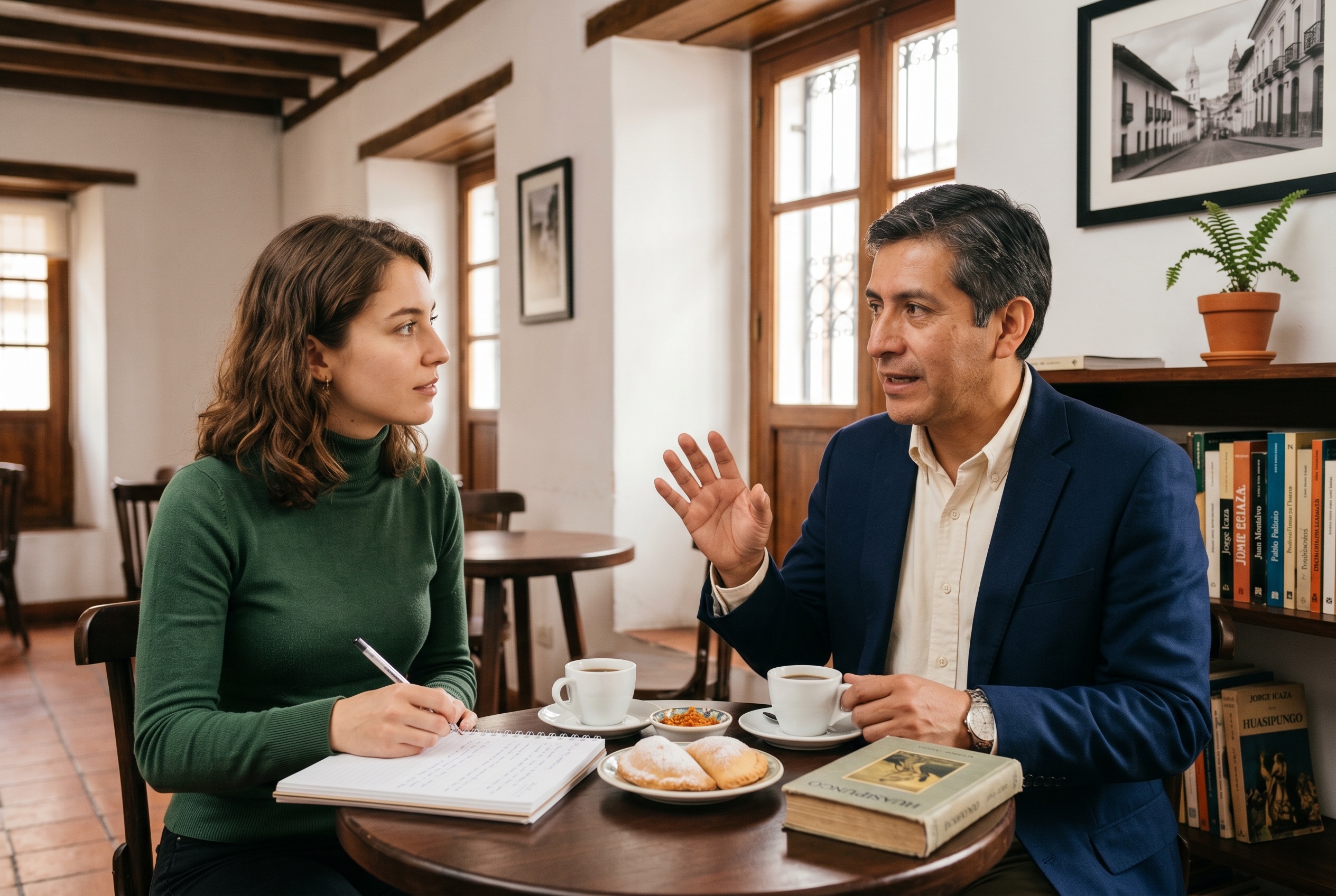
Strommen has been teaching Spanish in this city since 2006. Ecuadorian Spanish has always been a real demand: film and television training, family-connection Spanish for second-generation Ecuadorian-Americans, travel Spanish for Galápagos and Andean trips, and business Spanish for Ecuador-based teams. Every tutor below was met and vetted by us in person or via thorough video interview. No marketplace. No automated profile-creation. Real teachers with real backgrounds, which you can read about in their bios.
Filter by location, age, or price. Then book a 30-minute free trial.
Below are the Strommen tutors who specialize in Ecuadorian Spanish. Photos, ratings, and rates are real. Click any card to read their bio and book a free 30-minute trial.
I want to learn…
Every tutor, personally met. — founder-vetted since 2006, in Los Angeles and online worldwide.
Get a personalized plan
Pick your language — a language advisor will match you with the right tutor and map out your path.



Master’s in Teaching Spanish as a Foreign Language, Master of Science in Marketing, Business Management Engineering · Certificate in Teaching Spanish as a Foreign Language
Certified Spanish Tutor | Personalized Online Lessons
Personally vetted · Strommen’s note
Grammar arrives through real use, not worksheets first, in Emilio's task-based approach to Ecuadorian Spanish out of Guayaquil.
Specialties
Master’s in Teaching Spanish as a Foreign Language, Master of Science in Marketing, Business Management Engineering · Certificate in Teaching Spanish as a Foreign Language
Certified Spanish Tutor | Personalized Online Lessons
Specialties
Personally vetted · Strommen’s note
Grammar arrives through real use, not worksheets first, in Emilio's task-based approach to Ecuadorian Spanish out of Guayaquil.

A Bachelor of Business Administration · Yes
Immerse yourself in the culture of Spanish-speaking countries with confident communication
Personally vetted · Strommen’s note
Ivan's specialty is Ecuadorian dialect, twenty years into teaching Spanish out of Quito, with a focus on confident communication over textbook drills.
Specialties
A Bachelor of Business Administration · Yes
Immerse yourself in the culture of Spanish-speaking countries with confident communication
Specialties
Personally vetted · Strommen’s note
Ivan's specialty is Ecuadorian dialect, twenty years into teaching Spanish out of Quito, with a focus on confident communication over textbook drills.

Quichua — culture & language
5 ways to sound like you actually speak Ecuadorian Spanish
These aren't textbook expressions. They're the everyday words that separate tourists from people who've actually spent time in Quito or Guayaquil. Screenshot the infographic, then book a tutor to learn the rest.
-
01
Ñaño / Ñaña
Brother / sister. From Quichua. Used as a term of address even between friends, not only literal siblings. The most distinctively Ecuadorian filler word in social conversation, and no other Spanish dialect uses it the same way. Crosses class lines across the Sierra in particular.
e.g. ¿Cómo estás, ñaño? ¿Todo bien?
-
02
Achachay
Exclamation of cold. "It's freezing!" From Quichua. Used spontaneously when feeling cold, especially in highland Sierra weather. Pairs with atatay (disgust) and arrarray (surprise/pain) as part of a family of Quichua interjections that appear in everyday Ecuadorian Spanish.
e.g. ¡Achachay! Hace mucho frío esta noche.
-
03
Chuchaqui
Hangover. From Quichua. Ecuadorian-specific: other Spanish countries use resaca (Spain) or cruda (Mexico) or guayabo (Colombia). The Ecuadorian word lives in everyday speech across all registers.
e.g. Tengo un chuchaqui terrible, no me hables fuerte.
-
04
Diminutive culture: panecito, ratito, momentito
Ecuadorian Spanish uses the diminutive -ito/-ita more frequently than other Latin American varieties. Not just for small things, but also for politeness, softening requests, and expressing affection. ¿Me da un panecito? isn't asking for a small bread; it's a softened, polite request.
e.g. ¿Me espera un momentito, por favor?
-
05
Guagua
Baby, small child. From Quichua (Quechua family). Used across Andean Spanish, particularly common in Ecuador and Bolivia. Different from the Cuban/Puerto Rican guagua which means bus. In Andean Ecuador, it's always a baby or small child.
e.g. La guagua está durmiendo, no hagas bulla.
About Ecuadorian Spanish
Where Spanish meets Quichua
Ecuador has roughly 17 million Spanish speakers, with a sizable Ecuadorian diaspora in the United States and Spain, and a Spanish that splits sharply along the country's three geographic regions. Ecuador is a country of three sharply different regions, and Ecuadorian Spanish reflects that geographic split. The Sierra (Andean highlands, including Quito) speaks one variety. The Costa (Pacific lowlands, including Guayaquil) speaks another. The Oriente (Amazon basin) speaks yet a third. The Sierra variety gets cited alongside Colombian Bogotá rolo Spanish as one of the world's most neutral-sounding Spanish dialects: clear consonants, controlled pace, conservative grammar. If your goal is Spanish that travels well internationally while reflecting a specific Andean cultural identity, Ecuadorian Sierra Spanish is a strong choice.
The sound first. Sierra Ecuadorian Spanish (Quito, Cuenca, Riobamba, and the highland cities) is the textbook "clean" variant. S's stay crisp at the end of syllables. The pace is measured. The j sound is softer than Castilian. The intonation has the gentle rise-and-fall of Andean Spanish, with a slight Quechua substrate influence in some speakers, particularly visible in vowel quality, where some Sierra speakers tend toward a three-vowel system characteristic of Quechua. Costa Ecuadorian Spanish (Guayaquil, Manta, Esmeraldas) sounds noticeably different: faster, with some s-aspiration that overlaps with Caribbean Spanish patterns, more relaxed consonants. Coastal Ecuadorian Spanish belongs to a different sound family than highland Ecuadorian Spanish, more like Caribbean than Andean. The Oriente, the Amazon region, has its own pace and indigenous-language influences. Lessons can match you to any of these regional varieties.
The Quichua substrate (Ecuadorian-spelled Quichua rather than Peruvian Quechua) is the most distinctive feature of Sierra Ecuadorian Spanish. Quichua is the largest indigenous language in Ecuador and remains widely spoken in highland indigenous communities. Substrate vocabulary appears in everyday Spanish across class lines. Ñaño and ñaña mean brother and sister, used as terms of address even between friends, a signature Ecuadorian usage that no other Spanish dialect has in this form. Achachay is an exclamation of cold. Atatay expresses disgust. Arrarray expresses surprise. Guagua means baby (same Quichua origin as Bolivian and Peruvian Andean Spanish). Chuchaqui means hangover. The diminutive -ito appears more frequently than in other Spanish varieties: "¿Me da una panecitas, por favor?" instead of "unas panes." None of these are taught in classroom Spanish; all are everywhere in Ecuadorian speech. For broad Spanish foundations our 1,000 most common Spanish words list is a useful supplement.
Grammar carries some Andean signatures. Like other Andean Spanish dialects, Ecuadorian Sierra Spanish uses usted as a register of warmth and respect rather than just formal distance. Children may address parents with usted, friends use it reciprocally, and shifting between tú and usted reads as emotional rather than purely structural. The use of le for both direct and indirect objects (leísmo) is widespread, especially in the Sierra. Pronoun placement shifts in some constructions, and some Quichua-influenced Spanish includes verb-final word order, a pattern that sounds odd to other Spanish speakers but is grammatically meaningful in Andean Spanish. Costa Ecuadorian Spanish hews closer to standard Latin American patterns, with less Quichua influence and a more Caribbean-leaning cadence.
Cultural codes shape Ecuadorian Spanish in ways that take time to absorb. The Sierra-Costa rivalry is real and shows up in language: cuencanos and quiteños share a clear sense of distinction from guayaquileños, and the political and cultural undertones go back generations. Food vocabulary reflects this: encebollado (the Pacific coast fish stew that's become a national dish), locro de papa (highland potato soup), cuy (roasted guinea pig, Andean), ceviche (the lowland Pacific version). The Galápagos Islands, the Amazon, and the Andes give Ecuador a geographic identity that the Spanish has to handle, with different vocabulary for different regional foods, animals, and landscapes. Indigenous identity in Ecuador is politically active in ways that aren't true in many Latin American countries; the 2019 Indigenous-led protests and the CONAIE federation shape national conversation. Our blog post on Spanish dialect comparison sketches the broader landscape these dialects sit in.
What American students typically get wrong with Ecuadorian Spanish, fixable in weeks once you know to look for it. Ecuador is not one accent. Sierra and Costa Ecuadorian Spanish are different enough that locals identify each other in the first sentence; treating them as one variety misses the point entirely. The Andean ustedeo trips people next. Using tú where usted reads as warmth can land as cold even when you mean closeness. Vocabulary swaps come third. Asking for a jugo in a Quito café is fine, but using unas pancitas instead of unas panecitas shows you've internalized the local diminutive habit. The diminutive itself needs calibration. Ecuadorians use -ito in specific social registers, not constantly, and overusing it sounds performative. Finally, the Quichua substrate. Words like ñaño, achachay, guagua carry cultural weight, and learning to use them naturally is the line between sounding like a tourist and sounding like someone who's actually lived in Quito.
Between lessons, immerse with Ecuadorian-made media. Ratas, ratones, rateros (1999), the Sebastián Cordero film, remains the canonical entry to contemporary Ecuadorian cinema, capturing Guayaquil Costa Spanish with realism. Qué tan lejos (2006) by Tania Hermida moves between Sierra and Costa registers. For music, the contemporary scene includes Mateo Kingman, Da Pawn, and Nicola Cruz blending Andean substrate with modern production. Older folk tradition runs through Julio Jaramillo and the pasillo genre. For reading, Jorge Adoum, Juan Montalvo, and Marjorie Ross are among the canonical Ecuadorian voices; contemporary Ecuadorian fiction has grown internationally with writers like María Fernanda Ampuero. The pattern is the same as for any specialty: pick something you'd watch, listen to, or read in English anyway, and do it in Ecuadorian Spanish instead.
The Strommen Ecuadorian Spanish roster includes native Ecuadorians, longtime Andean Spanish speakers, and bilinguals based across South America and the United States. The teachers familiar with Sierra Ecuadorian Spanish bring the slower, more measured highland cadence, the ustedeo register, and direct knowledge of Quichua substrate vocabulary as it appears in everyday speech. The Costa-familiar teachers can shift toward the faster, more Caribbean-influenced cadence of Guayaquil and the Pacific lowlands. Each tutor's bio says where they're from, where they've taught, and which student profile they fit best. You can match yourself to a teacher whose accent fits your goal: highland Sierra for Quito or Cuenca, Costa for Guayaquil, or a more neutral pan-Ecuadorian register. For other Spanish dialect comparisons, our Colombian Spanish page covers the closest northern neighbor: Colombian Bogotá rolo and Ecuadorian Sierra share much in cadence and substrate.
Lessons calibrate to your actual goal. Travel Spanish for a Quito or Galápagos trip is a different curriculum from family-connection Spanish for second-generation Ecuadorian-Americans, which is different again from learning to read Adoum or to follow a Quichua-Spanish bilingual conversation in highland villages. We don't run a generic Spanish course. Each lesson is one-on-one, your tutor plans it around your week, and the trial is free. Existing Spanish is a head start. The most common adjustments for students arriving with Mexican or Castilian Spanish are the Andean ustedeo, Quichua substrate vocabulary, and the Sierra-vs-Costa regional split. For a head-start before lessons begin, our 5 most common embarrassing mistakes in Spanish covers errors learners make across all dialects, and the broader Spanish course page shows the family of related programs. Or just browse the full tutor list and book a trial. Find a voice you want to imitate. Put in the hours. That covers most of what actually works.
What you'll cover
Lessons & classes tailored to Ecuadorian Spanish
Sierra vs Costa vs Oriente Ecuadorian Spanish
Three distinct regional varieties. Sierra (Quito, Cuenca, Riobamba) is the measured Andean variety, often cited as one of the world's most neutral-sounding Spanish. Costa (Guayaquil, Manta) is faster, with s-aspiration overlapping Caribbean Spanish. Oriente (Amazon basin) has its own pace and indigenous-language influences. Lessons can target whichever variety fits your goal.
Quichua substrate vocabulary
Ñaño, ñaña, achachay, atatay, arrarray, chuchaqui, guagua, ñapa. The Quichua words that crossed into everyday Ecuadorian Spanish. Plus the broader Andean substrate that links Ecuadorian Sierra Spanish to Peruvian and Bolivian highland varieties. We teach when each fits, who you can say it to, and how to read the room.
Andean ustedeo and diminutive culture
Usted as a register of warmth rather than formality, shared across Andean Spanish. The Ecuadorian diminutive habit (panecito, momentito, ratito) used not just for small things but for politeness, softening requests, and expressing affection. We drill both registers and teach you to read which is appropriate based on context.
Cultural codes: Sierra-Costa identity, food, indigenous politics
The Sierra-Costa rivalry that runs through everything from food to politics to dialect. Regional food vocabulary: encebollado, locro de papa, cuy, ceviche. The Galápagos, Amazon, and Andes as geographic anchors. Indigenous political identity and the CONAIE federation. Lessons cover these so you can navigate Ecuadorian contexts like someone who's spent time there.
FAQ
About Ecuadorian Spanish lessons & classes
Is Ecuadorian Spanish really one of the most neutral Spanish dialects?
Ecuadorian Sierra Spanish (Quito, Cuenca, the highland cities) is often cited alongside Colombian Bogotá rolo as one of the world's most neutral-sounding Spanish varieties. The reputation comes from clear consonants, controlled pace, and conservative grammar, all features that travel well across Spanish-speaking audiences. Costa Ecuadorian Spanish (Guayaquil and the Pacific lowlands) is less "neutral" by these criteria and sounds more Caribbean. So the claim holds specifically for Sierra Ecuadorian Spanish, not for Ecuadorian Spanish broadly.
What's the difference between Sierra and Costa Ecuadorian Spanish?
Sierra is the highland variety (Quito, Cuenca, Riobamba), measured and clear, with strong Quichua substrate. Costa is the lowland Pacific variety (Guayaquil, Manta, Esmeraldas), faster and with s-aspiration that sounds closer to Caribbean Spanish. The two sound noticeably different. We can match you to either depending on your goal.
How is Ecuadorian Spanish different from Colombian / Bolivian / Peruvian?
All four share the Andean substrate and similar grammatical features, including the ustedeo register and Quichua/Quechua/Aymara substrate vocabulary. Colombian Bogotá Spanish is closest to Ecuadorian Sierra Spanish in cadence. Peruvian Spanish (Lima especially) shares vocabulary and the substrate but has its own coastal/highland split. Bolivian Spanish carries even more substrate and adds the lowland camba variety. Each is distinct enough that locals identify each other instantly, but mutually intelligible.
Are your tutors native Ecuadorians?
Most are native Ecuadorians, born and raised in Quito, Guayaquil, Cuenca, or other Ecuadorian regions. Each tutor's bio specifies where they're from, where they've taught, and which student profile they fit best. You can match yourself to a Sierra or Costa accent depending on the variety you care about.
Can I take Ecuadorian Spanish lessons online or only in person?
Both. Most of our Ecuadorian Spanish tutors teach online via Zoom or Jitsi, available globally. Several also teach in person around Los Angeles. The booking widget on each tutor's profile shows their available formats and locations.
I already speak some Spanish. Should I start over?
No. Existing Spanish is a head start. Most students begin with a 30-minute free trial where the tutor calibrates to where you actually are. From there you build toward the Ecuadorian register: the Andean ustedeo, Quichua substrate vocabulary, regional Sierra or Costa choice, and the diminutive culture that softens Ecuadorian Spanish speech.
How fast can I expect to progress?
Depends on the time you put in between lessons, your starting level, and your specific goal. For students arriving with intermediate Mexican or Castilian Spanish, transitioning to Ecuadorian Spanish takes most students 4 to 8 weeks at one or two lessons a week. From-scratch beginners reach travel-conversational comfort in three to six months at the same pace.
Ready for Ecuadorian Spanish lessons or classes?
Book a free 30-minute trial with one of our personally vetted tutors. Private lessons or small-group classes — your choice.