



Personally vetted instructors
Spanish for Children tutors, lessons & classes
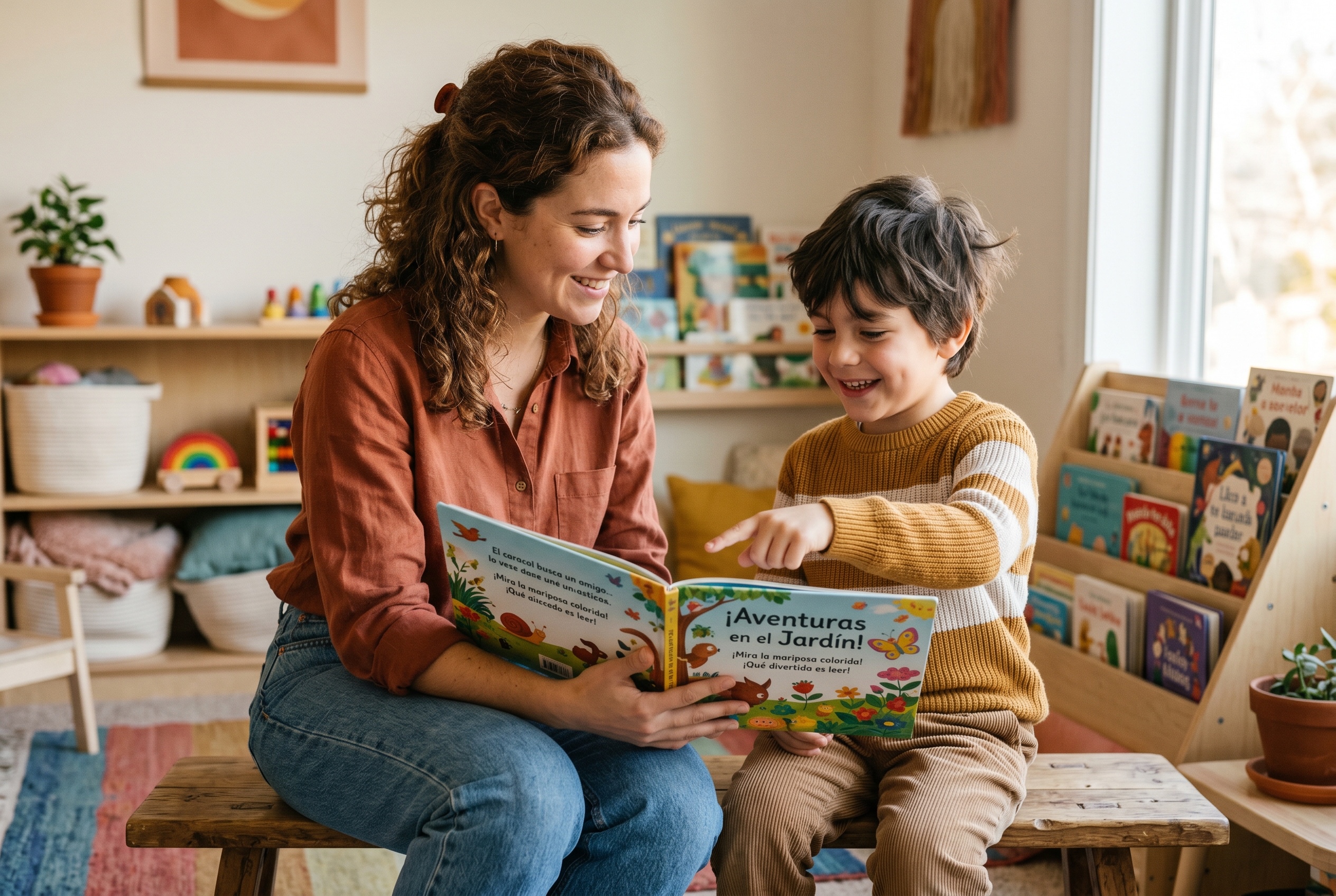
¡Hola, amiguito! The warm Spanish opener tutors use with younger children in heritage families, with <em>amiguita</em> for girls.
Personally vetted Spanish tutors for children in heritage-Spanish families. Patient, warm, family-aware lessons for kids ages 5-14 whose parents, grandparents, or great-grandparents speak Spanish at home and want the next generation to inherit something durable.
Your instructors
Spanish for Children tutors for private lessons & classes
Strommen has been working with heritage Spanish families since 2006, and the Spanish-for-Children roster is one of our most relationship-driven specialties. What makes a heritage tutor work isn't just the Spanish, it's the cultural calibration, the warmth, and the ability to honor the child's existing exposure rather than starting from scratch. Every tutor below was met and vetted by us in person or by thorough video interview, screened specifically for working with heritage families. We match for regional variety where it matters.
Filter by location, age, or price. Then book a free 30-minute trial, including a parent chat up front about your family's situation and goals.
Below are the Strommen tutors who specialize in Spanish for children in heritage families. Photos, ratings, and rates are real. Click any card to read their bio and book a free 30-minute trial, including a quick parent conversation up front about your child's situation and your family's goals.
I want to learn…
Every tutor, personally met. — founder-vetted since 2006, in Los Angeles and online worldwide.
Get a personalized plan
Pick your language — a language advisor will match you with the right tutor and map out your path.

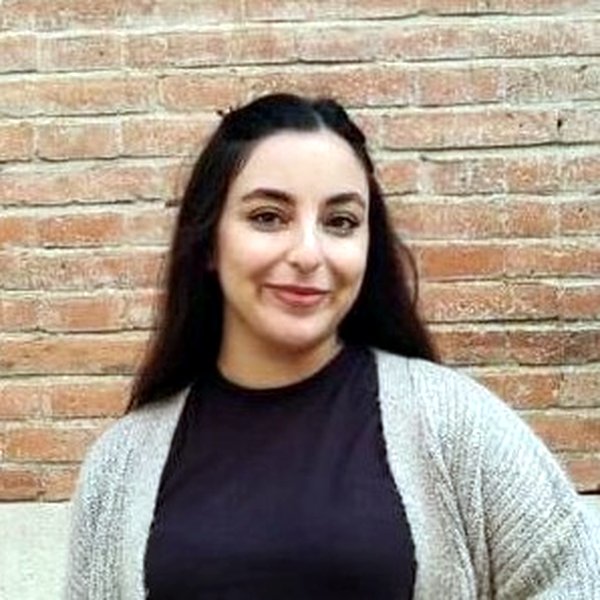


Bachelors degree in business Masters in logistics · TEFL Translation
Certified French & Spanish Language Coach | Business, Exams, & Conversational Mastery
Personally vetted · Strommen’s note
A Berlitz-trained language consultant, marielyne teaches English, French, and Spanish, built for business communication and exam prep specifically.
Specialties
Bachelors degree in business Masters in logistics · TEFL Translation
Certified French & Spanish Language Coach | Business, Exams, & Conversational Mastery
Specialties
Personally vetted · Strommen’s note
A Berlitz-trained language consultant, marielyne teaches English, French, and Spanish, built for business communication and exam prep specifically.

Familia y herencia — kids' Spanish
5 pieces that make heritage Spanish lessons actually work
Lessons that engage children in heritage families work on different principles than adult lessons or general kids' Spanish lessons. These are the pieces every great heritage-aware tutor leans on. Screenshot to share with your child's other parent, abuela, or the rest of the family.
-
01
El abecedario en español (the alphabet song)
The Spanish alphabet song, sung to the same melody as the English one with Spanish letter names, takes 30 seconds to learn and bridges spoken-Spanish-only home environments to written Spanish. Many heritage kids understand spoken Spanish perfectly but cannot identify a Spanish word in print because the home environment was entirely oral. The Real Academia's 2010 reform dropped ch and ll as separate letters; the famous ñ with its tilde remains. A parent who sings it once at bedtime has rebuilt the literacy bridge in 30 nightly seconds.
e.g. A, be, ce, de, e, efe, ge, hache, i, jota, ka, ele, eme, ene, eñe...
-
02
Arroz con leche y otras nanas
Family lullabies carry emotional weight that classroom vocabulary cannot replicate. Arroz con leche is the most-sung Spanish-language lullaby across the Spanish-speaking world. Duérmete mi niño, A la nanita nana, and the lullabies specific to your family's region are extraordinary anchors for a child's relationship to Spanish. Lessons often incorporate the family's specific lullabies as warm-ups because the emotional resonance amplifies retention.
e.g. Arroz con leche, me quiero casar, con una señorita de San Nicolás...
-
03
Libros ilustrados de Pat Mora y Anna Llenas
Spanish-language picture books are a deep catalog. Anna Llenas's El monstruo de colores for emotions and color words. Pat Mora's bicultural picture books for Mexican-American family experience. Mexican publisher Fondo de Cultura Económica's A la Orilla del Viento series for every age. The Spanish dubs of Bluey, Peppa Pig, and the long-running Plaza Sésamo coproduction (running since 1972) fill the rest. Substituting the Spanish version of content your child already loves is the highest-leverage between-lesson immersion.
e.g. Tonight we read La oruga muy hambrienta in Spanish, then watch one episode of Bluey en español.
-
04
El diminutivo (-ito / -ita)
The diminutive ending -ito/-ita carries enormous emotional weight in child-directed Spanish across most of the Spanish-speaking world. Amiguito, amiguita, perrito, gatito, mamita, papito, abuelita. The form softens, warms, and personalizes nouns in a way English diminutives (-y, -ie) only partially capture. Mexican Spanish leans heavily on diminutives; Spaniards use them somewhat less; the Andean Spanish countries (Ecuador, Bolivia, Peru) use them most of all. Heritage kids absorb the warmth without being taught it explicitly.
e.g. Buenos días, amiguito. ¿Quieres una galletita con leche?
-
05
El bilingüismo familiar (the heritage profile)
The three-generation slide that Stanford sociolinguist Guadalupe Valdés has documented: first generation fluent Spanish, second generation bilingual with stronger English, third generation passive Spanish (understands abuela, answers in English). Intervention works; the third-generation slide is reversible with deliberate structure: consistent input, deliberate output opportunities, age-appropriate literacy, and a tutor who understands the heritage profile. Research from York University's Ellen Bialystok confirms bilingual kids develop typically with cognitive advantages.
e.g. Mamá: ¿Qué quieres para la merienda? Niño (entiende, pero responde): I want apples. Tutoría heritage activa la respuesta en español: Quiero manzanas.
About Spanish for Children
Spanish your kid can take to abuela
Spanish for Children is the specialty we built for heritage families specifically: parents, grandparents, or great-grandparents who emigrated from Mexico, Central America, South America, Spain, or the Caribbean, where Spanish is still spoken at family gatherings but is slipping in the children. The page is intentionally distinct from our general Spanish for Kids page (which serves both heritage families and dual-language school families) because the heritage-family curriculum is its own discipline and benefits from being named, designed, and matched accordingly. If your child is in a Spanish-English dual-language school or you're a non-Spanish-speaking family wanting to add Spanish as enrichment, the Spanish for Kids page is the better starting point. If your home already holds Spanish and you want your kids to grow into it confidently, this is where you start.
The heritage family situation tends to follow a recognizable arc across three generations. The first generation arrives speaking fluent Spanish, often with limited English. They raise children in mixed environments: school, work, and broader media in English; home, family, and church in Spanish. The second generation grows up bilingual but often with stronger English than Spanish, especially if they entered the US school system early. The third generation, the grandchildren of the original immigrants, frequently grows up with passive Spanish (they understand abuela, they answer in English) and loses active production within a few years if no one intervenes. This is the pattern Stanford sociolinguist Guadalupe Valdés has documented for decades, and it's the pattern most heritage parents who write to us are trying to interrupt. The honest framing is that intervention works, that the third-generation slide is reversible with the right structure, and that the structure is straightforward: consistent input, deliberate output opportunities, age-appropriate literacy, and a tutor who understands the heritage profile.
Lessons calibrate by age, but the heritage curriculum always emphasizes activation over introduction. Most heritage kids understand more Spanish than their parents realize because abuela has been speaking it to them since infancy. The pattern is called passive bilingualism (strong comprehension, weak production), and it's the single most common heritage profile we see. Lessons focus on making Spanish the language of response, not just of understanding. Vocabulary the child already uses in family contexts (food at the kitchen table, holidays, family in-jokes, the names of relatives in Spanish) gets reinforced first because production starts wherever comprehension is densest. Reading and writing get scaffolded carefully because heritage learners often skip the literacy step entirely; they speak the Spanish they were spoken to, but they have never sat with it on a page.
For ages 5-7, sessions are short (20-30 minutes), built around picture books, songs, and embodied repetition. The alphabet song in Spanish (A B C D E F G... ¡Y todas las vocales son las que son!) is the first concrete grammar lesson because the Spanish alphabet has only a handful of differences from the English one (the dropped ch and ll in modern orthography per the Real Academia's 2010 reform, the famous ñ with its tilde, and the regional z and c pronunciation) and learning it explicitly anchors literacy from session one. Picture books in Spanish carry vocabulary effortlessly: Anna Llenas's El monstruo de colores for emotions and color words; Choco encuentra una mamá for family and feeling vocabulary; the Spanish editions of The Very Hungry Caterpillar (La oruga muy hambrienta) and Brown Bear, Brown Bear; the original-Spanish classics from Mexican and Argentine children's publishers. Songs do the same work. Arroz con leche is the most-sung Spanish lullaby across the Spanish-speaking world; Pin Pón, Los pollitos dicen, Los elefantes se balanceaban, and the entire Cantajuego catalog (which has been the household standard since 2005) anchor numbers, colors, animals, body parts, and the manners vocabulary that kids absorb without realizing they're studying.
For ages 8-11, sessions stretch to 45-60 minutes and start incorporating reading and writing. El Pequeño Nicolás in Spanish translation, the long-running Mafalda strip for kids ready to laugh at adult absurdity, the Spanish editions of Geronimo Stilton, the Spanish dubs of Disney, Pixar, and Bluey, and the Mexican-American children's classics like Pat Mora's The Bakery Lady / La señora de la panadería in its bilingual edition. Vocabulary games on Kahoot, Quizlet, and the various Spanish-as-a-second-language apps keep screen time productive when home reinforcement is needed. Light grammar appears at this age but never as the lesson's center: gender on nouns (the famous el-versus-la), the present tense of high-frequency verbs (ser, estar, tener, ir, hacer), the regional vocabulary differences (frijoles in Mexico and Central America, habichuelas in the Caribbean, porotos in the Southern Cone) so the child hears her own family's variety as legitimate rather than as one of several confusing options.
For ages 12-14, sessions feel more like adult lessons but stay scaffolded: full conversation, age-appropriate Spanish-language films and series (Coco, Encanto, the Mexican-original Netflix series in carefully selected clips, the family-friendly Argentine animated catalog, regional content the teen connects to), light explicit grammar work where the difference between ser and estar finally clicks and the preterite-versus-imperfect distinction begins to make sense. Some heritage teens at this age develop a sudden interest in their family's specific country, region, or town of origin, and lessons can pivot toward the regional Spanish, slang, music, and history their grandparents grew up with. That pivot is one of the most rewarding parts of the heritage curriculum and one of the strongest predictors of long-term language retention.
The alphabet song deserves its own moment because so many heritage parents underestimate its leverage. The Spanish alphabet song (the most common version sung to the same melody as the English one, with the letters in Spanish pronunciation) takes 30 seconds to learn and unlocks the connection between spoken Spanish and written Spanish for kids whose home Spanish has been entirely oral up to that point. Many heritage families are surprised to discover their child cannot identify a Spanish word in print despite recognizing it instantly in speech, and the alphabet song is the bridge. It's also a useful weekly home-reinforcement habit: a parent who sings it once at bedtime, just the song, has rebuilt the literacy bridge in 30 nightly seconds without adding a single chore to anyone's life.
Picture books are the second high-leverage tool, and the catalog is genuinely deep. The Spanish-language children's publishing industry has produced extraordinary picture books for over a century. Antonio Frasconi's bilingual The Snow and the Sun / La nieve y el sol from 1961 is still in print. Pat Mora's bicultural picture books (Tomás and the Library Lady, The Bakery Lady) anchor Mexican-American family experience. Mexican publisher Fondo de Cultura Económica's Los especiales de A la Orilla del Viento catalog covers every age from picture-book to early-chapter. Argentine illustrator Isol's work (Petit, el monstruo, Tener un patito es útil) crosses well to bilingual US households. The Spanish dubs of the international children's catalog (Bluey, Peppa Pig, Sesame Street's Plaza Sésamo coproduction running since 1972) fill the rest. Substituting the Spanish version of content your child already loves is the single highest-leverage between-lesson immersion any family can do.
Family lullabies deserve mention because heritage lullabies carry emotional weight that classroom vocabulary cannot replicate. Arroz con leche, Duérmete mi niño (sometimes called Nana or in its Spanish-Civil-War-era form Duérmete niño chiquito), A la nanita nana, and the lullabies specific to your family's region. Many heritage parents who do not consider themselves fluent Spanish speakers still know two or three lullabies their own mother or grandmother sang, and those songs are extraordinary anchors for a child's relationship to Spanish. Lessons often incorporate the family's specific lullabies as warm-ups or closers because the cultural and emotional resonance amplifies retention.
A cultural note on the bilingual confusion question. Will my child get confused growing up with two languages? No. Decades of research, with York University's Ellen Bialystok's three-plus decades of work on bilingual children as the most-cited anchor, document that bilingual kids develop typically on every measure that matters and frequently show advantages in executive function, attention switching, and metalinguistic awareness. Mixing words from two languages within a sentence (code-switching) is normal, healthy, and not a sign of confusion. Bilingual adults code-switch constantly. Our blog post on how the brain benefits from being bilingual covers the research in more depth. The other family-friendly framing worth knowing: dropping the home Spanish under the assumption that English will come faster is the most common heritage-family mistake we see, and the loss usually arrives within one generation and is almost always regretted later. The right move is to invest seriously in school English (which is what mainstream schools provide) while keeping the Spanish strong, and to add tutoring when the slide starts.
Lessons are one-on-one. The tutor builds the curriculum around your child's level, your family's variety of Spanish, your child's interests, and your specific goal: comfortable conversation with abuela, summer-visit prep for a trip to Mexico or Colombia or Spain, written-Spanish foundations for a child going into a Spanish-language summer program, or general activation work for a child whose home Spanish has gone passive. The 30-minute trial is free and includes a parent conversation up front about your family's specific situation. The Strommen Spanish-for-Children roster includes native Spanish teachers from across Latin America (Mexico, Guatemala, El Salvador, Honduras, Nicaragua, Costa Rica, Colombia, Venezuela, Ecuador, Peru, Bolivia, Chile, Argentina, Uruguay, Paraguay, the Caribbean) and Spain, longtime US bilinguals from heritage households themselves, and credentialed elementary teachers who specifically work with children. Several of our tutors taught in primaria in their home countries before relocating. We match for regional variety so a Salvadoran child can learn from a Central American tutor, a Mexican-American family can get a Mexican or Mexican-American tutor, a Castilian-speaking family can match to a tutor from Spain. For broader Spanish programs across the family, see our Spanish course page, the Mexican Spanish, Castellano (Spain), and Argentinian Castellano regional pages, the conversational Spanish page for working parents who want to learn alongside their child, or the full tutor list to browse beyond the children's specialty.
What you'll cover
Lessons & classes tailored to Spanish for Children
Heritage activation: turning passive Spanish into spoken Spanish
For heritage kids who understand abuela perfectly but answer in English. Lessons focus on activating production: making Spanish the language of response, not just of understanding. Vocabulary the child already uses in family contexts (food at the kitchen table, holidays, family in-jokes, the names of relatives in Spanish) gets reinforced first because production starts wherever comprehension is densest. Tutors are matched to the family's regional Spanish so the child hears the same accent at home and in lessons.
Alphabet songs, picture books, and early literacy
The Spanish alphabet song as the literacy bridge for kids whose home Spanish has been entirely oral. Picture books by age: Anna Llenas's El monstruo de colores and the Spanish editions of The Very Hungry Caterpillar for the youngest; Mafalda, the Spanish Geronimo Stilton, and Pat Mora's bicultural picture books for mid-elementary; Isol's catalog and the bilingual Mexican-American children's classics for older kids. Reading aloud with the tutor every session, with paired reading (tutor reads, child reads back, child reads independently) as the highest-leverage technique for emerging readers.
Family lullabies, songs, and Cantajuego
Family lullabies (Arroz con leche, Duérmete mi niño, A la nanita nana) as session warm-ups because the emotional resonance amplifies retention. Cantajuego, the Spanish kids' music franchise that has been the household standard since 2005, anchors numbers, colors, animals, body parts, and the manners vocabulary kids absorb without realizing they're studying. El Show de Bartolito and El Reino Infantil on YouTube for an Argentine accent variant. The Argentine and Mexican lullaby traditions specifically for families with those origins.
Summer-visit prep and family relationship building
For heritage families specifically, the most concrete and motivating goal is often a child becoming functional with cousins in Mexico, Colombia, El Salvador, Spain, or wherever the family roots run, during a summer visit. Lessons calibrate toward that very specific timeline in the months leading up: situational vocabulary for the country (the food, the games, the local slang the cousins use), basic conversation, the cultural context that lets a child read social cues, and the diminutives and warm-form vocabulary that make a child sound like a native cousin rather than a foreign visitor.
FAQ
About Spanish for Children lessons & classes
How is this different from your general Spanish for Kids page?
Spanish for Children is specifically designed for heritage families: parents, grandparents, or great-grandparents who speak Spanish at home, where the child has been hearing Spanish since infancy and now needs activation rather than introduction. Spanish for Kids serves both heritage families and non-heritage families (dual-language school students, kids in immersion programs, fresh-start enrichment learners from non-Spanish-speaking households). The Spanish for Children curriculum leans harder into family relationships, regional varieties, lullabies and picture books from the family's specific origin, and the passive-to-active production work that heritage kids specifically need. If your child has no home Spanish exposure, the general Spanish for Kids page is the right starting point.
My kid understands abuela but answers in English. Can lessons fix that?
Yes, and this is the heritage profile we work with most often. The pattern is called passive bilingualism: strong listening comprehension, weak production. A good heritage-focused tutor activates the latent Spanish by making it the language of response, not just of understanding. The work usually starts with vocabulary the child already uses in family contexts (food, family members, holidays) and builds production from there. Many families specifically want their child speaking with cousins in Mexico, Colombia, El Salvador, or Spain during a summer visit, and lessons calibrate toward that concrete goal.
Should we match the tutor's accent to our family's regional Spanish?
Yes, when possible. A Salvadoran child should learn from a Central American tutor, not a Castilian one, so the Spanish at home and the Spanish in lessons reinforce each other. The Strommen roster includes tutors from across the Spanish-speaking world, and we ask about your family's origins in the trial conversation. The regional alignment matters most for younger kids (5-10), where accent absorption is most rapid. By the teenage years, exposure to multiple regional Spanish varieties is actually useful, because the teen will encounter all of them in media.
Will tutoring confuse my child since we already speak Spanish at home?
No. Research consistently shows that explicit instruction reinforces home-language acquisition rather than competing with it. Heritage kids in tutoring tend to make faster progress on writing, formal vocabulary, and grammar than peers who only have home exposure, while still benefiting fully from the family's input. The tutor's job is to fill the specific gaps the home environment doesn't cover (literacy, conjugation accuracy, formal vocabulary, structured production opportunities) rather than to replace anything that's already working.
What if I'm not fluent in Spanish myself? Can I still support the lessons at home?
Yes, and many of our heritage families are in exactly this situation: a non-Spanish-speaking parent, a Spanish-speaking grandparent who lives elsewhere, and a child caught in the middle. The tutor coordinates with you on age-appropriate home reinforcement that doesn't require you to speak Spanish: a 30-second alphabet song at bedtime, a 10-minute Bluey episode in Spanish, a weekly Cantajuego playlist, a picture-book reading with the abuelos on FaceTime. The structure can survive imperfect parental Spanish.
How young is too young for heritage Spanish lessons?
Age 4-5 is the youngest we recommend formal lessons, and even then sessions need to be short (15-25 minutes), play-heavy, and built around immediate caregiver presence. Younger than 4 is better served by deliberate home exposure: Spanish-language children's TV (Cantajuego, Pocoyó, Plaza Sésamo), more grandparent time, and the family lullabies. Formal tutoring works well from age 5 onward, and the heritage activation work tends to be most efficient between ages 6 and 12 when the comprehension is high and the production circuits are still building.
Can lessons accommodate summer-visit prep specifically?
Yes, and this is one of the most rewarding heritage curriculum tracks. We work backward from the trip date with a tutor who knows the destination region. Vocabulary for the food, the games, the family activities. Basic conversation calibrated to the cousins' age and slang. The diminutives and warm-form vocabulary that make a child sound like a family member rather than a foreign visitor. The cultural context (the holidays, the church traditions, the food customs) that lets the child read social cues. Three to four months of weekly lessons before a two-week summer visit produces noticeable change.
What does the trial include?
30 minutes, free, with the tutor you select. The first 5-10 minutes are a conversation with you, the parent, about your family's situation, your child's current Spanish level, your family's origin and regional Spanish, and what you're hoping to achieve. The remaining 20 minutes the tutor spends one-on-one with your child to assess their actual level and establish rapport. After the trial you decide whether to continue, and the tutor shares their read on your child's level and a proposed curriculum direction. Most families continue with the trial tutor; if not, swapping to a different match is easy.
Ready for Spanish for Children lessons or classes?
Book a free 30-minute trial with one of our personally vetted tutors. Private lessons or small-group classes — your choice.