



Personally vetted instructors
French Dialect Coach tutors, lessons & classes
Allons-y ! What a coach actually says when the script is open, the read-through is starting, and the work begins.
Personally vetted French dialect coaches for actors and voice-over artists. Script-led phonetic and cultural prep for Parisian, Marseille, Méridional, Québécois, Belgian, Swiss, North-African, Sub-Saharan, and period French roles across film, TV, theater, and games.

Your instructors
French Dialect Coach tutors for private lessons & classes
Strommen has coached French dialect work for film, TV, theater, and voice productions since 2006. Our roster ranges from native French speakers from specific regional zones (Paris, Marseille, the wider South, Lyon, Brussels, Geneva, Montréal, Québec City, Acadia, the Maghreb, Sub-Saharan Africa) to theater-faculty coaches with stage credits in regional repertoire and voice-over specialists with booth credits across animation, games, and audiobooks. Every tutor below was met and vetted by us in person or via thorough video interview. No marketplace. No automated profiles. Real coaches with real on-set, on-stage, and in-booth credits.
Filter by location, age, or price. Then book a 30-minute free trial.
Below are the Strommen tutors who specialize in French dialect coaching for actors. Photos, ratings, and rates are real. Click any card to read their bio and book a free 30-minute trial.
I want to learn…
Every tutor, personally met. — founder-vetted since 2006, in Los Angeles and online worldwide.
Get a personalized plan
Pick your language — a language advisor will match you with the right tutor and map out your path.

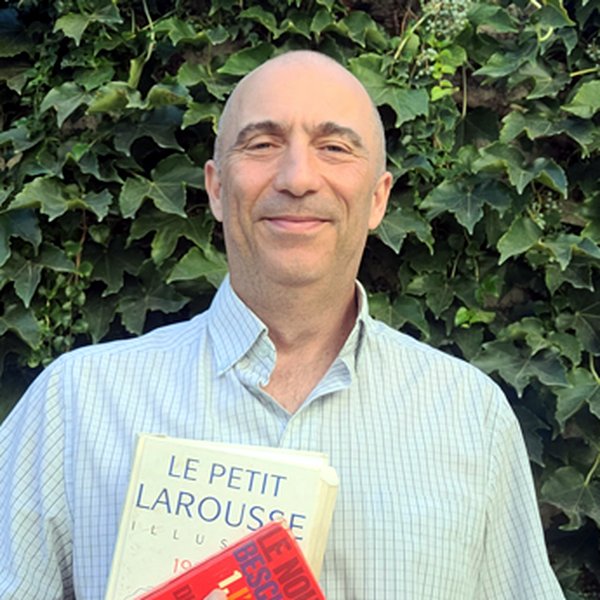


Bachelor of History, Université de PARIS I, Panthéon-Sorbonne · Diploma for the ability to teach French as a foreign language, Alliance Française de Paris (DAE FLE)
Tailor-made courses to achieve your fluency with native French teacher based in Marseille. Open to all, from beginners to pros.
Personally vetted · Strommen’s note
Marseille-based, Eric calls himself more coach than lecturer, heavy on phonetics and oral reflexes, light on grammar-trap lectures.
Specialties
Also speaks: English, German, Russian, Spanish
Bachelor of History, Université de PARIS I, Panthéon-Sorbonne · Diploma for the ability to teach French as a foreign language, Alliance Française de Paris (DAE FLE)
Tailor-made courses to achieve your fluency with native French teacher based in Marseille. Open to all, from beginners to pros.
Specialties
I also speak: English, German, Russian, Spanish
Personally vetted · Strommen’s note
Marseille-based, Eric calls himself more coach than lecturer, heavy on phonetics and oral reflexes, light on grammar-trap lectures.
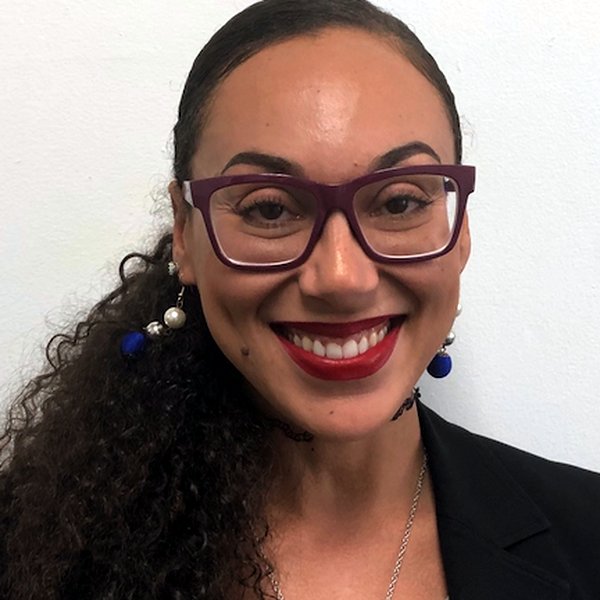

MBA and AS in Recording Arts · DALI, DELF, First Cert, SIZ Computer Science, Pro Tools, Dante
Multi-Culti Polyglot Linguist and Sound Engineer
Personally vetted · Strommen’s note
Vanessa speaks seven languages, has a sound-engineering background, and has spent two decades teaching. Her lessons range from accent coaching to art for kids.
Specialties
Also speaks: ASL American Sign Language, Chinese, Physics
MBA and AS in Recording Arts · DALI, DELF, First Cert, SIZ Computer Science, Pro Tools, Dante
Multi-Culti Polyglot Linguist and Sound Engineer
Specialties
I also speak: ASL American Sign Language, Chinese, Physics
Personally vetted · Strommen’s note
Vanessa speaks seven languages, has a sound-engineering background, and has spent two decades teaching. Her lessons range from accent coaching to art for kids.

Sur le plateau — dialect & culture
5 dialect-distinctive markers that show what regional French actually sounds like
Five markers, five French-speaking zones. Each one is the kind of detail a coach will mark up in your script the first time through, because the choice your character makes (a sound, a word, a particle) tells the audience where they're from before the line ends.
-
01
Quoi de neuf ?
The Parisian casual greeting, used between people who already know each other. Standard Parisian French, the default coaches reach for when a character is from Paris and the production has not specified a quartier or class. Pairs with the contemporary Paris discourse markers genre, du coup, franchement that fill almost any contemporary Paris-set scene.
e.g. Salut Léa, quoi de neuf depuis la semaine dernière ?
-
02
Peuchère
Marseillais expression of sympathy, used affectionately, from Occitan. Heard daily across Marseille and the wider Provence. Pairs naturally with the rolled Provençal R and the open vowels that mark Marseille French. The kind of word a coach will flag in a Pagnol-tradition script as one that has to land with the right melody, not just the right pronunciation.
e.g. Peuchère, il a perdu son chien.
-
03
Tu viens-tu ?
Québécois interrogative particle -tu, attached to the verb in casual questions regardless of grammatical person. Constant in everyday Québec speech, alongside the affrication of T before high front vowels (tsu for tu) and the sentence-final là. A coach reading a Xavier Dolan or Michel Tremblay script flags these as the load-bearing Québécois markers.
e.g. Tu viens-tu au cinéma à soir, là ?
-
04
Septante
Belgian and Swiss Romand word for seventy, where Parisian French says soixante-dix. The Belgian and Swiss numbering system is closer to the older Latin pattern French abandoned in the seventeenth century. Nonante for ninety follows the same pattern. The two numbers are the most recognized markers of Belgian and Swiss French in any contemporary script.
e.g. Il habite au septante-trois, rue Royale.
-
05
Wesh / wallah / starfoullah
Banlieue and North-African-diaspora French markers. Wesh as a casual greeting or filler, originally Arabic, now standard in suburban Parisian youth speech. Wallah as an intensifier asserting truth, also Arabic. Starfoullah as an exclamation of dismay. Heard in contemporary Paris suburbs, in Maghrebi-diaspora drama (Divines, Les Misérables, Bac Nord), and in current French rap. The kind of lexical detail a coach will calibrate for a banlieue-character role.
e.g. Wesh frère, ça fait longtemps, wallah.
About French Dialect Coach
Dialect work, built around your script
French dialect coaching for actors is script-led work. The first session is rarely a generic French-language lesson; it's a read-through with the coach holding the script, marking up the lines, asking the questions the part actually demands. Where is your character from, down to the city or region? What year? What social class? Did they leave France, Belgium, Québec, or wherever they grew up? When? Who do they speak with at home, and what register do they answer in? A Parisian banker in the 16th arrondissement today doesn't speak the same French as a Marseillais fisherman in 1958 or as a Québec teenager in Montréal in 2024, and none of them sound the way most American audiences picture generic French. The work that follows from those questions is what dialect coaching actually is at Strommen, and this page exists for actors approaching a French role rather than for language learners.
The French-speaking world is bigger and more internally varied than most American actors expect. Parisian French is the standard of films, news, and most teaching materials, but it is one variety among many. Marseille and the wider Méridional South have their own accent, lexicon, and melody. Québec carries a fully developed national variety of French with its own grammar features, anglicism rules, and cultural protections. Belgium has its own French (and its own separate Walloon language) shaped by Brussels bilingualism and southern-Belgian regional identity. Switzerland has Romand French across Geneva, Lausanne, and the Jura. North African French covers Morocco, Algeria, and Tunisia, with both colonial-era and post-independence varieties. Sub-Saharan French is a vast and underrepresented family covering Senegal, Côte d'Ivoire, Cameroon, the DRC, and beyond, each with its own phonology and lexicon. Indian Ocean French covers Réunion, Mauritius, and the Comoros. Period French covers the eighteenth-century court French of Versailles, the nineteenth-century bourgeois French of Balzac, and the mid-twentieth-century French of Renoir and Tati. For an actor, the choice of which French carries the entire backstory of the character. Getting it right is the difference between a part the audience believes and a part that reads as costume. Our blog post on the difference between African and European French covers one major axis of this variation; the wider framework is what the coach works in.
The regional inventory most actors hit on a job: Parisian for the largest share of contemporary French film and TV, for prestige drama like the work of Cédric Klapisch, for the comedy tradition from Bedos through Jamel Debbouze, and for any default French role with no specified region. Marseille for the Pagnol tradition, for contemporary Marseille-set crime drama (Bac Nord, Marseille, La French), for southern character work, and for OM-tradition football roles. Méridional more broadly for Toulouse, Bordeaux, Montpellier, and the wider South in any contemporary or period role. Québécois for any Montréal, Québec City, Saguenay, or wider Québec province role, plus for Xavier Dolan, Denys Arcand, Robert Lepage, and Denis Villeneuve's early Québec films; Acadian for any New Brunswick or Maritimes role. Belgian (Brussels or Wallonia) for any Belgian-set role, EU institutional drama, or characters drawn from the Brussels-rooted bande dessinée tradition. Swiss Romand for any Geneva, Lausanne, or wider French-speaking Switzerland role. North African French for any post-colonial drama set in the Maghreb or for North African diaspora characters in France. Sub-Saharan French for roles set across francophone Africa or for African diaspora characters. Period French for any pre-twentieth-century role, with specific calibration to the era (court French, revolutionary French, nineteenth-century bourgeois, Belle Époque, interwar). Strommen's roster covers all of these with native or near-native coaches; less-common varieties are matched on a per-project basis.
The distinction between French dialect coaching and French language teaching is real. A language tutor builds a student's French from foundations upward across a curriculum spanning months or years. A dialect coach takes an actor with a specific role and works from the script backward, identifying which sounds, words, registers, and cultural patterns the part requires and drilling those directly. Coaching can prepare a non-French-speaking actor to deliver credible dialect in a single language they otherwise don't speak (this is common: many on-camera and voice-over actors learn the lines and the dialect specifically, without claiming broader fluency). Coaching can take an intermediate French speaker and calibrate them from a generic standard French toward a specific Marseille or Québécois character. Coaching can move a French-fluent native French speaker from their own home register toward a different regional or period one for a part. All three are dialect-coach work. None of them is what a language tutor does. Tell the coach in the trial what level of French you actually have, what the role demands, and the curriculum gets built from there.
The method has a shape. Read the script first. The coach builds a phonetic map of the part: which sounds are dialect-distinctive, which the actor lands cleanly with brief coaching, which need real drilling. Listening drills come next, pulled from native sources the coach selects to match the character (a 70-year-old Marseillaise from a fishing village in the 1960s doesn't sound like a 25-year-old Marseille DJ in 2024; the coach picks the right audio reference). The actor records the dialect passages and the coach corrects mouth shape, cadence, lexical choices, and the rhythmic-musical layer that often distinguishes credible French performance from competent-but-flat work. Cultural and gesture coaching threads through when the role demands it. For shoot weeks, the coach can be available on-set or on-Zoom for emotional-scene work where actors typically lose dialect under pressure. Auditions and callbacks run on the same method compressed to the timeline. Theater work extends across the rehearsal period. Voice-over work focuses on microphone technique and recording-booth calibration alongside the dialect itself. The whole arc is one-on-one, calibrated to the part and the production calendar.
Strommen has been the LA-based dialect resource for film, television, and theater since 2006. Our coaches have worked on French and francophone roles for major film and TV productions, prestige limited series, theater productions in the US and Europe, video game character work, and voice-over campaigns. Garrett Strommen has been quoted in trade press on European-language dialect work; the Slate.com review of the Italian accents in House of Gucci is one published example of the kind of dialect analysis our team does for productions. Productions are tight-lipped by contract about which coaches worked on which projects, so we don't publish credit lists, but the trial conversation is where references get exchanged when a casting director or producer needs them.
A few honest observations on what trips up actors taking on French dialect work for the first time. The most common stumble is doing generic French. There is no generic French. Every French speaker speaks SOME regional or national variant, even when speaking standard, and the audience hears the absence of any specific grounding as fake. Going stagey-French is the next trap: the bad-Pepé-Le-Pew accent that piles on rolled Rs, exaggerated nasal vowels, and the clichés audiences read instantly as bad acting. Real French dialect work goes the opposite direction: quieter, more specific, more rooted. The French R catches non-French actors hard because the standard Parisian R sits at the back of the throat, dry and uvular, where most American actors arrive trying to roll it Spanish-style; meanwhile the Marseille rolled R is real but lighter than students expect, the Québécois R is variable between front-rolled and uvular, the Belgian R is closer to Parisian, the North African R often closer to Arabic. The choice of R depends on the character. Nasal vowels are the next layer; the four French nasal vowels (vin, vent, vont, brun) are produced differently in different regions and dropping them flat reads as English-accented French. Emotional scenes are where dialect drops first, and rehearsal under coach supervision is the only fix. And the script-to-set drift catches actors who prep at home alone: a line that sounds right in your own ear at 11pm rarely survives the first take in front of a director. Lessons drill all of these specifically rather than abstractly.
Between sessions, the immersion is character-specific. Your coach will send a curated reference list based on the role: contemporary Paris-set film for standard Parisian, Pagnol and modern Marseille crime drama for Marseille work, Xavier Dolan and Radio-Canada material for Québécois, the Dardenne brothers and Stromae for Belgian, North African cinema (Abdellatif Kechiche, Sofia Boutella's home-country material) for Maghrebi French, contemporary African cinema (Mati Diop, Alain Gomis) for Sub-Saharan French. For period work, period films supply the reference (Truffaut for 1960s standard, Renoir for 1930s-40s, Ophüls for nineteenth-century court). For broader French phonetic foundations, our French pronunciation guide and the 100 most frequently used French words list are useful supplements. For an actor without prior French, the foundation work runs alongside the dialect work rather than before it; you don't need to wait until your French is conversational to start coaching for a specific part.
The Strommen French dialect coaching roster includes native speakers from the major French-speaking zones (Paris, Marseille, the wider South, Lyon, Lille, Brussels, Wallonia, Geneva, Montréal, Québec City, Acadia, the Maghreb, Sub-Saharan Africa), trained French theater actors with stage credits in regional repertoire, and bilinguals with deep dialect-coaching experience for North American productions. Several coaches have direct on-set credits on prestige productions; others come from theater faculty positions at French or francophone conservatories; others come from voice-over and dubbing booths with credits across animation, games, and audiobooks. Each tutor's bio specifies regional background, dialect specialties, and which student profile they fit best (film/TV, theater, voice-over, opera, video games, animation). Pricing reflects experience and credit list. You can match yourself to a Paris-born coach for default standard work, a Marseille-born coach for Pagnol-tradition roles, a Québec-born coach for Xavier Dolan-tradition work, a Brussels-born coach for Dardenne-tradition work, or a coach with theater credits in dialect repertoire for stage work. Our Parisian French, Marseille French, Québécois, and Belgian French language-tutor pages cover the same roster from a different angle; this page is specifically built for actors approaching a part rather than for language learners building a curriculum.
Lessons are one-on-one and calibrated to the role. A coached lead role on an upcoming shoot is a different curriculum from a self-tape preparing for a callback, which is different again from foundation dialect-building between projects for an actor who wants to be ready when the next French role comes through. The trial is free, the coach reads the script with you, the study plan comes out of that read. For a head-start before the trial, our French course page shows the family of related programs. Or just browse the full tutor list and book a trial. Bring the script. Tell us the role. We'll go from there.
What you'll cover
Lessons & classes tailored to French Dialect Coach
Script-led phonetic mapping
Read the script with the coach, mark up the lines, identify the regional and generational specifics of the character (where from, what year, what class, who they speak with at home). Build the phonetic map: which sounds are dialect-distinctive, which the actor lands cleanly, which need drilling. Foundation step for any role-specific French dialect work, no matter which French-speaking zone the character is rooted in.
Regional French dialects: Parisian, Marseille, Méridional, Québécois, Belgian, Swiss, Acadian
Native or near-native coaches for the major regional zones. Standard Parisian for the largest share of contemporary French film and TV. Marseille for the Pagnol tradition, modern Marseille crime drama, OM-tradition football roles. Méridional for the wider South (Toulouse, Bordeaux, Montpellier). Québécois for any Montréal, Québec City, Saguenay role, plus Xavier Dolan and Denys Arcand traditions. Belgian (Brussels or Wallonia) for any Belgian-set role or bande dessinée adaptation. Swiss Romand for Geneva, Lausanne, the Jura. Acadian for New Brunswick and the Maritimes.
North African, Sub-Saharan, and diaspora French
North African French covering Morocco, Algeria, and Tunisia, with calibrations for colonial-era period work, post-independence contemporary, and Maghrebi-diaspora characters in France. Sub-Saharan French covering Senegal, Côte d'Ivoire, Cameroon, the DRC, and the wider francophone Africa. Banlieue French and the multicultural French of the contemporary Paris suburbs, with the Arabic and Sub-Saharan lexical layers (wesh, wallah, kiffer, frérot) that mark the register. Our blog post on African vs European French covers the broader linguistic framework these dialects sit inside.
On-set, on-Zoom, audition, and voice-over support
For shoot weeks, coaches can be available on-set or on-Zoom for emotional-scene work where dialect tends to drop under pressure. Pre-production coaching for auditions and callbacks under tight turnarounds. Voice-over and game-character recording sessions with microphone-technique calibration. Self-tape preparation. Theater rehearsal coaching for stage runs. Period-French calibration for any pre-twentieth-century role. The deliverable is a credible French dialect under real production conditions, not a polished demo reel.
FAQ
About French Dialect Coach lessons & classes
What's the difference between this page and your regional French tutor pages (Parisian, Marseille, Québécois, Belgian)?
Same roster of teachers, different angle. The regional pages (Parisian French, Marseille French, Méridional French, Québécois, Belgian French) cover language learning for students building French foundations over months or years. This page is built specifically for actors approaching a part: the method is script-led, the calibration is role-specific, and the timeline is the production calendar rather than a long-term language curriculum. Pick whichever framing matches where you are. If you're an actor with a script and a shoot date, start here.
I don't speak French at all. Can I still take dialect coaching for a role?
Yes. For non-French-speaking actors with a part that requires French dialect, the foundation work runs alongside the dialect work rather than before it. The coach builds out the specific lines and sounds the part requires, while the actor picks up enough French phonetics, vocabulary, and grammar to support the performance. Many actors who'd never studied French have delivered credible dialect work on screen this way. The script and the production calendar drive the curriculum, not the actor's prior French level.
I'm playing a Marseille / Québec / Belgian character. Do I learn the dialect or just the regional accent of standard French?
Depends on the script and the production's intent. Some productions use full regional variety for authenticity (Gomorra-equivalents in French are rare but exist, particularly in Québec where Xavier Dolan and others have used full joual on screen). Most productions use standard French with regional accent and occasional regional vocabulary as character marking, especially for international distribution. Your coach reads the script, talks to your director or showrunner if needed, and recommends the calibration. Often the answer is hybrid: standard French as the base with regional markers as the character signature.
I have a callback in two weeks. What can we do in that time?
A lot, if the scope is the audition rather than the whole role. Typical fast-turnaround plan: a first script-read session within 48 hours of booking the coach, daily or every-other-day sessions through the prep window, recorded drills the actor runs every day, a dress-rehearsal pass with the coach 24-48 hours before the audition. Full-role coaching for a series regular or lead is a longer arc (4-6 weeks of intensive work plus continuing support through shoot); audition prep is its own focused mode. Tell us the deadline in the trial and we'll match a coach with availability.
Do you coach North African or Sub-Saharan French for diaspora and post-colonial roles?
Yes. The roster includes coaches with native or near-native command of Maghrebi French (Morocco, Algeria, Tunisia), Sub-Saharan varieties (Senegal, Côte d'Ivoire, Cameroon, the DRC), and the banlieue / multicultural French of contemporary Paris suburbs where Arabic and Sub-Saharan lexicon shape current youth speech. For roles drawn from the post-colonial canon, the African contemporary cinema scene, or the diaspora-in-France drama tradition (Divines, Les Misérables 2019, Bac Nord), tell us which variety the part calls for and we'll match accordingly.
Do you support on-set coaching during production?
Yes. For lead roles in feature films, prestige TV, or theater productions with extended runs, on-set or on-Zoom coaching during shoot is common, especially for emotional scenes where dialect tends to drop, or for last-minute script changes that introduce new dialect material the actor hasn't drilled. Rates and availability for on-set work are arranged per-project; the trial conversation is where this gets scoped. We've staffed productions in Los Angeles, New York, Atlanta, and on-location internationally.
I'm a voice-over actor preparing for a game, animation, or commercial. Is this the right page?
Yes. Voice-over French dialect work is a core part of what these coaches do: for video game characters, animation, commercial voice-over, dubbing, audiobooks, and audio drama. The method is the same as for on-camera work (script-led, dialect-specific, phonetically mapped) but the focus shifts more toward microphone technique and recording-booth calibration. Several of our coaches have direct booth and dubbing credits across French-speaking markets.
What does the trial include?
30 minutes, free, with the coach you select. Bring the script (or the role you're auditioning for) if you have one. The coach will read or listen, ask the questions about the character that need answering, identify the highest-impact prep areas, and propose a study plan calibrated to your audition, shoot, or rehearsal date. Most actors continue with their trial coach; if the fit isn't right, swapping is easy and quick.
Ready for French Dialect Coach lessons or classes?
Book a free 30-minute trial with one of our personally vetted tutors. Private lessons or small-group classes — your choice.