



Personally vetted instructors
Portuguese for Travel tutors, lessons & classes
Com licença The polite "excuse me" every traveler reaches for first.
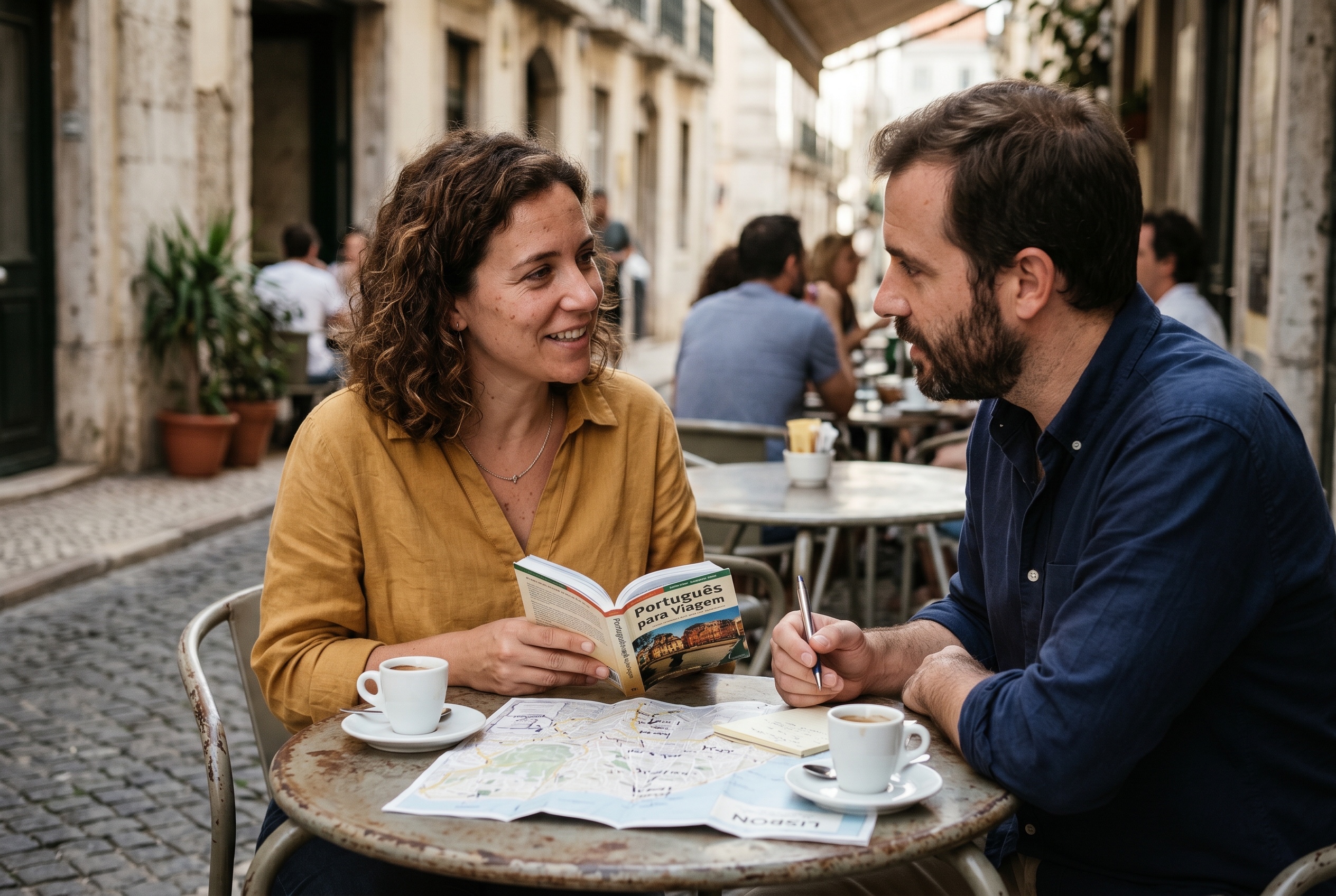
Personally vetted Portuguese tutors who specialize in travel-ready language. Lessons that get you off the tourist track and into the real Rio, São Paulo, Lisbon, or Porto without an awkward English handoff.
Your instructors
Portuguese for Travel tutors for private lessons & classes
Strommen has Portuguese tutors who specialize in pre-trip preparation. Six to twelve hours of focused one-on-one time before departure is usually enough to lift a traveler from English-only to genuinely useful Portuguese on arrival. Every tutor below was met and vetted by us in person or via thorough video interview. No marketplace. No automated profile-creation.
Filter by location, age, or price. Then book a 30-minute free trial.
Below are the Strommen tutors who specialize in travel Portuguese. Photos, ratings, and rates are real. Click any card to read their bio and book a free 30-minute trial.
I want to learn…
Every tutor, personally met. — founder-vetted since 2006, in Los Angeles and online worldwide.
Get a personalized plan
Pick your language — a language advisor will match you with the right tutor and map out your path.




Hispanic Philology Bachelor Degree
A gentle way to learn
Personally vetted · Strommen’s note
Woodland Hills-based, Carolina teaches Portuguese and Spanish through the CEFR framework. Seven years in, she still starts absolute beginners at their own level.
Specialties
Also speaks: English
Hispanic Philology Bachelor Degree
A gentle way to learn
Specialties
I also speak: English
Personally vetted · Strommen’s note
Woodland Hills-based, Carolina teaches Portuguese and Spanish through the CEFR framework. Seven years in, she still starts absolute beginners at their own level.
-Training Language Teachers Master’s Degree International University of Valencia – Spain -Phd. Teaching Language and Literature Basque Country University- Spain –Degree in Spanish language – UFPE · DELE Examiner level A,1A2, B1, B2
Spanish and hapiness
Specialties
-Training Language Teachers Master’s Degree International University of Valencia – Spain -Phd. Teaching Language and Literature Basque Country University- Spain –Degree in Spanish language – UFPE · DELE Examiner level A,1A2, B1, B2
Spanish and hapiness
Specialties

Associate of Arts
US expat living in Brazil teaching English all over the world
Personally vetted · Strommen’s note
A US expat based in Brazil, Ben teaches English worldwide and Portuguese on the side, conversational first, grammar only where it actually matters.
Specialties
Associate of Arts
US expat living in Brazil teaching English all over the world
Specialties
Personally vetted · Strommen’s note
A US expat based in Brazil, Ben teaches English worldwide and Portuguese on the side, conversational first, grammar only where it actually matters.

Em viagem — travel essentials
5 travel Portuguese essentials worth knowing before you board
These are the phrases and cultural notes that consistently make the difference between tourist and guest. Screenshot the infographic and brief yourself on the plane.
-
01
Com licença / por favor / obrigado(a)
The polite trio that opens almost every traveler interaction. Com licença is "excuse me" for getting attention or passing by. Por favor (Brazil) or se faz favor (Portugal) is "please." Obrigado (man speaking) or obrigada (woman speaking) is "thank you." Use all three liberally; both Brazilians and Portuguese hosts notice immediately when a traveler hasn't bothered.
e.g. Com licença, a conta, por favor. Obrigada!
-
02
Tem ___?
The universal traveler phrase for "is there ___?" or "do you have ___?" Portuguese uses ter (to have) much more freely than the textbook haver. Tem mesa?, tem wifi?, tem vegetariano?, tem troco?, tem banheiro? (Brazil) or tem casa de banho? (Portugal). Memorize the form and you can navigate most service interactions.
e.g. Boa noite, tem mesa pra dois?
-
03
Carnaval (Brazil)
If your trip falls anywhere near February or March, Carnaval will shape it. The dates shift yearly; Rio's sambadrome shows and street blocos run for roughly two weeks. Salvador's Carnaval centers on trio elétrico trucks rather than samba schools and is its own intensely different experience. Travel tutors brief you on the specific etiquette: when to dress up, when not to bring valuables, which neighborhoods are actually safe at night during Carnaval week.
e.g. Vou estar no Rio durante o Carnaval em fevereiro.
-
04
Lisbon and Porto basics differ from Brazil
Portuguese travel etiquette runs slightly more formal than Brazilian. Default to o senhor / a senhora in shops and restaurants on first contact. The couvert (bread, olives, cheese spread) arrives at the table whether you ask or not and you pay for it. The bill comes only when you ask: a conta, se faz favor. A bica in Lisbon is a small espresso (cimbalino in Porto). Tipping is not expected but rounding up is the typical move.
e.g. A conta, se faz favor. E uma bica, também, obrigado.
-
05
Brazilians are genuinely friendly with strangers
First-time visitors to Brazil are sometimes thrown by how directly locals strike up conversation in elevators, taxis, bar lines, and beachside kiosks. It's real, it's warm, and a halting attempt at Portuguese unlocks a much warmer trip than English-only. Portuguese hosts in Lisbon and Porto are more reserved on first contact but warm fast once you've made the linguistic effort. In both countries, the attempt matters more than polish.
e.g. Tourist: Oi, tudo bem? Carioca taxi driver: Tudo bem! De onde você é?
About Portuguese for Travel
Real travel Portuguese, not a phrasebook
Travel Portuguese is its own course, and the curriculum should match the trip. A two-week Rio holiday with beach days and samba shows is a different vocabulary set from a working visit to São Paulo full of meetings and Uber rides, which is different again from a slow tour through Lisbon, the Douro Valley, and Porto, which is different from a heritage visit to your grandmother's village in the Azores. Travel tutors at Strommen treat the destination as the curriculum: where are you going, what will you actually do there, who will you meet, what do you most fear getting wrong. The lessons build outward from those answers.
Most American travelers heading to Lusophone destinations are going to Brazil, with Rio, São Paulo, Salvador, and the Iguaçu Falls leading the list. Brazilian Portuguese is the default for those trips. Travelers heading to Portugal, Madeira, or the Azores need European Portuguese, which sounds and feels distinct enough that a Brazilian-trained tourist can land in Lisbon and feel like the language drifted overnight. Lessons stay variety-specific, so you don't show up at a Lisbon café trying out Brazilian contractions that local servers will gently smile at and answer in English. If your trip covers both countries (a Lisbon-to-Rio combination is increasingly common), your tutor can introduce both varieties sequentially with explicit markers for which phrase belongs to which.
Pre-trip lesson plans for Brazil typically run 6 to 12 hours of one-on-one time spread over a month or two before departure. The first lessons cover essential greetings, polite phrases, the universal Brazilian opener tudo bem?, the everyday com licença / por favor / obrigado/obrigada / desculpa set, and how to read prices and street signs. The middle lessons move into transportation (taxi, Uber, ônibus, metrô, navigating São Paulo or Rio public transit, what to do if a driver insists on a flat rate), restaurant ordering (caipirinha vocabulary, churrascaria etiquette, the difference between a padaria and a botequim and a lanchonete, how to ask for the bill without making it weird), and the standard requests that come up in shops, pharmacies, and hotels. The final lessons cover small talk that gets you out of tourist mode: weather, the city you're visiting, where you're from, what brought you, what you've eaten that you loved. Brazilians are famously warm with strangers, and a tourist who can hold even a short Portuguese exchange unlocks an entirely different layer of the trip.
Pre-trip lessons for Portugal follow a similar arc with different defaults. The polite register stays higher than in Brazil, especially in first-contact interactions: o senhor / a senhora in shops and restaurants, se faz favor in place of the looser Brazilian por favor, the European Portuguese obrigado/obrigada with the gender agreement rule that catches every beginner. Transportation vocabulary differs: a bus in Portugal is autocarro, not the Brazilian ônibus; the famous Lisbon trams (eléctricos) and elevators (elevadores) of the Alfama and Bairro Alto get their own short vocabulary set. Restaurant ordering has its own conventions: the couvert arrives at the table whether you ask for it or not (and yes, you pay for it; declining politely is the move if you don't want it), the bill comes only when you ask for it (a conta, se faz favor), and the bica is the small espresso in Lisbon (cimbalino in Porto). The pastel de nata vocabulary is its own pleasant lesson.
Nuts and bolts that travel tutors cover explicitly: the Real (R$) as Brazil's currency and the Euro in Portugal, with rough conversion intuition so you don't get burned at the cambio. Tipping norms (10 percent service charge is often included in Brazilian bills as serviço; in Portugal, tipping is appreciated but not expected, and rounding up is the typical move). The Carnaval calendar in Brazil if your trip falls anywhere near February or March, with the specific etiquette of street blocos versus sambadrome shows and the safety advice that locals actually give. The Festas dos Santos Populares in June if you're in Lisbon or Porto for Saint Anthony's or Saint John's nights. The polite-but-firm vocabulary for declining street vendors and persistent touts. The vocabulary for emergencies: pharmacy phrases, medical terms, lost-passport vocabulary, police-station phrases, the most useful five things to say if your phone or wallet gets stolen.
One difference that surprises every first-time visitor: Brazilian friendliness with strangers is real and disarmingly direct. Casual conversations start in elevators, taxi rides, beachside kiosks, and bar lines. A tourist who responds in even halting Portuguese gets a warmer reception than a tourist who immediately defaults to English. The traveler-Portuguese phrase that opens the most doors is not a polished sentence; it's the willingness to attempt the language at all. Portuguese hosts in Lisbon and Porto are slightly more reserved on first contact but warm fast once you've made the linguistic effort. The same principle applies: the attempt matters more than the polish.
A few honest tutor observations on what trips up travelers in Portuguese-speaking countries. Pronunciation of place names is the first stumble. Rio de Janeiro is roughly "HEE-oo jee zha-NAY-roo" in Carioca speech, not the English "REE-oh." São Paulo is "sown POW-loo" with a clean nasal, not "sow PAW-loh." Recife, Salvador, Belém, Manaus, Belo Horizonte, Lisboa, Porto, Coimbra, Évora all have specific pronunciations a traveler benefits from learning before arrival. The next stumble is restaurant menus full of regional ingredients you've never seen: moqueca, acarajé, vatapá, tucupi, jabuticaba on the Brazilian side; bacalhau in 1,000 preparations, francesinha, caldo verde, arroz de marisco, amêijoas à bulhão pato on the Portuguese side. Travel tutors walk through menus with you. The third stumble is taxi negotiations: in Brazil, the Uber and 99 apps have largely solved this, but cash taxis from airports occasionally still try to negotiate flat rates that are double the meter. Knowing the Portuguese for "please use the meter" (por favor, no taxímetro) ends the conversation. The fourth: the casual confusion between ter (to have) and haver (there is/are) that catches travelers asking about availability. Hotels, restaurants, museums, all use tem (literally "has") rather than the textbook há for "is there." The fifth, and the easiest first-month win: stop apologizing for your Portuguese. Hosts in both countries find apologies awkward; just attempt the phrase, accept the response, and continue.
For between-lesson immersion that builds travel readiness, the most useful inputs are visual and conversational rather than literary. The Cidade Maravilhosa documentary series for Rio. The Anthony Bourdain Brazil and Portugal episodes for food vocabulary. Brazilian YouTube vlogs from cities you'll visit. The Portuguese podcast guide on the blog has tested recommendations across both varieties. The essential phrases post is a useful primer between travel-track lessons.
The Strommen travel Portuguese roster includes native Brazilians from Rio, São Paulo, Salvador, and other major Brazilian destinations, and native Portuguese speakers from Lisbon, Porto, and the Azores. Each tutor brings on-the-ground knowledge of their region: which neighborhoods locals actually recommend, which restaurants are worth the trip, which scams to watch for, which etiquette mistakes embarrass travelers most. Pre-trip lesson packages typically run 6 to 12 hours over 4 to 8 weeks before departure. For complementary tracks, our Conversational Portuguese roster covers everyday speaking practice, Portuguese for Beginners handles zero-to-basic foundations for absolute beginners, and the Portuguese course page shows the full family. Book the trial, tell the tutor where you're going and when, and walk into your trip with the kind of confidence that turns a tourist into a guest. Browse the full tutor list to compare.
What you'll cover
Lessons & classes tailored to Portuguese for Travel
Destination-specific vocabulary
Lessons calibrate to your actual itinerary. Rio includes Cariocan slang and beach vocabulary; São Paulo covers business-traveler basics and the city's enormous immigrant-influenced lexicon; Salvador adds Bahian Portuguese and Afro-Brazilian cultural notes; Lisbon and Porto cover European Portuguese politeness, tram and metro vocabulary, and the regional dishes worth ordering. Tell your tutor where you're going and the curriculum builds from there.
Restaurants, transit, hotels, shops
The standard tourist transactions, drilled until they're automatic. Reading a menu and asking what something is, ordering specifics (rare versus well-done, spicy or not, dietary restrictions), splitting a bill, calling an Uber or 99 in Brazil and figuring out a taxi in Lisbon, checking into a hotel and asking about the wifi, buying a metro card, returning a bad item to a shop without escalating. These are the moments where confident Portuguese saves a trip from constant micro-friction.
Small talk that gets you out of tourist mode
Weather, the city you're visiting, where you're from, what brought you, what you've eaten that you loved. Both Brazilians and Portuguese respond warmly to travelers who attempt Portuguese small talk rather than defaulting to English. Lessons build a small kit of conversational openers and polite curiosity phrases that let you actually meet people rather than just transact with them.
Cultural calendars and safety notes
Carnaval in Brazil, Festas dos Santos Populares in Portugal, the long Catholic holiday calendar that closes shops unexpectedly, the typical scam patterns at airports and major tourist sites, the neighborhoods locals actually recommend versus the ones guidebooks oversell. Tutors who are from the cities you're visiting share what they'd tell a friend, not what a guidebook would tell a stranger.
FAQ
About Portuguese for Travel lessons & classes
How much Portuguese do I really need for a two-week trip?
Less than you fear, more than your phone's translation app suggests. A pre-trip program of 6 to 12 hours over 4 to 8 weeks gives most travelers enough Portuguese to handle restaurants, transit, shops, hotels, and basic social interactions without an awkward English handoff. You won't be fluent. You will, however, be able to navigate the trip with confidence and unlock the warmer reception that comes from attempting the local language. Hosts in Brazil and Portugal notice immediately.
Should I learn Brazilian or European Portuguese for my trip?
Match the destination. Trip to Brazil (Rio, São Paulo, Salvador, the Northeast, the Amazon, Iguaçu) means Brazilian Portuguese. Trip to Portugal (Lisbon, Porto, the Algarve, the Douro Valley, Madeira, the Azores) means European Portuguese. The two varieties sound different enough that mixing them creates confusion at restaurant counters and ticket windows. If your trip covers both countries, your tutor can introduce both sequentially with clear markers, but you'll still want a default variety for any single interaction.
What about pronunciation of Brazilian place names?
Worth learning before arrival. Rio de Janeiro in Carioca speech sounds roughly like "HEE-oo jee zha-NAY-roo," not the English "REE-oh." São Paulo is "sown POW-loo" with the nasal vowel. Recife, Salvador, Belém, Manaus, Belo Horizonte, Curitiba, Florianópolis each have specific pronunciations that travelers benefit from practicing. Lessons include place-name drills tied to your itinerary so taxi drivers, hotel staff, and locals understand you the first time you ask.
How safe are Rio and São Paulo really?
Both cities reward common-sense traveler awareness. Don't flash valuables, don't pull out your phone on busy streets, take Ubers at night rather than walking unknown neighborhoods, keep your passport in the hotel safe. Both cities have plenty of areas that are completely fine for tourists during daytime. Your tutor will share specific neighborhood-by-neighborhood notes, which beats any guidebook. The same applies to Salvador and the Northeast: glorious destinations with specific local safety patterns worth learning before arrival.
Will I get by with Spanish?
Partially in Brazil, less than you'd expect in Portugal. Many Brazilians, especially in tourist areas, understand basic Spanish and will respond in Portuguese or in portunhol (a Portuguese-Spanish hybrid). Portuguese listeners follow Spanish more easily than the reverse. The locals' patience is real, but using Spanish in Brazil consistently lands as "this person didn't bother to learn even a little Portuguese," which dampens the warmth of interactions. A few hours of pre-trip Portuguese pays for itself many times over in social reception.
What about tipping and payment customs?
In Brazil, restaurant bills usually include a 10 percent serviço charge that's technically optional but customarily paid. Cash is still useful for street vendors and small shops, though card and Pix (the Brazilian instant-payment system) cover most situations. In Portugal, tipping is appreciated but not expected; rounding up the bill or leaving small change for good service is the typical move. ATMs are widely available in both countries. Notify your bank of travel dates to avoid card freezes.
Can I take travel lessons online or only in person?
Both. Most of our travel Portuguese tutors teach online via Zoom or Jitsi, which is the most common format for pre-trip programs since students typically have 4 to 8 weeks of weekly sessions before departure. Several tutors also teach in person around Los Angeles. The booking widget on each tutor's profile shows their available formats.
Ready for Portuguese for Travel lessons or classes?
Book a free 30-minute trial with one of our personally vetted tutors. Private lessons or small-group classes — your choice.