



Personally vetted instructors
Intensive Italian tutors, lessons & classes
Andiamo Let's go — the opener for any student starting an intensive Italian arc.
Personally vetted Italian tutors for accelerated, immersive study. FSI Category I-II language at 600-750 hours to working proficiency — lessons designed for students with hard deadlines and the discipline to put in the daily reps.

Your instructors
Intensive Italian tutors for private lessons & classes
Strommen has been teaching Italian since 2006. Intensive Italian is the format we recommend for students with hard deadlines and the discipline to put in 4 to 10 hours of tutored lessons per week plus several hours of daily self-study. Every tutor below was met and vetted by us in person or via thorough video interview. No marketplace. No automated profile-creation.
Filter by location, age, or price. Then book a 30-minute free trial.
Below are the Strommen tutors who specialize in Intensive Italian. Photos, ratings, and rates are real. Click any card to read their bio and book a free 30-minute trial.
I want to learn…
Every tutor, personally met. — founder-vetted since 2006, in Los Angeles and online worldwide.
Get a personalized plan
Pick your language — a language advisor will match you with the right tutor and map out your path.

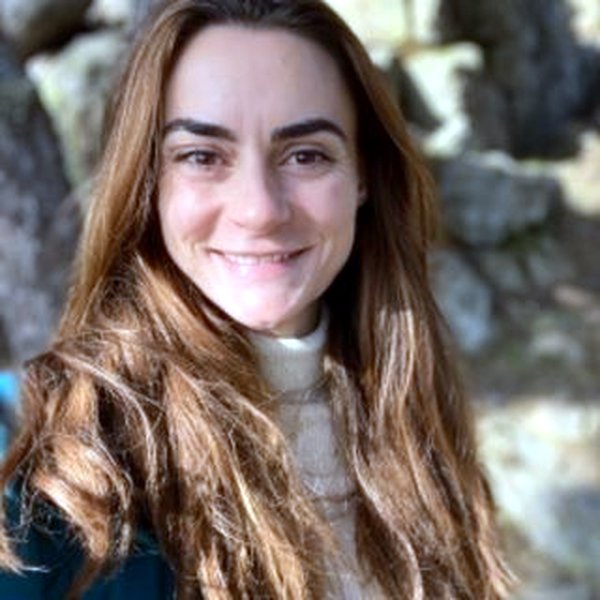

Masters of Fine Art, Bachelor in Foreign Language and Literature. · Over 2,000 hours of one‑on‑one teaching experience. Published literary translator, with work reviewed in Kirkus Reviews, Times Literary Supplement, Art Book D.A.P., and multiple international journals.
Master English, French & Italian with a Published Literary Translator
Personally vetted · Strommen’s note
A published literary translator, Colombina teaches English, French, and Italian, plus SAT prep, college essay coaching, and learning-disability support.
Specialties
Masters of Fine Art, Bachelor in Foreign Language and Literature. · Over 2,000 hours of one‑on‑one teaching experience. Published literary translator, with work reviewed in Kirkus Reviews, Times Literary Supplement, Art Book D.A.P., and multiple international journals.
Master English, French & Italian with a Published Literary Translator
Specialties
Personally vetted · Strommen’s note
A published literary translator, Colombina teaches English, French, and Italian, plus SAT prep, college essay coaching, and learning-disability support.



UCLA Bachelor degree
Roman Native Italian Tutor with 20 years Experience, lets speak Italian!
Personally vetted · Strommen’s note
A Rome native who has taught Italian for twenty years, Garrett still takes on a handful of students personally when his schedule allows.
Specialties
Also speaks: French, Spanish
UCLA Bachelor degree
Roman Native Italian Tutor with 20 years Experience, lets speak Italian!
Specialties
I also speak: French, Spanish
Personally vetted · Strommen’s note
A Rome native who has taught Italian for twenty years, Garrett still takes on a handful of students personally when his schedule allows.
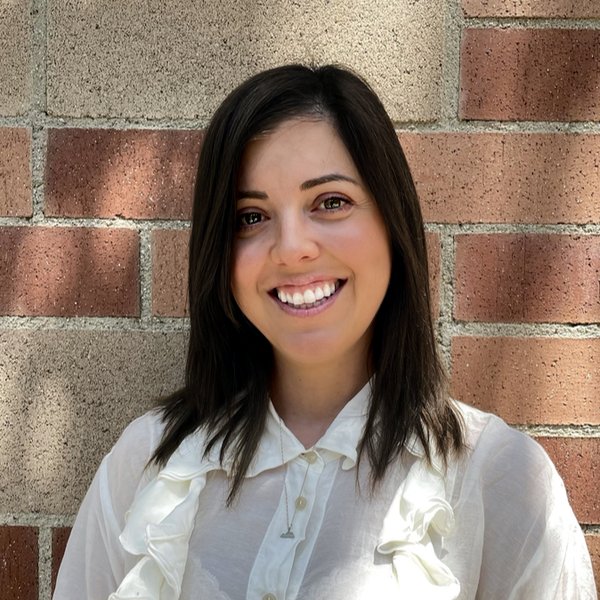
M.A. and Ph.D.
Former UCLA Italian Instructor with 16+ Years of Experience!
Personally vetted · Strommen’s note
A former UCLA Italian instructor with us since 2009, Marianna moves easily between Italian instruction and legal translation.
Specialties
M.A. and Ph.D.
Former UCLA Italian Instructor with 16+ Years of Experience!
Specialties
Personally vetted · Strommen’s note
A former UCLA Italian instructor with us since 2009, Marianna moves easily between Italian instruction and legal translation.
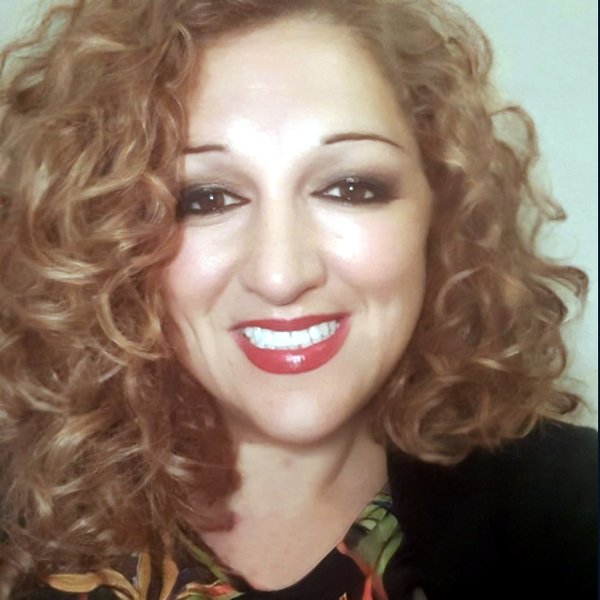
Interpreter /translator · Celta
Inspire the love for learning and cultural exploration
Personally vetted · Strommen’s note
Out of Turin, Caterina teaches Ladin, the Dolomite minority language, alongside Italian and English.
Specialties
Interpreter /translator · Celta
Inspire the love for learning and cultural exploration
Specialties
Personally vetted · Strommen’s note
Out of Turin, Caterina teaches Ladin, the Dolomite minority language, alongside Italian and English.


Psychology · N/A
Expert Native Italian Tutor | Personalized Lessons | Learn Italian with confidence, clarity, and authentic conversation
Specialties
Also speaks: French, Japanese, Russian, Welsh
Psychology · N/A
Expert Native Italian Tutor | Personalized Lessons | Learn Italian with confidence, clarity, and authentic conversation
Specialties
I also speak: French, Japanese, Russian, Welsh
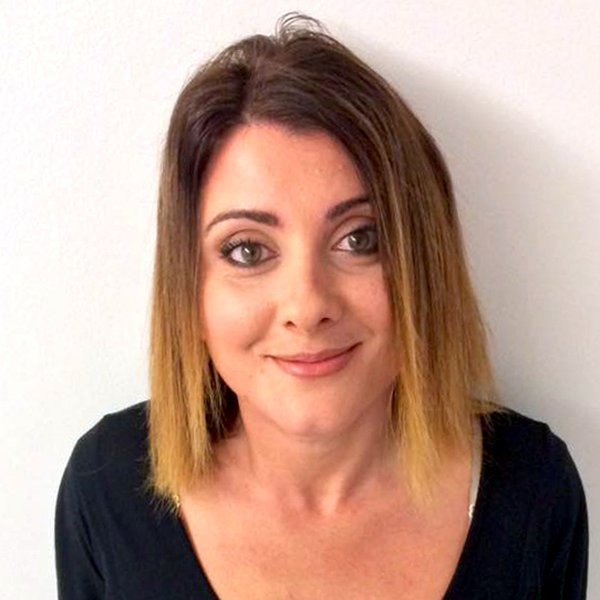
I have a degree in "Media and Journalism" from the Faculty of Political Science in Florence.I have obtained several certificates of suitability for teaching the Italian language L2/Ls to foreigners, and as administrator of the CILS exams (of all levels... · The certificate of suitability for teaching the Italian language L2/Ls to foreigners was issued by DILIT International House in Rome after being admitted through an initial test and passing the various stages of the training.
Learn Italian with confidence, clarity, and real-world results.
Personally vetted · Strommen’s note
Federica covers every CILS certification level from A2 to C2 in her Italian lessons, out of Barcelona, with Sicilian dialect and opera-singer coaching too.
Specialties
Also speaks: English, Spanish
I have a degree in "Media and Journalism" from the Faculty of Political Science in Florence.I have obtained several certificates of suitability for teaching the Italian language L2/Ls to foreigners, and as administrator of the CILS exams (of all levels... · The certificate of suitability for teaching the Italian language L2/Ls to foreigners was issued by DILIT International House in Rome after being admitted through an initial test and passing the various stages of the training.
Learn Italian with confidence, clarity, and real-world results.
Specialties
I also speak: English, Spanish
Personally vetted · Strommen’s note
Federica covers every CILS certification level from A2 to C2 in her Italian lessons, out of Barcelona, with Sicilian dialect and opera-singer coaching too.
I am a passionate Italian language teacher and tutor with a strong academic background that combines both science and humanities. Although I hold a degree in Biomedical Science, I also completed extensive humanities studies in Italy, where I studied It... · I am member of ATI ( American Association of Italian Teachers) and I partecipate to continuing education event and seminars.
Discover Italian Language and Italian Culture- Italian lessons customized to meet your individual needs, goals, and abilities
Personally vetted · Strommen’s note
Twenty-two years teaching Italian have given Francesca a track for nearly every reason to learn it, from opera-singer diction to CILS B1 citizenship prep.
Specialties
Also speaks: French, Japanese, Spanish
I am a passionate Italian language teacher and tutor with a strong academic background that combines both science and humanities. Although I hold a degree in Biomedical Science, I also completed extensive humanities studies in Italy, where I studied It... · I am member of ATI ( American Association of Italian Teachers) and I partecipate to continuing education event and seminars.
Discover Italian Language and Italian Culture- Italian lessons customized to meet your individual needs, goals, and abilities
Specialties
I also speak: French, Japanese, Spanish
Personally vetted · Strommen’s note
Twenty-two years teaching Italian have given Francesca a track for nearly every reason to learn it, from opera-singer diction to CILS B1 citizenship prep.

Immersione — intensive method
5 anchors of a serious intensive Italian program
These are the structural pieces that distinguish a genuinely intensive Italian arc from a casual one. Save the infographic for your trial conversation.
-
01
FSI Category I-II
The US Foreign Service Institute ranks Italian in Category I-II, the easiest tier for English speakers (alongside Spanish, French, Portuguese, Dutch, Scandinavian languages). FSI estimates 600-750 classroom hours plus equivalent self-study to reach working professional proficiency. That's roughly 6-12 months of intensive study, or 2-4 years of casual study. The category ranking is grounded in 60+ years of FSI data on diplomat training.
e.g. Italian: FSI Category I-II, ~600-750 hours to FSI Level 3 (C1).
-
02
The Castiglione method
Developed by Italian linguist Pierre Castiglione at the FSI in the mid-20th century, the method emphasizes pattern drilling, situational dialogue practice, and early cultural context alongside language. Still the structural backbone of most serious intensive Italian programs, now layered with modern tools (spaced-repetition vocabulary apps, calibrated audio, transcripted podcasts) but with the same core insight: daily volume across all four skills compounds, occasional concentrated practice doesn't.
e.g. Daily pattern drills + situational dialogue + cultural readings = the Castiglione frame.
-
03
Daily native-speed audio
30-60 minutes of daily Italian audio at native speed from week one, regardless of comprehension level. Slow news (News in Slow Italian) bridges into Tienimi Bordone, Will, Globo, then native podcasts and RAI broadcasts. By month 6 of intensive work, students who've put in the audio reps follow most native Italian; students who've skipped the audio reps stay stuck no matter how strong their grammar.
e.g. Anchor: 30+ minutes Italian audio daily, week 1 through week 52.
-
04
Cinema and opera as immersion
One Italian film per week from week 8 onward, first with Italian subtitles, later without. Start with contemporary (Sorrentino, Garrone, Guadagnino), work toward classics (Fellini, Visconti, Antonioni). For students drawn to opera, libretti of La Traviata, Rigoletto, Tosca, La Bohème carry vocabulary and formal register conversational Italian doesn't deliver. Cultural immersion that doubles as language practice.
e.g. Week 8 onward: 1 Italian film/week + 1 opera libretto/month.
-
05
Florence-Siena school tradition
Università per Stranieri di Siena (founded 1917) and Università per Stranieri di Perugia (founded 1925) are the state institutions dedicated to teaching Italian as a foreign language. They administer CILS and CELI. Florence hosts a constellation of private language schools founded over the past century. Many intensive students combine: 6 months of remote tutoring, then 1-3 months of in-residence study to consolidate.
e.g. Combined arc: 6 months remote tutoring + 2 months at Scuola Leonardo da Vinci or Università per Stranieri.
About Intensive Italian
Italian, seriously compressed
Intensive Italian compresses what most learners spread over two to three years into a focused 6 to 12 month arc. It's the right format for students with a real deadline: a move to Italy, a graduate program at an Italian university, a job posting to Milan, an upcoming Italian wedding into a family that doesn't speak English, a research fellowship at a Florence institution, an immersion year before an Italian-language film project, or a personal reset year where Italian is the central project. The model is built on what the US Foreign Service Institute learned over six decades of teaching diplomats: Italian sits in Category I-II of FSI's language difficulty ranking (the easiest tier for English speakers, alongside Spanish, French, Portuguese, Dutch, and the Scandinavian languages), with 600 to 750 classroom hours plus equivalent self-study reaching working professional proficiency (FSI Level 3, roughly C1 in CEFR terms).
What that 600-750 hour estimate hides is the structural difference between intensive and standard pacing. The FSI program runs full-time, five days a week, with multiple instructors rotating across each cohort, plus several hours of daily self-study and extensive audio immersion. The same student spreading those hours over four years of two-lessons-a-week schoolwork plateaus much earlier, because the cognitive consolidation of a new language requires regular high-volume exposure, not occasional sips. Intensive Italian replicates the FSI structure as closely as one-on-one tutoring allows: 4 to 10 hours of lessons per week, paired with several hours of daily self-study, a consistent audio diet of Italian news and podcasts, and committed practice with real Italian source material from week one.
The canonical intensive arc runs in three phases. The first 8 to 12 weeks are foundation: pronunciation locked in, the article and noun-agreement system internalized, the present and passato prossimo tenses solid, the first 1,000 high-frequency words active, and basic conversation flowing on familiar topics. The next 16 to 20 weeks are expansion: full indicative tense system, the conditional and the subjunctive introduced, vocabulary scaled to 2,500 to 3,500 words, regional ear training, longer-form listening (full podcasts, slow news, short Italian films), and writing developing toward paragraph-level fluency. The final 12 to 20 weeks are consolidation: full subjunctive mastery including sequence of tenses, the passato remoto for readers, register flexibility across casual and formal Italian, sustained listening to native-speed audio without subtitles, and the kind of writing that holds up to professional or academic scrutiny.
The Castiglione method is the historical model many intensive Italian programs draw on. Developed by Italian linguist Pierre Castiglione in the mid-20th century at the FSI and refined through generations of US diplomatic and military training, the method emphasizes pattern drilling, situational dialogue practice, and the early introduction of cultural context alongside language. The contemporary version layered onto modern intensive Italian programs adds technology (spaced-repetition vocabulary apps like Anki, calibrated audio at variable speeds, transcripted podcasts) but the core insight holds: language learning compounds when daily volume is high and the practice is varied across listening, speaking, reading, and writing rather than concentrated in any one skill.
Cinema and opera serve real pedagogical functions in intensive Italian. Italian film carries the language at native speed in cultural context, and a committed intensive student should be watching one Italian film per week from week 8 onward, first with Italian subtitles and later without. Start with accessible contemporary directors (Paolo Sorrentino, Matteo Garrone, Luca Guadagnino, the Manetti brothers) and work toward the classics (Fellini, Visconti, Antonioni, De Sica). Italian opera, with its dense libretti and theatrical clarity, offers a separate kind of immersion. La Traviata, Rigoletto, Tosca, La Bohème, and Don Giovanni (technically Mozart with an Italian libretto) carry vocabulary and register that conversational Italian doesn't, and following along with the libretto in Italian while listening trains a specific kind of reading-listening synthesis that pays off in formal contexts.
Florence and Siena are the historic centers of intensive Italian study for foreigners. The Università per Stranieri di Siena (founded 1917, the country's leading institution for teaching Italian to non-native speakers) and the Università per Stranieri di Perugia (founded 1925) are the two state institutions dedicated specifically to Italian as a foreign language. They administer the two major Italian proficiency certifications (CILS at Siena, CELI at Perugia). Florence hosts a constellation of private language schools founded over the past century: Scuola Leonardo da Vinci, Lorenzo de' Medici, Linguaviva, the British Institute of Florence. The traditional intensive Italian path involved a 3-to-12 month residency at one of these institutions; the contemporary online-tutoring version reproduces most of the value at much lower cost, with the trade-off being the loss of full geographic immersion. Many of our intensive students combine: 6 months of remote intensive tutoring, then 1 to 3 months of in-residence study in Italy to consolidate.
Vocabulary growth in intensive Italian follows predictable curves. The first 500 words cover roughly 70 percent of casual spoken Italian. The first 1,500 cover roughly 85 percent. The first 5,000 cover roughly 95 percent of everyday speech and most journalism. Reaching 10,000 active words (the rough threshold for confident professional or academic Italian) takes about 12 to 18 months of intensive work with daily spaced-repetition practice. We typically use Anki or a comparable spaced-repetition tool from week one, with the tutor seeding the deck from real lesson material rather than generic frequency lists. The vocabulary that gets retained is the vocabulary that appeared in a real Italian sentence the student worked through with a tutor.
The listening curve is the hardest one for adult learners. Italian at native speed (around 7 syllables per second in casual conversation) sounds like an unbroken stream to a learner who's only heard textbook-paced Italian. The cure is exposure: 30 to 60 minutes of native-speed Italian audio daily from week one, regardless of comprehension level. Slow news (News in Slow Italian) is the right intermediate step. Slow podcasts (Tienimi Bordone, Will, Globo) bridge into native pace. Italian YouTube interviews, news broadcasts (RAI, La7), and films round out the diet. By month 6 of an intensive program, students who've put in the daily audio reps can follow most native-speed Italian; students who've skipped the audio reps still struggle no matter how strong their grammar is.
For broader Italian-language ecosystem context, our curated Italian podcast guide, our Italian pronunciation primer, and the guide to Italian regional dialects are useful primary references. For students aiming at CILS or CELI certification as part of the intensive arc, the CILS DUE B2 and CILS TRE C1 specialty pages cover those test-prep specifics. For students whose intensive arc points toward Italian academic or business work, Italian Academic Writing and Business Italian are the natural extensions.
The Strommen Intensive Italian roster includes native Italian teachers with serious teaching credentials: university-trained Italian linguists, CILS and CELI examiners, several with backgrounds at Italian language institutions in Florence, Siena, and Rome. Intensive teaching is a different skill from casual tutoring; it requires the patience to repeat foundational drills, the calibration to push pace without overwhelming, the breadth to cover grammar, vocabulary, listening, speaking, reading, and writing in parallel, and the assessment skill to spot exactly where a student's specific weaknesses are slowing the overall arc. Each tutor's bio specifies their background and which student profile they fit best.
Lessons calibrate to your deadline and your starting point. A complete beginner with 12 months until a move to Rome runs a different curriculum from a B1-plus student with 6 months until a CILS DUE B2 exam, which differs again from an intermediate speaker with a 9-month sabbatical year and no specific endpoint other than getting genuinely fluent. Tell your trial tutor your deadline, your current level, your daily time commitment, and your end goal. The curriculum follows from there. For related Italian programs, see Conversational Italian, Italian Grammar, and the Italian classes page for the broader Italian program.
What you'll cover
Lessons & classes tailored to Intensive Italian
The full FSI-style curriculum, compressed
4 to 10 hours of one-on-one lessons per week paired with structured self-study, covering pronunciation, the full grammar arc (articles, agreement, all tenses including subjunctive and conditional, full pronoun system, formal register), vocabulary scaling from 500 to 5,000+ active words, and balanced practice across listening, speaking, reading, and writing. Sequenced so the highest-leverage topics come first and lower-priority items (like the passato remoto for non-readers) get the right relative weight.
Spaced-repetition vocabulary acceleration
Anki or comparable spaced-repetition tool from week one, with the deck seeded from real lesson material rather than generic frequency lists. Vocabulary growth in intensive Italian follows predictable curves: 1,500 words by month 3, 3,500 by month 6, 5,000 by month 9, 7,500-10,000 by month 12. The vocabulary that gets retained is the vocabulary that appeared in a real Italian sentence the student worked through with a tutor.
Listening curve discipline
30 to 60 minutes of daily Italian audio at native speed from week one, scaled progressively through slow news, slow podcasts, native podcasts, news broadcasts, and Italian film. The listening curve is the single hardest one for adult learners, and the only reliable way to crack it is daily volume. We build the listening protocol into the program structure and check in on it weekly.
Certification, immersion, and consolidation paths
For students with certification deadlines, intensive arcs are structured to peak at the CILS or CELI exam date with mock exams and module-specific strategy in the final 6-8 weeks. For students planning in-residence study in Italy, we coordinate prep and post-residence consolidation so the in-country time hits maximum impact. For students with open-ended goals, the arc targets functional C1 proficiency by month 12 with an honest assessment of where the remaining gaps will be.
FAQ
About Intensive Italian lessons & classes
How many hours does it really take to get fluent in Italian?
The FSI estimate is 600 to 750 classroom hours plus equivalent self-study to reach FSI Level 3 (roughly CEFR C1, working professional proficiency). That's the data from 60+ years of FSI diplomat training, and it's the most reliable benchmark available. Spread over a 12-month intensive arc, that translates to roughly 10-15 hours of structured study per week (lessons plus self-study) plus daily audio immersion. Spread over standard pacing (2 lessons per week, no daily commitment), the same competence takes 3-4 years and often plateaus before getting there. The intensive format isn't magic; it's just the math of consolidated practice.
What's a realistic intensive Italian schedule?
A serious intensive arc runs 4 to 10 hours of tutored lessons per week, paired with 1 to 3 hours of daily self-study (vocabulary, reading, writing exercises, audio immersion). That's 30 to 50 hours per week of total Italian contact at the high end, more typically 15 to 25 hours per week for students balancing other commitments. The threshold below which intensive becomes standard pacing is roughly 10 hours per week of total contact. Below that, the cognitive consolidation that makes intensive work doesn't happen, and students get standard-pacing results regardless of effort.
Can I do an intensive arc while working full-time?
Yes, but it requires honest accounting of available hours. A working professional can realistically commit 2 to 4 hours per week to lessons plus 30 to 60 minutes per day to self-study, totaling 8 to 12 hours of weekly contact. That's at the lower threshold of intensive and tends to produce intermediate-fluent results within 12 to 18 months rather than 6 to 9. Faster timelines require taking a sabbatical, an immersion residency in Italy, or a temporary career pause. Be honest about your real hours in the trial conversation; we'll calibrate the arc accordingly.
Should I plan a residency in Italy as part of my intensive arc?
If you can swing it, yes, but it works best in the middle of the arc rather than at the start or the end. Students who arrive in Italy at A1 spend most of their residency time on basic survival and gain less from the immersion than they hope. Students who arrive at B1 or B2 (typically month 4-6 of an intensive arc) get the maximum benefit: comprehensible input, real conversation practice, cultural immersion, and rapid consolidation of grammar that had been theoretical. Common arc: 4-6 months remote intensive, 1-3 months in Florence or Siena, 4-6 months of consolidation back home.
What's the difference between intensive and just taking more lessons?
Volume plus structure plus daily immersion. Simply scheduling more lessons without the surrounding structure (daily audio, spaced-repetition vocabulary, weekly reading and writing assignments, a real deadline) produces marginal acceleration. The intensive format works because the lessons sit inside a daily Italian-language environment, with the tutor calibrating the structure as the student progresses. Three hours of weekly lessons inside a daily Italian-immersion routine outperform six hours of weekly lessons without it.
Will intensive Italian help me prepare for CILS or CELI certification?
Yes, and certification is one of the most common endpoints for intensive arcs. We typically structure the program so the final 6-8 weeks before the exam pivot to mock exams, module-specific strategy (listening, reading, writing, speaking each have their own techniques), and timed practice. CILS DUE B2 is a realistic 9-12 month target from absolute beginning. CILS TRE C1 is a 12-18 month target from absolute beginning, or 6-9 months from a solid B1 starting point.
What if I'm a heritage speaker starting intensive Italian?
Heritage speakers typically arrive with strong passive comprehension and a substantial passive vocabulary from family exposure, even without active speaking practice. That's a real head start for intensive work. The starting assessment usually places heritage speakers somewhere between A2 and B1, depending on family exposure intensity. The intensive arc for heritage speakers tends to focus heavily on activating the passive vocabulary, building formal grammar that family-only exposure didn't include, and calibrating away from any regional dialect features toward standard Italian for professional or academic use.
Is intensive Italian worth it for personal or cultural goals rather than work?
Often more so than for work goals. Students whose intensive Italian arc is anchored in cultural passion (Italian opera, cinema, literature, food, art history, family heritage) tend to sustain the daily discipline better than students whose motivation is professional obligation. The lessons and the daily Italian audio become genuinely enjoyable rather than chores. Many of our most successful intensive students are mid-career or retired adults whose intensive Italian arc is the central project of a sabbatical year or a long-planned personal goal.
Ready for Intensive Italian lessons or classes?
Book a free 30-minute trial with one of our personally vetted tutors. Private lessons or small-group classes — your choice.