



Personally vetted instructors
Russian for Travel tutors, lessons & classes
Спасибо spasibo "Thank you," the single most useful word in any traveler's Russian vocabulary.
Personally vetted Russian tutors who teach travel Russian the way it actually gets used: Cyrillic-decoding for signs and menus, the Moscow metro, the famous stolovaya cafeterias, the spasibo-plus-tip culture, and the small social moves that decide how a foreign visitor is received in Moscow and St. Petersburg.
Your instructors
Russian for Travel tutors for private lessons & classes
Strommen has been teaching Russian for years, and travel-focused study has always drawn a particular kind of student: someone with a trip on the calendar and a specific list of things they want to handle on the ground. Strommen is a curated practice rather than an open marketplace. Every teacher below was met and vetted by us, and each bio is the tutor's own account of their background.
Filter by location, age, or price. Then book a 30-minute free trial and bring your travel dates.
Below are the Strommen tutors who specialize in Russian for Travel. Photos, ratings, and rates are real. Click any card to read a bio and book a free 30-minute trial.
I want to learn…
Every tutor, personally met. — founder-vetted since 2006, in Los Angeles and online worldwide.
Get a personalized plan
Pick your language — a language advisor will match you with the right tutor and map out your path.




Bachelor's · TEFL 120h (Graded A)
Damon, the ESL teacher
Personally vetted · Strommen’s note
Damon treats every student like someone he's building a long relationship with. He teaches Chinese, English, and Russian out of Bangkok.
Specialties
Bachelor's · TEFL 120h (Graded A)
Damon, the ESL teacher
Specialties
Personally vetted · Strommen’s note
Damon treats every student like someone he's building a long relationship with. He teaches Chinese, English, and Russian out of Bangkok.
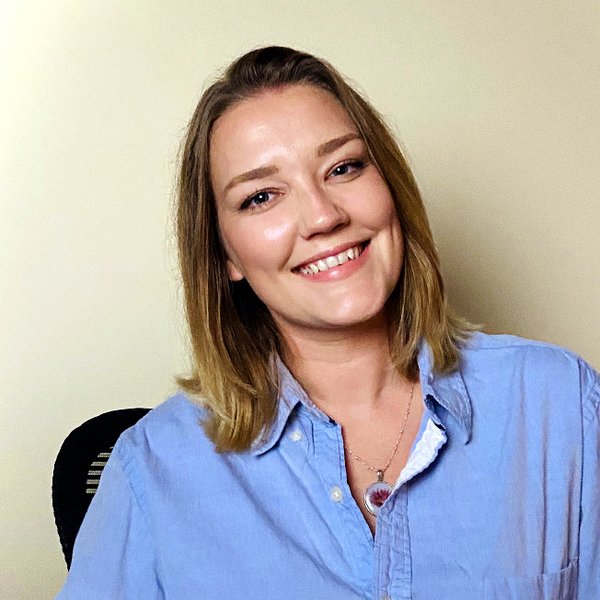
Master’s Degree of Foreign Languages, Concentration in English and French. Minor in Theatre & Choreography. PHD of Linguistics and Literary Criticism & Comparative Linguistics.
Russian Language Teacher, Dialect Coach, Translator, ESL Teacher. 10+ years of experience.
Personally vetted · Strommen’s note
A Russian dialect coach, translator, and teacher rolled into one, Anastasia has ten-plus years in and treats English and Russian as one connected skill set.
Specialties
Master’s Degree of Foreign Languages, Concentration in English and French. Minor in Theatre & Choreography. PHD of Linguistics and Literary Criticism & Comparative Linguistics.
Russian Language Teacher, Dialect Coach, Translator, ESL Teacher. 10+ years of experience.
Specialties
Personally vetted · Strommen’s note
A Russian dialect coach, translator, and teacher rolled into one, Anastasia has ten-plus years in and treats English and Russian as one connected skill set.
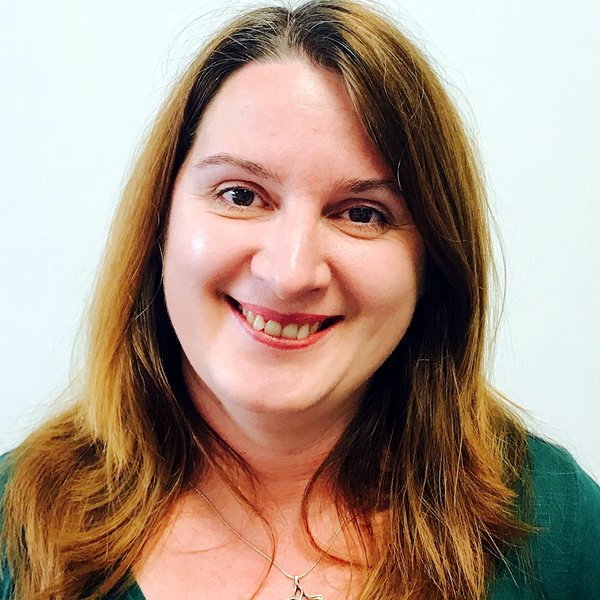
MA in teaching International Culture and History
Russian teacher with MA in teaching International Culture and History - Experienced Russian Tutor in Mar Vista, CA
Personally vetted · Strommen’s note
Maria holds an MA in international culture and history and is based in Mar Vista. She custom-builds Russian curriculum around group dynamics as much as level.
Specialties
MA in teaching International Culture and History
Russian teacher with MA in teaching International Culture and History - Experienced Russian Tutor in Mar Vista, CA
Specialties
Personally vetted · Strommen’s note
Maria holds an MA in international culture and history and is based in Mar Vista. She custom-builds Russian curriculum around group dynamics as much as level.

Masters degree
Study hard - Get Results
Personally vetted · Strommen’s note
Teaching Russian out of Osogbo, Nigeria, Iyanu starts every lesson by gauging exactly where a student's level actually sits.
Specialties
Also speaks: English
Masters degree
Study hard - Get Results
Specialties
I also speak: English
Personally vetted · Strommen’s note
Teaching Russian out of Osogbo, Nigeria, Iyanu starts every lesson by gauging exactly where a student's level actually sits.
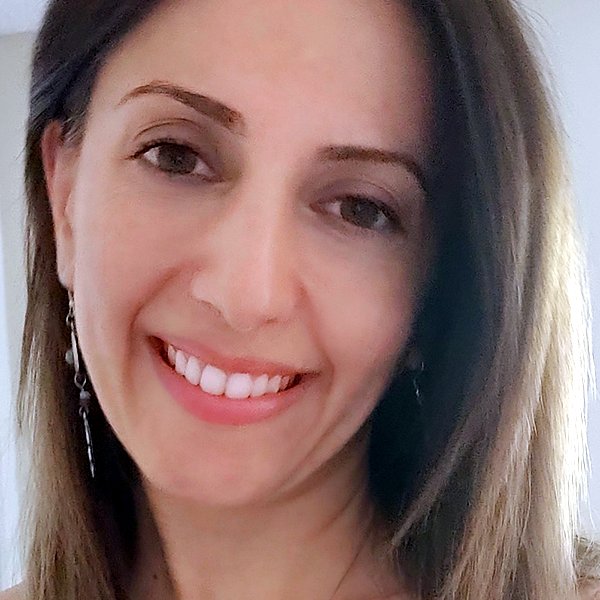


BA and MA in Arabic Studies, PhD in Philology (Arabic & Hebrew Studies)
Polyglot tutor with 15 years’ experience in Armenian, Arabic, Hebrew, and Russian
Personally vetted · Strommen’s note
Alvina holds a BA and MA in Arabic Studies and has spent fifteen years teaching Arabic, Hebrew, Russian, and Armenian, genuinely rare range in one tutor.
Specialties
BA and MA in Arabic Studies, PhD in Philology (Arabic & Hebrew Studies)
Polyglot tutor with 15 years’ experience in Armenian, Arabic, Hebrew, and Russian
Specialties
Personally vetted · Strommen’s note
Alvina holds a BA and MA in Arabic Studies and has spent fifteen years teaching Arabic, Hebrew, Russian, and Armenian, genuinely rare range in one tutor.

Masters in Linguistics · Masters in Linguistics, PFUR, Moscow, Russia, 2001
Native Russian Tutor with Over 20 Years of Experience
Personally vetted · Strommen’s note
A Russian native with a linguistics master's and more than twenty years teaching, Katya won't rush a student past where they're actually ready.
Specialties
Masters in Linguistics · Masters in Linguistics, PFUR, Moscow, Russia, 2001
Native Russian Tutor with Over 20 Years of Experience
Specialties
Personally vetted · Strommen’s note
A Russian native with a linguistics master's and more than twenty years teaching, Katya won't rush a student past where they're actually ready.

Путешествие — travel essentials
5 things a traveler to Russia actually needs to know
These are not vocabulary lists. They are the cultural defaults and small habits that decide how a foreign visitor is received in Moscow and St. Petersburg. Save the card and book a tutor to drill the language that goes with each.
-
01
Cyrillic-decoding for signs and menus
The Russian alphabet has 33 letters, is phonetic, and most travelers can decode it for reading within two weeks of light practice. A focused travel-prep student walks out of two lessons able to read metro stations, basic menu items, and street signs. The catch is the false-friend letters: Р is rolled R not P, Н is N not H, В is V not B, С is S not C, Х is the back-of-throat "loch" sound not X, У is OO not Y. Reading Russian as transliterated English produces wrong-station errors.
e.g. Метро (metro), Аэропорт (aeroport), Ресторан (restaurant), Кафе (cafe), Туалет (toilet), Музей (museum)
-
02
Moscow metro stations (Комсомольская, Маяковская)
The Moscow metro is genuinely one of the wonders of the world for a traveler: fast, frequent, inexpensive, beautiful, and densely networked. A traveler who can read Комсомольская (Komsomolskaya, baroque station serving all three of Moscow's major train stations), Площадь Революции (Ploshchad Revolyutsii, with bronze sculptures travelers rub for luck), Маяковская (Mayakovskaya, art deco masterpiece), and a few dozen other central stations navigates the system smoothly. The Yandex Metro app is a useful backup.
e.g. Reading the directional signs at the Komsomolskaya transfer: knowing which platform serves the Sokolnicheskaya (red) line vs the Koltsevaya (brown circle) line requires basic Cyrillic literacy
-
03
Stolovaya (столовая) cafeterias
Self-service cafeterias descended from the Soviet workplace canteen tradition, now widely available in cities as the affordable lunch alternative to restaurants. Take a tray, point at what you want (the food is laid out in front of you, which solves the menu-reading problem), pay at the register, eat at a long shared table. Food is simple homey Russian (borshch, pelmeni, blini, kasha) at dramatically cheaper prices than tourist restaurants. Му-Му and Грабли are reliable chains.
e.g. Lunch at a Moscow stolovaya: borshch + pelmeni + tea costs roughly 400-600 rubles ($5-8), takes 15 minutes, requires almost no Russian beyond pointing and saying spasibo
-
04
Spasibo + tipping culture
Russian restaurants typically expect a 10 percent tip, often added to the bill as "service." Cabs do not require tipping (round up if you wish). Hotel staff receive small tips of 50-200 rubles. Tour guides receive larger tips proportional to the tour. Saying spasibo (thank you) after any service interaction is the basic courtesy any language reads, and is appreciated.
e.g. Bill at a Moscow cafe: 1200 rubles for two coffees and two pastries. Standard tip would be 120-150 rubles in cash, with spasibo to the server on the way out.
-
05
Not smiling at strangers as cultural norm
The American baseline of smiling reflexively at strangers as a basic social signal reads as foreign or unsettling to Russians. The Russian social rule is that smiles are for situations that genuinely call for them: a real moment of warmth, a successful joke, a genuine pleasure. Travelers adjust by simply not performing the baseline smile and letting genuine smiles emerge for genuine moments. This is not unfriendliness; it is a different convention about what smiles mean.
e.g. On the Moscow metro, the American instinct to make brief eye contact and smile at strangers reads as odd; the Russian convention is composed neutrality, with smiles reserved for actual moments of connection
About Russian for Travel
Russian for the trip, not the textbook
Russian for Travel is its own kind of preparation. A traveler does not need to master the six grammatical cases, the perfective-imperfective verb aspect distinction, or the verbs of motion that drive intermediate Russian students into months of work. A traveler needs to land at Sheremetyevo or Pulkovo and get through passport control, decode enough Cyrillic to read the metro station names and the menu at a stolovaya cafeteria, navigate the Moscow metro (one of the most beautiful and most-used subway systems in the world), order a coffee at a cafe without freezing on the polite formula, manage cash and card payments in cities that still use a meaningful amount of physical rubles, and read the social cues around tipping, not smiling at strangers, and accepting hospitality. The grammar a traveler needs is a small subset of the standard beginner syllabus. The vocabulary is highly situational. The cultural register is non-negotiable and concrete. A tutor who teaches Russian for travel teaches that subset deliberately rather than running a tourist through an academic course they will not finish.
The first honest thing worth saying is about Cyrillic. The Russian alphabet is the gateway question every prospective traveler asks, and the answer is mostly reassuring. Cyrillic has 33 letters, the script is phonetic, several letters look or sound like their Latin counterparts (А, К, М, О, Т), and most beginners can decode the script for reading at a basic level within two weeks of light practice. A focused travel-prep student dedicates the first two lessons to Cyrillic and walks out of them able to read metro station names, basic menu items, and street signs. The script is not the hard part. The harder part is the false-friend letters: Р is rolled R, not P; Н is N, not H; В is V, not B; С is S, not C; Х is the back-of-the-throat sound in Scottish "loch," not X; У is OO, not Y. A traveler who reads Russian as if it were transliterated English misreads Метро (metro) as something English-looking and ends up at the wrong station. A tutor walks through the false-friend set in the first lesson and drills them until the misreading instinct is corrected.
Moscow Metro Cyrillic deserves its own paragraph because the Moscow metro is genuinely one of the wonders of the world for a traveler, and a small amount of Cyrillic literacy unlocks it dramatically. The metro is fast, frequent, inexpensive, beautiful (the older stations were built as showcases of Soviet architecture and feature mosaics, sculpture, and chandeliers), and densely networked. Station names are signed in Cyrillic and (in most central stations) also in Latin transliteration, but the directional signage inside the stations and the platform announcements rely on knowing the next station name in Cyrillic. A traveler who can read Комсомольская (Komsomolskaya, the famously baroque station at the three-station Komsomolskaya square that serves all three of Moscow's major train stations), Площадь Революции (Ploshchad Revolyutsii, with its bronze sculptures travelers rub for luck), Маяковская (Mayakovskaya, an art deco masterpiece), Новослободская (Novoslobodskaya, with stained-glass panels), and a few dozen other central stations navigates the system smoothly. A traveler who cannot will spend hours misreading routes and standing on the wrong platform. The Moscow Metro app (Яндекс Метро) is available in English and is a useful backup, but the Cyrillic literacy is what makes the system feel intuitive rather than baffling.
The stolovaya tradition is the second piece worth knowing in advance, because it is one of the most useful and most overlooked travel-Russian features. A столовая (stolovaya) is a self-service cafeteria, descended from the Soviet workplace canteen tradition but now widely available in cities as an affordable alternative to restaurants. You take a tray, point at what you want (the food is laid out in front of you, which solves the menu-reading problem), pay at the register, and eat at a long shared table. The food is simple, homey Russian: borshch, pelmeni, blini, beef stroganoff, kasha, salads with mayonnaise, compote. The pricing is dramatically cheaper than tourist restaurants (a full meal often costs the equivalent of $5 to $10), the experience is genuinely local, and the language demand is low because pointing solves most of the interaction. Travel-focused tutors brief students on the stolovaya tradition because it is the answer to the question "where do I eat lunch in Moscow without spending tourist prices or struggling with a menu I cannot read." Му-Му and Грабли are two well-known chains that travelers find reliable.
The spasibo-plus-tip culture is the third piece, and it matters because Russian tipping conventions differ from American defaults. Russian restaurants typically expect a 10 percent tip, often added to the bill automatically as "service" or noted on the menu. Cabs do not require tipping (round up the fare if you wish). Hotel staff (porters, housekeeping) receive small tips of 50 to 200 rubles. Tour guides receive larger tips proportional to the length and quality of the tour. Saying spasibo (thank you) is appropriate after almost any service interaction and is read as the basic courtesy it is in any language. The harder convention is the Russian practice of not smiling reflexively at strangers, which Americans tend to do as a baseline social signal and which Russians read as either insincere or slightly off. The Russian social rule is roughly that smiles are for situations that genuinely call for them: a real moment of warmth, a successful joke, a genuine pleasure. The American baseline smile-at-strangers habit reads as foreign at best and unsettling at worst. Travelers can adjust by simply not performing the baseline smile and letting genuine smiles emerge for genuine moments.
Moscow-vs-St-Petersburg traveler culture has real distinctions worth noting. Moscow is the larger, faster, more aggressive city, with the Kremlin, Red Square, the major federal museums (Tretyakov Gallery, Pushkin Museum of Fine Arts), the financial district, and the dense business culture. Moscow traveler vibe is bigger and more transactional; service is direct, the pace is rapid, and the scale of everything is overwhelming. St. Petersburg is the cultural and intellectual capital, with the Hermitage (one of the largest and most important art museums in the world), the Russian Museum, the Mariinsky Theatre, and the canals and palaces of the historic center that earn the city its reputation as the Venice of the North. St. Petersburg traveler vibe is slower, more intellectual, more relational; service is softer, the pace is closer to a continental European capital, and the scale is more human. Both cities reward a traveler who has done basic Russian-language preparation, and both are dramatically friendlier when you can read enough Cyrillic to navigate independently.
A word on cash and card payments. Russia retains a meaningful cash culture even as card and mobile payments have spread, particularly in markets, smaller restaurants, taxis, and the stolovaya cafeterias. Foreign Visa and Mastercard generally work at hotels, large restaurants, and major retailers, though sanctions-related card-processing issues have affected foreign-card acceptance at certain points (verify current conditions before you fly). Cash withdrawal from ATMs is widely available, with major bank ATMs (Sberbank, VTB, Alfa Bank) generally working with foreign cards. The Russian ruble (RUB) is the currency; tipping and small transactions almost always happen in cash. A traveler should arrive with some rubles already exchanged or withdraw on arrival and carry small denominations for daily use.
Most travelers who book Russian for travel lessons are heading to Moscow, St. Petersburg, or both within a few weeks or months and want a focused short course rather than a year of language study. A tutor builds the lesson plan around the trip itself: what cities, what arrangements, what kind of accommodation, whether the traveler is solo or with a Russian-speaking host, whether there is a family meal or a museum-heavy itinerary on the agenda. A four-day Moscow stopover is a different lesson plan from a two-week Moscow-St. Petersburg loop, which differs again from a longer trip extending to the Golden Ring towns or further afield. The tutor calibrates and prioritizes accordingly. For students whose interest in Russia extends past the trip, the path opens into our conversational Russian work, the broader Russian classes, and the Russian for Beginners roster for students starting a longer-term study path.
Our Russian for Travel tutors include native speakers from Moscow, St. Petersburg, and other Russian cities, alongside longtime bilingual teachers who have walked many travelers through exactly this short course. They know which phrases matter, which can be skipped, and how to teach Cyrillic fast enough to be useful for the trip without overpromising what a traveler will retain. Bring your travel dates and any specific situations you want to be ready for, and the tutor will structure the lesson plan from there.
What you'll cover
Lessons & classes tailored to Russian for Travel
Cyrillic fast enough to be useful on day one
The Russian alphabet is 33 letters, phonetic, and learnable for reading within two weeks of light practice. Travel-focused lessons teach Cyrillic as a recognition skill first: enough to read metro station names, restaurant categories, street signs, and major signage at the airport, the cafe, and the hotel. Particular attention to the false-friend letters (Р, Н, В, С, Х, У) that English speakers consistently misread. Fluency in reading comes later; functional recognition arrives quickly.
Survival phrases and the polite Vy register
Lessons drill the small set of high-frequency travel phrases: Здравствуйте (hello), Спасибо (thank you), Пожалуйста (please / you're welcome), Извините (excuse me), Я не понимаю (I don't understand), Где находится... (where is...), Сколько стоит (how much), and the request structure with пожалуйста attached. The polite Vy form is the universal default in any travel context (with strangers, with service staff, with elders), because Russian encodes formality grammatically and using the casual ty with a stranger reads as undertrained.
Moscow metro, stolovaya, and on-the-ground systems
The lesson plan tracks the actual situations a Russia traveler hits: navigating the Moscow metro (one of the wonders of the world for travelers who can read enough Cyrillic), the stolovaya cafeteria tradition (affordable, point-and-pay, dramatically cheaper than restaurants), the cash-plus-card payment culture, the tipping conventions (10 percent at restaurants, small tips for hotel staff), and the major museums and cultural institutions (the Hermitage in St. Petersburg, the Kremlin and Tretyakov Gallery in Moscow). Phrases are taught in context rather than as lists.
Calibrated to the actual trip
A four-day Moscow stopover is a different lesson plan from a two-week Moscow-St. Petersburg loop, which differs again from a longer trip extending to the Golden Ring or further afield. The tutor asks at the trial what the trip looks like (cities, length, type of accommodation, solo vs hosted, museum-heavy vs business-mixed) and structures the work from there. For students who decide to continue Russian past the trip, the path opens into our conversational Russian tutors, the broader Russian classes, or the Russian for Beginners roster.
FAQ
About Russian for Travel lessons & classes
Do I really need to learn Cyrillic for a short trip to Russia?
Strongly recommended, and easier than people expect. The Russian alphabet has 33 letters, is phonetic, and most travelers can decode it for reading within two weeks of light practice. A focused traveler walks out of two lessons able to read metro station names, basic menu items, and street signs. Major attractions and central metro stations have Latin transliteration alongside Cyrillic, but the directional signage inside metro stations relies on knowing the next station name in Cyrillic, and a traveler who cannot read it spends hours misreading routes. The script is the unlock for the entire trip.
Is the Moscow metro really navigable for a non-Russian-speaking visitor?
Yes, with two caveats. The metro is fast, frequent, inexpensive, and beautiful (the older stations are showcases of Soviet architecture), and the major central stations are signed in both Cyrillic and Latin transliteration. The caveats: directional signage on the platforms relies on knowing the next station name in Cyrillic, and the platform announcements are in Russian only. Travelers who can read basic Cyrillic navigate the system smoothly. The Yandex Metro app (available in English) is a useful backup, but Cyrillic literacy is what makes the system feel intuitive rather than baffling.
What's a stolovaya, and why does everyone recommend them?
A столовая (stolovaya) is a self-service cafeteria descended from the Soviet workplace canteen tradition, now widely available in Russian cities as the affordable lunch alternative to restaurants. Take a tray, point at what you want (the food is laid out in front of you, which solves the menu-reading problem), pay at the register, eat at a long shared table. Food is simple Russian (borshch, pelmeni, blini, kasha) at roughly $5-10 per full meal vs $30+ at tourist restaurants. Му-Му and Грабли are reliable chains. The language demand is low because pointing solves most of the interaction.
How does tipping work in Russia?
Restaurants typically expect a 10 percent tip, often added to the bill automatically as "service" or noted on the menu. Cabs do not require tipping (round up the fare if you wish). Hotel staff (porters, housekeeping) receive small tips of 50 to 200 rubles. Tour guides receive larger tips proportional to the length and quality of the tour. Saying spasibo after any service interaction is the basic courtesy any language reads, and is appreciated. Tipping in cash is the dominant convention even when the bill is paid by card.
Why do Russians not smile at strangers? Is it unfriendly?
Not unfriendly, just a different convention. The American baseline of smiling reflexively at strangers reads as either insincere or slightly off to Russians. The Russian social rule is that smiles are for situations that genuinely call for them: a real moment of warmth, a successful joke, a genuine pleasure. Travelers can adjust by simply not performing the baseline smile and letting genuine smiles emerge for genuine moments. Russians can be enormously warm in genuine interactions and noticeably composed in the casual ones, and the contrast is the convention rather than coldness.
What's the difference between Moscow and St. Petersburg for a traveler?
Moscow is the larger, faster, more aggressive city: the Kremlin, Red Square, the major federal museums, the financial district, the dense business culture. The Moscow traveler vibe is bigger and more transactional; service is direct, the pace is rapid, the scale is overwhelming. St. Petersburg is the cultural and intellectual capital: the Hermitage, the Russian Museum, the Mariinsky Theatre, the canals and palaces of the historic center. The St. Petersburg vibe is slower, more intellectual, more relational; service is softer, the pace is closer to a continental European capital. Both reward basic Russian-language preparation.
How long before my trip should I start lessons?
Six to ten weeks of focused lessons covers most travel needs for a one or two week trip, assuming one or two lessons a week plus a small amount of self-study between (especially for Cyrillic drilling, which rewards short daily practice over long weekly sessions). A four-week sprint is possible for an absolute essentials build (Cyrillic, survival phrases, metro vocabulary, restaurant ordering) and still pays off. Less than three weeks tends to leave the learner with phrases rather than the confidence to use them, though even that beats arriving with nothing.
Can I take travel Russian lessons online?
Yes. Most of our travel Russian tutors teach online via Zoom or Jitsi worldwide, which fits this specialty well since travelers are often booking from outside Los Angeles in the weeks leading up to a trip. Several tutors also teach in person around LA for students who prefer the format. The booking widget on each tutor profile shows available formats. Online lessons work especially well for travel prep because the tutor can share their screen to walk through your actual itinerary, hotel confirmations, and the Yandex Metro app routes.
Ready for Russian for Travel lessons or classes?
Book a free 30-minute trial with one of our personally vetted tutors. Private lessons or small-group classes — your choice.