



Personally vetted instructors
CILS A2 tutors, lessons & classes
Ciao The first word most A2 candidates already know, and the right register for early lessons.
Personally vetted CILS A2 prep tutors. Lessons calibrated to the everyday-transactions Italian the Siena rubric actually scores at A2, including the <em>Integrazione</em> variant used for permits of stay and family-reunification residency.

Your instructors
CILS A2 tutors for private lessons & classes
Strommen has prepped CILS A2 candidates across the family-reunification track, the permit-of-stay track, and the retirement-heritage track. Most students arrive with a target exam date and an honest sense of where their Italian sits. Every tutor below was met and vetted by us in person or via thorough video interview. No marketplace. No automated profile-creation. Real teachers who know what A2 actually asks for.
Filter by location, age, or price. Then book a 30-minute free trial.
Below are the Strommen tutors who prep candidates for the CILS A2. Photos, ratings, and rates are real. Click any card to read their bio and book a free 30-minute trial.
I want to learn…
Every tutor, personally met. — founder-vetted since 2006, in Los Angeles and online worldwide.
Get a personalized plan
Pick your language — a language advisor will match you with the right tutor and map out your path.


Psychology · N/A
Expert Native Italian Tutor | Personalized Lessons | Learn Italian with confidence, clarity, and authentic conversation
Specialties
Also speaks: French, Japanese, Russian, Welsh
Psychology · N/A
Expert Native Italian Tutor | Personalized Lessons | Learn Italian with confidence, clarity, and authentic conversation
Specialties
I also speak: French, Japanese, Russian, Welsh
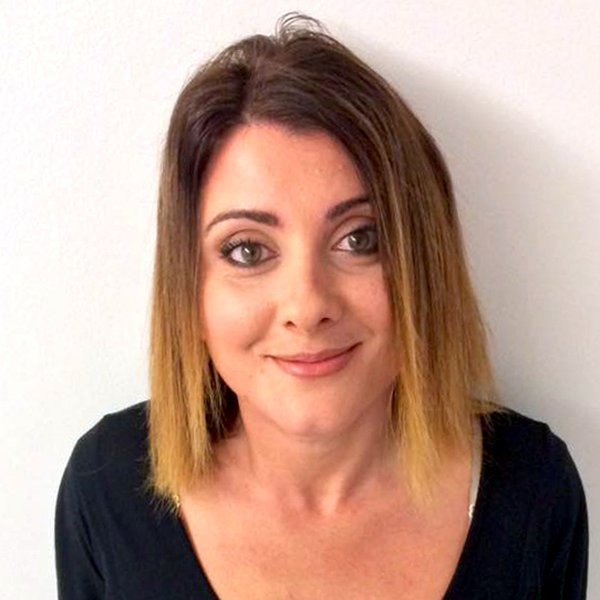

I have a degree in "Media and Journalism" from the Faculty of Political Science in Florence.I have obtained several certificates of suitability for teaching the Italian language L2/Ls to foreigners, and as administrator of the CILS exams (of all levels... · The certificate of suitability for teaching the Italian language L2/Ls to foreigners was issued by DILIT International House in Rome after being admitted through an initial test and passing the various stages of the training.
Learn Italian with confidence, clarity, and real-world results.
Personally vetted · Strommen’s note
Federica covers every CILS certification level from A2 to C2 in her Italian lessons, out of Barcelona, with Sicilian dialect and opera-singer coaching too.
Specialties
Also speaks: English, Spanish
I have a degree in "Media and Journalism" from the Faculty of Political Science in Florence.I have obtained several certificates of suitability for teaching the Italian language L2/Ls to foreigners, and as administrator of the CILS exams (of all levels... · The certificate of suitability for teaching the Italian language L2/Ls to foreigners was issued by DILIT International House in Rome after being admitted through an initial test and passing the various stages of the training.
Learn Italian with confidence, clarity, and real-world results.
Specialties
I also speak: English, Spanish
Personally vetted · Strommen’s note
Federica covers every CILS certification level from A2 to C2 in her Italian lessons, out of Barcelona, with Sicilian dialect and opera-singer coaching too.

Vita quotidiana — culture & daily life
5 everyday CILS A2 essentials worth drilling
These are the small language moves that show up in the A2 role-play and the writing prompt, drawn from real Italian daily life. Screenshot the infographic, then book a tutor to drill the rest.
-
01
Preposizioni articolate
The merging of prepositions with articles: a + il = al, a + la = alla, di + il = del, in + le = nelle. No English analog. The single largest source of lost points in the A2 grammar section. Tutors drill these until they come without thinking, in writing and in speech.
e.g. Vado al mercato, compro del pane, lo metto nella borsa.
-
02
Passato prossimo: essere o avere
Choosing the right auxiliary for the past: verbs of movement, change of state, and reflexives take essere; transitive verbs and most others take avere. Plus the past-participle agreement with essere (è andata, siamo arrivati). The A2 writing and speaking sections both score on this.
e.g. Ieri sono andata al mercato e ho comprato la frutta.
-
03
Fare la spesa vs fare spese
Two everyday phrases that look almost identical and mean different things. Fare la spesa = grocery shopping for daily food. Fare spese = going shopping, often for clothes or non-food items. Tourist phrasebooks routinely swap them. The A2 reading section has used the distinction in past papers.
e.g. Sabato faccio la spesa al supermercato; domenica vado in centro a fare spese.
-
04
Buongiorno, Buonasera, Buonanotte
The three time-of-day greetings, used differently than English assumes. Buongiorno covers morning through early afternoon. Buonasera kicks in around 4 or 5 PM and continues into the evening. Buonanotte is goodnight, only when one of you is going to sleep, not as an evening greeting. The A2 role-play often opens with one of these and a candidate using the wrong one signals foreign.
e.g. Entri in un negozio alle sette di sera: "Buonasera!" Non "Buongiorno."
-
05
Mi può aiutare?
The polite formal-register request that opens most transactional Italian. Mi può aiutare? = could you help me? Pairs with the Lei form throughout: Può, not puoi; mi dica, not dimmi. The A2 speaking role-play scores explicitly on holding formal register when the situation calls for it (asking a stranger, asking at a counter, asking a receptionist).
e.g. Mi scusi, mi può aiutare? Cerco la stazione.
About CILS A2
Italian for the first certificate
CILS A2 is the second of the six CEFR-aligned levels issued by the Università per Stranieri di Siena, sitting between the entry-level A1 and the substantive B1. The A2 candidate is asked to handle everyday transactions in Italian: introduce themselves and their family, read a short notice or sign, write a brief personal letter or message, ask for directions, order food, call about a service, and hold a short guided exchange with the examiner. The level matters in real-world Italian life beyond test preparation. CILS A2 is the language requirement for many permits of stay (permessi di soggiorno), it appears in family-reunification visa cases, and an A2 Integrazione variant exists specifically for migration-tier residency renewals and integration agreements with Italian Prefectures. For non-EU citizens applying for Italian citizenship by residency, the higher B1 Cittadinanza is the cleaner pathway. A2 sits below that bar but inside the same Siena rubric, so the prep work transfers directly when candidates step up later. Students looking for the broader Italian program our tutors teach can start at our main Italian page.
The exam structure follows the same five-section pattern as every other CILS level. Ascolto tests listening through short authentic audio: a phone message, a brief announcement, a short conversation, with multiple-choice or fill-in answers. Comprensione della lettura tests reading through short texts that mirror everyday material: notices, signs, simple articles, brief personal letters. Analisi delle strutture di comunicazione tests the grammar and lexis through structured exercises focused on the A2-level grammar floor: present and past tenses (passato prossimo and imperfetto), regular and common irregular verbs, prepositions of place and time, possessives, the most common pronouns, and the lexical groupings tied to family, daily routine, food, weather, travel, and work. Produzione scritta asks for a short personal text, usually a postcard, a short email, or a brief description, with a soft word count around 60-90 words. Produzione orale is a guided conversation with the examiner covering personal information and one or two everyday topics, followed by a short role-play of the kind of transaction A2 expects (booking a hotel room, asking about a train ticket, explaining a small problem in a shop). The whole exam runs roughly two hours including the listening audio. The fee at the Siena center is around €100; overseas authorized centers set their own modestly higher price. Verify the current calendar and fees at cils.unistrasi.it before registering.
The per-section pass model is the structural detail most A2 candidates need to understand before they start prep. Each of the five sections has its own minimum score. The candidate has to clear the minimum in every section to walk away with sufficiente. A weak score in one section produces insufficiente regardless of how strong the other four are. The benefit of the per-section model: if a candidate fails only one section, they can repay and re-sit only that module within an eighteen-month window rather than the entire exam. The implication for prep: a serious A2 plan diagnoses every section in week one, not the weaker block.
The A2 candidate profile at Strommen is wider than people assume. The largest group is adults preparing for the language requirement on an Italian permit of stay, a family-reunification visa, or an integration agreement with a Prefecture. The second-largest group is older adults, often ages 65 and up, learning Italian after retirement to reconnect with family heritage or to make a planned move to Italy realistic. A2 is a realistic target for both groups: it is the first level where the candidate can handle real-world Italian situations in writing and in speech, and it is reachable in roughly three to four months of consistent weekly lessons from a beginner start. Beyond migration purposes, A2 is also commonly chosen by heritage learners as a structured first credential before continuing toward B1 or B2, by spouses of Italian citizens preparing for visa interviews, and by working adults whose company has an Italian-language requirement at an entry tier.
A few honest tutor observations on what trips up A2 candidates most often. Articoli e preposizioni articolate are the biggest single source of lost points: al, alla, allo, ai, agli, alle, del, della, dello, dei, degli, delle, nel, nella, all the way through. The merging of articles with prepositions has no English analog, and candidates who guess at random in the grammar section forfeit easy points. Passato prossimo auxiliary choice is the next stumble: which verbs take essere (mostly verbs of movement, change of state, and reflexives) and which take avere (transitive verbs and most others), plus the agreement of the past participle with essere. This is drilled relentlessly because it appears in writing, in speaking, and in the grammar block. Reflexive verbs are the third recurring issue, both the pronoun placement and the auxiliary in the past. The fourth: gender for nouns ending in -e, which can be masculine or feminine and have to be memorized one by one (il ponte, la chiave, il fiume, la nave). The fifth, and the one that catches confident adult learners off guard: the speaking role-play tends to ask for short, specific, practical Italian ("ask the receptionist to change rooms because the air conditioner is broken") and not for general conversation. Candidates who prepare only for fluid chat about themselves get tongue-tied when the prompt demands a real transactional request.
How tutors prep CILS A2. Most first lessons are a placement diagnostic. The tutor administers a past A2 sample paper, scores every section against the Siena rubric, and identifies which section is the weakest. From there, lessons rebalance toward that section while keeping the others sharp. Listening uses A2-appropriate audio at native pace: RAI Radio Uno short news segments, RaiPlay Sound at the slower podcast end, dialogues from the official sample-paper archive. Reading uses real A2-level Italian: short notices, simple articles from News in Slow Italian for the early weeks, then graduating to short pieces from La Repubblica's Cronaca section. Grammar runs through structured exercises focused on the A2 floor: tenses, prepositions, articles, common irregular verbs, the basic pronoun system. Writing drills are real timed compositions on past A2 prompts: a postcard from a vacation, a short email about a problem, a brief description of a family member. Speaking is rehearsed as full mock interviews, recorded and reviewed for register, pacing, and the specific transactional Italian the role-play demands. Closer to exam date, lessons shift to full timed mock papers. A reasonable arc is three to four months for an absolute-beginner-to-A2 jump at two lessons per week with steady self-study, or eight to ten weeks for an existing conversational learner upgrading to a certified A2.
Between lessons, immerse with A2-appropriate Italian media. News in Slow Italian is the standard companion for the first weeks. RaiPlay Sound's podcast directory has slower-paced content suited to A2 listening (avoid the hard-news bulletins at native speed early on). Italian short-form video from RAI's Cultura channel and from RaiPlay's children-and-family section sit at an A2-friendly register. Books for A2-level reading: the Almaedizioni Italiano facile graded readers are the standard tutor recommendation; Penguin Parallel Texts (Italian-English short stories) are useful for self-study. Our 1,000 most common Italian words list covers the vocabulary floor that A2 demands. The official CILS sample-paper archive at the Siena website has past A2 listening audio with answer keys; drill these directly. The best Italian textbooks post inventories the A1/A2 textbook options tutors lean on (Nuovo Espresso 1, Nuovo Contatto A1-A2, Affresco Italiano A1).
The Strommen CILS A2 roster includes native Italian teachers patient with adult beginners, retired teachers used to working with older heritage learners, and Italian-American bilinguals who can teach in person in Los Angeles or remotely worldwide. Several tutors specialize in the family-reunification and permit-of-stay context and can talk through the practical paperwork side alongside the language work; others lean toward the older-adult heritage track, with a slower pace and a steadier review cycle. Each tutor's bio specifies which candidate profiles they fit best. Match yourself to a teacher whose pace and approach suit you. For broader Italian foundations alongside CILS A2 prep, our CILS overview, Italian for Kids, and general Italian specialty pages cover related programs. Browse the tutor list, find a bio that matches your situation, and book the trial.
What you'll cover
Lessons & classes tailored to CILS A2
A2 diagnostic and structured prep plan
Your first lesson is usually a diagnostic against a past CILS A2 sample paper from the Università per Stranieri di Siena archive. The tutor scores every section (ascolto, comprensione della lettura, analisi delle strutture di comunicazione, produzione scritta, produzione orale) against the official rubric and identifies the weakest section. Because CILS uses a per-section floor, that weak section determines the whole result. Subsequent lessons rebalance toward it while keeping the others sharp.
Grammar floor: tenses, prepositions, pronouns
The A2 grammar block has a predictable footprint: passato prossimo and imperfetto, regular and common irregular verbs, preposizioni articolate, possessives, basic direct- and indirect-object pronouns, gender and number agreement. Drilled with structured exercises and written reinforcement until accuracy moves from guess to instinct. The grammar block is the easiest place to lock in points if the drilling is consistent.
Writing and speaking for everyday transactions
A2 writing is short and concrete: a postcard, a brief email, a short description. Lessons drill real past prompts under timer pressure. A2 speaking is a guided conversation plus a transactional role-play (book a hotel room, ask about a service, explain a small problem). Rehearsed as full mock interviews, recorded and reviewed for register (formal Lei when the situation calls for it), pacing, and the practical specificity the role-play actually scores.
Family-reunification, permit-of-stay, and heritage tracks
A2 candidates come to Strommen with three main goals: language requirements on permits of stay or family-reunification visas, structured first-credential prep before continuing toward B1 or B2, and heritage-track Italian for older adults reconnecting with family roots. Lessons calibrate to your specific path. The tutor will talk through how the A2 fits the documentation you actually need, not a generic curriculum.
FAQ
About CILS A2 lessons & classes
Is CILS A2 the same as the A2 <em>Integrazione</em>?
Closely related but not identical. The standard CILS A2 is the second of the six main CEFR-level diplomas. The A2 Integrazione is a variant tailored specifically for the integration agreement (accordo di integrazione) that Italian Prefectures require for certain permit-of-stay renewals, and it focuses more sharply on the practical situations a new migrant actually meets: forms, services, healthcare, schooling, work documents. The pass threshold uses the same per-section model. If your goal is a permit of stay or integration-agreement compliance, the Integrazione variant is typically what you need; if your goal is a structured first language credential or a step toward B1, the standard A2 is the better fit. Confirm which variant your situation requires with the receiving authority before registering.
Do I need to live in Italy before I can sit the CILS A2?
No. The Università per Stranieri di Siena runs a global network of authorized centers, including Italian cultural institutes in major US cities, partner universities, and language schools across Europe, Latin America, and Asia. You can sit CILS A2 in your home country before any move to Italy. For family-reunification or permit-of-stay purposes, sitting the exam in advance and arriving with the diploma in hand is often the cleanest paperwork path. Verify your nearest authorized center at cils.unistrasi.it.
How long does it take to prepare for CILS A2 from zero?
From an absolute-beginner start, roughly three to four months at two lessons per week plus consistent self-study between lessons is a realistic arc to a confident A2. For learners with some prior Italian exposure (heritage background, a year of school Italian, prior travel-language work), six to eight weeks of focused weekly lessons is often enough. The trial lesson includes a diagnostic so the tutor can give you an honest timeline based on where your Italian actually sits today.
I'm 65+ and learning Italian for the first time. Is A2 realistic?
Yes, and this is one of the most common candidate profiles on the A2 track at Strommen. Older adults often prepare for A2 to support a planned move to Italy, to qualify for a family-reunification process, or to reconnect with heritage. Several of our tutors specialize in older-learner pacing: slower introduction of new material, more review cycles, more time on listening comprehension (often the hardest section for adult learners), and patient pronunciation work. The free trial includes time to talk through what kind of pace and approach fits you.
What if my native language is not English or a Romance language?
The CILS exam is administered entirely in Italian; the candidate's native language doesn't change the test or the rubric. Speakers of Romance languages (Spanish, French, Portuguese, Romanian) typically reach A2 faster because of vocabulary cognates and structural similarities. Speakers of languages further from Italian (Arabic, Mandarin, Russian, Tagalog, Vietnamese) often need a slightly longer prep arc, especially on listening and pronunciation, but the rubric expectations are the same and many of our tutors are experienced with non-Romance native speakers. The trial includes time to discuss what kind of prep cadence suits your linguistic starting point.
How is the A2 reading section actually scored?
Comprensione della lettura presents short Italian texts (a notice, a sign, a brief article, a personal letter) followed by comprehension questions in multiple-choice or true/false format. Each correct answer contributes to a section score, and the section has its own minimum pass threshold. The rubric scores comprehension specifically, not vocabulary in isolation, so candidates who can extract the gist of a text and answer questions about it correctly do better than candidates who try to translate every word. Tutors drill the read-for-gist habit explicitly because it directly improves the score.
What's the difference between CILS A2 and the A2 level on CELI or PLIDA?
All three are state-recognized Italian exams aligned to the CEFR at the same A2 level. The differences are the issuing body, the testing format, and the recognition footprint. CILS is issued by the Università per Stranieri di Siena. CELI is issued by the Università per Stranieri di Perugia. PLIDA is issued by the Società Dante Alighieri. The four-skill content is similar but the question formats and the rubric details differ. Sit whichever exam the receiving institution (your visa pathway, your employer, your university) names; if they accept any of the three, CILS is the most commonly available through international centers.
Can I take CILS A2 prep lessons online?
Yes. Most of our CILS A2 tutors prep students entirely online via Zoom or Jitsi, which works well for A2-level material: timed writing drills with shared screens, recorded speaking practice with playback, sample-paper review with annotated notes. Several tutors also offer in-person lessons in Los Angeles. The booking widget on each tutor's profile shows their available formats and locations.
Ready for CILS A2 lessons or classes?
Book a free 30-minute trial with one of our personally vetted tutors. Private lessons or small-group classes — your choice.