



Personally vetted instructors
CILS Quattro C2 tutors, lessons & classes
Egregio collega The opening of formal Italian correspondence among academic peers; the register C2 expects you to hold throughout.
Personally vetted CILS QUATTRO C2 prep tutors. The mastery-level certification from the Università per Stranieri di Siena, taught by Italianisti and translators whose own Italian reading and writing sit at the same tier the exam expects.
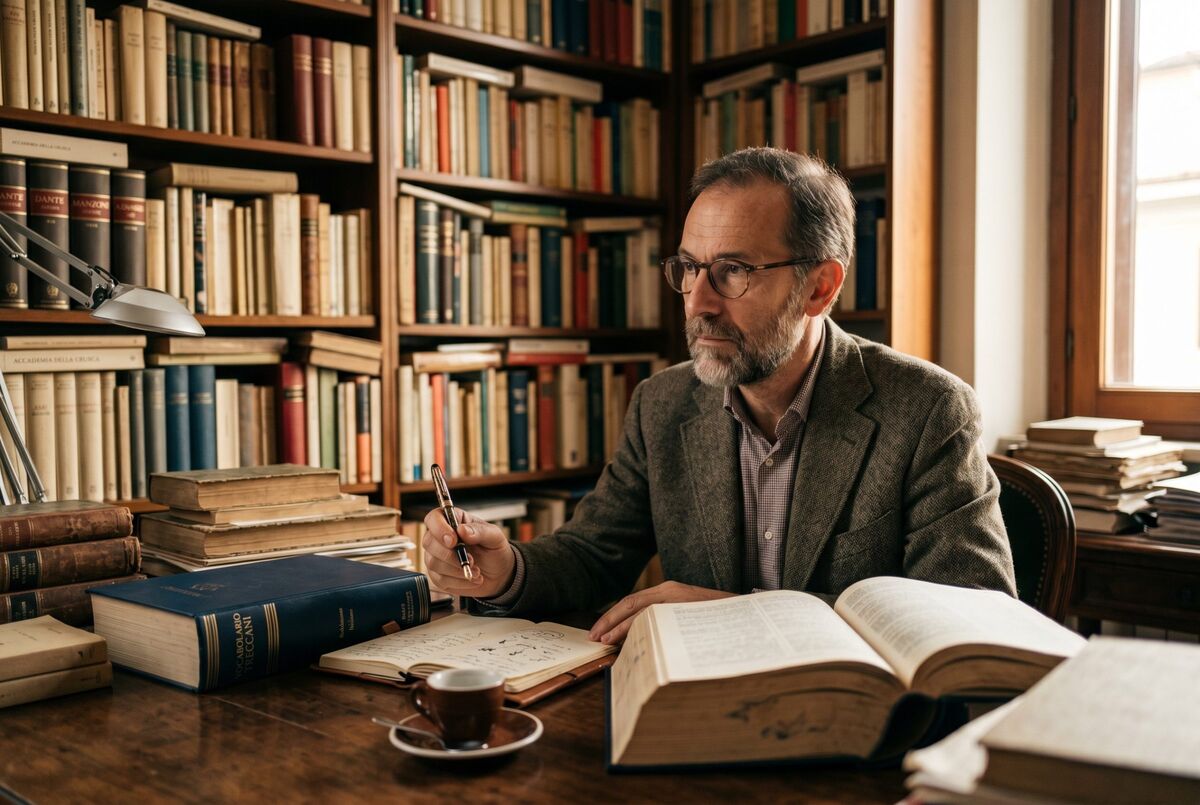
Your instructors
CILS Quattro C2 tutors for private lessons & classes
Strommen has prepped CILS QUATTRO C2 candidates across the literary-translation track, the senior academic-appointment track, and the personal-mastery milestone. The candidate pool is small and serious; most students arrive with years of Italian behind them and a specific reason for needing C2 rather than C1. Every tutor below was met and vetted by us in person or via thorough video interview. No marketplace. No automated profile-creation. These are real teachers whose own Italian sits at or above C2 in their own professional or scholarly life.
Filter by location, age, or price. Then book a 30-minute free trial.
Below are the Strommen tutors who prep candidates for the CILS QUATTRO C2. Photos, ratings, and rates are real. Click any card to read their bio and book a free 30-minute trial.
I want to learn…
Every tutor, personally met. — founder-vetted since 2006, in Los Angeles and online worldwide.
Get a personalized plan
Pick your language — a language advisor will match you with the right tutor and map out your path.


Psychology · N/A
Expert Native Italian Tutor | Personalized Lessons | Learn Italian with confidence, clarity, and authentic conversation
Specialties
Also speaks: French, Japanese, Russian, Welsh
Psychology · N/A
Expert Native Italian Tutor | Personalized Lessons | Learn Italian with confidence, clarity, and authentic conversation
Specialties
I also speak: French, Japanese, Russian, Welsh
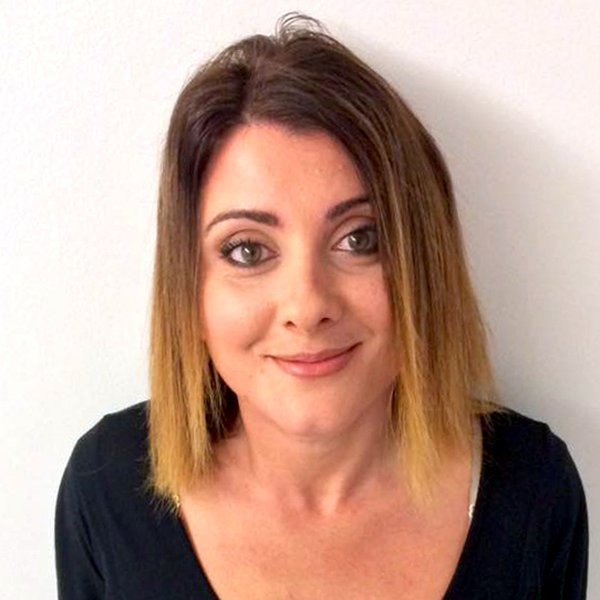

I have a degree in "Media and Journalism" from the Faculty of Political Science in Florence.I have obtained several certificates of suitability for teaching the Italian language L2/Ls to foreigners, and as administrator of the CILS exams (of all levels... · The certificate of suitability for teaching the Italian language L2/Ls to foreigners was issued by DILIT International House in Rome after being admitted through an initial test and passing the various stages of the training.
Learn Italian with confidence, clarity, and real-world results.
Personally vetted · Strommen’s note
Federica covers every CILS certification level from A2 to C2 in her Italian lessons, out of Barcelona, with Sicilian dialect and opera-singer coaching too.
Specialties
Also speaks: English, Spanish
I have a degree in "Media and Journalism" from the Faculty of Political Science in Florence.I have obtained several certificates of suitability for teaching the Italian language L2/Ls to foreigners, and as administrator of the CILS exams (of all levels... · The certificate of suitability for teaching the Italian language L2/Ls to foreigners was issued by DILIT International House in Rome after being admitted through an initial test and passing the various stages of the training.
Learn Italian with confidence, clarity, and real-world results.
Specialties
I also speak: English, Spanish
Personally vetted · Strommen’s note
Federica covers every CILS certification level from A2 to C2 in her Italian lessons, out of Barcelona, with Sicilian dialect and opera-singer coaching too.

Letteratura e cultura colta — literary and intellectual canon
5 literary and intellectual touchstones at the C2 tier
These are the reference points the serious Italian press and Italian academic life assume the reader already knows. Screenshot the infographic, then book a tutor to work through the rest of the literary and stylistic apparatus the level expects.
-
01
Italo Calvino
The twentieth-century writer most read in translation worldwide and the canonical entry into modern Italian prose at upper-intermediate and advanced levels. Le città invisibili, Se una notte d'inverno un viaggiatore, Il barone rampante in fiction; Lezioni americane in nonfiction, the lectures on lightness, quickness, exactitude, visibility, and multiplicity that Calvino was writing for Harvard at his death. At C2, Calvino's prose is a stylistic-register benchmark.
e.g. Le <em>Lezioni americane</em> di Calvino restano il riferimento per la prosa italiana contemporanea sulle qualità della letteratura.
-
02
Eugenio Montale
The 1975 Nobel laureate in Literature and one of the three major Italian poets of the twentieth century alongside Ungaretti and Quasimodo. Ossi di seppia, Le occasioni, La bufera e altro: the ermetismo tradition the Italian high-school curriculum still teaches as a unit. Knowing Montale's place in the twentieth-century canon and being able to discuss the poetics intelligently is part of the cultural-literacy expectation at C2.
e.g. Il "male di vivere" di Montale resta una delle formulazioni più citate della poesia italiana novecentesca.
-
03
La terza pagina
The cultural-essay page in serious Italian newspapers, a tradition dating to the early twentieth century when Italian dailies reserved the third page for literary reviews, essays, and cultural commentary by major Italian intellectuals. The format survives in modified form in Corriere della Sera's Cultura section, La Repubblica's Idee, and Il Foglio's longer commentary. A C2 reader knows the genre and its conventions, and writing for a terza pagina register is one of the C2 writing prompts' implicit demands.
e.g. L'articolo di apertura sulla terza pagina del Corriere oggi è un saggio di Magris su Trieste.
-
04
L'Accademia della Crusca
The Italian state-recognized linguistic academy, founded in Florence in 1583 and the oldest of the major European national language academies. The Crusca's Crusca Risponde service is the standard authority on contemporary Italian usage questions, and Italian writers, journalists, and editors consult it routinely. At C2, knowing the Crusca's role and being able to discuss prescriptive-versus-descriptive debates in Italian intelligently is part of cultural literacy.
e.g. L'Accademia della Crusca si è espressa di recente sull'uso dei neologismi anglofoni nei testi giuridici.
-
05
Il Vocabolario Treccani
The standard Italian dictionary, published by the Istituto della Enciclopedia Italiana founded by Giovanni Treccani in 1925. The Vocabolario Treccani and the Treccani encyclopedia are the reference works any C2 candidate uses routinely for definitions, etymology, and register questions. The online Treccani is free and is the working tool of professional Italian writers, editors, translators, and academics.
e.g. Ho verificato il significato esatto sul Treccani prima di usare il termine nel saggio.
About CILS Quattro C2
Italian at the level of mastery
CILS QUATTRO C2 is the highest of the six CEFR-aligned levels issued by the Università per Stranieri di Siena, and the candidate pool that sits it is narrow. C2 is the level the CEFR calls "Mastery": the Italian here approaches educated-native command across academic, professional, literary, and rhetorical registers. The exam expects the candidate to comprehend virtually any Italian text or audio, to write with the structural sophistication of a serious Italian author or journalist, to deliver an extended argument under sustained counter-pressure, and to handle the lexical and stylistic range that distinguishes mastery from competence. Most candidates who sit C2 do so for a specific reason: an Italian-language literary-translation career, a senior teaching position at an Italian university or cultural institute abroad, an academic appointment that names C2 in the requirements, a personal milestone after years of serious engagement with Italian, or the credential as supplementary documentation in a competitive professional context. C2 is rare and prestigious; the volume of candidates is a small fraction of B2 and B1 Cittadinanza traffic, and the prep work is correspondingly serious. Students looking for the broader Italian program our tutors teach can start at our main Italian page.
The exam structure follows the standard five-section CILS pattern, but every dimension scales up substantially from C1. Ascolto tests listening through four to five audio documents at full native pace, including spontaneous spoken Italian with regional accents, academic lectures or panel discussions on specialized topics, long-form narrative pieces, and at least one piece at fast or technically dense pace. The audio runs at no accommodation, the lexical density is real, and questions probe inference, irony, and rhetorical structure as much as literal comprehension. Comprensione della lettura tests reading through long texts from serious Italian literature, academic essays, and specialized journalism: passages from contemporary fiction (Calvino, Eco, Ferrante, Ammaniti), nonfiction (Levi's essays, contemporary Italian historians), opinion writing from Il Foglio, La Stampa, Il Sole 24 Ore, cultural reviews (Doppiozero, Letteratura e altre cose), and occasionally pre-twentieth-century prose. The texts are demanding, the syntactic complexity is real, and the questions require synthesis of multiple passages. Analisi delle strutture di comunicazione tests grammar and lexis at the full C2 floor: every subjunctive trigger including the rarest (per quanto, laddove, chiunque, qualsivoglia, nel caso in cui dovesse), the full conditional and counterfactual inventory, the passive voice in literary and bureaucratic registers, the impersonal constructions, the periphrastic constructions, idiomatic expressions and fixed phrases at the level the Accademia della Crusca actually catalogs, the connector inventory in its full sophistication, and lexical groupings around abstraction, argumentation, and specialized professional vocabulary. Produzione scritta at C2 demands two substantial pieces: a structured synthesis or analytical text working from multiple sources (often three or four passages), and a longer composition of roughly 300-400 words that may be a critical commentary, a structured essay on an abstract topic, or a formal piece in a specific genre (a book review, a journalistic feature, an academic abstract). Produzione orale at C2 is the most demanding section of any CILS sitting. The candidate selects from prompts, gets prep time, then delivers a sustained monologue (longer than at C1) followed by an extended interactive exchange with the examiner who pushes back at academic pace, requests theoretical justification, and probes the consistency of the candidate's argument across the full conversation. The whole sitting runs roughly four and a half to five hours. The fee at the Siena center is around €155; overseas centers set their own modestly higher price. Sessions run twice a year, in June and December, though some centers offer C2 only in one of the two sessions due to limited candidate volume. Verify the current calendar, fees, and your nearest center at cils.unistrasi.it before registering.
The per-section pass model still applies at C2, and the rubric thresholds are calibrated to the mastery level: each section's minimum score is higher in absolute terms than at C1. A C2 candidate who scores well on four sections but stumbles on one will receive insufficiente, with the option to repay and re-sit only the failed module within the eighteen-month window. The diagnostic in week one matters more than at any lower level because the gap between sections at C2 is often the difference between near-mastery and partial-mastery, and a serious prep plan addresses the partial section directly without complacency about the strong ones.
What C2 adds beyond C1, and where even strong candidates typically stall. The stylistic-register sophistication is the first and largest single feature. C1 demands the academic and journalistic registers; C2 expects the candidate to control multiple registers and to move among them with conscious purpose. A C2 writing prompt that asks for a book review needs to read like a serious Italian critic wrote it. A prompt that asks for a journalistic feature needs to land somewhere on the spectrum between La Repubblica's Cultura page and Internazionale's translated long-form. A prompt that asks for an academic abstract needs to use the conventions of the discipline named. American candidates trained on general academic writing often write competent but generic Italian and lose points under adeguatezza. The second stumble: the lexical breadth expected at C2 is genuinely wide. The candidate has to deploy a substantial inventory of idiomatic expressions, fixed phrases, and specialized vocabulary without the artificial register slippage that comes from a candidate showing off vocabulary they don't fully control. The third: the speaking section's extended exchange demands what Italian academic culture calls sostenere una tesi: defending a thesis under counter-pressure with internal consistency across a sustained conversation. American debate-style adversarial argument doesn't translate; Italian academic argument expects acknowledgment of counter-positions, refinement under pressure, and rhetorical patience the conversational frame doesn't naturally produce. The fourth: the synthesis writing at C2 expects integration of three or four sources, not two, and the rubric scores the candidate's argument structure as much as the source integration. The fifth, which surprises serious candidates: the listening section's spontaneous-spoken audio (interviews, casual conversations between native speakers, panel discussions) often features regional accents, colloquial idioms, and incomplete utterances that the candidate has to parse without the polish of broadcast Italian. Italian as it's actually spoken among educated natives is harder than Italian as it's broadcast on RAI Radio Uno, and the C2 listening section knows it.
How tutors prep CILS QUATTRO C2. The candidate pool is narrow, and serious C2 prep is genuinely individualized. Most first lessons are a placement diagnostic across all five sections, and the conversation that follows is partly about whether C2 is the right credential for the candidate's actual goal — sometimes the honest answer is that C1 already opens the doors the candidate cares about and the marginal six to twelve months for C2 is better spent on Italian-language professional development in the candidate's own field. For candidates whose path genuinely names C2, lessons rebalance toward the weakest section. Writing is drilled with real C2 prompts under timer pressure, both the multi-source synthesis and the longer compositional task, graded against the full rubric with multiple rewrite cycles. Speaking is rehearsed as extended mock interviews with the sustained-exchange structure under real prep-time constraints, recorded and reviewed for register sophistication, lexical breadth, argument coherence, and the rhetorical patience the format expects. Listening uses the full range of native-pace Italian audio at C2 difficulty: RAI Radio Uno's news magazines and political coverage, RaiPlay Sound's most analytical podcasts (Tintoria, Power, Stories, Voce ai libri), Italian academic lectures from Radio 3, and the official Siena C2 listening archive in the final months. Reading uses serious Italian literature, academic essays, and specialized journalism at full C2 register. Grammar work focuses on the rare triggers and the stylistic-register decisions that distinguish mastery from competence. A reasonable arc for a candidate already at solid C1 is six to twelve months of weekly lessons plus substantial self-study; faster timelines are possible only for candidates whose Italian is already operating at near-C2 from years of professional or academic use in Italy.
Between lessons, immerse with C2-appropriate Italian. The serious Italian press at full register: La Repubblica, Corriere della Sera, Il Foglio, La Stampa, Il Sole 24 Ore, Internazionale, plus the cultural reviews Doppiozero, Letteratura e altre cose, Le Parole e le Cose, and Limes for geopolitical writing. Books at C2: Italo Calvino's Lezioni americane for stylistic-register awareness, Primo Levi's I sommersi e i salvati for plain-register essayistic prose at high register, Umberto Eco's Sulla letteratura for cultural criticism, Eugenio Montale's poetry with commentary, Pier Paolo Pasolini's Scritti corsari for polemic at the highest level. The Accademia della Crusca's Crusca Risponde page online is the standard reference for usage questions at C2 level. The Treccani encyclopedia online for register and definitions; the Vocabolario Treccani is the standard reference dictionary. The official CILS sample-paper archive at the Siena website has past C2 listening audio with answer keys; drill these directly. Our Italian Literature specialty page covers the canonical reading that C2 candidates benefit from working through; the best Italian books for advanced students blog post lists titles specifically calibrated to the C1/C2 reader.
The Strommen CILS QUATTRO C2 roster is small and deliberately so. The level draws our most-experienced Italian tutors: several writers and translators working professionally in Italian, several with Italian university teaching backgrounds at the graduate or post-graduate level, several with formal CEDILS examiner certification from the Università per Stranieri di Venezia, and several with Italianistica training from programs descended from the Università per Stranieri di Perugia and Siena. The candidate at C2 needs a tutor whose own Italian sits at or above C2 in their own professional or scholarly life. Each tutor's bio specifies their background, their published work or scholarly affiliations where relevant, and which candidate profiles they fit best (literary translation, academic appointment, senior teaching credential, personal-milestone mastery). For broader Italian foundations alongside CILS QUATTRO C2 prep, our CILS overview, Italian Literature, Italian academic writing, and general Italian specialty pages cover related programs. Browse the tutor list, find a bio whose background matches your situation, and book the trial.
What you'll cover
Lessons & classes tailored to CILS Quattro C2
C2 diagnostic and section-by-section plan
Your first lesson is a diagnostic against a past CILS QUATTRO C2 sample paper from the Università per Stranieri di Siena archive. The tutor scores all five sections on the real rubric (coerenza, adeguatezza, correttezza grammaticale, ricchezza lessicale) and identifies the weakest section. At C2 the diagnostic also addresses a prior question: is C2 the right credential for this candidate's actual goal, or does C1 already open the doors that matter? Honest answers there save months of unnecessary prep.
Stylistic-register sophistication and lexical breadth
C2 expects the candidate to control multiple Italian registers and to move among them with purpose: academic, journalistic, literary, bureaucratic, polemic. Lessons drill the register-specific conventions for each genre: a book review reads differently than an academic abstract reads differently than a feature article reads differently than a formal report. The lexical inventory expected at C2 is genuinely wide, including idiomatic expressions, fixed phrases, specialized vocabulary, and the discourse markers that distinguish polished from mechanical Italian writing.
Multi-source synthesis and the C2 writing tasks
C2 writing demands two substantial pieces: a multi-source synthesis integrating three or four source passages, and a longer compositional task in a specific genre (book review, journalistic feature, academic abstract, critical commentary). Lessons drill both tasks with real past C2 prompts, graded against the full rubric with multiple rewrite cycles. The rubric scores the candidate's argument structure as much as the source integration, so synthesis work goes well past mere paraphrase or summary.
Sustained academic-register speaking
The C2 oral block is the most demanding section of any CILS sitting: an extended monologue followed by a sustained interactive exchange where the examiner pushes back at academic pace, requests theoretical justification, and probes consistency across the full conversation. Lessons rehearse the format as full extended mock interviews under real prep-time constraints, recorded and reviewed for register sophistication, lexical breadth, argument coherence, rhetorical patience, and the consistency the rubric expects across a sustained conversation rather than discrete monologue plus follow-up.
FAQ
About CILS Quattro C2 lessons & classes
Who actually takes CILS C2, and why?
The candidate pool is small and the reasons are specific. Literary translators working from Italian into English seek the credential as supplementary documentation in a competitive professional field where formal proof of mastery matters. Senior teaching positions at Italian-as-a-foreign-language programs at the most competitive Italian universities or cultural institutes abroad sometimes require C2 rather than C1. Academic appointments in Italian humanities at research universities sometimes name C2 in the requirements. Italian-language editorial work at serious publishing houses occasionally requires it. And some candidates sit C2 voluntarily as a personal milestone after many years of serious engagement with Italian, the prestige credential earned for its own sake. For most candidates, C1 already opens the doors they care about and C2 is a substantial additional investment for marginal additional opening.
How is CILS C2 different from CELI 5 and PLIDA C2?
All three are state-recognized Italian certifications aligned to the CEFR at the same C2 mastery level. CILS QUATTRO C2 is issued by the Università per Stranieri di Siena. CELI 5 is issued by the Università per Stranieri di Perugia. PLIDA C2 is issued by the Società Dante Alighieri. The four-skill content is similar but the multi-source synthesis structure, the genre-specific writing tasks, and the rubric details differ. Candidate volume at C2 is small across all three exams. Pick whichever the receiving institution specifically names; when they accept any, CILS QUATTRO is generally the most widely recognized in international academic and translation contexts.
Is C2 actually worth pursuing if I'm already at C1?
Often the honest answer is no, and a tutor worth working with will tell you so at the diagnostic. C1 already opens Italian graduate admissions, professional credentialing, most teaching pathways, and serious cultural-institute work. C2 is the prestige credential and represents serious mastery, but it rarely opens additional doors beyond what C1 already opens. Pursue C2 only if your specific situation names it (literary translation, senior academic appointment, certain competitive teaching positions), or if you want the credential as a personal milestone after years of Italian engagement. For most C1 candidates, the marginal six to twelve months of prep time for C2 is better spent on Italian-language professional development in the candidate's own field or on a related credential (DITALS for teaching, ATA membership for translation, doctoral work in Italianistica).
How long does C1-to-C2 prep typically take?
Six to twelve months at weekly lessons plus substantial self-study is the realistic arc for most candidates already at solid C1. Faster timelines (three to four months) are possible only for candidates whose Italian is already operating at near-C2 from years of professional or academic use in Italy. The gap from C1 to C2 is rarely about vocabulary at the surface level; it's about register sophistication, lexical breadth at depth, the multi-source synthesis skill at scale, the sustained-exchange speaking ability, and the stylistic awareness that distinguishes mastery from competence. None of these can be rushed without producing a candidate who underperforms on the actual exam.
Will the C2 credential help a literary-translation career?
It can, as supplementary documentation in a competitive field where formal proof of mastery has real signaling value. Italian-to-English literary translators typically build their professional reputation through published translations, association with respected presses, sample work, and word-of-mouth in the small community of literary translation editors. The C2 credential alone doesn't open the field; portfolios open the field. But for emerging translators who have not yet built a portfolio, the C2 is a credible signal of language competence that distinguishes a candidate from peers without formal certification. The American Literary Translators Association (ALTA), the PEN America Translation Committee, and the professional networks around presses like Europa Editions and New Directions are where the working translation career actually develops. C2 is a useful piece of the file, not the file.
Can I take CILS C2 prep lessons online?
Yes. Most of our CILS C2 tutors prep students entirely online via Zoom or Jitsi, which works well for the kind of advanced work C2 prep involves: shared-document synthesis work on source texts, timed writing drills with shared screens, recorded speaking practice with playback, sample-paper review with annotated notes, and the slow-paced discussion of stylistic register that benefits from a tutor and candidate working through a passage together. The format translates to video naturally because most of the lesson is spent on a shared text or source materials.
What's the C2 listening section actually like?
Four to five audio documents at full native pace with no accommodation, including spontaneous spoken Italian with regional accents, academic lectures or panel discussions on specialized topics, long-form narrative pieces, and at least one piece at fast or technically dense pace. The lexical density is real, and questions probe inference, irony, and rhetorical structure as much as literal comprehension. The spontaneous-spoken audio is the section most C2 candidates underestimate: Italian as it's actually spoken among educated natives, with regional accents and incomplete utterances and colloquial idioms, is harder than the polished Italian of RAI Radio Uno broadcasts. Drill with native podcasts and recordings of actual Italian conversation, not only with broadcast material.
Are your C2 tutors translators or academics?
Several are, and the C2 specialty draws our most-experienced Italian tutors. Writers and translators working professionally in Italian, several with Italian university teaching backgrounds at graduate level, several with formal CEDILS examiner certification from the Università per Stranieri di Venezia, and several with Italianistica training from programs descended from the Università per Stranieri di Perugia and Siena. The candidate at C2 needs a tutor whose own Italian sits at or above C2 in their own professional or scholarly life, and the bios make those backgrounds explicit so candidates can match themselves to a tutor whose register and field align with their own goals.
Ready for CILS Quattro C2 lessons or classes?
Book a free 30-minute trial with one of our personally vetted tutors. Private lessons or small-group classes — your choice.