



Personally vetted instructors
Business Chinese tutors, lessons & classes
您好 nín hǎo The respectful "hello" you open a first business meeting with.
Personally vetted Business Chinese tutors. Lessons built for the Mandarin you actually use in meetings, negotiations, banquets, and the WeChat threads that carry the relationship between them.

Your instructors
Business Chinese tutors for private lessons & classes
Strommen has been teaching Chinese since 2006. Business Chinese has always drawn a specific kind of student here: executives preparing for negotiation rounds, attorneys and finance professionals reading contracts in Mandarin, manufacturers and trade professionals managing Chinese supply chains, and long-running monthly clients whose Chinese counterparts conduct meetings in Mandarin as a matter of course. Every tutor below was met and vetted by us in person or through a thorough video interview. No marketplace. No automated profile-creation. Real teachers with real backgrounds in Chinese business language and culture, which you can read about in their bios.
Filter by location, age, or price. Then book a 30-minute free trial.
Below are the Strommen tutors who specialize in Business Chinese. Photos, ratings, and rates are real. Click any card to read their bio and book a free 30-minute trial.
I want to learn…
Every tutor, personally met. — founder-vetted since 2006, in Los Angeles and online worldwide.
Get a personalized plan
Pick your language — a language advisor will match you with the right tutor and map out your path.

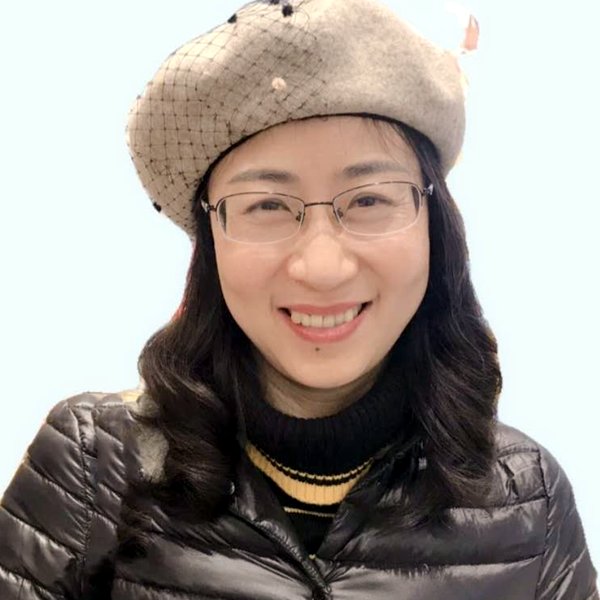
Masters degree
Expert University Teaching with a Friendly Touch: Professional, Engaging, Effective . #1 Mandarin Tutor at Strommen working with Corporate Clients, Kids + Individuals.
Personally vetted · Strommen’s note
Before joining Strommen, Linna spent twenty-five years teaching Chinese language and literature at a university in China.
Specialties
Masters degree
Expert University Teaching with a Friendly Touch: Professional, Engaging, Effective . #1 Mandarin Tutor at Strommen working with Corporate Clients, Kids + Individuals.
Specialties
Personally vetted · Strommen’s note
Before joining Strommen, Linna spent twenty-five years teaching Chinese language and literature at a university in China.
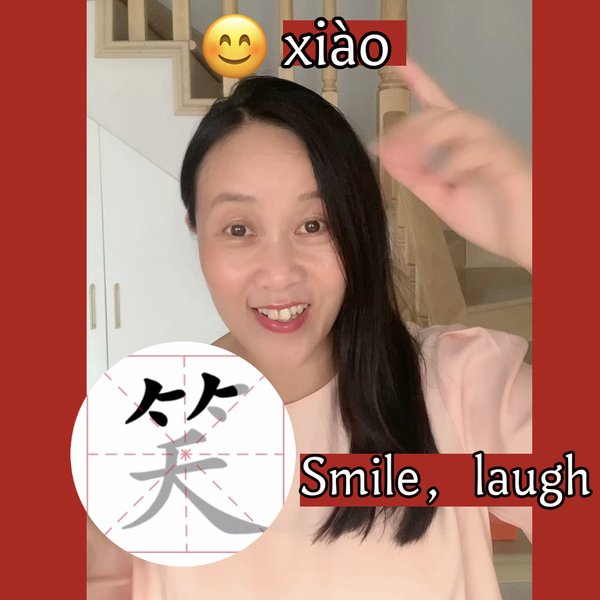
• BA major in History & Cultural comparison • · 1)中国教育部颁发的对外汉语教师资格证 ◐ Certificate for teaching Chinese as a foreign language Issue No. 2003240029 By The Ministry of Education of China ◐ 在线中文教学技能证书 2)Online Chinese Teaching Skills Certificate (No: AP-A003-A0007)
Practical & Interactive Chinese Classes From an Experienced Trainer
Personally vetted · Strommen’s note
Cathy went from Whitman College exchange instructor to Shanghai corporate Chinese trainer, and she teaches practical, business-ready Mandarin now.
Specialties
• BA major in History & Cultural comparison • · 1)中国教育部颁发的对外汉语教师资格证 ◐ Certificate for teaching Chinese as a foreign language Issue No. 2003240029 By The Ministry of Education of China ◐ 在线中文教学技能证书 2)Online Chinese Teaching Skills Certificate (No: AP-A003-A0007)
Practical & Interactive Chinese Classes From an Experienced Trainer
Specialties
Personally vetted · Strommen’s note
Cathy went from Whitman College exchange instructor to Shanghai corporate Chinese trainer, and she teaches practical, business-ready Mandarin now.


Masters in education
Looking forward to sharing Chinese language and culture with you.
Personally vetted · Strommen’s note
Simone's Chinese lessons stay interactive by design, heavy on student practice time, light on lecture.
Specialties
Masters in education
Looking forward to sharing Chinese language and culture with you.
Specialties
Personally vetted · Strommen’s note
Simone's Chinese lessons stay interactive by design, heavy on student practice time, light on lecture.
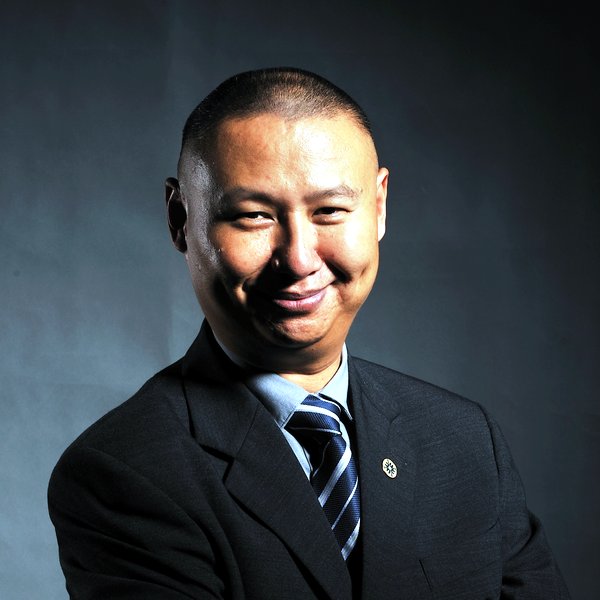
Master of Science · TEFL (120-hour Premier) Certificate
Learn the language, live the culture
Personally vetted · Strommen’s note
Bill's whole premise is that language and culture can't really be separated. His lessons are built around both together.
Specialties
Master of Science · TEFL (120-hour Premier) Certificate
Learn the language, live the culture
Specialties
Personally vetted · Strommen’s note
Bill's whole premise is that language and culture can't really be separated. His lessons are built around both together.

Teacher Permit, Bachelor Degree
Chinese Teacher with 17 Years Experience and Attention to Detail.
Personally vetted · Strommen’s note
Seventeen years teaching Chinese, with a specialty in AP and SAT II prep, and Xue still rewrites her own material rather than teach straight from the page.
Specialties
Teacher Permit, Bachelor Degree
Chinese Teacher with 17 Years Experience and Attention to Detail.
Specialties
Personally vetted · Strommen’s note
Seventeen years teaching Chinese, with a specialty in AP and SAT II prep, and Xue still rewrites her own material rather than teach straight from the page.

Top Chinese tutor at Strommen 10+ years exerience in person on the weekends!
Personally vetted · Strommen’s note
With us since 2011, Xi teaches Chinese in person on weekends only, a niche slot that's stayed booked the whole time.
Specialties
Top Chinese tutor at Strommen 10+ years exerience in person on the weekends!
Specialties
Personally vetted · Strommen’s note
With us since 2011, Xi teaches Chinese in person on weekends only, a niche slot that's stayed booked the whole time.

Bachelor's degree · CELT-P (Certificate in English Language Teaching – Primary)
Native Chinese Tutor in Tianjin with C1 English level
Personally vetted · Strommen’s note
A native Chinese speaker in Tianjin with C1 English herself, Xin opens every lesson by asking flatly what's been giving the student trouble.
Specialties
Bachelor's degree · CELT-P (Certificate in English Language Teaching – Primary)
Native Chinese Tutor in Tianjin with C1 English level
Specialties
Personally vetted · Strommen’s note
A native Chinese speaker in Tianjin with C1 English herself, Xin opens every lesson by asking flatly what's been giving the student trouble.


Bachelor’s degree · Certificate for Teaching Chinese as a Foreign Language
Making Chinese learning fun and easy.
Personally vetted · Strommen’s note
Wenlong opens every Chinese lesson with a four-skills check, listening, speaking, reading, writing, before deciding where to focus.
Specialties
Also speaks: English, German
Bachelor’s degree · Certificate for Teaching Chinese as a Foreign Language
Making Chinese learning fun and easy.
Specialties
I also speak: English, German
Personally vetted · Strommen’s note
Wenlong opens every Chinese lesson with a four-skills check, listening, speaking, reading, writing, before deciding where to focus.


bachelor
Korean teacher fluent in Chinese and English
Specialties
bachelor
Korean teacher fluent in Chinese and English
Specialties

Specialization (5 years) at Blagoveshchensk State Pedagogical University Major - Chinese language teacher with an additional specialty as an English language teacher.Postgraduate studies at the Moscow State University of Management, Faculty of Philoso... · 1) Diploma from Blagoveshchensk State Pedagogical University, majoring in Chinese language teacher with an additional specialty as an English language teacher. 2) Certificate of advanced training issued by Moscow State Linguistic University, awarded f...
Chinese language, Mandarin, Chinese tutor, Mandarin tutor,
Specialties
Specialization (5 years) at Blagoveshchensk State Pedagogical University Major - Chinese language teacher with an additional specialty as an English language teacher.Postgraduate studies at the Moscow State University of Management, Faculty of Philoso... · 1) Diploma from Blagoveshchensk State Pedagogical University, majoring in Chinese language teacher with an additional specialty as an English language teacher. 2) Certificate of advanced training issued by Moscow State Linguistic University, awarded f...
Chinese language, Mandarin, Chinese tutor, Mandarin tutor,
Specialties

Master
🏆Certified Pro(10Y+) | 🚀Fix Your Speaking Fast (HSK & Business Expert) | 🗣️Real Life Conversation | 💬Fluency & Pronunciation
Personally vetted · Strommen’s note
Before Strommen, Misty taught Chinese to students from more than thirty countries. Now she curates a plan instead of a textbook.
Specialties
Also speaks: English, Korean
Master
🏆Certified Pro(10Y+) | 🚀Fix Your Speaking Fast (HSK & Business Expert) | 🗣️Real Life Conversation | 💬Fluency & Pronunciation
Specialties
I also speak: English, Korean
Personally vetted · Strommen’s note
Before Strommen, Misty taught Chinese to students from more than thirty countries. Now she curates a plan instead of a textbook.

Bachelor of Arts (BA) in Global and Development Studies – Jagiellonian University of Krakow, Poland (Graduated, 2020–2023)Master of Science (MSc) in European Urban Studies – Bauhaus-Universität Weimar, Germany (Expected completion in September 2026) · CityMinds Summer School Certificate – EIT Urban Mobility, Thessaloniki, Greece (July 2025)Erasmus+ Academic Exchange Program – Goethe Universität Frankfurt, Germany (Focus on Social and Political Sciences, 2022–2023)
Multilingual tutor making Cantonese, Mandarin, and English practical and engaging
Specialties
Also speaks: English, German
Bachelor of Arts (BA) in Global and Development Studies – Jagiellonian University of Krakow, Poland (Graduated, 2020–2023)Master of Science (MSc) in European Urban Studies – Bauhaus-Universität Weimar, Germany (Expected completion in September 2026) · CityMinds Summer School Certificate – EIT Urban Mobility, Thessaloniki, Greece (July 2025)Erasmus+ Academic Exchange Program – Goethe Universität Frankfurt, Germany (Focus on Social and Political Sciences, 2022–2023)
Multilingual tutor making Cantonese, Mandarin, and English practical and engaging
Specialties
I also speak: English, German

客气 — culture & business etiquette
5 expressions that mark you as fluent in the room
These are the phrases that separate a foreign professional reciting business Mandarin from one who has spent real time in Chinese meeting rooms. Screenshot away. Then book a tutor to learn the register around them.
-
01
不好意思 (bù hǎo yìsi)
A softer, far more frequent "excuse me" or "sorry" than 对不起 (duìbuqǐ). It covers the small social frictions of a working day: getting someone's attention, slipping past a colleague, interrupting to ask a question, apologizing for a minor inconvenience. 对不起 is reserved for serious apologies, so using it for spilling water sounds excessive. 不好意思 is the right fit, and it is polite enough for a client and casual enough for a peer.
e.g. 不好意思,我打断一下。(Bù hǎo yìsi, wǒ dǎduàn yíxià. — "Excuse me, may I interrupt for a moment.")
-
02
厉害 (lìhai)
"Impressive," "skilled," "formidable." The compound joins 厉 (sharp, severe) with 害 (intense), so calling someone 厉害 says they are not just good but a little intimidating in their competence. It is neutral to casual register and safe in almost any setting, which makes it a natural, genuine way to give a counterpart face for real expertise.
e.g. 贵公司这个方案做得真厉害。(Guì gōngsī zhège fāng'àn zuò de zhēn lìhai. — "Your company's proposal is genuinely impressive.")
-
03
给力 (gěilì)
"Powerful," "comes through," "delivers." Literally "give strength." It began as internet slang around 2010, then crossed into mainstream use after the official People's Daily ran it in a headline, and it now appears even in state media. It praises something that performs as promised: a product that works, a teammate who delivered, a plan that held up. It carries a slightly youthful flavor, so read the room before using it with a very senior host.
e.g. 这个季度的数据很给力。(Zhège jìdù de shùjù hěn gěilì. — "This quarter's numbers really delivered.")
-
04
干杯 (gānbēi)
"Cheers," the toast, literally "dry the glass." In a Mainland business banquet a 干杯 from a senior host implies you should actually finish the glass, which carries more obligation than a loose Western toast. Refusing outright can read as a slight, though a token sip with 随意 (suíyì, "as you wish") is an accepted graceful out.
e.g. 为我们的合作,干杯!(Wèi wǒmen de hézuò, gānbēi! — "To our partnership, cheers!")
-
05
拍马屁 (pāi mǎpì)
"To suck up," "to brown-nose." Literally "pat the horse's rump," the image being someone flattering a horse to get on its good side. It carries the cultural disapproval a Westerner would attach to "kiss-up." You are far more likely to hear it described than to use it, but knowing it lets you read the workplace dynamics being discussed around you, and it marks the line between genuine 给面子 (giving face) and empty flattery.
e.g. 他天天拍老板的马屁。(Tā tiāntiān pāi lǎobǎn de mǎpì. — "He's brown-nosing the boss every single day.")
About Business Chinese
Mandarin for the room, not just the page
Business Chinese is a register, not a separate language. Standard Mandarin runs across a wide spread of formality, from the casual speech you use with friends to the careful, role-aware Mandarin of a first client meeting, and the gap between the two is where most foreign professionals get caught. The everyday Mandarin that carries a dinner conversation is not the Mandarin that carries a contract review, a board introduction, or a banquet toast with a senior host watching how you handle it. Lessons in this specialty live in the upper end of that spread: the vocabulary, the honorifics, and the cultural codes that decide whether a Chinese counterpart reads you as someone worth doing long-term business with.
The register starts with the pronoun. 您 (nín) is the respectful "you," and it is the default with clients, elders, and anyone clearly senior to you. Its etymology is worth knowing: the character writes 你 (you) over 心 (heart), so the word literally means "you, from the heart." 你 (nǐ) is for peers. Switching between the two inside one conversation reads as careless, so a tutor will drill the choice until it is automatic. Titles work the same way. The Chinese norm is surname plus title: 王经理 (Wáng jīnglǐ, "Manager Wang"), 李教授 (Lǐ jiàoshòu, "Professor Li"), 张总 (Zhāng zǒng, where 总 is shorthand for 总经理, general manager). Westerners tend to invert this and reach for given names far too early, which lands somewhere between uninformed and presumptuous depending on the room.
Then there is the written register, which is more elaborate than English business writing and easy to underestimate. A formal email opens with 尊敬的 plus the surname and title (zūnjìng de, "respected") and greets with 您好, never the casual 你好. It closes with set formulas: 顺祝商祺 (shùn zhù shāng qí, "wishing your business prosperity") for a business letter, or 此致 followed by 敬礼 for the most formal correspondence. None of this is decoration. It is the part of the message a Chinese reader scans first to place you, and getting it wrong quietly costs you standing before your actual point is read.
The vocabulary is its own layer. Business-language work in any language carries a specialized lexicon, and Mandarin is no exception: the terms for revenue, balance sheet, board of directors, power of attorney, joint venture, and the rest belong to professional Mandarin and appear in your first week working with Chinese partners. They are not in tourist Mandarin and not on the HSK survival-vocabulary lists at the lower levels. Lessons map the lexicon to your specific industry, because the Mandarin a finance professional needs for capital-markets conversations is not the Mandarin a manufacturer needs for supply-chain and quality-control discussions.
Where Business Chinese departs most sharply from a Western professional's instincts is the set of cultural codes that sit underneath the language. Four of them carry most of the weight. 关系 (guānxi) is the web of relationships and mutual obligation that business in China runs on, built slowly through dinners, well-timed gifts, and remembered names rather than closed in a single transaction. 面子 (miànzi) is face, the public dignity and standing a person holds in a given setting. 给面子 and 丢面子 (gěi miànzi, diū miànzi) are giving face and causing someone to lose it: praising a counterpart in front of their colleagues gives face; correcting them publicly, openly disagreeing in a meeting, or bluntly declining their hospitality makes them lose it, and that is the most damaging move available to you. And 客气 (kèqi), polite reserve, is the baseline register of the whole interaction. Being too direct or too transactional reads as "not 客气." When a host says 不客气 (bú kèqi), they are literally inviting you to relax the formality a notch.
The banquet is where these codes get tested at once. 干杯 (gānbēi), the toast, literally means "dry the glass," and in a Mainland business banquet a toast from a senior host carries more obligation than a loose Western "cheers." Refusing outright can register as a slight. There are graceful outs (a token sip with 随意, suíyì, "as you wish," or a quiet health reason), but a foreign professional should understand the weight of the moment before declining. The same care applies to the small mechanics: a business card is offered and received with both hands, read for a moment before it is put away, and in a seated meeting placed face-up on the table rather than pocketed unseen.
Region matters too, because "Business Chinese" is not one uniform thing across the Mandarin-speaking world. On the Mainland, communication runs through 微信 (WeChat), banquet culture is strong, and the register is built on Putonghua and simplified characters. Taiwan uses traditional characters, leans on email and LINE over WeChat, and runs a business culture that is less drinking-heavy while still shaped by Confucian respect for seniority. Hong Kong uses traditional characters, conducts much international business in English and often in Cantonese, and operates at a pace closer to Western norms. A professional moving among all three needs the register calibrated to each, and for Hong Kong-facing work often needs Cantonese rather than Mandarin. A tutor will help you scope which register your actual counterparts call for.
The Strommen Business Chinese roster includes native Mandarin teachers based in Mainland China and Taiwan alongside longtime bilinguals based in the United States, and several come from corporate, finance, legal, manufacturing, or trade backgrounds before teaching. Each tutor's bio states where they are from, their professional background, and the student profile they fit best, whether that is executive coaching, contract reading, presentation preparation, or banquet and negotiation rehearsal. Lessons are one-on-one and planned around your week and your industry. Pre-deal Mandarin for an upcoming negotiation round is a different curriculum from monthly maintenance for an executive whose counterparts insist on conducting meetings in Mandarin, and both differ again from BCT (Business Chinese Test) preparation for an employer's proof-of-proficiency requirement. The trial is free, and existing Mandarin counts as a head start rather than a liability: the usual adjustments for a student arriving with conversational Mandarin are register elevation, industry vocabulary, and cultural calibration around hierarchy and the banquet table.
What you'll cover
Lessons & classes tailored to Business Chinese
Register, honorifics, and titles
The core of Business Chinese is calibration. Lessons drill the 您 / 你 choice until it is automatic, the surname-plus-title pattern (王经理, 李教授, 张总) that the Chinese workplace runs on, and the colleague-level 老 / 小 forms of address for people you know well. We also work the moves around 面子: how to give face by praising a counterpart in front of their team, and how to disagree, correct, or decline without causing someone to lose it. This is the social calibration that marks you as someone who understands Chinese business culture, not just Chinese grammar.
Professional vocabulary for your industry
Business Mandarin carries a specialized lexicon that tourist Mandarin and lower HSK levels never touch: the terms for revenue, balance sheet, net profit, board of directors, power of attorney, and joint venture, plus the vocabulary specific to your field. Lessons map it to your actual work, because capital-markets Mandarin for a finance professional is a different curriculum from supply-chain and quality-control Mandarin for a manufacturer. We build the vocabulary you will use in your first week with Chinese partners, not a generic word list.
Email, WeChat, and written correspondence
Chinese business writing is more elaborate than its English equivalent. Lessons cover the formal email open (尊敬的 plus surname and title, greeting with 您好), the set closing formulas (顺祝商祺 for a business letter, 此致 / 敬礼 for the most formal correspondence), and the holiday courtesies around Spring Festival, Mid-Autumn, and Dragon Boat that keep 关系 warm. We also work the WeChat register, since on the Mainland 微信 carries much of the ongoing relationship and reads very differently from formal email.
Meetings, banquets, and negotiation
The cultural mechanics get rehearsed directly. Lessons cover meeting protocol (business cards exchanged with both hands and read before being put away, seating that places the most senior host facing the door), the banquet and the weight a 干杯 from a senior host carries, and the negotiation reality that decisions are often made privately among senior people before the meeting that ratifies them. We run role-play and email drafts mirroring your real workflow, and we scope the register for Mainland, Taiwan, or Hong Kong-facing work, since the three differ in characters, channels, and pace.
FAQ
About Business Chinese lessons & classes
How is Business Chinese different from regular Mandarin lessons?
Business Chinese is a register rather than a separate language. It lives at the formal, role-aware end of Standard Mandarin: the honorifics, the professional vocabulary, the written conventions, and the cultural codes (关系, 面子, 客气) that decide how a Chinese counterpart reads you. Conversational Mandarin carries a dinner; business Mandarin carries a contract review, a board introduction, and a banquet toast. Lessons focus on closing that gap.
Should I learn Simplified or Traditional characters for business?
It depends on which region your counterparts are in. Mainland China and Singapore use Simplified characters, and that is the default for most business work. Taiwan, Hong Kong, and Macau use Traditional characters. If you work across more than one of these markets, your tutor can scope which set you need first and how much of the other you should be able to recognize.
Do your tutors have real business backgrounds?
Several do. The roster includes native Mandarin teachers from Mainland China and Taiwan plus longtime bilinguals based in the United States, and a number came from corporate, finance, legal, manufacturing, or trade work before teaching. Each tutor's bio states their professional background and the student profile they fit best, so you can match a finance teacher for capital-markets vocabulary or a manufacturing-background teacher for supply-chain Mandarin.
I already speak some Mandarin. Do I need to start over?
No. Existing Mandarin is a head start, not a liability. Most students begin with a free 30-minute trial where the tutor calibrates to where you actually are. From there the work is usually register elevation (moving consistently to 您 and formal closings), industry vocabulary, and cultural calibration around hierarchy and the banquet table, rather than relearning the basics.
Can I take Business Chinese lessons online, or only in person?
Both. Many Business Chinese tutors teach online via Zoom or Jitsi and are available globally, which suits executives who travel. Several also teach in person. The booking widget on each tutor's profile shows their available formats, and you can filter the roster by what fits your schedule.
Can a tutor prepare me for a specific negotiation or meeting?
Yes, and that is one of the most common requests here. Pre-deal Mandarin for an upcoming negotiation round is its own curriculum: targeted vocabulary, role-play of the actual meeting, banquet rehearsal, and drafts of the emails and WeChat messages around the deal. Tell your tutor the timeline and the counterparts at the trial lesson, and the plan is built around that event.
Do you prepare students for the BCT (Business Chinese Test)?
Some of our tutors do. The BCT is the standardized proof-of-proficiency exam some employers ask for, and it is distinct from general HSK preparation. If you need it, mention it at the trial so you are matched with a tutor who preps it. If your requirement is general HSK certification instead, our HSK tutors handle that.
What does a Business Chinese lesson actually look like?
Lessons are one-on-one and built around your week. A typical hour might mix targeted vocabulary for your industry, role-play of a meeting or call you have coming up, a drill on register and honorifics, and a draft of a real email or WeChat message. No two students get the same lesson. Your tutor sets concrete goals at the trial and adjusts as your work changes.
Ready for Business Chinese lessons or classes?
Book a free 30-minute trial with one of our personally vetted tutors. Private lessons or small-group classes — your choice.