



Personally vetted instructors
Intensive German tutors, lessons & classes
Los geht's The German immersion-classroom opener: "alright, let's go."
Personally vetted German tutors who run immersion-paced programs. Built for students with a real deadline: a move to Berlin, a graduate program in Vienna, a Goethe C1 in six months, a Foreign Service posting that lands next year.
Your instructors
Intensive German tutors for private lessons & classes
Strommen has German tutors who run immersion-paced intensive programs. The work is specific: planning a 4-to-12-month curriculum, sequencing the predictable bottlenecks correctly, scaling daily intensity to a student's real life, and pushing the student through the case-system and adjective-ending walls without burning them out. Every tutor below was met and vetted by us in person or via thorough video interview. No marketplace. No automated profile-creation. Real teachers with formal training in German pedagogy and real intensive-program experience.
Filter by location, age, or price. Then book a 30-minute free trial.
Below are the Strommen tutors who specialize in intensive German programs. Photos, ratings, and rates are real. Click any card to read their bio and book a free 30-minute trial.
I want to learn…
Every tutor, personally met. — founder-vetted since 2006, in Los Angeles and online worldwide.
Get a personalized plan
Pick your language — a language advisor will match you with the right tutor and map out your path.

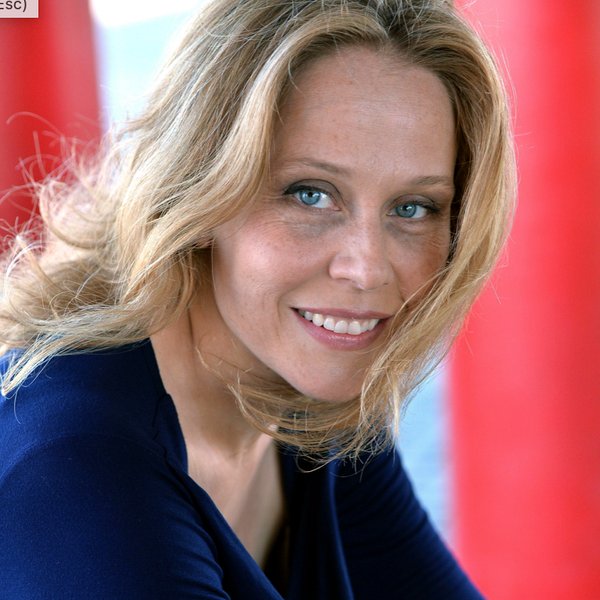

Diplom-Schauspielerin (BA in drama/acting) Germany
Dedicated German language tutor with over 15 years of expertise in teaching students of all ages. Proficient in preparing students for major German language certifications, SAT and AP German
Personally vetted · Strommen’s note
Fifteen-plus years teaching German, SAT and AP German certification prep included, and Patricia still keeps the structure interactive, not rigid.
Specialties
Also speaks: English
Diplom-Schauspielerin (BA in drama/acting) Germany
Dedicated German language tutor with over 15 years of expertise in teaching students of all ages. Proficient in preparing students for major German language certifications, SAT and AP German
Specialties
I also speak: English
Personally vetted · Strommen’s note
Fifteen-plus years teaching German, SAT and AP German certification prep included, and Patricia still keeps the structure interactive, not rigid.
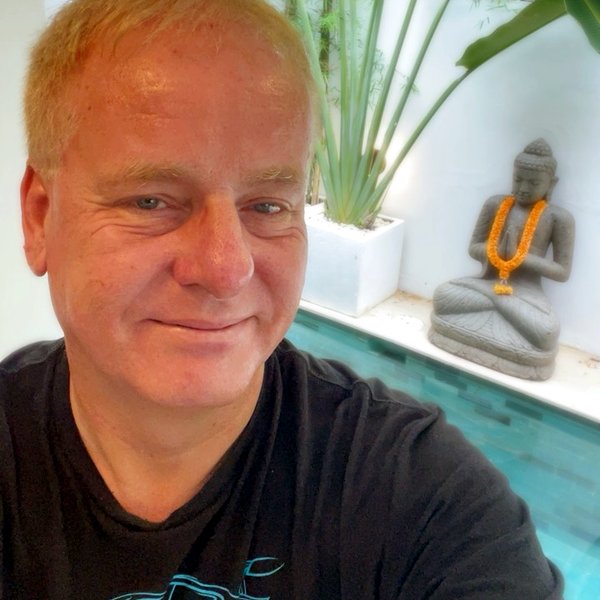

B.A. (MIT)
Native trilingual
Personally vetted · Strommen’s note
Trilingual since age seven and raised between Mexico City and Düsseldorf, Klaus coaches Spanish and German dialects the way he learned them: by talking.
Specialties
B.A. (MIT)
Native trilingual
Specialties
Personally vetted · Strommen’s note
Trilingual since age seven and raised between Mexico City and Düsseldorf, Klaus coaches Spanish and German dialects the way he learned them: by talking.
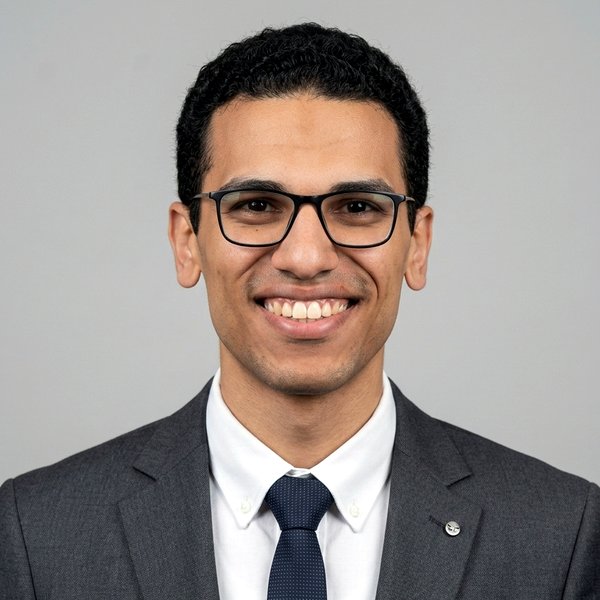


Bachelor of Education (B.Ed.) and pursuing a degree in Aerospace Engineering. · I have a TEFL certification | Certifications in Adobe Graphic Design (Level 1 & 2) for interactive presentations and educational materials.
English, German, and Arabic classes
Personally vetted · Strommen’s note
Arabic, English, and German sit alongside AP Calculus and AP Physics on Omar's schedule, a genuinely rare tutor who crosses from language straight into STEM.
Specialties
Also speaks: French, Italian, Spanish
Bachelor of Education (B.Ed.) and pursuing a degree in Aerospace Engineering. · I have a TEFL certification | Certifications in Adobe Graphic Design (Level 1 & 2) for interactive presentations and educational materials.
English, German, and Arabic classes
Specialties
I also speak: French, Italian, Spanish
Personally vetted · Strommen’s note
Arabic, English, and German sit alongside AP Calculus and AP Physics on Omar's schedule, a genuinely rare tutor who crosses from language straight into STEM.

M.A Oxford foreign languages and literature BSN University of Oklahoma.Working part time towards MSN · RN license for California
language learners unite!
Personally vetted · Strommen’s note
Miriam teaches English, French, German, and some Latin, adapting by age: constructivist methods for adults, inquiry-based learning for kids.
Specialties
M.A Oxford foreign languages and literature BSN University of Oklahoma.Working part time towards MSN · RN license for California
language learners unite!
Specialties
Personally vetted · Strommen’s note
Miriam teaches English, French, German, and some Latin, adapting by age: constructivist methods for adults, inquiry-based learning for kids.

Bachelor English and Psychology · TEFL, Oxford Aviation Train-the-Trainer Certificate
I love Deutsch
Specialties
Bachelor English and Psychology · TEFL, Oxford Aviation Train-the-Trainer Certificate
I love Deutsch
Specialties

B.M. in Vocal Performance, Augsburg College, Minneapolis, MNM.M. in Classical Voice, Manhattan School of Music, New York, NY · CELTA Certification, Teaching English as a Foreign Language to Adults, University of Cambridge/Hamburg School of English, Hamburg, GermanyDaF Unterrichten, teaching German as a Foreign Language, Goethe-Institut, München, GermanyGoethe-Zertifikat C2 Gro...
Your anchor on the stormy seas of German learning.™
Personally vetted · Strommen’s note
Nicole calls herself, trademark and all, 'your anchor on the stormy seas of German learning.' Sixteen years teaching, Goethe exam prep included.
Specialties
B.M. in Vocal Performance, Augsburg College, Minneapolis, MNM.M. in Classical Voice, Manhattan School of Music, New York, NY · CELTA Certification, Teaching English as a Foreign Language to Adults, University of Cambridge/Hamburg School of English, Hamburg, GermanyDaF Unterrichten, teaching German as a Foreign Language, Goethe-Institut, München, GermanyGoethe-Zertifikat C2 Gro...
Your anchor on the stormy seas of German learning.™
Specialties
Personally vetted · Strommen’s note
Nicole calls herself, trademark and all, 'your anchor on the stormy seas of German learning.' Sixteen years teaching, Goethe exam prep included.

Immersion — pacing & planning
5 realities every intensive German student needs to plan for
These are the structural realities of compressing 750 to 900 hours of German into a real deadline. Screenshot the infographic and bring your timeline to the trial.
-
01
FSI Category II
The US Foreign Service Institute classifies German as a Category II language for English speakers, estimating roughly 750 hours of class time to reach professional working proficiency (S-3/R-3, roughly CEFR C1). That sits between Category I languages (Spanish, French, Italian at 600 hours) and Category III languages (Russian, Greek, Polish at 1,100 hours). Total time investment including self-study is typically 2 to 2.5 times the classroom-hour estimate.
e.g. FSI puts German at 750 hours of class time to S-3 professional proficiency.
-
02
Goethe-Institut intensive tracks
The Goethe-Institut runs intensive courses at Berlin, Munich, Hamburg, Freiburg, Düsseldorf, Dresden, and Frankfurt, typically 4 weeks at 25 to 30 hours of classroom time per week. Optional homestays for in-country immersion. The do-Deutsch programs at Humboldt University and the F+U Academy in Heidelberg run parallel tracks. Strommen intensive tutors have taught in many of these programs.
e.g. A 4-week Goethe intensive in Berlin gets you roughly 100 to 120 classroom hours.
-
03
The case-system wall
Around weeks 10 to 16 of intensive work, the dative case is introduced after the accusative has barely been internalized, and progress feels much slower than the first month. This is the predictable bottleneck, not failure. The right response is to keep going at slightly reduced new-material intensity while drilling the case system in real sentences until it clicks. The wrong response is to add more grammar or drop the intensive entirely.
e.g. Most students hit the case-system wall around week 12, then break through by week 16.
-
04
Front-load grammar, back-load nuance
Intensive German programs introduce structural grammar early (you need the framework in place to absorb real German input) and save register, idiom, and regional variation for later. Spaced repetition is used aggressively: vocabulary from week 3 reappears in weeks 5, 8, and 13. Speaking practice starts in week one even when output is fragmentary, because the production habit prevents the recognition-versus-production gap.
e.g. We introduce the perfect tense in week 6, then drill it weekly through week 20.
-
05
Daily immersion structure
Intensive programs require 4 to 6 hours of daily self-study on top of the formal lessons, plus active immersion in German media. The students who succeed restructure their daily routine around German for the duration. The students who fail try to fit the hours into a normal life without restructuring. Realistic life planning is part of any honest intensive curriculum.
e.g. 1 hour newspaper, 2 hours self-study, 1 hour podcast commute, 2 hours of German TV nightly.
About Intensive German
750 to 900 hours, planned properly
Intensive German is built for students with a real deadline and the willingness to put in compressed daily hours to meet it. The US Foreign Service Institute classifies German as a Category II language for English speakers, estimating roughly 750 hours of class time to reach professional working proficiency (S-3/R-3 in the ILR system, roughly C1 on the CEFR scale). The Goethe-Institut's standard estimate is comparable: 600 to 750 hours of guided learning to reach C1 from zero, depending on prior language background and study consistency. Intensive programs compress that arc by stacking lessons (often two-a-day), pairing them with 4 to 6 hours of daily self-study, and immersing the student in German media outside of formal sessions. Done correctly, an intensive program can get a motivated learner from zero to B1 in 4 to 6 months, B1 to B2 in another 3 to 4 months, and B2 to C1 in another 6 to 9 months. Done incorrectly, an intensive program produces burnout in week six and stalls long-term progress for years. This page is for students considering the intensive route, and for the tutors who specialize in running it well.
The FSI category and the hour estimate are useful anchors. Category II languages (German, Indonesian, Malay, Swahili) sit between the easiest group (Category I: Spanish, French, Italian, Portuguese, Dutch, Romanian, at roughly 600 hours to professional proficiency) and the harder groups (Category III: Russian, Greek, Hindi, Polish, Turkish, Vietnamese, at roughly 1,100 hours; Category IV: Arabic, Korean, Japanese, Mandarin, at 2,200 hours). German's 750-hour estimate reflects the case system and gender complexity offset by the cognate advantages of English-German shared Germanic roots. The estimate assumes guided classroom time. Total time investment (including self-study, immersion, and review) is typically 2 to 2.5 times the classroom-hour estimate, so 1,500 to 2,000 total hours from zero to C1 is a realistic full-investment ballpark.
Intensive German programs have a long pedagogical tradition. The Goethe-Institut runs intensive courses at its Berlin, Munich, Hamburg, Freiburg, Düsseldorf, Dresden, and Frankfurt locations, typically 4 weeks at 25 to 30 hours of classroom time per week, with optional homestay accommodations for in-country immersion. The do-Deutsch programs at Humboldt University and the F+U Academy in Heidelberg run parallel intensive tracks. In Austria, the Sprachenzentrum at the University of Vienna runs intensive German for visiting students. In Switzerland, the Universities of Zurich, Basel, and Bern offer intensive Hochdeutsch tracks designed partly for Swiss German speakers who need to drill their Standard German for academic or professional purposes. For students outside the German-speaking world, intensive remote programs through these institutions have expanded substantially since 2020, and the Strommen intensive specialty includes tutors who have taught in these programs.
The sequencing question matters more than the hours-per-week count. Intensive doesn't mean cramming everything at maximum speed; it means structuring the progression so that each grammatical foundation is solid before the next one is loaded on top. A typical intensive sequence runs as follows. Weeks 1 to 4 cover greetings, the alphabet, pronunciation drills with focus on umlauts and the ich-sound, the verbs sein and haben, the present tense of regular verbs, the V2 word order rule, the three articles, basic vocabulary in family, food, daily routine, and time. Weeks 5 to 8 introduce the accusative case (after haben and the accusative-only prepositions), modal verbs, the perfect tense, and expanded vocabulary. Weeks 9 to 12 add the dative case (after geben, helfen, and the dative-only prepositions), separable-prefix verbs, and basic adjective endings in the weak pattern. Weeks 13 to 16 introduce the two-way prepositions, the mixed and strong adjective endings, the simple past, and the genitive (in passive recognition first). Weeks 17 to 20 cover subordinate clauses with verb-final word order, relative pronouns, the subjunctive II, and longer-form writing. By the end of a 20-week intensive (around 300 to 400 hours of structured work), a motivated student with no prior German typically tests at solid B1 with active vocabulary in the 2,000 to 2,500 word range.
The pedagogy of an intensive program differs from the pedagogy of weekly maintenance lessons. Intensive programs front-load grammar exposure (you need the structural framework in place early, even if it isn't fully internalized, so you can absorb input from real German media) and back-load nuance work (register, idiom, regional variation). They use spaced repetition aggressively: vocabulary introduced in week 3 reappears in weeks 5, 8, and 13, not just within the week of first exposure. They pair formal lessons with structured input (news articles at A2, then B1, then B2; podcasts at progressive speeds; films with then without subtitles). They include regular speaking practice from week one even when the student is barely producing complete sentences, because the speaking habit is what prevents the recognition-versus-production gap that traps many self-taught learners. And they recognize that 8 hours per day of formal study has rapidly diminishing returns past about 5 to 6 hours; the right intensity is high enough to drive real progress without inducing the cognitive overload that kills retention.
A few specific things intensive students need to plan for. The case system wall hits around weeks 10 to 16, when the dative is introduced after the accusative has just barely been internalized, and many students experience real frustration that progress feels slower than the first month. This is the predictable bottleneck. The right response is to keep going at slightly reduced new-material intensity while drilling the case system in real sentences until it clicks; the wrong response is to add more new grammar or to drop the intensive entirely. Adjective endings hit a similar wall around weeks 18 to 24, when the three patterns (weak, mixed, strong) get assembled against the four cases and three genders. Same advice: keep going at slightly reduced new-material pace, drill the assembled patterns in context, accept that this part of German takes time. The B2 plateau is a third predictable bottleneck: many learners reach B2 around month 9 to 12 of intensive work and then feel like they're not improving for another 3 to 6 months, when in fact they're consolidating before the C1 leap. Knowing these bottlenecks exist in advance helps students push through them rather than interpreting them as failure.
Intensive students also need to plan for life outside the lessons. The compressed schedule means 4 to 6 hours of daily self-study on top of the formal sessions, plus active immersion in German media (podcasts during commutes, German news as primary news source, German fiction or memoir as evening reading, German films and series as default streaming). The students who succeed in intensive programs are the ones who restructure their daily routine around German for the duration of the program, treating it as a part-time or full-time commitment rather than a hobby. The students who fail intensives are typically the ones who tried to fit the same hour count into a normal life without restructuring. Realistic life planning is part of the intensive curriculum that good tutors discuss upfront.
Between lessons, intensive German students use the same resources as standard learners but at higher daily volume. Deutsche Welle's Nicos Weg at the appropriate level (A1, A2, or B1) for video-based input. Deutsche Welle's Top-Thema mit Vokabeln and Langsam gesprochene Nachrichten for B1-B2 listening. Easy German on YouTube for street-interview immersion. Tagesschau (the canonical German evening news) for daily B2+ exposure. Tatort for prestige crime drama. Dark for higher-stakes drama. Goethe-Institut graded readers (A1 through C1) for structured reading. The standard German-language daily papers (Süddeutsche Zeitung, FAZ, Die Zeit, Spiegel Online) for advanced reading. Reading and listening volume is the single biggest accelerator of intensive progress; lessons calibrate input difficulty to your current level so that daily exposure stays just productively challenging without becoming demotivating.
The Strommen intensive German roster includes tutors with experience running Goethe-Institut intensive tracks, university intensive programs, and corporate intensive placements for executives and Foreign Service candidates. Several have taught in Berlin, Munich, Vienna, and Frankfurt intensive programs. Several hold Goethe-Institut teaching credentials and Lehramt training in German pedagogy. Several have prepped Foreign Service Institute candidates for German language qualification exams. The tutors who do intensive work well are the ones who can plan a 4-to-12-month curriculum, sequence the bottlenecks correctly, scale daily intensity to your real life, and recognize the difference between the wall-that-needs-pushing-through and the wall-that-needs-recovery-time. Each tutor's bio specifies background and intensive teaching experience. For related German programs, our Hochdeutsch, German Grammar, and Business German specialty pages cover adjacent specializations, and the German course page shows the full family.
Lessons calibrate to your specific deadline and starting point. A student with zero German and a job start in Berlin in 6 months has a different curriculum than a B1 student preparing for Goethe C1 in 9 months, which is different again from a Foreign Service candidate preparing for an S-3 qualification exam in 12 months. Each lesson is one-on-one. The trial is free. Bring your real deadline, your real available daily hours, and your real starting level. Your tutor will tell you honestly whether your goal is achievable in your timeline, and what daily commitment it will require. Browse the full tutor list, pick a tutor whose intensive experience matches your situation, and book a 30-minute trial.
What you'll cover
Lessons & classes tailored to Intensive German
Intensive curriculum design and pacing
A planned 4-to-12-month curriculum with weekly milestones, sequenced to introduce structural foundations early and load nuance later. Bottleneck-aware: the case-system wall around weeks 10 to 16, the adjective-ending wall around weeks 18 to 24, and the B2 plateau around month 9 to 12 are planned around, not stumbled into. Built-in deload weeks every 6 to 8 weeks for consolidation rather than continuous new-material loading. Realistic about daily hour requirements and how they fit your actual life.
Goethe certification track (A1 through C2)
All six Goethe-Zertifikat levels with exam-specific module preparation (Lesen, Hören, Schreiben, Sprechen) plus exam strategy. Mock exams in real-time conditions before the test date. Goethe-Zertifikat C1 is the most common intensive target for graduate-school admissions and many German employers; Goethe-Zertifikat C2 is the gold-standard near-native qualification for teaching, translation, and academic work. Several of our intensive tutors hold Goethe-Institut teaching credentials specifically for these exams.
Foreign Service Institute, TestDaF, DSH prep
FSI German qualification (S-3/R-3 or S-4/R-4) prep for Foreign Service officers and other federal employees with German postings. TestDaF (the academic German exam required for German university admission) and DSH (Deutsche Sprachprüfung für den Hochschulzugang) for graduate students moving to German universities. These exams have specific structural and stylistic requirements that benefit from dedicated prep rather than general intensive German work.
Immersion structure outside the lessons
Curated daily reading lists (Deutsche Welle graded news, Goethe-Institut graded readers, Süddeutsche Zeitung as your level rises). Podcast pairings for commute time (Slow German News at A2, Top-Thema at B1, Lage der Nation at B2+). Film and series sequencing (Easy German at A1-A2, Nicos Weg at A2-B1, Tatort at B2+, Babylon Berlin and Dark at C1). Active vocabulary tracking through a spaced-repetition system. Weekly self-study plans calibrated to your current level.
FAQ
About Intensive German lessons & classes
How long does it really take to reach C1 German from zero?
FSI estimates 750 hours of classroom time to S-3 professional working proficiency (roughly C1). The Goethe-Institut's standard estimate is 600 to 750 hours of guided learning to C1 from zero, depending on prior language background and study consistency. Total time including self-study is typically 2 to 2.5 times that, so 1,500 to 2,000 total hours is a realistic full-investment ballpark. At intensive pace (2 hours of formal lessons per day plus 4 to 6 hours of structured self-study, six days per week), C1 is reachable in 9 to 15 months from zero. At less intensive pace, the timeline extends proportionally.
Is FSI's German category accurate? Some people say it's much harder than 750 hours.
The 750-hour estimate is for the FSI's controlled-environment classroom training, which assumes selected high-aptitude learners, full-time study, immersion-quality teachers, and the FSI's specific pedagogical method. Most learners outside that environment take longer because they have less aptitude advantage, less immersion, less structured curriculum, and competing life demands. Realistic estimates for self-funded intensive learners typically run 1,500 to 2,000 total hours to C1, which still represents an aggressive intensive trajectory and isn't impossible. The FSI estimate is the floor; double it for a realistic personal ceiling.
What's a realistic intensive German schedule?
Two hours of one-on-one formal lessons per day, six days per week, plus 4 to 6 hours of structured self-study (reading, listening, writing exercises, vocabulary drilling, spaced repetition), plus 2 to 4 hours of passive immersion (German media as your default content choice). That's roughly 8 to 12 hours of total daily German engagement at peak intensity. Most students can't sustain peak intensity for more than 6 to 8 weeks without a deload, so good intensive programs plan recovery weeks at lower intensity to consolidate before the next push. Less than 4 hours of daily total engagement isn't really intensive; it's serious-but-normal pace.
What are the predictable bottlenecks?
Three of them, in order. The case-system wall hits around weeks 10 to 16 when the dative is loaded on top of the accusative. The adjective-endings wall hits around weeks 18 to 24 when the three patterns are assembled against the four cases and three genders. The B2 plateau hits around month 9 to 12 when learners reach B2 and feel like they're not improving for another 3 to 6 months while they consolidate before the C1 leap. Knowing these exist helps you push through them rather than interpreting them as failure. Good intensive tutors plan around all three explicitly.
Can I do an intensive program while working full-time?
Honestly, not at true intensive pace. Compressed intensives require 8 to 12 hours of daily German engagement, which isn't compatible with a 40-hour work week plus family responsibilities. What's realistic with full-time work is a half-intensive: one hour of formal lessons per day plus 2 to 3 hours of structured self-study, six days per week, totaling 4 to 5 hours daily. At that pace, C1 from zero is realistic in 18 to 24 months rather than 9 to 15. The students who succeed at half-intensive are the ones who restructure their commutes, lunch breaks, and evenings around German for the duration.
Do you prep for the Goethe-Zertifikat exams specifically?
Yes. All six Goethe-Zertifikat levels (A1, A2, B1, B2, C1, C2) with exam-module-specific preparation (Lesen, Hören, Schreiben, Sprechen) and exam strategy. Mock exams in real-time conditions before your test date. Goethe-Zertifikat C1 is the most common intensive target because it's the gold-standard credential for graduate-school admission to German universities and is recognized by most German employers. Goethe-Zertifikat C2 is the near-native qualification for teaching, translation, and academic work. Several of our intensive tutors hold Goethe-Institut teaching credentials specific to these exams.
Are your intensive tutors based in Germany or in the United States?
Both. Our intensive roster includes native German teachers based in Berlin, Munich, Vienna, Hamburg, Zurich, and Frankfurt who have taught in Goethe-Institut and university intensive programs, all teaching via video. Plus longtime German-American bilinguals based in the US with intensive teaching backgrounds. Time-zone-wise, Germany-based tutors typically have late-afternoon and evening availability that maps to US morning lessons; combining a morning slot with an evening slot in your local time, both with German tutors, gives you the two-hour-per-day intensive schedule with two different teaching styles, which many intensive students find helpful for variety.
What does an intensive trial lesson cover?
30 minutes, free, focused on your real deadline and your real starting point. Bring your timeline (the date you need to be at a specific level), your daily available hours, and your current German level if any. The tutor assesses your starting point, runs the math on what's achievable in your timeframe, and outlines a curriculum honest about both the daily commitment and the predictable bottlenecks. You'll leave the trial with a clear sense of whether the goal is realistic and what reaching it will actually require. If the timeline isn't achievable, the tutor will tell you that directly; honest planning beats over-promised programs that fall apart in month four.
Ready for Intensive German lessons or classes?
Book a free 30-minute trial with one of our personally vetted tutors. Private lessons or small-group classes — your choice.