



Personally vetted instructors
Intensive Spanish tutors, lessons & classes
¡Vamos! What every intensive Spanish lesson starts with.
Personally vetted intensive Spanish tutors. Compressed-timeline Spanish for adults with a real deadline — a relocation, a study-abroad start date, a business posting, a certification, or a personal sprint.
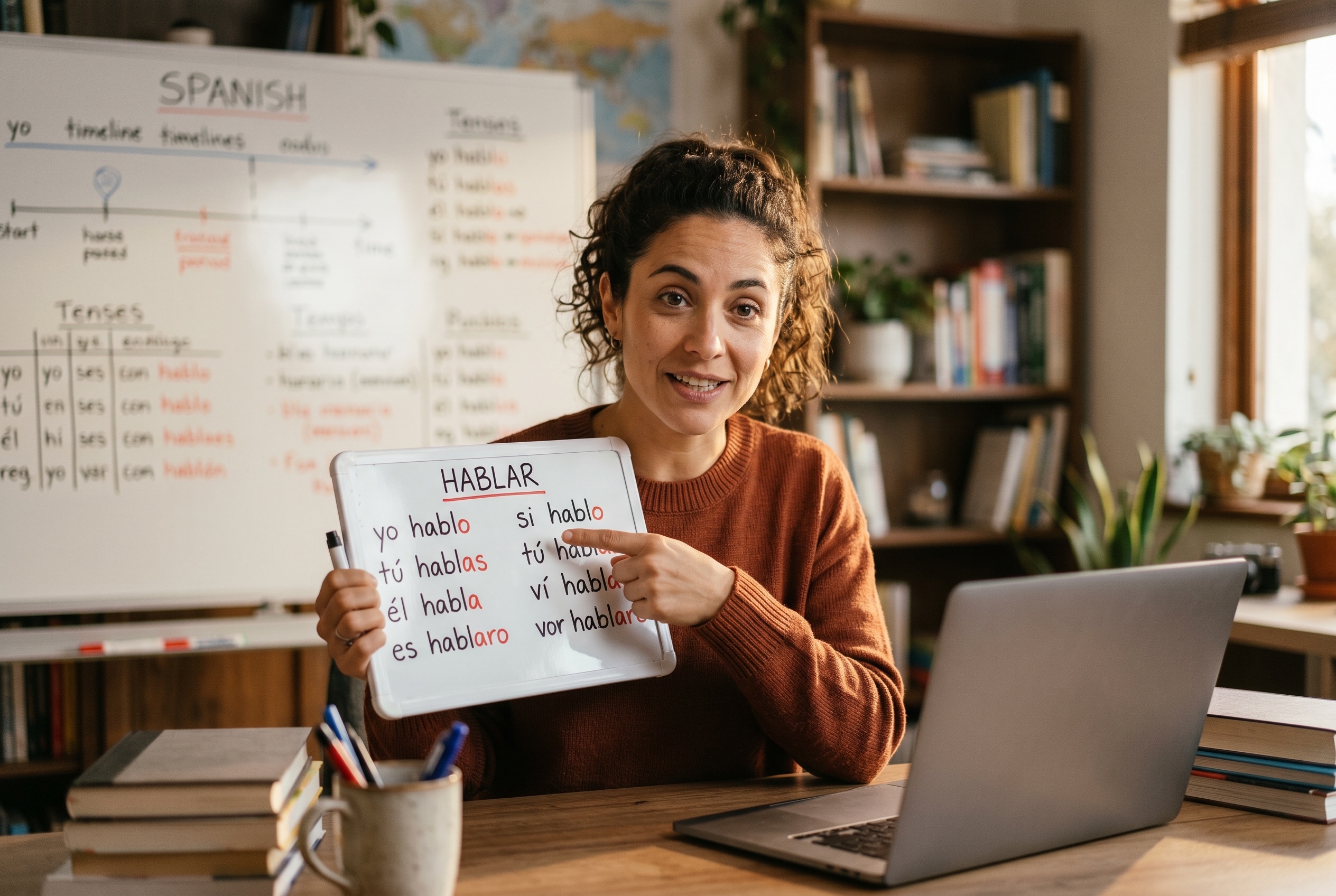
Your instructors
Intensive Spanish tutors for private lessons & classes
Strommen has been teaching Spanish since 2006, and intensive lessons have always been part of the work: pre-relocation sprints, study-abroad prep, DELE and SIELE preparation, corporate posting onboardings, and the occasional personal challenge. Every tutor below was met and vetted by us in person or via thorough video interview. No marketplace. No automated profile-creation. Real teachers with real backgrounds running compressed-timeline curricula for adult learners.
Filter by location, age, or price. Then book a 30-minute free trial.
Below are the Strommen tutors who run intensive Spanish curricula. Photos, ratings, and rates are real. Click any card to read their bio and book a free 30-minute trial.
I want to learn…
Every tutor, personally met. — founder-vetted since 2006, in Los Angeles and online worldwide.
Get a personalized plan
Pick your language — a language advisor will match you with the right tutor and map out your path.

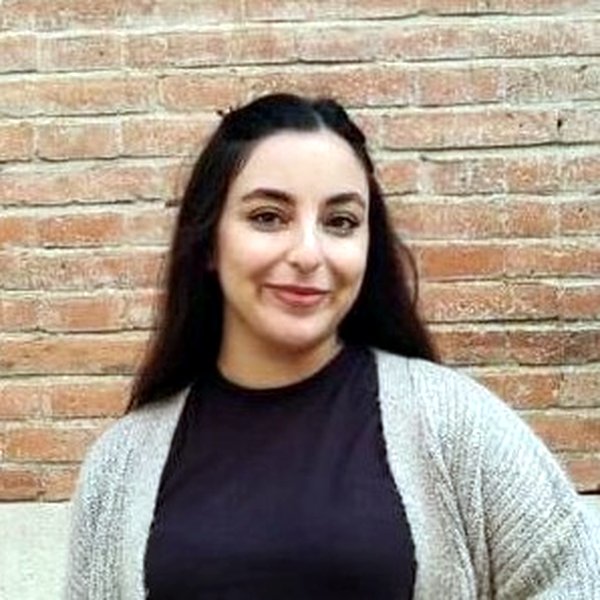


Bachelors degree in business Masters in logistics · TEFL Translation
Certified French & Spanish Language Coach | Business, Exams, & Conversational Mastery
Personally vetted · Strommen’s note
A Berlitz-trained language consultant, marielyne teaches English, French, and Spanish, built for business communication and exam prep specifically.
Specialties
Bachelors degree in business Masters in logistics · TEFL Translation
Certified French & Spanish Language Coach | Business, Exams, & Conversational Mastery
Specialties
Personally vetted · Strommen’s note
A Berlitz-trained language consultant, marielyne teaches English, French, and Spanish, built for business communication and exam prep specifically.

Curva de aprendizaje — milestones & moves
5 intermediate-plateau moves that mark real Spanish progress
These aren't beginner phrases. They're the structures and constructions that mark when an intensive learner crosses from A2 into B1 and from B1 into B2. Screenshot when you're tracking your own progress.
-
01
Me cuesta...
Literally "it costs me," idiomatically "I find it hard to." The construction every intensive learner needs by month two. Followed by an infinitive: me cuesta hablar rápido (I find it hard to speak quickly), me cuesta entender el subjuntivo (I find the subjunctive hard). Marks a shift from textbook "es difícil para mí" into how native speakers actually phrase struggle. The first thing intensive learners reach for when their tutor asks how the week went.
e.g. Me cuesta el subjuntivo, pero estoy avanzando.
-
02
Para que + subjunctive
The subjunctive trigger that breaks the B1 ceiling for most intensive students. Para que (so that, in order that) always demands the subjunctive in the following clause: te lo explico para que entiendas (I'm explaining so that you understand). Five other high-frequency subjunctive triggers worth drilling in the same week: antes de que, a menos que, aunque (when expressing hypothetical), cuando (future), and ojalá. Internalize these six and the subjunctive stops feeling foreign.
e.g. Te llamo para que sepas la dirección.
-
03
Por vs para
The preposition pair every intermediate learner half-knows and most get wrong under speaking pressure. Por answers "by means of, through, because of, in exchange for": gracias por la ayuda, viajo por avión. Para answers "toward, in order to, intended for, by a deadline": el regalo es para ti, estudio para hablar mejor. The shortcut intensive tutors teach: por is cause and route; para is destination and purpose. Drill it in conversation, not on flashcards.
e.g. Lo hice por ti, no para ti.
-
04
Llevo + time + gerund
The construction Spanish uses where English uses "I've been doing X for Y time." Llevo tres meses estudiando español (I've been studying Spanish for three months). The English "have been -ing" pattern translates badly word-for-word; learners who say he estado estudiando are technically correct but mark themselves as non-native immediately. Llevar + tiempo + gerundio is the native phrasing, and the day it clicks is a real B1 milestone.
e.g. Llevo dos años aprendiendo español intensivamente.
-
05
Acabar de + infinitive
"To have just done X." Acabo de llegar (I've just arrived), acaba de irse (she just left). Like llevar + gerundio, this is one of those constructions that English learners under-use because the English equivalent is a different grammatical pattern entirely. Internalizing acabar de instead of reaching for the present perfect every time is a marker that the learner has started thinking in Spanish rather than translating from English.
e.g. Acabo de terminar la lección de hoy.
About Intensive Spanish
Spanish on a deadline
Intensive Spanish at Strommen means one specific thing: a compressed-timeline curriculum for an adult learner with a real deadline. The deadline is what makes the work intensive, not the learner's enthusiasm. Most of our intensive students arrive with a date on the calendar: a relocation to Mexico City or Madrid in three months, a study-abroad semester starting in the fall, a corporate posting to a Spanish-speaking office, a DELE or SIELE sitting they've registered for, or a self-imposed sprint where they want to be functional in Spanish before a birthday, an anniversary, a long trip. The deadline shapes the curriculum. So does what level you start at and what level you actually need to hit. The first lesson is a calibration session: where are you now, where do you need to be by when, and is the timeline honest. From there your tutor builds the 90-day plan.
The shape of intensive work is different from casual conversational lessons. Where a casual learner might book a weekly 60-minute lesson and let Spanish accumulate over a year or two, an intensive learner runs 5 to 10 lessons a week (typically 60-minute sessions, sometimes 120-minute split sessions for advanced sprinters) paired with structured daily self-study. Daily self-study is non-negotiable. The lessons do roughly a third of the work; the homework cycle, immersion media, and spaced-repetition flashcards do the other two-thirds. Anyone running intensive lessons without committed daily reinforcement at home is paying for fluency they will not actually reach. Tutors say so plainly in the first lesson, because they have watched it fail too often to be diplomatic about it.
Realistic timeline brackets are worth stating before you commit. Going from A1 to A2 in an intensive setting takes most adult learners 3 to 6 weeks at 5 to 10 lessons a week plus 1 to 2 hours of daily self-study. A2 to B1 takes 2 to 3 months at the same cadence. B1 to B2 takes 4 to 6 months and is where most intensive learners hit the wall. B2 to C1 is the long climb. The returns slow markedly even at high lesson volume because the work shifts from rules and patterns to nuance, register, and breadth of vocabulary that only accumulates through massive input. C1 to C2 typically takes years, not months, and intensive lessons help less at that level than long-running media immersion and in-country residency. We will tell you all of this in the trial. A tutor who promises a deadline they secretly know you cannot hit is doing you no favors. For students whose calibration shows the timeline is genuinely tight, the conversation sometimes shifts toward a hybrid plan: hit a realistic threshold by your deadline (say, comfortable B1 instead of stretch B2) and continue past the deadline at a less aggressive pace.
The intensive curriculum has a handful of moving parts the tutor plans together at lesson one. Daily lessons sit at the center, 60 minutes minimum and often 120 minutes split into two sessions during sprint windows, focused on whatever the previous day's review-and-error log surfaced plus the next chunk of structured material (a verb tense, a grammatical pattern, a vocabulary domain). Around the lessons sit four reinforcement habits that do most of the actual work. A homework cycle that reviews yesterday's lesson and previews tomorrow's, with graded reading and listening at your current level. A spaced-repetition flashcard practice (Anki is the standard, twenty new cards a day, ten minutes of review, every day) targeted at the gaps showing up in your speaking. Daily immersion media calibrated to your level (News in Slow Spanish for A2-B1, Radio Ambulante for B2+, native podcasts for C1+), plus films and series in Spanish, news in Spanish, music with lyrics. Pick content you would consume anyway and run the Spanish version. And a weekly 10-minute progress check inside a regular lesson where the tutor scores you against the previous week's targets and adjusts the next week's plan based on what is sticking and what is not.
Immersion is the multiplier. Intensive Spanish lessons paired with a Spanish-speaking environment (a trip to Mexico City or Buenos Aires, a residency in Spain, even a Spanish-immersion week at home with media in Spanish only) compress the timeline by a factor of two or three for the same hours of formal study. If your deadline is a relocation, the move itself becomes part of the curriculum: most students arrive at the new country with B1 from intensive lessons and reach genuine B2 fluency within two to three months on the ground because every interaction is now compulsory Spanish input. If your deadline is a study-abroad start, working through intensive lessons in the months before departure and arriving at A2 or B1 means you spend your first semester learning rather than panicking. Where in-country immersion isn't available, building a daily Spanish-only window at home (everything from the news to the music to the kitchen timer in Spanish) is the closest substitute. Lessons calibrate the curriculum to whichever pattern your life allows. For broader Spanish foundations the 1,000 most common Spanish words list is essential supplementary work for intensive students, since high-frequency vocabulary delivers the largest fluency gains per hour of study time.
Strommen's intensive pedagogy centers on the 90-day curriculum, even when the actual deadline is six weeks or six months. Ninety days is the planning unit. Your tutor sits with you in lesson one, asks about your current Spanish, your target Spanish, your deadline, your weekly bandwidth, and your immersion options, and writes a 90-day plan that breaks into three 30-day arcs. Each arc has its own primary objective (e.g. arc one: present tense fluency and 500 high-frequency words; arc two: past tenses and 500 more words; arc three: subjunctive triggers and conversational sprint), measurable weekly targets, and a clear hand-off to the next arc. The plan adjusts weekly during the progress check. If a student is moving faster than the plan, the tutor pulls forward the next milestone; if slower, the tutor identifies the block (almost always either insufficient self-study or a specific grammatical pattern that hasn't internalized) and redesigns around it. Sprint windows (4-week pushes right before a deadline) get a separate plan that increases lesson density and tightens the daily review cycle. For a head-start on the framework, our 5 effective methods to memorize Spanish conjugations post covers the spaced-repetition habits intensive students lean on, and CEFR vs ILR level explainer helps anchor where you are now versus where you're going.
A few honest tutor observations on what trips up intensive Spanish students. The most common one is trying to run intensive lessons without intensive self-study. Five lessons a week with no homework, no flashcards, no daily input: that pattern produces a student who plateaus inside a month and never reaches the deadline. Lessons need 2-3x reinforcement at home; intensive students who do not put in the home time would be better off downshifting to a casual cadence and adjusting the timeline. The next trap is grammar drill addiction: spending hours on conjugation tables and verb worksheets while avoiding spoken output. Intensive Spanish is output-first by design, because production is what builds fluency at speed. Grammar gets taught as it shows up in conversation, not pre-loaded from a chart. A close cousin of grammar addiction is waiting until you feel "ready" to speak. That is lethal in intensive learning, where the cost of one silent week is roughly one week of progress lost. Speak from the first lesson, even badly. The fourth trap is giving up on the B1 to B2 plateau. Most intensive learners hit it around month three or four, the rate of visible progress slows, and the temptation is to add more grammar study, switch tutors, or quit. None of those are the answer. The answer is more spoken output and more comprehensible input, usually a shift in lesson structure toward extended conversation with subtle correction, plus a media-immersion ramp at home. And one more: students whose deadline is a relocation sometimes try to learn the wrong dialect for their destination. If you are moving to Mexico City, learning Castilian Spanish for three months and then arriving in Mexico is a self-inflicted setback. Match the tutor to the destination. We have native teachers from across the Spanish-speaking world; the trial conversation includes pairing you with the right one.
The Strommen intensive Spanish roster includes native Spanish teachers with deep experience running compressed-timeline curricula: DELE/SIELE prep specialists, university Spanish instructors who have built and taught intensive language-immersion programs, and tutors who have walked dozens of students through pre-relocation sprints to Mexico, Spain, Argentina, Colombia, and Peru. The teachers with university Spanish-instructor backgrounds bring formal pedagogy: scope-and-sequence planning, diagnostic assessment, scaffolded skill-building. The native-speaker tutors from the destination country bring real-time cultural calibration, current slang, and the rhythm and register of how Spanish is actually spoken right now in the place you are going. Many of our intensive tutors hold both: formal teaching credentials and native-speaker depth. Each tutor's bio specifies where they're from, where they've taught, which student profile they fit best (pre-relocation, exam-prep, study-abroad, professional sprint), and how dense a weekly cadence they can sustain. Sibling Strommen Spanish specialties interlock with the intensive curriculum and can be folded in as your tutor sees fit: conversational Spanish for casual-pace learners, business Spanish for professional context, DELE preparation for the certification specifically.
Lessons calibrate to your actual deadline. Pre-relocation Spanish for an upcoming Mexico City move is a different curriculum from DELE B2 prep, which is different from a study-abroad sprint, which is different again from a self-imposed personal challenge. We don't run a generic intensive Spanish course. Each lesson is one-on-one, your tutor plans the 90-day arc around your real timeline, weekly targets adjust based on actual progress, and the trial is free. The most common moves across all intensive paths are daily lessons paired with structured self-study, output-first conversation work from session one, vocabulary acquisition driven by your high-frequency gaps, and the daily comprehensible-input habit. For a head-start before lessons begin, our Spanish course page shows the family of related programs and where intensive Spanish sits within it. Or just browse the full tutor list and book a trial. The trial runs 30 minutes, costs nothing, and produces a real 90-day plan against your actual deadline. Bring the date on your calendar and your honest read on how many hours a day you can give it. We'll tell you whether the timeline holds and what level you can realistically reach by then.
What you'll cover
Lessons & classes tailored to Intensive Spanish
Pre-relocation Spanish
For adults with a date on the calendar: relocation to Mexico, Spain, Argentina, Colombia, Peru, or anywhere Spanish-speaking. The curriculum targets functional B1 by departure: comfortable ordering food, navigating service interactions, holding small talk with neighbors and colleagues, and reading enough to manage paperwork. Dialect matches the destination from day one. The lesson cadence ramps in the final 4 weeks before departure to a 4-week sprint of daily 60- to 120-minute sessions with intensified speaking practice.
DELE / SIELE certification prep
Certification-specific intensive work for students who have registered for a DELE or SIELE sitting. Curriculum is rubric-aligned: oral expression and written expression scored against the official band descriptors, listening and reading drilled against past-paper banks, vocabulary expansion targeted at the exam's topic inventory. Most students arrive needing a one-level lift (B1 to B2 is the most common), and the typical intensive runway is 3 to 6 months of weekly committed work plus daily self-study. The trial conversation includes a level diagnostic and an honest read on the timeline.
Study-abroad and university sprint
For students starting a semester or year abroad in a Spanish-speaking country, or for university Spanish majors trying to compress two semesters of progress into a summer. Intensive work focuses on the gap between classroom Spanish and street Spanish: comprehending native speakers at native speed, cultural register, idiomatic constructions textbook chapters skip. The goal is to arrive on campus speaking at the level your classroom Spanish credentials say you should already be at.
Professional posting and personal sprint
For executives deploying to a Spanish-speaking office, professionals onboarding for cross-border work, or self-motivated adults chasing a personal milestone (be functional in Spanish before a birthday, fluent enough for a long trip, conversational with new in-laws). The curriculum calibrates to the specific working environment (boardroom Spanish, family Spanish, hospitality Spanish, technical Spanish), and the cadence flexes with your professional bandwidth, including evening and weekend lessons for working adults.
FAQ
About Intensive Spanish lessons & classes
How fast can I actually learn Spanish intensively?
Honest brackets, assuming 5 to 10 weekly 60-minute lessons plus 1 to 2 hours of daily self-study: A1 to A2 in 3 to 6 weeks, A2 to B1 in 2 to 3 months, B1 to B2 in 4 to 6 months, B2 to C1 in 8 to 12 months. C1 to C2 takes years regardless of lesson density, because at that level the work is breadth of vocabulary, nuance, and register that only accumulates through massive input. Anyone promising fluency from zero in a month is selling you something. The intensive timelines above are real, and the limiting factor is almost always whether you actually do the daily self-study.
Do I really need to study every day, or can I cluster the work into weekends?
Daily wins decisively. Spanish acquisition rewards consistency over intensity, and the same principle applies inside an intensive program. Six 30-minute self-study sessions across a week build far more Spanish than one 3-hour weekend cram. Spaced-repetition flashcards in particular need daily exposure to work as designed. The honest version of the intensive offer is: yes, you can run 5 to 10 lessons a week, but only if you also put in 1 to 2 hours daily between lessons. Skipping the daily work and counting on lessons alone produces a plateau by week three.
Should I take 5 lessons a week, 10 lessons a week, or split sessions?
Depends on bandwidth and your current level. Beginners reach a useful absorption ceiling around 5 to 7 sixty-minute lessons a week; more than that and material starts blurring without time to consolidate. Intermediate and advanced students can absorb 10 lessons a week, sometimes more, especially in sprint windows before a deadline. Split sessions (60 minutes in the morning, 60 minutes in the evening) work very well for adult learners with focus limits; the morning session covers new material, the evening session does conversation practice and reinforcement of the morning's content. Your tutor adjusts the cadence based on what's actually sticking week to week.
I have a relocation deadline. Can you actually match the tutor to my destination?
Yes, and we strongly recommend matching dialect to destination from lesson one. We have native Spanish teachers from Mexico (Mexico City, Guadalajara, Monterrey, Oaxaca), Spain (Madrid, Barcelona, Seville, Andalusia), Argentina (Buenos Aires), Colombia (Bogotá, Medellín), Peru, Cuba, Venezuela, and elsewhere. Tell us in the trial where you're moving and what your start date is, and we'll pair you with a tutor whose accent, vocabulary, and cultural calibration match. Learning the wrong dialect for your destination is a self-inflicted setback most intensive students don't see coming.
How is intensive different from regular conversational lessons?
Three differences. First, lesson density: 5 to 10 weekly sessions versus the casual learner's 1 to 2. Second, structured curriculum: intensive students get a 90-day plan with weekly measurable targets that adjusts at each weekly progress check, rather than the open-ended conversation work that suits casual learners. Third, daily self-study expectations: intensive learning is half lesson, half home reinforcement (homework, flashcards, immersion media). Casual conversational Spanish can succeed without daily home study; intensive cannot. If you're not ready for the daily commitment, our conversational Spanish page is the better starting point.
I keep hitting the intermediate plateau. Will intensive lessons break me through?
Yes, if you do them right. The B1 to B2 plateau is the most predictable wall in adult Spanish learning, and breaking through it requires three things in combination: high-volume spoken output, targeted work on the subjunctive in real conversational context (not from a chart), and vocabulary expansion driven by your actual interests. Most plateau-stuck learners can move through to genuine B2 in 4 to 6 months of intensive committed work. The trap to avoid is responding to the plateau by adding more grammar study, and that's almost always the wrong move. The right move is more speaking and more comprehensible input. Your tutor will diagnose the specific blocks in the trial.
Are lessons online or in person?
Both. Most intensive Spanish students choose online lessons via Zoom or Jitsi for the scheduling flexibility, since daily lessons are easier to keep on the calendar when there's no commute. Several of our tutors also teach in person around Los Angeles, and a few teach in person in their home countries during student in-country immersion stays. The booking widget on each tutor's profile shows their available formats.
What does the trial lesson actually cover?
30 minutes, free. The tutor will hold a brief conversation in Spanish to assess your current level, ask about your deadline and what you need to be able to do by it, propose a 90-day curriculum arc, and give you an honest read on whether the timeline is realistic. If it isn't, the conversation shifts to either lowering the target or extending the runway. You'll leave the trial with a clear picture of what intensive looks like for you specifically. Most students continue with the trial tutor; if not, swap is easy.
Ready for Intensive Spanish lessons or classes?
Book a free 30-minute trial with one of our personally vetted tutors. Private lessons or small-group classes — your choice.