



Personally vetted instructors
Italian Opera tutors, lessons & classes
Da capo From the top, as the score notation reads.
Personally vetted Italian opera tutors for singers preparing Verdi, Puccini, Donizetti, Rossini, Bellini, and the full Bel Canto and verismo canon. Diction, libretto translation, role coaching, and audition prep grounded in the standards every major opera house still holds singers to.
Your instructors
Italian Opera tutors for private lessons & classes
Strommen has been coaching opera singers since 2006, and Italian repertoire is the deepest part of our roster because Italian sits at the center of every major company's season. The LA opera ecosystem (LA Opera, Long Beach Opera, Pacific Opera Project, USC Thornton, Colburn, Cal State LA, UCLA) feeds singers into our roster, and we coach singers from all of them along with singers preparing for houses elsewhere. Every tutor below was met and vetted by us in person or via thorough video interview. No marketplace. No automated profile-creation. Real coaches with real Italian-repertoire credits.
Filter by location, age, or price. Then book a 30-minute free trial.
Below are the Strommen tutors who specialize in Italian opera. Photos, ratings, and rates are real. Click any card to read their bio and book a free 30-minute trial.
I want to learn…
Every tutor, personally met. — founder-vetted since 2006, in Los Angeles and online worldwide.
Get a personalized plan
Pick your language — a language advisor will match you with the right tutor and map out your path.

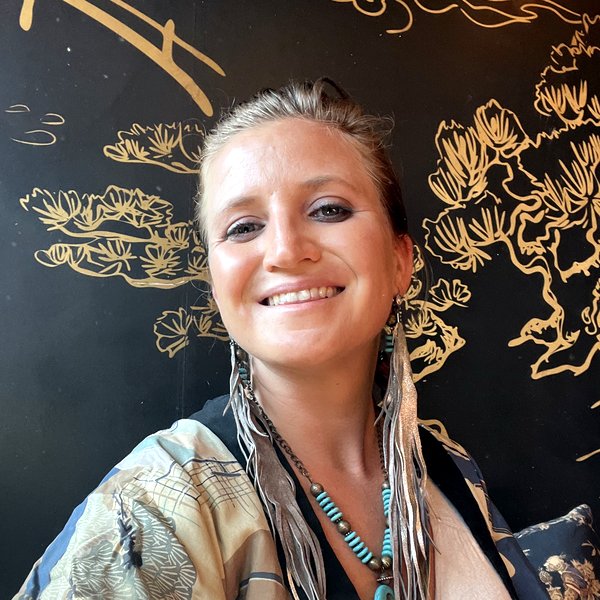
AA Degree
Italian Professional Tutor and Voice teacher
Personally vetted · Strommen’s note
Raised by an opera tenor and a folk singer, Luna teaches Italian and French opera repertoire alongside conversational lessons and actor dialect coaching.
Specialties
AA Degree
Italian Professional Tutor and Voice teacher
Specialties
Personally vetted · Strommen’s note
Raised by an opera tenor and a folk singer, Luna teaches Italian and French opera repertoire alongside conversational lessons and actor dialect coaching.

Dizione lirica — sung Italian
5 things every singer learns first about Italian operatic diction
These are the specifically operatic conventions that distinguish sung Italian from spoken, and they're what every coach drills in the first three sessions. Screenshot for your next coaching session.
-
01
Seven sung vowels, not five
Italian writes five vowels but sings seven, because e and o each split into closed (/e/, /o/) and open (/ɛ/, /ɔ/) phonemes. Operatic tradition treats all seven as pure cardinal vowels, no diphthongization toward English schwa. Vowel purity is the engine of Italian vocal line.
e.g. <em>amore</em>: /aˈmoːre/, three pure vowels, no English drift.
-
02
Pèsca vs pésca
The open/closed distinction on e and o is load-bearing in libretto pronunciation. Pèsca with open è is a peach; pésca with closed é is fishing. Vènti with open è is twenty; vénti with closed é is winds. Composers wrote knowing which vowel sat under each note, so the wrong vowel changes both meaning and resonance.
e.g. <em>perché</em> closed é versus <em>caffè</em> open è.
-
03
Consonanti doppie
Italian distinguishes single from doubled consonants as separate phonemes; the doubled version is held audibly longer and carries expressive weight in opera. Pala (shovel) vs palla (ball). Verismo singing leans on percussive doppie for emphasis on emotionally charged words like sangue, morte, amore. English speakers underdo gemination because English has no phonemic doubling.
e.g. <em>O bella signorina, dimmi di sì</em>: held doppia on "bella" and "dimmi."
-
04
Libretto Italian is its own register
Most operatic repertoire was written between 1600 and 1925, and the language reflects that. Voi appears as a formal singular address largely dropped in modern Italy; passato remoto is the living past tense; second-person endings in -avi and -evi are standard; poetic word order pushes the verb to the end of the clause for meter. Even fluent modern Italian speakers benefit from line-by-line libretto translation before singing.
e.g. <em>Vincerò!</em> uses the future; <em>vinsi</em>, <em>amai</em>, <em>partì</em> show passato remoto across Puccini, Verdi, Bellini.
-
05
Vocale sul fiato
Italian vocal line is built on a continuous vowel stream, with consonants placed cleanly at the edges so vowel duration is maximized. The Italian tradition calls this vocale sul fiato: the vowel sings, the consonant is what the air passes through on its way to the next vowel. Singers trained in English-language repertoire often arrive with too much consonant emphasis, breaking the vowel line.
e.g. <em>Casta diva</em> opening: every consonant gets out of the way of the vowel.
About Italian Opera
The repertoire at the center of every opera house
Italian opera is the trunk of the operatic tree. Verdi alone wrote 28 operas, most still in the active repertoire of every major house; Puccini wrote ten, with at least six (La bohème, Tosca, Madama Butterfly, Turandot, Manon Lescaut, Gianni Schicchi) anchoring opera seasons globally; Donizetti wrote 70-plus, with Lucia di Lammermoor, L'elisir d'amore, and Don Pasquale on every house schedule somewhere any given year; Rossini's Il barbiere di Siviglia, La Cenerentola, and L'italiana in Algeri close the Bel Canto perimeter from the other side; Bellini's Norma and I puritani sit at the technical apex of soprano repertoire. This page is for singers preparing any of that catalog: young artists on their first Verdi role, conservatory students learning arie antiche, emerging professionals adding Puccini, and established singers refining specific parts for upcoming productions.
The sound of Italian opera is built on the vowel. Italian operatic tradition treats the five written vowels as seven sung phonemes (open and closed variants of e and o split into separate sounds), and each is held as a pure cardinal vowel with no diphthongization toward English schwa. Voice rides on the stable vowel; consonants happen at the edges. Lose that purity and the whole architecture collapses. The open-versus-closed distinction on e and o is load-bearing throughout the libretti: pésca with closed é is fishing, pèsca with open è is a peach. Vénti with closed é is winds, vènti with open è is twenty. Composers wrote knowing which vowel sat under which note, and the wrong vowel damages both the meaning and the resonance. Reference texts in active use across the field include Joan Wall's International Phonetic Alphabet for Singers and Evelina Colorni's Singers' Italian; either is a starting point for the diction work.
Gemination is the consonant counterpart. Italian distinguishes single and doubled consonants as separate phonemes, and the doubled version carries audible length plus expressive weight. Pala is a shovel; palla is a ball. Caro is dear; carro is a cart. In operatic singing the doppia also becomes interpretive: verismo composers wrote percussive doubled consonants on words like sangue, morte, amore, and singers lean into the doubling for emotional weight. English speakers underdo it almost without exception, because English does not phoneme-distinguish single from double consonants. Coaching includes hearing it, producing it, and timing it expressively to the score.
Libretto Italian is a register apart from modern conversational Italian, and singers who learn modern Italian in classroom courses are often surprised by how much of the libretto vocabulary is unfamiliar. Most of the repertoire was written between 1600 and 1925, and the language reflects that. Voi appears as a formal singular address that modern Italy outside southern dialects has largely dropped; archaic verb forms (the passato remoto used the way modern Italian uses the passato prossimo, second-person endings in -avi and -evi as living forms) carry across Verdi, Puccini, and Bellini; poetic word order pushes the verb to the end of the clause for meter and emphasis. Reading the libretto as text before singing it is non-negotiable. Most singers underestimate how much of the text they do not understand on first pass. Coaching includes line-by-line translation alongside diction, drawing on the Nico Castel IPA-transcribed libretto series as the field standard for the major Italian operas.
The four repertoire periods each have a sound of their own. Bel Canto (Rossini, Bellini, Donizetti, plus early Verdi) asks for coloratura agility, ornamentation, breath spans that hold long melismatic passages, and a vocal line that floats above the orchestra rather than fights it. Verdi's middle and late period (from Rigoletto through Otello and Falstaff) shifts toward dramatic declamation, heavier orchestration, and a more direct emotional contract with the text. Verismo (Mascagni, Leoncavallo, Cilea, Giordano) tightens the realism further, with composers writing closer to spoken cadence and with percussive consonants on emotionally charged words. Puccini sits across that boundary: lyric Italian with verismo emotional weight and orchestral writing that can swamp an underpowered voice. A coach calibrates the diction and stylistic markup to the specific period the singer is working in; what serves Rossini will overcoach Puccini, and what serves Puccini will undercoach Bellini.
Legato is the interpretive technique that ties all of it together. Italian vocal line is a continuous vowel stream with consonants placed cleanly and quickly at the edges so the vowel duration stays maximized. The Italian tradition calls it vocale sul fiato (vowel on the breath): the consonant is something the air passes through on its way to the next vowel, never a stop. Singers trained in English-language repertoire often arrive with too much consonant emphasis, breaking the vowel line and producing a choppier sound than Italian opera wants. Targeted work on consonant-vowel timing is part of every coaching session; the consonant lands early, releases fast, the vowel sings.
Several patterns repeat across singers stepping into Italian opera. Doppia handling is usually the first thing flagged at the trial. Open and closed e/o consistency comes up almost immediately after. The rolled R question lands next, because operatic tradition uses a fully rolled R throughout, not the softer single-flap R that some regional Italian accents use in speech. Pure vowels under sustained pitches catch singers off guard, because the temptation to diphthongize on long notes is strong and breaks the line. Libretto comprehension surprises even fluent modern Italian speakers, because archaic vocabulary and inverted syntax mean a recitative can be misread by someone who can order a coffee in Trastevere without thinking. And the last one is interpretive: Italian opera asks the singer to commit emotionally without losing vocal line, which is the technical-and-artistic balance the entire training is aimed at.
Between lessons, listening is non-negotiable. Build a personal library across periods: Bel Canto (Sutherland, Sills, Caballé, Florez, Camarena); Verdi (Bergonzi, Cappuccilli, Pavarotti, Tebaldi, Domingo, Netrebko); Puccini (Tebaldi, Freni, di Stefano, Pavarotti); verismo (Corelli, Tebaldi, del Monaco). Shadow their diction with libretto in hand. The historical La Scala and Accademia Nazionale di Santa Cecilia traditions are the institutional anchors; the Pesaro Rossini Festival, Verona, Macerata, and Martina Franca are the festival reference points. Mark up scores with IPA where the diction is uncertain. Watch live where you can. For broader Italian foundations, our 1,000 most common Italian words list builds a base, and our Italian for opera singers page covers adjacent diction-coaching ground from a singer-language-toolkit angle.
The Strommen Italian-opera roster includes native Italian diction coaches with conservatory backgrounds, North American opera coaches with extensive Italian-repertoire experience, and singers who have built second careers in coaching after professional stage work. Each tutor's bio specifies training, professional experience, repertoire areas, and student profile fit (conservatory, emerging professional, established singer, art-song specialist). You can match yourself to a native Italian specialist for ground-up vowel and consonant work, a coach with extensive role experience for repertoire preparation, or a specialist in early Italian or 20th-century repertoire if your program sits at the edges of the tradition. For adjacent specialties, our French opera and German opera pages cover the two other major operatic languages, and our Italian dialect coaching page is the sister specialty for stage actors working in regional Italian. Browse the Italian course page for the broader program family, or the full tutor list to see every coach across every language. Lessons are one-on-one. Bring the score. Mark the vowels. We work from there.
What you'll cover
Lessons & classes tailored to Italian Opera
Bel Canto: Rossini, Bellini, Donizetti
Coloratura agility, ornamentation, breath spans for long melismatic phrases, vocal line that floats above the orchestra. Repertoire focus on the central Bel Canto operas (Il barbiere di Siviglia, La Cenerentola, L'italiana in Algeri; Norma, I puritani; Lucia di Lammermoor, L'elisir d'amore, Don Pasquale) with diction and stylistic markup specific to the early-19th-century operatic Italian register.
Verdi: middle and late period
From Rigoletto through Otello and Falstaff: dramatic declamation, heavier orchestration, direct emotional contract with the text. Role-specific preparation alongside translation review, text interpretation, and stylistic notes that travel through the Verdi performance tradition. Repertoire knowledge calibrated to your specific production, audition, or competition program.
Puccini and verismo
Puccini's full repertoire (La bohème, Tosca, Madama Butterfly, Turandot, Manon Lescaut, Gianni Schicchi) plus the verismo school (Mascagni, Leoncavallo, Cilea, Giordano). Closer-to-spoken cadence, percussive doppie on emotional words, lyric line under heavy orchestration. Stylistic balance between vocal beauty and dramatic commitment is the central craft of this section of the repertoire.
Audition prep, score markup, libretto translation
Short-deadline role preparation, audition aria coaching, score markup with IPA notation, line-by-line libretto translation for recitatives and dramatic passages, and Italian ear-training for non-native speakers. Coaches with experience at North American and European houses can advise beyond just diction on stylistic expectations at specific companies.
FAQ
About Italian Opera lessons & classes
What's the difference between this page and Italian for Opera Singers?
Same coach pool, different framing. Italian for Opera Singers focuses on the language-and-diction toolkit a singer builds across their career: vowels, gemination, libretto register, IPA. This page is organized by repertoire: Bel Canto, Verdi, Puccini, verismo. Pick whichever framing matches where you are. Both link to the same tutors.
I'm preparing my first Verdi role. Where do we start?
First session with the score in hand. The coach reads through the role with you, marks open and closed vowels on the libretto, identifies the lines most likely to drift away from clean Italian under dramatic pressure, and builds a study plan calibrated to your performance date. Verdi-specific stylistic notes (the declamatory cadence, the orchestration, the consonant weight Verdi expected on emotional consonants) thread through the rest of the prep arc.
I sing mostly Bel Canto. Can you coach the ornamentation tradition?
Yes. Several coaches on the roster specialize in Bel Canto coloratura, cadenza writing and adaptation, and the ornamentation tradition (Tosi, Mancini, the Rossini cadenza school) that singers historically built between studying with a coach and learning from senior colleagues. Score markup, cadenza review, and stylistic notes are part of standard Bel Canto preparation here.
Do you provide IPA transcriptions of full roles?
Yes. Standard references in active use include the Nico Castel IPA libretto series for the major Italian operas, plus Joan Wall's IPA for Singers and Evelina Colorni's Singers' Italian. We work from those for established repertoire and build custom transcriptions for less-common roles or unusual edition choices on request.
Where are your Italian opera coaches based?
Most of the roster is in Los Angeles, matching the LA opera ecosystem (LA Opera, Long Beach Opera, Pacific Opera Project, USC Thornton, Colburn, Cal State LA, UCLA). Several coaches are based in Italy (Milan, Rome, Florence) and elsewhere in the US (New York, Boston, San Francisco, Houston) and teach via video. For singers preparing for specific North American houses, LA-based coaches typically know the regional ecosystem and can advise beyond just diction.
Can I prep a Puccini role under a tight deadline?
Yes, with realistic expectations. A typical compressed timeline for a full role is 4 to 8 weeks of intensive coaching at 2 to 3 sessions per week, plus daily home practice between sessions. An audition aria from a Puccini role is 2 to 3 weeks of focused work. Recital programs sit between. The coach builds the plan against your deadline at the trial.
What does the trial cover?
30 minutes, free, with the coach you select. Bring your current repertoire: a role you're preparing, an aria you're working on, an art song from your program. The coach will listen, identify the highest-impact areas to work on first, propose a study plan, and you decide whether to continue. Bring the score if possible since coaches often mark it up during the trial so you leave with concrete IPA notation to practice.
Ready for Italian Opera lessons or classes?
Book a free 30-minute trial with one of our personally vetted tutors. Private lessons or small-group classes — your choice.