



Personally vetted instructors
Syrian Arabic tutors, lessons & classes
أهلين فيك Ahlēn fīk, the warm Damascene welcome reply that doubles a guest's greeting.
Personally vetted Syrian Arabic tutors. Lessons in the spoken Arabic of Damascus, Aleppo, Homs, and the wider country, taught with the melodic Damascene register that has carried across the Arab world through television, music, and now diaspora.
Your instructors
Syrian Arabic tutors for private lessons & classes
Strommen is a curated, founder-vetted practice rather than a marketplace. The Syrian Arabic tutors below were each met by us, and most are native speakers from Damascus, Aleppo, or elsewhere in the country, with the sub-variety they speak listed in their bio.
Click a card to read the full bio, then book a 30-minute free trial.
Below are the Strommen tutors who specialize in Syrian Arabic. Photos, ratings, and rates are real. Click any card to read their bio and book a free 30-minute trial.
I want to learn…
Every tutor, personally met. — founder-vetted since 2006, in Los Angeles and online worldwide.
Get a personalized plan
Pick your language — a language advisor will match you with the right tutor and map out your path.

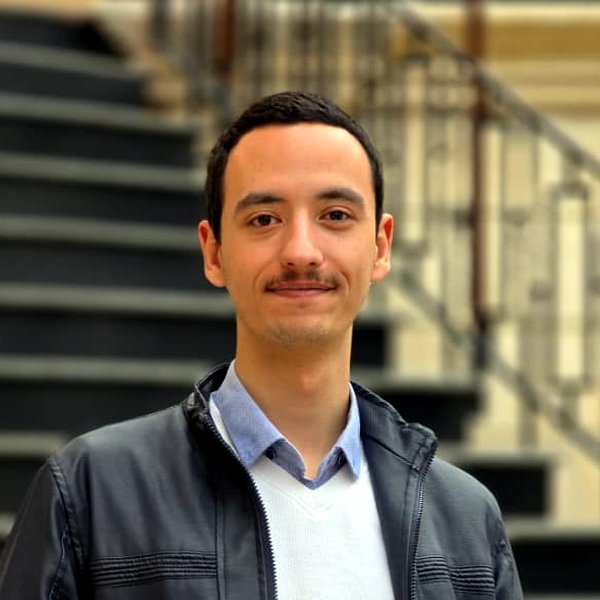


BA in English Literature · TOT , ITM Interactive teaching methodology. BA in English Literature
Step by step to English mastery.
Personally vetted · Strommen’s note
Emad's Arabic dialect range is genuinely enormous: Syrian, Gulf, Levantine, Emirati, Saudi, Moroccan. English is taught step by step alongside it.
Specialties
Also speaks: Copywriting, Spanish, Translation
BA in English Literature · TOT , ITM Interactive teaching methodology. BA in English Literature
Step by step to English mastery.
Specialties
I also speak: Copywriting, Spanish, Translation
Personally vetted · Strommen’s note
Emad's Arabic dialect range is genuinely enormous: Syrian, Gulf, Levantine, Emirati, Saudi, Moroccan. English is taught step by step alongside it.

الشامي الدمشقي — Damascene culture & speech
5 Syrian expressions that carry the Damascene warmth
These are the courtesy and culture formulas that mark Damascene speech, audible in any Syrian drama and central to how the dialect actually feels. Worth saving.
-
01
ربي يخليك rabbī yikhallīk
"May God preserve you." The warm Syrian thank-you said when someone has done you a real favor or shown unusual care, doing emotional work a plain shukran cannot. Pan-Syrian and instantly recognizable as not generic Levantine. Speakers of any faith or none use it freely.
e.g. Said to a tutor who stayed late on a difficult lesson: ربي يخليك على هاد الشرح.
-
02
شو أخبارك shū akhbārak
Literally "what's your news." The standard Damascene how-are-you, where the expected answer is the same length back rather than a quick "good, thanks." Cutting it short reads as cold, so the exchange runs three or four rounds before the actual conversation begins.
e.g. Opening a phone call: مرحبا، شو أخبارك، شو عاملة؟
-
03
عيني عليك ʿaynī ʿalayk
Literally "my eye is upon you." A high-warmth phrase used to express affectionate worry or care, the kind a Damascene grandmother says to a grandchild heading out into the world. Pan-Syrian. Watch the register: it is intimate, not formal.
e.g. A mother seeing off a son for a long trip: عيني عليك يا حبيبي.
-
04
يا بيي / يا أمي yā bayyī / yā immī
"My father" and "my mother," used as exclamations of mild surprise or distress, similar to English's "oh my goodness." The reversal (the speaker invokes their parent rather than addressing them) is purely emotional, and the phrase belongs in everyday speech across the whole country.
e.g. Reacting to traffic on the way to a meeting: يا بيي، شو هاد الزحمة!
-
05
متبل، فتوش، كبة نية mutabbal, fattoush, kibbe nayye
The Damascene mezze table, in three iconic dishes. Mutabbal is the smoked-eggplant dip Westerners call baba ghanoush, fattoush the sumac-and-pomegranate bread salad, kibbe nayye the raw-lamb-and-bulghur speciality eaten with mountain herbs. The vocabulary appears in any normal conversation about lunch, and a tutor walks you through ordering and hosting alongside.
e.g. Greeting guests with the spread already laid: تفضلوا، عندنا متبل وفتوش وكبة نية.
About Syrian Arabic
The Arabic of old Damascus, still in motion
Syrian Arabic occupies an unusual position in the Arab-language world. It sits inside the Levantine family alongside Lebanese, Palestinian, and Jordanian, sharing most of its grammar and a large core vocabulary. But Damascene Syrian in particular has carried across the entire Arab world through a single cultural channel: Syrian period drama. Bāb al-Ḥāra, the long-running serial about old-Damascus quarters during the French Mandate, ran for over a decade and was watched at peak Ramadan viewing hours from Morocco to the Gulf. Its successor dramas have done the same. Audiences who would never naturally encounter Damascene speech absorbed its melodic intonation, its formal-old-city vocabulary, and its distinctive courtesy formulas through these broadcasts. The result is that Damascene Syrian is the most recognized urban Arabic dialect after Egyptian, and it has done so without the demographic weight of a Cairo or the diaspora reach of a Beirut. That cultural authority is what a Syrian Arabic tutor inherits the moment they sit down for a first lesson.
The Damascene melodic quality, the well-known Damascene singsong, is the first thing a trained ear notices. Syrian speech tends to be slower than Beiruti and warmer in pitch than Cairo, with a rising and falling intonation pattern that gives even routine conversation a quality of unhurried storytelling. The qāf in urban Damascene speech lands as a glottal stop, matching the wider urban Levantine pattern, so "qalb" (heart) becomes "alb" and "qaddēsh" (how much) becomes "addēsh." But the country is not uniform on this. Aleppine speech, in the north, keeps some classical retentions and often pronounces the qāf as a uvular k closer to MSA, which is one of the cleanest ways to place an Aleppo speaker against a Damascene one within a few seconds. Homs and Hama sit between the two, with their own rural-and-urban patterns. Coastal Latakia speech leans toward Lebanese. A good tutor will tell you which Syrian sub-variety they speak, because the differences are audible and they matter.
The vocabulary that gives Damascene speech its texture is largely shared with the wider Levantine family but carries Syrian-specific weight in a few places. "Shū," the question word for "what," is universal across Levantine but appears in Damascene speech with particular frequency, threaded through any conversation as a soft question marker the way "so" works in English. The phrase "shū akhbārak," literally "what's your news," is the standard Damascene how-are-you, and the expected reply is the same length back rather than a one-word answer; cutting the exchange short reads as cold. "Yā bayyī" and "yā immī," literally "my father" and "my mother," are used as affectionate exclamations of mild surprise or distress, similar to English's "oh my goodness." "Rabbī yikhallīk," "may God preserve you," is the warm Syrian thank-you that does work a plain shukran cannot, said when someone has done you a real favor or shown unusual care. "ʿAyni ʿalayk," literally "my eye is upon you," is a high-warmth phrase used to express affectionate worry, the kind a Damascene grandmother says to a grandchild leaving the house.
The Damascene table is the cultural anchor most tutors will lean into early because the food vocabulary appears everywhere in normal speech. The mezze tradition is at its most developed in Damascus, with the slow Friday-lunch spread that runs across an entire afternoon: mutabbal (the smoked-eggplant dip Westerners often call baba ghanoush), fattoush (the bread salad with sumac and pomegranate molasses), tabbouleh, hummus, kibbe nayye (raw lamb pounded with bulghur, eaten with mountain herbs), the small grilled-meat plates, and the bread baked fresh that morning. Damascene sweets are their own canon: maʿmoul (the date-stuffed semolina cookies made for Eid), barāzeq (the sesame-and-pistachio biscuits), and the Nabulsi-style kunafa that traveled south from Nablus and made itself at home in Damascus. Aleppine cuisine sits alongside, distinct in its own right, famous for its kibbe varieties (including kibbe Ḥalabiyya, an Aleppine bulghur-shell speciality) and its use of tamarind and pomegranate.
The Syrian situation since 2011 has scattered the speech community across Turkey, Lebanon, Jordan, Germany, Sweden, Canada, the US, and many other countries, and that scatter has changed who books Syrian Arabic lessons and why. The largest cluster is diaspora-and-resettlement learners: children of Syrian refugee families who arrived in the US, Canada, or Europe as teenagers or younger and are now in their twenties wanting to consolidate a dialect they speak imperfectly. A second cluster is partners of Syrian heritage who want to be understood by parents and grandparents who never switched to English at home. A third is academic, journalism, NGO, and human-rights workers covering the region. A fourth is a steady trickle of learners who fell in love with the dialect through the dramas and want to learn the version they hear on screen. The Strommen tutors below teach the dialect as it is actually spoken in Damascus, Aleppo, Homs, the coast, or the diaspora, calibrated to your particular sub-variety and reason for learning, alongside our Levantine Arabic roster for the wider regional koine and our MSA tutors for students who want both spoken and written register in the same plan. For deeper context on how the dialects fit together, the Arabic dialects guide is the right next read, and you can see the full Arabic classes overview on the main Arabic page.
What you'll cover
Lessons & classes tailored to Syrian Arabic
Damascene pronunciation and the Damascene singsong
The slower pace, the rising-and-falling intonation pattern, and the glottal-stop qāf that defines urban Damascene speech. Lessons drill the prosody directly with listening practice on real Damascene audio (drama clips, family-style dialogue, Fairuz's slower repertoire) so the melody becomes a habit rather than a feature you only recognize.
Sub-variety: Damascus, Aleppo, Homs, the coast
Aleppine speech keeps some classical retentions and a uvular qāf closer to MSA. Homs and Hama sit between the urban and rural patterns. Coastal Latakia leans toward Lebanese. Tell your tutor which Syrian region your connection points to and lessons lean that way rather than flattening into a generic Damascene default.
Courtesy formulas and family vocabulary
The Syrian-specific courtesy register that English does not have parallels for: rabbī yikhallīk as a warm thank-you, ʿaynī ʿalayk as an affectionate worry phrase, yā bayyī and yā immī as everyday exclamations, the chained shū akhbārak greeting that runs several rounds. These appear constantly in normal speech, and tutors treat them as the default rather than as ornaments.
Mezze, sweets, and the Damascene table
Mutabbal, fattoush, tabbouleh, hummus, kibbe nayye, the small grilled-meat plates, and the Damascene sweet canon (maʿmoul, barāzeq, kunafa). Aleppine cuisine alongside, with its own pomegranate-and-tamarind tradition. The vocabulary appears anywhere food appears, which is most of Syrian social life. For a wider vocabulary base between lessons, the 1,000 most common Arabic words is a solid frequency reference, and students who want stronger MSA alongside Syrian can pair this with our Modern Standard Arabic tutors.
FAQ
About Syrian Arabic lessons & classes
Is Syrian Arabic the same as Levantine Arabic?
Syrian is a sub-variety of Levantine, alongside Lebanese, Palestinian, and Jordanian, and the four share most of their grammar and a large core vocabulary. What marks Syrian, especially Damascene Syrian, is its melodic intonation, the specific courtesy register (rabbī yikhallīk, ʿaynī ʿalayk, yā bayyī), and the cultural reach the dialect has built through Syrian television drama, which has carried Damascene speech to viewers across the Arab world. If you want the wider regional koine, our Levantine Arabic tutors teach it as the shared spoken Arabic of the four countries together.
Should I learn Syrian Arabic from a Damascene tutor or an Aleppo tutor?
Depends on your goal. Damascene is the more widely recognized urban Syrian register, the one carried by drama and music across the Arab world, and it is the default for learners with no specific regional tie. Aleppine keeps some classical retentions, including a uvular qāf, and is the right choice if your family or work connection points to Aleppo or the north. Tell your tutor at the trial and they can lean toward whichever sub-variety matters to you.
I learned Arabic from Syrian dramas. Is that real Damascene speech?
Yes, largely. Series like Bāb al-Ḥāra are set in old Damascus and use a register that leans toward formal-old-city Damascene, with vocabulary and intonation that audiences across the Arab world have learned to recognize. The everyday Damascene spoken in homes today is slightly less ornate and slightly faster, but the dramas are a genuinely useful ear-training source. A tutor can help you calibrate from drama-Damascene to everyday-Damascene.
Are your tutors native Syrian speakers?
Yes. The teachers on this page are native or near-native speakers from across Syria and the diaspora, and each bio specifies where they are from and which sub-variety they speak. Many were trained as language teachers before they left the country and have spent years teaching Syrian Arabic to adult learners abroad.
Can I take Syrian Arabic lessons online or only in person?
Both. Many of our Syrian Arabic tutors teach online via Zoom or Jitsi and are available worldwide. Several also teach in person around Los Angeles. The booking widget on each tutor's profile shows their available formats and current schedule.
Should I learn Modern Standard Arabic first?
It depends on your goal, and the two are not in competition. MSA is the written and formal register every literate Arab shares, while Syrian is the spoken dialect of Damascus and the country. Many learners run both in parallel, treating them as two registers of one language. If your reason for learning is family or daily conversation, the dialect can lead. If you also need to read or write at a serious level, your tutor will weave MSA in alongside, or you can study it on its own with our MSA tutors.
What does a Syrian Arabic lesson actually look like?
Lessons are one-on-one and built around your goal. A typical hour mixes conversation in Syrian on a topic you chose, targeted work on pronunciation and the Damascene prosody, Syrian-specific vocabulary and courtesy formulas, and listening practice with real audio: drama clips, Fairuz's slower repertoire, family-style dialogue. Tutors set concrete weekly goals at the trial lesson and adjust as you go.
How long until I can hold a conversation in Syrian Arabic?
It depends on your starting point and the hours you put in between lessons. A complete beginner aiming for everyday conversation usually needs several months of consistent weekly lessons with self-study in between. Diaspora learners with a passive ear from parents or grandparents often move faster, since the comprehension is already there and the work shifts to active production. Your tutor will give you a realistic timeline at the trial rather than a marketing one.
Ready for Syrian Arabic lessons or classes?
Book a free 30-minute trial with one of our personally vetted tutors. Private lessons or small-group classes — your choice.