



Personally vetted instructors
Palestinian Arabic tutors, lessons & classes
كيف الحال Kīf el-ḥāl, the warm pan-Palestinian "how's it going."
Personally vetted Palestinian Arabic tutors. Lessons in the spoken Arabic of Jerusalem, the West Bank, Gaza, and the wider Palestinian diaspora, taught with the sub-variety your family or work connection points to.

Your instructors
Palestinian Arabic tutors for private lessons & classes
Strommen is a curated practice, not a marketplace. Each Palestinian Arabic tutor below was met and vetted by us, and most are native speakers from across the West Bank, Jerusalem, Gaza, the 1948 territories, or the long Palestinian diaspora, with the sub-variety they speak listed in their bio.
Filter by location, age, or price. Then book a 30-minute free trial.
Below are the Strommen tutors who specialize in Palestinian Arabic. Photos, ratings, and rates are real. Click any card to read their bio and book a free 30-minute trial.
I want to learn…
Every tutor, personally met. — founder-vetted since 2006, in Los Angeles and online worldwide.
Get a personalized plan
Pick your language — a language advisor will match you with the right tutor and map out your path.

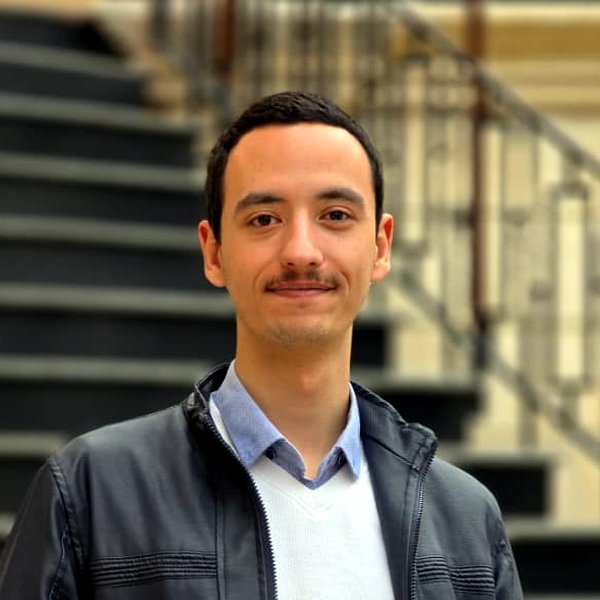


BA in English Literature · TOT , ITM Interactive teaching methodology. BA in English Literature
Step by step to English mastery.
Personally vetted · Strommen’s note
Emad's Arabic dialect range is genuinely enormous: Syrian, Gulf, Levantine, Emirati, Saudi, Moroccan. English is taught step by step alongside it.
Specialties
Also speaks: Copywriting, Spanish, Translation
BA in English Literature · TOT , ITM Interactive teaching methodology. BA in English Literature
Step by step to English mastery.
Specialties
I also speak: Copywriting, Spanish, Translation
Personally vetted · Strommen’s note
Emad's Arabic dialect range is genuinely enormous: Syrian, Gulf, Levantine, Emirati, Saudi, Moroccan. English is taught step by step alongside it.

الفلسطيني — Palestinian culture & speech
5 Palestinian markers worth learning before your first lesson
These are the words and patterns that mark speech as Palestinian rather than generic Levantine. Worth saving.
-
01
كتير ktīr
"Very," "a lot." The pan-Levantine intensifier, and a constant in Palestinian speech, used where an Egyptian would say qawi and a Maghrebi bezzāf. It tags onto adjectives (ḥilw ktīr, "very nice") and onto thanks (shukran ktīr, "thank you so much").
e.g. حلو كتير ḥilw ktīr — "really nice."
-
02
يا با / يا إمّا yāba / imma
The Palestinian parent-and-child reversed address, where a parent calls a child "yaba" (literally "father") or "imma" (literally "mother"), conveying a closeness no direct English translation carries. The phrasing essentially names the bond rather than the child, and it is one of the warmest features of Palestinian family speech.
e.g. A father calling to his daughter: تعالي يابا taʿālī yāba, "come, my dear."
-
03
هيك hēk
"Like this" or "like that." A high-frequency Palestinian connector that does constant low-level work in conversation, similar to how "like" softens English speech. It is shared with the wider Levantine family but the rhythm and frequency in Palestinian speech are characteristic.
e.g. Used to mean "that's how it is": هيك الوضع hēk il-waḍʿ, "that's the situation."
-
04
مقلوبة maqlūba
Literally "flipped over." The iconic Palestinian dish: rice, vegetables (eggplant, cauliflower, potato), and lamb or chicken layered in a pot and flipped upside down onto a serving tray, so the bottom becomes the top. The drama of the flip is part of the meal, and any household across the West Bank, Gaza, or the diaspora cooks it on regular rotation.
e.g. Inviting a guest: عندنا مقلوبة اليوم ʿindnā maqlūba il-yōm, "we have maqluba today."
-
05
كنافة نابلسية knāfe Nābulsiyye
The Nablus-style cheese-and-semolina pastry topped with bright-orange shredded kataifi dough and soaked in sugar syrup. Nablus has effectively trademarked the dish, and a tutor will tell you the city's name is part of the name. Hospitality vocabulary at any celebration, and a common diaspora craving.
e.g. A friend ordering at a Palestinian sweet shop: واحد كنافة نابلسية wāḥad knāfe Nābulsiyye, "one Nablus knafe."
About Palestinian Arabic
The Levantine that carries a history
Palestinian Arabic is a Levantine dialect, but it is also a language with a particular weight, because the speech community that uses it is scattered across the West Bank, Gaza, the 1948 territories inside Israel, Jordan, Lebanon, Syria, the Gulf, and a long diaspora in the US, Latin America, Europe, and Australia. That dispersion is the single most useful thing to understand before your first lesson. Palestinian Arabic does not live in one capital the way Lebanese lives in Beirut or Egyptian lives in Cairo. It lives in a network of sub-varieties that have stayed in real contact through family, media, music, and movement, and the version your tutor teaches will track where your particular connection points. A student with grandparents from Jaffa, a partner from Ramallah, a colleague from Gaza, and a friend from Nazareth would each end up learning a slightly different shape of the same dialect, and that is the right outcome rather than a problem to solve.
The sub-varieties divide along a few clear lines. Urban Palestinian, spoken in cities like Jerusalem, Ramallah, Nablus, Hebron, and Jaffa before 1948, lands the qāf as a glottal stop, so "qalb" (heart) becomes "alb" and "qaddēsh" (how much) becomes "addēsh," matching the urban Levantine pattern from Beirut and Damascus. Rural Palestinian and Bedouin speech keep older realizations: in many villages the qāf lands as a hard k, so "qāl" (he said) sounds like "kāl," and in Bedouin speech the qāf becomes a hard g, the way it does in Jordan and the Negev. The kāf itself can soften to a "ch" sound in some rural areas, so "kīf" (how) is sometimes heard as "chīf." Gaza speech carries Egyptian influence from its long border, and 1948 Palestinian speakers, those who remained inside what became Israel, have added Hebrew loans to their everyday register in ways the West Bank generally has not. A tutor familiar with this map can place a speaker within a few sentences and can teach you to do the same.
The vocabulary that marks Palestinian speech is largely shared with the wider Levantine family, but a few choices give the dialect away to a trained ear. "Kteer" is the universal intensifier for "very" or "a lot," used where an Egyptian would say "qawi" and a Maghrebi "bezzāf." "Hēk" is "like this" or "like that," doing constant low-level work in conversation. "Bidd-" is the wanting verb, biddi for "I want," biddak "you want," biddo "he wants," identical to Levantine more broadly. "Yā zalama," the affectionate "hey man" tag, is shared with Jordanian. The parent-naming convention is Palestinian-specific in its emotional weight: a Palestinian father might call his daughter yaba, literally "father," rather than calling her by name, and a mother might use imma, "mother." The reversed-relation address is one of the warmest features of Palestinian family speech, and it has no clean parallel in English at all, because the parent is essentially saying "the love between us" by addressing the child with their own relational title.
The keffiyeh is the visual symbol the dialect carries with it, and the cultural vocabulary around it appears regularly in lessons because it appears regularly in life. The black-and-white kufiyya is not generic Arab dress; it is a specifically Palestinian garment whose post-1960s political weight has made it a recognizable marker around the world, while older generations wore it as practical headwear for sun, dust, and cold. A tutor will explain the layered meaning briefly when it comes up, because students with diaspora roots often arrive with strong feeling and incomplete vocabulary around it. The same is true for olive harvest vocabulary (the zaytūn season, the moneadeh harvest gatherings, the cold-pressed early-October oil that any Palestinian household receives jugs of from family in the West Bank), zaʿtar (the wild thyme blend, baked into manʾūshe and stirred into everything), and the foods that anchor Palestinian gatherings: maqluba, the iconic upside-down dish of rice, vegetables, and meat layered in a pot and flipped onto a tray to serve; musakhan, the sumac-and-onion roast chicken on taboon bread; knafe Nablusiyye, the cheese-and-semolina pastry with bright-orange shredded dough on top, which Nablus has effectively trademarked as a specialty.
Most students who book Palestinian Arabic specifically arrive with a clear reason. Diaspora heritage, where family left in 1948 or 1967 and the grandparents speak the dialect at home in Detroit, Brooklyn, Santiago, São Paulo, Amman, or Beirut. A partner with Palestinian roots and a wish to be understood by the people who raised them. Academic study, often the Birzeit summer program in the West Bank, which is one of the major Arabic immersion routes for foreign learners. Journalism, NGO, or human-rights work in the region. Whatever the entry point, the Strommen tutors below teach the dialect calibrated to the sub-variety you actually need. The Strommen Levantine Arabic roster covers the wider regional koine if your interest spans the southern Levant generally, and the MSA tutors handle the written and formal register that runs alongside any spoken dialect. For deeper context on how the spoken varieties fit together, the Arabic dialects guide is the right next read, and you can see the full Arabic classes overview on the main Arabic page, or browse every vetted teacher on the tutors directory.
What you'll cover
Lessons & classes tailored to Palestinian Arabic
Sub-variety mapping and the qāf
Palestinian Arabic is not one accent. Urban speech in Jerusalem, Ramallah, Nablus, and Jaffa lands the qāf as a glottal stop. Rural speech often keeps it as a hard k. Bedouin speech, especially in the south, turns it to a hard g. Gaza carries Egyptian influence, and 1948 Palestinian speakers have added Hebrew loans. Tell your tutor where your connection points and the lessons lean that way.
Family-speech vocabulary and warmth markers
The Palestinian features that English does not have direct parallels for: the reversed parent-child address yāba and imma, the constant ktīr intensifier, the soft hēk connector, and the everyday hospitality formulas that mark a household as Palestinian rather than generic Levantine. Lessons treat these as the default rather than as cultural color, because they are how people actually talk.
Food, harvest, and gathering vocabulary
Maqluba, musakhan, knafe Nablusiyye, the zaytūn (olive) harvest in October, the zaʿtar that lives in any Palestinian kitchen. The vocabulary around the table and the seasonal calendar is its own small fluency, and a tutor weaves it through conversation practice rather than treating it as a separate unit. For broader Arabic vocabulary between lessons, the 1,000 most common Arabic words is a solid frequency reference.
Palestinian within wider Levantine and MSA
Because Palestinian Arabic overlaps heavily with Jordanian, Lebanese, and Syrian speech, lessons keep the wider Levantine picture in view, flagging what is shared and what is specifically Palestinian. Students who eventually want a stronger written foundation alongside Palestinian can pair this with our Modern Standard Arabic tutors.
FAQ
About Palestinian Arabic lessons & classes
Is Palestinian Arabic the same as Levantine Arabic?
Palestinian is a sub-variety of Levantine, alongside Jordanian, Lebanese, and Syrian. The four share most of their grammar and a large core vocabulary, and a Beiruti, a Damascene, an Ammani, and a Jerusalemite can each speak their own variety and understand one another easily. The features that mark Palestinian specifically are its sub-variety map (urban with glottal-stop qāf, rural with hard k, Bedouin with hard g, Gaza with Egyptian influence, 1948 Palestinian with Hebrew loans), the parent-child reversed address, and a set of food and seasonal vocabulary that anchors Palestinian households across the diaspora.
I am a heritage learner with family from a specific Palestinian city or village. Can a tutor match that?
Yes. The roster includes tutors from across the West Bank, Jerusalem, Gaza, and the 1948 territories, and each bio specifies where they are from. If your family is from Jenin, Hebron, Jaffa, or a particular West Bank village, ask the tutor at the trial. Most can lean toward your family's sub-variety even when their own city differs, because Palestinian speech communities have stayed in close contact through media, music, and diaspora networks.
Should I learn Palestinian Arabic or Modern Standard Arabic first?
It depends on your goal. If your reason is family, daily conversation, or work where Palestinian speakers will be your counterparts, the dialect is the direct path. If you also need to read or write at a serious level, MSA is the written register every literate Arab shares. Many learners run both in parallel, treating them as two registers of one language. Your tutor can build the balance based on what you actually need, or you can study MSA on its own with our MSA tutors.
How is Palestinian Arabic different from Jordanian Arabic?
They overlap enormously, more so than any other pair of Levantine dialects, because Amman's demographic history layered large Palestinian populations onto a Jordanian and Bedouin base. The main differences are in family-specific phrasing and in the pronunciation patterns particular communities use. If your family is Palestinian-Jordanian, you can study either, and a tutor familiar with both will lean toward whichever variant your household actually uses. Our Jordanian Arabic tutors teach the other side of that overlap.
Are your tutors native Palestinian speakers?
Yes. The teachers on this page are native or near-native speakers from across the West Bank, Jerusalem, Gaza, the 1948 territories, or the diaspora. Each bio specifies their background, the sub-variety they speak, and how they teach. Heritage learners can match to a tutor whose region matches their family; complete beginners can pick by schedule and fit, since any tutor on the roster can teach the dialect from the ground up.
Can I take Palestinian Arabic lessons online or only in person?
Both. Many of our Palestinian Arabic tutors teach online via Zoom or Jitsi and are available worldwide. Several also teach in person around Los Angeles. The booking widget on each tutor's profile shows their available formats and current schedule.
What does a Palestinian Arabic lesson actually look like?
Lessons are one-on-one and built around your goal. A typical hour mixes conversation in Palestinian on a topic you chose, targeted work on a pronunciation point (often the sub-variety qāf realizations), Palestinian-specific vocabulary, and listening practice with real audio: dabke music, Palestinian film, family-style dialogue. Tutors set concrete weekly goals at the trial lesson and adjust as you go.
How long until I can hold a conversation in Palestinian Arabic?
It depends on your starting point and the hours you put in between lessons. A complete beginner aiming for everyday conversation usually needs several months of consistent weekly lessons with self-study in between. Heritage learners with a passive ear from grandparents or family often move faster, since the comprehension is already there and the work shifts to active production. Your tutor will give you a realistic timeline at the trial rather than a marketing one.
Ready for Palestinian Arabic lessons or classes?
Book a free 30-minute trial with one of our personally vetted tutors. Private lessons or small-group classes — your choice.