



Personally vetted instructors
Moroccan Arabic tutors, lessons & classes
السلام، لاباس Moroccan for "peace" and "no harm," the everyday Darija exchange that opens almost any conversation.
Personally vetted Moroccan Darija tutors. Lessons in the spoken Arabic of Casablanca, Marrakech, Rabat, Fes, and Tangier, with the Amazigh, French, and Spanish layers that are inseparable from it.
Your instructors
Moroccan Arabic tutors for private lessons & classes
Strommen is a curated, founder-vetted teaching practice rather than a marketplace. The Moroccan Darija roster is built around tutors we have met directly, each one teaching the dialect with the Amazigh, French, and Spanish layers intact.
Click any card to read the full bio, then book a 30-minute free trial.
Below are the Strommen tutors who specialize in Moroccan Darija. Photos, ratings, and rates are real. Click any card to read their bio and book a free 30-minute trial.
I want to learn…
Every tutor, personally met. — founder-vetted since 2006, in Los Angeles and online worldwide.
Get a personalized plan
Pick your language — a language advisor will match you with the right tutor and map out your path.

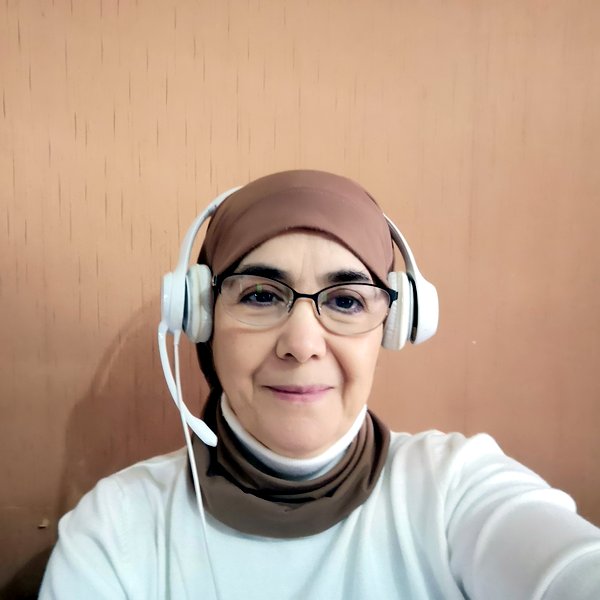


University Degree
Helping students learn with clarity, confidence, and motivation
Personally vetted · Strommen’s note
Quebec-based, Rahma teaches Arabic and French together, four Maghreb dialects covered, Algerian through Libyan.
Specialties
Also speaks: English
University Degree
Helping students learn with clarity, confidence, and motivation
Specialties
I also speak: English
Personally vetted · Strommen’s note
Quebec-based, Rahma teaches Arabic and French together, four Maghreb dialects covered, Algerian through Libyan.

Bachelor degree in french studiesMaster's degree in french studies · DALF C2
Online certified french tutor delf/DALF/ TEF/TCF Preparation
Personally vetted · Strommen’s note
Hela has taught French and Arabic for thirteen years, DELF, DALF, TEF, and TCF certification prep included, plus four different Maghreb Arabic dialects.
Specialties
Bachelor degree in french studiesMaster's degree in french studies · DALF C2
Online certified french tutor delf/DALF/ TEF/TCF Preparation
Specialties
Personally vetted · Strommen’s note
Hela has taught French and Arabic for thirteen years, DELF, DALF, TEF, and TCF certification prep included, plus four different Maghreb Arabic dialects.
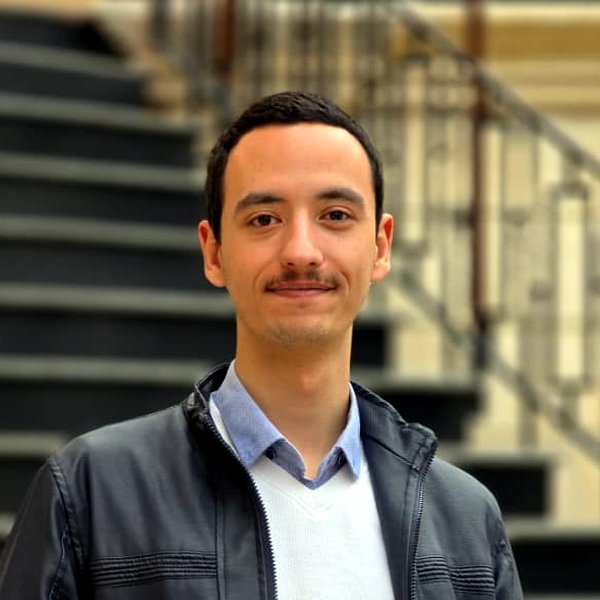

BA in English Literature · TOT , ITM Interactive teaching methodology. BA in English Literature
Step by step to English mastery.
Personally vetted · Strommen’s note
Emad's Arabic dialect range is genuinely enormous: Syrian, Gulf, Levantine, Emirati, Saudi, Moroccan. English is taught step by step alongside it.
Specialties
Also speaks: Copywriting, Spanish, Translation
BA in English Literature · TOT , ITM Interactive teaching methodology. BA in English Literature
Step by step to English mastery.
Specialties
I also speak: Copywriting, Spanish, Translation
Personally vetted · Strommen’s note
Emad's Arabic dialect range is genuinely enormous: Syrian, Gulf, Levantine, Emirati, Saudi, Moroccan. English is taught step by step alongside it.
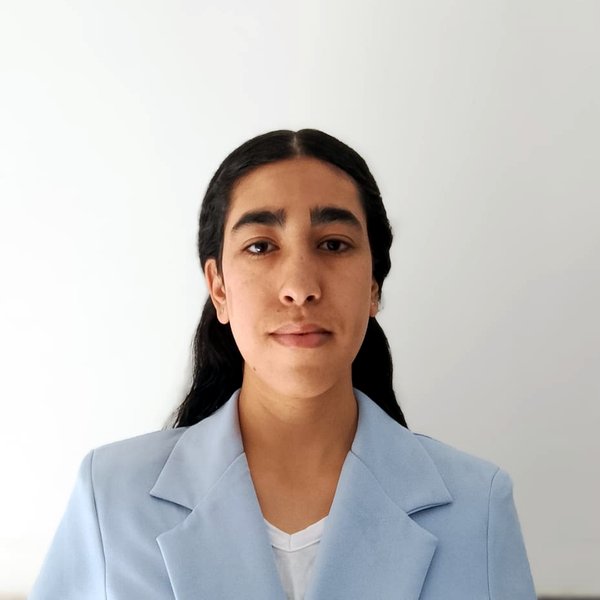
Degree in biology · Certificate in biology
#Moroccan #Arabic #Darija
Specialties
Degree in biology · Certificate in biology
#Moroccan #Arabic #Darija
Specialties

I have a Bachelor degree in French and English Linguistics · TEFL Certeficate
Exellent French teacher
Specialties
saida a
Personally vettedI have a Bachelor degree in French and English Linguistics · TEFL Certeficate
Exellent French teacher
Specialties
الدارجة المغربية — Moroccan culture & slang
5 Darija expressions that mark a speaker as Moroccan
Five expressions a Moroccan ear catches in the first sentence. Screenshot them, then book a tutor to learn the rest in context.
-
01
شكراً بزاف, shukran bzzaf
"Thanks a lot." The intensifier bzzaf is the Maghrebi marker, almost certainly Amazigh in origin, used where a Levantine reaches for ktīr and an Egyptian for qawi. The phrase is one of the fastest single tells of Moroccan or Algerian speech.
e.g. A standard end-of-conversation line: "shukran bzzaf, yaʿṭīk ṣṣaḥa" ("thanks a lot, may God give you health").
-
02
واخا, wāḫa
"Okay," "alright," "fine." The default casual agreement marker across the Maghreb. Likely Amazigh in origin. Spoken on its own as a quick yes, or threaded through speech as a soft confirmation that a textbook of eastern Arabic will never cover.
e.g. Used on its own in reply to a plan or a request: "wāḫa, ghadi nji" ("okay, I'll come").
-
03
بغيت, bghīt
"I want," with bghīti for "you wanted" and bgha for "he wanted." Replaces the eastern ʿāyiz (Egyptian) and biddī (Levantine) completely. One of the clearest verbs to flag a speaker as Maghrebi rather than eastern Arab.
e.g. Casual ordering: "bghīt atāy" ("I'd like tea").
-
04
غادي, ghādi
The future marker, prefixed to a verb to mark intention or upcoming action. Where eastern dialects use ḥa- or raḥ, Moroccan uses ghādi, and where Levantine and Egyptian conjugate around the marker, Moroccan keeps ghādi invariant in many speakers.
e.g. "ghādi nshūfu ghadda" ("we'll see each other tomorrow").
-
05
كازوينة، لوطو، أتاي, the layered lexicon
Moroccan Darija sits on top of an Amazigh substrate and absorbs French and Spanish openly: kuzīna (kitchen, from Spanish or Italian via French), l-ūṭū (the car, from French auto), atāy (tea, the country's signature drink, with mint and far too much sugar). Code-switching mid-sentence between Darija, French, and sometimes Tamazight is the educated urban norm.
e.g. A Casablancan parent might call across the kitchen: "ʿṭīni l-ūṭū dyāli" ("give me my car keys," literally "my car").
About Moroccan Arabic
The Arabic that rewrites the rules
Moroccan Darija is the farthest western edge of spoken Arabic, and that geography is the whole story. It is the Arabic least intelligible to eastern speakers, the most heavily layered with non-Arabic vocabulary, and the one that forces almost every student to accept, early, that what they learned about Arabic does not entirely apply here. Egyptians watching a Moroccan film often miss large stretches of dialogue. Levantines fare a little better, mostly because of long exposure to Moroccan music and television, but the comprehension gap is real and runs in one direction: Moroccans understand the eastern dialects from a lifetime of Egyptian cinema and Lebanese television, while easterners need dedicated exposure to follow Darija at conversational speed. A tutor who teaches Darija will tell you this in the trial, because pretending the dialect is just "Arabic with a Moroccan flavor" sets you up to fail.
The single biggest reason Moroccan reads as so different is the Amazigh (Berber) substrate that underlies the country's Arabic. Tamazight, Tashelhit, and Tarifit are spoken across Morocco today by roughly a third of the population, and the influence runs both directions: the dialects of Tamazight have absorbed Arabic vocabulary, and Moroccan Arabic has absorbed Amazigh phonology, lexicon, and even some grammatical patterns. The vowel reductions that produce the country's famously dense consonant clusters (kterti for "you ate a lot," mshit for "I went," bghit for "I wanted") are influenced by Amazigh phonotactics. Many everyday words have Amazigh roots, including some you would not guess from the spelling. The greeting and politeness register draws from both traditions. None of this is incidental. Strip the Amazigh layer out and you do not have Moroccan Arabic anymore; you have a textbook approximation that nobody actually uses at home.
Then there is the French and Spanish layer. The French protectorate from 1912 to 1956 made French the language of education, administration, and middle-class urban life, and that role survived independence by decades. The Spanish Protectorate in the north (the Rif region and Tetouan) and the south (Western Sahara) left a parallel Spanish layer that is still audible in northern Moroccan speech. A modern Casablanca conversation runs through three or four languages without flagging the switches: a Darija main clause, a French technical noun, a Spanish word for an everyday object, a Tamazight phrase for emphasis. Shukran bzzaf means "thank you very much," with bzzaf being the Maghrebi intensifier of likely Amazigh origin; la voiture dyāli means "my car," mixing French and the Darija possessive dyāl; kayna mushkila uses an Arabic frame with a Spanish-influenced realization. Code-switching is not a sign of weak Arabic. It is the educated urban norm, and a tutor teaches you to switch the way real Moroccans do.
The regional map matters too. Casablanca and Rabat speech is the metropolitan koine, the closest thing to a national standard, lighter on French than older varieties because of the rise of a generation educated more in Arabic. Marrakshi has its own rhythm, with vocabulary from the Amazigh south and a register that travels well into the country's tourism economy. Fes and Tetouan in the north carry the older urban dialects, with Spanish layers stronger in Tetouan and a more conservative classical-influenced register in Fes. The Rif speaks Tarifit alongside Arabic, with its own vocabulary and a pronunciation an outsider catches immediately. Tell your tutor where your family or work points and the lessons lean into that variety rather than flattening it into a Casablanca-by-default Darija.
The pitfalls for Arabic learners coming from another dialect are concrete. The vowel reductions are the first wall: the dense Moroccan consonant clusters take an ear that has been trained on Egyptian or Levantine months to parse comfortably, and tutors drill the most common reductions explicitly from the first lessons. The negation system is the Maghrebi mā ... sh wraparound, which a Levantine speaker has to learn fresh. The verb "to want" is bghīt, not the Levantine biddī or the Egyptian ʿāyiz. The future marker is ghadi. The question word for "what" is shnū in some varieties and āsh in others. The intensifier is bzzaf, the agreement marker is wāḫa, the all-purpose connector is u rather than wa. Each of these is small in isolation. Together they explain why a year of MSA does not get you a Moroccan conversation, and why students who start Darija with a tutor make faster progress than those who keep hoping the eastern dialect they already know will carry them west.
Most students arrive at Moroccan Darija through a particular connection. Family roots in Morocco or in the wider Moroccan diaspora across France, Spain, Belgium, the Netherlands, the US, and Canada. A partner from the country. Work in the Maghreb, in development, in research, or in the textile and automotive supply chains that link Morocco to Europe. Travel that has shifted from a single trip to something more sustained. Heritage learners are a large share of who books, and they tend to start uneven: a strong passive ear, a working ability to follow family conversation, but gaps in active speaking or reading. A good tutor builds on what is there. The Strommen tutors on this page teach Darija as a serious living language with a working stake in getting it right, not as a curiosity.
What you'll cover
Lessons & classes tailored to Moroccan Arabic
Darija with its Amazigh, French, and Spanish layers
Lessons treat Moroccan Darija as the layered system it actually is. The Amazigh substrate gets explicit attention in vocabulary and phonology (wāḫa, bzzaf, the vowel reductions that produce the country's dense consonant clusters), the French layer is taught as part of normal urban speech rather than as borrowing to apologize for, and Spanish appears where it should (northern Morocco, the Tetouan and Rif varieties). Code-switching is a learnable skill, and tutors teach the patterns Moroccans actually use. Our guide to Arabic dialects sets the broader map between lessons.
Pronunciation and vowel reduction
Moroccan compresses short vowels heavily, which produces the consonant clusters that trip up almost every student trained on Egyptian or Levantine. Lessons drill the reductions directly (mshit for "I went," bghīt for "I wanted," kterti for "you ate a lot") with listening practice on real Moroccan audio: chaabi music, Moroccan film and television, family-style conversation. Shadowing exercises build an ear that can parse Darija at conversational speed rather than only at slowed-down classroom speed.
Grammar that splits from eastern Arabic
The Maghrebi grammar fingerprints get explicit attention: bghīt for "I want," the future marker ghādi, shnū and āsh for "what," the possessive dyāl, the mā ... sh negation circumfix, and the connector u rather than the classical wa. If you have studied another Arabic variety, your tutor maps the differences directly so you adjust rather than relearn. Students who want a stronger MSA foundation alongside Darija can pair this with our Modern Standard Arabic tutors.
Regional varieties: Casablanca, Marrakech, Fes, the north
Casablanca and Rabat speech is the metropolitan koine, lighter on French in newer generations. Marrakshi has its southern Amazigh-influenced rhythm. Fes and Tetouan carry the older urban dialects, with Spanish stronger in Tetouan. The Rif speaks Tarifit alongside Arabic with its own register. Tell your tutor where your family or work points and lessons lean that way rather than flattening to Casablanca-by-default.
FAQ
About Moroccan Arabic lessons & classes
Is Moroccan Darija really that different from other Arabic dialects?
Yes, and it is the honest first thing to know. The vowel reductions, the Amazigh substrate, the French and Spanish layers, and the country's distinctive vocabulary and grammar combine to make Moroccan the variety eastern speakers find hardest to follow. Moroccans understand Egyptian and Levantine well from cinema and television; the reverse takes dedicated exposure. Learning Darija gets you Morocco specifically, which is exactly why a dialect-focused tutor matters more here than for most Arabic varieties.
Do I need to know French or Spanish to learn Moroccan Darija?
Helpful but not required. French loanwords are part of everyday Moroccan urban vocabulary, and code-switching between Darija and French is the educated urban norm. Northern varieties also carry a Spanish layer. A tutor teaches the borrowed vocabulary as part of the dialect, so students with no French or Spanish still learn the words in context. If you already speak either language, that is a real head start, and your tutor will build on it.
Are your Moroccan Darija tutors native speakers?
Yes. The tutors on this page are native or near-native Moroccan Darija speakers, and each bio specifies where in Morocco they are from and which sub-variety they speak. The roster is intentionally small. Strommen is a curated practice rather than a marketplace, so every tutor was met by us before being listed.
Can I take Moroccan Darija lessons online or only in person?
Both. Many of our Moroccan tutors teach online via Zoom or Jitsi and are available worldwide. Several also teach in person. The booking widget on each tutor's profile shows their available formats and current schedule, so you can match a tutor to how you prefer to learn.
I already studied Modern Standard Arabic. Will that help with Darija?
It will, more than you might expect. MSA gives you the script, the root system, and a formal register that Moroccans still use in writing, in news, and in formal speech. The work of moving toward Darija is mostly about pronunciation, the spoken vocabulary including the Amazigh and French layers, and the dialect-specific grammar that diverges from MSA. Tutors map the differences directly so MSA students adjust forward rather than starting over. Pairing Darija lessons with continued MSA study is a common path.
I am a heritage learner who understands Darija but cannot speak it. Can a tutor help?
Yes, and this is one of the most common situations we see. Heritage learners usually have a strong passive ear from years of family conversation and a real cultural anchor, but gaps in active speaking or in reading. A tutor builds on what you already have, focusing lessons on the production skills and the literacy you want to add rather than starting you over from the alphabet. Most students begin with a 30-minute free trial so the tutor can hear where you actually are.
What does a Moroccan Darija lesson actually look like?
Lessons are one-on-one and built around your goal. A typical hour mixes conversation in Darija on a topic you chose, targeted work on a pronunciation point that came up (often the vowel reductions or the consonant clusters), vocabulary including the French and Amazigh layers, and practice with real Moroccan audio when the level fits. No two students get the same plan. Tutors set concrete weekly goals at the trial and adjust from there.
Why do most students want Moroccan Darija specifically?
Almost always a concrete reason. Family roots in Morocco or in the wider Moroccan diaspora across France, Spain, Belgium, the Netherlands, the US, and Canada. A partner from the country. Work in the Maghreb, in development, in research, or in supply chains that link Morocco to Europe. Travel that has shifted from one trip into something sustained. The page exists for those students, and the tutors plan courses around your particular reason.
Ready for Moroccan Arabic lessons or classes?
Book a free 30-minute trial with one of our personally vetted tutors. Private lessons or small-group classes — your choice.