



Personally vetted instructors
Tunisian Arabic tutors, lessons & classes
أهلا، شنية حوالك Tunisian for "hi, what's up?" Spoken fast and casual, with the unmistakable Tunis intonation.
Personally vetted Tunisian Arabic tutors. Lessons in the Darija actually spoken in Tunis, Sfax, Sousse, and the Sahel, with the French layer that runs through every educated conversation.
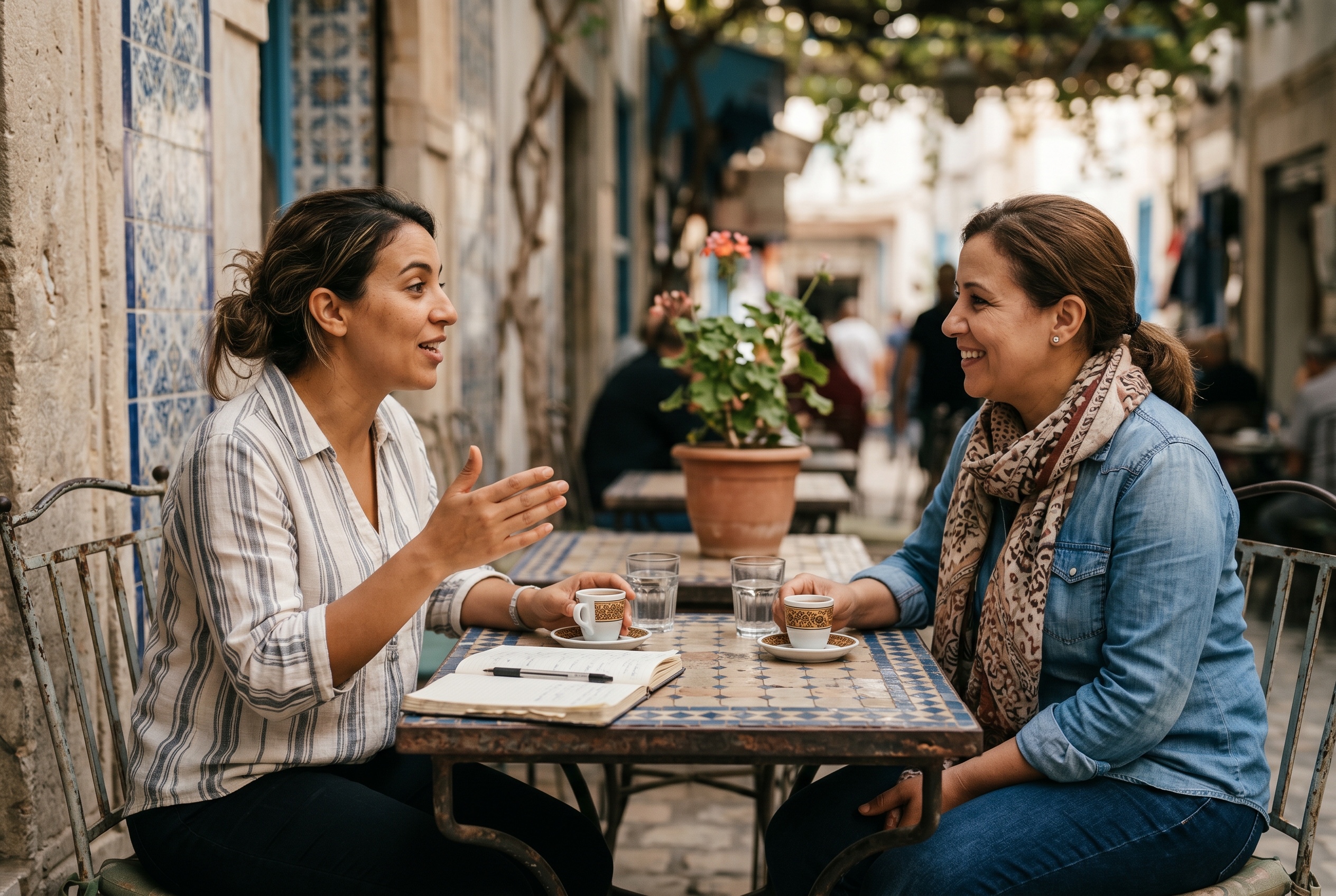
Your instructors
Tunisian Arabic tutors for private lessons & classes
Strommen runs a curated, founder-vetted teaching practice rather than a marketplace. The Tunisian Arabic roster is small on purpose, with every tutor met and vetted by us, each one teaching Derja as it is actually spoken in Tunis, Sfax, and the Sahel.
Click any card to read the full bio, then book a 30-minute free trial.
Below are the Strommen tutors who specialize in Tunisian Arabic. Photos, ratings, and rates are real. Click any card to read their bio and book a free 30-minute trial.
I want to learn…
Every tutor, personally met. — founder-vetted since 2006, in Los Angeles and online worldwide.
Get a personalized plan
Pick your language — a language advisor will match you with the right tutor and map out your path.

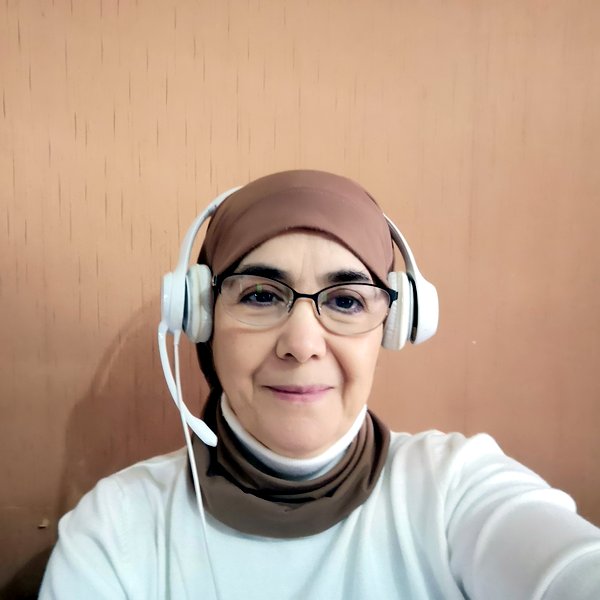


University Degree
Helping students learn with clarity, confidence, and motivation
Personally vetted · Strommen’s note
Quebec-based, Rahma teaches Arabic and French together, four Maghreb dialects covered, Algerian through Libyan.
Specialties
Also speaks: English
University Degree
Helping students learn with clarity, confidence, and motivation
Specialties
I also speak: English
Personally vetted · Strommen’s note
Quebec-based, Rahma teaches Arabic and French together, four Maghreb dialects covered, Algerian through Libyan.

Bachelor degree in french studiesMaster's degree in french studies · DALF C2
Online certified french tutor delf/DALF/ TEF/TCF Preparation
Personally vetted · Strommen’s note
Hela has taught French and Arabic for thirteen years, DELF, DALF, TEF, and TCF certification prep included, plus four different Maghreb Arabic dialects.
Specialties
Bachelor degree in french studiesMaster's degree in french studies · DALF C2
Online certified french tutor delf/DALF/ TEF/TCF Preparation
Specialties
Personally vetted · Strommen’s note
Hela has taught French and Arabic for thirteen years, DELF, DALF, TEF, and TCF certification prep included, plus four different Maghreb Arabic dialects.
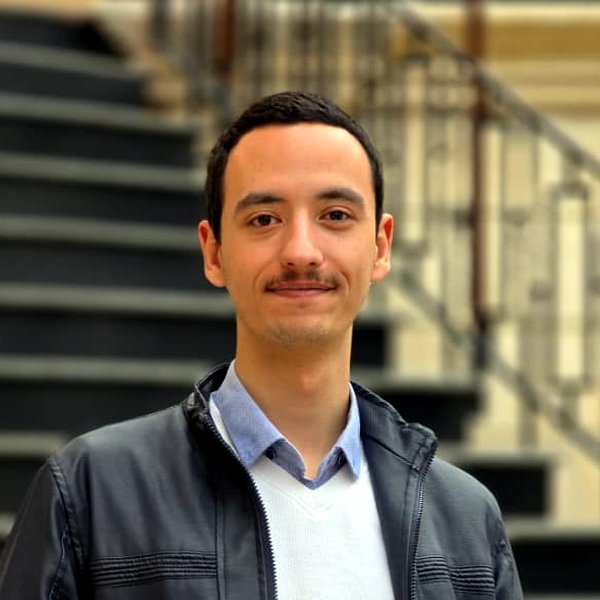

BA in English Literature · TOT , ITM Interactive teaching methodology. BA in English Literature
Step by step to English mastery.
Personally vetted · Strommen’s note
Emad's Arabic dialect range is genuinely enormous: Syrian, Gulf, Levantine, Emirati, Saudi, Moroccan. English is taught step by step alongside it.
Specialties
Also speaks: Copywriting, Spanish, Translation
BA in English Literature · TOT , ITM Interactive teaching methodology. BA in English Literature
Step by step to English mastery.
Specialties
I also speak: Copywriting, Spanish, Translation
Personally vetted · Strommen’s note
Emad's Arabic dialect range is genuinely enormous: Syrian, Gulf, Levantine, Emirati, Saudi, Moroccan. English is taught step by step alongside it.

I have a Bachelor degree in French and English Linguistics · TEFL Certeficate
Exellent French teacher
Specialties
saida a
Personally vettedI have a Bachelor degree in French and English Linguistics · TEFL Certeficate
Exellent French teacher
Specialties
التونسي — Tunisian culture & slang
5 Tunisian markers a Tunis or Sfax ear catches in the first sentence
Five markers that read as unmistakably Tunisian. Screenshot them, then book a tutor to learn the rest in context.
-
01
شنوة, shnowa
"What." The Tunisian question word, distinct from the Algerian shnū and the Moroccan shnū or āsh. Spoken with the characteristic Tunis intonation, it lands as one of the fastest single tells of Tunisian speech.
e.g. Sentence-initial in casual conversation: "shnowa, kīfāsh?" ("what, how come?").
-
02
برشا, barsha
"A lot," "very." The Tunisian intensifier, where Algerians say bezzāf and Egyptians say qawi or kteer. The form is Tunisian-specific within the Maghreb, and missing it is one of the fastest ways for a learner to read as not-Tunisian even when their grammar is correct.
e.g. "yʿajbnī barsha" ("I like it a lot").
-
03
بسيسة, bsīsa
The Tunisian breakfast staple: a roasted grain and chickpea flour mixture sweetened with sugar or dates and stirred with olive oil and sometimes water into a paste or drink. Older than the country's modern history, with roots in Berber food culture, and a household word in Tunisia and the Tunisian diaspora.
e.g. A grandmother might serve <em>bsīsa</em> as breakfast with a glass of strong tea on the side.
-
04
لاكول، لفوتور, the French layer
Tunisian Derja runs through French constantly in urban speech: lakōl for school (from l'école), l-vwātūr for car (from la voiture), l-otobīs for bus, byūro for office. Educated Tunis speakers can switch into French mid-sentence and back without registering the switch, and a tutor teaches the borrowings as Tunisian vocabulary rather than as a separate French lesson.
e.g. A working parent: "khdmt fl-byūro, baʿd msheet ʿal-lakōl" ("I worked at the office, then I went to the school").
-
05
متاع, mtāʿ
The Tunisian possessive: l-ktāb mtāʿī means "my book." Parallel to but distinct from the Algerian tāʿ and the Moroccan dyāl. Used across every register of speech, and a quiet but constant marker of Tunisian Arabic.
e.g. A Tunisian shopkeeper: "l-kāfī mtāʿak ḥāḍer" ("your coffee is ready").
About Tunisian Arabic
The Arabic that runs through French
Tunisian Arabic, called Tūnsī or Derja by its speakers, is the spoken Arabic of about 12 million people in Tunisia and another million or so across the Tunisian diaspora in France, Italy, Belgium, and the Gulf. Linguists place it firmly in the Maghrebi group alongside Moroccan and Algerian, and the family resemblance is strong: the vowel reductions that produce dense consonant clusters, the mā ... sh negation circumfix, the Maghrebi question words, the possessive mtāʿ in Tunisian's case rather than the Algerian tāʿ or the Moroccan dyāl. Mutual comprehension across the Maghreb is high but not seamless, with Tunisians often understanding Algerian and Moroccan better than the reverse, and Tunisian sitting closer to Algerian than to Moroccan in vocabulary and phonology. Egyptians and Levantines find it difficult without dedicated exposure, the same one-way comprehension pattern that applies across the western dialects.
The French layer is the single most distinctive feature of educated urban Tunisian speech. Tunisia was a French protectorate from 1881 to 1956, and the post-independence state kept French as the de facto second language of schooling, administration, science, and middle-class life. Modern Standard Arabic is the official language and the language of religion, government, and formal writing, but ordinary spoken Tunisian in cities like Tunis runs through French constantly. A Tunisian sentence might begin in Derja, slide into a French clause for a technical noun or a school-related concept, and finish in Derja again without the speaker registering the switch. The school is lakōl from l'école; a car is l-vwātūr from la voiture; l-otobīs is the bus; khdmt fl-byūro is "I worked at the office." Tunisian academics sometimes call this code-switching the Tunisian arabīsé or franbīsé, half joke and half observation about how the two languages interpenetrate. A tutor teaches Derja with the French layer in it from the beginning, because removing it would produce a register that nobody actually speaks at home or at work.
What sets Tunisian apart from Algerian, its closest sibling, is mostly vocabulary, intonation, and a handful of distinct grammatical features. Tunisians say shnowa for "what," where Algerians lean toward shnū; winū or fīn for "where"; barsha for "a lot," the same Maghrebi intensifier as Algerian bezzāf in function but different in form; kīfāsh for "how"; taww or tawwa for "now." The possessive structure uses mtāʿ: l-ktāb mtāʿī means "my book," parallel to but distinct from the Algerian tāʿī and the Moroccan dyāli. The intonation of Tunis carries a recognizable lilt that Tunisians abroad pick out of a crowded room instantly. And the vocabulary has its own Tunisian Italian and Maltese borrowings layered into the older Mediterranean port history: fūrnū for an oven, kushīna for a kitchen sink in older varieties, tarīna for a plate in some southern speech.
The accent map inside the country splits roughly between the urban koine of the north (Tunis, Sousse, Bizerte) and the more conservative south (Sfax, Gabès, the Sahel proper). Tunis speech is the de facto standard and the one most students learn, lighter and more French-influenced. Sfax, the country's second city and an industrial center, has a distinct accent with sharper consonants, less French in casual speech, and a vocabulary that retains more older forms. Rural and Bedouin varieties in the south and the Sahara carry their own features and are less commonly taught abroad. The Tunis koine is what travels best through the diaspora and through the country's cultural output: cinema, music, and the social media that has carried Tunisian speech across the Arab world in the past decade. Tell your tutor where your reason for learning points and the lessons calibrate from there.
The pitfalls Tunisian holds for an Arabic learner from another dialect are concrete and similar to those of its Maghrebi siblings. The vowel reductions take an ear trained on Egyptian or Levantine months to parse comfortably, and the French interjections come at speed; both reward early drilling rather than waiting until intermediate level. The grammar fingerprints (shnowa, winū, mtāʿ, the mā ... sh negation) need explicit teaching as Tunisian defaults rather than as departures from MSA. The intensifier barsha needs to replace whatever you have been saying instead. The future marker is besh, distinct from the Moroccan ghadi and the Algerian rāyḥ. None of this is hard in isolation, but it adds up, and a tutor who actually speaks the dialect handles it explicitly from the first weeks rather than letting eastern habits calcify.
Most students who arrive at Tunisian have a particular reason. Family roots in Tunisia, with grandparents or relatives whose home dialect never switched. A partner from the country. Posting to Tunis or business across the Maghreb. Academic work on the region, or dialect coaching for a film role where a generic Maghrebi accent would not pass. Heritage learners in France, Belgium, and Italy are a large share of who books, often arriving with a strong passive ear from family conversation and gaps in active speaking. The Strommen tutors on this page teach Tunisian Derja as a living dialect with the French layer intact, not as a curiosity or a regional footnote.
What you'll cover
Lessons & classes tailored to Tunisian Arabic
Tunisian Derja with the French layer intact
Lessons treat the French layer as part of the dialect rather than as borrowing to apologize for, because that is how educated urban Tunisian actually works. Tutors teach the high-frequency French loanwords (lakōl, l-vwātūr, l-otobīs, byūro) in context, the switch patterns that mark a sentence as Tunis-urban rather than rural, and when MSA is the right register instead. Code-switching is a learnable skill, not background noise. Pairs with our guide to Arabic dialects for broader context.
Pronunciation, vowel reduction, and the Tunis lilt
Tunisian compresses short vowels heavily, the standard Maghrebi pattern, but the country's intonation is distinct enough that Tunisians abroad recognize each other across a crowded room. Lessons drill the vowel reductions explicitly and use the Tunis intonation as a target through shadowing exercises on real Tunisian audio: rap, mezwed and shaabi music, Tunisian film and television, and family-style conversation. Sfax accent is taught as an alternative if your reason for learning points there.
Grammar that diverges from eastern Arabic
The Maghrebi grammar fingerprints get explicit attention: shnowa for "what," the possessive mtāʿ, barsha as the intensifier, the future marker besh, and the mā ... sh negation circumfix. If you have studied another Arabic variety, your tutor maps the differences directly so you adjust rather than starting over. Students who want a stronger MSA foundation alongside Derja can pair this with our Modern Standard Arabic tutors.
Tunis vs Sfax and the regional map
Tunis and the north form the urban koine, the lighter and more French-influenced variety that travels through diaspora and media. Sfax and the south carry their own accents, with sharper consonants, less French in casual speech, and a vocabulary that retains older forms. Rural and Bedouin southern varieties carry further distinct features. Tell your tutor where your family or work points and lessons lean that way rather than flattening to Tunis-by-default.
FAQ
About Tunisian Arabic lessons & classes
How different is Tunisian from Algerian or Moroccan Arabic?
All three are Maghrebi and share core features: vowel reduction, the mā ... sh negation, similar question words, the western intensifiers. Within the family, Tunisian sits closer to Algerian than to Moroccan, with mostly vocabulary and intonation differences (Tunisian shnowa vs Algerian shnū, Tunisian barsha vs Algerian bezzāf, Tunisian mtāʿ vs Algerian tāʿ). Mutual comprehension is high but not seamless. If your reason for learning is Tunisia specifically, a Tunisian tutor matters because the country's intonation, French layer, and signature vocabulary need direct teaching.
Do I need to know French to learn Tunisian Arabic?
Helpful but not required. French loanwords are part of everyday urban Tunisian vocabulary, and code-switching between Derja and French is the educated urban norm. A tutor teaches the French layer as part of the dialect, so students with no French still learn the borrowed words in context. If you already speak French, that is a real head start, and your tutor will build on it from the first lessons.
Are your Tunisian Arabic tutors native speakers?
Yes. The tutors on this page are native or near-native Tunisian Arabic speakers, and each bio specifies where in Tunisia they are from and which sub-variety they speak. The roster is intentionally small. Strommen is a curated practice rather than a marketplace, so every tutor was met by us before being listed.
Can I take Tunisian Arabic lessons online or only in person?
Both. Many of our Tunisian Arabic tutors teach online via Zoom or Jitsi and are available worldwide. Some also teach in person. The booking widget on each tutor's profile shows their available formats and current schedule, so you can match a tutor to how you prefer to learn.
I already studied Modern Standard Arabic. Will that help with Tunisian?
Yes. MSA gives you the script, the root system, and a formal register that Tunisians still use in writing and in formal speech. The work of moving toward Derja is mostly about pronunciation (the vowel reductions and the Tunis intonation), the spoken vocabulary including the French layer, and the dialect-specific grammar. Tutors map the differences directly so MSA students adjust rather than starting over. Pairing Tunisian lessons with continued MSA study is a common path.
I am a heritage learner. My parents speak Tunisian but I never learned. Can a tutor help?
Yes, and this is one of the most common situations we see, especially among the Tunisian diaspora in France, Italy, and Belgium. Heritage learners usually have a strong passive ear from years of family conversation and a real cultural anchor, but gaps in active speaking or in reading. A tutor builds on what you already have, focusing lessons on the production skills and the literacy you want to add rather than starting you over from the alphabet.
What does a Tunisian Arabic lesson actually look like?
Lessons are one-on-one and built around your goal. A typical hour mixes conversation in Derja on a topic you chose, targeted work on a pronunciation point that came up (often the vowel reductions or the Tunis intonation), vocabulary including the French layer, and practice with real Tunisian audio when the level fits. No two students get the same plan. Tutors set concrete weekly goals at the trial lesson and adjust from there.
Why do most students want Tunisian Arabic specifically?
Almost always a concrete reason. Family roots in Tunisia or in the Tunisian diaspora across France, Italy, Belgium, and the Gulf. A partner from the country. Work in Tunis or across the Maghreb. Academic research on the region. Dialect coaching for a film or stage role where a generic Maghrebi accent would not pass. The page exists for those students, and the tutors plan courses around your particular reason rather than treating Tunisian as a tourist variety.
Ready for Tunisian Arabic lessons or classes?
Book a free 30-minute trial with one of our personally vetted tutors. Private lessons or small-group classes — your choice.