



Personally vetted instructors
Egyptian Arabic tutors, lessons & classes
ازيك Izzayyak — Egypt's universal "how are you," izzayyik to a woman.
Personally vetted Egyptian Arabic tutors. Lessons in the Masri actually spoken in Cairo and Alexandria, the most widely understood spoken Arabic in the world thanks to a century of Egyptian cinema, television, and music.
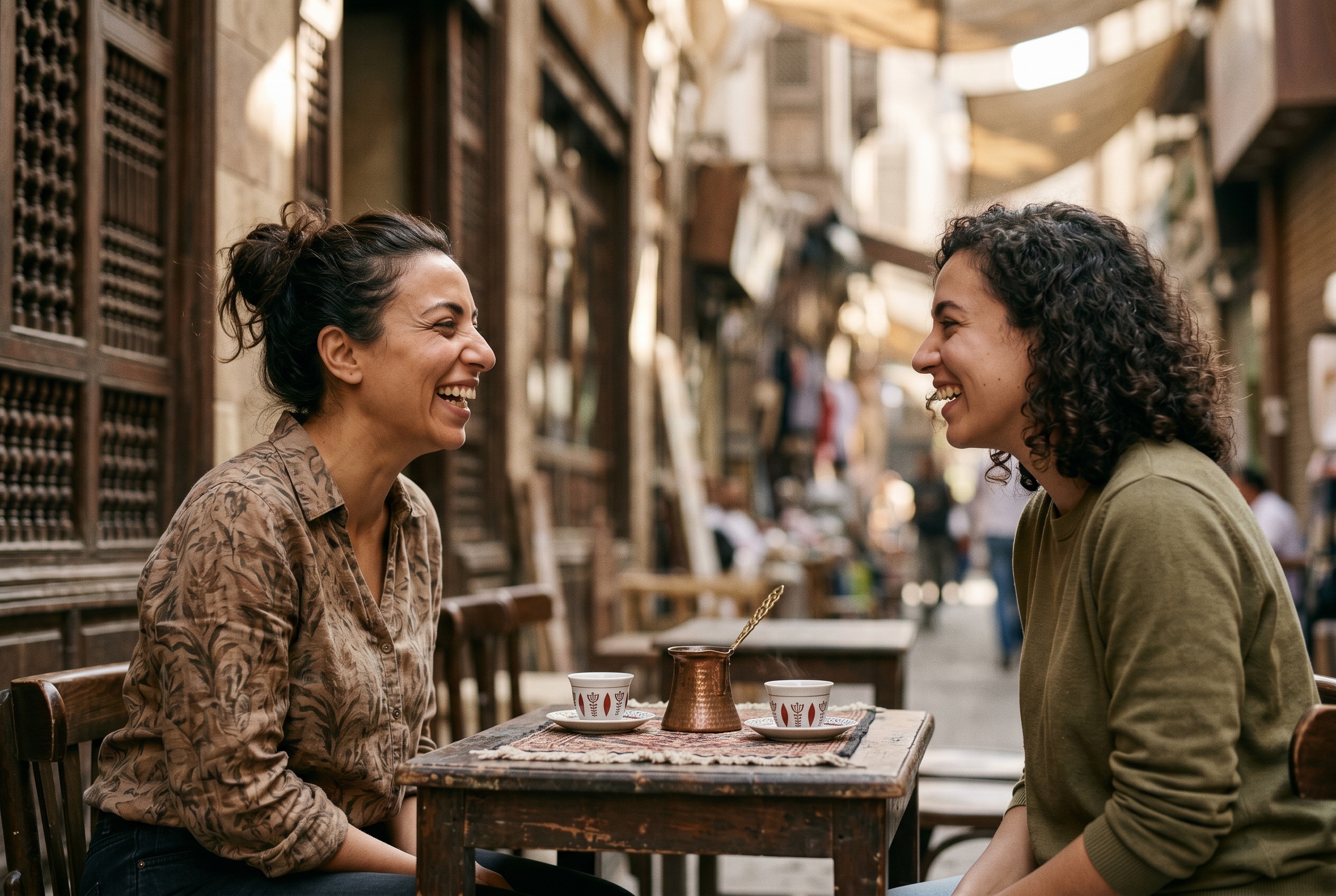
Your instructors
Egyptian Arabic tutors for private lessons & classes
Strommen tutors below are Egyptian or near-native Masri speakers, met and vetted by us in person. No marketplace, no automated profile-creation. Each bio specifies where in Egypt the tutor is from and the variety they teach.
Filter by location, age, or price. Then book a 30-minute free trial.
Below are the Strommen tutors who specialize in Egyptian Arabic. Photos, ratings, and rates are real. Click any card to read their bio and book a free 30-minute trial.
I want to learn…
Every tutor, personally met. — founder-vetted since 2006, in Los Angeles and online worldwide.
Get a personalized plan
Pick your language — a language advisor will match you with the right tutor and map out your path.

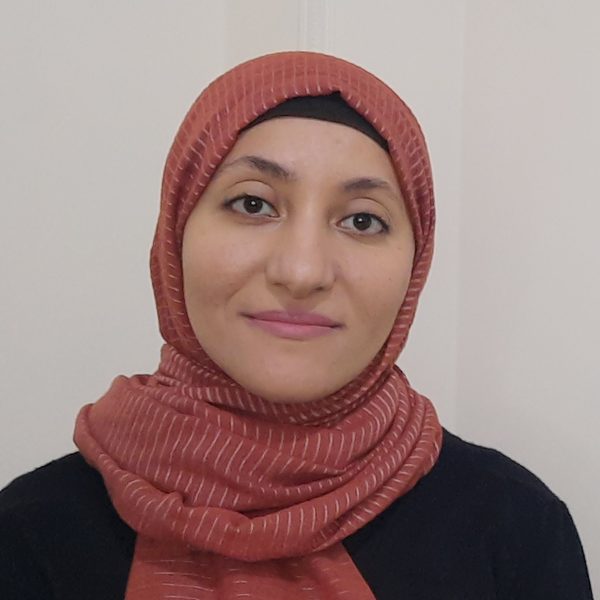
A master degree in Education in Teaching Arabic language to non Arabic speakers
Arabic language teacher (Modern standard, and Egyptian Arabic)
Personally vetted · Strommen’s note
Somaia teaches both Modern Standard and Egyptian Arabic, useful if you need the textbook version and the way people actually talk.
Specialties
A master degree in Education in Teaching Arabic language to non Arabic speakers
Arabic language teacher (Modern standard, and Egyptian Arabic)
Specialties
Personally vetted · Strommen’s note
Somaia teaches both Modern Standard and Egyptian Arabic, useful if you need the textbook version and the way people actually talk.


I have a Bachelor degree in French and English Linguistics · TEFL Certeficate
Exellent French teacher
Specialties
saida a
Personally vettedI have a Bachelor degree in French and English Linguistics · TEFL Certeficate
Exellent French teacher
Specialties
المصري — Egyptian culture & slang
5 Egyptian expressions worth absorbing in your first week
These are markers a Cairene ear notices instantly. Screenshot them, then book a tutor to learn the timing and the rhythm of where each one fits.
-
01
ازيك, izzayyak
"How are you." Izzayyak to a man, izzayyik to a woman. Egypt's universal opener, far more common in daily speech than the formal kayf hālak. Paired with kwayyis ("good") or alḥamdulillāh ("thanks to God") as the response.
e.g. ازيك يا صاحبي؟ izzayyak yā ṣāḥbī? means "how are you, friend?"
-
02
إيه, ēh
"What." The Cairene everyday question word, central to the singsong rhythm Egyptian is famous for. Used at the end of a sentence as a check (kwayyis, ēh?: "good, right?") and at the start as a real question (ēh ra'yak?: "what's your opinion?"). One of the cleanest pronunciation fingerprints of Egyptian.
e.g. ايه ده؟ ēh da? means "what is this?"
-
03
خلاص, khalāṣ
"Done," "alright," "that's enough," "finished." One word, enormous conversational range. Used to close a discussion, accept a compromise, signal patience, or end a phone call. Cairenes use it dozens of times a day.
e.g. Closing a haggle in a market: <em>khalāṣ, mīt gineh, yallah</em>: "alright, a hundred pounds, let's go."
-
04
كده, kida
"Like this," "this way," "so." The all-purpose Egyptian demonstrative adverb, used for showing, agreeing, summarizing, and softening. Borrowed from Egyptian into Hejazi Arabic, where its presence is a clear mark of the historical Red Sea contact.
e.g. اعملها كده, iʿmilha kida: "do it like this."
-
05
كشري, koshari
The national dish: a layered mix of rice, lentils, pasta, chickpeas, fried onions, and a vinegar-and-tomato sauce, eaten standing or sitting at koshari shops across the country. Vocabulary around food and ordering carries cultural texture beyond the dish itself; Cairo eats publicly, and the ordering register matters. Read alongside our guide to Arabic dialects for context.
e.g. Ordering at a koshari shop: <em>waḥda koshari kbīra, min faḍlak</em>: "one large koshari, please."
About Egyptian Arabic
The Arabic the rest of the Arab world already understands
Egyptian Arabic, المصري, is the most widely understood spoken Arabic on earth, and the reason has very little to do with population, which would have given the same advantage to several other dialects, and everything to do with media. From roughly the 1930s through the 1980s, Egypt produced the overwhelming majority of Arabic-language films, the most-watched television drama, and the music that traveled across the entire Arab world. Cinema in Cairo, radio in Cairo, then television in Cairo set the soundtrack of Arab popular culture for two generations. A Moroccan in Casablanca, a Yemeni in Sanaa, an Iraqi in Mosul all grew up understanding Egyptian Arabic effortlessly even when their own dialects were very far from it, simply because Egyptian was the lingua franca of entertainment. That fact alone makes Egyptian an unusually practical starting point for anyone learning a spoken Arabic dialect with no other specific regional anchor.
The inverse is also worth noting honestly. Egyptians understand Egyptian. They follow Levantine drama and Gulf media reasonably well, and many can adapt to Maghrebi speech with effort, but Egyptian as a first dialect is the closest thing Arabic has to a default mutual ground. If your reason for learning is travel across the Arab world, work in media or diplomacy or international NGOs operating regionally, or a general love of Arabic culture without one specific country in mind, Egyptian is a defensible choice that nothing in the Levantine, Gulf, or Maghrebi families quite matches for sheer reach. Strommen tutors will walk you through the trade-off at the trial lesson, because there are good reasons to choose a different dialect if your direction is specific.
What makes Egyptian sound the way it does starts with one famous sound change: the MSA j, written as ج, surfaces in Cairene speech as a hard g rather than the soft j of most other Arabic varieties. So Jamal is Gamal, jamīl ("beautiful") is gamīl, and the name al-Jazira is al-Gazira. This is the single most recognisable Egyptian feature to an Arab ear, and it is also one of the reasons the variety is so easily identified across the region. The second prominent feature is the treatment of the MSA qāf, which in everyday Cairene Egyptian flattens to a glottal stop, so qultu ("I said") becomes ʾult and qalb ("heart") becomes ʾalb. This is the urban Cairene pattern; rural and Upper Egyptian speech keeps the qāf as a hard g in some regions, and the dialect map of Egypt is internally more varied than the Cairene-centric media picture suggests.
Grammatically, Egyptian carries its own everyday verbs and connectors that distinguish it from Levantine and Gulf. "I want" is ʿāyiz for a man and ʿāyza for a woman, with the future built using a prefix ha-: hāʾūl means "I will say." The intensifier is qawi or kitīr (kteer), with qawi having a more colloquial, conversational range. Negation runs as the wraparound mā ... sh circumfix: mā-baʿrafsh means "I don't know," with the negation marked at both ends of the verb. The question word for "what" is ēh, for "where" is fēn, for "why" is lēh, all famously sing-song and central to the rhythm of Cairene speech. Possession uses bitāʿ as the marker, so "my car" is al-ʿarabiyya bitāʿtī. None of these features are exotic to a learner, but all of them have to become default rather than substitutions, and a tutor who teaches Egyptian as the spine of the lesson rather than as a coat of paint over MSA is most of what separates an effective Egyptian course from a generic Arabic one.
Cairo and Alexandria carry distinct sub-varieties, though both are Lower Egyptian and mutually trivial. Cairene is the prestige register, the variety of the entertainment industry and of educated urban Egyptian speech generally, with the famous sing-song intonation that comedy across the Arab world plays on. Alexandrian shares most features with Cairene but carries some Mediterranean coastal vocabulary and a slightly different rhythm. Upper Egyptian, the Saʿīdi varieties of the south, sounds quite different, with the qāf preserved as a hard g, distinct vocabulary, and a slower pace that Cairenes affectionately stereotype. Most Strommen students arrive wanting Cairene because that is the Egyptian they recognise from films and music, and that is where lessons typically anchor.
The cultural register that comes with Egyptian Arabic is part of what makes the dialect worth learning. The rhythm of bargaining in a Cairo market, the affectionate insult-as-greeting between friends, the way a Cairene will compress an elaborate sentence into a single particle of disbelief or amusement, the patience for long conversational openings before getting to the point of a phone call. Lessons treat these patterns as part of the language, because in practice they are most of what makes Egyptian Arabic Egyptian rather than just a particular set of grammatical forms. The food and street vocabulary follows naturally: koshari as the national dish that anchors weeknight family eating, foul and taʿmiyya for breakfast across class lines, the bayya7 calls of Cairo street vendors that punctuate any morning walk. None of this is in a generic Arabic curriculum. All of it is in a real Egyptian one.
What you'll cover
Lessons & classes tailored to Egyptian Arabic
The Cairene sound and the g-for-j
Lessons start with the two most recognisable Egyptian sound features: the hard g for the MSA j (so Jamal becomes Gamal, jamīl becomes gamīl), and the urban Cairene flattening of the MSA qāf to a glottal stop. Listening practice uses real Cairo audio: classic film, modern television drama, music, and family-style conversation, so your ear adjusts to how Cairo actually sounds rather than to a generic Arabic textbook recording.
Egyptian everyday grammar
The Cairene everyday verbs and connectors get explicit attention: ʿāyiz for "want," the ha- future prefix, the mā ... sh negation circumfix, the question words ēh, fēn, lēh, and the possessive marker bitāʿ. If you have studied Modern Standard Arabic, the script and root system carry over, and the Egyptian dialect is the most globally recognisable spoken variety to add on top.
Listening with classic Egyptian film and music
Egyptian Arabic has the deepest cultural shelf in the Arab world: Umm Kulthum and Abdel Halim Hafez for music, Adel Imam and Faten Hamama for classic cinema, plus a continuous flow of modern television drama and film. Lessons draw on real Egyptian material at your level, using it for shadowing, vocabulary, and ear training, because Egyptian rewards listening practice in a way few other dialects can match.
Cultural register and the rhythm of Cairo
Knowing Egyptian Arabic also means knowing the rhythm: the long social openings to a phone call, the affectionate insults between friends, the patience for indirect approaches to a request, the comedic timing of Cairene complaint. Tutors teach these patterns as part of the language. For students whose interest in Egypt runs into broader Arabic literature and culture, pair lessons with our Arabic literature tutors.
FAQ
About Egyptian Arabic lessons & classes
Why is Egyptian Arabic the most widely understood Arabic dialect?
Almost entirely because of media. From roughly the 1930s through the 1980s, Egypt produced the majority of Arabic-language films, the most-watched television drama, and most of the popular music that traveled across the entire Arab world. Two generations of Moroccans, Iraqis, Yemenis, and everyone in between grew up understanding Egyptian effortlessly from cinema and radio, even when their own dialects were very far from it. That historical reach is still in place, which is why Egyptian remains the closest thing spoken Arabic has to a default mutual ground.
How is Egyptian different from Levantine or Gulf Arabic?
Substantially across both grammar and pronunciation. Egyptian says ʿāyiz for "I want" where Levantine says biddī and Gulf says abī. Egyptian intensifies with qawi or kitīr; Levantine uses ktīr alone; Gulf uses wāyid. The MSA qāf flattens to a glottal stop in Cairene; in Gulf speech it stays as a hard g. The MSA j becomes a hard g in Cairene (Gamal, not Jamal); in Levantine and Gulf it stays as a soft j. Egyptian also uses the wraparound mā ... sh negation, where most other dialects use a plain mā. Our guide to Arabic dialects walks through the comparison.
Should I learn Modern Standard Arabic first or start with Egyptian?
Depends on your goal. MSA is what you read in newspapers and hear in formal speeches, but no one speaks it casually. Many students run both in parallel, MSA for the script and literacy and Egyptian for actual conversation, treating them as two registers of one language. Your tutor sets the balance based on whether you are learning mainly for spoken interaction or also for written work.
Are your Egyptian Arabic tutors native speakers?
Most are native speakers from Egypt, with backgrounds across Cairo, Alexandria, and other regions. A few are long-time bilinguals who teach the dialect to heritage learners and adult beginners. Each bio specifies where the tutor is from and which variety they teach, so you can match yourself to a Cairene accent, an Alexandrian one, or a more general Lower Egyptian register.
Can I take Egyptian Arabic lessons online or only in person?
Both. Many of our Egyptian Arabic tutors teach online via Zoom or Jitsi and are available worldwide. Several also teach in person around Los Angeles. The booking widget on each tutor's profile shows their available formats and current schedule.
I want to learn Arabic broadly. Is Egyptian a good starting point?
It is one of the strongest single-dialect starting points for the reasons above: media reach, cross-dialect intelligibility, and a deep cultural shelf for listening practice. If your direction later sharpens toward a specific region, you can transition. Common moves we see: students start with Egyptian, then add MSA for literacy, or pivot to Levantine, Gulf, or Maghrebi when work or family ties make a different dialect more relevant.
What does an Egyptian Arabic lesson actually look like?
Lessons are one-on-one and built around your goal. A typical hour mixes conversation in Egyptian on a topic you chose, targeted work on a grammar or pronunciation point that came up, listening practice with real audio (a film clip, an Umm Kulthum song, a podcast segment), and vocabulary including the everyday cultural register that makes Cairene Cairene. Tutors set concrete weekly goals at the trial lesson and adjust as you go.
How long until I can hold a real conversation in Egyptian?
It depends on your starting point and the hours you put in between lessons. A complete beginner aiming for everyday conversation usually needs several months of consistent weekly lessons with self-study in between. Heritage learners with a strong passive ear from family or media often move faster, because comprehension is already partly there. Reading-level comfort with MSA is a separate, longer track. Your tutor sets a realistic timeline at the trial rather than a marketing one.
Ready for Egyptian Arabic lessons or classes?
Book a free 30-minute trial with one of our personally vetted tutors. Private lessons or small-group classes — your choice.