



Personally vetted instructors
Conversational Romanian tutors, lessons & classes
Salut! The casual Romanian hello, used between friends and people on first-name terms.
Personally vetted Conversational Romanian tutors. Lessons centered on how Romanian is actually spoken at a Bucharest cafe, a Transylvanian Sunday lunch, or a video call with the family in Iași, not the careful grammar-textbook register that most courses lead with.
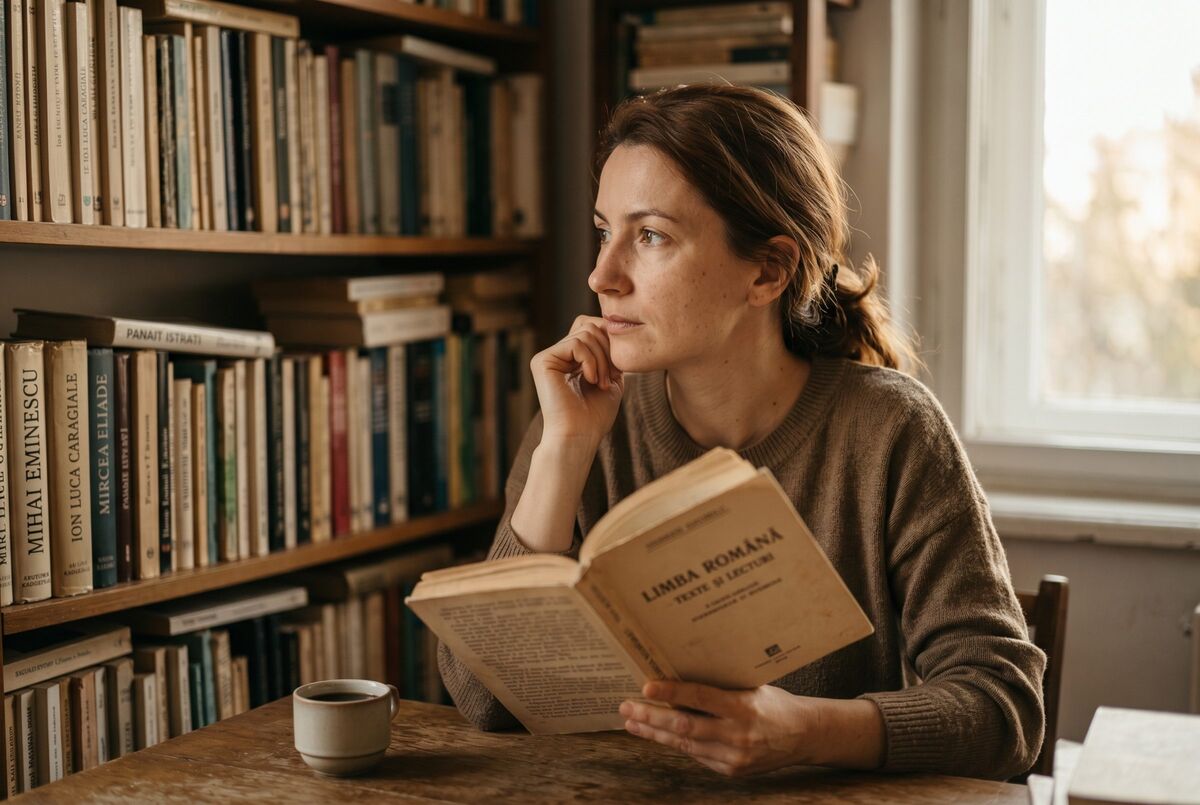
Your instructors
Conversational Romanian tutors for private lessons & classes
Strommen runs a curated Romanian practice. Every teacher here was met and vetted by us. Bios are the tutors' own.
Filter by location, age, or price. Then book a 30-minute free trial.
Below are the Strommen tutors who specialize in Conversational Romanian. Photos, ratings, and rates are real. Click any card to read a bio and book a free 30-minute trial.
I want to learn…
Every tutor, personally met. — founder-vetted since 2006, in Los Angeles and online worldwide.
Get a personalized plan
Pick your language — a language advisor will match you with the right tutor and map out your path.

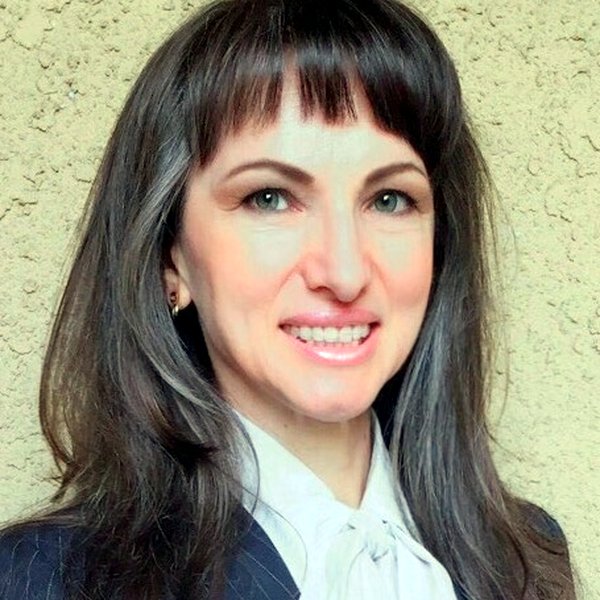
1. B.A./B.Ed. Philology; Specialty: Romanian Language and Literature- Latin Language and Literature2. B.A./B.Ed.Theology: Specailty: Orthodox Theology- Letters3. M.A Philology: Specialty: History of the Romanian Language4. PhD Philology; Title: The
Cura ut valeas
Personally vetted · Strommen’s note
Mihaela has spent more than thirty years teaching Latin and Romanian, and she sets every lesson inside the literature, history, and philosophy it came from.
Specialties
1. B.A./B.Ed. Philology; Specialty: Romanian Language and Literature- Latin Language and Literature2. B.A./B.Ed.Theology: Specailty: Orthodox Theology- Letters3. M.A Philology: Specialty: History of the Romanian Language4. PhD Philology; Title: The
Cura ut valeas
Specialties
Personally vetted · Strommen’s note
Mihaela has spent more than thirty years teaching Latin and Romanian, and she sets every lesson inside the literature, history, and philosophy it came from.

Argou — culture & slang
5 cues that mark Romanian you actually hear
These are the small details that mark a learner who has spent time among Romanian speakers from one who has only studied the language on paper. Save the list. Then book a tutor for the practice that uses them.
-
01
Latin core, Slavic and Turkish edges
Romanian's basic vocabulary is unmistakably Latin (mamă, tată, apă, pâine, om), which gives Italian and Spanish speakers a head start. About 14% of the vocabulary is Slavic from centuries of contact and from the Orthodox Church's Old Church Slavonic, and another layer is Turkish from the Ottoman centuries (cafea, ciorbă, iaurt). Romanian's vocabulary stratification is unusually rich, and learning it as a layered system is part of learning the language.
e.g. Da (yes, Slavic) and nu (no, Latin) are the first two words a learner encounters. Each tells half the story of where Romanian came from.
-
02
The definite article on the end of the noun
Romanian attaches its definite article to the end of the noun, not before it. Lup is wolf, lupul is the wolf. Fată is girl, fata is the girl. This is unusual among Romance languages and is shared with Bulgarian, Macedonian, and Albanian as a feature of the Balkan Sprachbund. The system is regular once you know the rules, and it is one of the markers that makes Romanian look distinctively itself rather than a southern Italian dialect.
e.g. Carte (book) → cartea (the book). Băiat (boy) → băiatul (the boy).
-
03
Mămăligă, sarmale, and the kitchen-table register
Romanian food culture has its own vocabulary that runs through everyday conversation. Mămăligă is the cornmeal polenta that anchors traditional meals. Sarmale are the cabbage rolls that show up at every holiday. Ciorbă is the sour soup that is its own meal-time category. Cozonac is the sweet bread of Easter and Christmas. Knowing how to talk about Romanian food is a cultural register, not a vocabulary list, and any tutor will fold it into early lessons.
e.g. Hai să mâncăm sarmale și mămăligă, ca la bunica. ("Let's eat sarmale and mămăligă, like at grandma's.")
-
04
Sărut mâna for elders
Literally "I kiss your hand," the traditional respectful greeting used by younger speakers toward elders, especially grandmothers and great-aunts, and as a respectful goodbye in older registers. The gesture may or may not accompany the words. Less common in modern urban Bucharest but entirely standard in Transylvania, Moldavia, and most family contexts with older relatives. Knowing when to use it and when la revedere serves better is part of the social register.
e.g. A grandchild arriving at grandma's: "Sărut mâna, bunica." ("Hello, grandma" in the respectful register.)
-
05
Moldova writes Romanian, used to write it in Cyrillic
Romanian was written in Cyrillic from the 16th century until the mid-19th, when Romania adopted the Latin alphabet. Moldova, under Russian and Soviet rule, kept Cyrillic until 1989. Standard Romanian and Moldovan are the same language with negligible differences. The labelling is political rather than linguistic. A learner of Romanian travels in Moldova without trouble.
e.g. The Soviet-era spelling of Chișinău in Cyrillic Romanian was Кишинэу, a transliteration of the Romanian word. Same language, two scripts.
About Conversational Romanian
Romanian is the Latin language no one expects
Romanian is the surprise of the Romance family. About twenty-five million native speakers across Romania and Moldova, with a substantial diaspora in Italy, Spain, Germany, the UK, and the US, plus Vlach and Aromanian communities scattered through Greece, Albania, and North Macedonia. The language descends directly from the Vulgar Latin of the Roman province of Dacia, conquered by Trajan in 106 CE, and has survived as a Romance island in a Slavic-Hungarian-Greek-Turkish-speaking sea for almost two thousand years. The basic vocabulary is unmistakably Latin: mamă (mother), tată (father), apă (water), pâine (bread), om (man, human), bun (good), mare (big, sea), soare (sun), lună (moon, month). An Italian or Spanish speaker reading Romanian for the first time recognises roughly 75% of the basic vocabulary, though the pronunciation and the surrounding grammar can make recognition slower than the percentage suggests.
The history left visible traces. About 14% of modern Romanian vocabulary is Slavic, borrowed from the centuries when Slavic peoples settled around and through Dacia and from the long influence of the Orthodox Church (which used Old Church Slavonic until the 17th century). Da means yes (Slavic), nu means no (Latin). Words like prieten (friend), iubire (love), and trebuie (must) are Slavic in origin. Turkish gave Romanian a layer of food and household vocabulary during the Ottoman centuries: cafea (coffee), ciorbă (sour soup), iaurt (yogurt), papuc (slipper). Hungarian and German contributed alongside. The result is a Romance language with an unusually rich vocabulary stratification, where the same concept might be expressed with a Latin word, a Slavic word, or a Turkish word depending on register and history. Lessons name the layers as they come up, because a learner who understands which word came from where reads Romanian as a place rather than as a list.
The grammar is where Romanian gets interesting. Romanian preserves features from Latin that other Romance languages lost. The case system is partially intact, with nominative-accusative and genitive-dative forms (collapsed pairs, not the full five of Latin) plus a vocative. The definite article is postposed, attached to the end of the noun rather than placed before it: lup is wolf, lupul is the wolf. This is the same feature found in Bulgarian, Macedonian, and Albanian, and it is one of the markers of the Balkan Sprachbund, the linguistic area where Romanian sits alongside its Slavic and Greek neighbors. The neuter gender (unusual among Romance languages) is retained as a kind of mixed gender: masculine in the singular, feminine in the plural. None of this is exotic. It is just specific, and a learner with prior French or Spanish has to unlearn certain expectations.
The Cyrillic past in Moldova is worth knowing. Romanian was written in Cyrillic from the 16th century until the mid-19th, when Romania adopted the Latin alphabet as part of its nation-building project. Moldova, under Russian and later Soviet rule, kept the Cyrillic script until 1989 (and the breakaway region of Transnistria officially still uses it). Standard Romanian and Moldovan are the same language with negligible differences, and the labelling is political rather than linguistic. A learner of Romanian can travel in Moldova without trouble, and Moldovan speakers identify as Romanian speakers in most contexts.
The regional varieties are also worth knowing. Wallachian Romanian, spoken across the southern half of Romania including Bucharest, is the standard variety taught in schools and used in most media. Moldovan Romanian (the speech of Moldavia, the northeastern region of Romania, including Iași and Suceava, plus the Republic of Moldova) has its own characteristic intonation and some vocabulary differences. Transylvanian Romanian, in the region historically under Hungarian and Austrian rule, carries more German and Hungarian loanwords and a distinct intonation pattern. Bessarabian and Bukovinian varieties shade into Ukrainian contact zones. Most lessons aim at standard Wallachian Romanian and develop passive recognition of the others through listening practice.
Mămăligă, the national polenta-like dish made from cornmeal, is the food everyone learning Romanian encounters first. It serves the role bread serves in French cuisine or rice in Japanese: the absolute base, eaten with everything, present at every traditional meal. Mămăligă cu brânză și smântână (with sheep cheese and sour cream) is the breakfast or peasant lunch that every Romanian grandparent makes. Sarmale (cabbage rolls), mititei (grilled minced-meat skewers), and ciorbă (sour soup, often the cabbage-soured ciorbă de burtă with tripe) are the dishes a learner needs to be able to order, accept seconds of, and appreciate by the second or third visit. Knowing how Romanians talk about food is a real cultural register, not a vocabulary list, and a tutor folds it into conversation practice.
The traditional greeting Sărut mâna ("I kiss your hand") is the cue that marks the older social register. Younger speakers say it to elders, especially grandmothers and great-aunts, as a sign of respect and warmth, and the gesture (an actual hand-kiss, especially in church or at a formal family event) may or may not accompany the words. The phrase is also used as a respectful goodbye to women in older registers, and a tutor will tell you when it is the right move and when a simple la revedere serves better. In modern urban Bucharest, sărut mâna is becoming less common among younger speakers and remains entirely standard among older ones, especially in Transylvania and Moldavia.
The Orthodox church calendar shapes the year in ways no learner can fully ignore. Easter (Paștele) is the largest holiday, much larger than Christmas in cultural weight, with specific foods (red eggs, cozonac sweet bread, drob lamb-organ loaf) and rituals (the midnight service, the lit candles carried home). Saint Nicholas (December 6) brings small gifts to children before Christmas. The fasting periods (Lent before Easter, Advent before Christmas, the Apostles' Fast in summer) shape what people eat and when. A learner whose Romanian goal involves family or extended community needs to know the rhythm at least at the level of awareness, and tutors fold the seasonal vocabulary in as the calendar makes it relevant.
Who learns Romanian with us. Strommen sees expats and partners of Romanian speakers preparing for life or extended visits in Bucharest, Cluj-Napoca, or Iași, heritage learners with Romanian or Romanian-American grandparents reconnecting with the language, business professionals whose work has shifted toward Romania's growing tech sector, and the occasional traveller who fell in love with Transylvania or the Black Sea coast. Each has a different finish line. A good conversational tutor will not run them through the same lesson plan.
Our Conversational Romanian tutors are native speakers from Bucharest, Cluj, Iași, Timișoara, and elsewhere, alongside Moldovan speakers from Chișinău and longtime bilingual teachers experienced with how English speakers stall in Romanian. They calibrate to your goal at the trial, build the lesson plan around it, and adjust as you progress. You can also browse the wider Strommen tutor directory.
What you'll cover
Lessons & classes tailored to Conversational Romanian
Latin core, taught with the borrowed layers named
Lessons lead with the Latin vocabulary that gives Romanian its Romance identity, the part that learners with Italian, Spanish, or French recognize quickly. The Slavic and Turkish borrowings are named as they come up, because a learner who understands which word came from where reads Romanian as a place rather than as a memorisation list. The Latin grammatical scaffolding stays at the center, and the borrowed words slot in around it.
The postposed article and the case system
Two of the features that mark Romanian as distinct among Romance languages. The definite article attaches to the end of the noun, and Romanian preserves a partial Latin case system (nominative-accusative and genitive-dative collapsed pairs, plus a vocative). Lessons drill both early because they touch every noun and ripple through every sentence. The work is concrete and the rules are regular once introduced.
Spoken register: Bucharest, Cluj, Iași, and the Moldovan inflection
Romanian varies in intonation and vocabulary across Wallachia, Transylvania, Moldavia, and the Republic of Moldova. Lessons name the variety being taught (usually standard Wallachian Romanian, used in most media) and the variety the student wants. Listening practice covers all the main varieties so a learner can follow whichever region they encounter. Transylvanian intonation and Moldovan inflection are the two most likely to throw a learner trained only on standard Bucharest speech.
Food, family, and the Orthodox calendar
Romanian cultural life runs through food, family, and the Orthodox church calendar. Lessons fold the vocabulary of mămăligă, sarmale, ciorbă, and the holiday foods (cozonac, drob, Easter eggs) into conversation practice. The Orthodox calendar shapes the year in ways no learner whose Romanian goal involves family can fully ignore. A tutor names this context when it matters so a learner understands why a given conversation is going where it is.
FAQ
About Conversational Romanian lessons & classes
Is Romanian really a Romance language?
Yes, fully. Romanian descends directly from the Vulgar Latin of the Roman province of Dacia and has remained a Romance language for almost two thousand years, despite being surrounded by Slavic, Hungarian, Greek, and Turkish speakers for most of that history. The basic vocabulary is unmistakably Latin (mamă, tată, apă, pâine), the grammar is Romance at its core, and Romanian is fully mutually intelligible at the reading level with the other Romance languages. The Slavic and Turkish borrowings are real but additive. They do not change Romanian's basic family membership.
How hard is Romanian for someone who already speaks Italian or Spanish?
Easier than starting fresh, harder than transferring directly from one Romance language to another. The vocabulary overlap with Italian and Spanish is substantial, especially in basic words and common verbs, so reading and listening come faster than for a learner with no Romance background. The grammar has its own features (the postposed article, the case system, the neuter gender) that require unlearning some Italian or Spanish expectations. Most Italian or Spanish speakers reach conversational comfort in Romanian noticeably faster than learners coming from English alone.
What is the difference between Romanian and Moldovan?
Linguistically, nothing of significance. Standard Romanian and Moldovan are the same language with negligible differences, and the labelling is political rather than linguistic. Moldova kept the Cyrillic script for Romanian until 1989 under Soviet rule, which is the main visible difference for older speakers and written materials. A learner of Romanian travels and converses in Moldova without trouble, and Moldovan speakers identify as Romanian speakers in most non-political contexts.
How long until I can hold a real conversation in Romanian?
Depends on what counts as a conversation and on whether you bring a prior Romance language. A learner starting from English alone usually reaches comfortable everyday conversation in five to nine months of one or two lessons a week with steady practice. A learner who already speaks Italian or Spanish often gets there in three to six months. Following a casual exchange between two native speakers at full Bucharest speed takes longer. Your tutor sets concrete weekly targets at the trial and adjusts based on what is working.
Will Romanian help me with other Romance languages?
Yes, for reading and recognition more than for speaking. Romanian shares a substantial vocabulary base with Italian, Spanish, French, and Portuguese, and reading any of these is meaningfully easier once you have Romanian. Speaking another Romance language still requires direct study, especially because Romanian's grammatical features (postposed article, case system) do not transfer. The general Romance family knowledge accelerates the new language, even if individual habits need adjusting.
Are your Romanian tutors native speakers?
Most are native speakers from Bucharest, Cluj-Napoca, Iași, Timișoara, and elsewhere in Romania, alongside Moldovan speakers from Chișinău and longtime bilingual teachers experienced with adult learners. Each tutor's bio specifies background, region, and teaching experience. For conversational practice, what matters most is a tutor who can hear what is keeping your Romanian from sounding natural and diagnose it specifically.
Can I take Romanian lessons online?
Yes. Most of our Romanian tutors teach online via Zoom or Jitsi and work with students worldwide, which fits this specialty well since the lesson is mostly speaking and listening. A few teach in person around Los Angeles when schedules align. The booking widget on each tutor profile shows the available formats and live availability.
I have Romanian family but never spoke the language. Where do I start?
This is the most common Strommen profile for Romanian. Heritage learners usually have a strong passive ear from family conversations and very little active production, often combined with embarrassment about how their grandparents would hear them speak. A conversational tutor builds on the listening you already have rather than starting from zero, which is much faster than a beginner course. Most heritage learners are functional in real conversation within a few months once they start producing the language regularly.
Ready for Conversational Romanian lessons or classes?
Book a free 30-minute trial with one of our personally vetted tutors. Private lessons or small-group classes — your choice.