



Personally vetted instructors
Romanian for Beginners tutors, lessons & classes
Bună! Bună, the everyday Romanian "hi," used between friends and in most casual settings.
Personally vetted Romanian tutors who teach the language from the first word. Lessons that start with the sounds, the Latin core vocabulary every Italian or Spanish speaker half-recognizes, and the small grammatical features that make Romanian distinctively itself.
Your instructors
Romanian for Beginners tutors for private lessons & classes
Strommen runs a small curated Romanian roster. Every tutor below was met and vetted by us, with particular attention to beginner-level teaching because the first hundred hours of any language set the habits a learner carries for years.
Filter by location, age, or price, then book a 30-minute free trial.
Below are the Strommen tutors who teach beginner-level Romanian. Photos, ratings, and rates are real. Click any card to read the bio and book a free 30-minute trial.
I want to learn…
Every tutor, personally met. — founder-vetted since 2006, in Los Angeles and online worldwide.
Get a personalized plan
Pick your language — a language advisor will match you with the right tutor and map out your path.

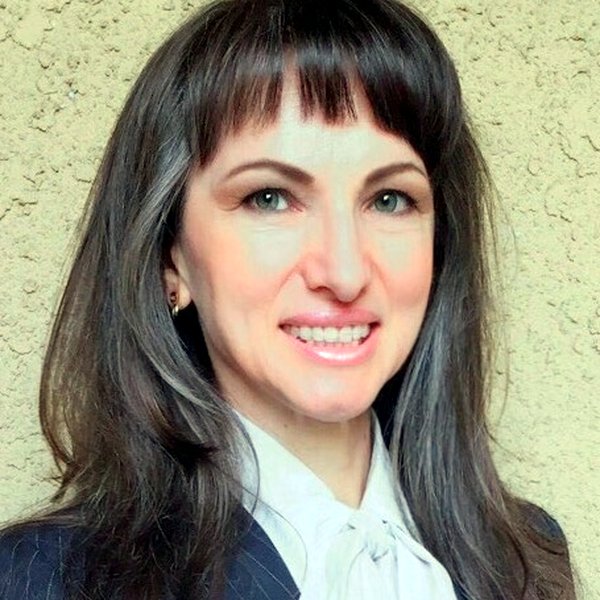
1. B.A./B.Ed. Philology; Specialty: Romanian Language and Literature- Latin Language and Literature2. B.A./B.Ed.Theology: Specailty: Orthodox Theology- Letters3. M.A Philology: Specialty: History of the Romanian Language4. PhD Philology; Title: The
Cura ut valeas
Personally vetted · Strommen’s note
Mihaela has spent more than thirty years teaching Latin and Romanian, and she sets every lesson inside the literature, history, and philosophy it came from.
Specialties
1. B.A./B.Ed. Philology; Specialty: Romanian Language and Literature- Latin Language and Literature2. B.A./B.Ed.Theology: Specailty: Orthodox Theology- Letters3. M.A Philology: Specialty: History of the Romanian Language4. PhD Philology; Title: The
Cura ut valeas
Specialties
Personally vetted · Strommen’s note
Mihaela has spent more than thirty years teaching Latin and Romanian, and she sets every lesson inside the literature, history, and philosophy it came from.

Primele cuvinte — first words & first sounds
5 first features every Romanian beginner should know
These are the foundational pieces a good tutor teaches in the first month. Save the list. Bring it to the trial.
-
01
Ă, Â, Î, Ș, Ț: the five extra letters
Romanian uses the Latin alphabet plus five diacritical letters that cover the sounds English speakers find unfamiliar. Ă is the schwa-like sound in unstressed syllables.  and Î represent the same close central vowel, with  written inside word roots and Î at word boundaries. Ș is the SH of "shop." Ț is the TS of "cats." Reading them correctly is the first step; ignoring them sounds foreign immediately.
e.g. Pâine (bread), țară (country), așa (so), învăț (I learn). Each letter does specific work.
-
02
The postposed definite article
Romanian attaches its definite article to the end of the noun rather than placing it before. Lup is wolf; lupul is the wolf. Fată is girl; fata is the girl. This is the most visually distinctive feature of written Romanian and one of the markers that places Romanian in the Balkan Sprachbund alongside Bulgarian, Macedonian, and Albanian. The system is regular once introduced.
e.g. Carte (book) → cartea (the book). Băiat (boy) → băiatul (the boy). Casă (house) → casa (the house).
-
03
Latin core, Slavic and Turkish layers
Basic vocabulary is unmistakably Latin (mamă, tată, apă, pâine, om, bun, mare), which gives Italian and Spanish speakers a head start from day one. About fourteen percent of the modern vocabulary is Slavic (da for yes, prieten for friend), and another layer is Turkish from the Ottoman centuries (cafea, ciorbă, iaurt). Romanian is a Romance language with an unusually rich vocabulary stratification.
e.g. Mamă (Latin) + da (Slavic) + cafea (Turkish): three layers in three common words a beginner learns in week one.
-
04
The subjunctive with să
Romanian uses the subjunctive much more often than French or Italian, marked with the particle să before the verb. Many constructions where English uses an infinitive (I want to go, I need to learn) take a subjunctive in Romanian (vreau să merg, trebuie să învăț). A beginner who does not absorb the subjunctive early sounds awkward in any non-trivial sentence; tutors drill it from the second or third month.
e.g. Vreau să mănânc (I want to eat). Trebuie să plec (I have to leave). Pot să te ajut? (Can I help you?)
-
05
Da and nu, Slavic and Latin yes/no
The first words any beginner learns also tell half the story of Romanian's origins. Da, meaning yes, was borrowed from Slavic; nu, meaning no, descends from Latin non. Two of the most basic words in the language sit on opposite sides of Romanian's main historical contact zones, and tutors often use the pair as the first example of how Romanian's vocabulary stratification works in practice.
e.g. Da, vreau cafea, nu vreau ceai. (Yes, I want coffee, no I do not want tea.)
About Romanian for Beginners
Romanian, from the very first lesson
Romanian is a Romance language, and that is the first useful thing a beginner needs to know. The basic vocabulary descends directly from the Vulgar Latin of the Roman province of Dacia, conquered by Trajan in 106 CE, and the survival of a Latin language as a Romance island in a Slavic-Hungarian-Greek-Turkish-speaking sea for almost two thousand years gives Romanian its distinctive flavor. A learner with no prior Romance language meets a manageable language: regular phonetics, mostly Latin-rooted vocabulary, a grammar with surprises but not chaos. A learner who already speaks Italian, Spanish, French, or Portuguese meets a language where roughly seventy-five percent of basic vocabulary is half-familiar from the first day, and where the harder work is unlearning a few transferred expectations.
The sound system is the right place to start. Romanian uses the Latin alphabet with five additional diacritical letters: Ă (the schwa-like sound in the second syllable of "sofa"),  and Î (the same close central vowel, with  written inside roots and Î at word boundaries), Ș (the SH of "shop"), and Ț (the TS of "cats"). The five extra letters cover most of the sounds English speakers find unfamiliar in Romanian. Stress is mostly predictable, vowels are clean and Italian-like, consonants are pronounced as written. A beginner reaches reliable pronunciation in two to three weeks of guided practice. The trickier phonetic detail is the unstressed Ă, which lives in unstressed syllables across the vocabulary and gives Romanian its characteristic relaxed-vowel sound, distinct from the brighter vowels of Italian or Spanish.
The basic vocabulary is unmistakably Latin and recognizable on sight to anyone with a Romance background. Mamă (mother), tată (father), apă (water), pâine (bread), om (man, human), bun (good), mare (big, sea), soare (sun), lună (moon, month), foc (fire), nume (name). Numbers, family words, body parts, basic verbs all sit close to their Italian or Spanish equivalents. The borrowed layers come in next: about fourteen percent of the modern Romanian lexicon is Slavic, borrowed across the centuries of Slavic settlement around Dacia and the long influence of the Orthodox Church (which used Old Church Slavonic until the seventeenth century). Da means yes (Slavic), nu means no (Latin); the two words a beginner encounters in the first hour already tell half the story of where Romanian came from. Turkish gave Romanian a layer of food and household vocabulary during the Ottoman centuries (cafea coffee, ciorbă sour soup, iaurt yogurt, papuc slipper). Hungarian and German contributed alongside. A beginner does not need to memorize the etymologies, but a tutor who names which layer a word came from helps the learner read Romanian as a layered place rather than as a memorization list.
The grammar holds the most interesting surprises. Romanian preserves features from Latin that other Romance languages dropped. The case system is partially intact, with collapsed nominative-accusative and genitive-dative pairs (not the full Latin five) plus a vocative form for direct address. The definite article is postposed, attached to the end of the noun rather than placed before it: lup is wolf, lupul is the wolf, fată is girl, fata is the girl. This is the most visually distinctive feature of written Romanian, and it is the feature that marks Romanian (alongside Bulgarian, Macedonian, and Albanian) as part of the Balkan Sprachbund, the linguistic area where the languages converged across centuries of contact. The neuter gender, unusual among Romance languages, is retained as a kind of mixed gender: masculine in the singular, feminine in the plural. The verb system has indicative, subjunctive, conditional, and imperative moods, with the subjunctive used much more often than in French or Italian and marked with the particle să before the verb. None of this is exotic. It is just specific, and a learner with prior French or Spanish has to unlearn a handful of expectations early.
A beginner course usually progresses through clear stages. The first month covers pronunciation, the five extra letters, the greeting and survival phrases, the personal pronouns, the verb a fi (to be) and a avea (to have), and basic word order. The second month introduces gender, plural formation, the postposed article, and the first non-nominative cases (genitive-dative). The third month brings the present tense across the main verb conjugations, the most common prepositions, and the structures for time, place, and weather. The fourth month opens the past (perfectul compus, the compound past used in conversation) and the imperative. By month six a motivated beginner is holding short conversations, reading simple texts, and watching Romanian films with subtitles. The honest pace is slower than that for students who take one lesson a week without home practice, and faster for students who already speak a Romance language; tutors calibrate at the trial.
Moldova writes Romanian. Worth saying once because the question comes up. Standard Romanian and Moldovan are the same language with negligible differences, and the labeling is political rather than linguistic. Moldova kept the Cyrillic script for Romanian until 1989 under Soviet rule, and the breakaway region of Transnistria officially still uses it, but the spoken and written language is mutually identical with Romanian as taught in Bucharest schools. A beginner of Romanian can travel in Moldova without trouble, and Moldovan speakers identify as Romanian speakers in most non-political contexts. The wider Conversational Romanian page covers more of the regional variety landscape for students past the beginner stage.
Romanian sits in a meaningful diaspora context. Significant Romanian-speaking communities have formed across Italy, Spain, Germany, the UK, and the US, the largest emigration waves having happened since 2007 when Romania joined the European Union. The American diaspora is concentrated in Chicago, the New York / New Jersey metro area, Los Angeles, and Atlanta. Many adult learners arrive at Romanian through heritage routes, having grown up around the language without formal study, and beginner lessons in that case look slightly different: less new sound-recognition work, more focus on writing, the case system, and the gap between household register and educated Romanian. Tutors with heritage students plan accordingly.
For learners with no prior Romanian, motivations vary. Some are heading to Romania for study at one of the universities (Bucharest, Cluj-Napoca, Iași, Timișoara), or for work in the rapidly growing Romanian tech sector. Some have family on the other side of a language gap and want to close it. Some fell in love with Romanian cinema (the New Wave through Cristian Mungiu, Cristi Puiu, Corneliu Porumboiu) and want to watch without subtitles. Some are linguists drawn by the language's unusual Latin-Slavic-Turkish-Hungarian stratification. The tutors below teach all of these starting points and calibrate the first lesson to yours. The full tutor directory lists every Strommen teacher across languages.
A few honest observations from tutors on where American beginners tend to lose traction. Treating Romanian as Italian-with-extra-letters is one pattern, and it leaves the learner unprepared for the postposed article and the partial case system. Underestimating the subjunctive is another, since Romanian uses the subjunctive (with the marker să) in many contexts where English would just use the infinitive, and a learner who does not absorb the subjunctive early sounds awkward in any non-trivial sentence. Pronouncing Ă as a full A is a third pattern, and it makes the learner's Romanian sound brighter than it should. And the last one is skipping the postposed article practice; the article system is regular but it touches every noun, and a learner who does not internalize it early stays slow at producing any noun phrase. A good beginner tutor catches each of these in the first weeks.
What you'll cover
Lessons & classes tailored to Romanian for Beginners
Sounds, the five extra letters, and survival phrases
The first month covers Romanian pronunciation, the five diacritical letters (Ă, Â, Î, Ș, Ț), the basic greeting and survival phrases, the personal pronouns, the verbs a fi (to be) and a avea (to have), and basic word order. A beginner reaches reliable pronunciation in two to three weeks, faster than most expect, because Romanian phonetics is mostly regular and Italian-like.
Postposed articles, gender, and the partial case system
Romanian's distinctively postposed definite article (lup → lupul), the gender system (masculine, feminine, neuter as a mixed gender), plural formation, and the partial case system with collapsed nominative-accusative and genitive-dative pairs plus a vocative for direct address. The grammar is regular once introduced; the trick is encountering it in real sentences rather than memorizing tables.
Verb conjugation and the subjunctive
The four main Romanian verb conjugation classes in the present tense, plus the past (perfectul compus, used in conversation), the imperative, and the subjunctive with the particle să. Romanian uses the subjunctive much more often than French or Italian, and beginner lessons introduce it in the second or third month so the learner can express want, need, ability, and obligation correctly from early on.
First conversation: greetings, prices, directions, food
Greetings (bună, salut, bună ziua, la revedere), introductions, numbers, asking prices and directions, ordering food and coffee, the polite request structures using the conditional, and the everyday vocabulary of mămăligă, sarmale, ciorbă, and Romanian café life. Beginners build a working set of phrases in parallel with the grammar, so even the early lessons produce real conversational ability.
FAQ
About Romanian for Beginners lessons & classes
How hard is Romanian for an English speaker?
Easier than most assume. The Foreign Service Institute classifies Romanian as a Category I language for English speakers, the same category as Spanish, French, Italian, and Portuguese. The phonetics is regular, the vocabulary is mostly Latin-rooted (and recognizable to anyone with a Romance background), and the grammar has surprises (the postposed article, the partial case system, the heavy use of the subjunctive) but not chaos. A motivated beginner reaches conversational comfort in roughly six to nine months of one to two lessons per week.
How hard is Romanian if I already speak Italian or Spanish?
Noticeably easier than starting fresh. The vocabulary overlap with Italian and Spanish is substantial, especially in basic words and common verbs, so reading and listening come faster than for a learner with no Romance background. The grammar has its own features (the postposed article, the partial case system, the neuter gender, the heavy subjunctive) that require unlearning some Italian or Spanish expectations. Most Italian or Spanish speakers reach conversational comfort in Romanian in three to six months.
Why does Romanian have all those letters with marks on them?
Because Romanian needed letters for sounds the basic Latin alphabet did not cover. Ă is the schwa-like sound that lives in unstressed syllables across the language.  and Î represent the same close central vowel, with  written inside word roots (român, mâine) and Î at word boundaries (învăț). Ș is the SH of "shop," needed because Latin alphabets had no single letter for it. Ț is the TS of "cats," same reasoning. The five letters look unusual but each one does specific phonetic work, and a beginner reads them reliably within a few weeks.
What is the postposed article and why is it different?
In most languages that have a definite article (the in English, le / la in French, el / la in Spanish, il / la in Italian), the article comes before the noun. Romanian attaches its definite article to the end of the noun instead: lup is wolf, lupul is the wolf, fată is girl, fata is the girl. This is unusual among Romance languages and is shared with Bulgarian, Macedonian, and Albanian as a feature of the Balkan linguistic area. The system is regular once introduced and touches every noun in the language, so beginner tutors teach it early.
What is the difference between Romanian and Moldovan?
Linguistically, nothing of significance. Standard Romanian and Moldovan are the same language with negligible differences, and the labeling is political rather than linguistic. Moldova kept the Cyrillic script for Romanian until 1989 under Soviet rule, which is the main visible difference for older materials and signage. A learner of Romanian travels and converses in Moldova without trouble, and Moldovan speakers identify as Romanian speakers in most non-political contexts.
Are your Romanian tutors native speakers?
Most are native speakers from Bucharest, Cluj-Napoca, Iași, Timișoara, and elsewhere in Romania, alongside Moldovan speakers from Chișinău and longtime bilingual teachers experienced with English-speaking adult learners. Each tutor's bio specifies background, region, and teaching experience. For beginner work, what matters most is a tutor who can hear what is keeping your early Romanian from sounding natural and diagnose it specifically.
Can I take Romanian lessons online?
Yes. Most of our Romanian tutors teach online via Zoom or Jitsi and work with students worldwide. A few teach in person around Los Angeles when schedules align. The booking widget on each tutor's profile shows available formats and live availability. Online lessons work well for Romanian because the work is mostly conversational and visual aids (the postposed article system, verb conjugation tables) translate cleanly to screen-share.
What does a beginner Romanian lesson actually look like?
Lessons are one-on-one and built around you. An early-stage hour might mix pronunciation drilling on the five diacritical letters, a small grammar point introducing the postposed article or the subjunctive marker să, vocabulary built around a specific theme (food, family, the café), and survival phrases for the trip or the family conversation you are preparing for. Tutors plan each lesson rather than running a fixed curriculum, so two beginners with different goals get different lessons.
Ready for Romanian for Beginners lessons or classes?
Book a free 30-minute trial with one of our personally vetted tutors. Private lessons or small-group classes — your choice.