



Personally vetted instructors
ASL for Kids tutors, lessons & classes
Hi friend! The warm wave-and-smile that any signer uses with a child entering the room.
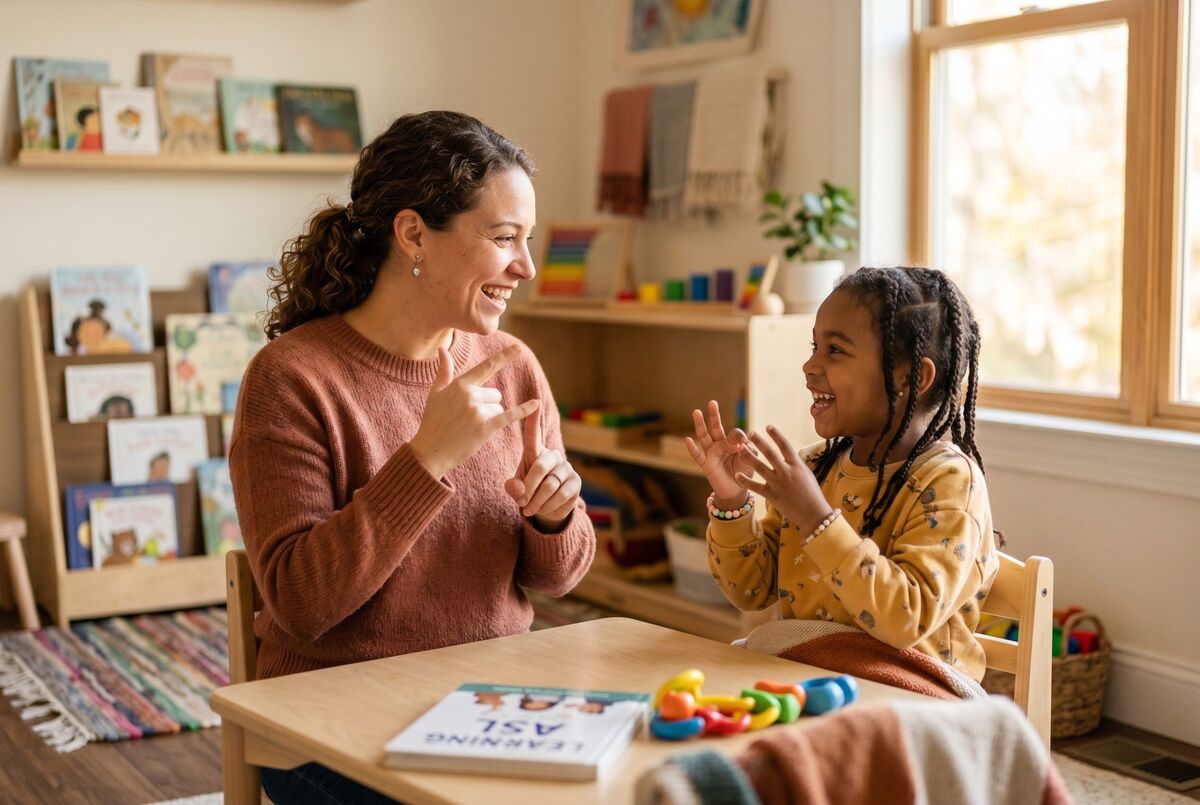
Personally vetted American Sign Language tutors who teach kids. Lessons built around songs, picture books, and the natural visual play that lets a child absorb a full language from age two through the teen years.
Your instructors
ASL for Kids tutors for private lessons & classes
Strommen runs a curated ASL practice and only lists kids' tutors who actively enjoy working with this age group. Teaching ASL to a child is different from teaching ASL to an adult; not every adult-ASL tutor has the patience or the playfulness, and we do not pad the kids' roster with tutors who do not fit.
Read the bios, then book a 30-minute free trial so the tutor can meet your child.
Below are the Strommen tutors who teach ASL to children. Photos, ratings, and rates are real. Click any card to read the bio and book a free 30-minute trial.
I want to learn…
Every tutor, personally met. — founder-vetted since 2006, in Los Angeles and online worldwide.
Get a personalized plan
Pick your language — a language advisor will match you with the right tutor and map out your path.


I have a Bachelors degree
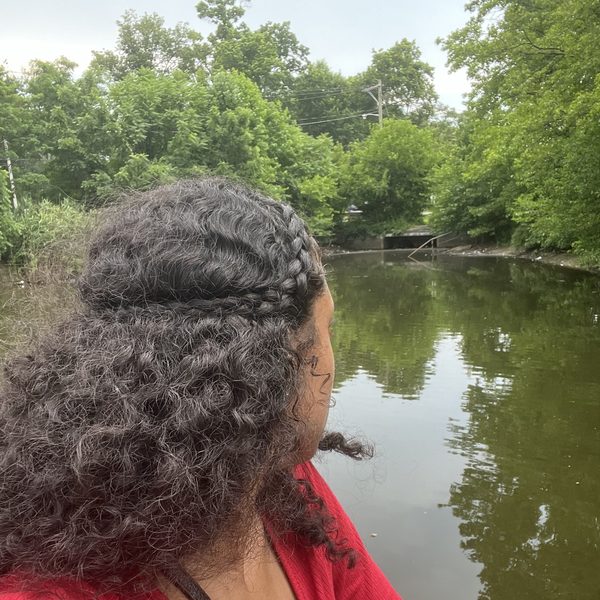
Immersion ASL Instructor from Gallaudet University from NY - I am passionate about your learning and making the classes fun and low pressure!
Personally vetted · Strommen’s note
Trained at Gallaudet University, the country's ASL powerhouse, Nadgie keeps immersion lessons deliberately low-pressure and fun.
Specialties
Also speaks: English
I have a Bachelors degree
Immersion ASL Instructor from Gallaudet University from NY - I am passionate about your learning and making the classes fun and low pressure!
Specialties
I also speak: English
Personally vetted · Strommen’s note
Trained at Gallaudet University, the country's ASL powerhouse, Nadgie keeps immersion lessons deliberately low-pressure and fun.

Kids' ASL — language & play
5 anchors of a kids' ASL learning environment
These are the building blocks every thoughtful kids' ASL program builds around. Knowing them helps parents see what is happening in the lessons.
-
01
Hello and name-signs
Every Deaf person typically has a name-sign, a single sign that represents them, given by a Deaf person (not chosen by the bearer). Hearing learners are not given name-signs until they have spent meaningful time in Deaf community and a Deaf person offers them one. Kids learn this convention early because it shapes how introductions work in Deaf space.
e.g. A tutor introducing herself: HI MY NAME I-S [fingerspelled], MY NAME-SIGN [name sign].
-
02
ASL songs and rhymes
The Deaf community has a rich tradition of ASL poetry and signed song, distinct from translated English lyrics. Children's ASL songs use rhythm in the body, repetition in handshape and movement, and visual rhymes that English lyrics cannot replicate. Lessons cycle through age-appropriate ASL songs as a primary teaching tool, not as decoration.
e.g. An ASL version of an ABC song uses handshape patterns rather than sound rhymes.
-
03
Picture books in ASL
Tutors read picture books aloud in ASL rather than translating from the English text, which is its own skill. Bilingual ASL-English children's books exist (the Don Johnston and Gallaudet University Press catalogs both publish them) and serve as anchor texts for kids' lessons. Reading aloud in ASL builds story-comprehension and exposure to extended ASL discourse.
e.g. A tutor reading "Goodnight Moon" in ASL with full facial grammar and signing space.
-
04
ASL vs BSL: not the same language
American Sign Language and British Sign Language share no common alphabet or vocabulary. A child growing up between the US and the UK needs deliberate planning if both sign languages matter. Most kids' programs in the US, including Strommen, focus on ASL because it is the working sign language of North America.
e.g. ASL uses a one-handed alphabet; BSL uses a two-handed alphabet. Different languages.
-
05
The face as part of the language
ASL uses facial expression and body position grammatically: raised eyebrows for yes-no questions, furrowed brows for wh-questions, cheek puffs for emphasis or distance. Children pick this up fast through imitation, and tutors model it constantly. Hearing kids sometimes need encouragement past the inhibition against expressive faces, but the inhibition usually fades within a few months of regular signing.
e.g. DOG WHERE? (eyebrows furrowed on WHERE) = "Where is the dog?"
About ASL for Kids
ASL is a kid's first full language, when families want it that way
Children learn ASL the same way they learn any first or second language: through play, repetition, songs, stories, and the warmth of an adult who clearly enjoys the language they are passing along. The unusual piece in ASL for kids is that the families coming to it often arrive under more pressure than families learning a spoken language. A newly identified Deaf or hard-of-hearing child has a developmental window for first-language acquisition that no parent wants to waste. A hearing child of Deaf adults (a CODA) is already absorbing ASL at home and the question is how to formalize it. A hearing family adopting a Deaf child needs the whole household signing competently as quickly as possible. A school placement that brought a Deaf classmate into a hearing child's life creates a fast, organic motivation. Each of these is a real situation in our roster, and the lesson plan adjusts.
The most important thing for families with a Deaf or hard-of-hearing child to understand is that ASL is not a backup plan in case spoken language does not work. It is a full language with the same developmental power as any spoken language, and Deaf children exposed to fluent ASL from birth develop language on the same timeline as hearing children exposed to spoken English. Decades of language-deprivation research have shown that the real risk for Deaf children is not signing too much; it is signing too little, too late, or with insufficient fluency in the home. Parents who jump into ASL early and aggressively give their child the strongest possible foundation, regardless of whether the child also uses hearing aids, cochlear implants, or grows up to be primarily oral, primarily signing, or both. The Deaf community has decades of receipts on this question and the message is consistent.
For very young children, ages two through five, lessons are short, playful, and visual. A typical 30-minute lesson with a four-year-old might cycle through a hello-and-feelings warm-up, a short song with signed lyrics, a picture book read aloud in ASL, a vocabulary game (animals, food, colors, family members), and a closing routine that the child looks forward to. Babies and toddlers learn ASL through what amounts to extended caregiving: the parent or tutor signing to them throughout daily routines (diaper changes, meals, bath time, bedtime) and the child gradually producing signs back. The famous "baby sign" trend of the 2000s, which taught hearing babies a small set of ASL signs to ease pre-verbal communication, is a watered-down version of what real ASL exposure looks like. Real ASL for a toddler is the full language, not a vocabulary of twelve common nouns.
Elementary-age kids, six through ten, can sit for longer lessons and absorb explicit vocabulary instruction alongside the play-based work. This is the age at which a hearing child taking ASL for fun, for a Deaf sibling, or for a class becomes capable of substantive conversation. Lessons at this age weave in fingerspelling drills (the manual alphabet, which is the foundation skill for proper nouns and English-borrowed terms), short ASL narratives, classifier predicates (the way ASL describes objects in space using handshape and movement together), and the first systematic work on facial grammar. Hearing kids often have to be coached past the inhibition against expressive faces, but they pick it up much faster than adults. Deaf kids at this age are usually in a school environment with other Deaf children and benefit from private tutoring as supplemental enrichment or focused work on specific skills.
Middle-school and teenage kids, eleven and up, can engage with more abstract and culturally rich content. ASL poetry, ASL storytelling traditions, the history of the Deaf community, Deaf cinema, and the politics of being Deaf or hard-of-hearing in a majority-hearing world all become accessible at this age. Many teen learners are taking ASL alongside a school class for high school language credit, and the private tutor's job becomes filling in what the classroom cannot: receptive practice with a fluent signer, conversation practice, and cultural context that group classes often skim.
A short note on baby sign versus real ASL. Programs like Baby Signing Time and various daycare curricula teach hearing babies a small vocabulary of ASL-derived signs to help with pre-verbal communication around hunger, sleep, and basic wants. These programs are not harmful, and the babies who use them often develop strong sign vocabularies that fade as spoken English takes over. They are not, however, ASL instruction. A family that wants their hearing child to grow up bilingual in spoken English and ASL needs the full language exposure, not the curated vocabulary subset. A tutor or fluent caregiver providing real ASL input throughout daily life is what produces a bilingual child. The same is true for hearing children of Deaf parents (CODAs), who absorb ASL natively when their parents sign fluently with them from birth.
A quick note on BSL versus ASL for international families. ASL is the working sign language across the United States and most of English-speaking Canada. British Sign Language is a different language used in the UK, with no shared alphabet or vocabulary, despite both countries speaking English. Australian Sign Language (Auslan) is closer to BSL than to ASL. A family that moves between the US and the UK with a Deaf child will need to think deliberately about which sign language is primary, because they are not interchangeable and a child fluent in one will need real lessons to acquire the other. The Strommen ASL roster teaches ASL specifically; we do not currently teach BSL or other national sign languages.
Lessons happen online over Zoom or Jitsi and in person around Los Angeles for tutors in the area. Video works well for ASL because the language is visual, with the caveat that lighting and framing matter more than they do for spoken-language lessons. A tutor working with a young child often asks the parent to position the camera to capture both the tutor's hands and face clearly, and to make sure the child is well-lit on their side too so the tutor can see the child's signing in return. Most tutors send short read-aloud videos or song clips home as between-lesson reinforcement, and most parents who actively co-sign with the child between lessons see meaningfully faster progress than parents who treat lessons as the only ASL exposure.
The tutors below include Deaf signers with classroom or family-coaching experience, hearing CODAs who grew up bilingual and now teach, and hearing fluent signers who have spent years working in Deaf-education or Deaf-services contexts. Each bio specifies background, age range, and family-situation experience (Deaf child of hearing parents, hearing child of Deaf adults, mixed-hearing household, hearing-only family). The trial lesson is where the rapport between tutor and child gets confirmed. With a child, the right tutor is the one your kid wants to come back to next week.
What you'll cover
Lessons & classes tailored to ASL for Kids
Age-paced lessons from toddler through teen
30-minute lessons for ages 5 to 8 with song, story, and play as the main vehicles. 45-minute lessons for ages 9 to 12 with explicit vocabulary work alongside the play. Full-hour lessons for teens with substantive conversation, ASL narratives, and cultural depth. Toddler exposure is best handled through a parent learning ASL alongside the child, with the tutor coaching the parent as much as the child.
Picture books and the ASL storytelling tradition
Tutors read aloud in ASL rather than translating from English text, which is a distinct skill. Bilingual ASL-English picture books from Gallaudet University Press and similar publishers serve as anchor texts. Older kids work up to ASL narratives and the storytelling traditions of the Deaf community, which are some of the richest material in the language.
Deaf culture introduced age-appropriately
Name-sign conventions, the etiquette of getting a Deaf person's attention, Deaf history including Gallaudet University and the American School for the Deaf, and the cultural framing of Deafness as identity rather than deficit. Cultural content is woven in across lessons rather than treated as a separate subject, so the child grows up with the cultural frame built into their language.
Family-situation calibration
Lessons for a Deaf child of hearing parents (CODH) look different from lessons for a hearing child with a Deaf sibling, which look different from lessons for a hearing child taking ASL for school. Tutors calibrate at the trial and during ongoing work, with check-ins on what is working and what needs to change. The family's overall language environment matters as much as the lesson itself, and tutors will give honest guidance on that side.
FAQ
About ASL for Kids lessons & classes
What age can my child start ASL lessons?
From birth in principle, with the format adjusted for age. Babies and toddlers learn ASL through daily-life exposure with fluent signing caregivers; structured tutored lessons usually start around age 4 or 5 when a child can sit through a 30-minute session. Younger children benefit most when a parent learns ASL alongside the child and a tutor coaches both. Older kids and teens can start at any age, including absolute beginners.
My child is Deaf or hard-of-hearing. Should we sign with them even if they use hearing aids or cochlear implants?
Yes, and the research on this is clear. Decades of language-deprivation studies show that Deaf and hard-of-hearing children develop strongest when given full access to a complete language from infancy, and ASL is that language for many families regardless of whether the child also uses hearing technology. Signing with your child does not interfere with spoken-language development. The real risk is signing too little, not too much.
Will learning ASL slow down my child's English?
No. Decades of bilingual-development research, including specific studies on ASL-English bilingual children, show that exposure to two full languages does not delay either one and often confers cognitive advantages by school age. Hearing children of Deaf adults (CODAs) typically develop both ASL and spoken English on normal timelines, and Deaf children with full ASL access plus speech therapy also develop both languages strongly.
Is ASL the same as British Sign Language?
No. ASL and BSL share no common alphabet or vocabulary. A family that moves between the US and the UK with a child who signs will need to plan deliberately about which sign language is primary. Australian Sign Language (Auslan) is closer to BSL than to ASL. The Strommen roster teaches ASL specifically.
Is baby sign the same as teaching my baby ASL?
No. Baby sign programs teach hearing babies a small vocabulary of ASL-derived signs to ease pre-verbal communication. They are not harmful, but they are not ASL instruction either. A family that wants their hearing child to grow up bilingual in spoken English and ASL needs full language exposure from a fluent signer, not a curated subset of common nouns. The distinction matters for what kind of long-term outcome you can expect.
How long until my child can hold a basic conversation in ASL?
For an absolute beginner child of elementary age with weekly lessons and some between-lesson exposure, basic conversation usually comes within 6 to 12 months. Toddlers exposed to ASL daily by a fluent caregiver hit comparable milestones on the same timeline as hearing toddlers learning spoken English. Teens taking ASL for high-school language credit usually reach functional conversation by the end of a second year of regular study.
Should I learn ASL alongside my child?
Yes if you can. For younger children especially, a parent who signs at home produces meaningfully faster progress than weekly lessons alone. Tutors often coach parents and children together for the early sessions, or work with the parent separately so the home environment can match the lesson content. For a Deaf or hard-of-hearing child, parent fluency is the single biggest factor in long-term language outcomes.
Are your kids' ASL tutors Deaf or hearing?
Both. The roster includes Deaf signers, hearing CODAs who grew up bilingual, and hearing fluent signers with substantial Deaf-community experience. Each bio specifies background and family-situation experience. Many families benefit from working with at least one Deaf tutor at some point in the child's learning so the child meets ASL inside its cultural home.
Ready for ASL for Kids lessons or classes?
Book a free 30-minute trial with one of our personally vetted tutors. Private lessons or small-group classes — your choice.