


Personally vetted instructors
CILS Due B2 tutors, lessons & classes
Buonasera How an Italian university tutorial actually opens after late-afternoon class.
Personally vetted CILS DUE B2 prep tutors. Lessons calibrated to the argumentative-Italian threshold that opens Italian university admission, professional credentialing, and a substantive working career in Italian.

Your instructors
CILS Due B2 tutors for private lessons & classes
Strommen has prepped CILS DUE B2 candidates across the university-admission track, the professional-credentialing track, and the long-arc B1-to-B2 upgrade. Most students arrive with a target exam date, a target program or employer, and an honest sense of which section worries them most. Every tutor below was met and vetted by us in person or via thorough video interview. No marketplace. No automated profile-creation. Real teachers with real Siena-rubric experience at B2.
Filter by location, age, or price. Then book a 30-minute free trial.
Below are the Strommen tutors who prep candidates for the CILS DUE B2. Photos, ratings, and rates are real. Click any card to read their bio and book a free 30-minute trial.
I want to learn…
Every tutor, personally met. — founder-vetted since 2006, in Los Angeles and online worldwide.
Get a personalized plan
Pick your language — a language advisor will match you with the right tutor and map out your path.


Psychology · N/A
Expert Native Italian Tutor | Personalized Lessons | Learn Italian with confidence, clarity, and authentic conversation
Specialties
Also speaks: French, Japanese, Russian, Welsh
Psychology · N/A
Expert Native Italian Tutor | Personalized Lessons | Learn Italian with confidence, clarity, and authentic conversation
Specialties
I also speak: French, Japanese, Russian, Welsh
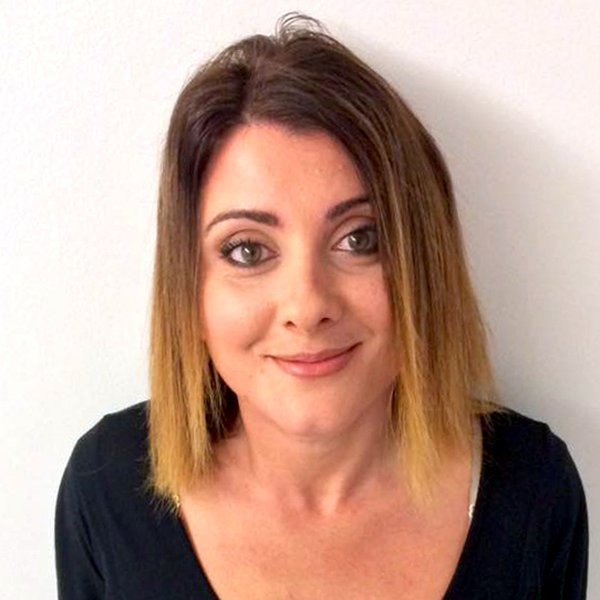

I have a degree in "Media and Journalism" from the Faculty of Political Science in Florence.I have obtained several certificates of suitability for teaching the Italian language L2/Ls to foreigners, and as administrator of the CILS exams (of all levels... · The certificate of suitability for teaching the Italian language L2/Ls to foreigners was issued by DILIT International House in Rome after being admitted through an initial test and passing the various stages of the training.
Learn Italian with confidence, clarity, and real-world results.
Personally vetted · Strommen’s note
Federica covers every CILS certification level from A2 to C2 in her Italian lessons, out of Barcelona, with Sicilian dialect and opera-singer coaching too.
Specialties
Also speaks: English, Spanish
I have a degree in "Media and Journalism" from the Faculty of Political Science in Florence.I have obtained several certificates of suitability for teaching the Italian language L2/Ls to foreigners, and as administrator of the CILS exams (of all levels... · The certificate of suitability for teaching the Italian language L2/Ls to foreigners was issued by DILIT International House in Rome after being admitted through an initial test and passing the various stages of the training.
Learn Italian with confidence, clarity, and real-world results.
Specialties
I also speak: English, Spanish
Personally vetted · Strommen’s note
Federica covers every CILS certification level from A2 to C2 in her Italian lessons, out of Barcelona, with Sicilian dialect and opera-singer coaching too.

Vita universitaria — university & work register
5 B2-register essentials American candidates often miss
These are the register moves and cultural touchpoints that show up in B2 writing prompts, speaking interactions, and the Italian work-and-study life the credential opens. Screenshot the infographic, then book a tutor to drill the rest.
-
01
Caffè al banco
The Italian espresso ritual: standing at the counter (al banco) for a quick espresso rather than sitting at a table, which costs more. The cultural shorthand for daily Italian work-life rhythm: morning cappuccino, mid-morning caffè, after-lunch caffè, sometimes another mid-afternoon. The B2 oral exam often invites discussion of daily Italian habits and the espresso routine is one of the most-cited.
e.g. Vado al bar a prendere un caffè al banco prima della lezione.
-
02
La pausa pranzo
The Italian lunch break: traditionally an hour or more, often with colleagues at a nearby trattoria, real food rather than a sandwich at the desk. Orario continuato (a workplace without a real lunch break) still gets remarked on as a deviation. B2 candidates working in Italian corporate environments meet this directly; the writing section sometimes asks about work-life-balance topics where the lunch culture appears.
e.g. Alla pausa pranzo andiamo sempre dallo stesso trattoria sotto l'ufficio.
-
03
Fare carriera
"To build a career," the standard phrase for professional advancement in Italian. The verbal idiom carries cultural weight: Italian professional culture tends to value loyalty and tenure within an organization more than the American job-hopping pattern. B2 writing prompts on work and career routinely use this phrase, and the structured-opinion-essay format expects a candidate to discuss it with cultural awareness.
e.g. In Italia fare carriera dentro la stessa azienda è più comune che cambiare ogni due anni.
-
04
Il colloquio
Colloquio di lavoro = job interview; colloquio orale = oral exam interview; colloquio con il professore = office-hours meeting with a professor. The same word covers high-stakes one-on-one conversations across work and academia. B2 candidates routinely meet the word in writing and speaking prompts about university and work life. The cultural register expected in a colloquio is formal Italian throughout, the Lei form, conditional mood for polite questions.
e.g. Domani ho un colloquio con il direttore del dipartimento, devo prepararmi bene.
-
05
Nondimeno e tuttavia
Two of the most useful argumentative connectors at B2 register: "nonetheless" and "however," both more formal than the conversational però. Pair with per quanto concerne ("as regards"), a tal proposito ("on this matter"), occorre rilevare che ("it should be noted that"). A B2 opinion essay scoring buono on coerenza uses three or four of these naturally throughout, not stuffed in for effect.
e.g. Le statistiche mostrano un miglioramento; nondimeno, alcuni problemi strutturali persistono.
About CILS Due B2
Italian for the university threshold
CILS DUE B2 is the upper-intermediate certification issued by the Università per Stranieri di Siena, and for most candidates it's the most consequential level in the whole CILS family. B2 is the threshold that opens Italian university admission for non-native applicants: virtually every Italian undergraduate and master's program for international students names B2 as the language requirement, and a CILS DUE diploma is the credential most program admissions offices want to see in the file. B2 is also the level routinely named in Italian employer language clauses for professional roles, in HR documentation requirements at Italian-headquartered firms with US operations, and in the licensing pathways for certain Italian-regulated professions. Above B2 sit C1 and C2 for academic and prestige contexts; below it sit B1 for survival-plus-civic Italian and the B1 Cittadinanza variant for the citizenship pathway. B2 is where Italian moves from competent to argumentative, and the prep curve reflects that. Students looking for the broader Italian program our tutors teach can start at our main Italian page.
The exam structure follows the standard five-section CILS pattern. Ascolto tests listening through three to four audio documents at native pace: a news bulletin, an interview, a longer conversation or panel discussion, with multiple-choice and fill-in answers. Comprensione della lettura tests reading through multi-paragraph texts from real Italian press (news articles, opinion pieces, longer features) with inference and detail questions. Analisi delle strutture di comunicazione tests grammar and lexis through structured exercises that go well past the B1 floor: subjunctive in all four tenses (presente, passato, imperfetto, trapassato), conditional present and past, pronoun combinations, prepositions with verbs, the lexical groupings around argumentation and abstraction. Produzione scritta demands two tasks: a structured formal text (often a letter of complaint, a formal email, a contribution to a debate) and an opinion essay of roughly 200 words built around a defended position. The opinion essay is where the rubric grades coerenza (coherent argument structure), adeguatezza (register appropriate to the formal-written context), correttezza grammaticale (accuracy in subjunctive, conditional, agreement), and ricchezza lessicale (range of vocabulary and connectors). Produzione orale is the most-underestimated section by American candidates: the candidate selects from prompts, gets prep time to organize notes, then delivers a structured monologue followed by an interactive exchange with the examiner. The whole sitting runs roughly three and a half hours including listening audio. The fee at the Siena center is around €130; overseas centers set their own modestly higher price. The session calendar runs twice a year, in June and December. Verify the current dates, fees, and centers at cils.unistrasi.it before registering.
The per-section pass model is the structural detail that shapes B2 prep. Each section has its own minimum score; the overall result is sufficiente only when every section passes. A weak score in even one section produces insufficiente. The benefit: a candidate who fails only one section can repay and re-sit that module within an eighteen-month window. The implication for prep at B2: the diagnostic in week one matters more than at lower levels, because the gap between sections widens at B2 (most American candidates are stronger in reading and listening than in writing and speaking, sometimes by a wide margin), and a serious prep plan rebalances toward the weak section without letting the strong ones slide.
What B2 demands beyond B1, and where most American candidates underestimate the jump. The connector layer is the most-cited issue at B2 and the one the rubric grades most explicitly. A B2 essay without three or four argumentative linkers reads as a list of points, not a structured argument. The expected inventory: nondimeno, tuttavia, per quanto concerne, va sottolineato che, a tal proposito, laddove si consideri che, a conclusione di quanto detto, per altro verso, in tal senso, occorre rilevare che. These appear in any Italian opinion column and any Italian academic prose; B2 candidates have to use them naturally in production, not just recognize them in reading. The second issue: subjunctive in the full set of four tenses, including the imperfetto for hypothetical past situations (se avessi saputo, sarei venuto) and the trapassato for unrealized past possibility. Candidates who hold congiuntivo presente from B1 prep often haven't built the muscle for the past forms, and the writing prompt punishes the gap. The third: formal-register conventions in writing. The B2 formal-text task expects the elaborate Italian register: Egregio Direttore, La ringrazio per la Sua disponibilità, Resto a disposizione per qualsiasi chiarimento, Cordiali saluti, conditional throughout, no contractions, no spoken-Italian fillers. American candidates who write a businesslike English email in Italian translation lose adeguatezza points. The fourth issue, on the speaking section: candidates who prepare only the monologue and not the interaction tend to score well on the first half and slide on the second, because the examiner pushes back, asks for justification, requests examples, and probes inconsistencies. Drilling the defended exchange under realistic counter-question pressure is what closes the gap. The fifth, easy to fix once flagged: the accent and punctuation discipline that distinguishes textbook Italian from rubric-passing Italian. A missing apostrophe on un'altra, a missing accent on perché, an extra space before a comma — these are small, but they count under correttezza grammaticale.
How tutors prep CILS DUE B2. Most first lessons are a placement diagnostic. The tutor administers a past B2 sample paper, scores every section against the official rubric, and identifies which section is the weakest. From there, lessons rebalance toward that section while keeping the others sharp. Writing is drilled with real timed compositions on past B2 prompts, both the formal-text task and the opinion essay, graded against the four rubric categories with rewrite cycles. Speaking is rehearsed as full mock interviews with the monologue-then-interaction structure under real prep-time constraints, recorded and reviewed for register, pacing, subjunctive accuracy, and recovery from a stumble in the defended exchange. Listening uses Italian audio at native pace: RAI Radio Uno news bulletins, RaiPlay Sound's longer-form podcasts, Internazionale's weekly audio summary, and the official Siena listening archive in the final month. Reading uses real Italian press: La Repubblica and Corriere della Sera opinion pieces, Internazionale's translated long-form journalism, Il Sole 24 Ore for register-heavy professional Italian. Grammar runs through the B2 floor: full subjunctive inventory, conditional in present and past, pronoun combinations, prepositions with verbs, the lexical groupings around argumentation. A reasonable arc is five to six months for a B1-to-B2 jump at one or two lessons per week with steady self-study; faster timelines (three months) are possible for candidates already at solid B1+ from immersion in Italy or extended prior study.
Between lessons, immerse with B2-appropriate Italian media. La Repubblica's opinion section (Idee) and Corriere della Sera's Cultura and editorial pages are the standard companions for B2 reading. Internazionale's weekly long-form translations from international press are at exactly the register the B2 reading section uses. RAI Radio Uno's morning news (Radio Anch'io) and the daily news magazines are at B2 listening pace. RaiPlay Sound's podcast directory has serious long-form Italian at B2/C1 register: Pascal, Tabloid, Storie d'Italia. For books at B2: Italo Calvino's Le città invisibili is the canonical upper-intermediate entry; Primo Levi's Se questo è un uomo for plain-register reading; Elena Ferrante's L'amica geniale for contemporary narrative. The official CILS sample-paper archive at the Siena website has past B2 listening audio with answer keys; drill these directly. The best Italian textbooks post inventories B2-level textbooks (Nuovo Espresso 4, Nuovo Contatto B2, the Almaedizioni Magari! grammar workbook) that tutors lean on. Our 1,000 most common Italian words list is below the B2 vocabulary floor; B2 candidates need a substantially wider lexicon, especially around argumentation.
The Strommen CILS DUE B2 roster includes native Italian teachers based in Italy, several with formal CEDILS examiner certification from the Università per Stranieri di Venezia, longtime US-based Italian-American bilinguals with direct B2 prep experience, and several tutors with Italian university teaching backgrounds who know what an Italian admissions office actually expects from an international applicant's language file. Each tutor's bio specifies which levels they prep, what registers they're strongest on, and which candidate profiles fit them best (working adult preparing for Italian university admission, professional preparing for an Italian employer language requirement, B1-to-B2 upgrader on the longer arc, intensive prep for an exam date inside three months). Match yourself to a Siena- or Perugia-trained teacher for the closest rubric familiarity, a Rome- or Milan-based teacher for the cadence of metropolitan Italian, or a US-based bilingual for in-person weekly lessons and the experience of someone who has watched many American mouths build B2-level Italian production skills from B1. For broader Italian foundations alongside CILS DUE B2 prep, our CILS overview, Business Italian, Italian academic writing, and general Italian specialty pages cover related programs. Browse the tutor list, find a bio that matches your situation, and book the trial.
What you'll cover
Lessons & classes tailored to CILS Due B2
B2 diagnostic and section-by-section plan
Your first lesson is a diagnostic against a past CILS DUE B2 sample paper from the Università per Stranieri di Siena archive. The tutor scores all five sections on the real rubric (coerenza, adeguatezza, correttezza grammaticale, ricchezza lessicale) and identifies the weakest section. At B2 the gap between sections tends to widen for American candidates, and the diagnostic surfaces it precisely. Subsequent lessons rebalance toward the weak section while keeping the others sharp.
Produzione scritta (the gating skill)
B2 writing is where most candidates lose points. Two tasks per sitting: a structured formal text (letter of complaint, formal email, contribution to a debate) and an opinion essay of roughly 200 words. Lessons drill structured argumentation (thesis → developed body → synthesis), the connector layer (nondimeno, per quanto concerne, va sottolineato che, laddove si consideri che, occorre rilevare che), full subjunctive inventory across all four tenses, formal-register conventions in writing, and the accent and punctuation discipline the rubric grades. Real timed compositions each week with rewrite cycles.
Produzione orale: monologue plus defended exchange
The B2 oral block is built from prompts the candidate selects with prep time, followed by a structured monologue and then a defended exchange with the examiner who pushes back, requests examples, and probes inconsistencies. Lessons rehearse both halves under real prep-time constraints, recorded and reviewed for register (formal Lei, subjunctive in hypotheticals, conditional in polite framings), pacing, recovery from stumbles, and consistency across both halves. Pronunciation and intonation refinement run in parallel.
Listening, reading, grammar, full mock papers
Authentic Italian audio at native pace from RAI Radio Uno, RaiPlay Sound's longer-form podcasts, Internazionale's weekly audio summary. Real exam-style reading documents from La Repubblica opinion pieces, Corriere della Sera editorials, Internazionale long-form journalism. Grammar drills on the full B2 inventory: subjunctive in all four tenses, conditional in present and past, pronoun combinations, prepositions with verbs. Close to exam date, lessons shift to full timed mock papers from the official Siena archive. Timer-aware practice from week one remains the single best predictor of a first-sit pass.
FAQ
About CILS Due B2 lessons & classes
Can I take CILS DUE B2 to enter Italian university?
Yes, and B2 is the standard threshold for Italian university admission for international students at virtually every Italian undergraduate and master's program. Some programs accept UNO B1 for first-year enrollment with a B2 upgrade required by the end of year one; some specialized programs (medicine, certain humanities tracks) accept the B2 only after a placement interview; programs taught in English typically waive the Italian requirement but still ask for English-language proof. Check your specific target program's admissions page for the named credential and required score. CILS DUE B2 is accepted by every Italian state university that recognizes any CILS, CELI, PLIDA, or Roma Tre certification (which is essentially all of them).
How does CILS compare to CELI and PLIDA at B2?
All three are state-recognized Italian certifications aligned to the CEFR at the same B2 level, all accepted by Italian universities and the Italian Ministry of Foreign Affairs. The differences are the issuing body, the testing format, and the regional recognition footprint. CILS DUE B2 is issued by the Università per Stranieri di Siena and has the deepest penetration in Italian university admissions. CELI 3 is issued by the Università per Stranieri di Perugia and is sometimes the specifically-named requirement at regional Italian government offices and certain professional licensing boards. PLIDA B2 is issued by the Società Dante Alighieri and runs widely through Italian cultural institutes abroad. Sit whichever the receiving institution names; when they accept any, CILS DUE is generally the most portable.
How much harder is B2 than B1?
Meaningfully harder, and the gap surprises candidates who came through B1 comfortably. The grammar floor jumps from congiuntivo presente e passato to the full four-tense subjunctive inventory including imperfetto and trapassato. The writing rubric jumps from short personal compositions to structured argumentative essays with a defended position. The speaking rubric jumps from guided conversation to a monologue-plus-defended-exchange under prep-time constraints. The reading and listening passages jump from B1-pace short texts to B2-pace longer documents from real Italian press at native speed. Most American candidates need five to six months of focused prep to make the B1-to-B2 jump cleanly.
I'm preparing for university admission. Should I sit B2 or aim for C1?
For most Italian university programs, B2 is sufficient and is the named threshold in the admissions documentation. Pursuing C1 is worthwhile only if your specific program or your career plan requires it, or if you're targeting graduate-level humanities work where the higher credential genuinely matters. Most undergraduate and master's programs accept B2 without distinction between candidates at B2 and candidates at C1. The marginal six to nine months of extra prep for C1 is better spent on academic content in your field unless C1 is specifically named in your admissions requirements.
How long does B1-to-B2 prep take?
Five to six months at one or two lessons per week plus consistent self-study is the realistic arc for most candidates. Faster timelines (three months) are possible for candidates already at solid B1+ from immersion in Italy or extended prior study, where the gap is more about exam strategy than language acquisition. Slower timelines (eight to nine months) are common for candidates who plateaued at mid-B1 and need to build the argumentative production skills genuinely. There's no shortcut around writing a lot of structured Italian prose and getting it graded against the actual B2 rubric.
When and where is the CILS DUE B2 offered?
Main CILS DUE B2 sittings run twice a year, in June and December. The Università per Stranieri di Siena maintains a global network of authorized centers, including the Italian cultural institutes in major US cities (New York, Los Angeles, Chicago, San Francisco, Washington DC, Boston), partner universities and Italian-language schools at several other US cities, and the international cultural-institute network across Europe, Latin America, and Asia. Verify the current calendar and your nearest center at cils.unistrasi.it. Registration deadlines typically fall four to six weeks before each session.
Can the speaking section be taken online?
The standard CILS DUE B2 is administered in person at authorized centers; the speaking section requires a live examiner. Some centers offer remote speaking under specific testing-integrity protocols, but the standard administration is in-person at the center where you registered. Confirm the format at your registration center before assuming remote testing is available. The prep work itself, separately, is widely done online via Zoom or Jitsi; the mock-speaking sessions translate to video well.
Are your B2 tutors certified Italian examiners?
Several are. Our roster includes teachers with the CEDILS examiner certification from the Università per Stranieri di Venezia, several Siena- and Perugia-trained teachers familiar with the CILS rubric from inside the testing system, and longtime Italian-language teachers with direct B2 prep experience who know where American candidates typically stumble. Several tutors have Italian university teaching backgrounds and know what an Italian admissions office actually expects from an international applicant's language file.
Ready for CILS Due B2 lessons or classes?
Book a free 30-minute trial with one of our personally vetted tutors. Private lessons or small-group classes — your choice.