



Personally vetted instructors
Bulgarian for Beginners tutors, lessons & classes
Здравейте Zdraveyte The formal Bulgarian hello, the first phrase every beginner learns to use with strangers and elders.
Personally vetted Bulgarian tutors who specialize in absolute beginners. Patient, methodical teachers who can take a student from zero through the Cyrillic alphabet and into their first real Bulgarian sentences without overwhelm.
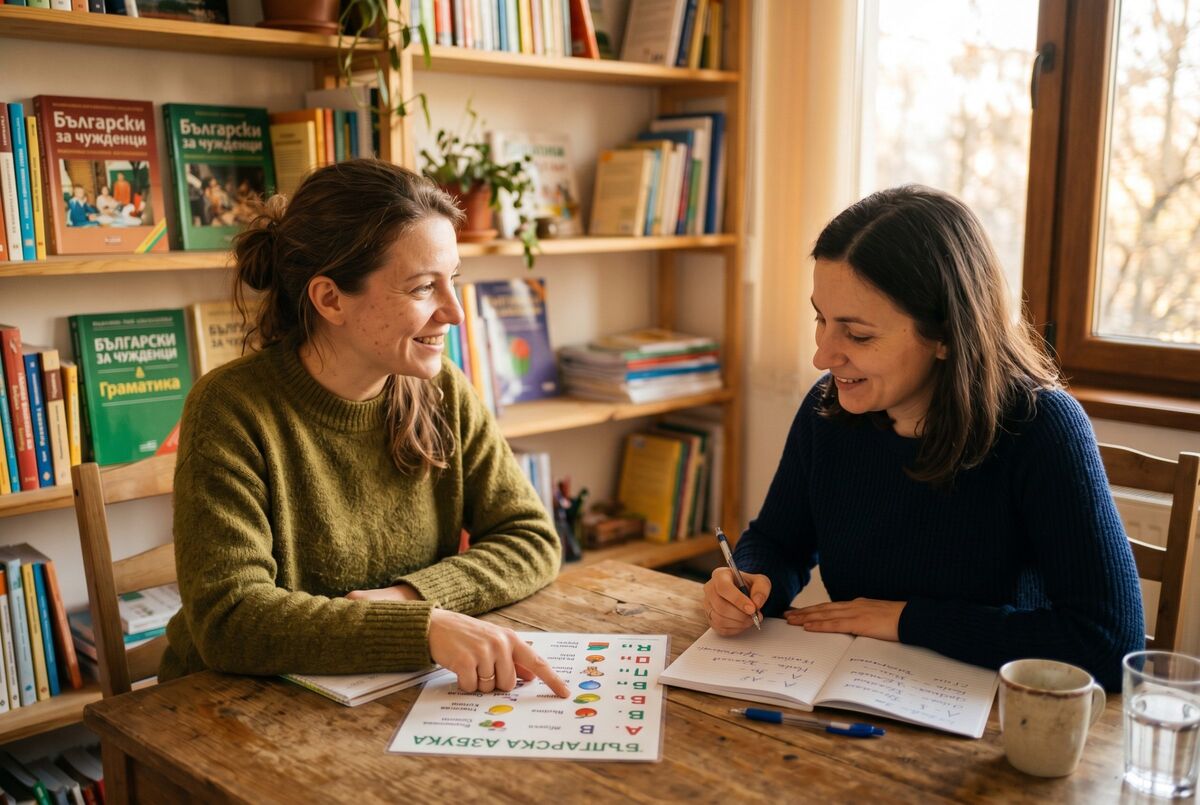
Your instructors
Bulgarian for Beginners tutors for private lessons & classes
Strommen runs a small, deliberately curated Bulgarian practice. Every teacher here was met and vetted by us in person or via thorough video interview. No marketplace. No automated profile creation.
Filter by location, age, or price. Then book a 30-minute free trial.
Below are the Strommen tutors who specialize in teaching Bulgarian to absolute beginners. Photos, ratings, and rates are real. Click any card to read a bio and book a free 30-minute trial.
I want to learn…
Every tutor, personally met. — founder-vetted since 2006, in Los Angeles and online worldwide.
Get a personalized plan
Pick your language — a language advisor will match you with the right tutor and map out your path.

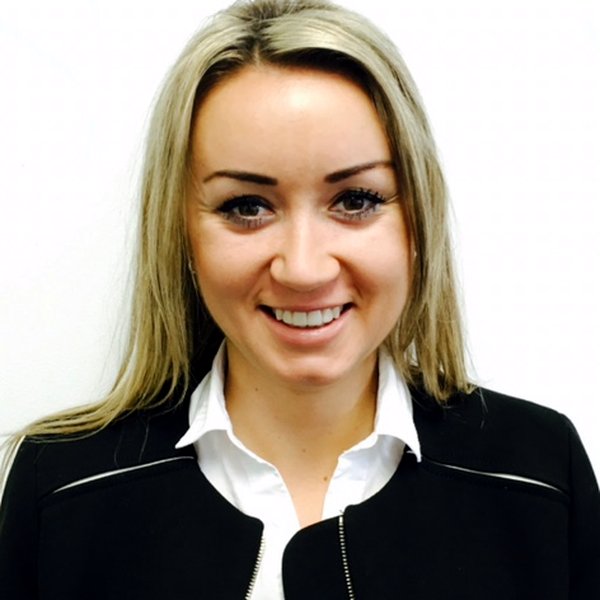
Methodology 1, 2, 3. Diploma in TESOL
Greek and Bulgarian Teacher Bachelor degree from Hellenic American Union
Personally vetted · Strommen’s note
Mariya is bilingual in Greek and Bulgarian with a degree from the Hellenic American Union, one of very few tutors anywhere teaching Bulgarian one-on-one.
Specialties
Methodology 1, 2, 3. Diploma in TESOL
Greek and Bulgarian Teacher Bachelor degree from Hellenic American Union
Specialties
Personally vetted · Strommen’s note
Mariya is bilingual in Greek and Bulgarian with a degree from the Hellenic American Union, one of very few tutors anywhere teaching Bulgarian one-on-one.

Първи думи — first foundations
5 Bulgarian foundations every beginner needs in the first month
These are the building blocks that turn Cyrillic from a wall into a settled skill and let real Bulgarian learning begin. Save the list for the trial lesson.
-
01
Cyrillic was invented in Bulgaria
The Cyrillic alphabet was developed in the First Bulgarian Empire in the ninth and tenth centuries by the disciples of Saints Cyril and Methodius, named for Cyril. It spread from Preslav and Ohrid to the rest of the Slavic-Orthodox world. The Russian, Ukrainian, Serbian, and Macedonian Cyrillic alphabets in use today are all later branches of the script that started in Bulgaria. A beginner who learns Bulgarian Cyrillic gets a real head start on every other Cyrillic-script language.
e.g. The same alphabet that reads София in Sofia reads Москва in Moscow. The script is older than either capital.
-
02
No cases, definite article on the end
Bulgarian simplified the Slavic case system more than any other Slavic language. Russian, Polish, and Czech have six or seven cases that drive every noun ending; Bulgarian uses word order and a postposed definite article instead. Котка is cat. Котката is the cat. A beginner who has heard horror stories about Russian declension finds Bulgarian noun grammar dramatically easier on day one.
e.g. Мъж (man) → мъжът (the man). Жена (woman) → жената (the woman).
-
03
Head-shake for yes, nod for no
Bulgarian speakers often shake their head laterally for yes and tip the head back for no. The gesture is in flux among younger speakers exposed to international media but is still standard enough to trip up new beginners on their first video call. Watching a tutor say да while their head moves in what an American reads as no is its own small ear-eye training exercise.
e.g. You ask "искаш ли кафе?" and the speaker shakes their head while saying да. That is a yes.
-
04
Banitsa, the breakfast every beginner learns to ask for
A layered cheese pastry made from filo dough wrapped around sirene (Bulgarian white brined cheese), eggs, and yogurt, then baked. Banitsa is what grandmothers make for grandchildren on Sunday mornings and what every Sofia train-station cafe sells fresh in the morning. The word itself (ба-ни-ца, stress on the first syllable) is a useful early pronunciation drill, and ordering one is the first real conversation a beginner can plausibly have.
e.g. Една баница и едно кафе, моля. ("One banitsa and one coffee, please.")
-
05
Pirin and Rila, the mountain heart of Bulgaria
Bulgaria is one of the most mountainous countries in Europe, and the mountain culture (hiking, mushroom-gathering, summer mountain houses, the polyphonic music traditions of the Pirin region) is woven into how Bulgarians talk about their own country. A beginner whose Bulgarian goal involves real time in the country picks up the mountain vocabulary almost by accident, and a tutor folds it into early lessons.
e.g. The Mystery of Bulgarian Voices, the Grammy-winning women's choir, draws its repertoire from the Pirin folk tradition.
About Bulgarian for Beginners
Bulgarian: Cyrillic first, then everything opens up
Most beginners come to Bulgarian expecting the hardest part to be the grammar. It is not. The hardest part is week one, when Cyrillic looks like a wall. Two weeks later the wall is gone, the alphabet has stopped being a barrier and become ordinary reading, and the actual work of learning Bulgarian (the verb system, the spoken register, the vocabulary) can begin. A good beginner tutor frontloads the script, gets you reading basic words by the end of session two, and from there treats Cyrillic as a settled skill rather than a recurring obstacle. Most adults need ten to fifteen hours of focused practice to read Bulgarian Cyrillic fluently. That is a manageable investment that pays back for the rest of the language.
The story of the alphabet itself is worth knowing as a beginner. Cyrillic was developed in the First Bulgarian Empire in the ninth and tenth centuries by the disciples of Saints Cyril and Methodius, and it spread from Preslav and Ohrid to the rest of the Slavic-Orthodox world. The Cyrillic that Russia, Ukraine, Serbia, and Macedonia use today is a later branch of the script that started in Bulgaria. For a beginner, this means two practical things. Reading Bulgarian Cyrillic gives you a head start on every other Cyrillic-script language. And the script you are learning is older than most of the political maps you have in your head.
Bulgarian is a Slavic language that does not behave like the other Slavic languages, and this is the second thing every beginner needs to understand early. The famous case system that defines Russian, Polish, and Czech, with its six or seven cases that drive every noun and adjective ending, is essentially gone in Bulgarian. Bulgarian simplified the Slavic case system more than any other Slavic language did and now uses word order and a postposed definite article instead. Котка (kotka) is cat. Котката (kotkata) is the cat. The article is attached to the end of the noun rather than placed before it, the same way Romanian, Albanian, and Macedonian do it (the four are part of the Balkan Sprachbund, the linguistic area where these features cross language families). A beginner who has heard horror stories about Russian declension will find Bulgarian noun grammar dramatically easier.
The trade is that Bulgarian invested its complexity in the verb system. Bulgarian has nine tenses, an evidential mood that lets a verb form itself signal whether the speaker witnessed an event firsthand or only heard about it, and a perfective-imperfective aspect distinction in every verb pair. This is more verbal richness than any other Slavic language carries. Most beginners spend the first six months on the basic present and past tenses, and the evidential mood and the more elaborate compound tenses are usually deferred to intermediate work. The aspect distinction is the one feature beginners cannot defer, because it lives in every verb. Each Bulgarian verb has a perfective form (used for completed, bounded actions) and an imperfective form (used for ongoing, repeated, or habitual actions), and choosing the right one is a daily mental move from the first month.
The sound system is one of the easier parts of beginner Bulgarian. The vowels are the six relatively clean vowels of most Slavic languages (a, e, и, o, у, plus the schwa vowel ъ that English speakers usually find intuitive). The consonants are mostly recognisable to English speakers, with a few that need attention: the soft consonants marked by a following ь or я, the trilled р, the soft ll-sound that some speakers use for the letter л. The spelling-to-sound correspondence is highly regular once you know Cyrillic, which is the consolation: a beginner who can read the alphabet can pronounce most Bulgarian words on first sight.
The head-shake-means-yes inversion is the cultural cue every beginner encounters within a day of arriving in Bulgaria, and even before that in any video call with a Bulgarian speaker. Bulgarians often shake their head laterally for yes and tip the head back for no. The gesture is in flux among younger speakers who consume international media, but it is still standard enough that any tutor brings it up early. A beginner who watches a teacher say да (yes) while their head moves in what an American reads as no needs a few weeks of exposure before it stops feeling cinematic. Pair this with the typical Bulgarian eyebrow-raise and slight head-tilt for emphasis and you have most of the body language a beginner needs to read.
Banitsa is the national breakfast and the beginner's first cultural vocabulary item. A layered cheese pastry made from filo dough wrapped around a filling of sirene (the white brined cheese), eggs, and yogurt, then baked, banitsa is what Bulgarian grandmothers make for grandchildren on Sunday mornings and what every cafe near a train station sells in the morning. The word itself is a useful pronunciation drill (ба-ни-ца, with the stress on the first syllable), and the conversation around banitsa is the first cultural register a beginner can plausibly enter. Pair with kiselo mlyako (the yoghurt that Bulgaria claims as a national invention) and lyutenitsa (the roasted-pepper relish that appears at every meal) and you have a starter vocabulary that opens real conversations.
The Pirin, Rila, and Stara Planina mountain ranges are central to Bulgarian cultural identity in ways no beginner who plans real time in the country can ignore. Bulgaria is one of the most mountainous countries in Europe, and the mountain culture (hiking, mushroom-gathering, summer mountain houses, the music traditions of the Pirin region) is woven into how Bulgarians talk about their own country. The Strandzha range in the southeast and the Black Sea coast have their own cultural registers that learners with heritage ties to those regions will encounter.
A typical first month of beginner Bulgarian covers the Cyrillic alphabet (with reading fluency by week two), the sound system, greetings and farewells, introducing yourself, numbers one through one hundred, days of the week and months, basic family vocabulary, the auxiliary verbs съм (to be) and имам (to have), the present tense of the most common verbs, and roughly one hundred to one hundred and fifty high-frequency words. By month three, most beginners can hold a basic conversation about themselves, their family, their work, their day, and order food at a Sofia kebapche stand. By month six, conversational ease at A2 level is realistic for committed students with weekly lessons and twenty to thirty minutes of daily exposure.
Who learns Bulgarian with us. Strommen sees heritage learners reconnecting with grandparents who emigrated mid-twentieth century, partners of Bulgarian speakers preparing for visits to Sofia, Plovdiv, or Burgas, occasional academics in Slavic studies adding Bulgarian to a comparative reading list, and EU professionals whose work has shifted toward the region. Each has a different finish line. A good beginner tutor will not run them through the same lesson plan. Our Bulgarian for Beginners tutors include native speakers from Sofia, Plovdiv, Varna, and elsewhere, alongside longtime bilingual teachers experienced with how English speakers stall in early Bulgarian. Beginner-specific teaching in a Cyrillic language is its own skill: the patience to drill the alphabet, the ear for the specific letter a learner is confusing, the instinct for when to push reading practice and when to consolidate vocabulary. Each tutor's bio specifies their background. You can also browse the wider Strommen tutor directory for our full Slavic-language roster, and the sibling Conversational Bulgarian page covers a related program for students past the beginner stage.
What you'll cover
Lessons & classes tailored to Bulgarian for Beginners
Cyrillic in week one, reading by week two
The alphabet is the first hurdle and the smallest. Lessons treat Cyrillic as a one-time investment of ten to fifteen hours of focused practice for an adult, after which it stops being a barrier and becomes ordinary reading. Once the script is in hand, the work shifts to vocabulary, the spoken register, and the verb system. Most students are reading basic Bulgarian words by the end of the second session.
съм and имам, plus your first 150 words
The two foundational verbs (to be and to have) plus 100 to 150 high-frequency nouns and verbs in the first month cover the majority of basic Bulgarian sentences. Family, food, daily routine, work, hobbies, time, location. Once съм and имам are automatic, regular present-tense verb conjugation slots in with very little additional friction, and the aspect distinction can be introduced through real verb pairs rather than as abstract grammar.
Perfective and imperfective aspect, introduced gently
Every Bulgarian verb comes in a perfective-imperfective pair, and choosing the right one is a daily move from the first month. Lessons introduce the aspect distinction through real verb pairs (пиша / напиша, ям / изям, чета / прочета) rather than as an abstract grammar lecture, because the rules become intuitive much faster through use than through memorisation. Most beginners reach reliable aspect instinct by month four to five.
Beginner-friendly between-lesson resources
Your tutor will recommend specific resources calibrated to your level: the Drops Bulgarian app for vocabulary reps, the Pimsleur Bulgarian audio course for ear training, BNT children's programming for slow Bulgarian, and the Lingvist Bulgarian course for grammar reinforcement. Twenty to thirty minutes of daily exposure outside lessons is the single biggest accelerator for beginners.
FAQ
About Bulgarian for Beginners lessons & classes
How long does it take to learn Cyrillic?
About ten to fifteen hours of focused practice for an adult, then ordinary use. The Bulgarian alphabet has 30 letters and the spelling-to-sound correspondence is highly regular, which makes it less work than the English spelling system most learners already navigate. Most students are reading basic Bulgarian words by the end of their second lesson. Once the script is settled, Cyrillic stops being a barrier. It also gives you a head start on Russian, Ukrainian, Serbian, and Macedonian Cyrillic.
Is Bulgarian as hard as Russian?
Different rather than harder. Bulgarian dropped most of the Slavic case system that Russian kept, which removes a major source of stress for beginners. In exchange, Bulgarian has a much richer verb system with nine tenses, an evidential mood, and aspect everywhere. For a beginner, the noun-and-adjective side of Bulgarian is dramatically easier than Russian. The verb-and-aspect side is comparable in difficulty. The overall verdict from most learners is that beginner Bulgarian is somewhat easier than beginner Russian.
How long until I can hold a basic conversation in Bulgarian?
From zero, weekly hour-long lessons plus twenty to thirty minutes of daily exposure typically produces functional A2 conversation within six to nine months. That means introducing yourself, ordering food, talking about your day, basic small talk. Conversational comfort at B1 usually takes another six to nine months at the same pace. The Cyrillic-reading hurdle is in the first two weeks; once it is past, the rate of progress matches most other European languages.
What does a typical beginner Bulgarian lesson look like?
A first-month lesson runs about an hour and typically opens with Cyrillic reading practice (in the first three weeks), moves through ten minutes of new vocabulary with pronunciation drill, fifteen minutes of grammar in context (one point introduced through example sentences), ten minutes of listening practice with a short audio clip, and ten minutes of structured speaking practice. Homework is light. Your tutor calibrates based on what is clicking and what is not.
Will Bulgarian help me with Russian or other Slavic languages?
Yes for vocabulary and script, less so for grammar. Bulgarian shares a substantial vocabulary base and the Cyrillic alphabet with Russian, Ukrainian, Belarusian, Serbian, and Macedonian. Bulgarian grammar took its own path, especially with the loss of cases and the elaborate verb system, so a beginner cannot transfer Bulgarian grammar directly to Russian. The vocabulary overlap alone is significant, and reading any other Slavic language is meaningfully easier once you have Bulgarian under your belt.
Is the head-shake-for-yes thing really a problem?
Real and still common, especially with older speakers and outside the larger cities. Younger urban Bulgarians who travel and consume international media have started using the international nod, so you will see both. Most Bulgarian adults read an American nod correctly thanks to context, but the lateral shake for yes still trips up enough conversations that any good tutor brings it up early. A few weeks of exposure usually clears it up.
Do I need to know any other Slavic language before starting Bulgarian?
No. English is more than enough background. Bulgarian is sometimes presented as a good first Slavic language to learn precisely because the case system is dramatically simpler than in Russian, Polish, or Czech. Beginners who arrive with prior Russian have a real head start on vocabulary and the Cyrillic alphabet, but the simplified noun grammar and the postposed definite article will feel unfamiliar at first.
What is the trial lesson like for a complete beginner?
Thirty minutes, free, with the tutor you select. For absolute beginners, the trial is half assessment and half preview: the tutor will introduce themselves in Bulgarian and English, walk through a few Cyrillic letters to show how the alphabet works in practice, explain the typical first-month roadmap, and answer your questions about lesson cadence and goals. You will leave with a sense of whether this specific tutor's approach feels right for you.
Ready for Bulgarian for Beginners lessons or classes?
Book a free 30-minute trial with one of our personally vetted tutors. Private lessons or small-group classes — your choice.