



Personally vetted instructors
Afrikaans for Beginners tutors, lessons & classes
Goeie môre The formal Afrikaans good morning, the first phrase every beginner learns to say out loud.
Personally vetted Afrikaans tutors who specialize in absolute beginners. Patient, methodical, and calibrated to take you from zero into your first real Afrikaans sentences without textbook overwhelm.
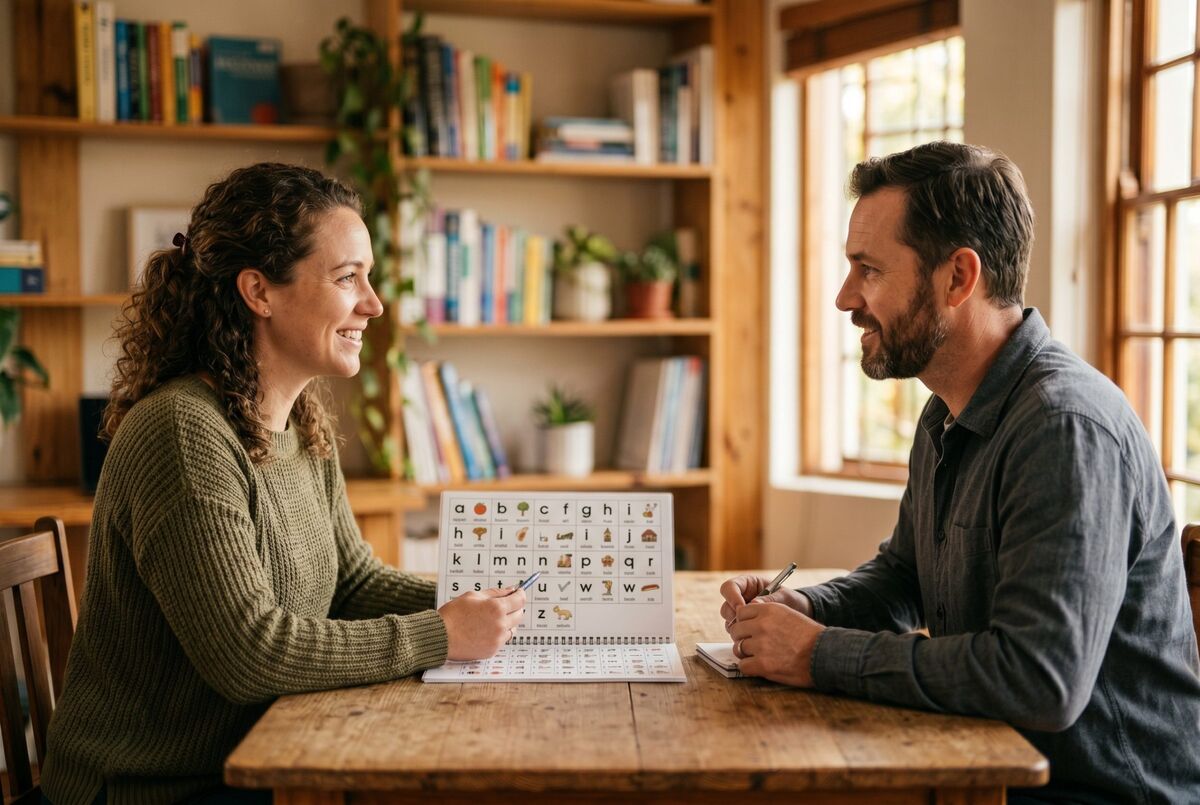
Your instructors
Afrikaans for Beginners tutors for private lessons & classes
Strommen has Afrikaans tutors who specialize in working with absolute beginners, where patience, pronunciation modeling, and steady vocabulary building matter more than any other skill. Every tutor below was met and vetted by us in person or via thorough video interview. No marketplace. No automated profile creation.
Filter by location, age, or price. Then book a 30-minute free trial.
Below are the Strommen tutors who specialize in teaching Afrikaans to absolute beginners. Photos, ratings, and rates are real. Click any card to read a bio and book a free 30-minute trial.
I want to learn…
Every tutor, personally met. — founder-vetted since 2006, in Los Angeles and online worldwide.
Get a personalized plan
Pick your language — a language advisor will match you with the right tutor and map out your path.

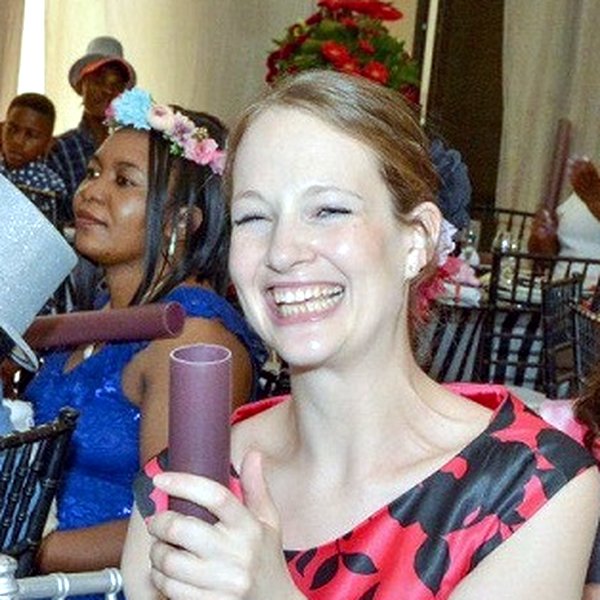

I have a Bachelor Of Arts General Degree (majoring in English Lit. and Counselling Psychology) and a Bachelor Of Arts Honours in Psychology Degree.
Published Author teaching Afrikaans and English Second Language, With especial care for Children & those with Special Needs ☺️.
Specialties
I have a Bachelor Of Arts General Degree (majoring in English Lit. and Counselling Psychology) and a Bachelor Of Arts Honours in Psychology Degree.
Published Author teaching Afrikaans and English Second Language, With especial care for Children & those with Special Needs ☺️.
Specialties

Eerste woorde — first foundations
5 Afrikaans foundations every beginner needs in the first month
These are the building blocks that separate a beginner making real progress from one spinning on a vocabulary app. Save the list for the trial lesson.
-
01
The Roman alphabet, no script to learn
Afrikaans uses the same 26-letter Roman alphabet you already read, with no extra characters and no diacritics beyond the occasional accent on borrowed words. A beginner who would otherwise spend two weeks on Cyrillic, Devanagari, or Hangul starts producing real sentences in Afrikaans from day one. The spelling is also highly regular once the long-vowel and digraph rules are in place.
e.g. Goeiemôre, my naam is Sarah. ("Good morning, my name is Sarah.")
-
02
No verb conjugation
Afrikaans dropped the verb conjugation system its Dutch parent kept. Ek is, jy is, hy is, ons is, julle is, hulle is. One form for every subject. The past tense is built with het plus the ge-stem of the verb. The exceptions are few enough to count on two hands. A beginner who has dreaded Romance or Slavic verb tables tends to laugh at the first lesson.
e.g. Ek loop, jy loop, ons loop, hulle loop. Same form everywhere.
-
03
The diminutive -tjie
Adding -tjie (or -jie, -pie, -kie) to a noun softens, shrinks, or affectionates the word. Kop becomes koppie. Hond becomes hondjie. The diminutive is everywhere in spoken Afrikaans and a beginner who learns it in week one rather than week ten avoids sounding stiff for months. It carries warmth and tone more than literal smallness.
e.g. Wil jy 'n koppie koffie hê? ("Want a cup of coffee?")
-
04
Goeie môre — the formal register first
Goeiemôre (good morning), goeiemiddag (good afternoon), and goeienaand (good evening) are the formal greetings a beginner learns before the casual howzit or hallo. Pairing the right greeting with the right time of day is a small social cue that a tutor reinforces from day one. The formal register is the safe default until the relationship invites the casual one.
e.g. Goeiemôre, mevrou. Hoe gaan dit met u vandag? ("Good morning, ma'am. How are you today?")
-
05
Cape Town openness
Afrikaans culture is socially warm, first-name quickly, and direct in ways that surprise American beginners used to more guarded openings. Cape Town and the wine country lean even more relaxed than the conservative Boer heartland of the Free State. A beginner who arrives expecting formality and is met with immediate warmth often misreads the register, so a tutor names the social temperature early and helps a student calibrate to it.
e.g. A Stellenbosch wine farm host greets you by first name within thirty seconds. Match the energy.
About Afrikaans for Beginners
Afrikaans is the easiest Germanic language to start
For an English speaker starting a Germanic language from zero, Afrikaans is the gentlest ramp on offer. It descended from 17th-century Dutch carried to the Cape, simplified its verb conjugation almost out of existence, dropped grammatical gender on nouns, and ended up as a language an English speaker can start producing real sentences in within the first week of lessons. The US Foreign Service Institute classifies Afrikaans as a Category I language for English speakers, in the same bracket as Spanish and French, with about 600 classroom hours to professional proficiency. In practical conversational terms, that puts a committed adult beginner at confident travel speech in months rather than years.
The cognates do most of the early lifting. Boek is book. Water is water. Melk is milk. Hand is hand. Vinger is finger. Winter is winter. Somer is summer. Huis is house. Vriend is friend. Bring is bring. The Roman alphabet you already read does the rest, with no script to learn before the language can start. A beginner whose first day is spent on Cyrillic or Devanagari is often two weeks behind a beginner who can spell from minute one.
The verb system is where Afrikaans surprises learners coming from German, Dutch, French, or Spanish. There is essentially no conjugation. Ek is, jy is, hy is, ons is, julle is, hulle is. One form for every subject. Ek loop, jy loop, hy loop, ons loop, julle loop, hulle loop. One form again. The past tense is built with het plus the ge-stem of the verb (het gewerk, het geloop, het gegee), and that is most of the tense system. The exceptions are few enough to count on two hands and worth learning early. A beginner who has spent years dreading Romance conjugation tables sometimes laughs out loud at the first Afrikaans lesson.
That does not mean Afrikaans is trivial. The sound system asks for genuine work. The famous Afrikaans G, written as G or sometimes CH, is a uvular fricative produced at the back of the throat with no English equivalent. It appears in everyday words like goeiemôre (good morning), graag (please, gladly), and genoeg (enough). The Cape and the Boland versions of the G are softer and more palatal, closer to a heavy English H. The northern and Free State versions are throatier. Neither is wrong, and your tutor will help pick the variety that matches your goals. The rounded front vowels in vuur (fire), deur (door), and skuur (shed) take ear-training that beginners often underestimate. The double-vowel spellings (oo, ee, aa) signal length rather than diphthongs, the opposite of what English spelling would suggest.
The diminutive ending -tjie (or -jie, -pie, -kie depending on the preceding sound) is a beginner feature that pays off immediately. Adding it to a noun softens, shrinks, or affectionates the word. Kop becomes koppie (a small head, or a cup of coffee in informal use). Tafel becomes tafeltjie (a small table). Hond becomes hondjie (a puppy, or a beloved dog). The diminutive is everywhere in spoken Afrikaans and learning it in week one rather than week ten saves a beginner from sounding stiff for months.
The formal-informal distinction is gentler than in German or Dutch. Afrikaans has u as the formal you and jy as the informal you. In practice, jy has been gaining ground for decades, especially in casual contexts, with peers, and in most workplaces. U remains the safe default in a first-contact email, with anyone considerably older than you, and in service contexts where respect is being signalled. Beginners are taught to default to u in any formal first contact and to switch to jy when invited or when the other person uses jy first. Better to be slightly more polite than slightly less.
A typical first month of beginner Afrikaans covers greetings and farewells, introducing yourself, numbers one through one hundred, days of the week and months, basic family vocabulary, the verbs is and het and a handful of high-frequency action verbs, the present and past tenses, and roughly one hundred to one hundred and fifty everyday words. By month three, most beginners can hold a basic conversation about themselves, their family, their work, their day, and order food and drinks at a Stellenbosch wine farm or a Cape Town cafe with confidence. By month six, conversational ease at A2 level is realistic for committed students with weekly lessons and twenty to thirty minutes of daily exposure.
The Cape Afrikaans question comes up early for any beginner planning time around Cape Town or with family in the Western Cape. Standard Afrikaans, the variety in schools and most published writing, is mainly the Northern variant. Kaaps, the working-class and Coloured Cape variety, has its own vocabulary, its own rhythm, and a rich oral and hip-hop tradition. Both are Afrikaans. Beginners are usually taught Standard Afrikaans first, with passive exposure to Kaaps through music and film, and most students naturally develop comprehension of both varieties through real life over time.
Dutch speakers (and English speakers who have studied any Dutch) get a real head start. Reading Afrikaans is easy for a Dutch speaker, and many Dutch words map almost directly into Afrikaans with predictable changes. The reverse is also true: a beginner who finishes a year of Afrikaans can read Dutch with effort and understand much of it spoken slowly. For students with one eye on the Netherlands or Belgium later, Afrikaans is a soft gateway. For students whose goal is South Africa, it is the direct route.
Between lessons, beginner-friendly resources include the Drops app for Afrikaans vocabulary reps, the LingQ Afrikaans library for graded readers, kykNET children's programming for slow Afrikaans, and the Afrikaans for Beginners course on Memrise. Karen Zoid, Karen Meiring, and the cast of Suidooster (the SABC2 soap opera set in Cape Town's southern suburbs) are accessible listening once a beginner has the first three or four months under their belt. The Strommen Afrikaans for Beginners roster includes native speakers from across South Africa and Namibia, alongside longtime bilingual teachers based in the United States who specialize in adult beginner work. Beginner teaching is its own skill: the patience to repeat the G sound for the tenth time, the ear for the specific pronunciation issue a student is missing, the instinct for when to push vocabulary and when to consolidate. Each tutor's bio specifies their background and which student profile they fit best. For other Afrikaans specialties our Conversational Afrikaans page covers a related program, and you can browse the wider Strommen tutor directory for our full Germanic-language roster.
Lessons calibrate to your specific situation. A leisurely beginner pace for someone curious about South African heritage looks different from an accelerated sprint for someone moving to Cape Town in three months, and both look different from a partner preparing to be functional at a Pretoria family Sunday. Each lesson is one-on-one, your tutor plans around your week, and the trial is free. Pick a tutor whose teaching style feels approachable and book the thirty-minute trial. The fastest way to find out whether Afrikaans will click for you is one hour with a real Afrikaans teacher.
What you'll cover
Lessons & classes tailored to Afrikaans for Beginners
Sound system from day one: the G, the rounded vowels, the long-vowel digraphs
The uvular G is the consonant beginners spend the most effort on, with the Cape and Boland versions easier on the throat than the northern. The rounded front vowels in vuur, deur, and skuur take real ear-training. Long vowels are written as double letters (oo, ee, aa) and signal length rather than diphthongs, the opposite of English spelling intuition. Lessons include short shadowing drills with native audio from week one, because beginner Afrikaans pronunciation is best learned correctly the first time.
Verb-free conjugation, used right away
What Afrikaans gains in grammatical ease it pays back by letting a beginner into real spoken exchange almost immediately. The grammatical machinery that usually stalls beginners is simply not there. The work is on vocabulary, pronunciation, and the social texture of how Afrikaans speakers move through a conversation. Most adult beginners are forming complete sentences in week one and complete short conversations in month one.
U and jy, the diminutives, and basic politeness
Afrikaans social culture is warm and direct, with first names quickly. The u-versus-jy register is gentler than in Dutch or German but still real, especially in first contact and with anyone considerably older. The diminutive system carries affection rather than literal smallness and shapes much of casual speech. Lessons teach all three together as a register layer rather than as isolated grammar points.
Beginner-friendly between-lesson resources
Your tutor will recommend specific resources calibrated to your level: Drops for vocabulary reps, LingQ for graded readers, kykNET children's programming for slow Afrikaans listening, Suidooster once the basic vocabulary is in place. Twenty to thirty minutes of daily exposure outside lessons is the single biggest accelerator for beginners, and matching the resource to the week's lesson focus multiplies the effect.
FAQ
About Afrikaans for Beginners lessons & classes
Is Afrikaans really easier than German for English speakers?
Yes, in most ways. Afrikaans lost almost all of its verb conjugation and grammatical gender, where German keeps both. Afrikaans uses one article (die) where German uses six article forms across cases. Word order is simpler. Vocabulary overlap with English is comparable or slightly higher. The pronunciation has the uvular G and a few rounded vowels that take work, but those are the main sticking points. English speakers who tried German and bounced off often find Afrikaans much more approachable.
How long until I can hold a basic conversation in Afrikaans?
From zero, weekly hour-long lessons plus twenty to thirty minutes of daily exposure typically produces functional A2 conversation within four to seven months. That means introducing yourself, ordering food, talking about your day, basic small talk. Conversational comfort at B1 usually takes another six months at the same pace. Faster timelines are possible with more intensive schedules. Slower timelines are normal for learners with less time.
How do I actually master the famous Afrikaans G sound?
Hear it first, then approximate. The uvular G is produced at the back of the throat with the tongue pulled back and a scraping airflow. Most English speakers find a soft Scottish-loch CH a useful starting point. The good news: if your goal is Cape Town or the Boland, the softer palatal version is much easier and is fully natural Afrikaans. Aim for the variety that matches your goal and let it develop over the first six months rather than stressing about a textbook-perfect G in week one.
Do I need to know Dutch to start Afrikaans?
No. English is more than enough background. Cognates between English and Afrikaans are abundant from day one. Dutch is a real head start if you have it, especially for reading, but it can also create interference (Dutch speakers sometimes default to Dutch grammar that does not apply in Afrikaans). We have taught Afrikaans beginners with zero language background besides English with consistent success.
What does a typical beginner Afrikaans lesson look like?
A first-month lesson runs about an hour and typically includes ten minutes of warm-up conversation in Afrikaans (even halting), fifteen minutes of new vocabulary with pronunciation drill, fifteen minutes of grammar in context (one point introduced through example sentences), ten minutes of listening practice with a short audio clip, and ten minutes of structured role-play or guided conversation. Homework is light and primarily listening-focused. No two lesson plans are identical; your tutor calibrates based on what is clicking and what is not.
Should I worry about Kaaps versus Standard Afrikaans as a beginner?
Not in the first six months. Beginners are usually taught Standard Afrikaans first because it is the variety used in education, news, and most published writing. Kaaps is the right add-on if you have family or work ties to the Cape Flats or surrounding Coloured communities, or if you are drawn in by its hip-hop and oral traditions. Most students aim at Standard Afrikaans first and absorb Kaaps through music, film, and exposure over time.
Will Afrikaans help me with other South African languages?
Not directly. South Africa has eleven official languages. Afrikaans gives you access to Afrikaans speakers, Afrikaans-language media, and a real share of everyday speech in parts of the country. It will not make isiZulu, isiXhosa, Sesotho, or the other Bantu-family languages easier, because they belong to a completely different language family. For those, separate study is the answer. Afrikaans is its own language and its own community of speakers.
What is the trial lesson like for a complete beginner?
Thirty minutes, free, with the tutor you select. For absolute beginners, the trial is half assessment and half preview: the tutor will introduce themselves in Afrikaans and English, gauge what you already know (even passive cognate recognition counts), explain the typical first-month roadmap, and answer your questions about lesson cadence and goals. You will leave with a sense of whether this specific tutor's approach feels right for you. If not, swapping is easy.
Ready for Afrikaans for Beginners lessons or classes?
Book a free 30-minute trial with one of our personally vetted tutors. Private lessons or small-group classes — your choice.