



Personally vetted instructors
Conversational Afrikaans tutors, lessons & classes
Howzit! South Africa's universal hello, used by Afrikaans and English speakers alike.
Personally vetted Conversational Afrikaans tutors. Lessons built around how Afrikaans is actually spoken on a Stellenbosch stoep or in a Cape Town kitchen, not the stiff colonial register of an old grammar book.
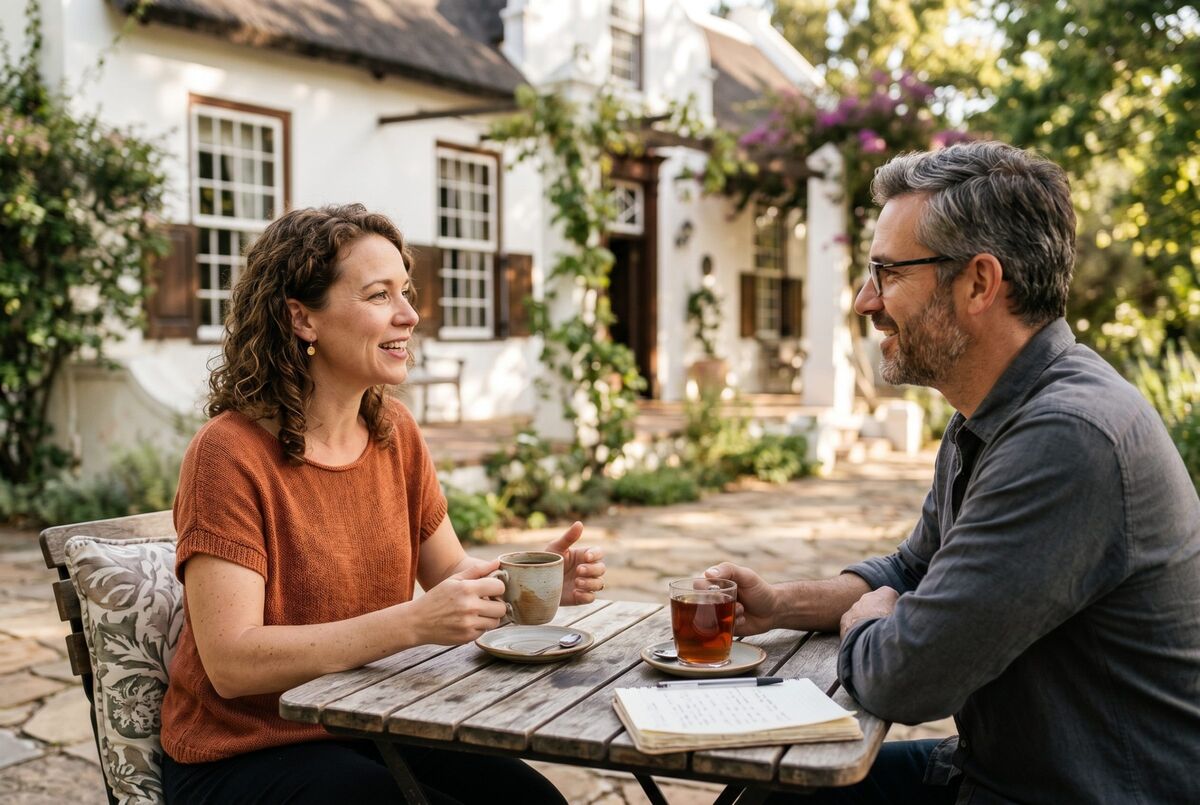
Your instructors
Conversational Afrikaans tutors for private lessons & classes
Strommen has run a small but real Afrikaans practice for years, mostly through expat families and partners of South African speakers. The roster is curated rather than crowdsourced, so every teacher here was met and vetted by us. Bios are the tutors' own.
Filter by location, age, or price. Then book a 30-minute free trial and tell the tutor what you want to be able to say.
Below are the Strommen tutors who specialize in Conversational Afrikaans. Photos, ratings, and rates are real. Click any card to read a bio and book a free 30-minute trial.
I want to learn…
Every tutor, personally met. — founder-vetted since 2006, in Los Angeles and online worldwide.
Get a personalized plan
Pick your language — a language advisor will match you with the right tutor and map out your path.

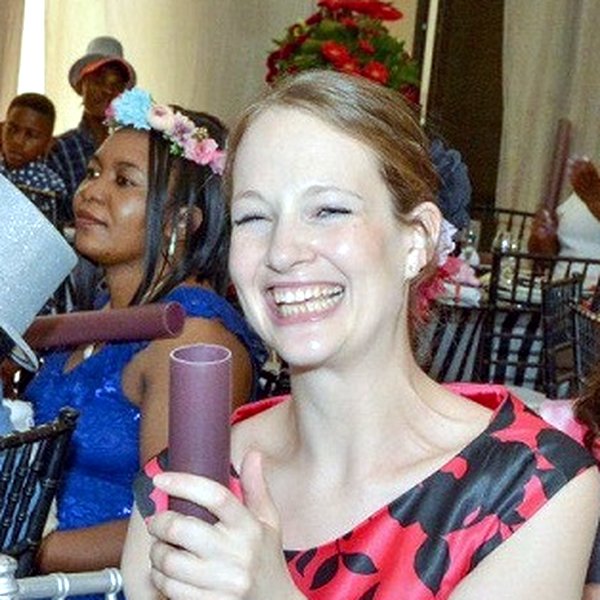

I have a Bachelor Of Arts General Degree (majoring in English Lit. and Counselling Psychology) and a Bachelor Of Arts Honours in Psychology Degree. · N / A
Published Author teaching Afrikaans and English Second Language, With especial care for Children & those with Special Needs ☺️.
Specialties
I have a Bachelor Of Arts General Degree (majoring in English Lit. and Counselling Psychology) and a Bachelor Of Arts Honours in Psychology Degree. · N / A
Published Author teaching Afrikaans and English Second Language, With especial care for Children & those with Special Needs ☺️.
Specialties

Lekker — culture & slang
5 ways to sound like you've actually spent time in South Africa
These are not vocabulary items so much as the social texture of how Afrikaans speakers actually talk. Save the list, then book a tutor to work them into real conversation.
-
01
Lekker
The most-used word in conversational Afrikaans and the hardest to translate. "Nice," "tasty," "fun," "cool," "good," depending on context. Used so widely that South African English speakers borrow it constantly. A learner who controls lekker has half of casual Afrikaans working already.
e.g. Die braai was baie lekker, dankie. ("The braai was really nice, thanks.")
-
02
Boet / boetie / maatjie
Boet is brother, used between men as friend or mate, the way "bro" works in American English. Boetie is the affectionate little-brother version, often used with kids. Maatjie is softer and works across genders. Reaching for the right one signals you are inside the conversation, not next to it.
e.g. Hoe gaan dit, boet? Lank laas. ("How's it going, mate? Long time.")
-
03
Simplified verb morphology
Afrikaans dropped the verb conjugation system its Dutch parent kept. Ek is, jy is, hy is, ons is, julle is, hulle is. One verb form across every subject. The past tense is built with het plus the ge-stem of the verb, and that is essentially the entire tense system to learn. After French or German, this comes as a genuine surprise.
e.g. Ek loop, jy loop, ons loop, hulle loop. Same form everywhere.
-
04
Just now / now-now / sharp-sharp
South African English carries these directly from Afrikaans time-vagueness. "Just now" means soon-ish, not immediately. "Now-now" means actually fairly soon. "Now" means at some point. "Sharp-sharp" is goodbye or see you later. A learner who reads "just now" as English-immediate ends up waiting forever for a friend who said it.
e.g. Ek kom nou-nou, wag net 'n bietjie. ("I'm coming soon, just hold on a bit.")
-
05
Kaaps vs Standard Afrikaans
Standard Afrikaans is the variety in schools, news, and most published writing. Kaaps is the Cape variety, especially as spoken in Coloured and working-class communities around Cape Town, with its own vocabulary, rhythm, and a rich oral and hip-hop tradition. Both are Afrikaans. A tutor will tell you which they teach and adjust to which you want.
e.g. A Stellenbosch speaker and a Cape Flats speaker can have a full conversation and still hear the difference in every other sentence.
About Conversational Afrikaans
Afrikaans as people actually speak it
Afrikaans is younger than most European languages and feels it in conversation. It branched from 17th-century Dutch carried to the Cape, simplified its verb morphology almost completely, absorbed words from Khoi, Malay, Portuguese, French Huguenot, and isiXhosa, and emerged as a working language of about seven million native speakers across South Africa and Namibia. A Dutch speaker hearing Afrikaans for the first time recognizes it the way an English speaker recognizes Frisian: clearly cousin, clearly different. The simplification that makes Afrikaans approachable also makes it conversational by default. There is no verb conjugation to speak of. Ek is, jy is, hy is, ons is, julle is, hulle is. One verb form does the work for every subject. A learner who has spent years dreading Romance or Slavic conjugation tables tends to laugh out loud at the first Afrikaans lesson.
That does not mean the language is easy in the way travel guides claim. The vowel system is rich, with rounded front vowels that take ear-training to hear and articulate. The throaty g, a uvular sound borrowed from Dutch and reinforced by Khoi influence, is the consonant most American learners struggle with. The diminutive endings are everywhere and carry tone: koffietjie is not just "little coffee," it is affectionate coffee. Word order in subordinate clauses flips in ways that Dutch shares and English does not. And the social register is its own course. Afrikaans culture leans warm and direct, with first names quickly, but the politeness moves around food, family, and elders are specific and worth learning rather than guessing at.
The spoken landscape is also more varied than outsiders expect. Standard Afrikaans, the variety taught in schools and used in formal writing, is mainly the Northern variant. Cape Afrikaans, especially Kaaps spoken in the working-class and Coloured communities of the Cape Flats, has its own vocabulary, its own rhythm, and a long oral tradition that today includes hip-hop and slam poetry. A learner whose family is from Stellenbosch or Paarl will hear Standard Afrikaans at home and Kaaps in a District Six restaurant a few kilometres away, and the gap between them is real. Our tutors name the variety they teach and adjust to which one a student wants, because there is no useful neutral here. You aim at one and pick up the other through exposure.
Why learn Afrikaans conversationally rather than start from a textbook track. The simple answer is that the textbook track in Afrikaans is a short on-ramp to a long plateau, and the plateau is the part where real exchanges happen. The grammar fundamentals can be learned in weeks because there is genuinely less to learn than in most European languages. After that the work is vocabulary, idiom, the texture of how braai culture talks, and the ear training to follow rapid speech with elision. Lessons that center conversation from the first session get a learner to comfortable everyday speech faster than any course built around chapter-by-chapter progression.
The word that pulls most travellers in is lekker. It means "nice," "tasty," "good," "fun," "cool," and several other things that English needs a separate word for in each case. Die kos is lekker. Die musiek is lekker. Ek het lekker geslaap. The dog is lekker. The braai was lekker. Once a learner is comfortable using lekker for everything appreciative, half of conversational Afrikaans falls into place. The other half is boet (brother, friend, mate, used between men), maatjie (a softer friend, used across genders), and the universal eh? and né? tags that turn a statement into a check-in. Add the borrowed slang from South African English like howzit, just now (which does not mean now, it means soon-ish), and sharp-sharp (goodbye, see you later), and a conversation starts moving the way South Africans actually move it.
Who learns Afrikaans with us. Strommen sees a mix: South African expats in the US who want to keep the language for their kids, partners of South African speakers who want to be functional at family meals in Pretoria or Cape Town, travellers planning a working holiday or a longer stay, and an occasional researcher or student of Dutch wanting to add the closest living daughter language. Each of these has a different speaking goal, and a good conversational tutor will not run them through the same lesson plan. We also link out to the full Strommen tutor directory for students who want to see who else teaches across our African and Germanic-family languages.
Our Conversational Afrikaans tutors include native speakers from across South Africa, alongside longtime bilingual teachers who have moved many adult learners from textbook silence into Afrikaans they can actually use at a braai. They calibrate to your goal at the trial, build the lesson plan around it, and adjust as you progress.
What you'll cover
Lessons & classes tailored to Conversational Afrikaans
The simplified verb system, used right away
Afrikaans has effectively no verb conjugation. Lessons take advantage of that by putting a learner into real spoken exchanges within the first few sessions, because the grammatical machinery that usually stalls beginners simply is not there. The work is on vocabulary, pronunciation, and the texture of how Afrikaans speakers move through a conversation. Most adult learners are forming complete sentences in week one and complete short conversations in month one.
Sound system: the uvular g, rounded vowels, and elision
What Afrikaans gains in grammatical ease it takes back in pronunciation. The throaty g (closer to the Dutch ch than to English) is the consonant American learners work hardest on. The rounded front vowels in words like vuur, deur, and skuur take ear training. Rapid speech also elides aggressively, so what looks like seven words on the page often sounds like four. Lessons include shadowing drills with real audio and direct feedback until the sounds settle in.
Braai culture, family, and the politeness moves
Afrikaans social culture has its own register of warmth: first-name quickly, but specific moves around food, family, and elders. A tutor teaches the everyday courtesies (smaakvol, dankie, asseblief, baie dankie), the way diminutives carry affection rather than literal smallness, and the conversational rhythm of a braai or a family Sunday. Knowing the words is not enough. Knowing how Afrikaners use them is what makes a learner sound at home.
Standard Afrikaans, Kaaps, and the listening gap
Lessons name the variety being taught and the variety the student wants. Standard Afrikaans for school, news, and most published writing. Kaaps for Cape Town's working-class and Coloured communities, including its hip-hop and slam scenes. Listening practice draws on real audio from both: SABC news, Afrikaans podcasts, Kaaps performers, family interviews. The aim is a learner who can follow either variety and produce one well, rather than a neutral nowhere-accent that does not actually exist.
FAQ
About Conversational Afrikaans lessons & classes
How hard is Afrikaans for an English speaker?
Comparatively easy. The US Foreign Service Institute groups Afrikaans alongside Dutch and the Scandinavian languages as among the most accessible for English speakers, with about 600 classroom hours estimated to reach professional working proficiency. The lack of verb conjugation makes early progress fast. The pronunciation, especially the uvular g and the rounded vowels, is where most learners actually spend their effort.
Is Afrikaans the same as Dutch?
Closely related, not the same. Afrikaans descended from 17th-century Dutch carried to the Cape and then simplified its grammar dramatically while absorbing vocabulary from Khoi, Malay, Portuguese, and other languages on the ground. A Dutch speaker can read most Afrikaans with effort and understand much of it spoken slowly. A learner who already knows Dutch has a real head start in Afrikaans, though the simplifications and the loanwords still need direct study.
Will Afrikaans help me understand other South African languages?
Not directly. South Africa has eleven official languages. Afrikaans gives you access to Afrikaans speakers, Afrikaans-language media, and a real share of everyday speech in parts of the country. It will not make isiZulu, isiXhosa, Sesotho, or the other Bantu-family languages easier. For those, separate study is the answer. Afrikaans is its own language and its own community of speakers.
Which variety should I learn, Standard Afrikaans or Kaaps?
Standard Afrikaans is the default for most learners and the variety used in education, news, and most published writing. Kaaps is the choice if you have family or work ties to the Cape Flats and surrounding Coloured communities, or if you are drawn in by its hip-hop and oral traditions. Your tutor names which variety they teach and adjusts to your goal at the trial. Most students aim at one and develop passive comprehension of the other through exposure.
Are your Afrikaans tutors native speakers?
Most are, born and raised in South Africa or Namibia. A few are longtime bilingual teachers fully fluent in Afrikaans through family and immersion. Each tutor's bio specifies where they are from and which variety they teach. For conversational practice the relevant question is less native or not and more whether the tutor can hear what is keeping your Afrikaans from sounding natural and diagnose it.
Can I take Afrikaans lessons online?
Yes. Most of our Afrikaans tutors teach online via Zoom or Jitsi and work with students worldwide, which fits the specialty well since the lesson is mostly speaking and listening. A few teach in person around Los Angeles when schedules align. The booking widget on each tutor profile shows the available formats and live availability.
I have South African family but never spoke Afrikaans. Where do I start?
This is the most common Strommen profile for Afrikaans, by a wide margin. Heritage learners usually have a strong passive ear from family contexts and very little active production, and the work is to turn the comprehension into speech. A tutor builds on the listening foundation rather than starting from scratch, which is much faster than a beginner course designed for total newcomers. Many heritage learners are functional in conversation within a few months once they start producing the language regularly.
What does a typical conversational Afrikaans lesson look like?
Lessons are one-on-one and built around your goals. A typical hour might pair a guided conversation in Afrikaans on a topic you chose, focused work on whatever pronunciation or vocabulary issue surfaced, a listening segment with real audio, and feedback on your output. No two students get the same plan. A heritage learner reconnecting with family and a traveller preparing for a working holiday get genuinely different lessons.
Ready for Conversational Afrikaans lessons or classes?
Book a free 30-minute trial with one of our personally vetted tutors. Private lessons or small-group classes — your choice.