


Personally vetted instructors
Serbian for Beginners tutors, lessons & classes
Добар дан Beginner-formal: "good day" — the safe greeting for any first encounter.
Personally vetted Serbian tutors who teach absolute beginners. Patient lessons that start where you are, in either Cyrillic or Latin, with no assumption that you've ever met a Slavic language before.
Your instructors
Serbian for Beginners tutors for private lessons & classes
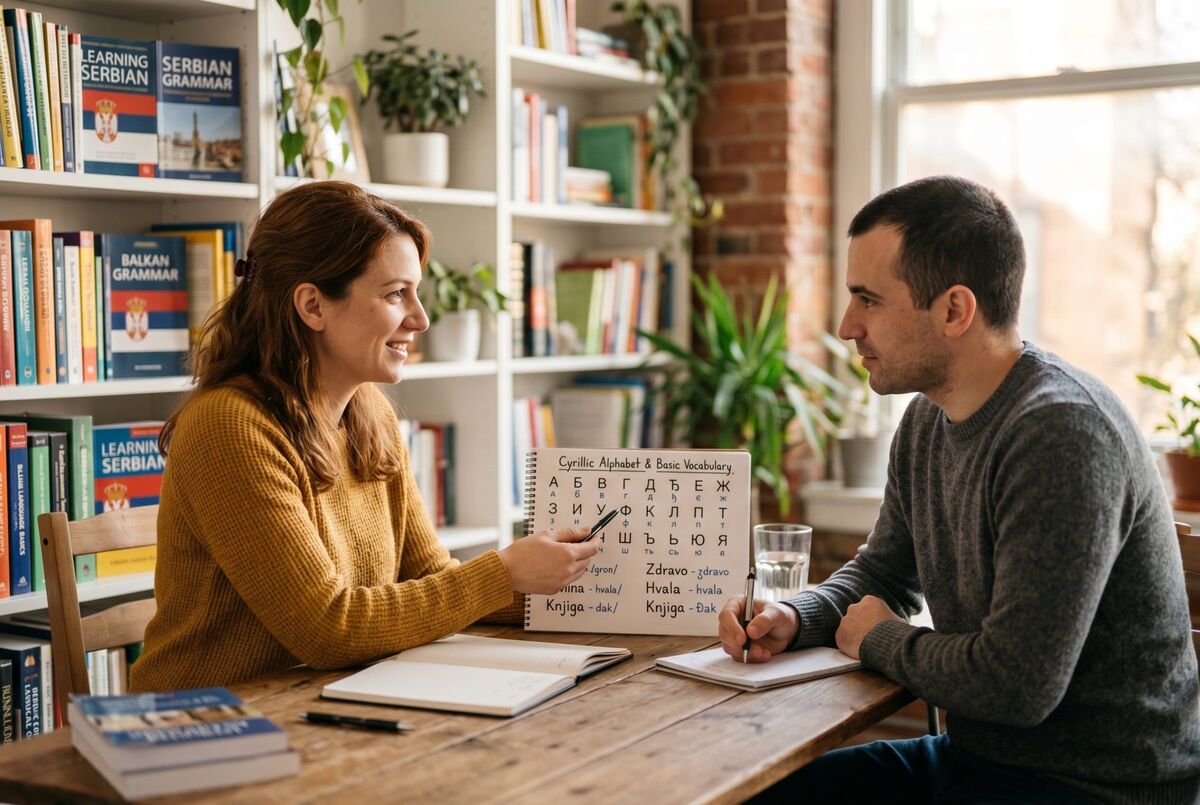
Strommen has placed Serbian tutors for years, and the steady ask from new students is some version of "I have heritage roots and want to actually speak to my grandmother / my partner's family / my colleagues" rather than coursework prep. Strommen is a curated practice rather than an open marketplace, so every tutor below was met and vetted by us. You can read their actual bios on each card.
Filter by location, age, or price. Then book a 30-minute free trial.
Below are the Strommen tutors who teach Serbian to absolute beginners. Photos, ratings, and rates are real. Click any card to read their bio and book a free 30-minute trial.
I want to learn…
Every tutor, personally met. — founder-vetted since 2006, in Los Angeles and online worldwide.
Get a personalized plan
Pick your language — a language advisor will match you with the right tutor and map out your path.

University of Philology in Belgrade
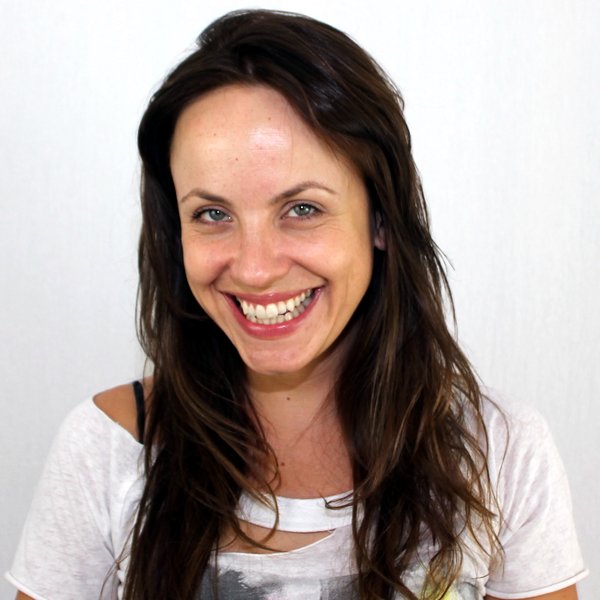
Born in Serbia, I specialize in Serbian language, literature, and Balkan accents. Let's explore language and culture together
Personally vetted · Strommen’s note
Serbian-born, with us since 2011, Jelena is who we send anyone chasing an exact Balkan accent or literature-grade grammar.
Specialties
University of Philology in Belgrade
Born in Serbia, I specialize in Serbian language, literature, and Balkan accents. Let's explore language and culture together
Specialties
Personally vetted · Strommen’s note
Serbian-born, with us since 2011, Jelena is who we send anyone chasing an exact Balkan accent or literature-grade grammar.
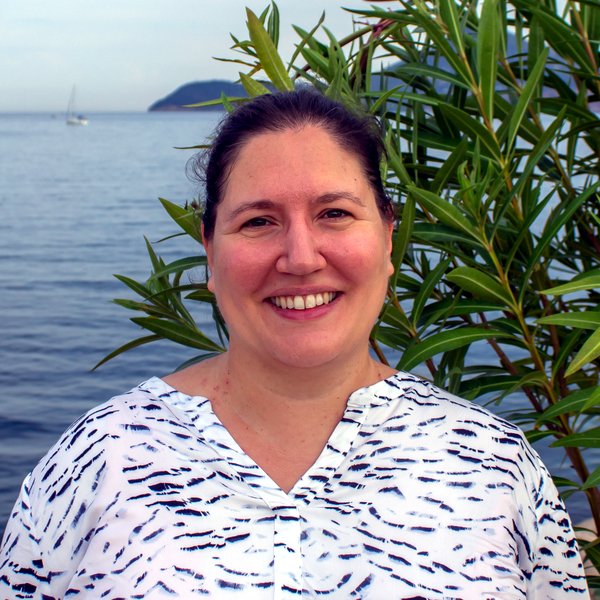


MA in Language, Literature, and Culture (Italian) · My certifications include numerous ones from various publishing houses (mainly Alma Edizioni and Edilingua), ESL webinars, seminars, and Serbian L2 courses and webinars. The goal of these seminars was to stay up to date with all the news and trends in...
Italian and Serbian Teacher with experience working at Italian companies and private tutoring
Personally vetted · Strommen’s note
Belgrade-based and fluent across Croatian, Italian, and Serbian, Vladana's background includes years working inside actual Italian companies, not just classrooms.
Specialties
Also speaks: English, Norwegian, Spanish
MA in Language, Literature, and Culture (Italian) · My certifications include numerous ones from various publishing houses (mainly Alma Edizioni and Edilingua), ESL webinars, seminars, and Serbian L2 courses and webinars. The goal of these seminars was to stay up to date with all the news and trends in...
Italian and Serbian Teacher with experience working at Italian companies and private tutoring
Specialties
I also speak: English, Norwegian, Spanish
Personally vetted · Strommen’s note
Belgrade-based and fluent across Croatian, Italian, and Serbian, Vladana's background includes years working inside actual Italian companies, not just classrooms.

Почетак — first steps
5 things a beginner Serbian learner gets to skip worrying about
These are the parts where the textbook scares you on day one and where, in practice, Serbian rewards beginners faster than other Slavic languages. Save this image. Share it with the friend who keeps saying Serbian is impossible.
-
01
Pick a script. Either one.
Cyrillic and Latin are equally official in Serbian. Beginner tutors usually start you in Latin because it looks familiar, then slide Cyrillic in once you can read confidently. Either script is correct on a homework page. Both are correct on a real street sign.
e.g. Здраво and Zdravo are the same word, the same greeting, written two ways.
-
02
Spell it the way you say it
Serbian is fully phonetic. Every letter has one pronunciation. There are no silent letters and no spelling exceptions. Once you have the 30 sounds, you can read any new word aloud correctly. Most adult learners reach reliable pronunciation in the first month.
e.g. Београд is pronounced exactly "Be-o-grad," no surprises.
-
03
No articles to memorize
Serbian has no "the" and no "a/an." Whatever the noun is, you just say it. English speakers who have been bruised by German der/die/das or French le/la spend a happy week realizing this entire layer of grammar simply does not exist in Serbian.
e.g. Kafa je dobra means "the coffee is good," "coffee is good," or "a coffee is good," depending on context.
-
04
Word order is a suggestion
Because Serbian marks the role of each noun by case endings, you can shuffle the words in a sentence and still be understood. The endings carry the grammar. Beginners use this as a forgiveness margin in conversation: if a word comes out in the wrong slot, the meaning still arrives.
e.g. Ana voli Marka and Marka voli Ana both mean "Ana loves Marko," because the -a ending on Marka marks him as the object.
-
05
One Serbian opens four countries
Serbian, Bosnian, Croatian, and Montenegrin share the same spoken core. A beginner who learns Serbian can travel from Belgrade to Sarajevo to Zagreb to Podgorica and hold conversations in every city. The vocabulary differences are roughly British-vs-American in scale.
e.g. Hleb (Serbian) and kruh (Croatian) both mean "bread," and a baker in either country understands both.
About Serbian for Beginners
Starting Serbian, two scripts and seven cases
Serbian for beginners is friendlier than the textbook makes it look. The language has roughly nine million native speakers across Serbia, Bosnia, Montenegro, and the wider Balkan diaspora, and learners coming in cold tend to walk in with two worries: the Cyrillic alphabet, and the famous seven grammatical cases. Both are smaller obstacles than they sound, and one of them turns out to be your secret weapon.
The alphabet first. Serbian is written in both Cyrillic (ћирилица) and Latin (latinica), and the two scripts map letter-for-letter. There is no version of one script that says something the other cannot. Street signs in Belgrade rotate between them. Restaurant menus mix both freely. Newspapers, banks, and government forms each pick a default and assume readers handle both. Phones and laptops swap with a single setting. Most beginner tutors start in Latin because it looks familiar, then introduce Cyrillic in week two or three as a low-stakes pattern-matching exercise. By month two most students can read a menu in either. The script is the easy part of Serbian, and the dual-script reality means you can choose your reading entry point depending on your mood.
The cases are the part that feel intimidating and turn out to be tractable. Serbian marks the role of every noun in a sentence by changing its ending, not by changing word order. There are seven of these endings: nominative, genitive, dative, accusative, vocative, instrumental, and locative. You will not learn all seven in the first lesson, and you will not need them all in the first month. Beginner tutors at Strommen teach the cases in the order beginners actually need them. Nominative and accusative come first, for basic sentences. Locative arrives when you want to talk about places. Genitive shows up once you want to count things or describe absence. Dative, instrumental, and vocative arrive as the natural shape of your conversations demands them. The grammar comes in usable chunks rather than as a single grid you have to memorize, and most adult learners report that the cases became automatic somewhere in month four or five.
The pleasant surprise for English speakers is pronunciation. Serbian is phonetic. Every letter is pronounced the same way every time. There are no silent letters, no spelling tricks, no English-style exceptions. Once you know the 30 sounds, you can read any Serbian word aloud correctly, even if you do not know what it means. This is the part of the language where adult learners make faster early progress than they do in French or English. The vowel system is clean (five vowels, no surprises) and the consonant inventory has a few sounds that take a week or two of practice — the soft Ć and Č, the soft Ђ and Џ — but nothing exotic. Most beginners reach reliable pronunciation in the first month, which gives them confidence to speak before grammar has fully landed.
The absence of articles is another quiet beginner gift. Serbian has no "the" and no "a/an." Whatever the noun is, you just say it. English speakers who have been bruised by German der/die/das or French le/la spend a happy week realizing this entire layer of grammar simply does not exist in Serbian. The same goes for question-formation: in many cases you make a statement into a question with intonation alone, the way English does informally. The structural simplicity at this level frees up cognitive room for the case endings to bed in.
The mutual-intelligibility note is worth knowing up front, because it changes how useful your Serbian becomes. Serbian, Bosnian, Croatian, and Montenegrin are, at the conversational level, one shared language with regional preferences and a few political reasons for separate names. A beginner who learns Serbian can hold a coffee conversation in Sarajevo or Zagreb without switching languages. You will pick up the regional vocabulary differences as you go, the same way an American picks up British words. The script preferences are part of the difference too: Croatian uses only Latin, Bosnian and Montenegrin use both, Serbian uses both with a slight cultural preference for Cyrillic in formal settings. None of this stops you from being understood across the entire region.
Our beginner-track tutors include native speakers from Belgrade, Novi Sad, Niš, and the Serbian diaspora, along with a few longtime instructors who learned the language as adults and remember every step of the climb. The second kind of tutor is often the right pick for absolute beginners, because they speak your starting point better than a native does. Both kinds are on the cards below. Pick the one whose bio sounds like the right voice in your ear for an hour at a time, and consider booking a trial with two different tutors if you want to compare teaching styles before committing.
What you'll cover
Lessons & classes tailored to Serbian for Beginners
Alphabets and reading fluency
We start with the 30 sounds and one alphabet at a time. Most beginners begin in Latin and pick up Cyrillic by week three or four as a low-friction add-on. By the end of month one you can read aloud any word you see, even unfamiliar ones, and recognize the difference between Cyrillic on a Serbian newspaper site and Cyrillic on a Russian one. Reading drills use real menus, signs, song lyrics, and short news headlines rather than invented textbook sentences.
Survival speaking in the first six weeks
Greetings, introductions, ordering coffee or food, asking directions, telling someone your name and where you live, numbers and prices, days of the week, and the few verbs that get you through a first trip: biti (to be), imati (to have), hteti (to want), moći (to be able to). We get you to a self-contained conversation early, then layer grammar onto that foundation rather than front-loading rules.
Cases in the order you actually need them
Nominative and accusative first, because they appear in every sentence. Locative next, because you need it to say where things are. Then genitive (for counting, for absence, for "a glass of"). Dative, instrumental, and vocative arrive as the natural shape of conversations demands them. Each case is taught with a memorable real-world cue rather than a chart.
The shared Balkan layer
Once your Serbian is moving, your tutor introduces the differences and shared vocabulary across Croatian, Bosnian, and Montenegrin. This matters if you have family or work ties anywhere in the region, because the four countries share roughly 95 percent of their everyday vocabulary. If your goals broaden, our conversational Serbian track picks up where the beginner curriculum lets off.
FAQ
About Serbian for Beginners lessons & classes
Do I need to learn Cyrillic to study Serbian?
Eventually, yes. In the first month, no. Most beginner tutors at Strommen start you in Latin script because it is familiar and removes one obstacle from week one. Cyrillic comes in around week three or four, learned letter-by-letter against words you already know how to say. By month two most students can read either script comfortably. Both are used in Serbia every day.
How long until I can have a basic conversation?
Most absolute beginners reach a self-contained first conversation (greetings, ordering food, talking about where you live, basic questions) somewhere in weeks four to eight, at one or two lessons per week with reasonable self-study in between. The early Slavic learning curve is steeper than Spanish but flatter than Russian, partly because Serbian pronunciation is so regular.
Are Serbian and Croatian really the same language?
At the spoken everyday level, yes. They share grammar and most vocabulary. The political reasons for separate names are real, and the regional preferences (vocabulary, a few sound habits, script preference) are also real, but a beginner who learns Serbian will be understood across Bosnia, Croatia, Montenegro, and parts of the wider Balkans. The Croatian-specific words come naturally once you start using them.
Is Serbian harder than Spanish or Italian?
Different, not strictly harder. Spanish and Italian let an English speaker borrow a lot of vocabulary on day one. Serbian gives back less vocabulary borrowing but rewards the work earlier on pronunciation (one sound per letter, no exceptions) and grammar (no articles, flexible word order). Most beginners feel the steep early phase last about two months, then describe the rest as steady forward motion.
Can I learn Serbian online or only in person in LA?
Both. Most Serbian tutors at Strommen teach online via Zoom or Jitsi and are reachable globally, which matters because Serbian-speaking communities are scattered across the world. Several of our tutors also teach in person around Los Angeles, particularly the Westside and the diaspora-heavy parts of the South Bay. The booking widget on each tutor's profile shows their available formats. Group introductions sometimes run through our Serbian classes in Los Angeles program.
Do your beginner tutors speak English fluently?
Yes. Every tutor on the cards below speaks English at a high level, which is essential for absolute-beginner lessons. They translate freely between Serbian and English in the early weeks, then taper the English as your comfort grows. By month three most students are spending the second half of each lesson primarily in Serbian, with the tutor only stepping into English to unblock a grammar point.
What does a Serbian beginner lesson look like?
A typical hour mixes a short warm-up in Serbian (greetings, weekend update), 15 to 20 minutes of new vocabulary or grammar built into a small scenario, 20 minutes of paired practice with the tutor on that scenario, and a short reading or listening segment that uses the day's words. Homework is usually 20 to 40 minutes between lessons. Each card on the page shows that tutor's specific style, since several teach more conversation-forward and a few are more structured.
Ready for Serbian for Beginners lessons or classes?
Book a free 30-minute trial with one of our personally vetted tutors. Private lessons or small-group classes — your choice.