



Personally vetted instructors
Dyslexia Phonics Support tutors, lessons & classes
Let's hear that sound Phonics is the alphabet, slowed down and made honest.
Personally vetted phonics tutors for students with dyslexia. Orton-Gillingham-trained instruction in the sound-letter system English actually uses, taught explicitly, systematically, and one sound at a time.

Your instructors
Dyslexia Phonics Support tutors for private lessons & classes
Strommen has been coaching foundational literacy in LA since 2006, and our roster of Orton-Gillingham and structured-phonics tutors is one of the parts of the practice we recruit most carefully into. Every tutor below was met and vetted by us in person or via thorough video interview, with credentials verified. No marketplace. No automated profiles. Real teachers with real structured-literacy training.
Filter by location, age, or price. Then book a 30-minute free trial.
Below are the Strommen tutors who specialize in Orton-Gillingham and structured-phonics instruction for students with dyslexia. Photos, ratings, and rates are real. Click any card to read their bio and book a free 30-minute trial.
I want to learn…
Every tutor, personally met. — founder-vetted since 2006, in Los Angeles and online worldwide.
Get a personalized plan
Pick your language — a language advisor will match you with the right tutor and map out your path.

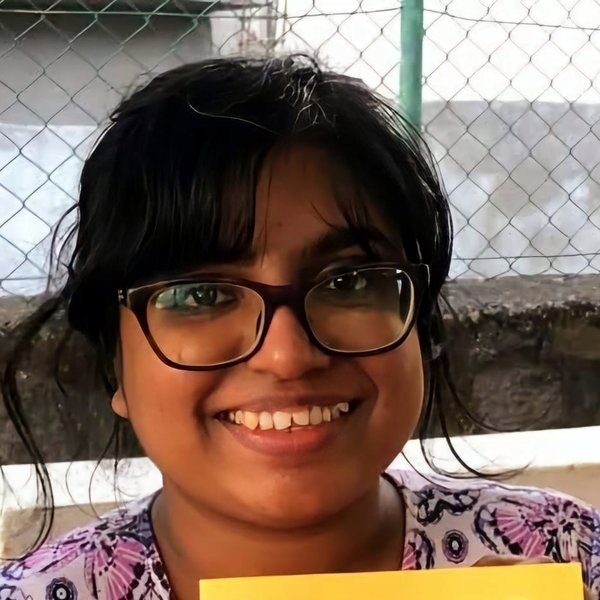
Bachelor's degree in Sociology
Learn English & French with clarity, confidence, and comfort.
Personally vetted · Strommen’s note
Kareshma specializes in teaching English and French to students with dyslexia and autism, structured literacy and routine-based learning built in.
Specialties
Bachelor's degree in Sociology
Learn English & French with clarity, confidence, and comfort.
Specialties
Personally vetted · Strommen’s note
Kareshma specializes in teaching English and French to students with dyslexia and autism, structured literacy and routine-based learning built in.

The method — phonics, slowed down
5 pieces of structured phonics every Orton-Gillingham tutor will teach
Five concepts that show up in every credible structured-phonics program. Useful for parents trying to recognize what good instruction actually looks like in a lesson.
-
01
The 44 phonemes of English
English has 26 letters and about 44 phonemes (the count varies slightly by dialect), so most letters and letter combinations represent more than one sound, and most sounds can be spelled more than one way. Structured phonics teaches the full inventory explicitly rather than letting the student guess. The phoneme charts on the wall of any Orton-Gillingham classroom are not decoration; they are the reference the student returns to until the mapping becomes automatic.
e.g. /sh/ is one phoneme, two letters. /oi/ is one phoneme, written <em>oi</em> in <em>coin</em> or <em>oy</em> in <em>boy</em>.
-
02
The CVC ladder
Consonant-vowel-consonant words (cat, sit, mop, hug, bed) are where decoding starts in almost every structured-phonics program, because they let the student feel the work pay off on the first day. The pattern is regular, the sounds are short vowels, and the student can blend three sounds into a real word with very little training. Most programs spend two or three weeks on CVC patterns before moving on.
e.g. <em>c</em> + <em>a</em> + <em>t</em>: /k/ + /æ/ + /t/, blended into <em>cat</em>.
-
03
Open vs. closed syllables
A closed syllable ends in a consonant and the vowel is short (met, cat, sit). An open syllable ends in a vowel and the vowel is long (me, go, hi). Where you place the syllable break in a multi-syllable word decides which rule applies. Robot breaks ro-bot: open first syllable, long o; closed second syllable, short o. The single most useful piece of phonics knowledge for decoding multi-syllable words, taught explicitly in every structured-phonics program.
e.g. <em>Pilot</em>: pi-lot. Open first syllable, long i. Closed second syllable, short o.
-
04
The schwa
The most frequent vowel sound in English. The unstressed "uh" in about, sofa, president, lemon. Any vowel can reduce to schwa when it sits in an unstressed syllable, which is why English spelling looks so unpredictable to anyone trying to spell by sound alone. Structured phonics teaches the schwa as its own concept and gives the student strategies for spelling words that contain it. Skipping the schwa is one of the most common gaps in mediocre phonics instruction.
e.g. <em>Banana</em>: the first and third <em>a</em> are schwa (/bə-NAE-nə/); the middle <em>a</em> carries the stress.
-
05
The Orton-Gillingham lesson sequence
Orton-Gillingham programs typically work through a sequence of roughly 70 to 90 lessons that move from simple to complex without leaving holes. The order is deliberate: short vowels, then blends, then digraphs (sh, ch, th, wh), then silent-e long vowels, then vowel teams (ai, ee, oa), then r-controlled vowels (ar, er, ir, or, ur), then more elaborate multi-syllable patterns. Each lesson reviews prior content and adds one new element. The cumulative, systematic structure is what distinguishes Orton-Gillingham from ad-hoc phonics worksheets.
e.g. Lesson 1: short <em>a</em>, CVC words. Lesson 7: blends (st, sp, sk). Lesson 14: digraph <em>sh</em>. Lesson 25: silent-e long <em>a</em>.
About Dyslexia Phonics Support
Phonics is a code, and the code can be taught
Phonics is the relationship between the sounds of spoken English and the letters that represent them. For most students, that relationship gets absorbed implicitly: a year or two of reasonable instruction in kindergarten and first grade, plus enough exposure to print, and the brain figures out the pattern on its own. For students with dyslexia, the implicit route does not work. The brain that struggles to map sound to letter benefits enormously, and sometimes only, from explicit and systematic instruction in the phonics code, one sound and one rule at a time, in an order designed to build from simple to complex without leaving holes. That kind of instruction has a name. It is called Orton-Gillingham, after the neurologist Samuel Orton and the educator Anna Gillingham who developed the method in the 1930s, and it remains the most widely studied and most consistently effective intervention for dyslexic readers in the English-speaking world.
If your student has been diagnosed with dyslexia, has been flagged for reading concerns, or has spent two or three years in a classroom that uses balanced literacy or three-cueing methods and is still guessing at words, the Orton-Gillingham question is the right question to ask. Strommen's phonics-support tutors are trained in Orton-Gillingham itself or in one of its direct descendants (Wilson Reading System, Barton, Slingerland, Lindamood-Bell LiPS), and the lessons they run follow the structured-literacy principles the International Dyslexia Association has spent the last twenty years documenting. The instruction is explicit (the rule is stated, never inferred), systematic (the sequence builds in a known order), cumulative (every lesson reviews and extends prior lessons), and multisensory (the student sees, hears, says, and traces each sound). The lesson plan typically runs 60 to 90 episodes across the full sequence, depending on the program; most students see meaningful gains in the first 20 to 30 sessions if instruction is consistent.
What the lessons actually contain. English has about 44 phonemes (the count varies slightly by dialect and analyst) mapped onto 26 letters and roughly 250 spelling patterns. Phonics instruction walks the student through that mapping in an order that matches how the brain best builds it: short vowels first, then consonant blends, then digraphs (sh, ch, th, wh), then long vowels with silent e, then vowel teams, then r-controlled vowels, then the more elaborate patterns of multi-syllable words. The schwa, the most frequent vowel sound in English (the unstressed "uh" in about, sofa, president), gets its own attention because dyslexic students often misspell it predictably, and the rule for when a vowel reduces to schwa is one of the harder ones to internalize. The consonant-vowel-consonant (CVC) ladder (cat, sit, mop, hug, bed) is where most programs start because it lets the student feel decoding work on day one. The open-syllable versus closed-syllable rule (the vowel in me says its long name; the vowel in met says its short name; the syllable break decides which) is the single piece of phonics knowledge that unlocks the most multisyllable words and is taught explicitly in every structured-phonics program.
The multisensory component matters and is part of what makes Orton-Gillingham distinct from general phonics instruction. A student learning the sound /sh/ does not just see the letters and hear the sound; they say the sound out loud, watch their mouth shape in a mirror or video, trace the letters in sand or on a textured surface, and write them while saying the sound. Multiple sensory channels engage simultaneously, which research on the dyslexic brain suggests is more effective than visual or auditory alone. Tutors run this in lessons with physical materials (letter tiles, sand trays, magnetic letters) for younger students and with adapted digital equivalents for older students and adults who would find the sand tray patronizing. The principle is the same; the delivery shifts with age.
A word about age. Phonics instruction is most often associated with elementary students, and it is true that the earlier the structured intervention begins, the more efficient the gains tend to be. But phonics works at every age. Adult dyslexics who never received structured instruction as children often see real progress in a few months of focused work, particularly with decoding multi-syllable words and with spelling. Middle and high school students who slipped through elementary school with workaround strategies (sight-word memorization, contextual guessing, audiobooks) often benefit from a focused phonics block that fills the gaps the workarounds were hiding. The instruction is delivered with age-appropriate materials and pacing; the underlying code is the same code, regardless of the student's age.
A note on programs and certification. Orton-Gillingham itself is a method, not a single curriculum, and the Academy of Orton-Gillingham Practitioners and Educators (AOGPE) certifies practitioners at multiple levels. Wilson Reading System, developed by Barbara Wilson in 1988, is a structured Orton-Gillingham derivative widely used in schools and certified at multiple levels by the Wilson Language Training organization. Lindamood-Bell offers LiPS (Lindamood Phoneme Sequencing) for foundational phonemic awareness and Seeing Stars for symbol imagery. Barton, Slingerland, Project Read, and Spalding are other established structured-phonics programs. Strommen's tutors hold credentials across this landscape; their bios specify which program and which certification level. The tutors who have not pursued formal certification but have decades of classroom or private-practice experience with structured-literacy instruction are also represented, and the bio will indicate that clearly. The right tutor for your student depends on the student's age, the severity of the reading profile, and whether the family wants a program-specific approach (often the case when coordinating with a school that uses the same program) or a more flexible Orton-Gillingham-grounded approach.
The trial conversation is where the program fit gets decided. Many families come to us already knowing their child needs Orton-Gillingham because a neuropsychologist or educational evaluator recommended it; we match accordingly. Other families come not yet knowing what they need, and the trial gives the tutor a chance to listen to the student read, ask a few diagnostic questions, and recommend an approach. We do not run formal dyslexia evaluations (those should come from a credentialed neuropsychologist or educational psychologist), but the tutor can usually tell quickly whether structured phonics is the right starting point or whether some other intervention should run first or alongside.
Lessons are one-on-one, typically 50 to 60 minutes, and most families do one or two sessions a week through the school year. Progress is tracked session over session in concrete metrics (which decodable patterns the student now has automatic, which spelling rules they have internalized, which multi-syllable types they can chunk independently), and parents get regular updates. The free 30-minute trial is the place to start.
What you'll cover
Lessons & classes tailored to Dyslexia Phonics Support
Orton-Gillingham and structured-phonics instruction
One-on-one instruction in the Orton-Gillingham method or one of its direct descendants (Wilson Reading System, Barton, Slingerland, Lindamood-Bell LiPS, Project Read). Tutors hold credentials across this landscape; each bio specifies the program and certification level. Lessons follow the structured-literacy principles documented by the International Dyslexia Association: explicit, systematic, cumulative, multisensory.
Phonemic awareness and the 44 phonemes
For students who need foundational work below the level of letter-sound mapping, lessons start with phonemic awareness: hearing, identifying, and manipulating the individual sounds of spoken English before connecting them to print. Lindamood-Bell LiPS is the most-cited program for this layer. Foundational phonemic-awareness work is often the missing piece for students who have been through phonics instruction once already without consistent gains.
Spelling, encoding, and the rules of English orthography
Decoding (reading) and encoding (spelling) are the same skill in reverse, and structured-phonics programs teach both in parallel. Tutors work through the spelling generalizations that govern English (the FLOSS rule, the doubling rule, the silent-e drop, the y-to-i change) so students can spell words they have never seen rather than memorizing word lists. The Brown-Carlisle Inventory and similar diagnostic tools help identify which patterns the student has mastered and which still need work.
Adult and adolescent phonics intervention
Phonics works at every age, and several Strommen tutors specialize in middle school, high school, and adult learners. The instruction is delivered with age-appropriate materials and pacing (no sand trays for a 40-year-old reading at a fourth-grade level) but the underlying code is the same. Adult dyslexics who never received structured instruction as children often see real gains in three to six months of focused work, particularly with multi-syllable decoding and spelling.
FAQ
About Dyslexia Phonics Support lessons & classes
Is Orton-Gillingham the right method for my child?
For students with a dyslexia diagnosis or a clear reading-profile concern, Orton-Gillingham or one of its structured-phonics descendants is the most evidence-backed intervention available, and the International Dyslexia Association endorses the structured-literacy approach broadly. That said, the question is rarely Orton-Gillingham or nothing; it is more often which structured-phonics program fits this student best. Wilson, Barton, Lindamood-Bell, Slingerland, and Project Read are all structured-literacy programs with strong track records. The trial conversation is where the fit gets decided; the tutor will ask diagnostic questions and recommend an approach.
How long until I see results?
Most students show meaningful gains in the first 20 to 30 sessions of consistent structured-phonics instruction, which at one to two sessions a week works out to two to six months. Full programs typically run 70 to 90 lessons across the complete sequence, so a year or two of consistent work is a reasonable expectation for a student who is multiple grade levels behind. Progress is tracked session over session in concrete metrics (which decodable patterns are now automatic, which spelling rules are internalized), so you will see the gains in real numbers rather than guessing.
Will phonics work for adult dyslexics?
Yes. Adult dyslexics who never received structured instruction as children often see real progress in a few months of focused work, particularly with decoding multi-syllable words and with spelling. The materials and pacing shift to fit the adult learner (no sand trays, no children's reading passages, often a faster initial pace because the cognitive maturity is there) but the underlying instruction is the same Orton-Gillingham code. Several Strommen tutors specialize in adult learners and have helped career professionals improve their reading and writing into their 30s, 40s, 50s, and beyond.
What is the difference between Orton-Gillingham, Wilson, Barton, and Lindamood-Bell?
Orton-Gillingham is the foundational method (1930s, Samuel Orton and Anna Gillingham). Wilson Reading System (Barbara Wilson, 1988) is a structured Orton-Gillingham derivative widely used in schools, with multiple levels of certification through Wilson Language Training. Barton (Susan Barton) is a home-friendly Orton-Gillingham-based program often used by parents and private tutors. Lindamood-Bell offers LiPS for foundational phonemic awareness and Seeing Stars for symbol imagery, and is more often delivered in their dedicated learning centers. All four share the structured-literacy core; the differences are in materials, pacing, and certification path.
Do you run dyslexia evaluations?
No. Formal dyslexia evaluations should come from a credentialed neuropsychologist or educational psychologist, who can administer the full battery of cognitive and academic assessments and produce a report that schools and insurance providers will accept. We can refer you to evaluators in the LA area, and many of our tutors work routinely with the recommendations such reports contain. What our tutors can do in a trial is listen to the student read, ask a few informal diagnostic questions, and tell you whether structured phonics is likely the right starting point.
Does this replace the work my child is already doing at school?
Usually it supplements it. Some schools have strong structured-literacy programs already in place, in which case Strommen instruction extends what the school is doing. Other schools use balanced literacy or three-cueing approaches, in which case Strommen instruction often fills the structured-phonics gap the school is not addressing. With parent permission, tutors will coordinate with classroom teachers and learning specialists. The goal is consistency in the methods the student is exposed to, not turf battles between providers.
What does the trial include?
30 minutes, free, usually with the parent first if the student is school-age. The tutor will ask about prior evaluations, current school placement, what has been tried, and what your goals are. If time allows, a brief listen to the student read (a paragraph at their estimated level) gives the tutor a starting sense of where the gaps sit. By the end of the trial you will have a recommended program approach and a sense of session frequency. Most families continue with their trial tutor; if the fit is not right, swapping is easy and quick.
Ready for Dyslexia Phonics Support lessons or classes?
Book a free 30-minute trial with one of our personally vetted tutors. Private lessons or small-group classes — your choice.